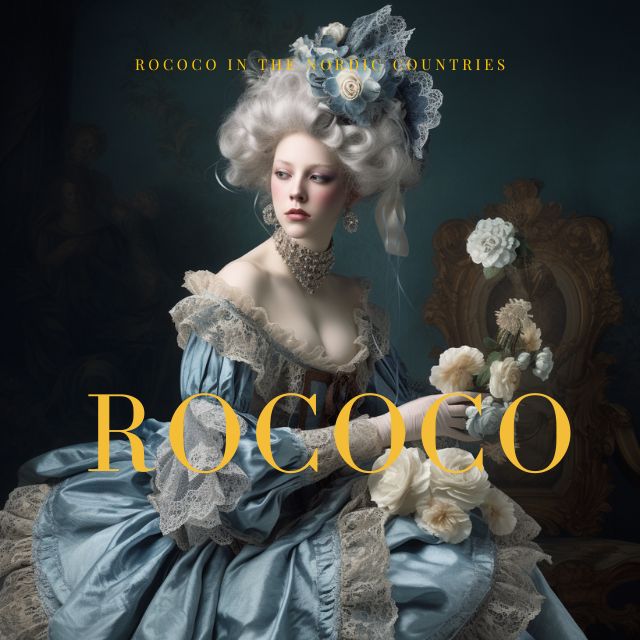
Rococo In The Nordic Countries
The Rococo style, which emerged in the early 18th century, originated in France and quickly spread throughout Europe, including the Nordic countries. While the Nordic countries, comprising Denmark, Sweden, Norway, Finland, and Iceland, were influenced by the broader European Rococo movement, they also showcased distinctive characteristics and adaptations that set them apart.
Danish Rococo: In Denmark, Rococo art and architecture were strongly influenced by French and German styles. Danish Rococo emphasized elegance, refinement, and symmetry. Architects like Nicolai Eigtved played a crucial role in shaping the Danish Rococo style, evident in buildings such as the royal palaces of Amalienborg and Christiansborg. Danish furniture of this period featured delicate, curving lines, often adorned with intricate carvings and gilding.
Swedish Rococo: Swedish Rococo, known as the Gustavian style, developed later than in other Nordic countries. It was influenced by French Rococo and neoclassical elements. Gustavian interiors showcased light colors, restrained ornamentation, and a preference for straight lines, reflecting a shift towards neoclassicism. The Swedish king, Gustav III, played a significant role in promoting this style, and it became synonymous with elegance and sophistication in Sweden.
Norwegian Rococo: Norway was under Danish rule during the height of the Rococo period, so Danish Rococo influences were prominent. However, Norwegian craftsmen and artisans infused their own regional characteristics into the style. Norwegian Rococo featured intricate woodcarvings, often depicting local flora and fauna, as well as a preference for vibrant colors. Examples can be seen in the elaborate woodwork found in stave churches and traditional rural buildings.
Finnish Rococo: Finland, then part of the Kingdom of Sweden, adopted Swedish Rococo influences. The Finnish interpretation of Rococo emphasized simplicity, lightness, and elegance. Finnish architects and craftsmen integrated Swedish neoclassical elements into their Rococo designs, reflecting a shift towards classicism. The famed architect Carl Fredrik Adelcrantz played a significant role in shaping Finnish Rococo.
Icelandic Rococo: As an isolated island nation, Iceland’s exposure to the Rococo style was relatively limited. However, the few examples of Rococo art and architecture in Iceland demonstrate a fusion of local influences with European Rococo. The Icelandic interpretation tended to incorporate simpler ornamentation and more rustic elements, often reflecting the country’s natural surroundings.
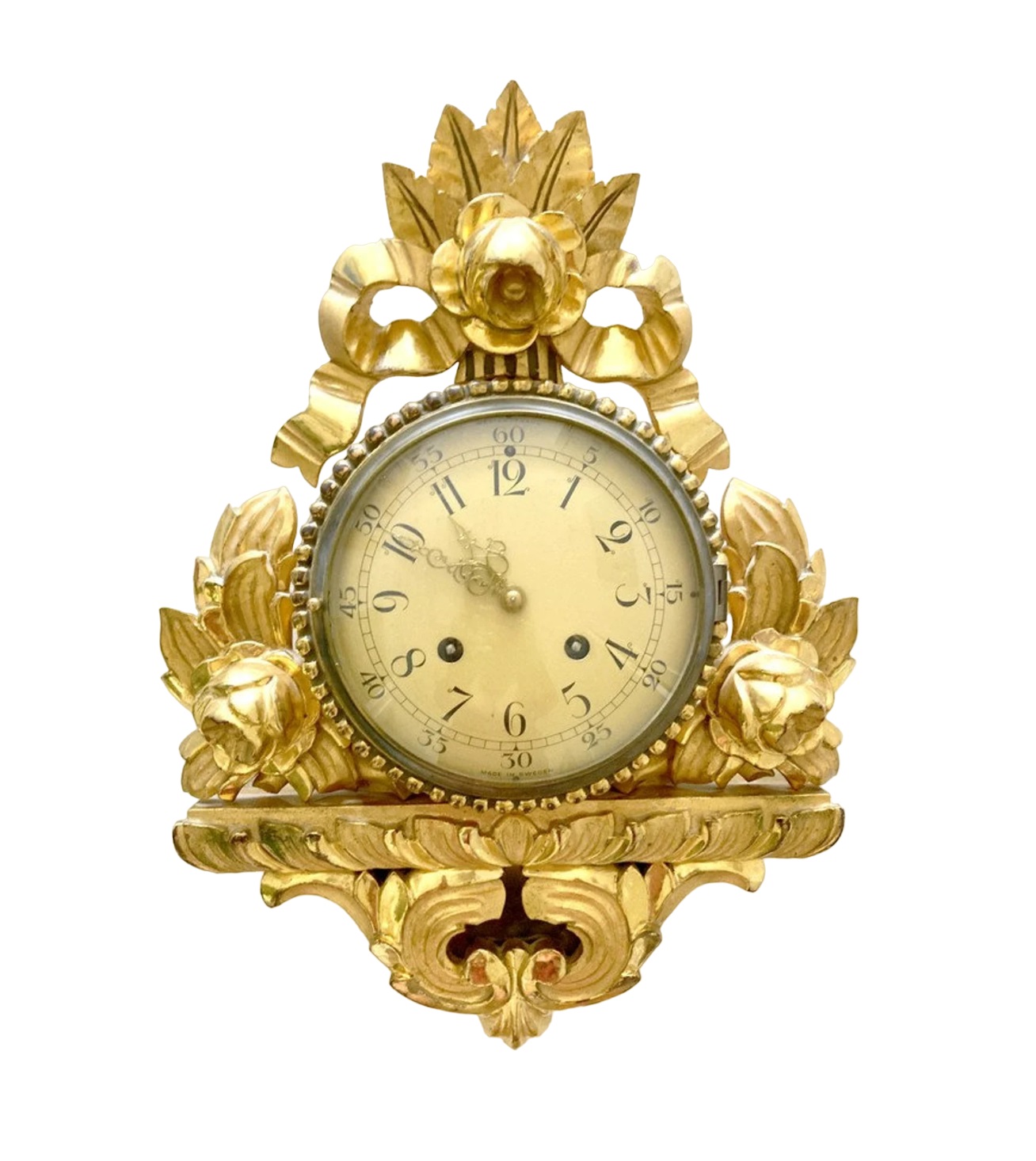
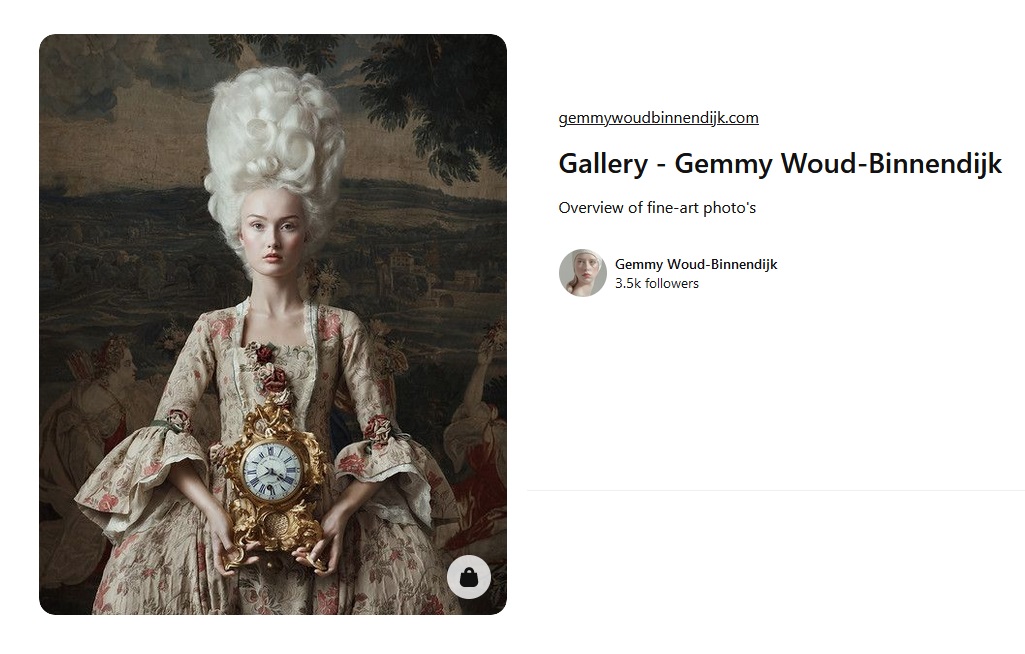
Antique Westerstrand Swedish Rococo Gilt Carved Wood CARTEL WALL CLOCK – Etsy
Overall, while the Rococo style in the Nordic countries shared common European influences, each country infused their own regional characteristics, resulting in distinct variations. Danish Rococo emphasized elegance and symmetry, Swedish Rococo transitioned towards neoclassicism, Norwegian Rococo incorporated local woodcarvings, Finnish Rococo leaned towards simplicity, and Icelandic Rococo fused local elements with European style. These variations highlight the diverse interpretations and adaptations of Rococo across the Nordic region.
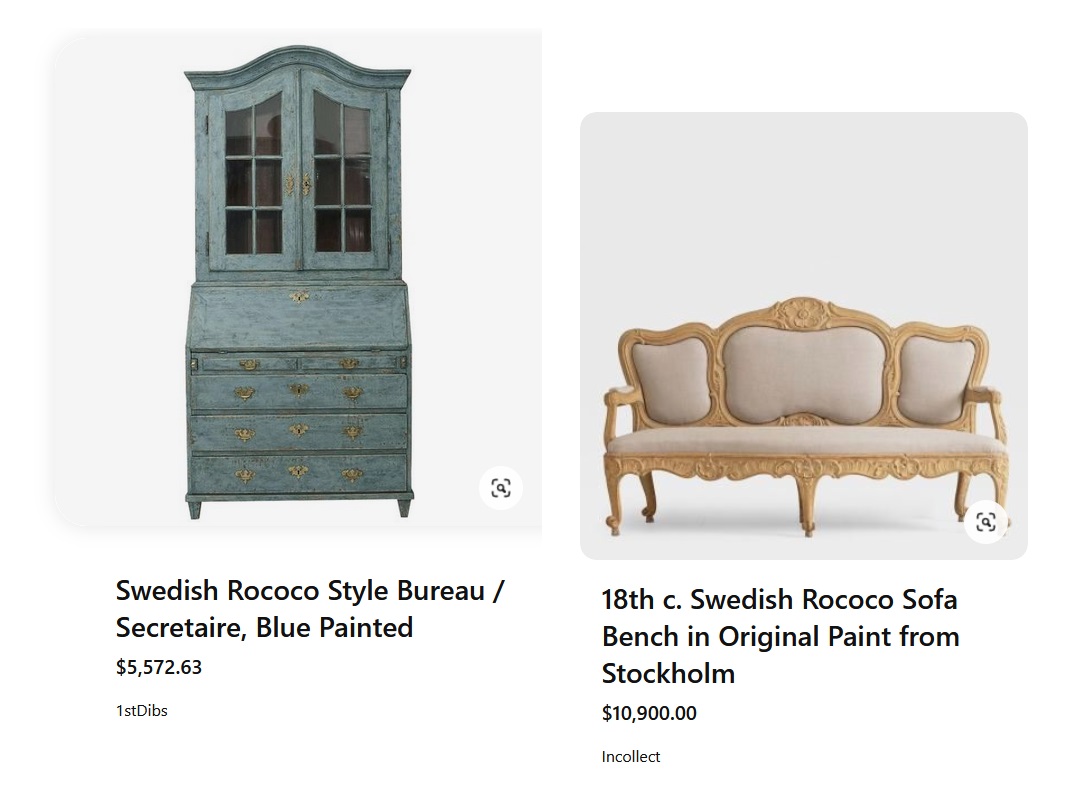
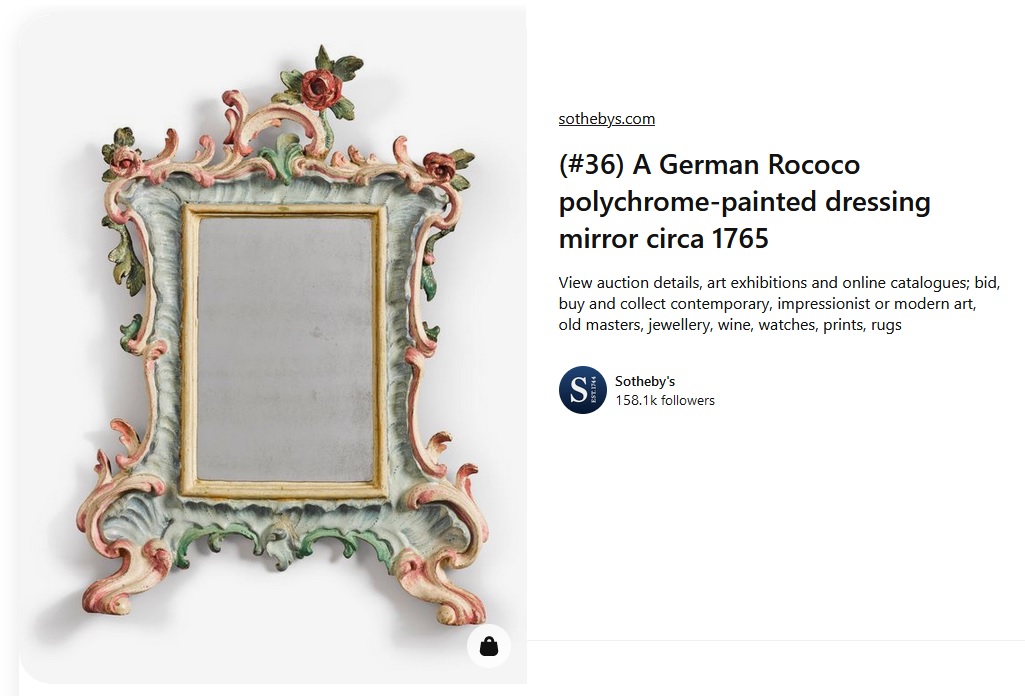
sothebys.com
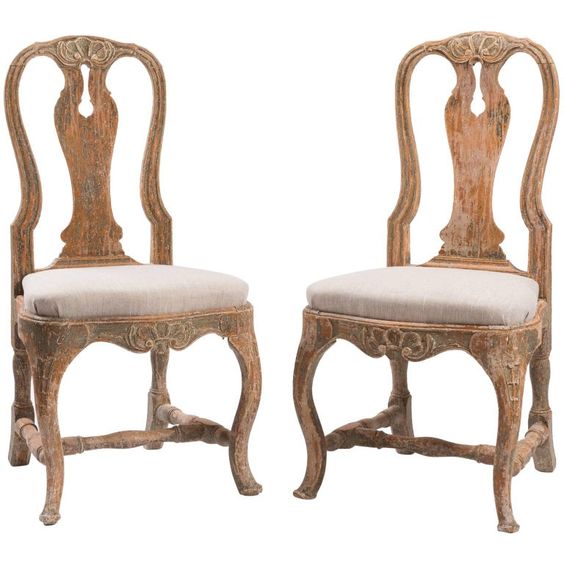
1stdibs.com
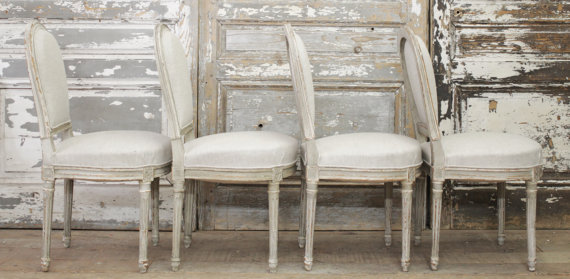
18th Century Swedish Rococo Chairs
About A pair of Swedish Rococo chairs with nice proportions and wooden Rococo carvings. Scraped to original paint and original seats with new linen. Manufactured in Stockholm, Sweden, circa 1760.
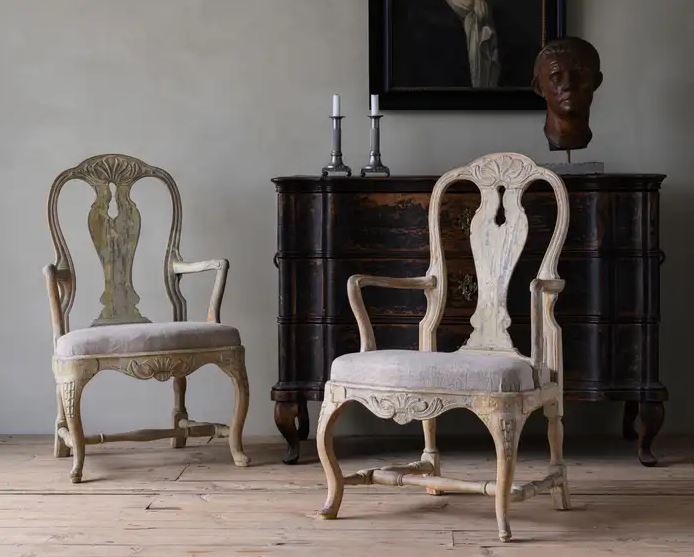
1stdibs Wood Rococo Swedish Armchair $9,200.00
………………
The Rococo style, characterized by its ornate and playful aesthetic, originated in France in the early 18th century and spread throughout Europe. While the Rococo style had a significant impact on the arts and architecture of several Nordic countries, including Sweden, Denmark, and Norway, it was adapted and interpreted differently in each region. Let’s explore the characteristics and variations of the Rococo style in the Nordic countries:
Sweden:
In Sweden, the Rococo style, known as “Rokoko,” emerged in the mid-18th century. Swedish Rococo was influenced by the French Rococo but had a distinctive national character. It incorporated elements of the Gustavian style, which focused on simplicity and neoclassical influences. Swedish Rococo emphasized lightness, elegance, and refinement. The furniture and interior design often featured delicate ornamentation, curved lines, and pastel colors. Rococo interiors in Sweden showcased painted paneling, gilded mirrors, and intricate stucco decorations.
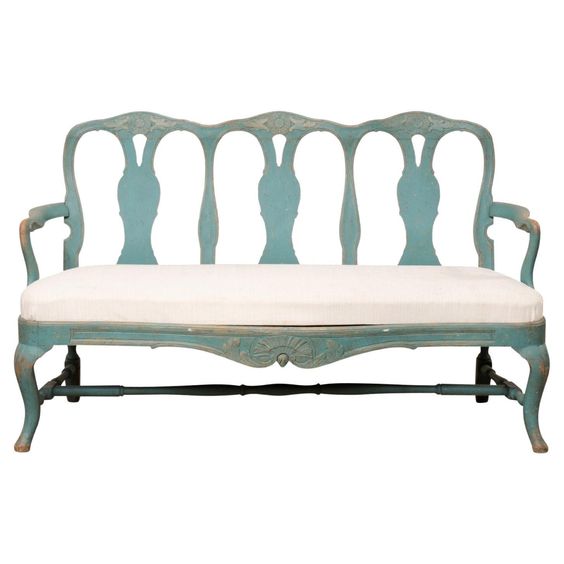
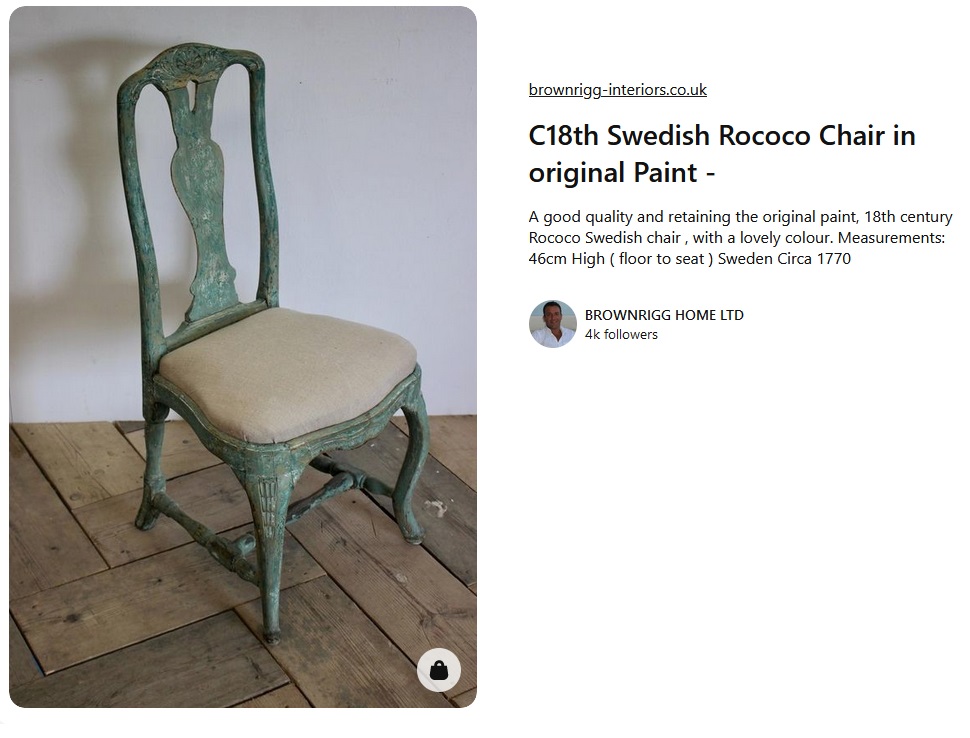
1stdibs Sofa – Period 3- Back Painted Bench Swedish Rococo Upholstery, Wood
$6,720.00 1stDibs
Denmark:
Denmark also embraced the Rococo style, which is known as “Rokoko” or “Rococo” in Danish. Danish Rococo emphasized asymmetry and organic forms. Furniture and interiors were characterized by intricate woodwork, curving lines, and an abundance of decorative elements like foliage, shells, and scrollwork. Danish Rococo incorporated motifs inspired by nature and often featured light and pastel colors. The royal palaces of Denmark, such as Frederiksborg Palace and Amalienborg Palace, exhibit remarkable examples of Rococo architecture and design.
Norway:
In Norway, the Rococo style, known as “Rokokko” or “Rococo” in Norwegian, found expression in both architecture and interior design. Norwegian Rococo often displayed a fusion of Rococo elements with traditional Norwegian craftsmanship and folk art. The Rococo interiors in Norway featured intricate woodcarvings, especially in the form of acanthus leaves, floral motifs, and swirling patterns. Buildings such as the Royal Palace in Oslo exemplify the Rococo influence in Norwegian architecture.
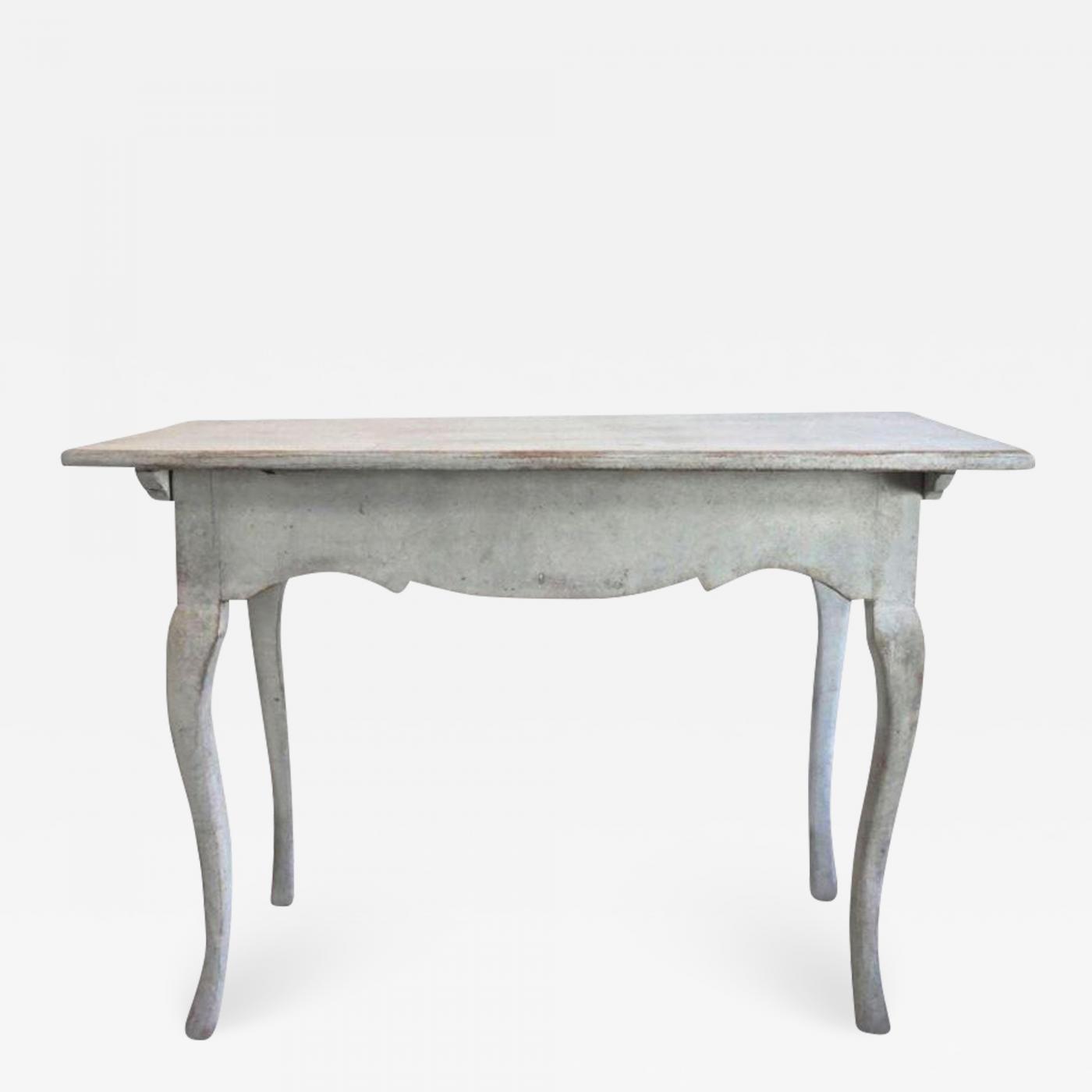
18TH C SWEDISH ROCOCO SIDE TABLE – In Collect
Despite these regional variations, the Nordic countries generally embraced the Rococo style as a way to demonstrate wealth, sophistication, and cultural refinement. The style was particularly popular among the nobility and upper classes, who commissioned lavish interiors, furniture, and art in the Rococo aesthetic.
It’s important to note that the Rococo style gradually gave way to neoclassical influences in the late 18th century, as tastes shifted towards simpler and more restrained forms. However, the legacy of Rococo can still be seen in many historic buildings, palaces, and museums across the Nordic countries, showcasing the region’s unique interpretation of this ornate and whimsical style.
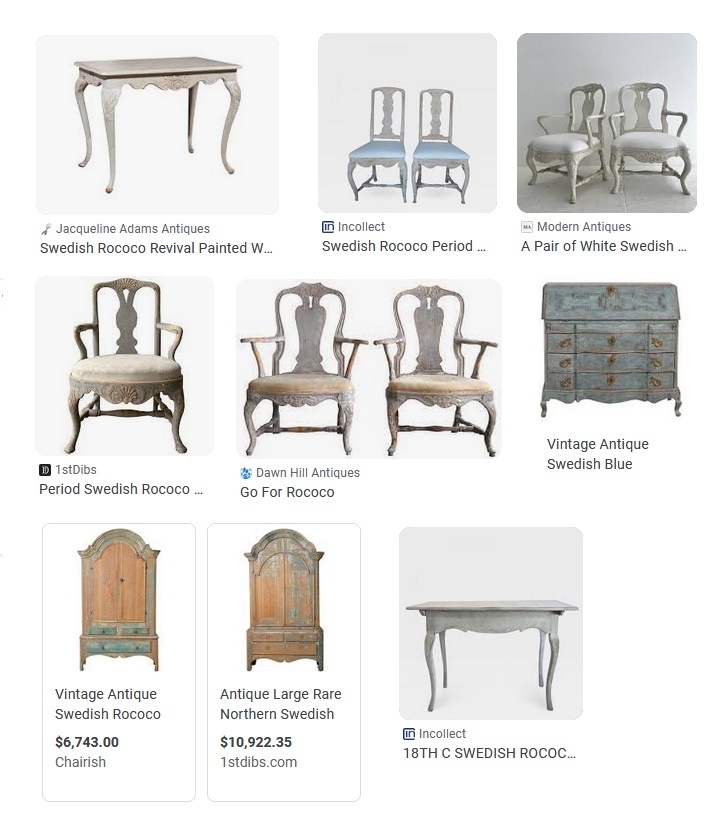
The Rococo Style in Sweden: A Delicate Blend of Elegance and Extravagance
The Rococo style, known for its ornate and whimsical designs, flourished in Sweden during the 18th century. This period, often referred to as the Gustavian era, was a time of great artistic and cultural refinement in the country. While the Rococo movement originated in France, it quickly spread throughout Europe, leaving its indelible mark on Swedish art, architecture, and interior design.
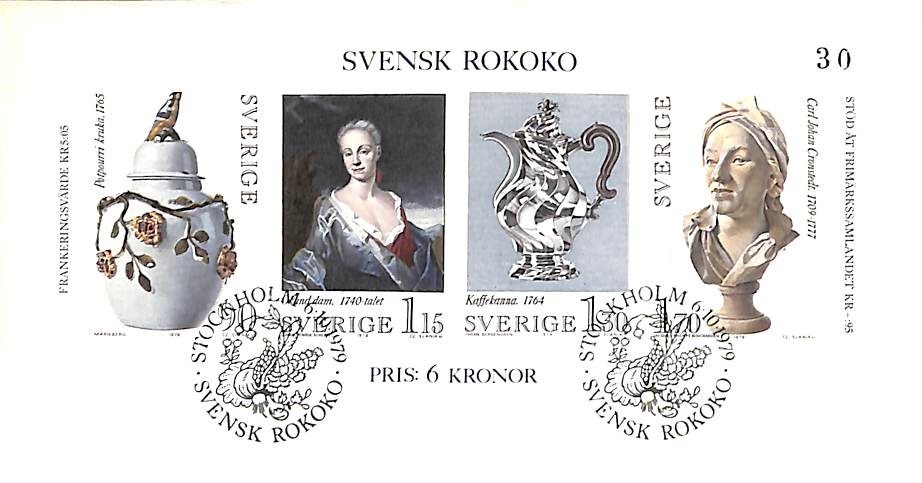
Stamp 1979, Sweden Swedish rococo s/s, 1979 – Collecting Stamps – PostBeeld – Online Stamp Shop – Collecting
In Sweden, the Rococo style was embraced by the aristocracy and the wealthy bourgeoisie, who sought to emulate the elegance and opulence associated with the French court. This period coincided with the reign of King Gustav III, whose personal taste and influence played a pivotal role in shaping the Swedish interpretation of Rococo.
One of the key characteristics of Rococo design is its emphasis on asymmetry and intricate detailing. Swedish Rococo architecture featured gracefully curved facades, ornamental embellishments, and elaborate stucco work. The interiors of buildings were adorned with delicate motifs, including shells, scrolls, flowers, and foliage. Furniture and decorative objects were often crafted from light-colored woods, such as birch or beech, and embellished with gilded accents.
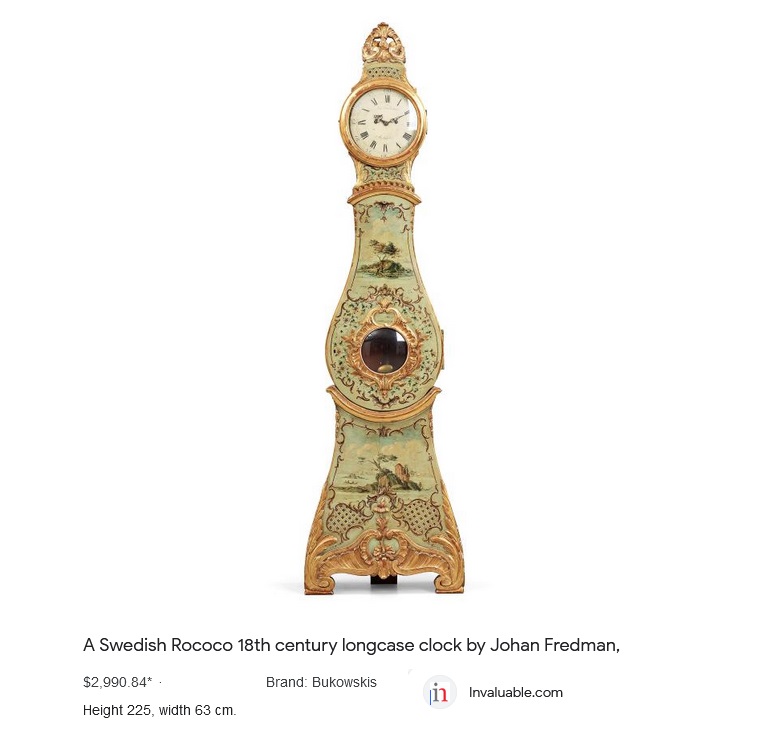
The Rococo style also had a significant impact on Swedish craftsmanship. Master artisans excelled in cabinetmaking, producing exquisite furniture pieces characterized by their lightness and grace. These pieces often featured slender legs, delicate carvings, and upholstery in soft, pastel-colored fabrics. Rococo-style mirrors, chandeliers, and porcelain became highly sought after, adding a touch of sophistication to the interiors.
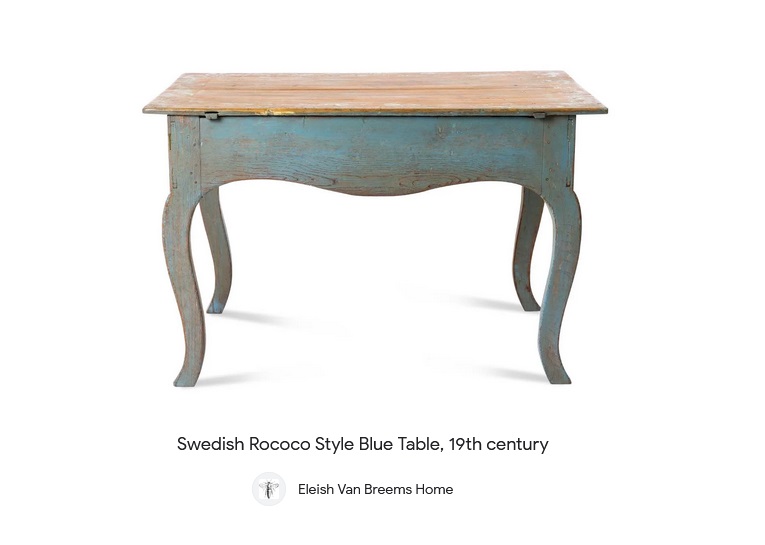
One prominent example of Swedish Rococo architecture is the Royal Palace in Stockholm. Designed by architect Nicodemus Tessin the Younger, it showcases the elegance and grandeur associated with the style. The interiors of the palace, particularly the Royal Apartments, feature elaborately decorated rooms with intricate stucco work, ornate furnishings, and beautiful tapestries.
While Rococo design was prevalent in the royal palaces and the homes of the upper class, its influence extended beyond the elite. The Rococo aesthetic trickled down to the middle class, with merchants and professionals incorporating elements of the style into their homes. This democratization of Rococo design contributed to its widespread popularity and enduring legacy in Swedish culture.
The Rococo era in Sweden was not solely focused on superficial beauty and decoration. It also fostered intellectual and cultural advancements. King Gustav III, a passionate patron of the arts, established the Royal Swedish Academy of Fine Arts and promoted the development of Swedish literature and theater. This period witnessed the rise of influential Swedish artists and writers, including Carl Fredrik Adelcrantz, Carl Michael Bellman, and Johan Tobias Sergel.
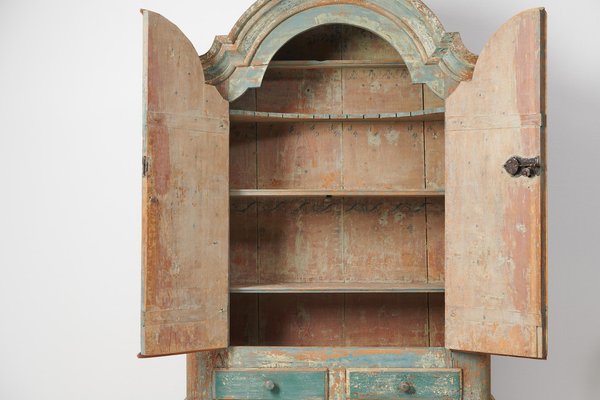
Antique Swedish Rococo Country Cabinet
Vintage Design Antique rococo country cabinet made by hand in solid Swedish pine.
Despite its popularity, the Rococo style eventually fell out of favor in Sweden. In the late 18th century, a shift towards neoclassicism, inspired by ancient Greek and Roman aesthetics, took hold. This transition was marked by simpler, more restrained designs that favored symmetry and clean lines over the elaborate ornamentation of Rococo.
However, the Rococo style’s impact on Swedish culture remains significant to this day. Many architectural landmarks and historical buildings continue to showcase the delicate and intricate beauty of the Rococo era. The influence of Rococo can also be seen in contemporary Swedish design, with echoes of its graceful lines and decorative motifs found in furniture, textiles, and decorative objects.
In conclusion, the Rococo style in Sweden during the 18th century brought a sense of elegance, luxury, and artistic refinement to the country. Its influence can still be seen in the architectural marvels, exquisite furniture, and decorative objects that have stood the test of time. The Rococo era in Sweden serves as a reminder of a bygone era of grandeur and artistic expression, and its legacy continues to inspire and captivate admirers of beauty and craftsmanship.
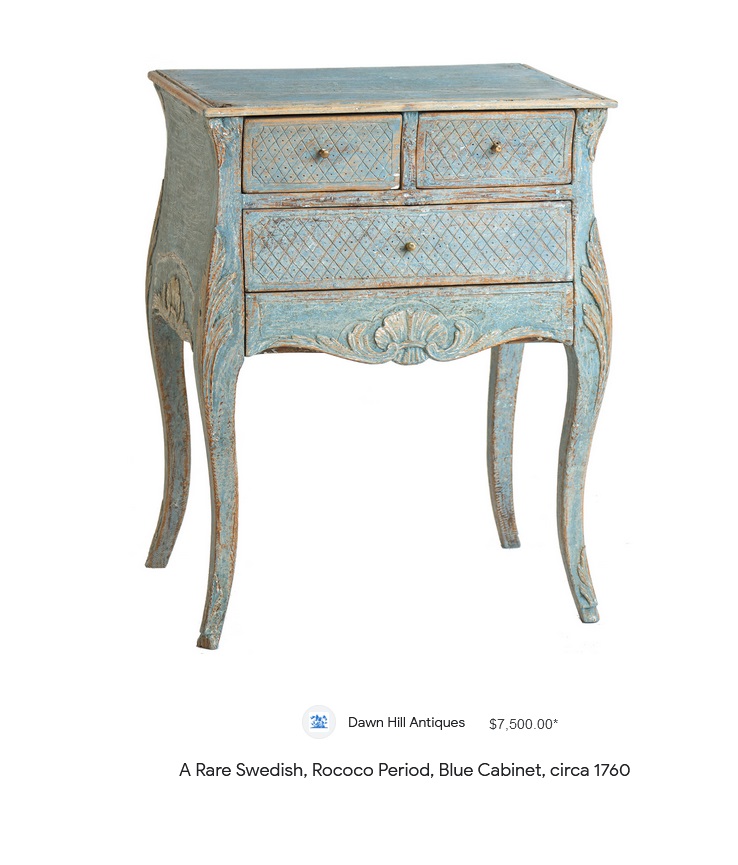
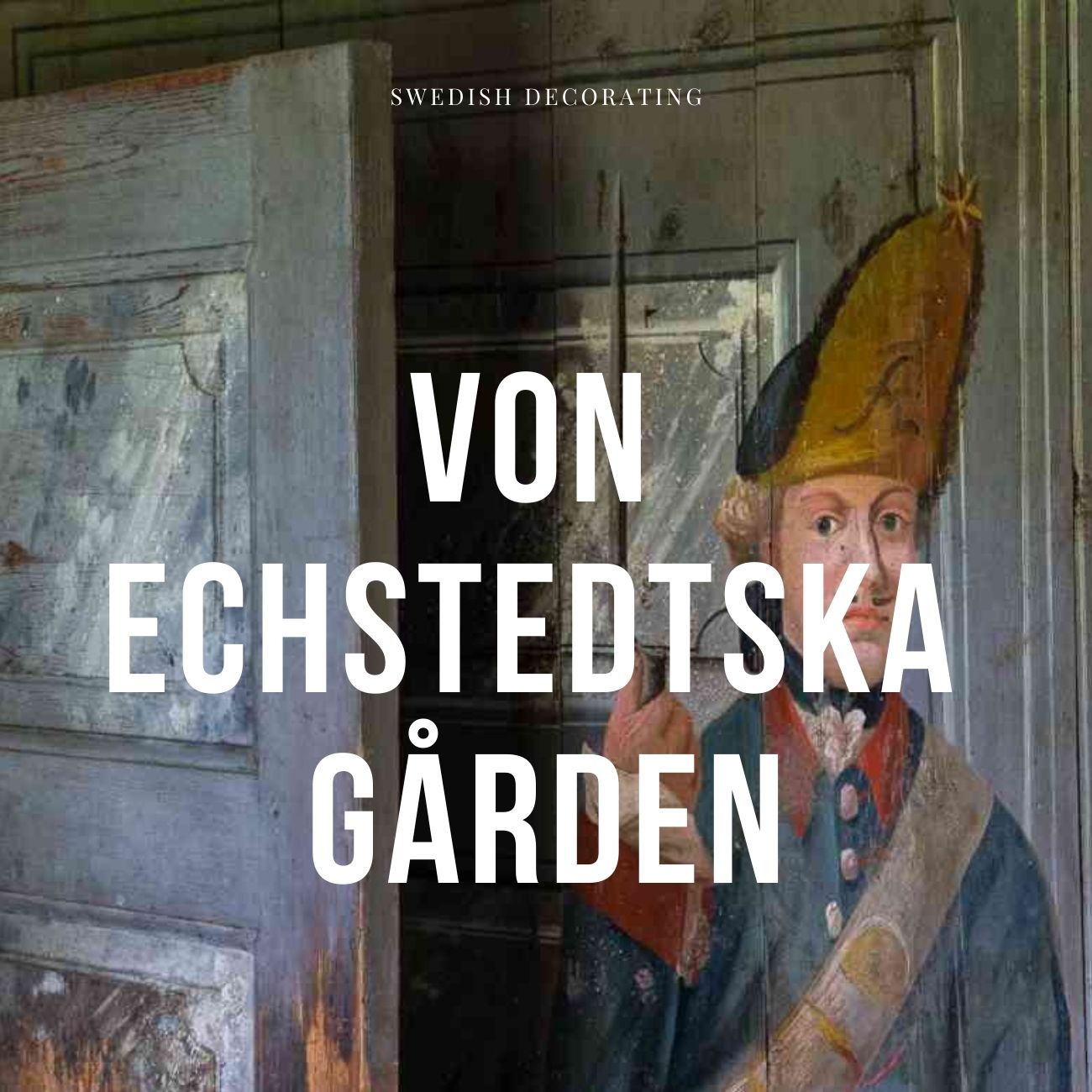
The Beautiful Wall Paintings Of von Echstedtska gården In Sweden
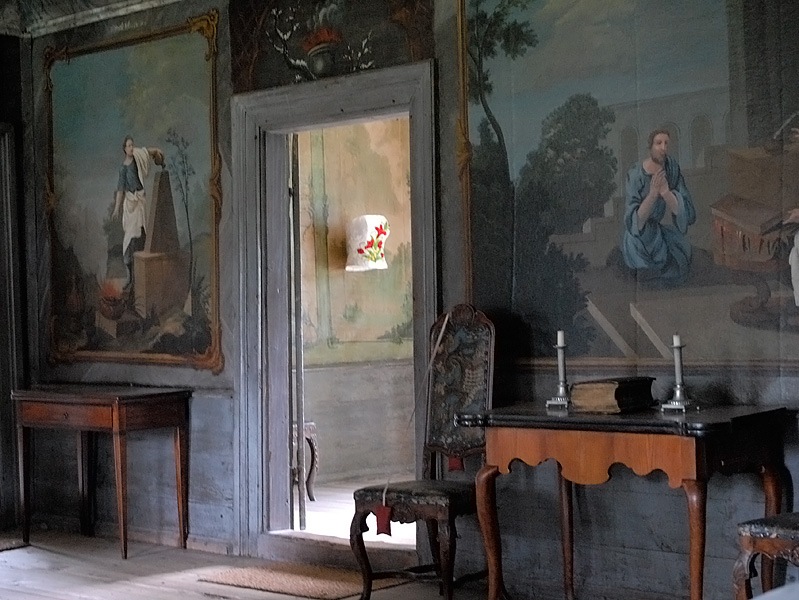
See more pictures of these wall paintings on Miras Mirakel’s blog.
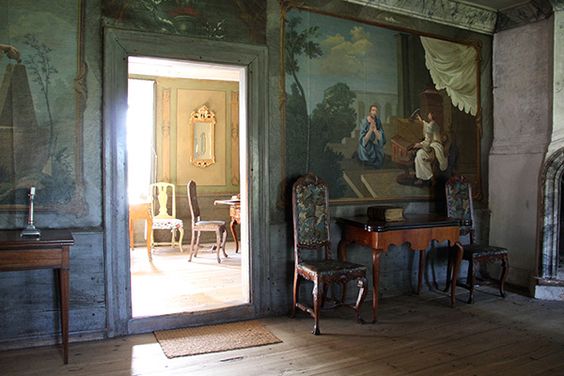
Picture Credit – naturbilder.biz
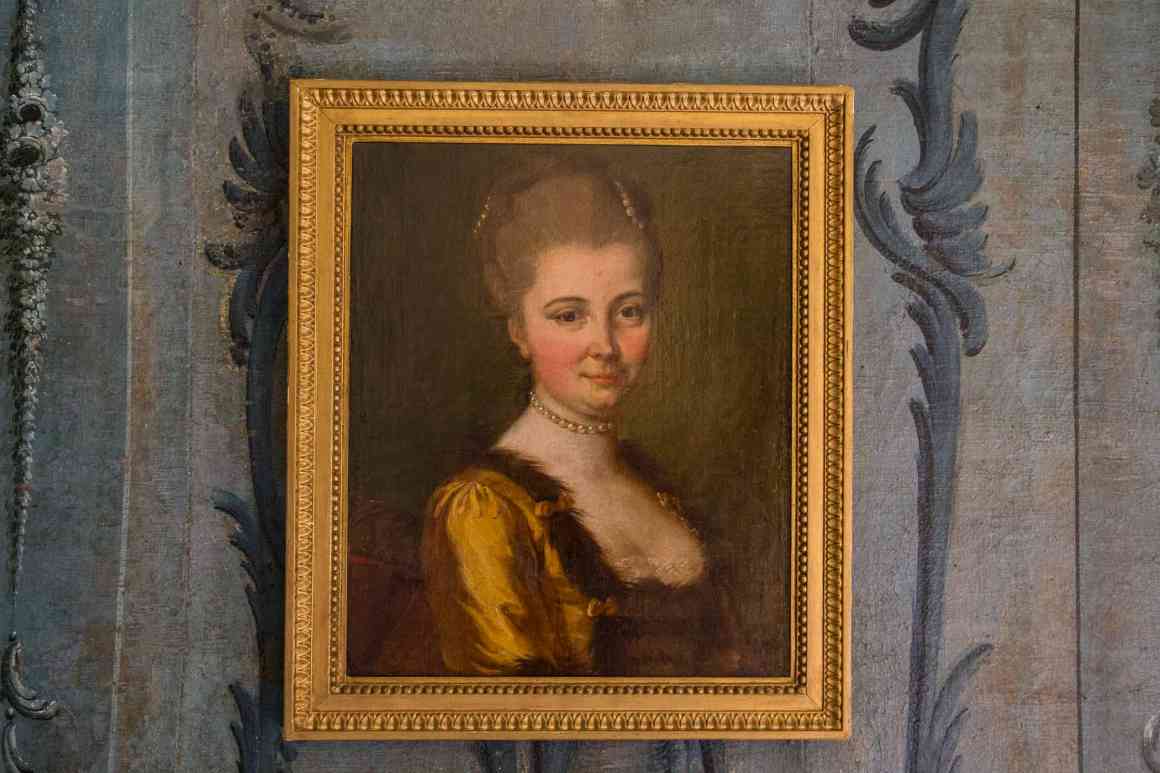 von Echstedtska gården – Picture Credit – trippa.se
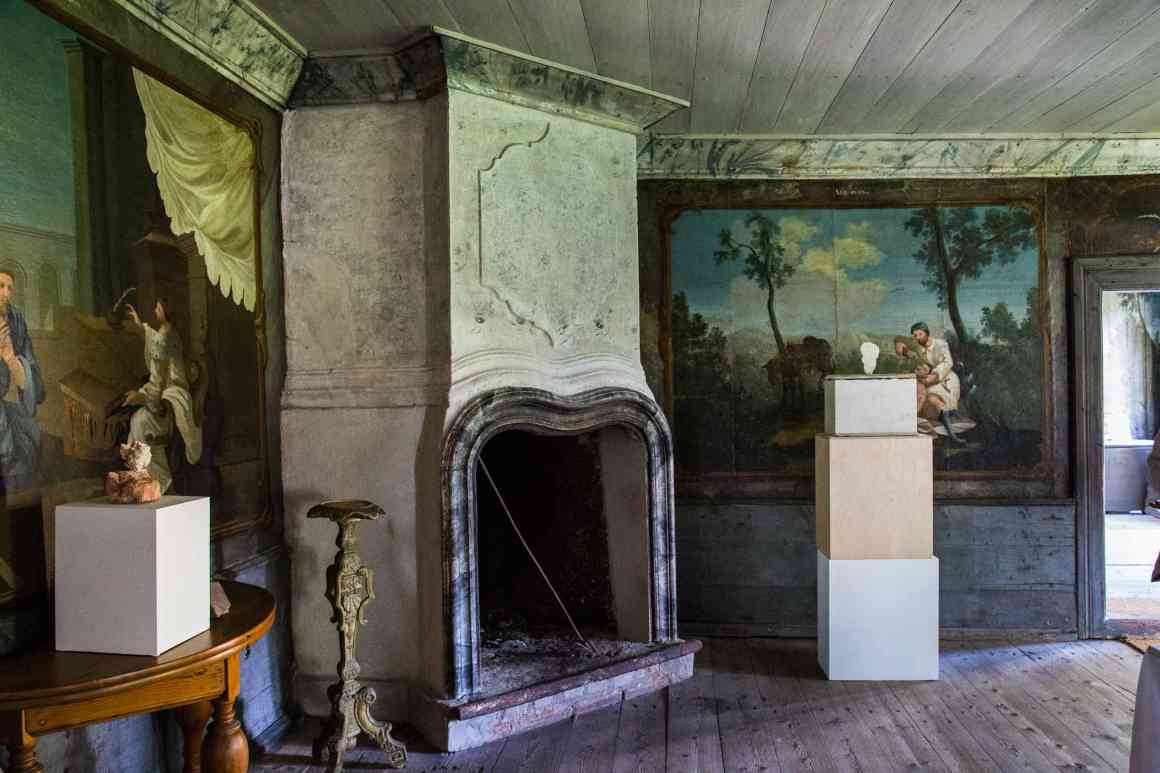
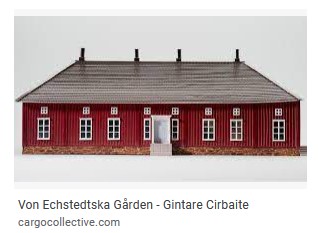 I stumbled across a post from Miras Mirakel’s blog about an enchanting farm called “von Echstedtska gården” located in Saffle, Sweden. The pictures immediately caught my attention.
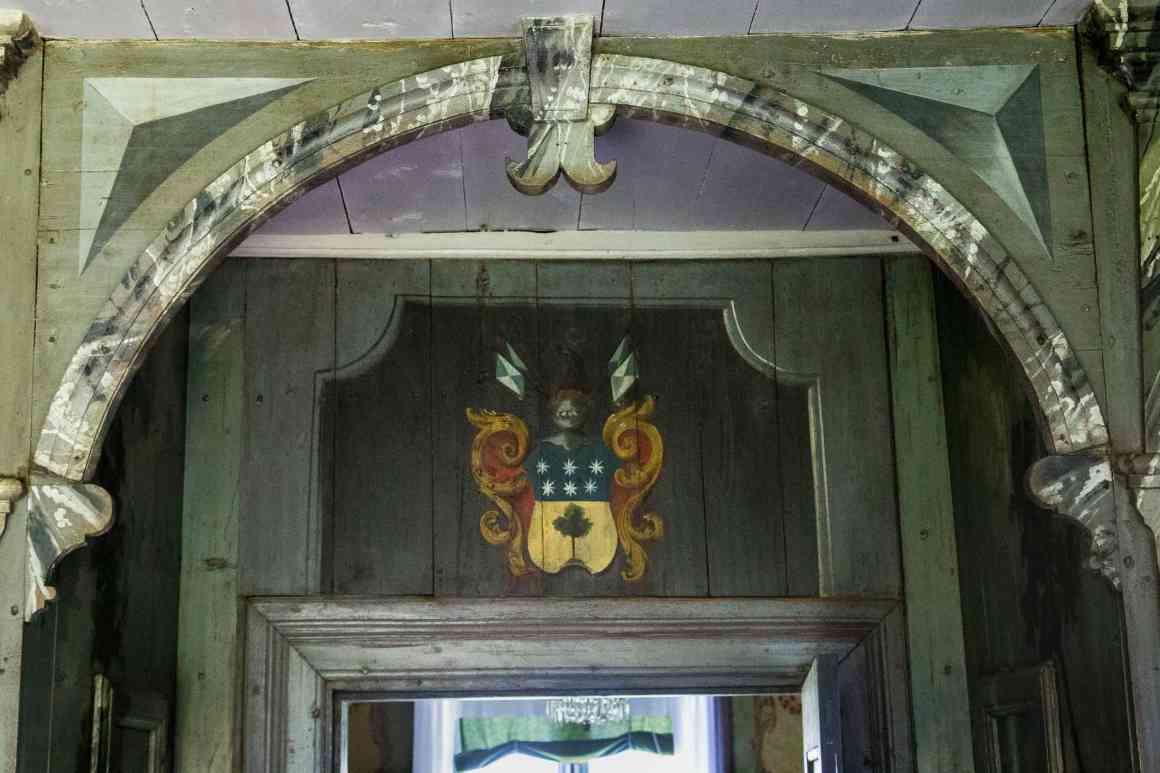
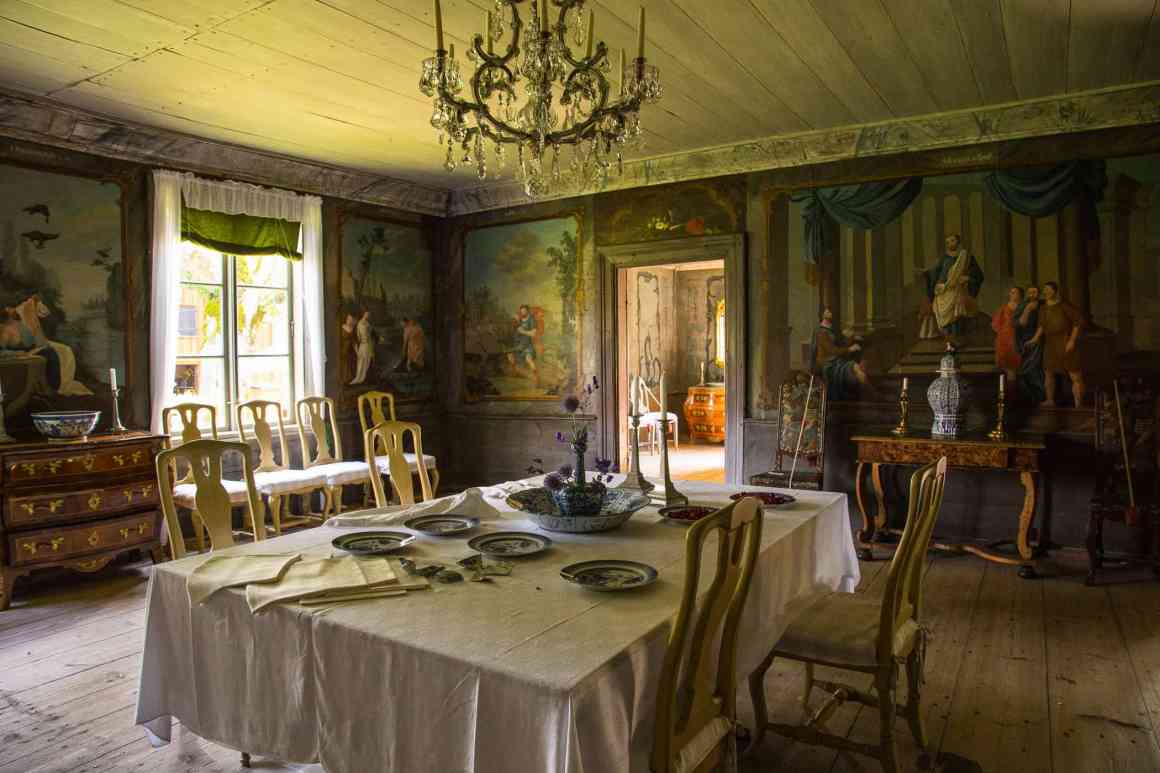
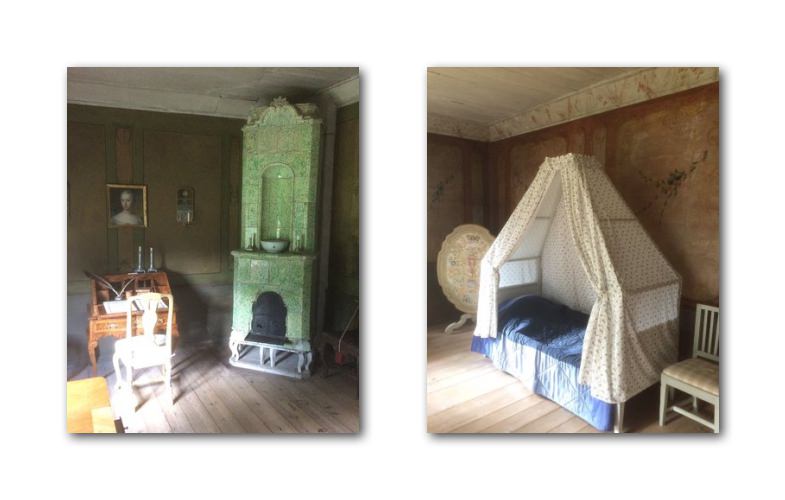
What is really captivating about this mansion is the beautiful wall murals. You have to wonder whose talent that was through history. Was it one woman, or a few talented residents? I really don’t know. When you look at the pictures, pay attention to the faux marble panels and trim. My goodness, someone in time had some incredible talent!
Here is what Wikipedia tells us about this beautiful mansion:
The farm was built during the years 1762–1764 by the assessor Bengt von Echstedt . The outside has a Carolingian touch. On the inside, the rococo blooms in the murals, among other things. A gazebo and secret house flank on either side of the main building, below are double pairs of wing buildings. The secret house has unique ceiling paintings that depict the landlord with his first wife elegantly sitting on the exit with courting servants. At the farm there is an apple farm with old Värmland apple varieties .
The farm was threatened at the beginning of the 20th century to be moved to Skansen but avoided this by Värmlands Museum buying the farm in 1939. The buildings and interiors were thoroughly restored in the 1950s, 1992–93 and even later.
More Pictures To View :
Von Echstedtska Gården, Västra Smedbyn, 661 94 Säffle, Sweden
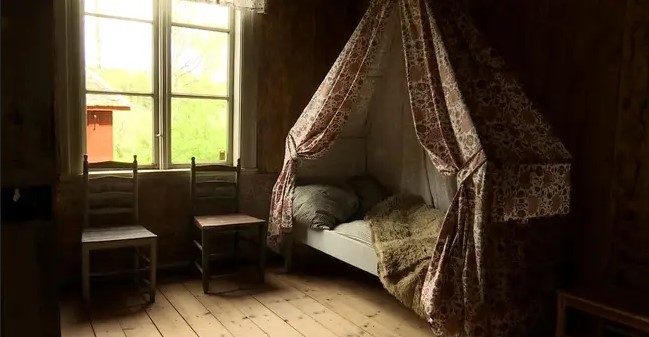
Textile exhibition at Echstedtska gården in Säffle – 5/29/2021 – tellerreport.com
Värmlands Museum has had the help of the art historian Lars Sjöberg, he has borrowed from his collections and is an expert on 18th century interiors.
– When you furnish a home, you dress it in textile, he explains.”
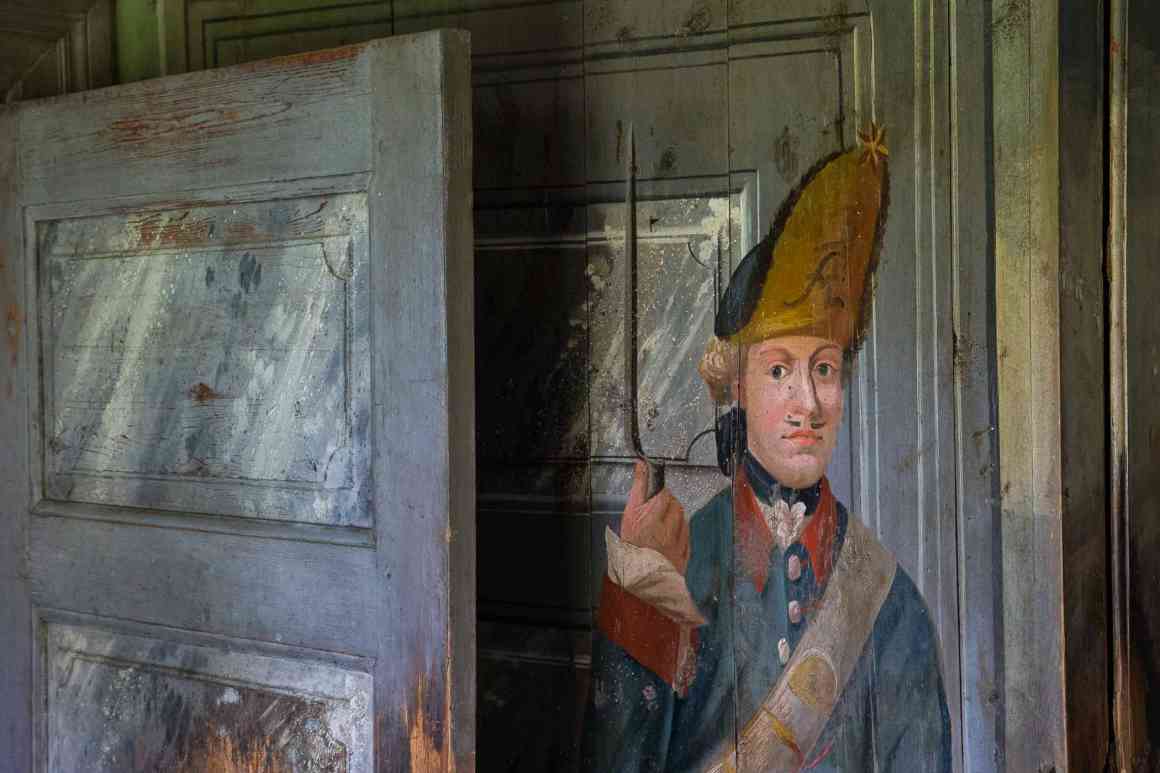
von Echstedtska gården – Picture Credit – trippa.se
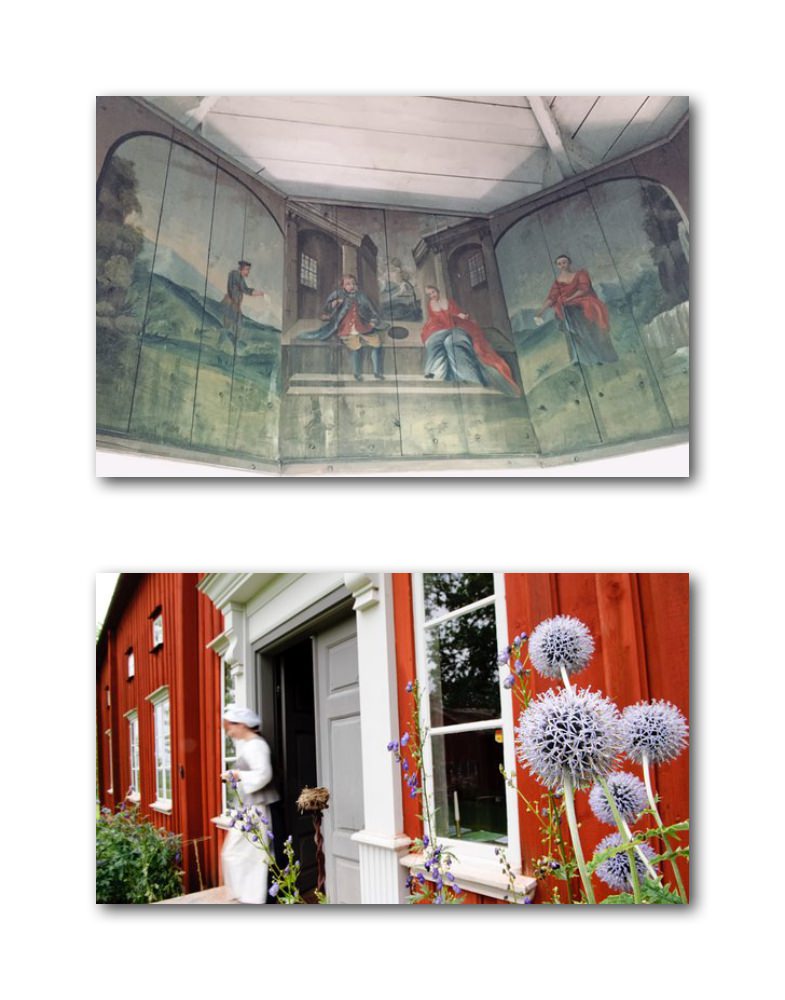 von Echstedtska gården – Picture Credit Trip Advisor
von Echstedtska gården – Picture Credit – trippa.se
 von Echstedtska gården – Picture Credit Trip Advisor
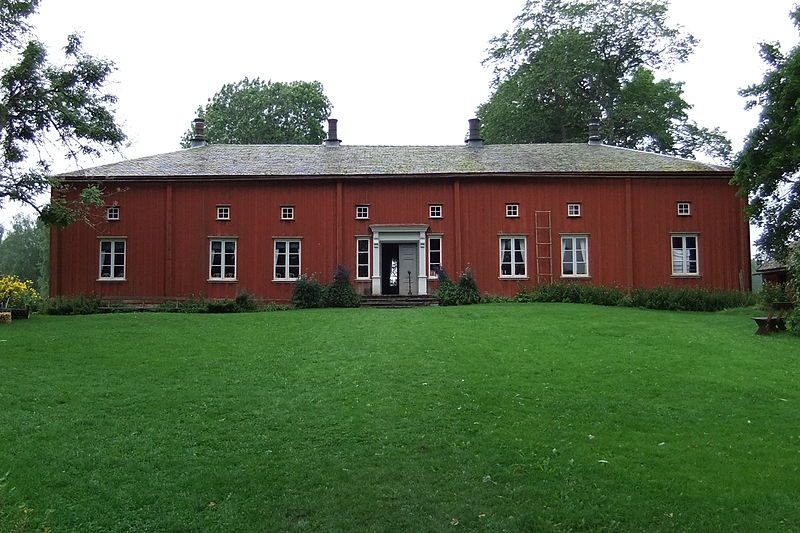 Picture seen on spokhistorier
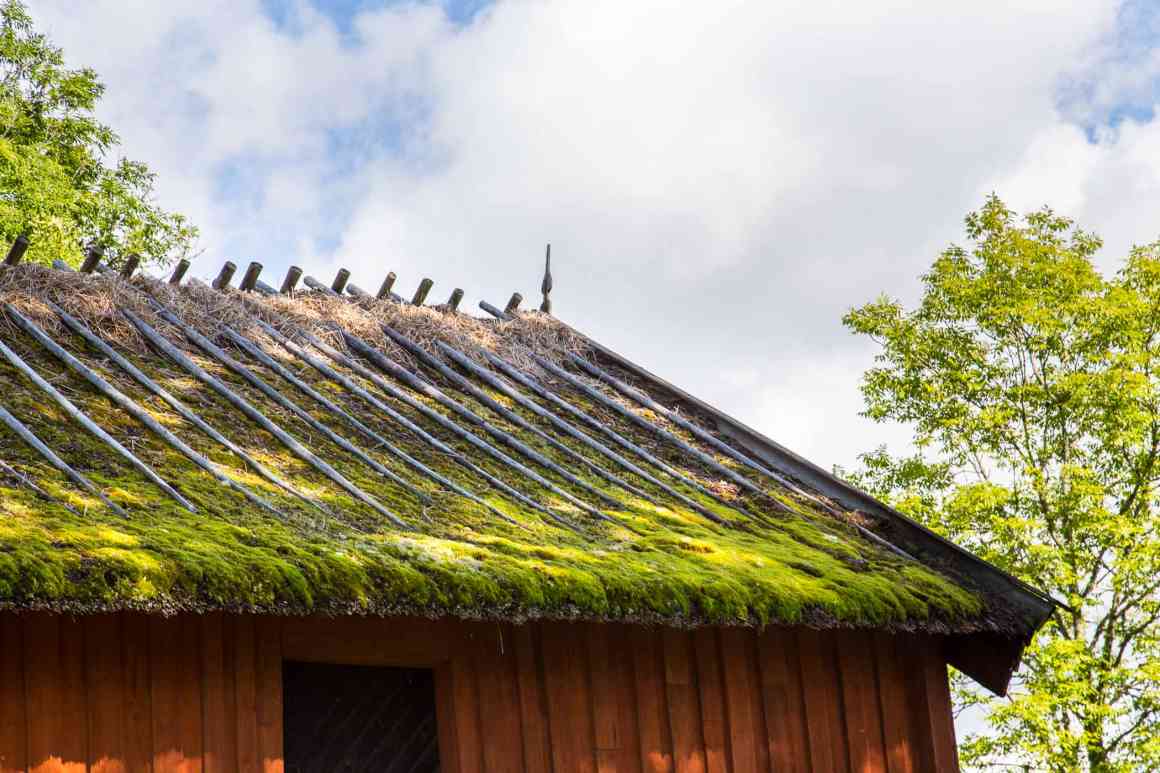
von Echstedtska gården – Picture Credit – trippa.se
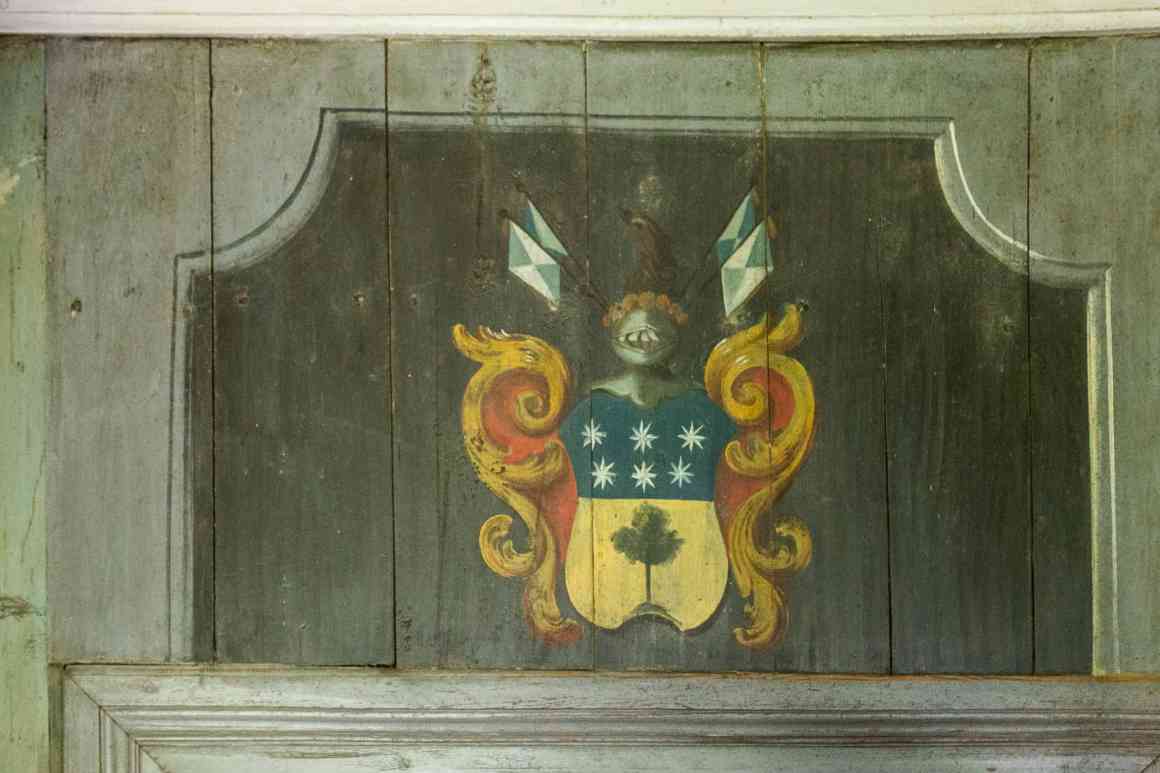
von Echstedtska gården – Picture Credit – trippa.se
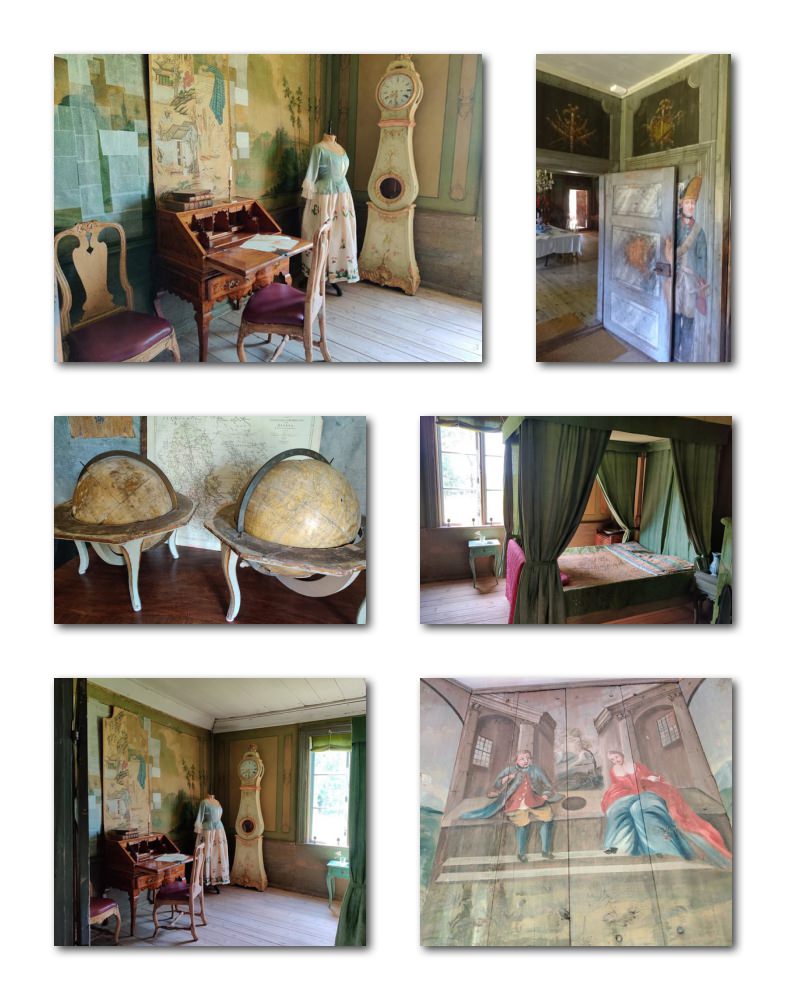 von Echstedtska gården – Picture Credit Trip Advisor
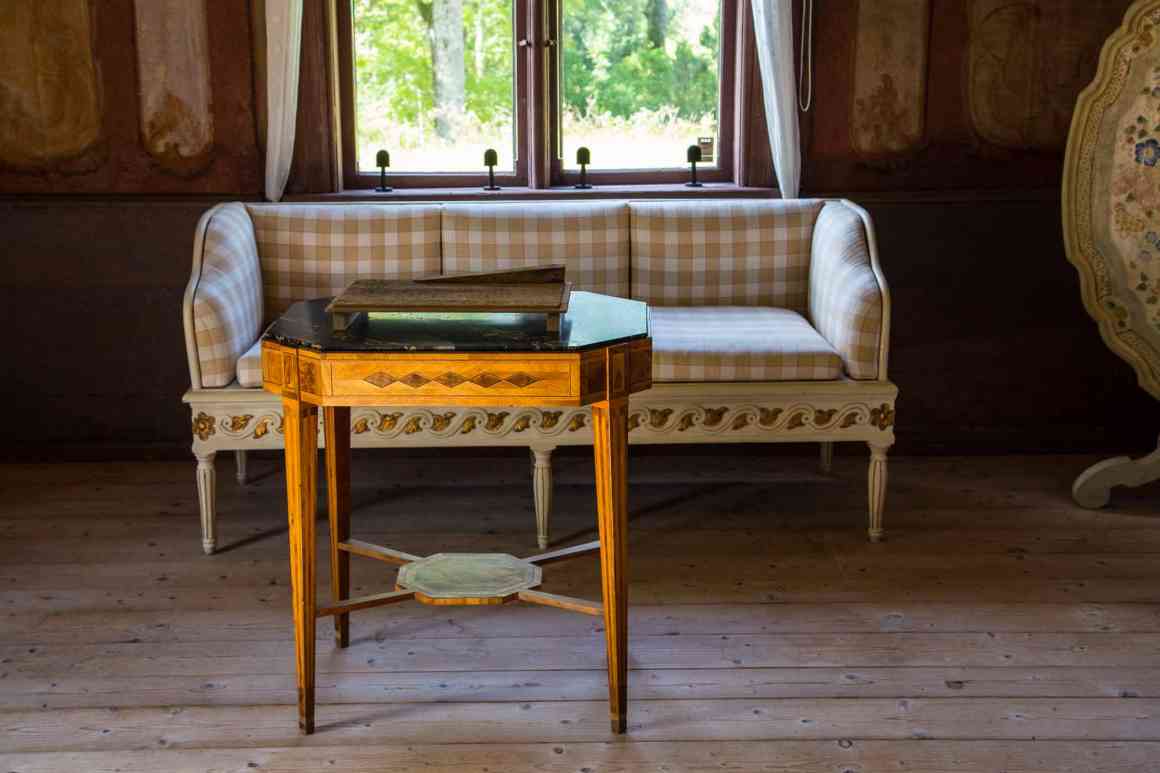
von Echstedtska gården – Picture Credit – trippa.se
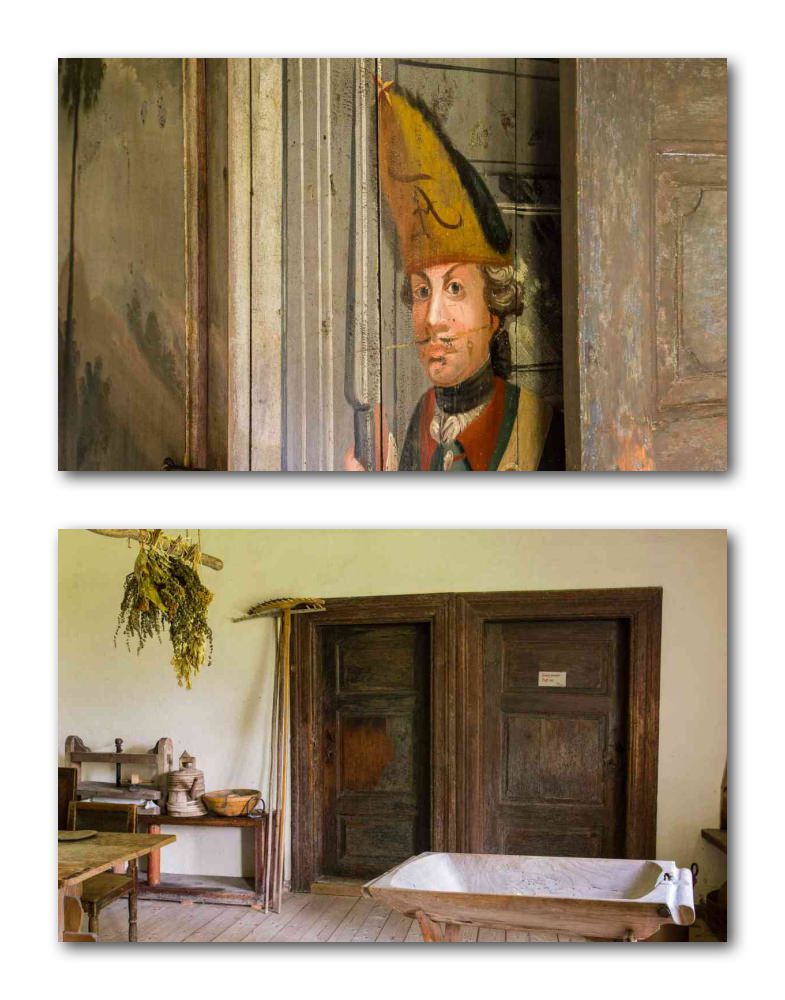 von Echstedtska gården – Picture Credit – trippa.se
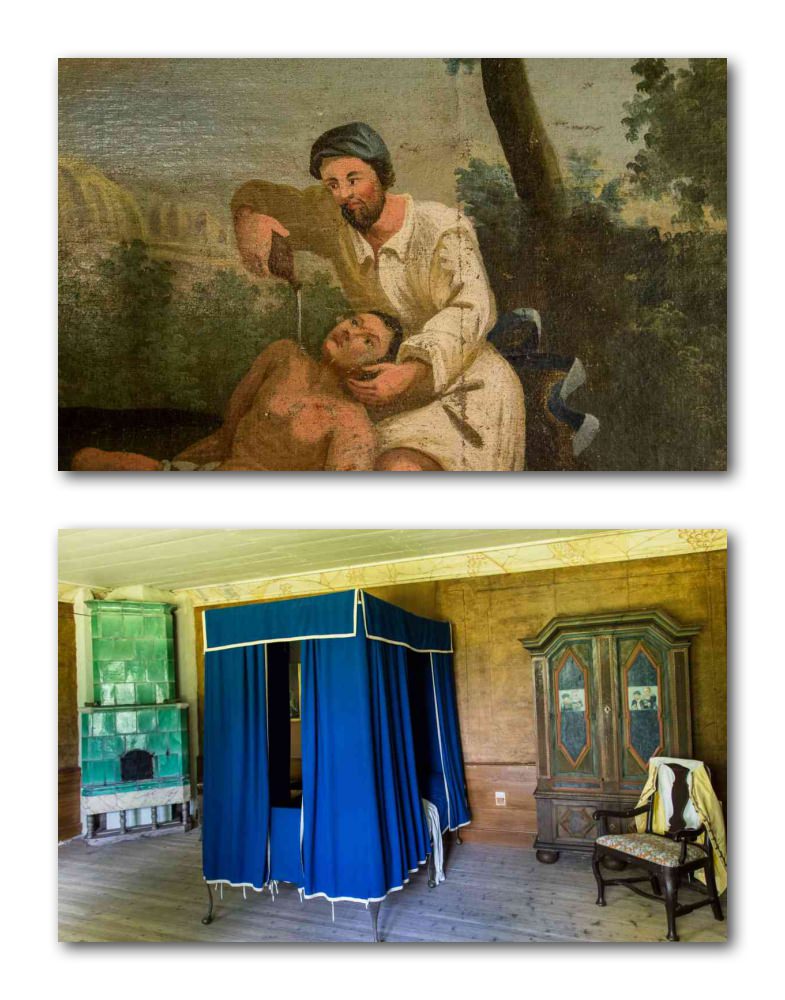
von Echstedtska gården – Picture Credit – trippa.se
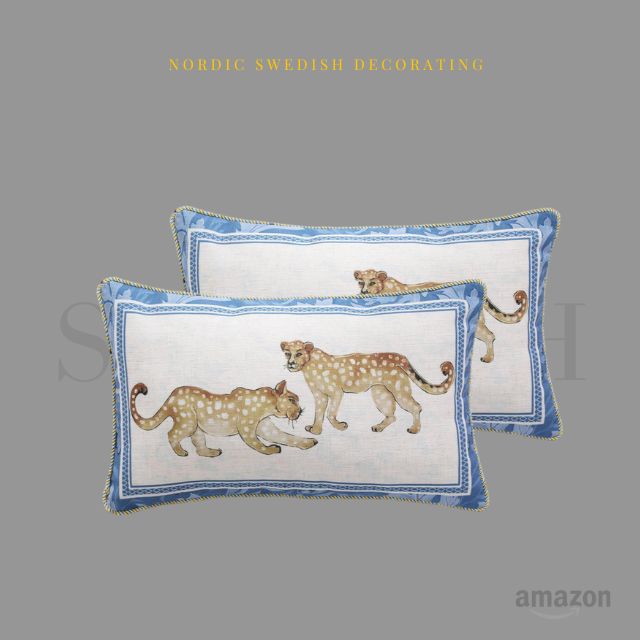
Swedish Inspired Kids Bedrooms
Embroidered Pillow, – Amazon
Decorating a Child’s Room in the Gustavian Swedish Style
A Guide for Parents Who Value Calm, History, and Timeless Beauty
1. Begin With the Gustavian Philosophy
The Gustavian style, born in late 18th-century Sweden during the reign of Gustav III, was rooted in simplicity, light, and restraint. For a child’s room, this philosophy encourages calm surroundings that nurture imagination rather than overstimulation.
2. Prioritize Light Above All
Swedish interiors evolved in response to long, dark winters. A child’s Gustavian room should feel airy and luminous, relying on pale tones, reflective finishes, and uncluttered surfaces to maximize natural light.
3. Choose a Historical Color Palette
Authentic Gustavian colors are muted and mineral-based. Ideal hues for a child’s room include:
-
Soft dove gray
-
Pale blue-gray
-
Chalky white
-
Faded sage
-
Warm stone
These colors age beautifully and create a peaceful environment.
4. Avoid Modern Brights
Skip saturated primaries and bold contrasts. Historically, pigments were limited, resulting in dusty, softened tones that feel gentle and grounding—perfect for a child’s nervous system.
5. Invest in a Gustavian-Style Bed
A painted wood bed with simple carving, tapered legs, and a distressed finish is a cornerstone piece. Look for beds in pale gray or antique white, ideally with subtle wear that suggests age.
6. Opt for Painted Wood Furniture
Must-buy pieces include:
-
A small Gustavian chest of drawers
-
A writing desk with straight lines
-
A painted armoire or cupboard
Painted finishes were common in Sweden due to the scarcity of expensive hardwoods.
7. Embrace Gentle Patina
Furniture should never look factory-perfect. Soft distressing, rubbed edges, and uneven paint application echo the handcrafted nature of 18th-century interiors.
8. Use Natural Materials
Choose linen, cotton, wool, and untreated wood. These materials not only reflect history but also feel comforting and tactile for children.
9. Keep Patterns Minimal
If introducing pattern, favor:
-
Fine stripes
-
Small florals
-
Simple checks
All patterns should feel faded and understated, never bold or graphic.
10. Select Linen Bedding in Muted Tones
Linen bedding in pale gray, flax, or washed blue provides breathability and texture. Layer simply—one quilt, one blanket, one pillow—avoiding excess.
11. Add a Painted Wooden Chair
A small Gustavian chair or stool is both functional and decorative. Painted chairs were common in Swedish homes and offer charm without clutter.
12. Introduce Antique or Reproduction Storage
Baskets, small chests, or wooden boxes help keep toys contained. Storage should feel intentional and beautiful, not plastic or brightly colored.
13. Choose Subtle Wall Treatments
Walls may be:
-
Limewashed
-
Painted in matte finishes
-
Finished with restrained Gustavian wallpaper featuring delicate neoclassical motifs
14. Display Art Sparingly
Frame a few carefully chosen pieces:
-
Botanical prints
-
Animal engravings
-
Classical sketches
Avoid character art or trend-driven imagery.
15. Use Soft, Diffused Lighting
Opt for:
-
Fabric-shaded table lamps
-
Wall sconces with warm bulbs
Lighting should feel golden and gentle, never harsh or overly bright.
16. Avoid Excess Decoration
The Gustavian style values negative space. Leave room for the eye to rest and for the child’s imagination to fill the space.
17. Incorporate Heirloom Elements
A handed-down quilt, a wooden toy, or an antique book adds soul. Swedish interiors often blended practicality with sentimental value.
18. Choose Wooden Toys Over Plastic
Classic wooden toys align beautifully with the aesthetic and reinforce the room’s quiet, timeless character.
19. Let the Room Grow With the Child
A Gustavian room is not themed or age-specific. Its neutrality allows it to evolve naturally from toddler years into adolescence without redesign.
20. Remember: Calm Is the Luxury
Above all, the Gustavian child’s room should feel safe, serene, and enduring. It is a space shaped by history, light, and thoughtful restraint—where a child can grow surrounded by beauty rather than noise.
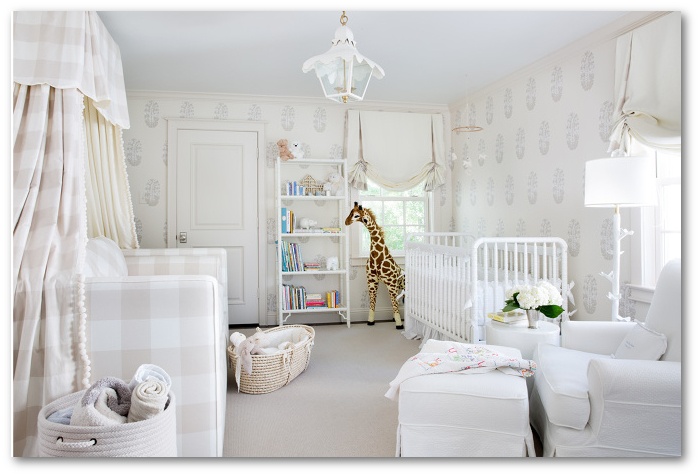
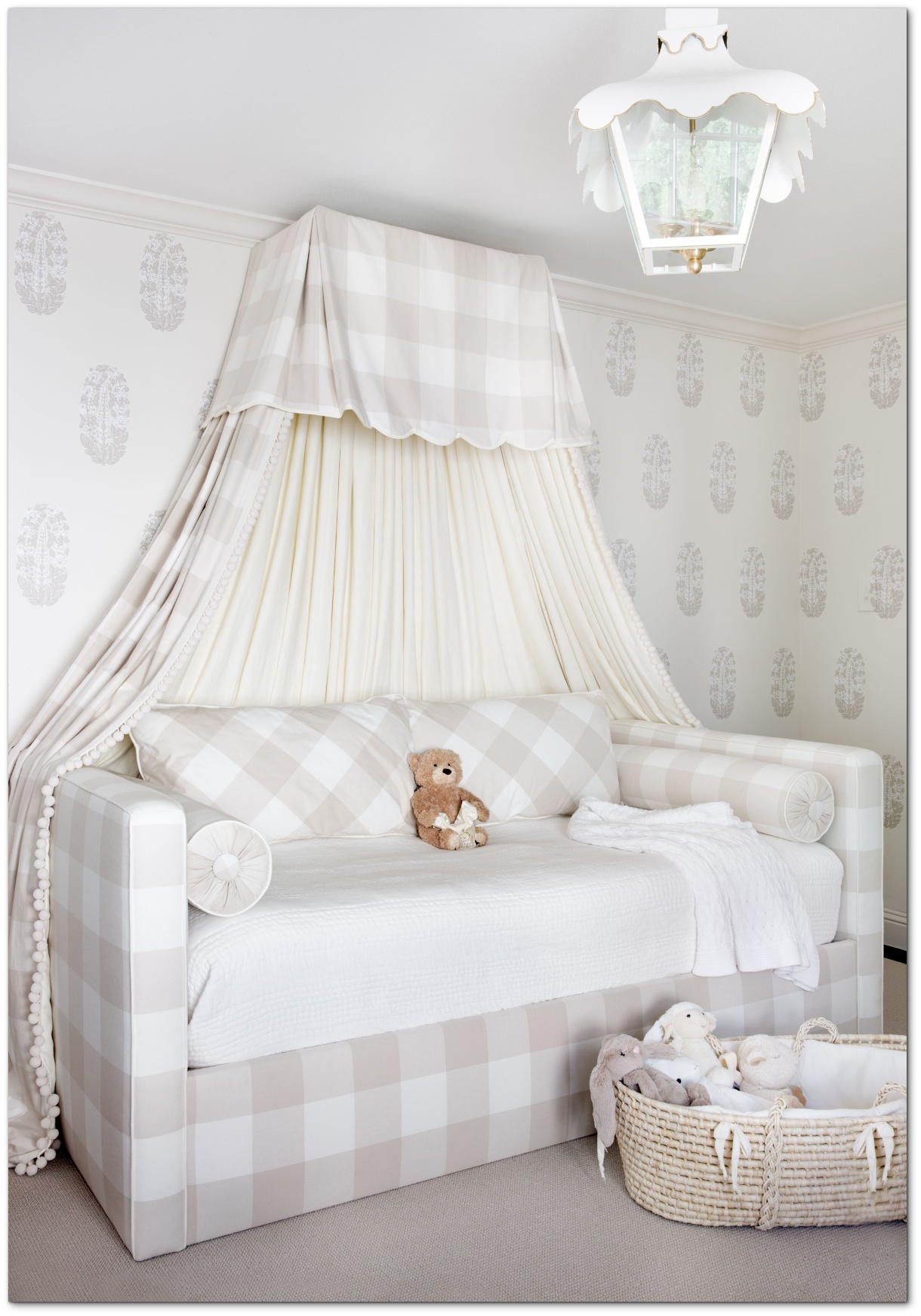
This room was designed by the ladies of Madre in Dallas. Seen at Mollyculverblog.com
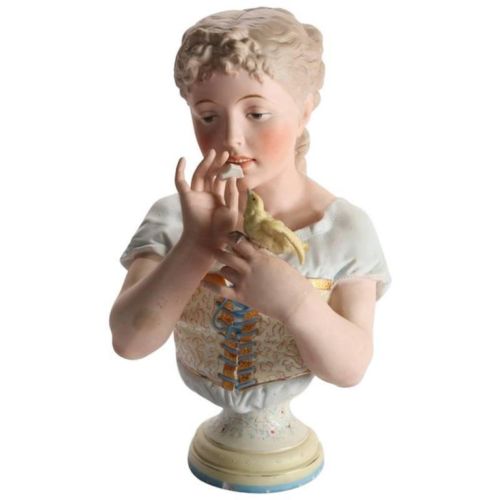 Chelsea School Hand-Painted and Gilt Bisque Porcelain Bust – Ebay
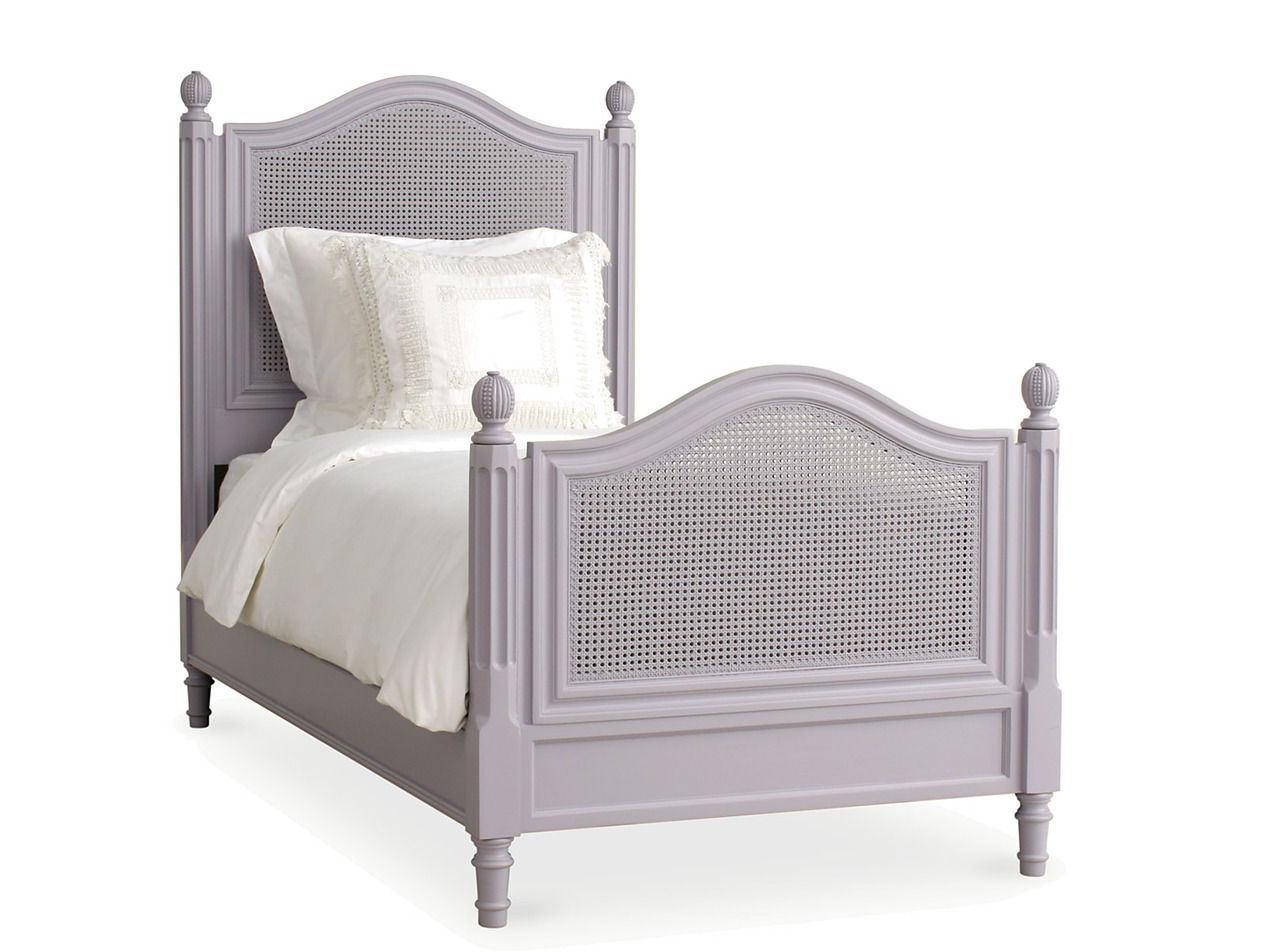 Isabella Bed Twin Redford House Cane Wood 25 Cottage Paints Stains- Coachery Barn
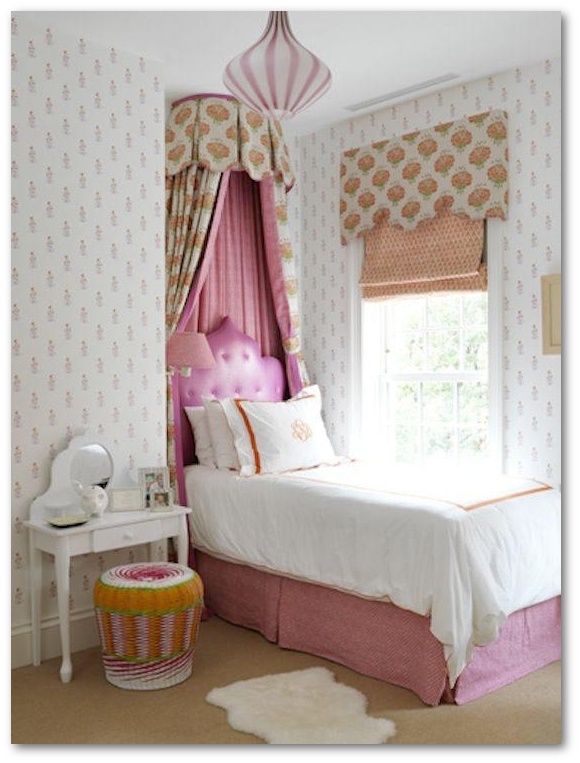 A custom canopy with pink trim – skonahem.com
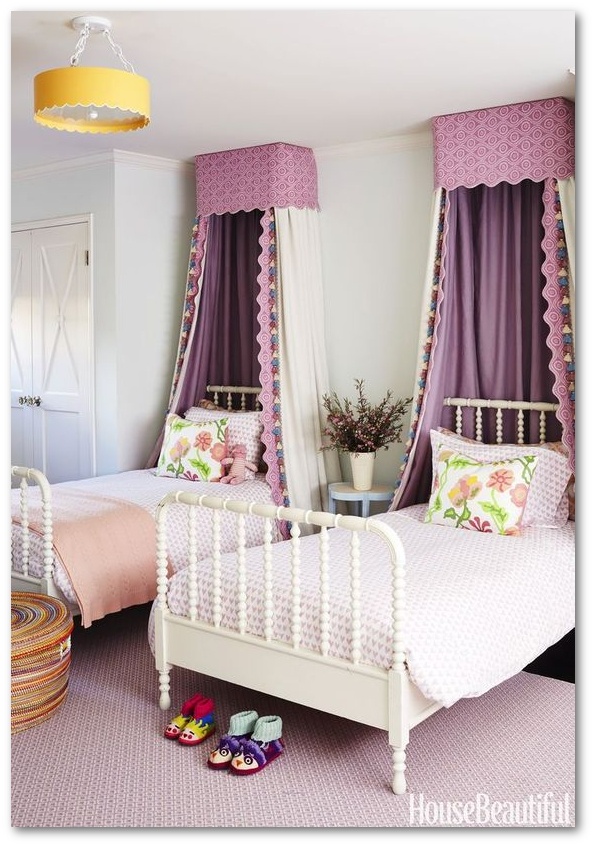 LA Home –House Beautiful Magazine
Safari Nursery Art Prints Set of 6 – Amazon
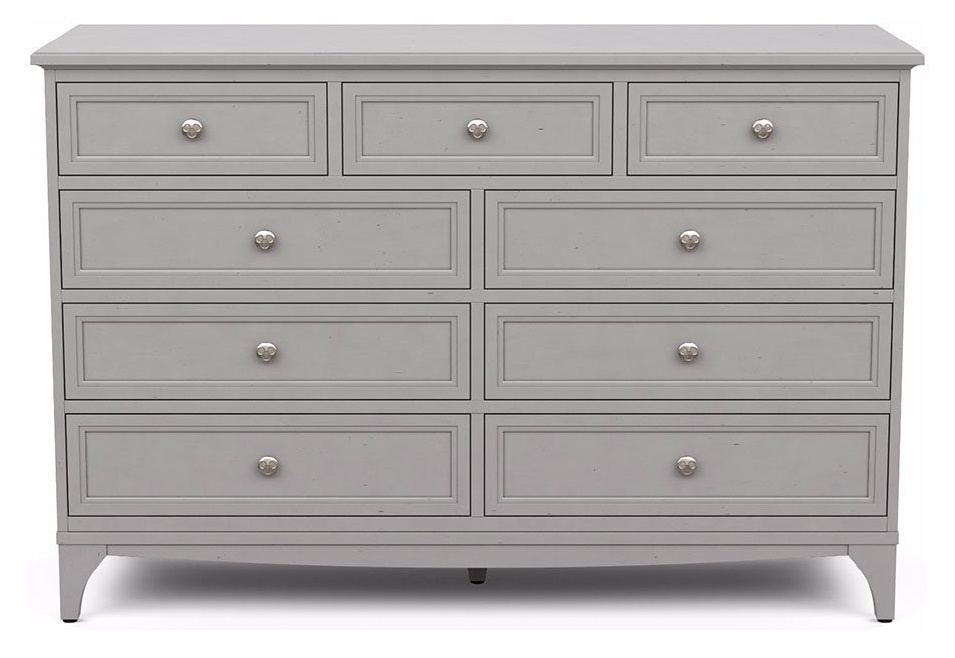 Ethan Allen | Disney Hyperion Double Dresser, Mouse Grey – $1200
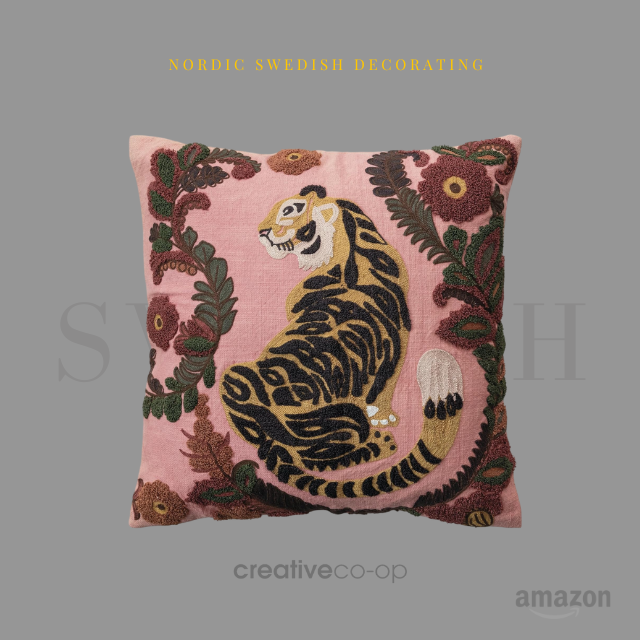
Embroidered Tiger and Flowers Cotton Slub Pillow, – Amazon
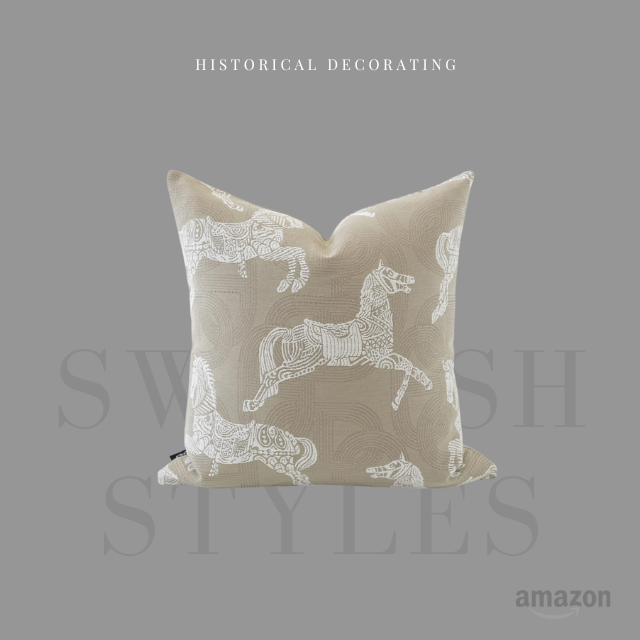
Essential Characteristics Of 18th Century Swedish Interiors
Horse Pattern Jacquard Craft – Amazon
Guest Post by Jason Phillips
The 18th century Swedish interior was a manifestation of neo-classism across Europe. It was made prominent by King Gustav III who introduced different styles of interiors in Sweden when he returned home from his visit to France. In 1771, King Gustav III traveled to France and was impressed with the nature of interiors that he decided to introduce the same back home. At this point in time, the effects of neo-classism had spread to Sweden but its adoption was still low. But with King Gustav’s travel to France, the adoption of foreign mannerisms began to grow. It started with the well-off members of the society but it soon spread across town to the rural areas. Key components of French interiors such as open spaces with natural light became common in Sweden. Living areas that are calm, elegant and airy became the norm. Pale greens, blues, and grays became the preferred decorating colors of the Swedish interiors. Cream, pink and white were other the colors that were used to decorate Swedish homes. Some homes would still spot deeper accents with colors such as ochre, red and gold used for the interiors. There was also the use of rich woods to style the interiors. The woods were used to make furniture, to accent the walls and to make the floor.
The main characteristics of 18th century Swedish interiors.
Here are some of the characteristics of 18th century interiors.
- Simplicity and Comfort.
Designers and homeowners strived to keep their homes as simple as possible. They would also strive to keep their homes comfortable for themselves and their guests. Most homes in Sweden at this time featured open spaces so as to let in as much natural light as possible. This feature was witnessed across the board with the rich in townhouses insisting on open designs just as the locals in country farm houses. The furniture in most homes was designed with in a simple manner so as to keep them as comfortable as possible. They would be decorated with straight line decorations and the ends arched for an appealing look. The sofas had straightened backs and featured lots of cushioning for added comfort. Blankets would be added for warmth and comfort.
- Unique decorations.
The Swedes in the 18th century would use antique items to decorate their homes. Antiques and collectibles would be located strategically in the homes for decoration. They enhanced the ambiance within the homes and made them appealing. Some of the antiques that were used in most homes included tilled and cast-iron stoves that positioned strategically in the living area.
- Natural decorations.
The Swedes would also decorate their homes using natural elements of nature such as fresh flowers, plants, pebbles and sea shells. Those that required care and attention to thrive such as flowers and plants were watered and trimmed so as to keep them fresh. They were positioned close to the windows so as to ensure that they received enough light for prosperity. Natural materials would also be used to make hand-woven decorations. Some of these materials included wood, glass and natural textile elements.
- Surface decoration.
The 18th century Swedish interior also featured surface decorations. The walls in most homes were decorated using floral patterns, checks, and stripes so as to make them much more appealing. Plain and textured fabrics were also used to line walls in some Swedish homes. Another aspect of Swedish interior was decorating the surface of furniture items such as sofas and chairs with stencil decoration, wreaths, and heart motifs.
- Proper lighting.
Sweden is very cold during winter and in an effort to bring in as much natural light as possible, homes would be built with large windows. The windows were lined with roman blinds and fine curtains so as not to obstruct the flow of light. Winters in Sweden are characterized by reduced sun hours and to keep houses well lit, candles and stoves and even chandeliers were common in most homes. Fireplaces were also common just as were table lamps. The fireplaces would also double up as sources of warmth within the household.
Swedish interiors of the 18th century were rich in style and they made the homes beautiful and interesting.
Candles – 12 Pieces – Amazon
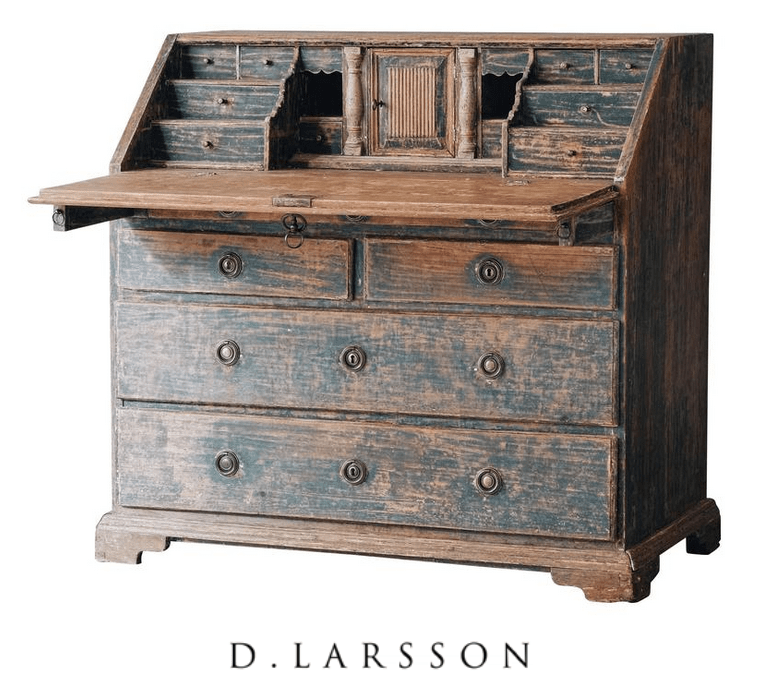
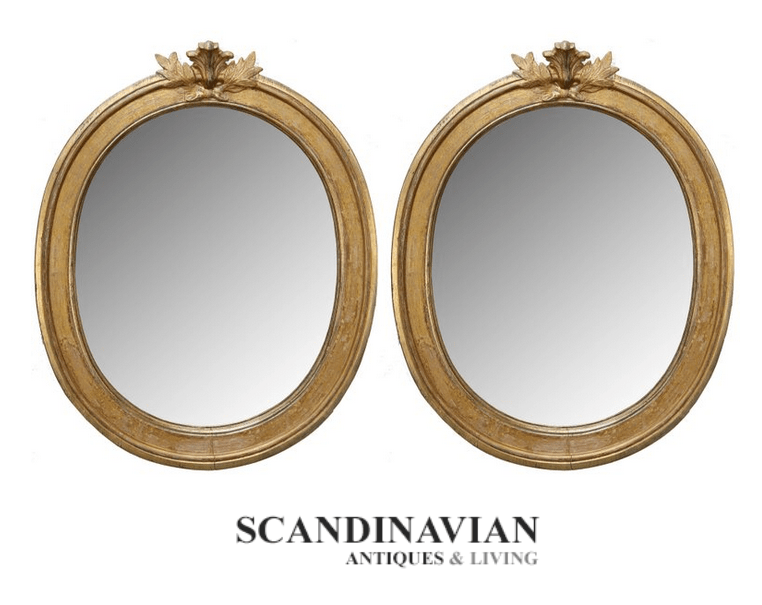 Exquisite pair of antique, Swedish late Gustavian giltwood mirrors. Lovely oval giltwood carved frames with carved oak leaves and cartouche atop each mirror.–Scandinavian Antiques & Living
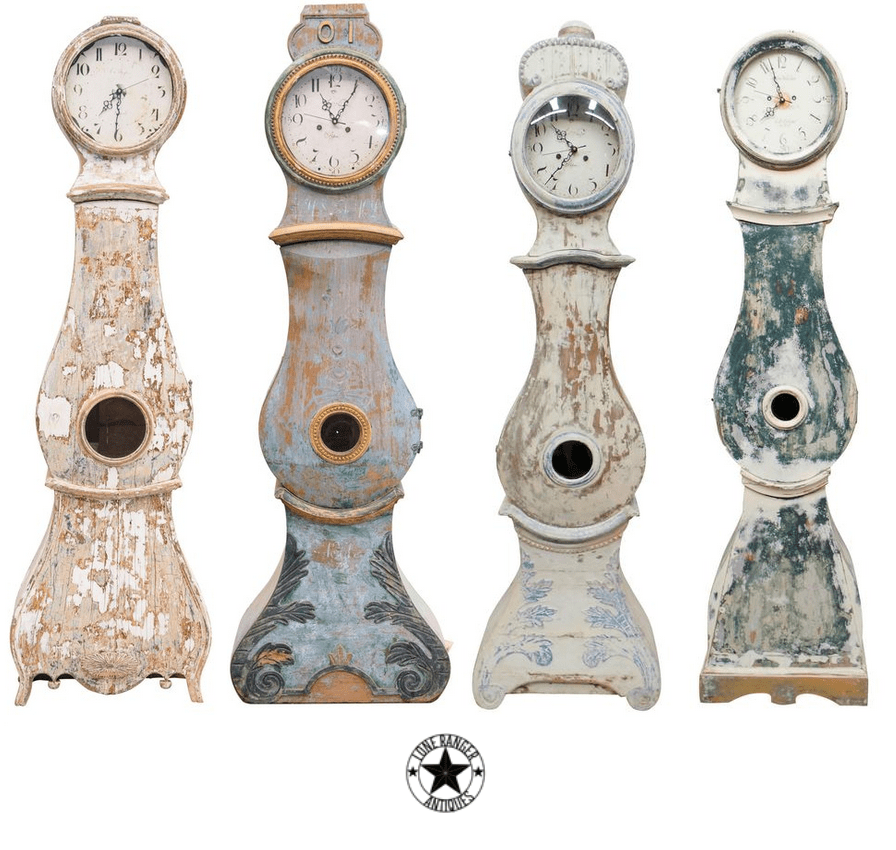 Antique Swedish Clocks From The Lone Ranger Antiques
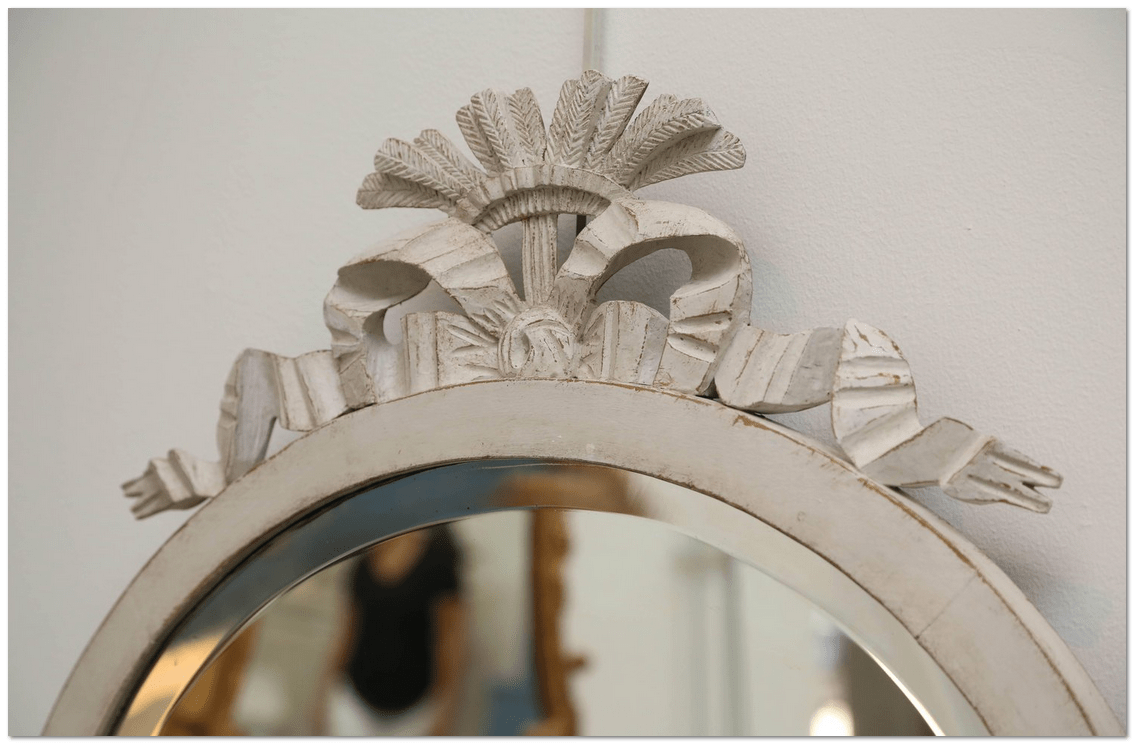 Antique Swedish Gustavian Style White Painted Oval Mirror, Mid-19th Century – Scandinavian Antiques & Living
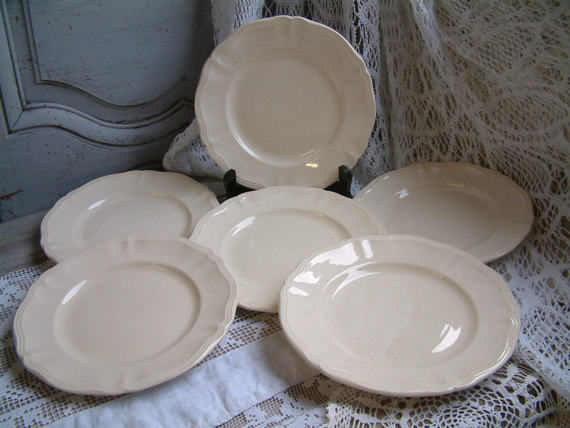 Set of 6 Antique french creamware ironstone plates –Chanteduc
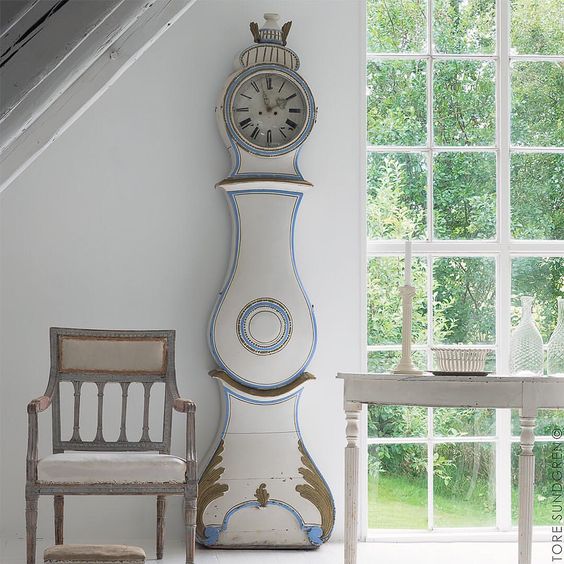 Nina Hartmann
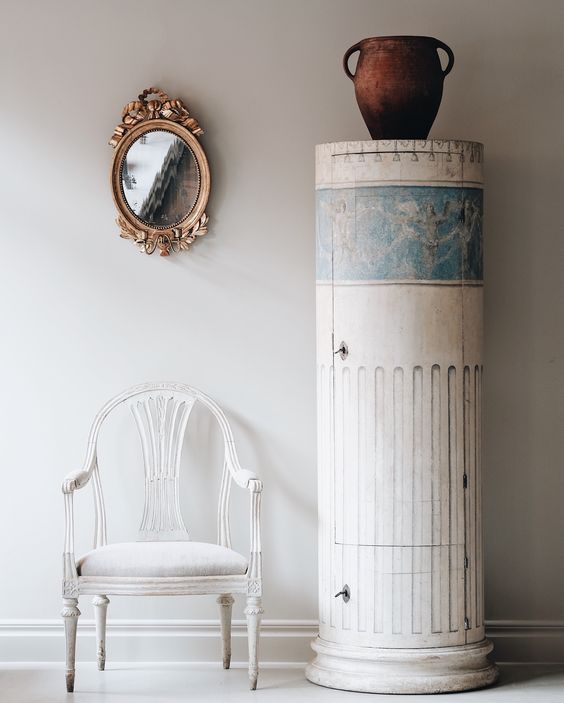 D.Larsson Interiör & Antikhandel
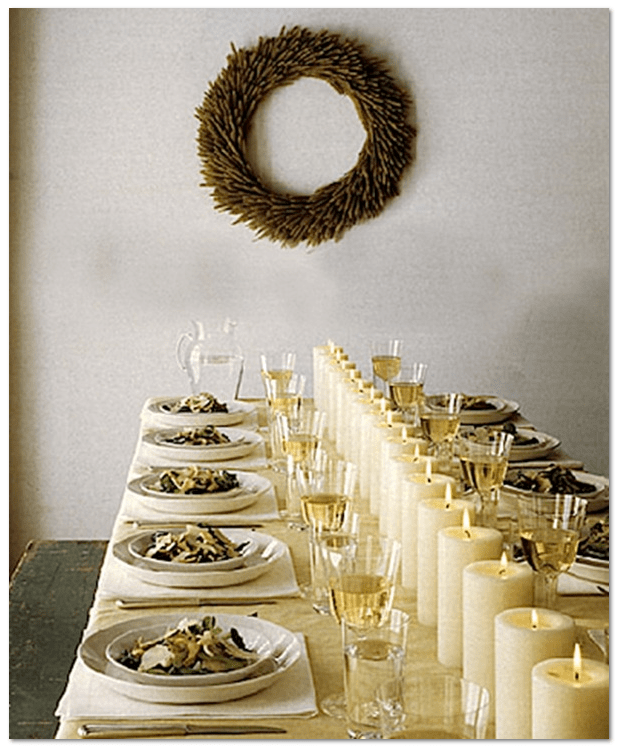 40 Thanksgiving Table Settings to Wow Your Guests – Martha Stewart
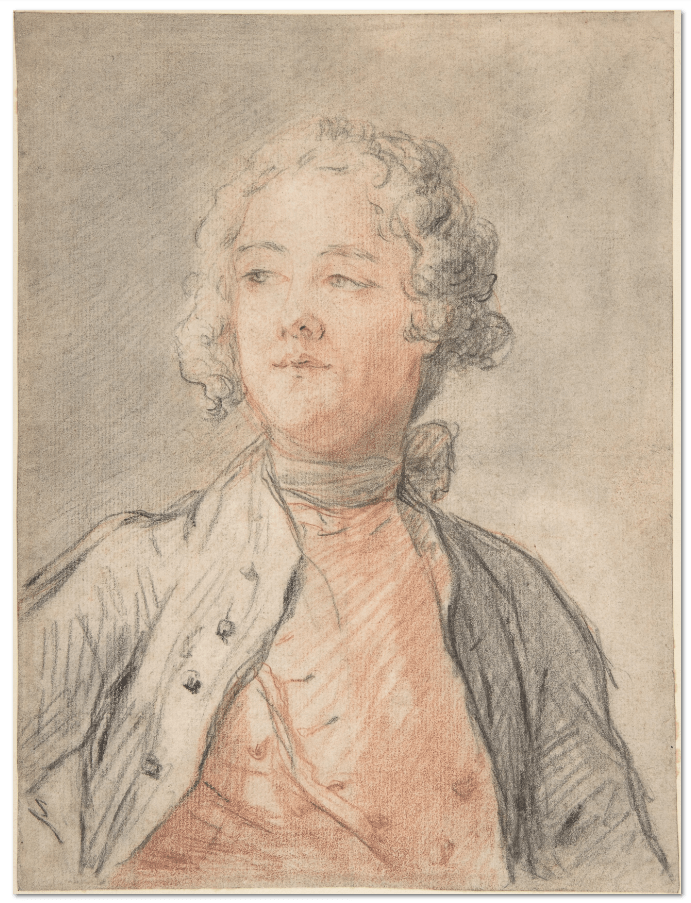 Attributed to Jean Marc Nattier
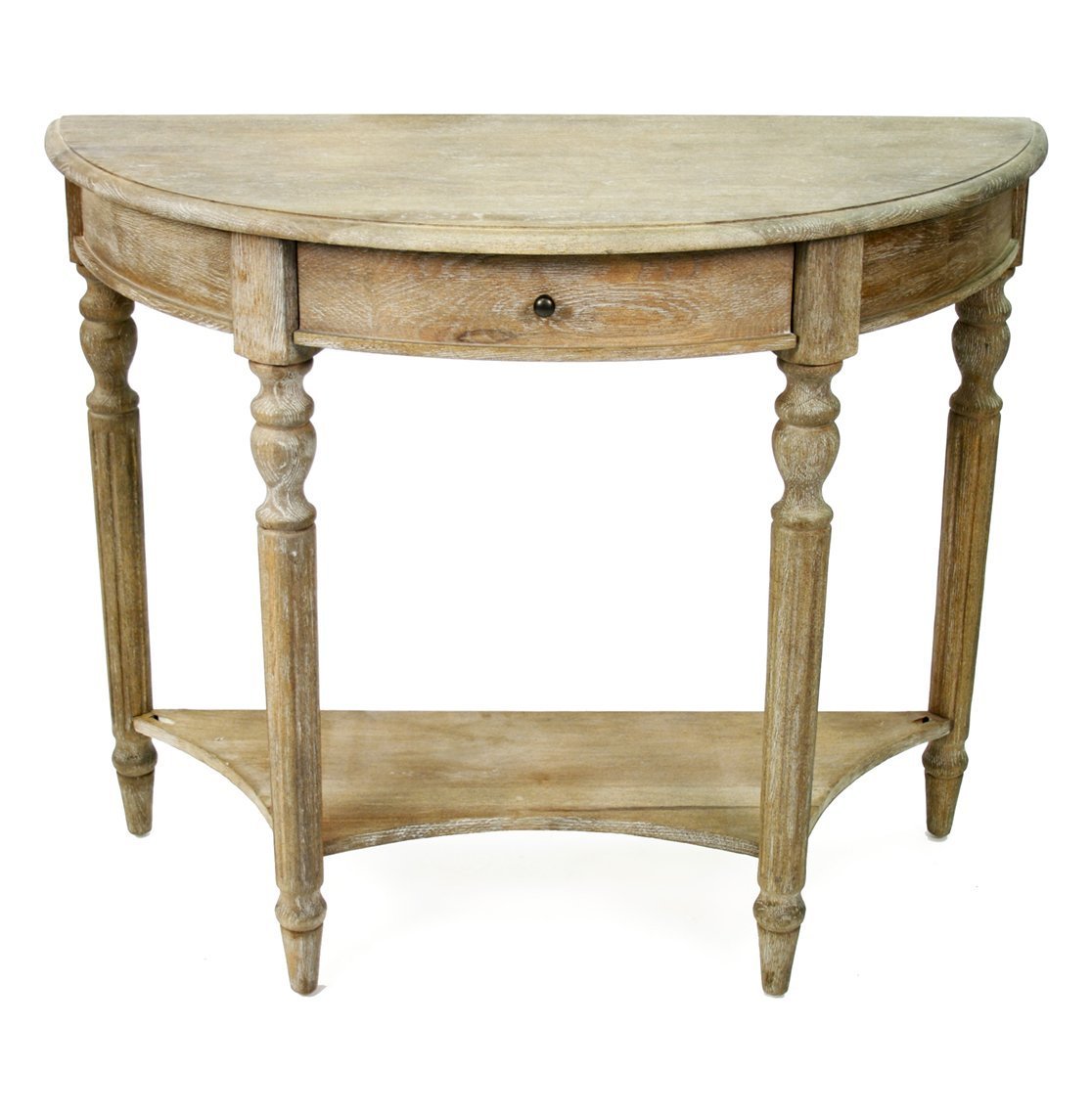 Natural Wood Table From Kathy Kuo
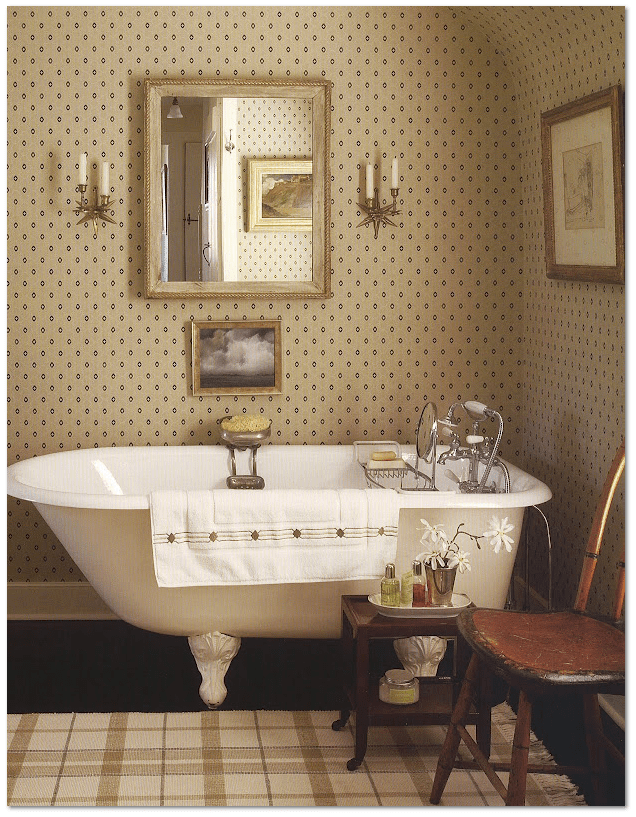 Old Clawfoot Tub – source: viendoraglass.com
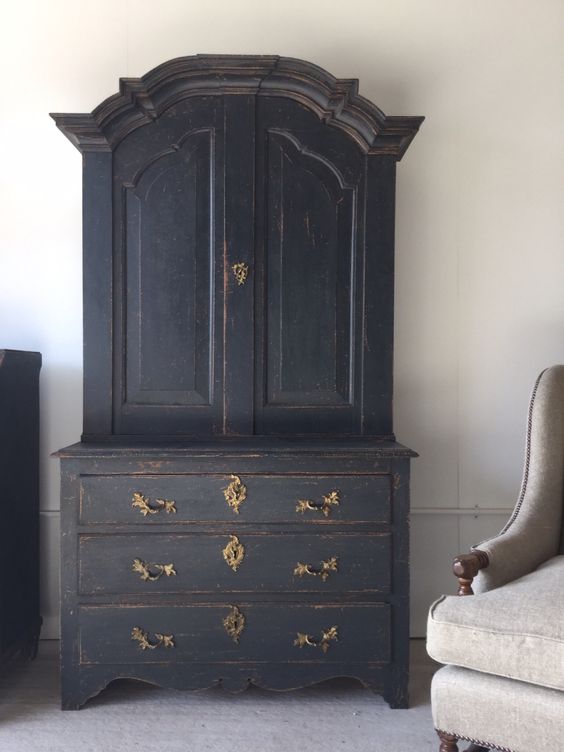 antonandk.co.uk
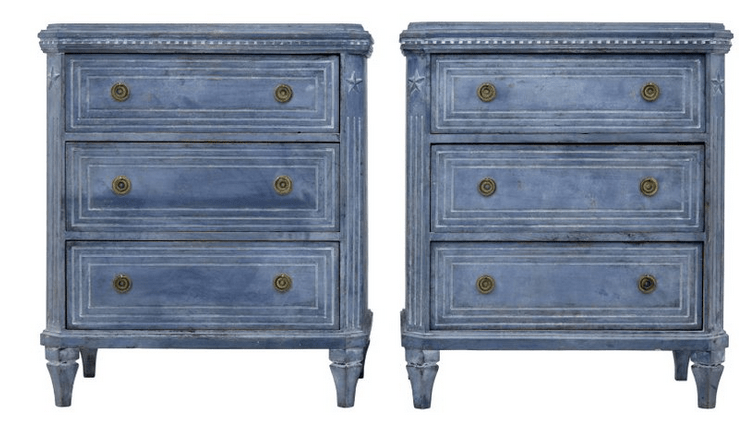 Pair of Small 19th Century Gustavian Influenced Commodes, Debenham Antiques
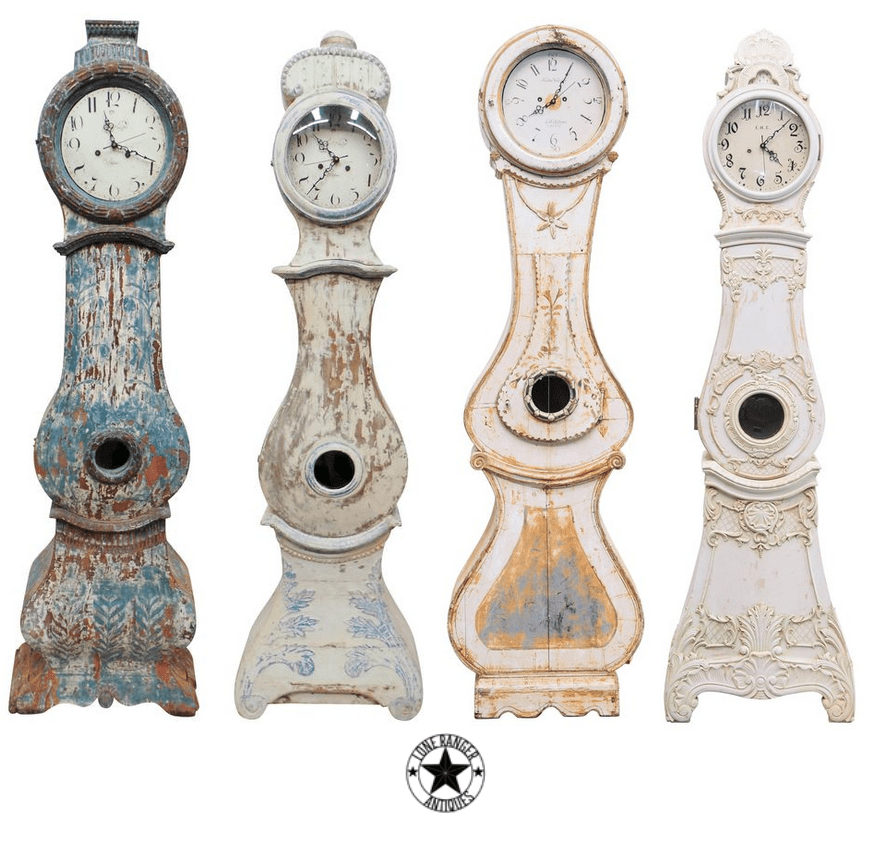 Antique Swedish Clocks From The Lone Ranger Antiques
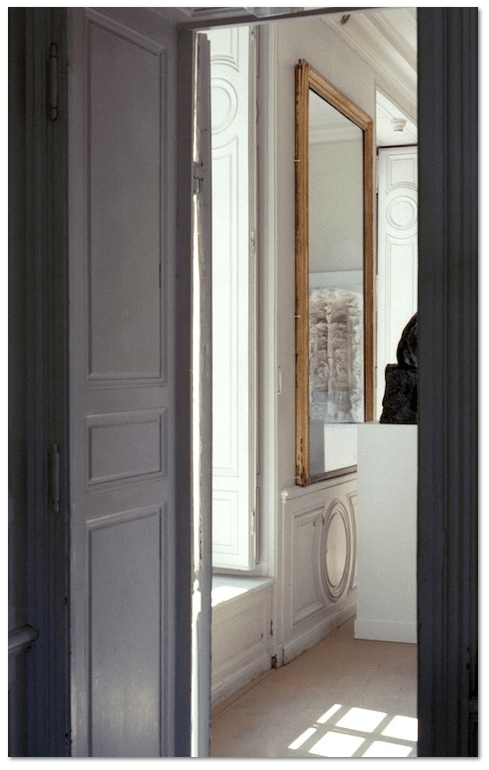 Habitually Chic® » Grey Day
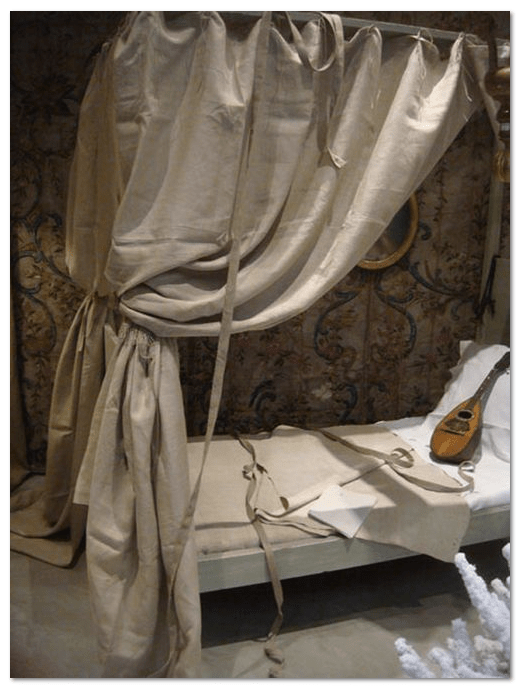 The Paper Mulberry
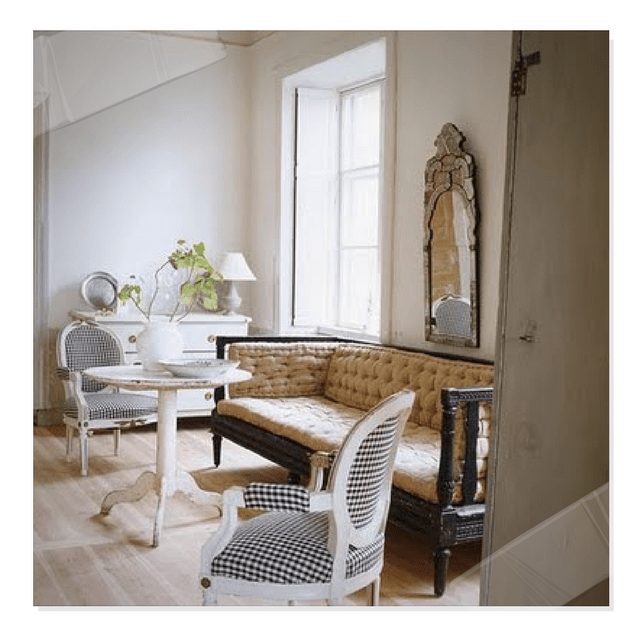
Gustavian Style By Kristie Barnett
I don’t know what kind of leader King Gustav III of Sweden was, but he really had some design sense! After spending much of his early life in the French courts of Versailles, Gustav developed a style that was heavily influenced by French Neo-Classical design, as well as Italian Classicism. Gustavian style is one of my all-time favorites, and I have a heavy dose of it in my own home.
Gustavian style is marked by grayed pastels, lots of whites and creams, painted furniture, clean simple lines, and fabulous lighting.
This style is rather austere and not overly ornamented. Lots of leggy furniture, bleached wood, and reflective surfaces/mirrors.
Swedish Country style is Gustavian, but at it’s most informal. Lots of whites and lots of rustic.
The more formal version of Gustavian features a bit more color, lots of reflective surfaces, and crystal chandeliers. And gilt, like I blogged about here.
Read more of this article at thedecorologist.com

Study Shows The Gustavian Period Has Defined All Tastes Through Time In Sweden
A New Dissertation From Uppsala University Shows How Gustavian Style Has Defined Swedish Tastes In Art
Why has the neoclassical Gustavian style become so prominent in the Swedish self-image? A new dissertation from Uppsala University shows how researchers in art history, along with museums, commercial enterprises and the monarchy, have contributed to preserving and conveying the Gustavian style.
“An important reason for the extreme strength of the Gustavian style ideal,” says Hedvig Mårdh, doctoral student at the Department of Art History at Uppsala University, “is that it managed to unite a series of seemingly contradictory movements during the 1900s, such as tradition and modernity, and nationalism and internationalism, and that it has become part of various utopian visions.”
The Gustavian style, connected to the 18th century and Gustav III and Gustav IV Adolf, has been intimately associated with what has been designated as specific Swedish cultural heritage, linked to Swedish tastes and interior design. The style has generally been highly esteemed by both museums and art historians, who have produced national and international exhibitions and publications and have also contributed to successful furniture production from the late 19th century through today, including both IKEA’s line of 18th-century furniture as well as more small-scale production.
It’s about recurring re-use, in the form of copies, reconstructions and staging of the period. In her dissertation A Century of Swedish Gustavian Style: Art History, Cultural Heritage and Neoclassical Revivals from the 1890s to the 1990s, Hedvig Mårdh studied three periods that all illustrate the re-use of the Gustavian period in different ways: the 1890s, which saw the emergence of art history as a discipline, and of museums and cultural heritagethe period 1930-1940, when the production of period furniture existed concurrently with functionalismthe 1990s, a decade characterised by a cultural heritage boom, economic crisis and the search for a national identity in a European context.
Read more at eurekalert.org
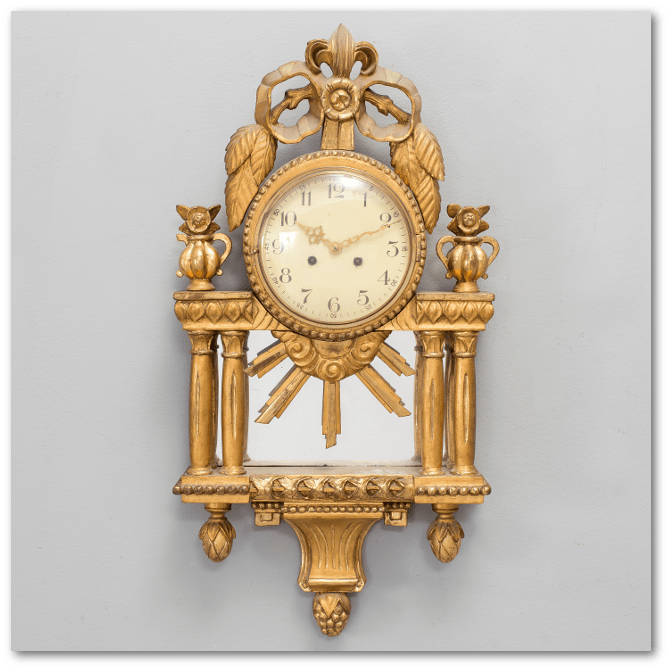
Gustavian style, 20th century Wall Clock, Bukowskis
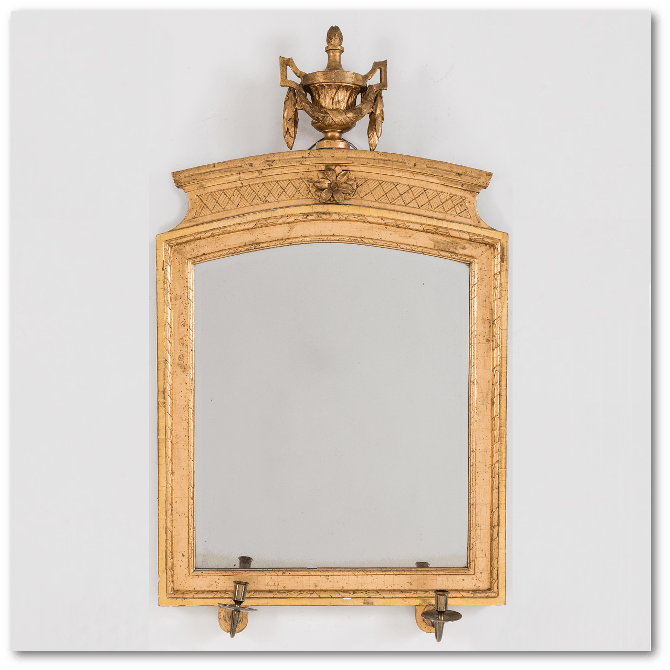
A gustavian wall sconce from around 1800, Bukowskis
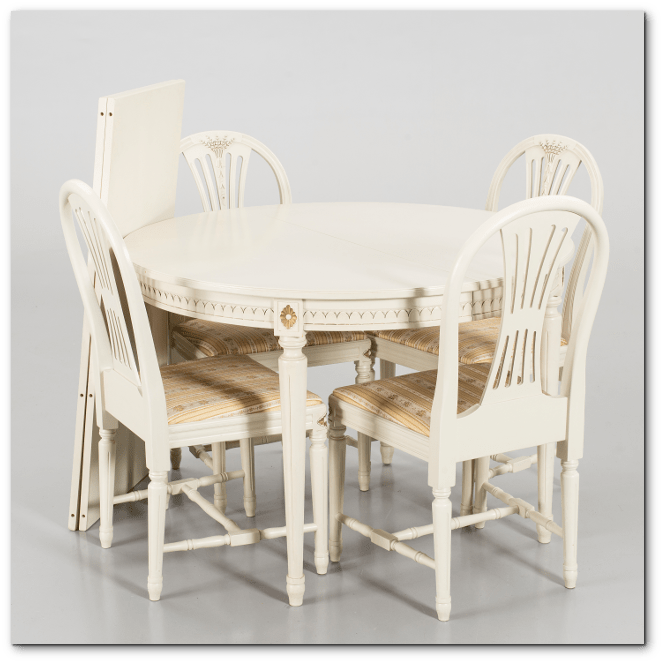
A Swedish gustavian style 5 pcs dining furniture, Bukowskis
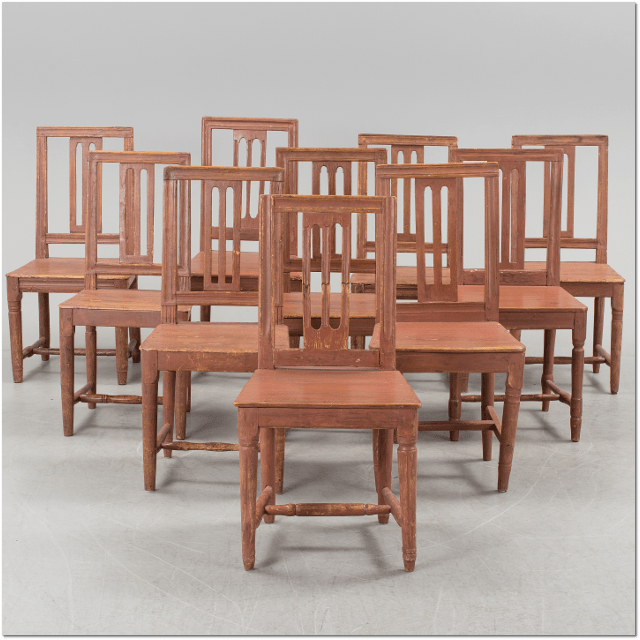
Ten Swedish Gustavian chairs, early 19th century, Bukowskis
All these images are found are bukowskis.com
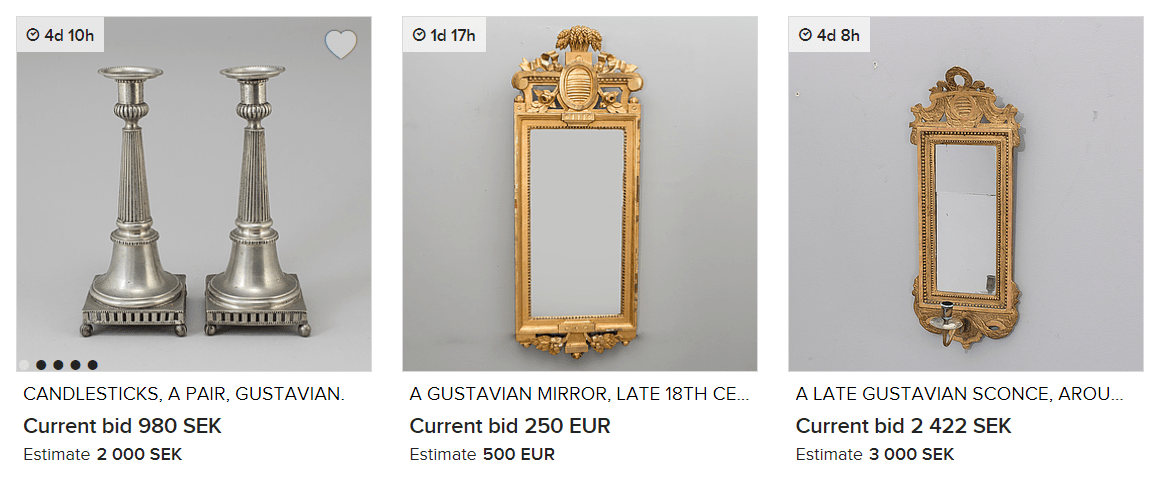
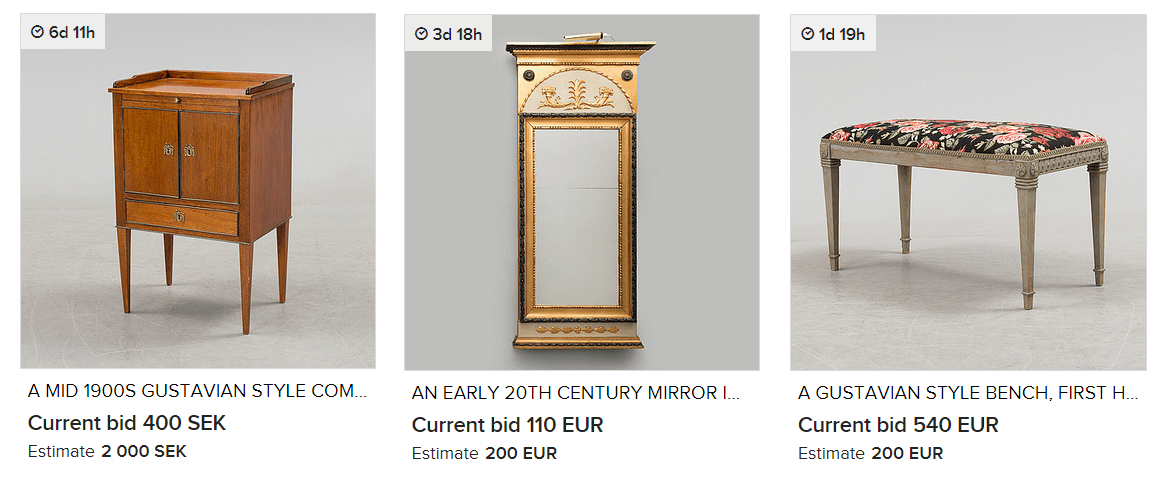
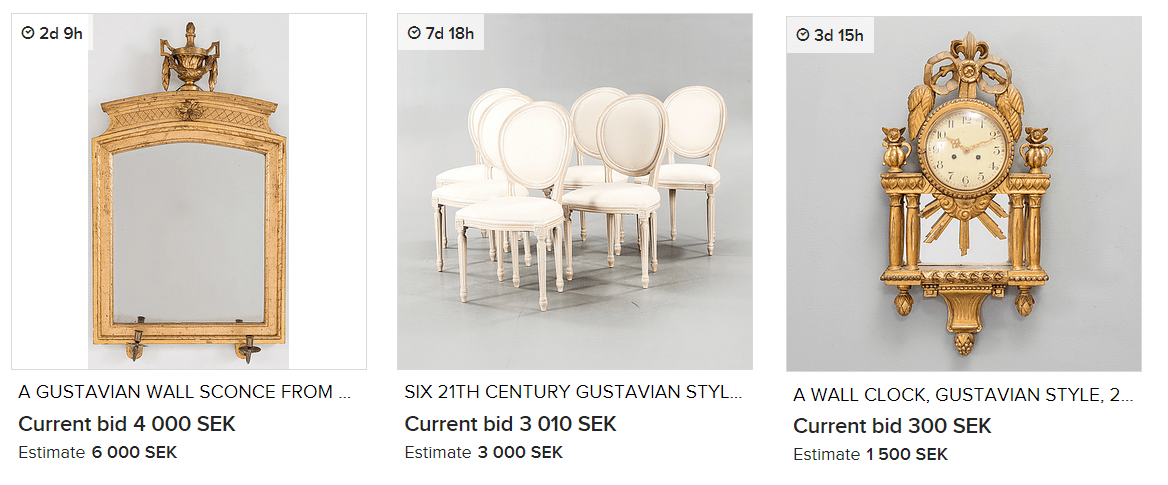
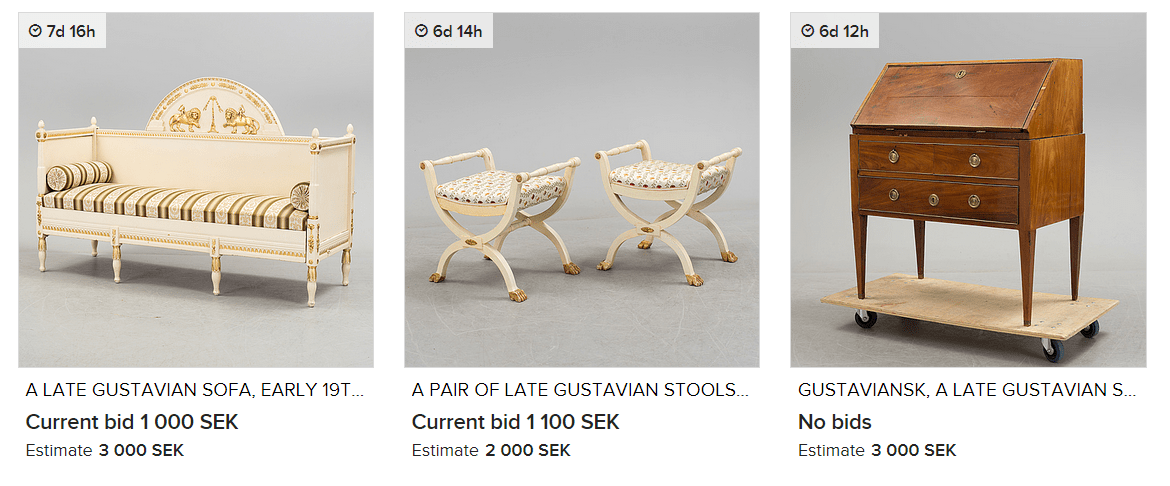
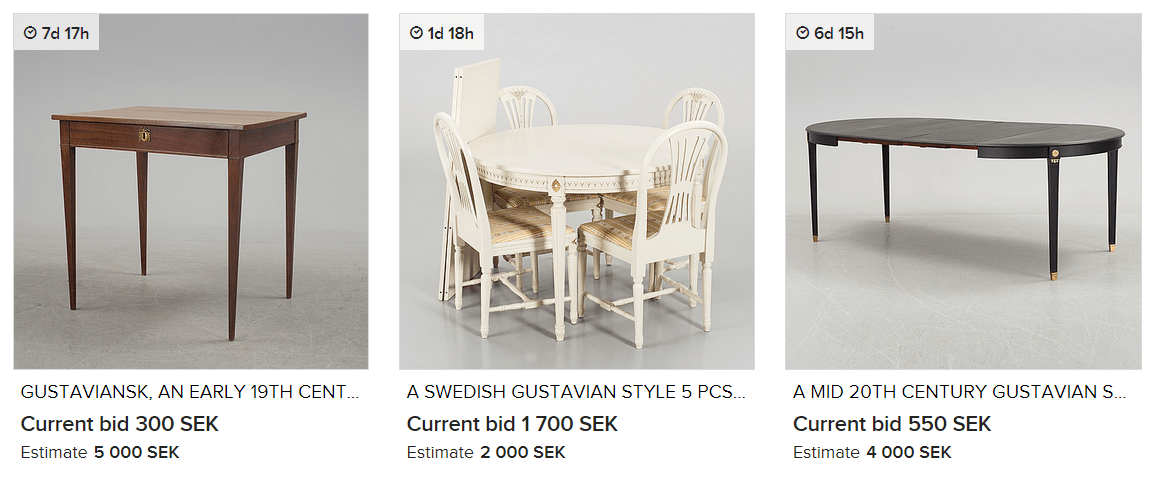
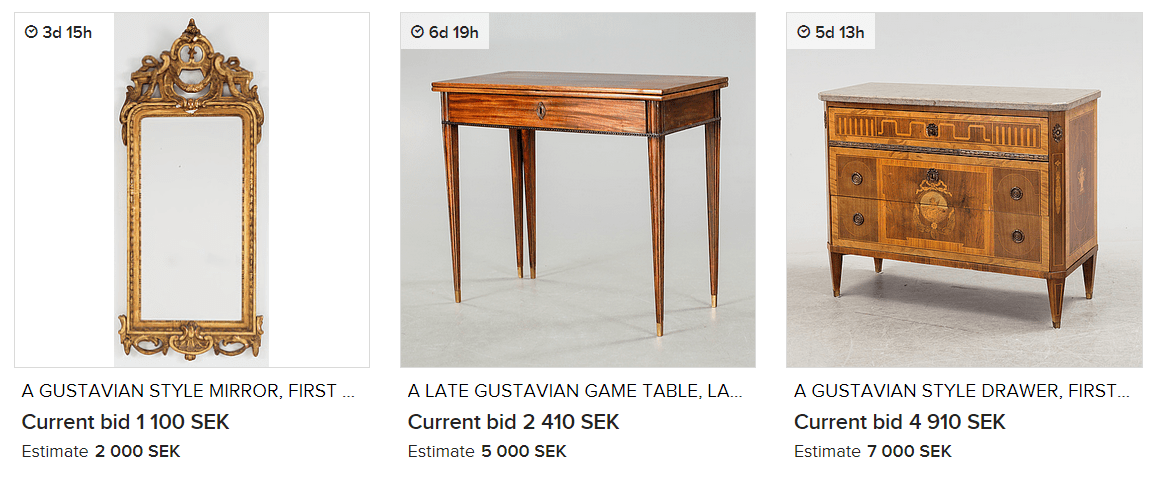
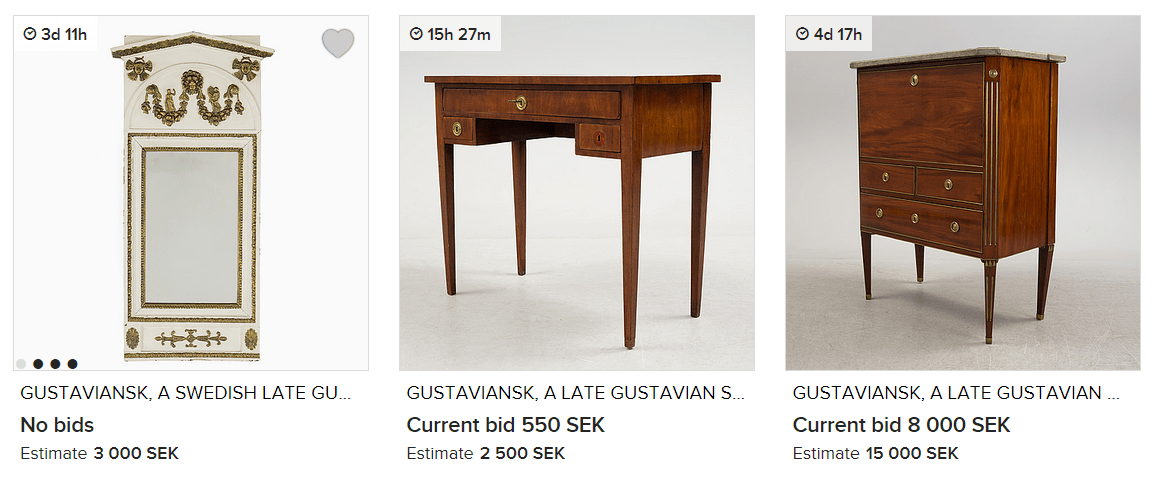
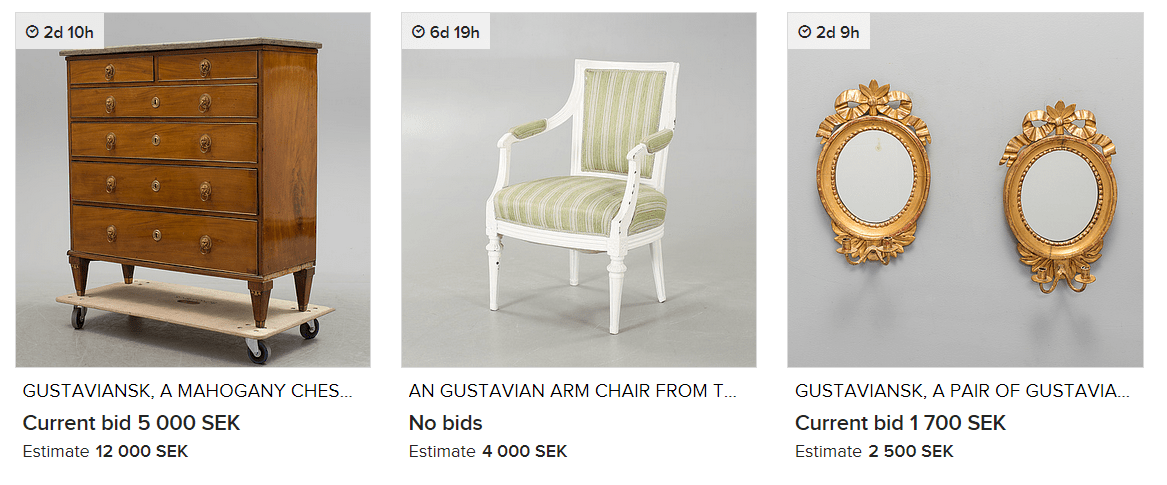
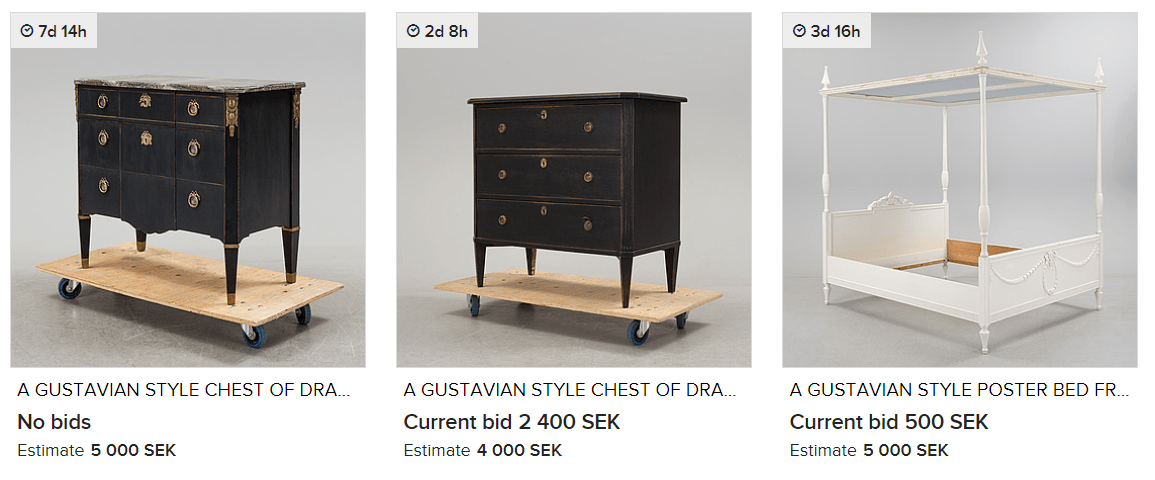
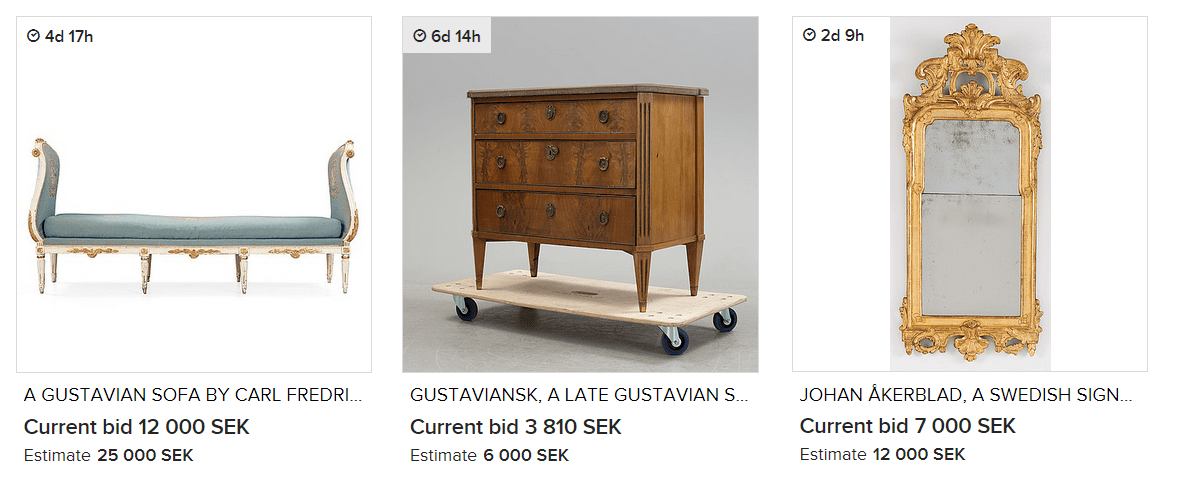
All these images are found are bukowskis.com
Linen Has An Incredible History- Find Out Why……
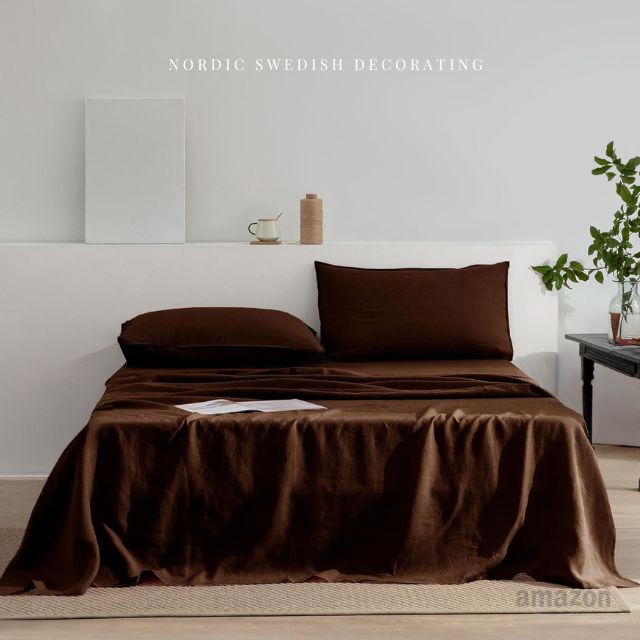
Linen Sheets Set King Size,100% French Stonewash – Amazon
Guest Post – Jason Phillips
Linen is a type of fabric or textile manufactured from fibers. The making process is laborious, and the result is truly remarkable. Many things are made of linen including towels, aprons, bags, tablecloths, bed linens, runners, curtains, drapes, upholstery covers and more. Textiles that feature a linen weave texture, even those made in combination with hemp or cotton, are also referred to as linens; some have specific names, such as madapolam, which is a fine cotton yard wove in linen style.
Linen textiles have an incredible history. Fragments of seeds, yards, straw and additional types of materials date back to 8000 BC, and were usually found in Swedish homes. In Ancient Egypt, linens were used as currency, and the mummies had to be wrapped in this luxury material as a symbol of purity and light. Nowadays, fine linens are high-priced yet incredibly qualitative.
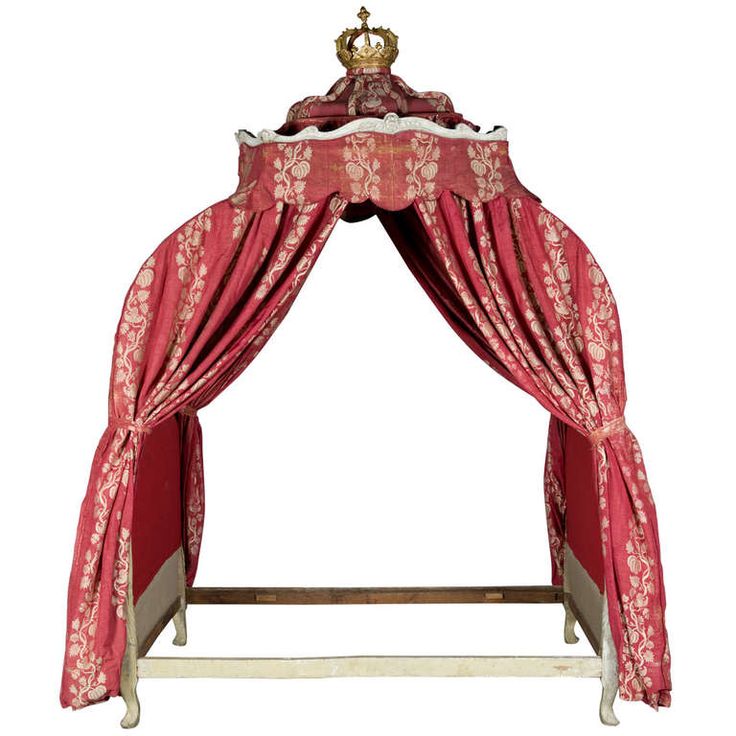
18th Century Lit a la Polonaise – Chartreuse de Bonpas, Avingnon, France Found on 1stdibs.com
Curtains And Drapes
In the early 18th century most homes still used shutters to block light and make the place appear private and secluded from the eyes of people on the street. However, they had a fuller texture and came in different styles than in the 17th century. As for the materials, main fabrics were cotton chintz, taffeta, and velvet. A valance or pelmet cornice was usually employed to hide the workings. Then the paired curtains made an entrance. They were topped with stiffened pelmets and featured embroidery work and appliqués; also, they had a really elegant shape. The linen fabric used for the curtains included Rococo motifs, including knots of ribbons, garlands of flowers, and leave fronds.
By the middle of the century, pelmets became a lot softer, with small tails and shallow swagging and bells. Portieres had lighter curtains and deeper pelmets designed in Italian style. Store marquises, also known as light silk festoons, were widely used with beautifully draped pelmets. At the end of the 18th century, roller blinds made an entrance as well. Their use was first recorded in 1726, in London.
Fabrics
There was a great variety of fancy fabrics one could select from in the 18th century. There was one industry in particular that thrived – the silk industry. Fragile florals, lace, and scallop, as well as patterns that incorporated doves and other beautiful prints were in high demand. Inside people’s homes silk was the most appreciated. It was used for linings, beds, tables and inner covers. During that time the bed in the bedroom had sophisticated hangings, which were also made of silk; those who could afford to invest in such fancy linens, bought Genoese silk velvet.
For the windows, brocades and silk damasks were highly appreciated. For hangings, brocatelle was still in high demand. Ribbed silk, satin, chintz, taffeta and clouded silk were all exceptional materials used mainly for curtains. Those who couldn’t afford such fancy linens had great alternatives, such as moreen for draperies and beds, and velvet or silk mohair for chair coverings.
The most exclusive chintz was manufactured in Versailles, and was produced by Jouy-en-Josas. However, throughout the 18th century, in England and France there was an anti-cloth law materializing. It was aimed at protecting silk and wool industries. The production went full ahead in 1770.
Sophisticated Trimmings
In the 18th century there was a wide variety of sophisticated trimmings materializing in Germany, Ireland, the Netherlands, England and Switzerland, mainly due to the battle of Huguenot craftsmen n the 1600s France. Narrow and broad bands of rich colored lace were used thus contrasting the rich, new techniques. Furthermore, fancy details started being used such as frogging, gold galloon and artificial flowers on valance and pelmets; these were meant to replace entirely heavy trims found in the 17th century.Embroidered, tie backs or appliquéd and ended with ribbons or bows became a new feature in home décor that many people adopted for their window treatments.
Decorating with 18th century linens from the French period will add sophistication to your personal space. Give your windows the treatment they deserve and use luxury linen materials for the curtains and shades. Make your bedroom seem romantic, your living area chic and welcoming, and your kitchen practical and fun. Consider the best materials and the finest shapes, and your entire home will come back to life.
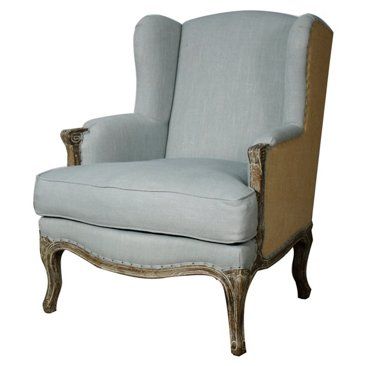
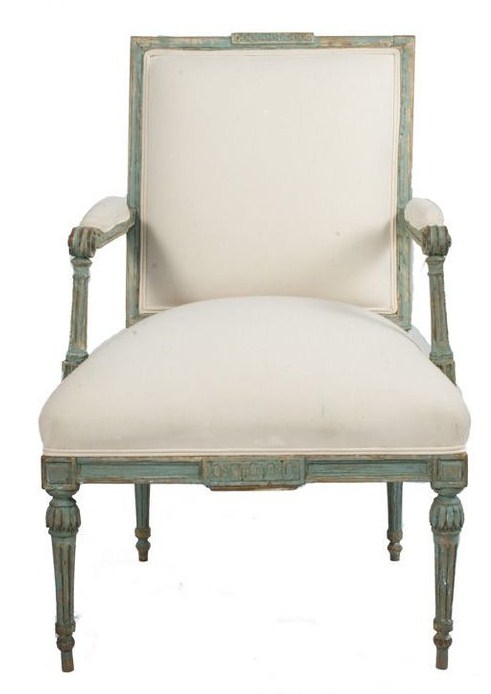
Gustavian Lounge Chair, Sweden, c.1780, Found on 1stdibs.com
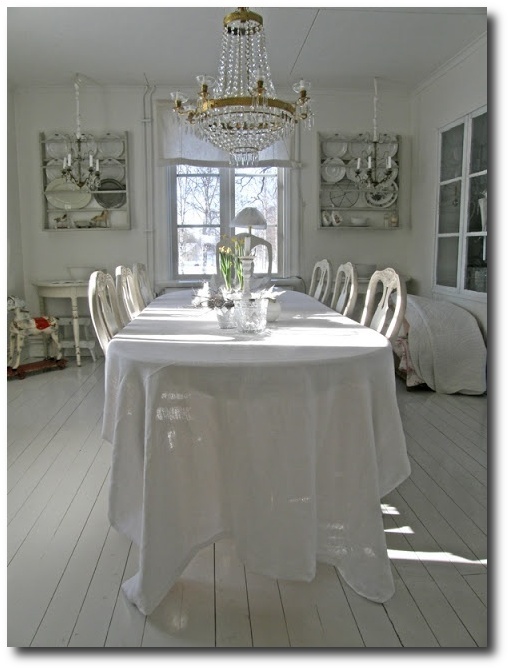
Swedish Interiors Using Linen For Table Cloths Found on lantlif.blogspot.it
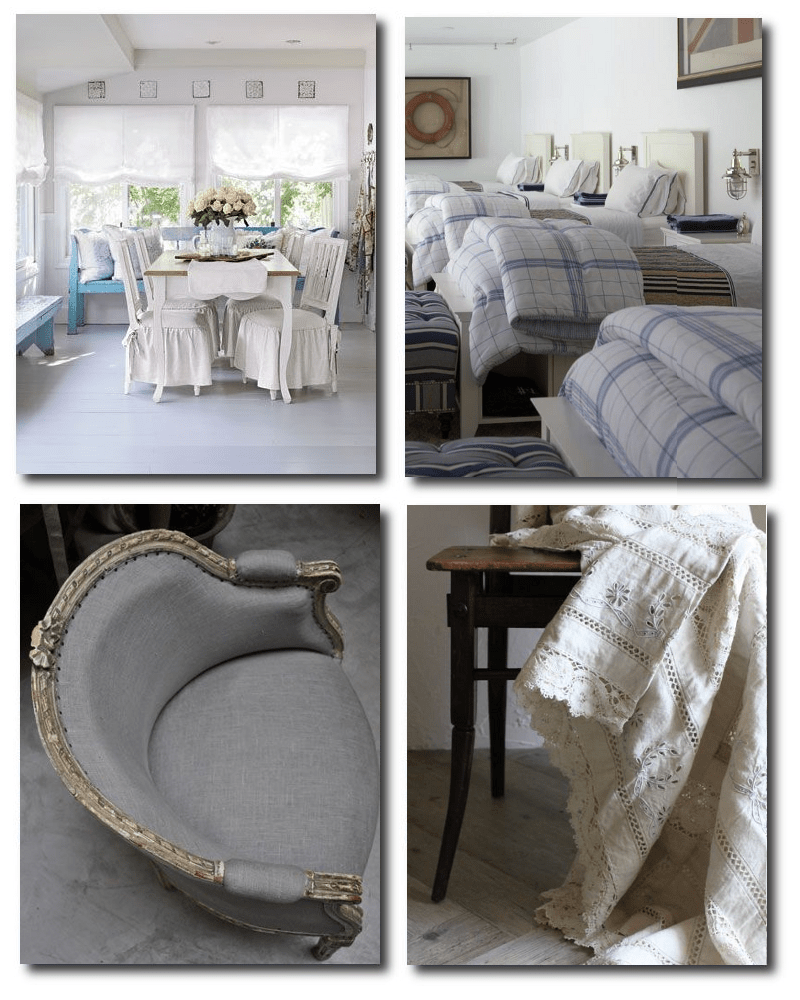
Victorian home designer Carrie Raphael’s farmhouse marries beauty with function, Swedish Style in a Maryland Farmhouse Country Living Magazine
Robert Dean and interior designer Anne Miller,Found on nehomemag.com
Linen Upholstery In Gray Found on une-ame-en-plus.com
Linens seen at Found on fleurage.exblog.jp
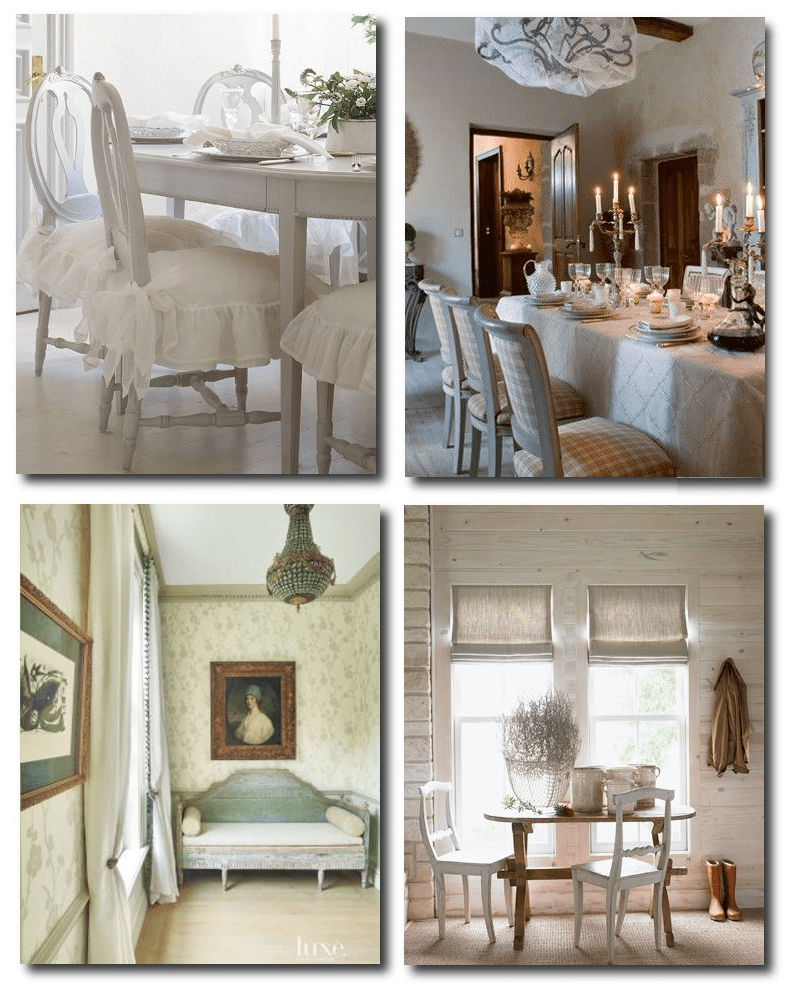
Swedish Dining Seen on bloglovin.com
Life In 17th Century Norway & Sweden
In the 17th and 18th centuries, the Nordic people had various desires and aspirations influenced by the social, economic, and cultural context of the time. Here are some of the most sought-after things during those centuries:
Wealth and Land: Accumulating wealth and owning land were significant aspirations for many people in the Nordic region. Land ownership represented social status, economic power, and provided opportunities for agricultural production and resource exploitation.
Trade and Commerce: Nordic countries, such as Sweden and Denmark, were engaged in international trade during this period. Merchants and traders sought to establish profitable connections with other European countries and expand their commercial ventures.
Access to New Goods: The growing trade networks allowed for the introduction of new and exotic goods into the Nordic region. People sought after luxury items like spices, silks, ceramics, and other commodities that were not readily available locally.
Education and Knowledge: The Enlightenment period in the 18th century brought an increased emphasis on education and the pursuit of knowledge. People sought access to education, particularly in fields like philosophy, science, and the arts.
Social Status and Prestige: Nobility and social hierarchy played an important role in the Nordic societies of the time. Many individuals desired to attain or maintain their noble status, associating themselves with the upper echelons of society.
Cultural and Intellectual Trends: The Nordic region saw an influx of ideas and cultural movements from other European countries. People sought to be part of these intellectual trends, embracing new philosophies, literary works, and artistic movements.
Scientific Advancements: The 17th and 18th centuries witnessed significant scientific discoveries and advancements. People were eager to access and learn about the latest scientific theories, particularly in fields such as astronomy, physics, and medicine.
Political Influence: As in other parts of Europe, power and political influence were highly sought after. Many individuals aspired to hold positions of authority, whether in local governance, regional politics, or the national administration.
It’s important to note that the desires and aspirations of individuals varied depending on their social class, occupation, and personal circumstances. These general themes provide a glimpse into the aspirations of people during the 17th and 18th centuries in the Nordic region.

18th Century Antique Swedish Rococo Tragsoffa | Vinterior

‘Saddle Up’ wallpaper designed by Eleanor Walton for Graduate Collection
 decorativecollective.com
 Picture –thisivyhouse
Life In the 17th century Nordic countries
Daily Routine: People in the 17th century generally woke up early, as daylight was essential for most activities. They would begin their day with personal hygiene tasks like washing their face and hands, often using water from a basin. Due to limited sources of artificial lighting, the evening hours were typically dedicated to rest and sleep.
Work and Occupations: The majority of the population in the 17th century lived in rural areas and worked in agriculture. Farmers would tend to their crops and livestock, while women would engage in domestic tasks such as cooking, cleaning, and caring for children. In urban areas, people were involved in various trades and crafts. Merchants conducted business, artisans practiced their respective crafts, and apprentices learned skills from their masters.
Religion and Church: Religion played a significant role in daily life during the 17th century, particularly in Europe. Most people adhered to Christianity, and attending church services was a central part of their routine. Church buildings often served as community centers, where people gathered not only for religious activities but also for socializing and discussing local matters.
Education: Formal education was limited during this period, and literacy rates varied across regions. Wealthy families could afford tutors or send their children to private schools, while the lower classes often received basic education through informal means. Education focused on religious teachings, reading, writing, arithmetic, and vocational skills.
Entertainment and Recreation: In their leisure time, people in the 17th century engaged in various forms of entertainment. Popular recreational activities included playing games, such as cards, dice, and board games like chess or backgammon. Sports like archery, bowling, and tennis were also enjoyed. Social gatherings and events, such as dances, music performances, and theatrical plays, provided further amusement.
Art and Culture: The 17th century witnessed significant advancements in art and culture. Renowned artists like Rembrandt, Caravaggio, and Vermeer produced masterpieces during this period. Literature flourished with the works of influential writers like William Shakespeare, Miguel de Cervantes, and John Milton. Music, including compositions by composers like Johann Sebastian Bach and Antonio Vivaldi, also thrived.
Fashion and Dress: Clothing in the 17th century varied based on social class and occupation. Wealthy individuals wore garments made of fine fabrics and adorned with elaborate embellishments, while commoners dressed more simply. Fashion trends were influenced by the styles of the monarchy and the aristocracy, and clothing choices often reflected social status.
Food and Drink: The diet of people in the 17th century consisted of locally available food sources. Common staples included grains like wheat, barley, and oats, along with vegetables, legumes, and dairy products. Meat was primarily consumed by the wealthy, while the less affluent relied more on fish and poultry. Alcoholic beverages, such as beer and wine, were commonly consumed due to the limitations of safe water sources.
It’s important to note that the specifics of daily life in the 17th century varied greatly depending on the region and social circumstances.

The painted detail of a 18th Century Swedish Gustavian Chest – 1st Dibs


Antique Swedish Furniture

Swedish 18th Century Gustavian Clock with Original Paint – averydash.com/
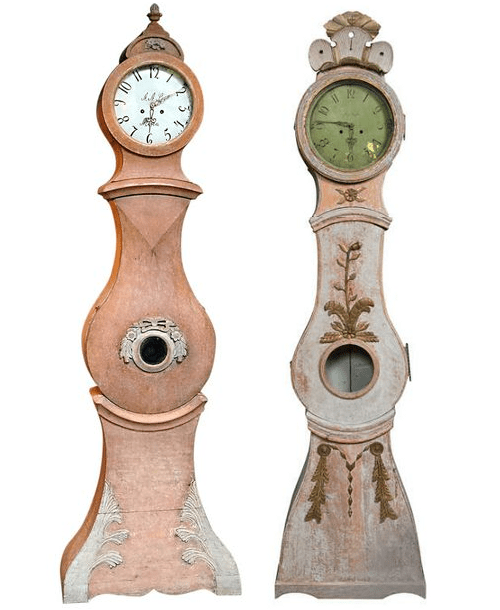
Mora Clock in Original Salmon Paint Found on 1stdibs.com
Swedish Tall Case Clock, ca.1780-1800 Found on 1stdibs.com
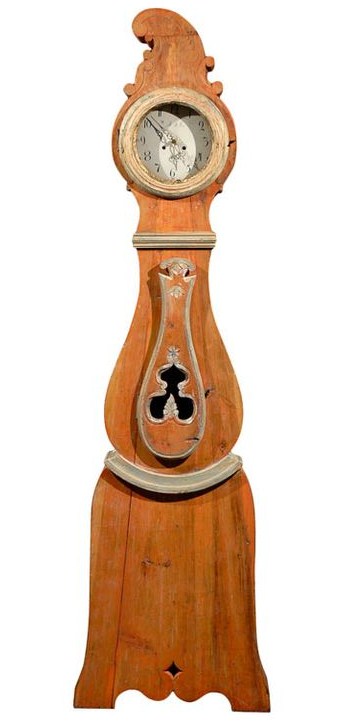
19th Century Swedish Orange Painted Wooden Clock Found on 1stdibs.com
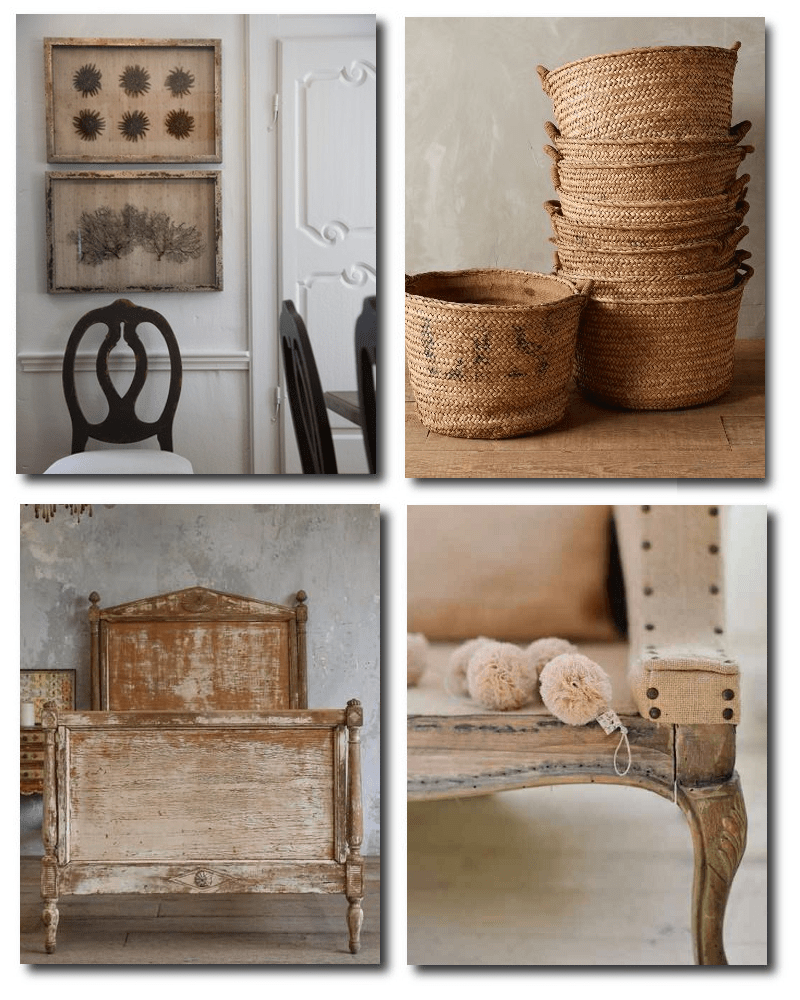
Gustavian Style Found on houzz.com
Harvest Basket, Found on anthropologie.com
Directoire Bed, Found on eloquenceinc.com
De-constructed Chair – Found on inspired-design.tumblr.com
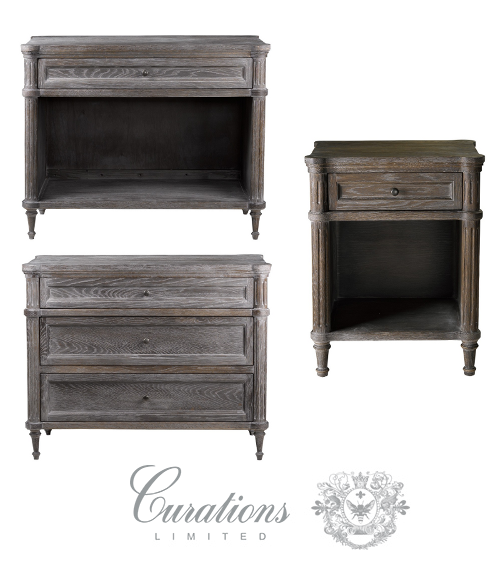 Alden Furniture Collections- Curations Limited
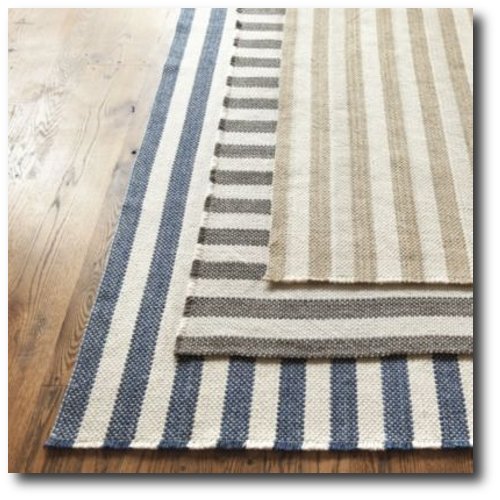
Vineyard Stripe Rug Ballard Designs
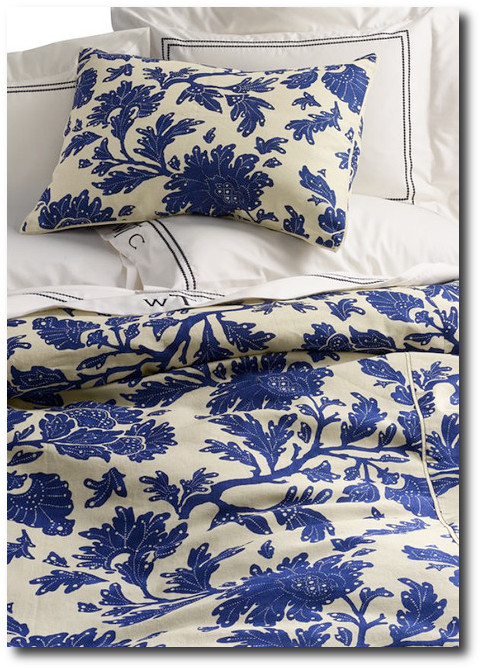
Harbor Springs Floral Duvet Cover, Lands End
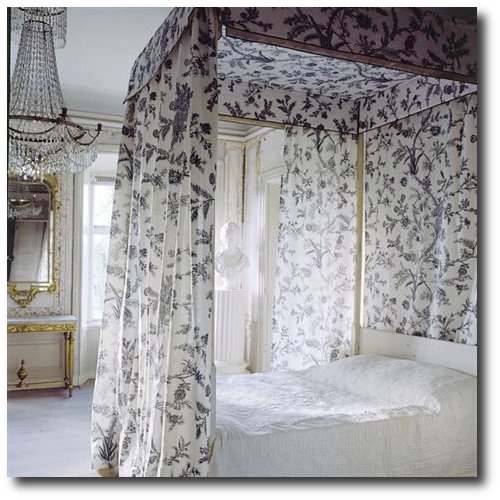
Buy Authentic Historical Textiles online at Ljungbergs Factory
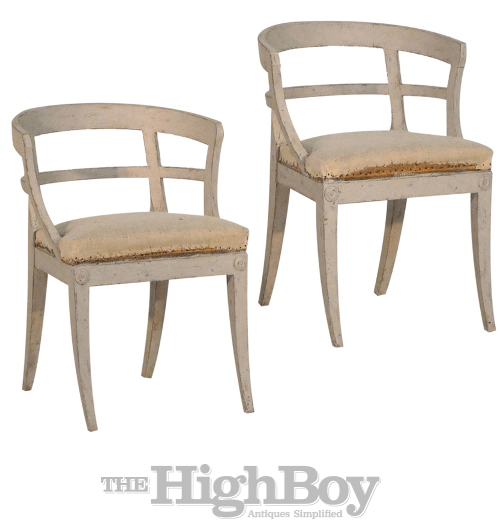 Pair of Swedish Sulla chairs with curved and open H-form backs, with original upholstery raised on splayed legs.- Highboy Antiques

An antique looking mailbox – Amazon

A mailbox with a blue distressed finish – Amazon


Mid 19th Century Painted Water Carrier – debenhamantiques

How To Select The Right Linen For Your Children’s Bedroom- Kids Room Decor Ideas
Guest Post Jason Phillips
Your kid’s bedroom has to look fun and entertaining; otherwise the little ones may not want spend time in it.
What can parents do to make their bedrooms appear more enticing without investing a lot of money on new furniture or a flat-screen TV?
Believe it or not, playful bed linens can have an amazing effect. You kids will love the colorful designs and interesting patterns. You can opt for bed linen deigns with superheroes and princesses, or you can opt for the educational ones with letters and animals.
Here are 5 playful ideas that will convert your kid’s room into a fabulous environment.
1. Bear Print Bed Linen Designs
Allow the kids to explore the woods and let them enjoy a good night sleep tucked in bed linens with bear patterns.
Consider a natural green color, and make sure the material is 100% cotton.
It is important to invest in quality too, not just in design. Cotton is comfortable and it allows the skin to breathe. As for the print, kids will definitely adore the bears, as well as the color. Consider a full set with cover, sheet and pillow cases, and create a nature-inspired bed for your beloved kids.
2. Baby Blue Linens With Car Designs
Little boys love cars, as well as the blue color.
Combine these two and make their beds cool. Consider linens with more than one car model, and before bedtime talk about the prints. Who knows, maybe your son will grow up a mechanic’s enthusiast or an engineer? Make sure the bedding set is colorful to draw his attention. Trucks, motorbikes, SUV, and others, will transform your kid’s bed into a virtual dealership. Have together before bedtime, and they will go to sleep with a lot more enthusiasm and determination.
3. Pastel Pink Linens With Star Designs
Girls are fond of lighter colors of pink, yellow and purple. They want their rooms to look colorful and playful, if possible be filled with stuffed animals, dolls, and glitter.
Choosing bed linens for girls can be challenging, and that’s because unlike boys, girls tend to be really picky. Regardless, as long as their linens have attractive patterns, they’ll certainly love to sleep in them.
Star signs, golden crowns, and even “princess” message prints are excellent ideas. Make sure that you spend time together too; read them a related story before bedtime, and they’ll love their new sheets.
4. Bed Linens With Letter Designs
Bed linens with letter designs are excellent for pre-scholars. Apart from being colorful and extremely appealing to the eye, bedding with imprinted letters is an opportunity for parents to teach the alphabet to their kids.
Do it in a fun way, but try not to make the process seem like a dreadful activity. Make it fun – associate each letter with an animal for example, and even turn to onomatopoeia to help the kids remember that animal, and its corresponding letter. To help the kids remember the letters better, go for white cotton linens with black letters (or pink for girls). This way you’ll create a visual appeal.
5. Deep Blue & Silver Stars Cotton Linens
Kids are drawn by strong color palettes, such as deep blue, green or yellow.
To convince them to go to bed on time, you could buy them a set of linens with star prints. Combined with deep blue, their beds will look like the sky at night. Make sure the pillow cases have moon designs, and they will have the most relaxing sleep. Bedding for children is not easy to pick. The secret is to consider attractive patterns and soft materials.
We spend too much time spending money on low quality items that don’t last. But when it comes to linen fabric for kids ‘beds, we can’t afford to compromise.
It is important to purchase quality linens because when they’re little, kids sleep a lot.
They’re growing and you can’t risk ruining their health with low quality linens that trigger rashes and allergies. Of course, this doesn’t mean you should buy expensive sheets you can’t afford.
Stick to 100% cotton because it is both comfortable and durable, and stay as far away as possible from synthetic fibers.
Picture Credit –Antique Vintage European Textiles On Ebay
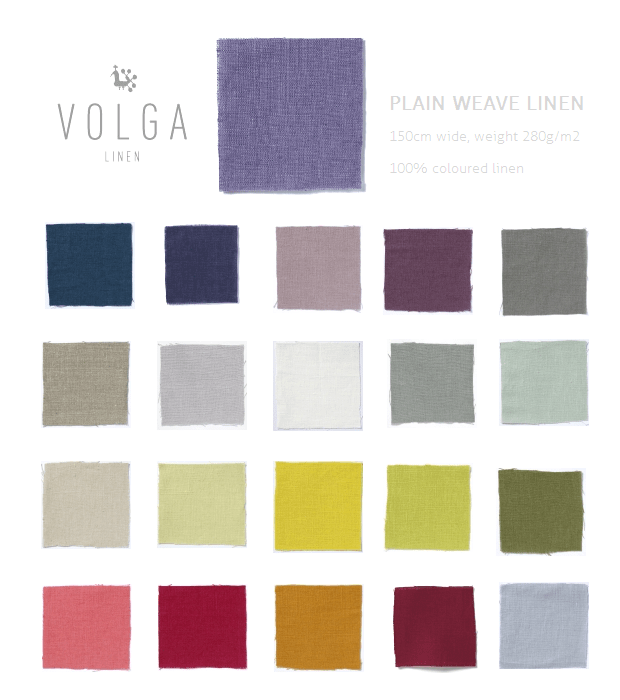
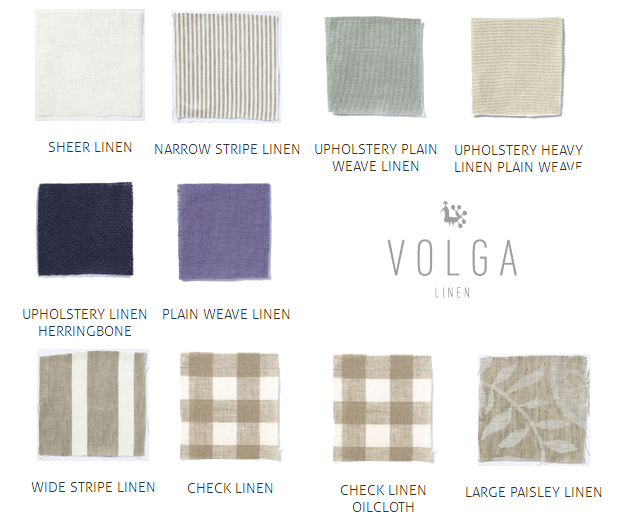
Fabric Selections From Volga Fabrics
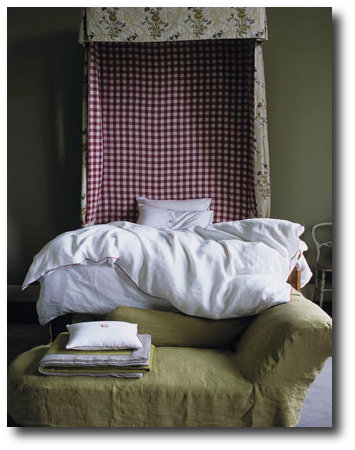
Red Trim Bed Linen > Volga Linen
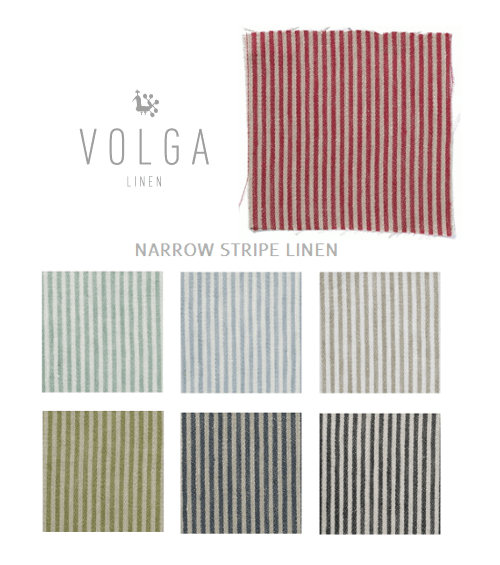 Narrow Stripe Linen From Volga Fabrics
Nordic Style Kids Bedroom Decor Ideas
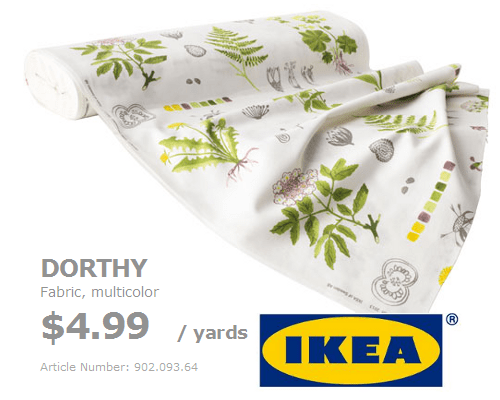
The design of your children’s rooms should feel like a natural extension of your home and your personal style. A playful space doesn’t require cartoon characters splashed across every wall to prove you’re a fun mom. Thoughtful design can feel youthful, imaginative, and beautiful all at once.
Below are a few simple tips for decorating a child’s room in a way that feels lively yet timeless.
Limit the Number of Pieces in the Room
Create breathing room. Choose just a few well-made, thoughtful pieces and leave open space for play. Many modern homes don’t offer large secondary bedrooms, so prioritize furniture that works hard for you—dressers with ample storage and beds with built-in drawers are invaluable.
Add Dedicated Storage for Toys
Teaching children to put their toys away in a designated space makes a world of difference. We updated all the closets in our home using simple bracket systems from Home Depot and lined the shelves with baskets. One row is reserved for clothing, while the remaining shelves house toys. A cleaner room means far less daily stress.
Use Wall Shelving to Elevate the Space
Everyday toys can live in the closet, while more decorative or antique toys can be displayed on wall shelves. If you love design, use vertical space to your advantage. Painted and lightly distressed wood shelves add charm, and floor-to-ceiling bookcases maximize storage while drawing the eye upward. Thrift stores often carry porcelain dolls for very little—I’ve found beautiful ones for as little as $5 that can be enjoyed now and played with later.
Invest in the Right Fabric
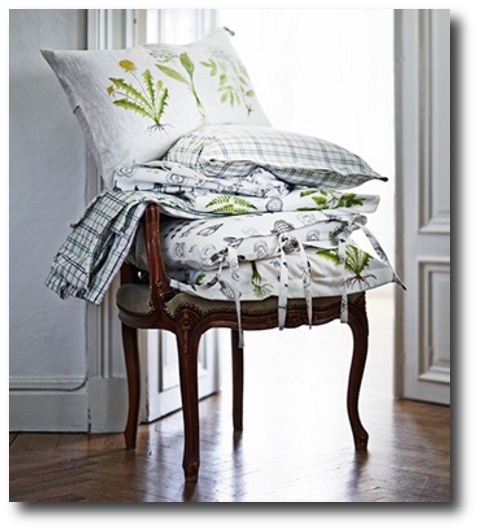
Fabric can set the tone of a room instantly. Printed textiles add warmth and personality, whether through bedding, curtains, or pillows. If sewing isn’t an option, look for comforters that achieve the look you love, then echo that fabric in smaller accents like throw pillows or an upholstered chair.
Choose One Standout Antique
A single antique—whether it’s a toy on a shelf or a beautifully crafted bed—can anchor the entire room. You don’t need excess furniture or décor. Nordic-inspired interiors thrive on restraint, so focus on a few functional, high-quality pieces paired with subtle accents.
Mix Old and New
The Swedish look is all about balance. Combine modern furniture with classic patterns like checks or stripes, and layer in color through textiles, ribbon details, or small accessories. New pieces can feel timeless when styled thoughtfully.
Enlarge a Vintage Print
Large artwork doesn’t need to be expensive. I’ve found frames at yard sales and replaced outdated prints with enlarged vintage images—one even came from an old calendar my grandmother gave me. Printing them at a local shop like Staples is an affordable way to fill large frames with beautiful, meaningful artwork.

Melissa and Doug Plush Dogs – Amazon
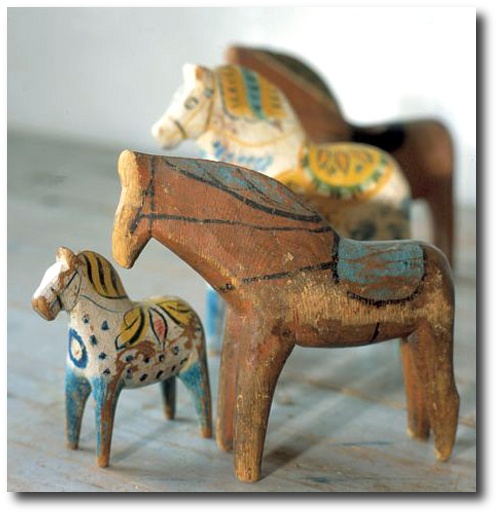
The tiny horses originated in Dalarna hundreds of years ago. They were made from scrap pieces of wood and used as toys and first mentioned in writing from 1624. In the 1800s, this horse became famous and internationally known as the dala horse. Add one of these into your children’s room for a Swedish flavor.
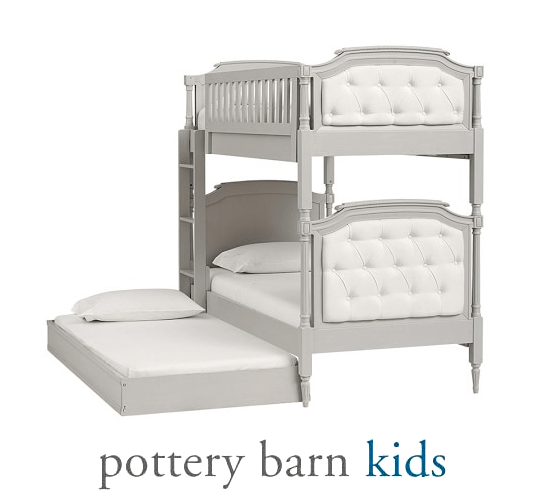 This grand bunk bed sleeps two children in comfort and style. They are quite expensive…. however don’t discount trundle beds which can house an extra bed quite nicely. Create your own beautiful bed by tufting the head board, or upholster your headboard for an updated look. Here you can see, gray always looks classy. From Pottery Barn
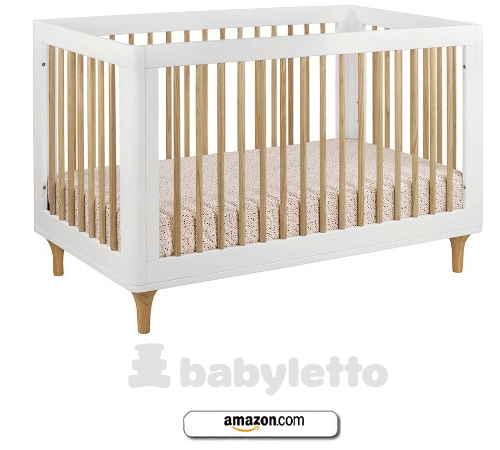 Modern can be fun! Look at this bed from Babyletto! Don’t you love it?
Babyletto Lolly 3-in-1 Convertible Crib with Toddler Rail, White/Natural – Amazon
babyletto Skip 3-in-1 Convertible Crib with Toddler Rail, Chestnut and White- Amazon
Babyletto Origami Mini Crib, Amazon
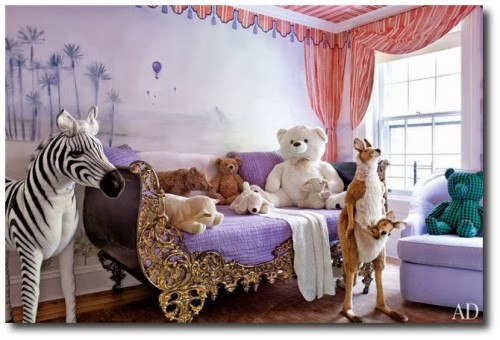
Found on architecturaldigest.com
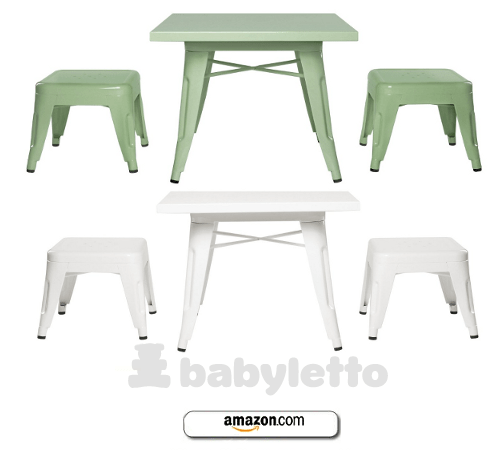
Babyletto Lemonade Playset- Amazon
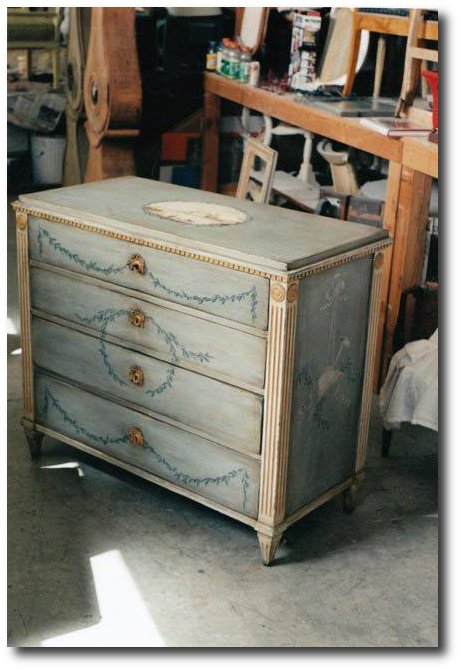
Painted garland is a classic Swedish look.
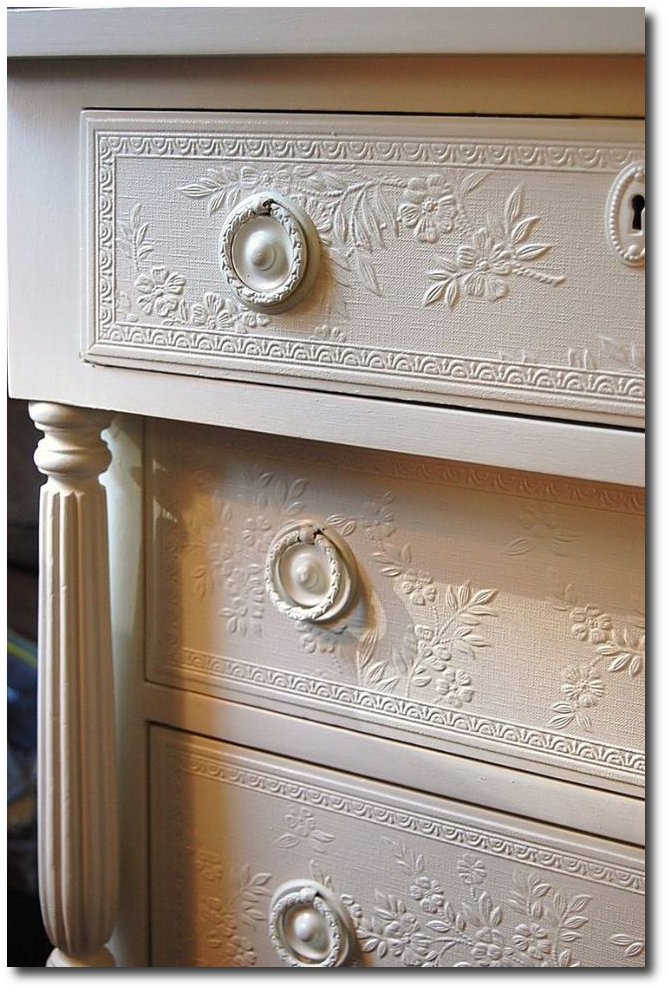
Get some ideas from this delicate and intricate design by using embossed wallpaper to decorate a chest. Seen on A Changing Nest Daniella Burnett , Found on etsy.com
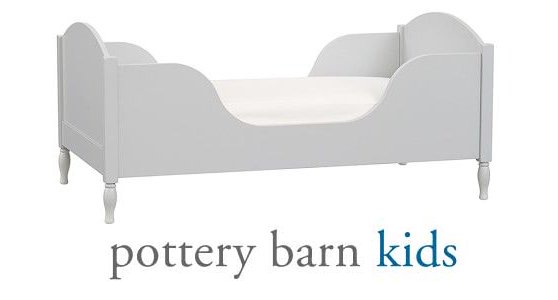 This bed from Pottery barn has the classic looks seen in Swedish kids antique beds
Shelter Toddler Bed, Found on potterybarnkids.com
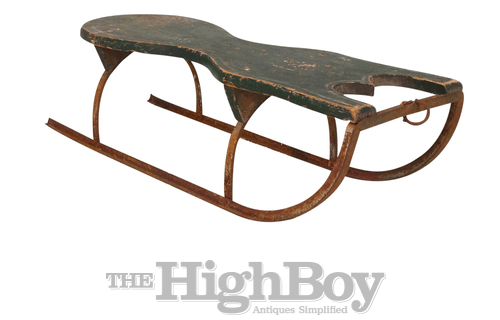
A very charming 19th century Swedish sled from Dalame, Sweden- Highboy Antiques
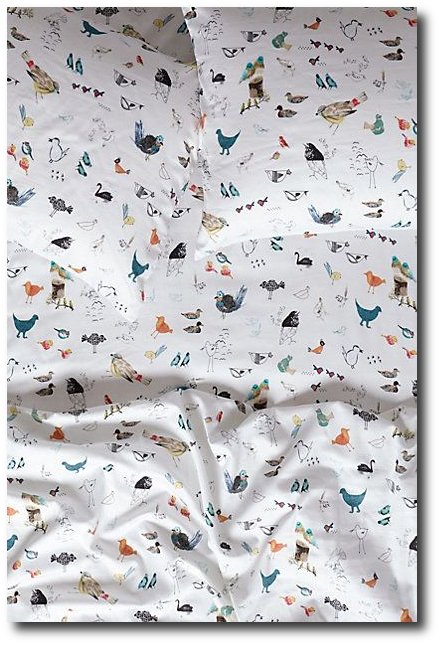
Paths Of Flight Sheet Set Found on anthropologie.com

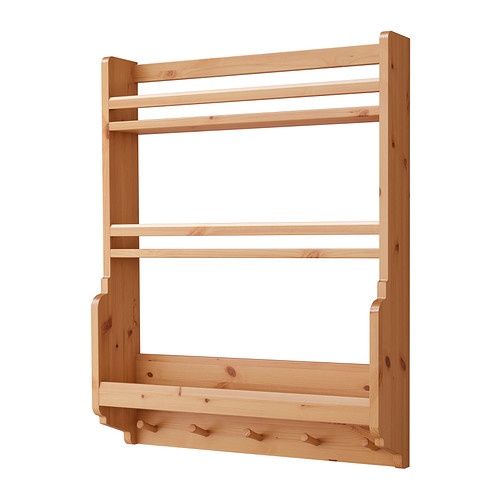
GAMLEBY Wall shelf IKEA, could double up as a book shelf
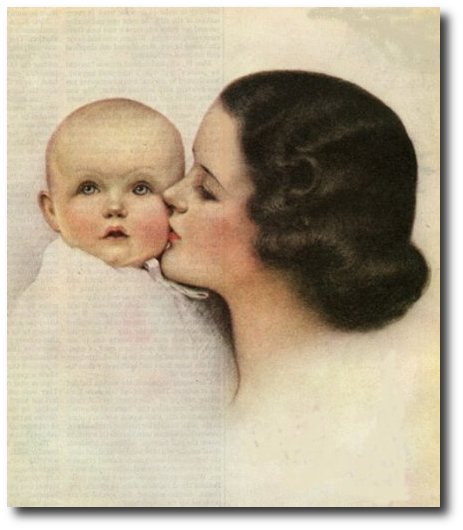
Counted Cross Stitch Pattern Chart Graph – Vintage Mother & Baby 1930s By Vintage Home Arts – $12 On Amazon
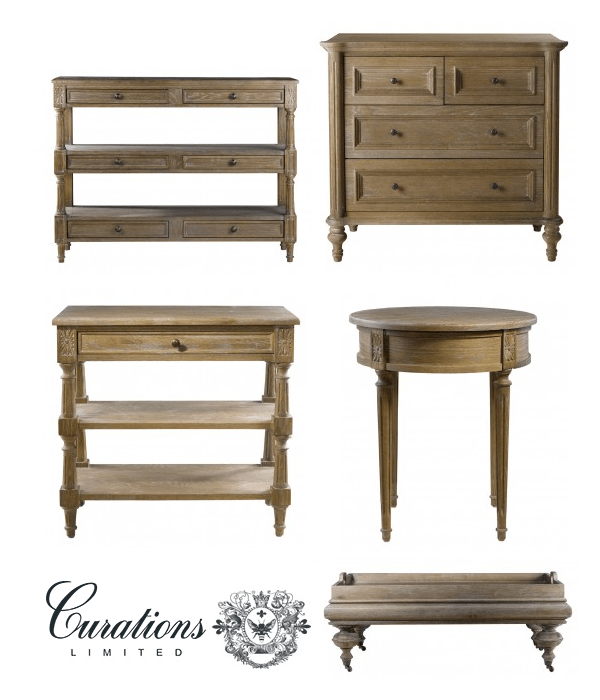
Furniture From Curations Limited.com
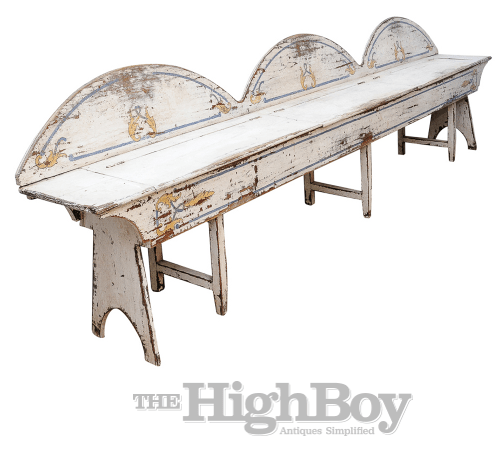
he Highboy Antiques

Swedish 19th century wooden soldier Found on bukowskis.com
Gustavian Officer, Kostymskisser | Atelje Alenhall
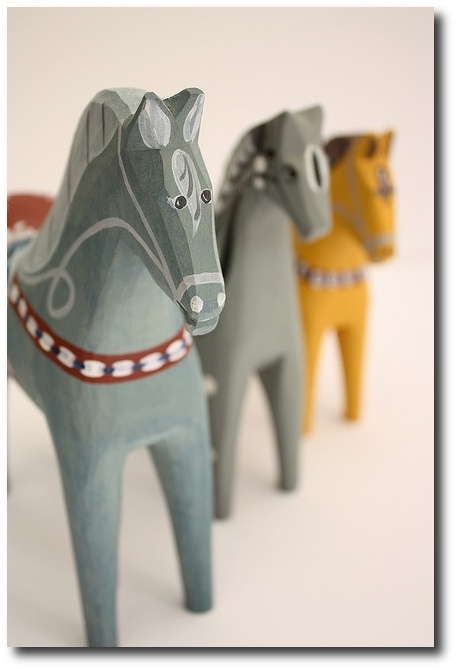
Dala Hast (swedish wooden horse) by Hart Interior photo on Flickr
Find similar images to this one on google images
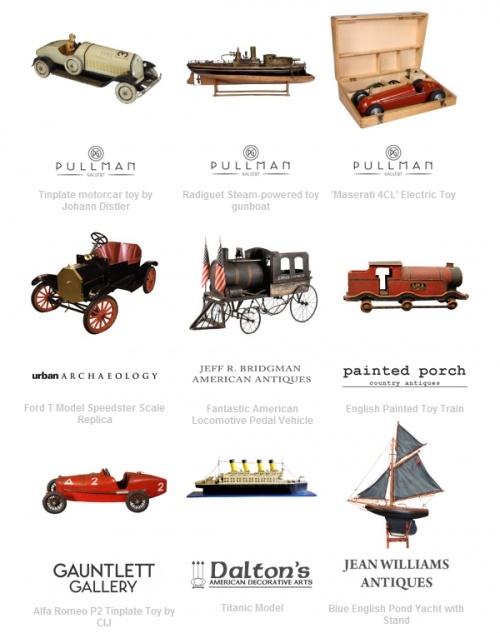 Decorate With Antique Toys- Ideas For Your Kids Room Decor
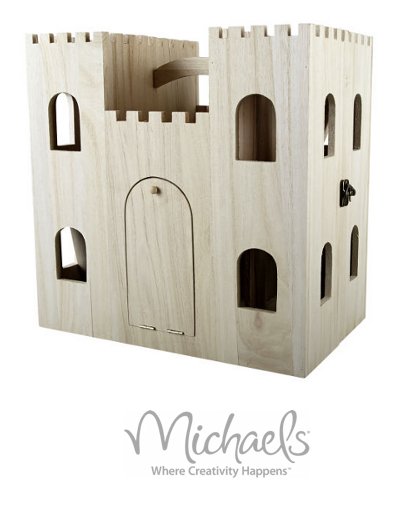 Art Minds ArtMinds™ Wood Castle Dollhouse – Michaels
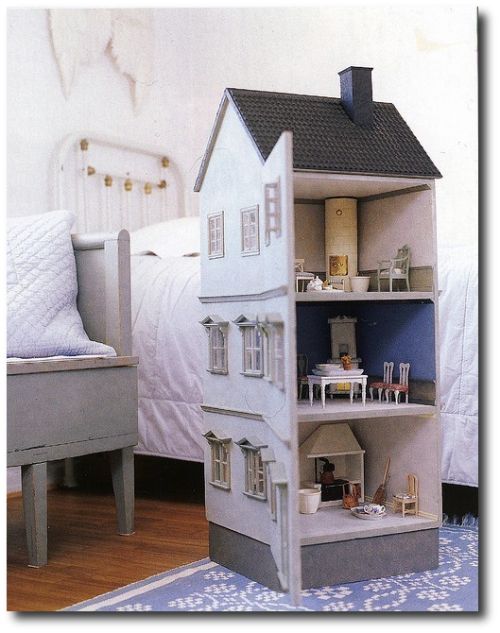
Decorate with old wood painted doll houses. As you can see this photo actually contains Swedish doll house furniture!
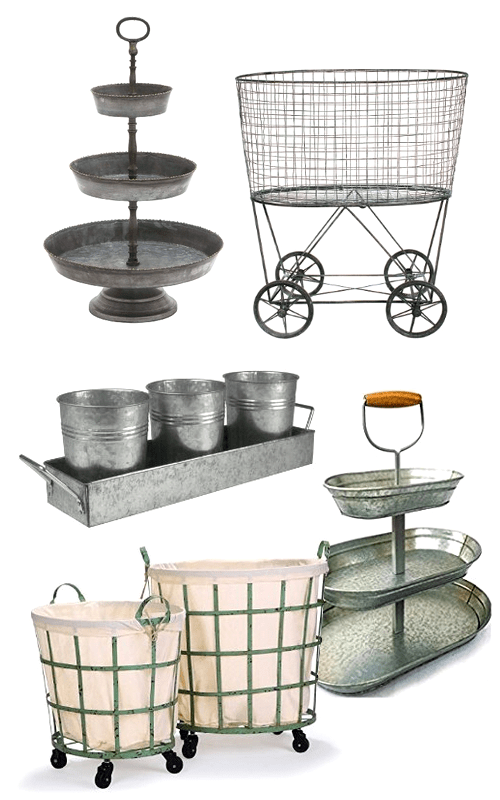 Deco 79 Metal Galvanized Tray, $81.84
Oasis Picnic Caddy & Planter Set, Galvanized Toy Buckets? $14
3 Tier Galvanized Metal Stand $52
Metal Vintage Laundry Basket with Wheels $124
Adeco Round Rolling Laundry and Storage Baskets $99+ $32 Shipping
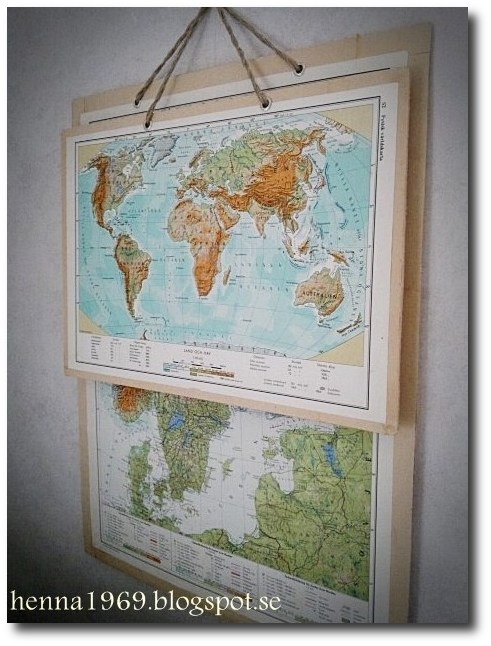
Consider layering maps on the wall by using thin plywood.
Read more on henna1969.blogspot.se
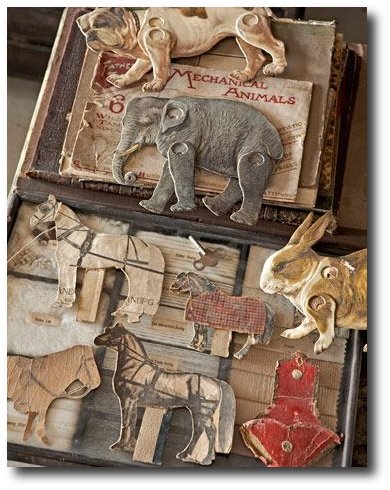
19th-century English paper animals-Found on countryliving.com
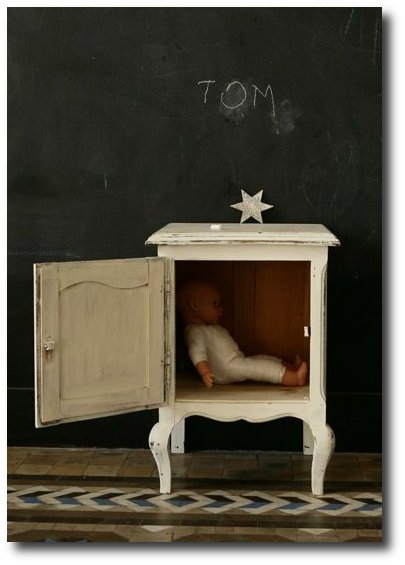
Based in Barcelona, is owned by Kathleen Boonen and Jan Dönhardt, a couple with Belgian, Dutch and German origins – Found on pirouetteblog.com
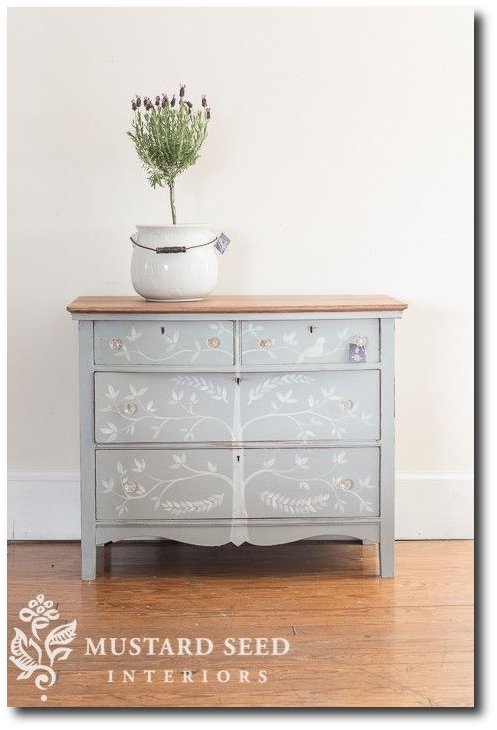
Dresser With A Tree – Found on missmustardseed.com
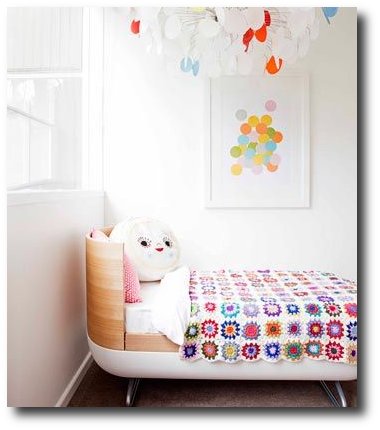 Real Living November 2010
Bring color into the room with a white based knitted blanket
All Things Beautiful Blog: Marburger Farms Antique Show
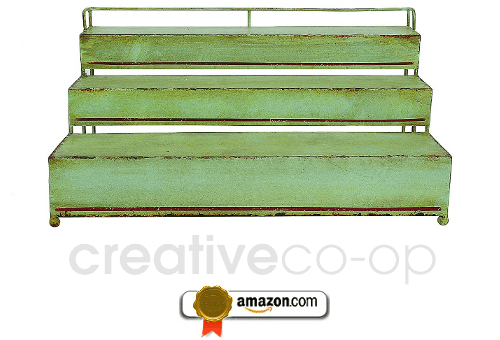 Creative Co-Op Metal Three-Tier Rack, Green $49
Perfect for displaying toys
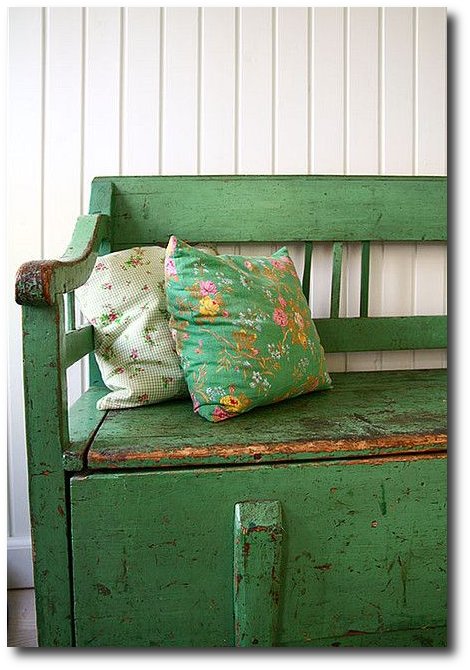
Swedish “slagbaenk” by Live Bohemian on Flickr
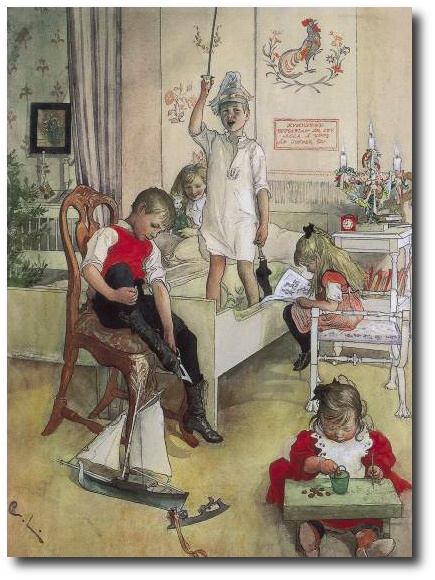
Carl Larsson 1894
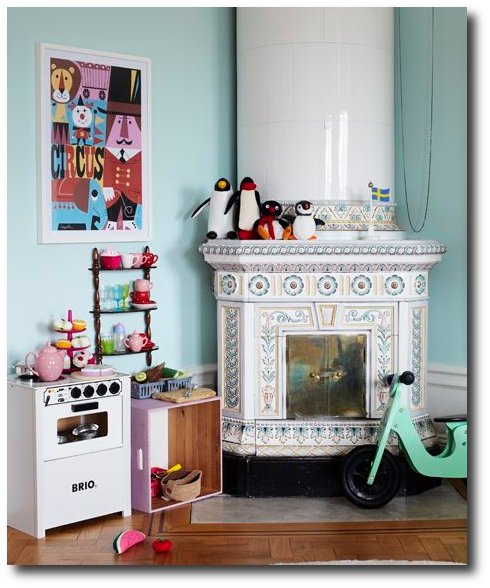
Children’s toys featured with a Kakelugn tiled stove- Found on familyliving.se
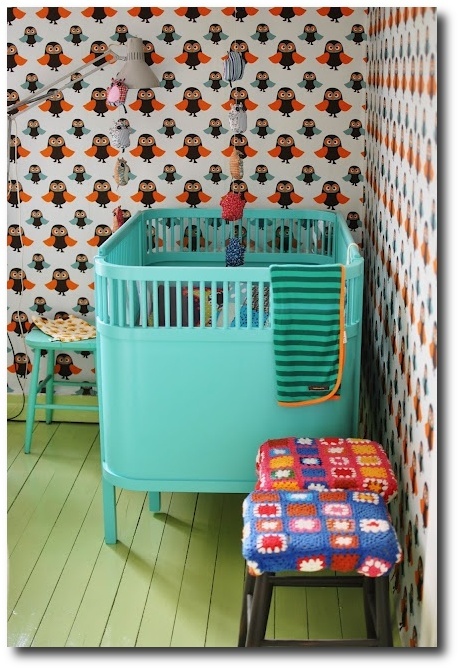
Turquoise crib – Found on in-myhouse.blogspot.se