
Swedish Council Of America Articles
DECORATIVE ARTS
- Antikhuset (Spring 91)
- Falu rödfärg (red paint) (Winter 89)
- Ferdinand Boberg (Summer 97)
- FibreWall (Spring 90)
- Gärdsgård: The Swedish Longfence (Spring 96)
- Kakelugn: Heating the Swedish Way (Summer 89)
- Loran Nordgren’s Swedish-Style Home (Autumn-Winter 98)
- Pergo Flooring (Winter 97)
- Rejmyre Lamps (Autumn 90)
- Sweden Sends Its Best (Autumn 87)
- Swedish Craft and Design in the 20th Century (Autumn 88)
- Swedish Culture in the 1980s (Autumn 88)
FOLK ART
- All Tradition is Change (Summer 95)
- Lindsborg’s Dala Horseman (Summer 87)
- Swedish Folk Art (Autumn 94)
- The Swedish Wooden Horse (Summer 93)
- When Moses Became a Swede (Spring 98)
FABRIC ARTS
- Folk and Provincial Costumes (Winter 91)
- Helena Hernmarck’s Tapestries (Autumn 92)
- Glimåkra Looms (Spring 89)
- Swedish Craft and Design in the 20th Century (Autumn 88)
MUSEUMS
- The Art of Preserving a Swedish Heritage (Autumn 97)
- National Museum: 200 Years of Art (Summer 92)
- Richard Oldenberg, Museum Director (Spring 94)
- Sweden Sends Its Best (Autumn 87)
- Uppsala’s Gustavianum Museum (Winter 99)
- The Vasa Comes Home (Spring 90)
WOODWORKING
- See also FOLK ART, above
- How to Build a Nyckelharpa (Summer 87)
- Jonsered Chain Saws (Summer 92)
- Swedish Boatbuilding in Yankee Maine (Spring 87)
- The Vasa Comes Home (Spring 90)
- Woodcarvers of Lindsborg, Kansas (Summer 92)
PAINTING AND DRAWING
- Albertus Pictor: Sweden’s First Great Painter (Autumn 93)
- America Discovers Anders Zorn (Winter 93)
- Carl Larsson and Sundborn (Autumn 91)
- Fred Somers, Swedish-American Artist (Spring 94)
- Gustaf Tenggren’s Golden Tales (Winter 87)
- John F. Carlson: American Landscapes (Spring 95)
- Jordi Arkö: A “Neo-Runic” Artist (Winter 95)
- Lindsborg and the Legacy of Birger Sandzén (Spring 93)
- Margareta Sjödin and Hanna Hellsten (Winter 94)
- Mona Starfelt: From Poems to Paints (Winter 93)
- National Museum: 200 Years of Art (Summer 92)
- Ray “Padre” Johnson (Autumn 92)
- Roger Tory Peterson (Spring 97)
- The Royal Artists of Sweden (Spring 94)
- Sweden Sends Its Best (Autumn 87)
- Swedish Culture in the 1980s (Autumn 88)
- Swedish Folk Art (Autumn 94)
- Ulla Wachtmeister’s Colorful World (Summer 94)
CRAFTS AND DECORATIVE ARTS (book reviews)
- The Book of Wheat Weaving and Straw Craft: From Simple Plaits to Exquisite Designs (Winter 99)
- Carl and Karin Larsson: Creators of Swedish Style (Summer 98)
- Carving Swedish Woodenware (video) (Summer 92)
- Creating the Look: Swedish Style (Spring 97)
- Dräktbruk och linnetradition I dalasocknarna Svårdsjö och Enviken (Autumn-Winter 98)
- Essential Swedish Style (Spring 97)
- Gamla möbler (Winter 96)
- The Magic Horse: “Devil’s Plaything” That Became a National Symbol (Winter 99)
- Making Swedish Country Furniture & Household Things (Autumn 94)
- New Swedish Style: A Practical Decorating Guide (Spring 97)
- Old Swedish Quilts (Spring 96)
- Poems of Color: Knitting in the Bohus Tradition (Summer 96)
- Porches of Pride in the Swedish Province of Hälsingland (Summer 99)
- Scandinavian Country, JoAnne Barwick (Spring 92)
- Scandinavian Country, Pamela Diaconis (Autumn 99)
- Scandinavian Painted Décor (Spring 91)
- Scandinavian Painted Furniture: A Step-by-Step Workbook (Summer 98)
- Sjutton Skansenhus berättar om Stockholm (Winter 99)
- Skansen: Traditional Swedish Style (Winter 96)
- Solveig Kristiansson, folkkonstnär (Summer 99)
- Swedish Carving Techniques (Summer 92)
- Swedish Folk Art: All Tradition is Change (Spring 95)
- A Swedish Legacy: Decorative Arts 1700–1960 in the Collections of the Nationalmuseum, Stockholm (Spring 99)
- The Swedish Room (Winter 95)
- Swedish Sweaters: New Designs from Historical Examples (Summer 91)
- A Taste for All Seasons: Cooking and Design in Sweden (Autumn-Winter 98)
5 Homes Decorated Around The Nordic Style
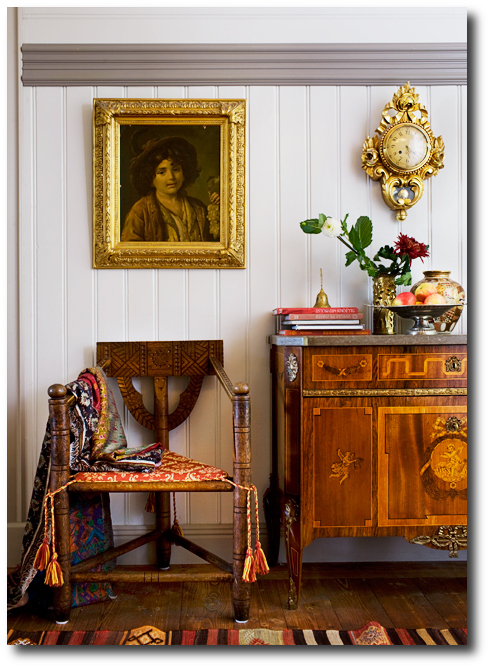
New Orleans invid Mälaren- Skona Hem
Country House Inspired After New Orleans -One hundred and fifty meters from Lake Mälaren is 1800-century house whose decor is inspired after the famous city of New Orleans. Kristina Spur found the house 11 years ago in deplorable condition. It leaked, had no electricity, water or heat. The building had been abandoned since the 1950s, and the roof was almost completely destroyed as the home had it’s original roof timbers from 1887 when the house was first built. In February 2001, she moved in with her two sons Oscar and Gustav, then 3 and 5 years old. Read more about this transformation at Skona Hem
A Swedish Seaside Home Decorated Around The Nordic Style- This Scandinavian home is surrounded by rocks and sea. The owner, Jacob is an architect followed in his forefathers steps, as his ancestor designed the the library in 1760, at the Royal Palace in Stockholm. His home boasts huge windows, which can be seen from the ocean, and lets in a terrific amount of light, and provides an open concept with the vaulted ceilings. Interior wood paneling on the walls brightens things up. The interior decor mingles the new with the old. One of the oldest pieces in the house is a rococo sofa from 1760, which was completely refurbished. Originally featured at werandacountry.pl
Granholms Estate has been named the the Manor of the year in 2014 in the Great Gods & Farms Gala. Gransholm is also Mary and Jan Åke of Trampes private homes. Granholm’s mansion, built in 1812, has regained its original beauty. With great passion and respect for the history, the family has managed to create a modern functional home while preserving the cultural history behind the home. The mansion also serves as showroom for antiques. See the rest of the pictures in godsochgardar.se
Gotland House- When Asa Hallin and Håkan Jacobsson finally got to buy the house of Hemsedal municipality 20 years ago, it was run down and in poor condition. Håkan is a carpenter by profession, and through the process of renovating the house, they enlisted the help of another carpenter, a mason and a painter. Over a year and a half, they completely restored it back to the style resembling its original condition. Read more at lantliv.com/
Restored Home Built In 1792- There isn’t a lot of information about this last Swedish home on the internet. The home is decorated with classic Swedish distressed furniture. It is unclear how many rooms are in this house, but an obvious kitchen/ dining room has a large center table, with two rectangular side tables pushed together. Off this room, is another bedroom with a twin bed, and rustic wood chair. A children’s room is the highlight of the tour, with a painted blue doll house situated on a table, with a country style Swedish bed with draperies. A stenciled floor make this room memorable. Photography Solvie dos Santos
View the pretty pictures below:


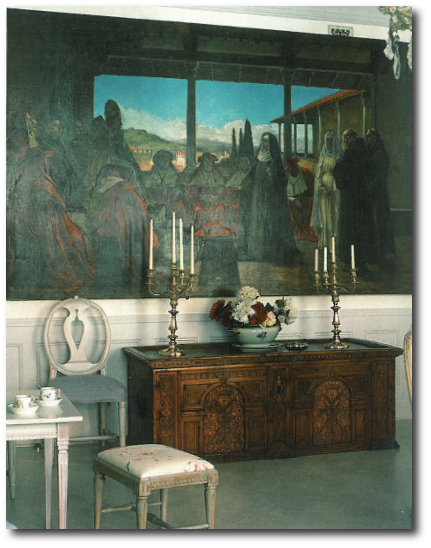


Swedish Reproduction Furniture At Solgarden

House Beautiful Magazine, 2002, Picture Credit solgarden.se

If you are looking for beautiful reproduction Swedish furniture, consider Solgarden. Solgarden has two lines of furniture, one named “classic”, and the other named “vintage”.
Solgarden Classic- This line is manufactured by a Swedish furniture maker and the timber is locally grown in Sweden. This line is inspired after authentic 1700s furniture found in Sweden. Within this line, you will find furniture inspired after gustavian, rococo and baroque styles. All of their furniture is hand painted adjacent to their store.
The pricing of the furniture includes a choice of color within their “Solgård Colours”. Their signature painting is a process that involves nine different applications. While you have the option to paint the furniture, you can also have it finished to a “worn” appearance that also gives the look and feel of antique furniture.
Solgarden Vintage- Here you’ll find beautiful pieces found around Sweden which have been restored and refreshed with paint or new fabric. Often times these pieces are one of a kind, very unique and special. If you are looking for something specific, which you cannot locate yourself, contact them, and they can do their best to locate that item. Solgarden also offers furniture painting, furniture upholstery and sewing services.
About Solgarden
The operation was named Solgarden, and was originally founded out of a yellow house. After a few years, the business grew and moved to Karlavagen 58 in Stockholm. It was in 1998 when the company changed owners, and over the years the business developed a passion for concentrating their efforts in Gustavian styled furniture, and it was there that special pieces were copied and reproduced. The level of painting evolved over the years, and the quality of the furniture just got better over time.
In 2012, Anki and Mary took over, and Solgarden opened the current store on Surbrunnsgatan 28 in Stockholm. Skilled painters and artists continue to paint furniture next to their shop, and they have expanded to also offer add one-of-a-kind older refurbished furniture along side their 1700s reproduction furniture. A customer can also take advantage of their upholstery and sewing services. If you need slipcovers made, upholstery for a chair, or settee, or bedding and drapery to be made, they can do that too.
Contact Solgarden:
- Surbrunnsgatan 28, 113 48 Stockholm
- +46 (0)8-663 93 60
- info@solgarden.se
- www.solgarden.se
This stunning feature was featured in House Beautiful back in 2002. Read all about Marianne von Kantzow’s apartment located on Strandvagen:
“Welcome to my latest love affair,” said the invitation to the launching of Solgarden’s new management four years ago; Marianne von Kantzow just abandoned her post as as a construction executive” to take the helm at one of Sweden’s premier makers of reproduction Gustavian furniture and objects. The daughter of Swedish aristocrats, she was raised in an 18th-century manor in the countryside north of Stockholm where “you could find not just Gustavian furniture but details of the style everywhere—walls decorated with painted canvas in colors such as pearl gray and decorated with swags of flowers in lovely pastels.” she remembers.
At Solgarden she offers furnishings that hark back to the years between 1770 and 1790, a golden age in Sweden during which King Ciustav III had his own love affair—with the fashions of the French court. Solgarden continues to discover antique pieces to reproduce, often with the help of the distinguished decorative arts scholar Lars Sjoberg. The company makes tables and chairs finished in the traditional 18th-century gray paint, but von Kantzow has also modernized the look of her furniture by using what she calls “Solgarden white.” This color, her trademark, is a soft “broken white” la European term for off-white) antiqued in her store’s workshop with eight layers of paint and one of wax.
Von Kantzow also tinkers with tradition in her nine-room apartment on Strandvagen, Stock-
holm’s Fifth Avenue. Divorced after a long marriage that produced five now grown children,
she left a picturesque weekend house on an island in the Stockholm archipelago and now lives
in town full time with her companion, a lawyer. “He and I have the same taste.” she reports,
although her decor is so “un-Swedish” that when she hosted her daughter’s engagement patty,
the young woman’s future mother -in-law expressed fears that her son might have to live with
Marianne von Kantzow’s aesthetic. “Swedes are generally afraid of strong colors on themselves and in their homes,” says von Kantzow. “They walk into my house and stare with their mouths open, and I can see they wish they could be as daring.”
The late 19th-century apartment overlooking the National Museum and the waterfront is decorated with the same colors that von Kantzow has used in all her houses. “I love while with other colors, preferably strong pastel tones of blue and pink.” she says, “They give love and happiness to a room.” Her color palette is both pleasing and practical. “I believe in color schemes that allow a person to move furniture from room to room without having to reupholster everything.
The apartment’s 15-foot ceilings and ample natural light are dramatic and accommodating. The piece de resistance is the drawing room, where against rosy pink walls von Kantzow has arranged two conversation groups, using her collection of signed late-18th-century furniture upholstered in pink velvet and blue period documentary fabrics. Anchoring two opposite walls, she has hung paintings close to her heart, one of her great aunt, the other showing a view of her beloved archipelago.
For the formal dining room she painted a forthright Wedgwood blue on her walls, along with Solgarden white for the panels. Two pieces immediately attract attention: a 19tg century cut-glass chandelier—a copy of one made for the Austrian empress Maria Teresa—and an 13th-century Dutch cabinet housing pan: of von Kamzow’s china and silver collections. Most of the dining chairs are 18th-century originals.
Von Kantzow- shows her playful side in the kitchen and study. The former took its surprising lime and pink accent colors from the heating stove installed at the time of the buildings construction. In the latter, von Kantzow uses a shack of sorts, complete with roof and trompe l’oeil scenery, as a walk in closet.
If only von Kantzow could enjoy her urban oasis more often. Like any good enterprising Swede, she works long hours—sometimes seven-day weeks. Fortunately her soothing yet stimulating shop makes up for it. Customers, she says, “come in and say things like ‘All this whiteness makes me calm,'” and they tend to stay a while, conversing deeply with strangers.
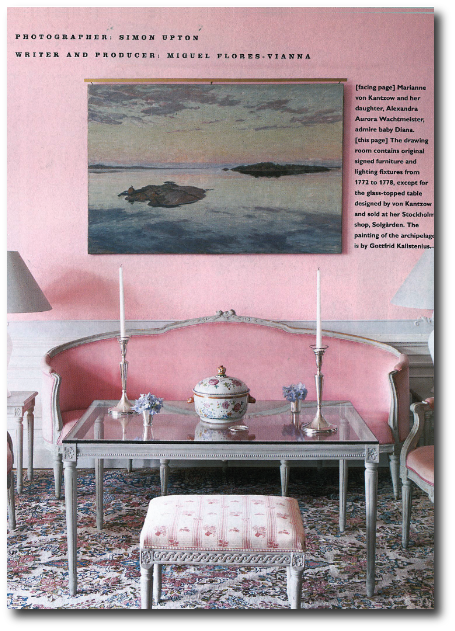
House Beautiful Magazine, 2002, Picture Credit solgarden.se
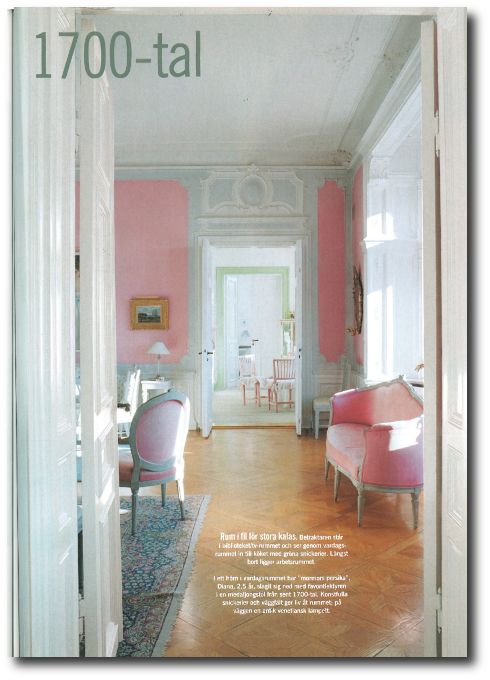
Pink Gustavian Interior -SKONAHEM
2004 Picture Credit solgarden.se
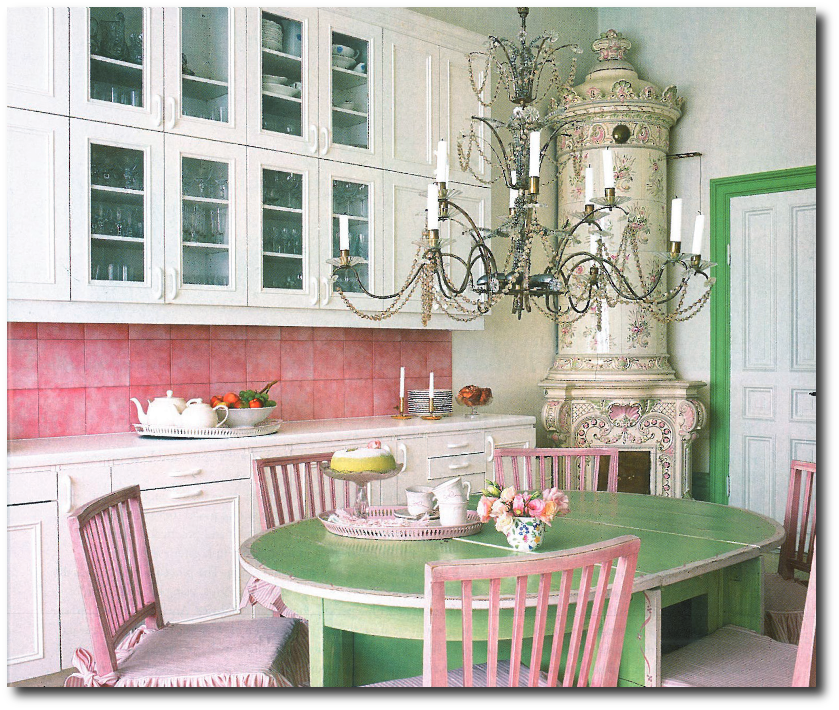
House Beautiful Magazine, 2002, Picture Credit solgarden.se
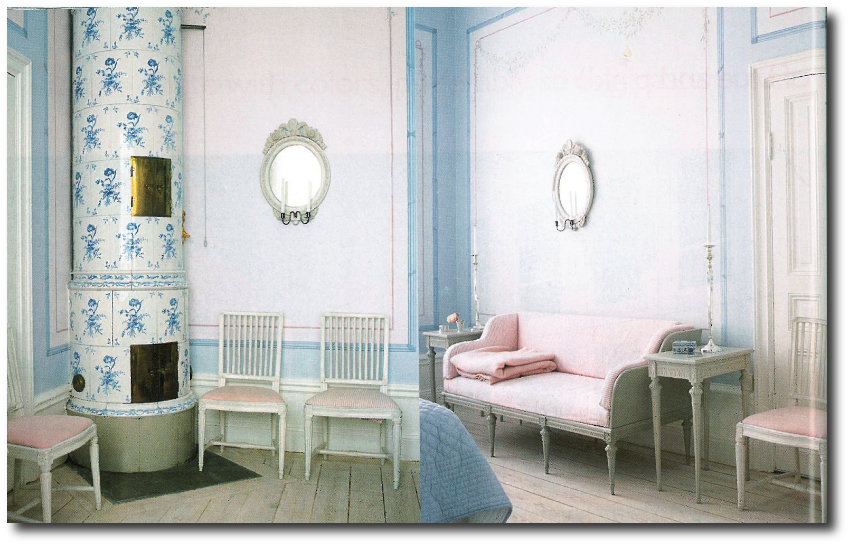
House Beautiful Magazine, 2002, Picture Credit solgarden.se
Pink Gustavian Interior -SKONAHEM
2004 Picture Credit solgarden.se
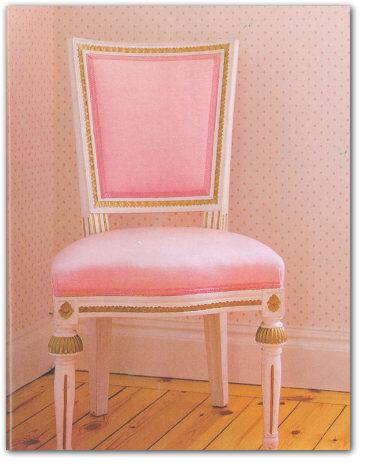
Pink Upholstered Gustavian Chair- GODS & GARDAR
2004 Picture Credit solgarden.se
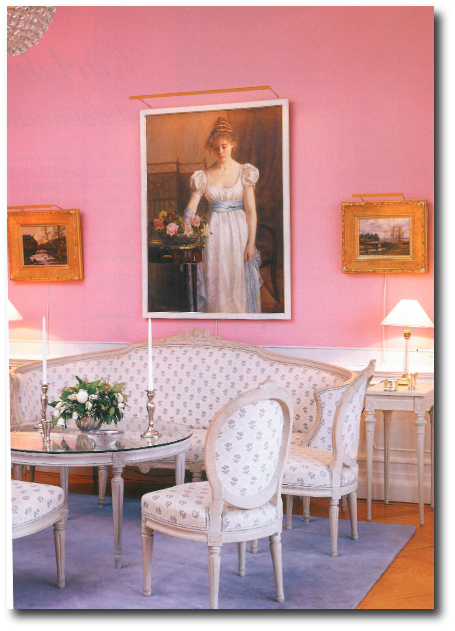
Gustavian Room – BAZAAR
2002 Picture Credit solgarden.se
Swedish Interior, Designer Marianne von Kantzow Seen In Hem & Gardar Magazine, Featured At solgarden.se
More Picture Credits :
- Baby Swedish Toys In A Nordic Styled Interior – Picture Credit solgarden.se
- Swedish Interior, Designer Marianne von Kantzow Seen In Hem & Gardar Magazine, Featured At solgarden.se


Behind The Rundale Palace in Latvia
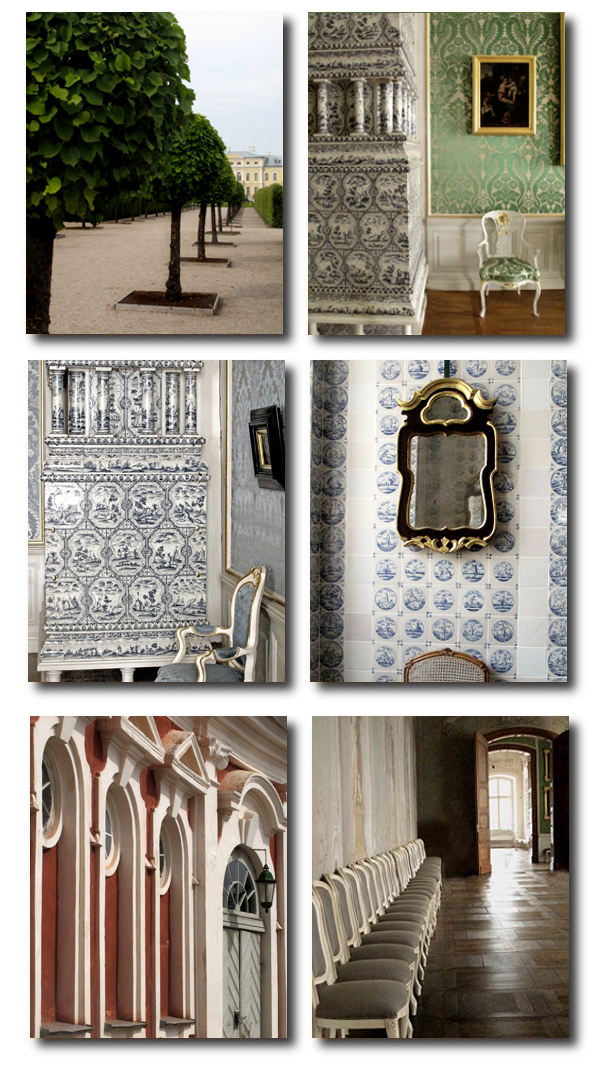
This week we’re visiting Rundale Palace in Latvia, newly restored to former glory. I can’t wait to go there.
This summer, New York-based photographer Christopher Flach discovered this world-heritage Latvian palace, Rundale. I had been aware of this baroque treasure, and knew it was undergoing major restoration. Chris was there just at the right moment.
Rundale, built between 1736 and 1740, is important because it paints a vivid portrait of the period from 1730 to around 1812. Rundale graphically embodies the world of an international coterie of eighteenth-century architects and craftsmen who traveled from one job-site to the next in Europe. These talents worked on palaces and museums for the Russian and Swedish and Latvian kings and czars and queens and empresses and nobles in the late eighteenth century.
Rundale Palace is one of the most outstanding monuments of Baroque and Rococo art in the Baltic region.
Read more at the thestylesaloniste.com
Nordic Style Historical Interior Decorating Books – Living Museums in Scandinavia
Living Museums in Scandinavia By Per Nagel- On Amazon From $89
An inspiring, interesting and useful insight into Swedish life and interior decoration of the past. This is a lavish photographic guide to 13 historic houses in Scandinavia that have been preserved exactly as their original owners left them. They have now been opened to the public as museums.
The houses featured represent a wide range of types, from the sophisticated Jugend style to simple country dwellings, city houses and studios, and belonged to artists, architects and scientists, as well as ordinary folk. Painstakingly reconstructed and preserved with authenticity, these homes offer the reader a rare opportunity to travel back in time to experience the best in Scandinavian style, characterized by simplicity and by clarity of light and color.
From The Amazon Preview:
The museums chosen for this book are all authentic Scandinavian homes. Their distinctive common Scandinavian origin is evident in the wonderful clarity of light and colour and in the beautiful, simple living style for which Scandinavia is so well
known.
These museums also have in common that they seem especialry alive because they are still intensely reflecting the life that was once lived in them. They are all real, in
the sense that they were created by those who originally lived there. It is as though the residents have just stepped out for a moment! These homes represent a wide variety of types ranging from a sophisticated Jugend style to simple country style, and from urban houses to farms and artist’s studios. The residents have represented many social levels from famous citizens and farmers to well-known artists, architects and scientists.Because of the strong authenticity of these places, they offer us a rare opportunity of going back in time and experiencing different ways of living, and perhaps
finding inspiration for our own lives.
Photographer Per Nagel has collaborated with architect Vibe Udsen for many years in publishing the world-wide distributed architectural annual, LIVING ARCHITECTURE, which is based on his exceptional photographs of Scandinavian architecture.
In LIVING MUSEUMS IN SCANDINAVIA, Per Nagel’s evocative photographs convey the atmosphere of these old residences in such a magnificent way that the reader almost has the feeling of having been there.
Table Of Contents:
8 Melstedgard Farm House on Bornholm, Oenmark
16 Erichsens Gard Townhouse on Bornholm. Denmark
24 Hjorth’s Pottery on Bornholm. Denmark
26 Michael and Anna Ancher’s House The Artists’ Home In Skagen. Denmark
42 Holger Drachmann’s Villa Pax The Artist’s Home in Skagen. Denmark
58 Kauppila Farm House in Finland
68 Qwensel House Chemist’s Shop ana* Home in Turku. Finland
82 Hvittrask Architects Saarinen, Gesellius and Lindgren s Home in Finland
96 Carl Larsson-Garden Karin and Carl Larsson’s Home in Sundborn. Sweden
124 Zorngarden Artist Anders Zorn’s Home in Mora. Sweden
138 Carl von Linne Carl Linnaeus’ Town House and Summerplace in Uppsala. Sweden
163 Siggebohyttan Mine Owner’s House in Nora, Sweden
182 Husantunet Farm House in Alvdal. Norway


Decorating Around Red- Historical Interior Design Ideas
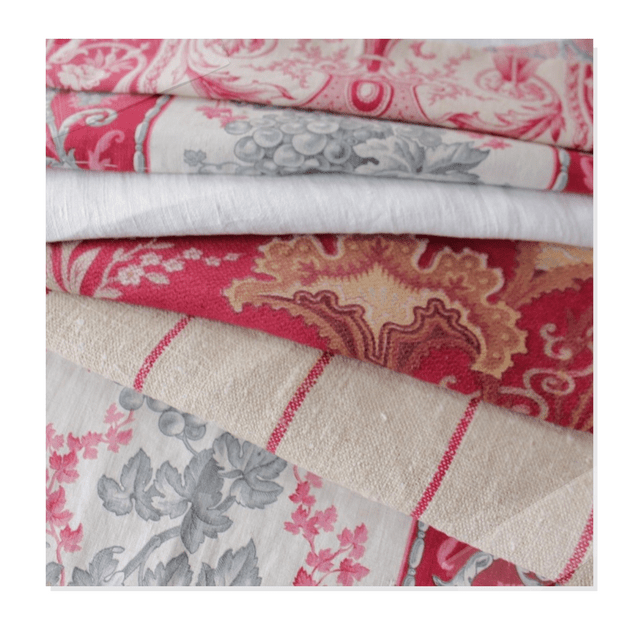
Antique Vintage European Textiles On Ebay
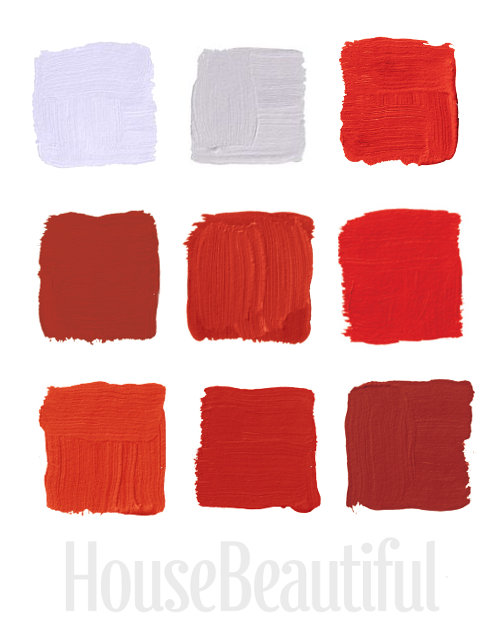
House Beautiful Magazine featured the top favorite red colors from the most famous interior designers. Here are my favorite 9 red shades of paint from their selection of 24
TOP ROW:
1.”This is a really deep coral, kind of like a cheerful Chinese red. Pinks and reds to me are synonymous with frozen drinks and relaxing.” –Richard Mishaan Pictured, Benjamin Moore‘s Chili Pepper 2004-20
2.”When I look for red, I want a pure, true red, like the color in the American flag. Ralph Lauren does absolutely the best. It’s the essence of red. It makes me think of boating or polo.” –Suzanne Kasler Pictured, Ralph Lauren Paint‘s Dressage Red TH41
3. “Red never goes out of style. It’s full of life — always fresh, always fun to wake up to. We go for reds with less blue in them and more orange because they’re happier to live with.” –William Diamond and Anthony Baratta Pictured, Ralph Lauren Paint‘s Lattice Red IB57
MIDDLE ROW:
4. “It’s a true, deep red. I like the temperature of it: it’s a bit cooler. But a little red goes a long way. It’s good in areas where you don’t spend much time or in boring areas that need a strong burst of color.” –Roderick Shade Pictured, Benjamin Moore‘s Million Dollar Red 2003-10
5. Benjamin Moore‘s Redstone was used in Eldon Wong’s cupboard.
6. “All my life I’ve pursued the perfect red. I can never get painters to mix it for me. It’s exactly as if I’d said “I want Rococo with a spot of Gothic in it and a bit of Buddhist temple” — they have no idea what I’m talking about.” –Diana Vreeland Pictured, Benjamin Moore‘s Red 2000-10
BOTTOM ROW:
7. “Red is the color of excitement, and I tend to go for corally orange reds. With red, you know you’ve arrived and you glance in the mirror and realize how great you look and breeze right in.” –Keith Irvine Pictured, Benjamin Moore‘s Salsa 2009-20
8.”I prefer the warm, vibrant reds to the historic reds, which are beautiful but sedate. This is a daring red, a real fire engine red. It has a playfulness that reminds me of a little red schoolhouse.” –Ruthie Sommers Pictured, Fine Paints of Europe‘s Dutchlac Brilliant Tulip Red W1001B-M
9.”Lately I’m on this anti-completely-neutral kick. You have to have some seasoning in your rooms. Sangria is good, universal-donor red — not too blue, not too orange, not too dark.” –Elissa Cullman Pictured, Benjamin Moore‘s Sangria 2006-20
Frijsenborg Castle
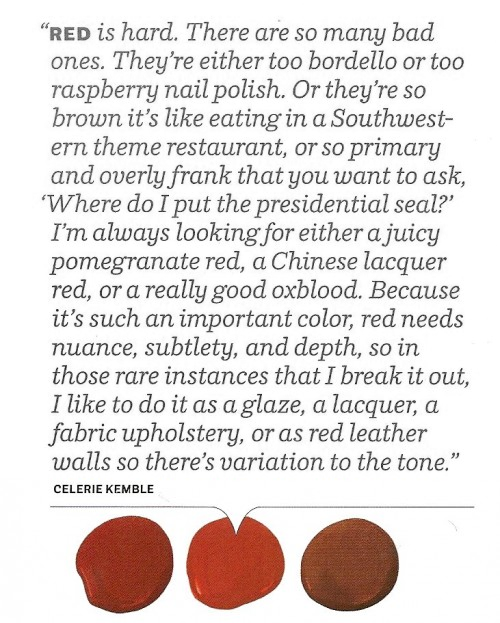 House Beautiful Color Celerie Kemble’s Advice
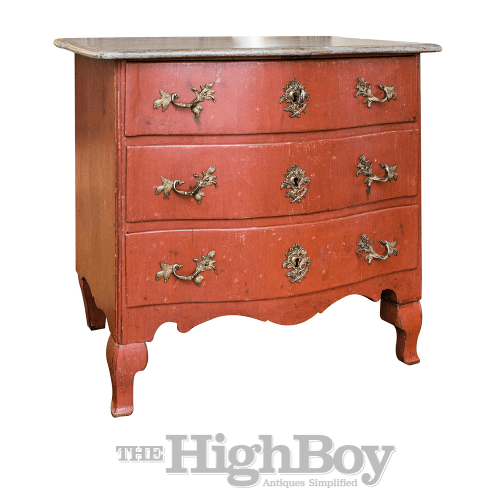 1760 Swedish Rococo Period Painted Commode thehighboy.com
Unknown Library Painted In Red
Photography By Simon Upton
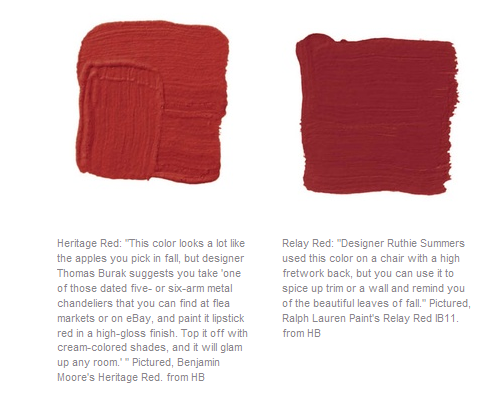
Favorite Red Paint Colors Seen In House Beautiful Magazine
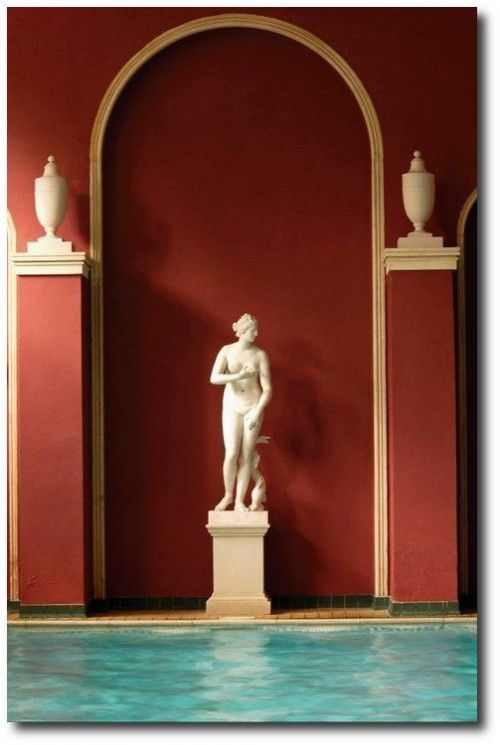
Hartwell House in Aylesbury, Buckinghamshire
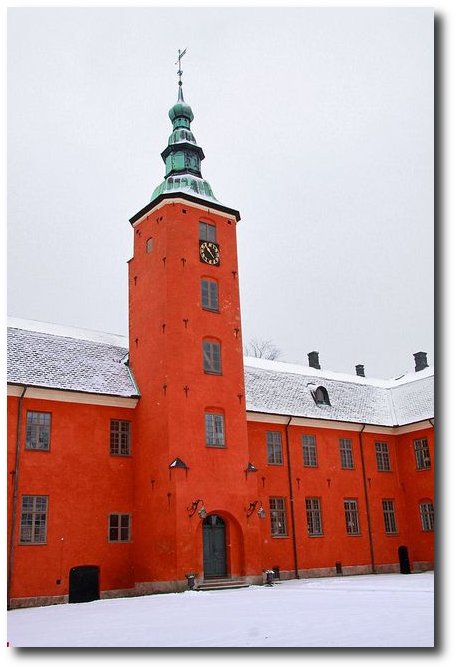
Halmstad Slott, Halland, Sweden- 2013-02-10 by Giåm on Flickr (cc)
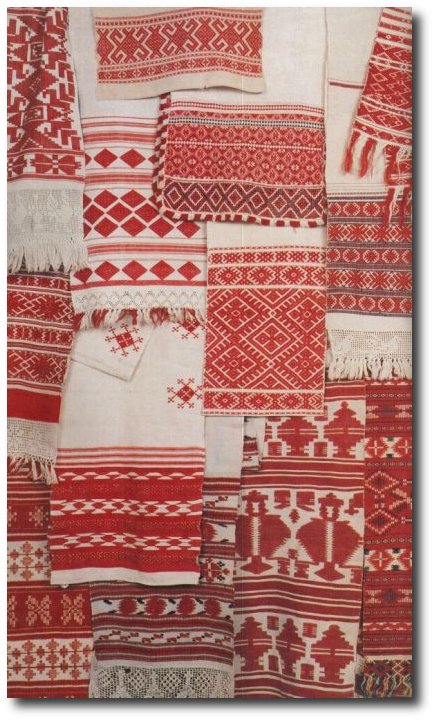
Beautiful Red Textiles Found on bohemianwornest.tumblr.com
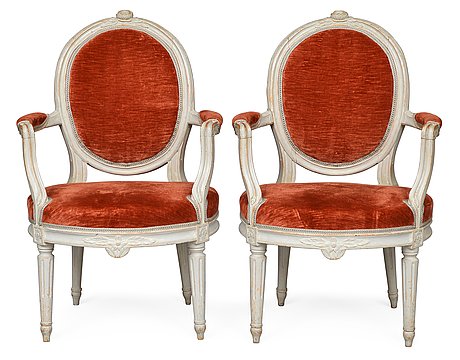
Gustavian armchairs signed Jacob Malmsten ( master in handcraft Stockholm 1780- 1788) from Bukowskis Classical auction 26-27 of May godsochgardar.se
18th Century Swedish Gustavian Grandfather Clock from Stjernsund Castle. The clock face is signed by Daniel Frång from Stjernsund. The inside of the clock case has preserved newspaper articles from the auction at Stjernsund Castle as well as information about important Swedish antiques clocks.- Scandinavian Antiques
Rembrandt Paintings Seen On Habitually Chic Blog
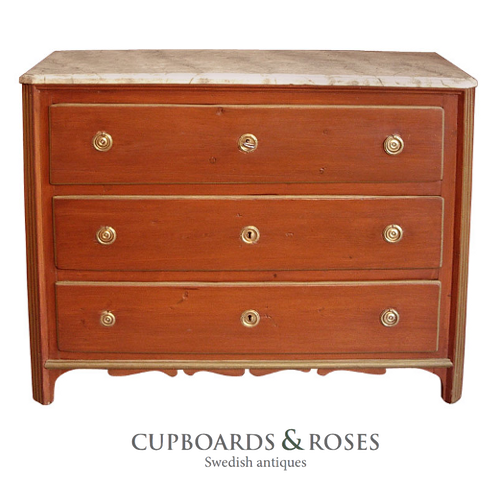 Early Gustavian chest of drawers, Sweden circa 1780, in secondary red paint. Chamfered corners, shaped bracket base, and faux marbled top. Cupboards & Roses
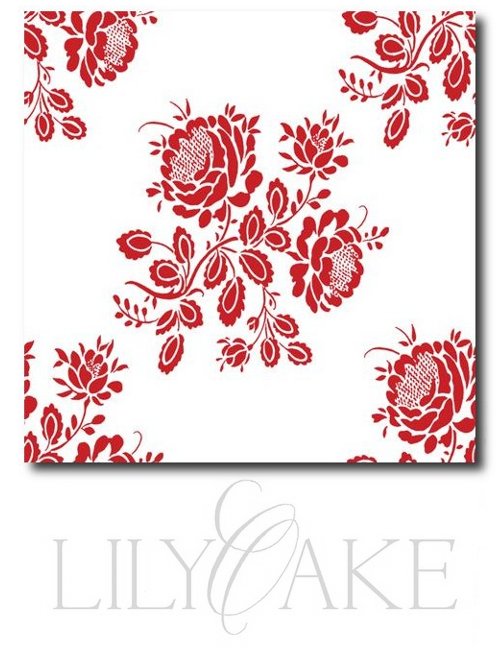 Gustavian Fabrics – Seen Pictured is Kristianstad Rose In Cranberry Red


Florence De Dampierre Comments On Nordic Furniture In Sweden And Denmark
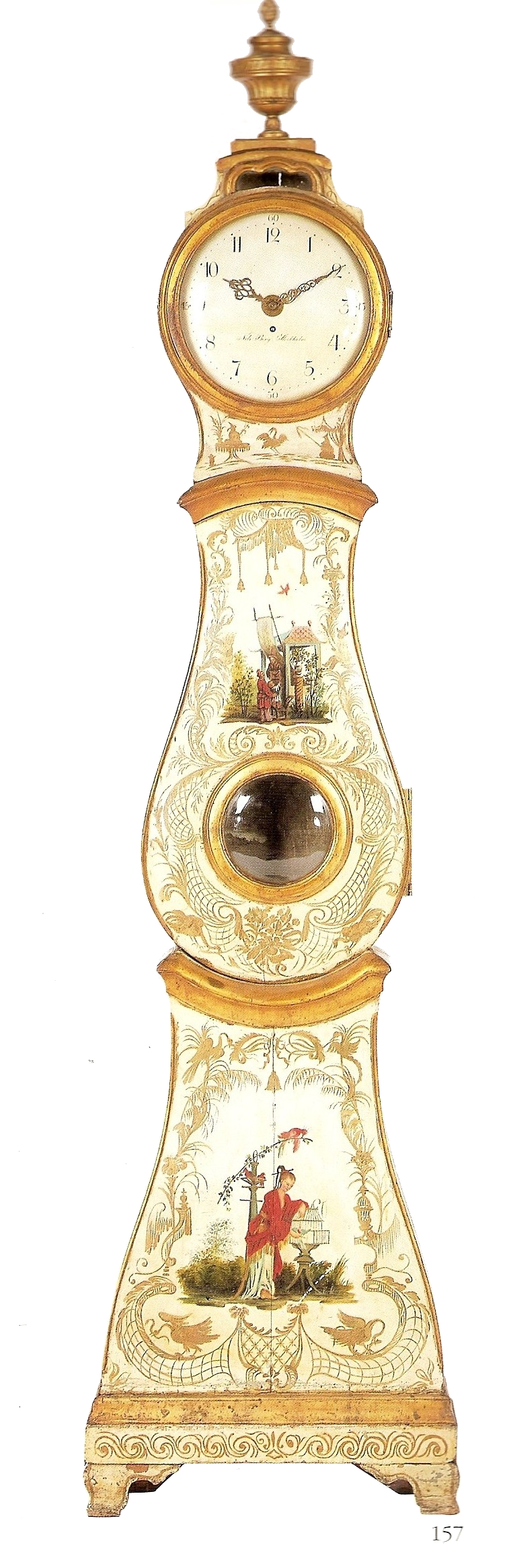
Chinoiserie found another outlet in the rare longcase clock at the right, made about 1765 by
Nils Berg, whose signature appears on the case.
The Best Of Painted Furniture By Florence De Dampierre, presents the tradition of painted furniture as it developed in Europe and the United States.
Dampierre, owns a New York gallery which features painted furniture, and specializes in tracing the art form in Italy, Spain, Portugal, England, Germany, Austria, Switzerland, Sweden, Denmark and America. She features French and Italian examples to simpler, more provincial American and northern European folk-art pieces. She talks about how art influenced furniture across Europe, as craftsmen adapted ideas and techniques. Various chapters discuss furniture embellishments and treatments from high art elegance to folk art simplicity.
Here are her comments on Sweden and Denmark:
Two important traditions of painted furniture developed in Sweden: the high-style aristocratic furniture that evolved from the international taste for oriental lacquer beginning in the seventeenth century- and the rural folk tradition, which grew up both in the manors of landowners (where it attempted to imitate its elegant counterpart) and in humble peasant dwellings. As late as the seventeenth century the great houses of Sweden were still closed fortresses—large rectangular structures furnished with imposing, simple chairs and tables. Tastes began to change by the end of the century when the architects Nicodemus Tessin and his son Nicodemus traveled to Italy, where they eagerly embraced the refined luxury of Italian and French styles. As the designers of Drottningholm Castle and the grand castle at Stockholm, the Tessins did much to spread the appreciation of sumptuous high Baroque decoration among the Swedish nobility.
Skane, the southern region of Sweden had painted furniture traditions of it own. Largely
derived from those of Denmark, since it was a Danish province until 1658. Southern pieces, primarily blanket chests and armoires, featured Rococo and Baroque decoration with rose bushes heavily laden with bloom. The Erik Eliasson style of painting spread from Dalecarlia to Skane at the end of the eighteenth century, intermingling with the
southern style.
Other regions invented their own designs. Painters from Delsbo or Jarvsd, in the Dellen Lake district, notably Gustavus Reuter, originated a version of Baroque style painting that was free of influence from other areas. In Jamtlancl (bordering Norway), the armoires, in typically Rococo style, were particularly interesting. In some areas along the seacoast, such as Blekinge, painted furniture was a rarity.
Florence de Dampierre | Facebook
Buy this book from Amazon for as little as $3.99
Picture Credits:
- Sköna hem Magazine
- Holiday Decorating in a Swedish Home Country Living Magazine
- Van Breems joins sons Lars and Martin in the kitchen for an afternoon of cookie-baking.
- Svindersvik, Stockholm, Sweden- Wikimedia.org
- Anders Zorn’s Studio in Mora
- Swedish Painted Trunk Seen At Country Gallery.com
- Country Painted Chest At Milord Antiques.com
- Överkalix Painting, See More At kurbits.nu
- Egeskov Castle In Denmark- www.skyscrapercity.com
- Swedish Painted Mora Clock- Swedish Decorating
- Close up faux painted detail of the clock
- Swedish Hand painted Cabinet Sold through Umbrella Home Decor
- The Best Of Painted Furniture By Florence De Dampierre
- A Swedish, Rococo Chest of Drawers Seller Dawn Hill Antiques
- This table-Liselund castle- made in 1795
- Stool in the neoclassical style seen at Liselund Castle
- The Best Of Painted Furniture By Florence De Dampierre
- Swedish Gustavian Console Table, C. 1810 , D.Larsson Swedish Antiques
- Gård & Torp Photo Karin Foberg
- “Story Time” (portrait of the artist’s father and daughter) by Knut Ekwall (1843 – 1912, Swedish)
- “Hårnäver” a headdress from Norra Ny in Värmland! (Sweden)Her hair is tied up in a red ribbon and she is wearing a hårnäver. This is a kind of diadem that is used as a hair band to keep the hair high up on the fore head. A hårnäver is made from two pieces of birch-bark that are sewn together with long stitches on the back. They are decoratively painted in red or reddish-brown. Matte paint is used to cover the hårnäver and patterns are painted on free-hand. Bark is collected from the birch trees – Found on folkthings.tumblr.com
- Furniture From Nordic Style
- Home of Lisa Larsson- Seen On jessimfine.se
- Svindersvik –Stockholms läns Museum
- Folk art trunk made by Stenström, from the south of Sweden, 1819. Bukowskis Market.com
- Swedish wedding chest with domed top dated 1809 Liveauctioneers
- Blue and White Porcelain Room
- Swedish Door Detail – KML Design.dk
- Mora clock – this is the rare Ångermanland Bride! The cases were made by local carpenters around 1820-1840. – Found on epokantik.com
- Egeskov Castle In Denmark- www.skyscrapercity.com
- Quenselska gården, Åbo, Finland. At that time Finland still was a part of the kingdom of Sweden. Found on sphotos-e.ak.fbcdn.net
- Ornak, A Folk Art Style Villa – See more of this property at Archdeco.org
- Original Painted Swedish Trunk, Dated 1843 Scandinavian Antiques
- Mora Grandfather Clock, circa 1842 Scandinavian Antiques
- Louis XVI Style Carved & Painted Cane Fauteuils Seen On Quality Is Key On Ebay


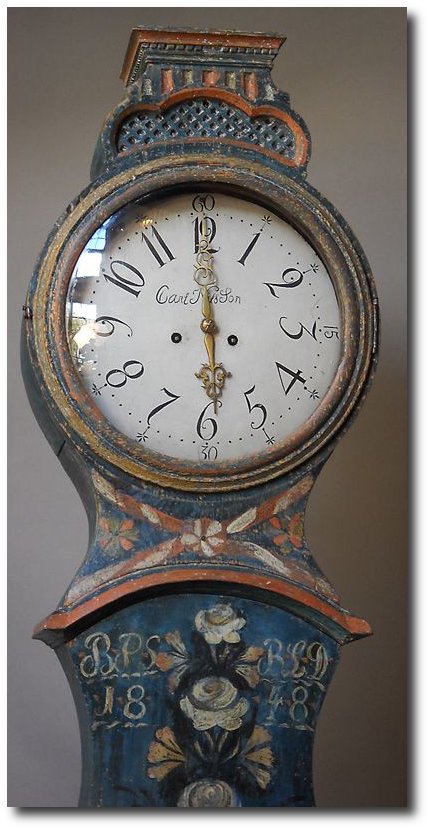
Swedish Mora Clock From Cupboards And Roses
Found on cupboardsandroses.com
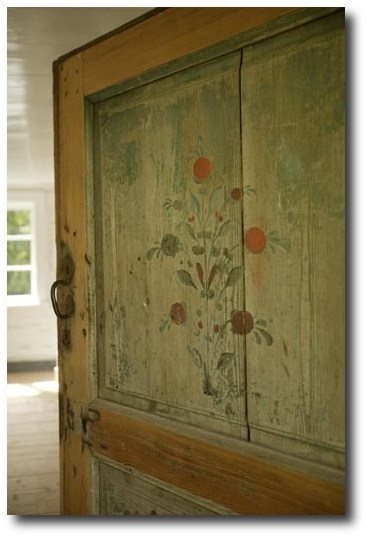
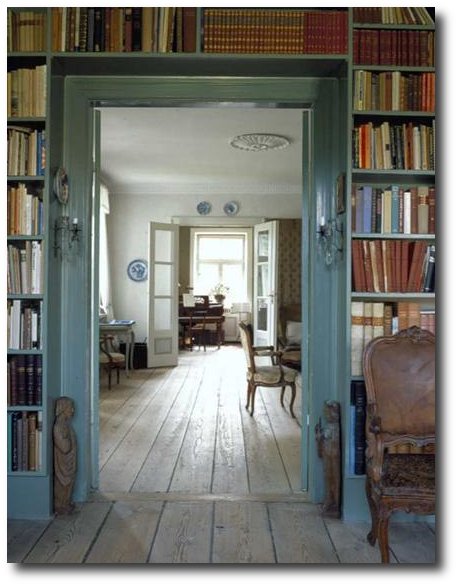
Sköna hem Magazine
Light Green Painted Swedish Mora Clock Cote Jardin Antiques
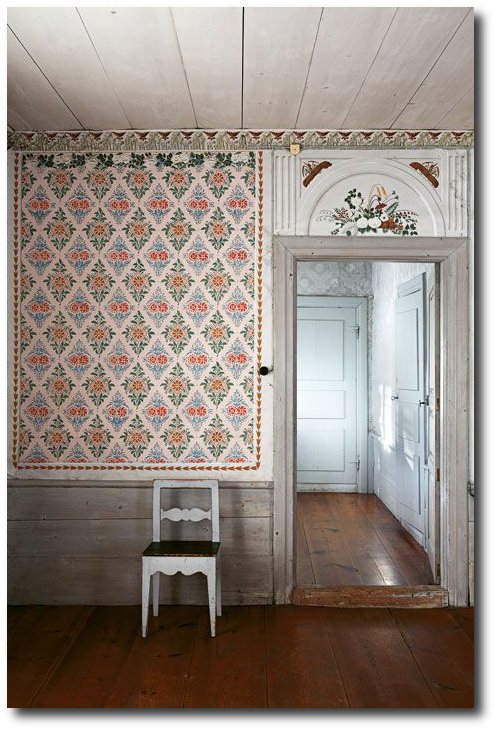
Decorated Farmhouses of Hälsingland – Life Beyond Tourism
Fjällbacka, Sweden


12 Designers Pick Their Favorite Paint Colors – House Beautiful


House Beautiful often features the best designers with their favorite go-to paint colors. Sometimes having the just-right color can make a tremendous difference in a room, or on a piece of furniture. Here are some of my favorites that work with the classic Gustavian/ Swedish interior design themes.
Ann Wisniewski – Sherwin-Williams Emerald Fawn Brindle SW 7640,
Cathy Kincaid – Farrow & Ball Estate Emulsion Pale Powder 204
Kerry Joyce – Benjamin Moore Natura St. Johns Bay 58
Lisa McDennon – Sherwin-Williams Harmony Conservative Gray SW 6183
Whitney Stewart – C2 LUXE Seedling C2-188
Allison Caccoma – Benjamin Moore Regal Harbor Haze 2136-60
Paul Corrie – Benjamin Moore Regal Select Blue Lace 1625
Ashley Whittaker – Farrow & Ball Estate Eggshell Pink Ground 202
Mara Miller – Ralph Lauren Paint Willow RLVM270
Kevin Isbell – Benjamin Moore Aura Buttered Yam AF-230
Lynn Morgan – Benjamin Moore Advance Nosegay 1401
Deborah Walker Sherwin-Williams Duration Gray Screen SW 7071
7 Of The Most Famous Swedish Furniture Designers And Decorators
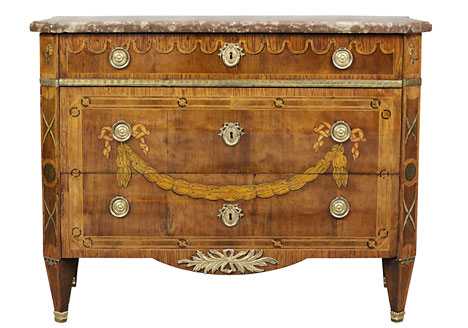 Bureau of Jonas Hultsten, champion in Stockholm 1773-1794. Veneered with rosewood, mahogany, maple and stained hardwood and slice of red limestone.
Jonas Hultsten
Jonas Hultsten was born in 1742 and was known in Sweden as a famous furniture maker. Hultsten completed his apprenticeship with Kristian Waistband in Stockholm, and earned the title of champion in his trade. He began working within the Rococo style, but was influenced by Georg Haupt who designed around the Gustavian style. Haupt influenced his choice of motifs in wood inlays, but after his death, he developed an eye which was all his own. He is best known for creating a design with a grid pattern featuring a small flower in each box. An example can be seen in the Princess’s bedchamber at Gripsholm Castle with a chest of drawers made around 1780.
Jonas Hultsten, Seen At Bukowskis.com
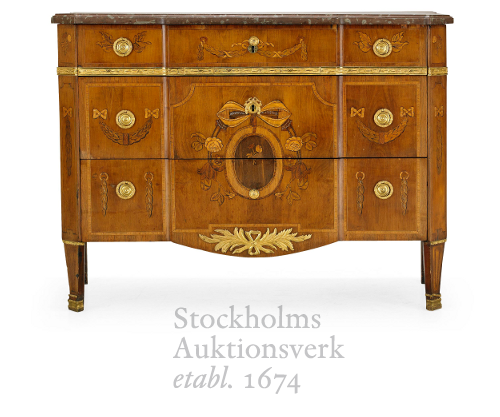 Jonas Hultsten, Seen At Auktionsverket.se
Johan Åkerblad
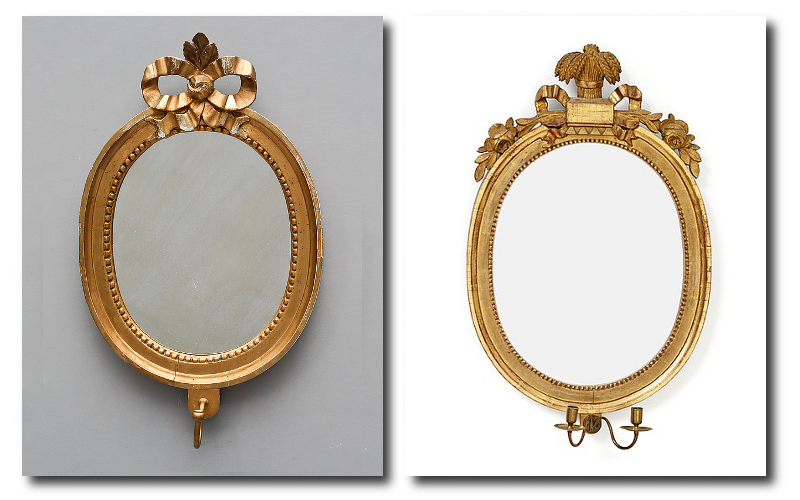
Åkerblad was one of Sweden’s most prominent and prolific mirror maker, working mainly in the Rococo and Gustavian styles. Johan Åkerblad’s mirrors were decorated with beading around the glass and classic decorations seen in the Gustavian styles such as the bow. Johan Åkerblad’s mirrors can be found today, and demand premium prices for their craftsmanship.
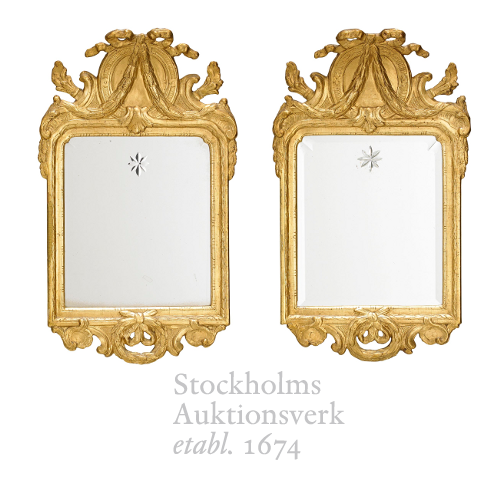 Johan Åkerblad, Seen At Auktionsverket.se
Johan Åkerblad Seen At Bukowskis Market
Gustav III’s collapsible bed by Georg Haupt, located at Drottningholm Palace-
Picture Credit- godsochgardar.se
Georg Haupt
Georg Haupt, born in 1741 in Stockholm , died September 18 1784 , was a Swedish craftsman and one of the most famous designers of Gustavian furniture. He became a cabinetmaker to King Adolphus Frederick in 1769, and was known as a master carpenter and burgess in Stockholm in 1770 and 1771.
Haupt was the son of a Nuremberg carpenter, and learnt his trade as an apprentice of Johan Conrad Eckstein in Stockholm. His grandfather was an art maker Jurgen Haupt who in the 1660s immigrated to Stockholm from Nuremberg. He travelled as a journeyman to Amsterdam, Paris and London, and learned the trade during a period when the French rococo had been quite fashionable in Swedish furniture design. When he arrived in Paris in 1764, the neoclassical style, under the name Louis XVI was gaining popularity. Many speculate he was employed in the workshop of Simon Oeben, the brother of the better-known Jean-François Oeben.
One of his most famous piece of furniture was Gustav IV Adolf’s cradle. It was King Adolf Fredrik’s gift to his wife, Louisa. It got its place in the marble cabinet at Drottningholm Palace. His first royal commission was to be a desk intended as a gift for the Queen. After some pressure from the King, the Stockholm carpentry guild allowed him to use the completed piece to qualify as a master, even though journeymen older than him waiting for their turn. When he was allowed into the Guild in 1770, he became a burgess in Stockholm the following year. He establishing a workshop in rented premises at Trumpetarbacken, Norrmalm, which allowed him to employ four journeymen and a few apprentices to produce furniture for the royal court and the Swedish social and economic elite.
A signed Haupt agency was sold in 1989 to Bukowski to 12.2 million kroner at the Smaland financial man Roy Gustafsson, making it Sweden’s second most expensive antique.
Article Credit – Wikipedia
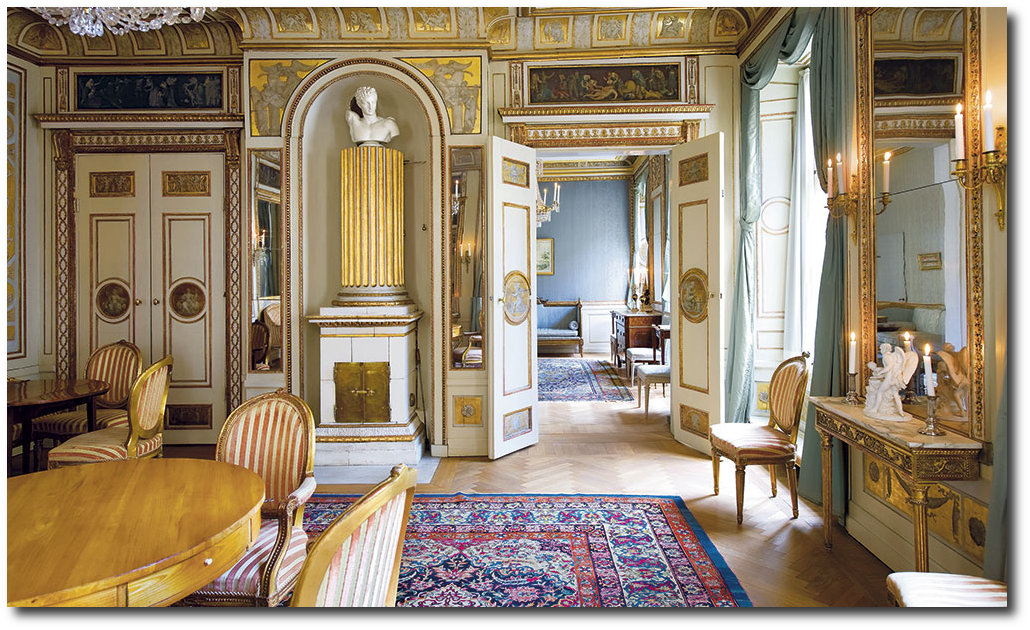
Sophisticated neoclassical interior of the Old Town in Stockholm by Louis Masreliez.- Picture Credit- Godsochgardar.se
Louis Masreliez
Louis Masreliez (Adnen Louis Masreliez) born in 1748 in Pans, died March 19 in 1810 , was a Swedish painter, graphic artist and interior designer.
He was the older brother of ornament sculptor Jean Baptiste Masreliez and son of Jacques Adrien Masreliez, also an ornamental sculptor, invited to Sweden from France to assist in the construction of the Royal Palace .
Louis Masreliez came to Sweden in 1753, and began his education at Scribbles Academy at age 10. When the drawing academy was no training in painting , Masreliez began his studies at Lorens Gott’s workshop. In 1769 he was awarded a government scholarship, which he used for a study trip to Paris and Bologna. He returned to Sweden in 1782, where he became a member of the Academy of Art and the following year professor of history painting . His breakthrough work included Gustav Ill’s Pavilion at Haga Park.
Source- Wikipedia
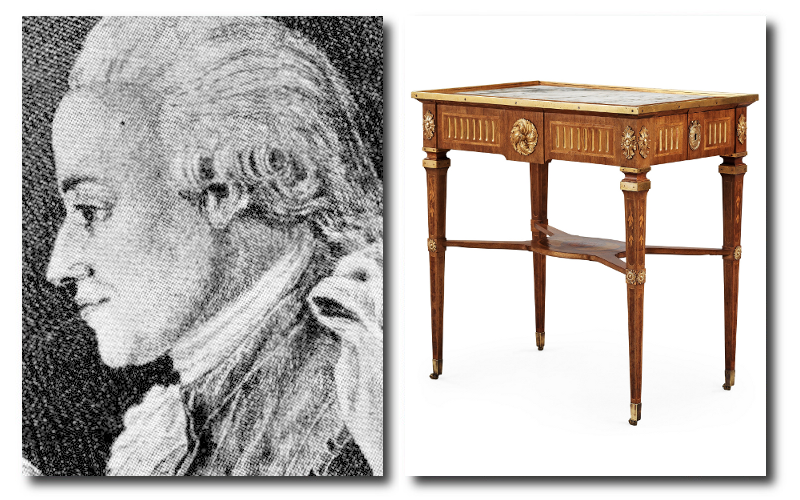 Gottlieb Iwerson
Gottlieb Iwersson
Gottlieb Iwersson, born 1750. died 1813, and was known to be a famous Swedish furniture maker. He was born in Malmo , the second son of alderman in Malmo carpenters office Olof Iwersson and began his career in 1766 by an apprenticeship to his father.
In 1769, he moved to Stockholm, and became a master in 1778. Mastarprovet was a desk that was manufactured for Gustav III’s behalf, a magnificent piece of furniture with vertical facade, decorated with the Swedish national coat of arms in marquetry and extensive decorations in
gilt bronze. He worked with Louis Masreliez , and designed a desk for Gustav IV Adolf. He also worked with interior Arvfurstens palace.
He opened his own workshop in the neighborhood Ox in Stockholm in 1779, he was forced to close in 1812 due to increasing health problems. Iwerssons more famous works originated at the end of his career when he designed in the late Gustavian style, which saw veneer with dark woods like mahogany and simple brass fittings that incorporated both English and French influences.
Source- Wikipedia
Gustavus Ditzinger
Gustavus Ditzinger, was born in 1760, and died 1800. He was known as a famous Swedish furniture-maker. Ditzinger studied under Georg Haupt from 1776 and became a journeyman in 1782. He worked for Haupts widow Sara from 1784 and married her in 1789.
Ditzinger received a title of master carpenter in Stockholm in 1788. He is known for the rich inlaid furniture seen in Haga Palace and interior Arvfurstens palace. He collaborated with Louis Masreliez, and after 1790 his style changed to include furniture with mahogany veneer and simpler hardware in brass.
Source: Wikipedia

Carl Hårleman (1700-1753) was one of Sweden’s best-known and influential architects ever.
He was a central figure during the 1700s, and pushed for the influence of French Rococo on Swedish architecture and decor.
Carl was the son of a landscape architect, and trained to be an architect under the tutelage of Nicodemus Tessin Jr., one of Sweden’s great Baroque architects. Hårleman spent 1721-1725 in Paris, improving his craft, and then went to Italy to to study church architecture.
After coming home, Tessin Jr. had died, and his son Carl Gustaf had taken over as the country’s Head Architect or Superintendent. Hårleman was still a young man, around the age of 30 years old, yet he was accomplished in his talents. He had the finest architectural education of any Swede, which landed him the job of building the Swedish royal palace in Stockholm.
Tessin Jr. had planned around the Baroque style, however, France was seeing the trends steer towards the Rococo style movement. Regardless that Hårleman’s style was Rococo, he stayed faithful to Tessin Jr’s plans for the exterior, and created some of the most spectacular Rococo interiors that remain to this day.
After returning to France, to hire competent artists to finish off his various projects, they would then teach a new generation of Swedish artists and artisans,which influenced the style in Sweden for decades.
Hårleman succeeded Tessin as Superintendent, and would mold the Swedish tastes in architecture and interior decorating for a century. He also designed a number of palaces and villas, both new ones and renovation objects.
Carl Hårleman was one of the most important Swedes of the 1700s, and even though he died young at 52 years old. He was known for his architecture and interior decor, but also had his hand in landscape architecture, and created an education system to ensure that Sweden would continue secure skilled artists and artisans to continue on in the work of design, architecture and decorating royal palaces and administrative buildings when he was gone.



New Research Suggests Swedish Furniture In The 1700’s May Have Had Strong Colors

The computer-generated image shows how Gottlieb Iwerssons bureau was color set from the beginning with stained inlays.
Furniture with inlay from the 1700s tend to be in a moderate brown color scale. But new research suggests that Gottlieb Iwerssons and the other Masters furniture had strong colors when they were new.
Elise Andersson at Carl Malmsten Furniture Studies presented his essay in Varying Shades of Brown where she runs the thesis that several of the 1700s masterful intarsiamöbler had a rich and expressive colors.
It is exciting to imagine how old things looked like when they were new, says Elise.
After a symposium in the Netherlands on stained wood Elise was inspired to investigate a bureau of master carpenter Gottlieb Iwersson (1750-1813). The bureau was a gift to King Gustav III and is currently banked in the Royal Collections.
Elise has looked closely at the paint residue on the furniture, studied the original drawing, examined sekretärens surface with UV light and read old beet recipes.
Emerges is a picture of a piece of furniture where the motifs were originally colored in blue, green, red and yellow against a light gray background – all framed by rosewood and amaranth, two popular woods for furniture production in the late 1700s.
Read More Of This Article At godsochgardar.se