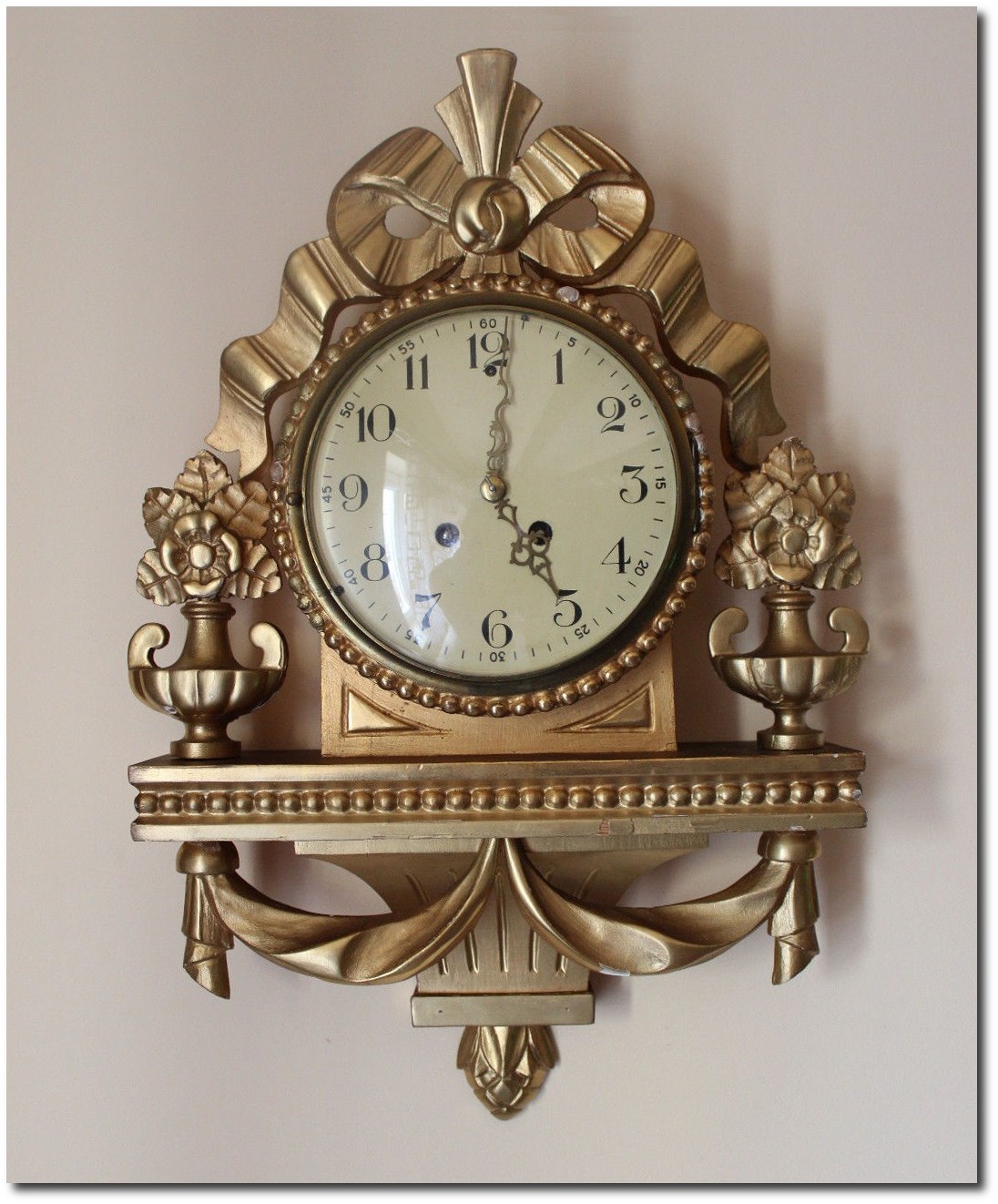
200 Swedish Antiques A Person Can Look For
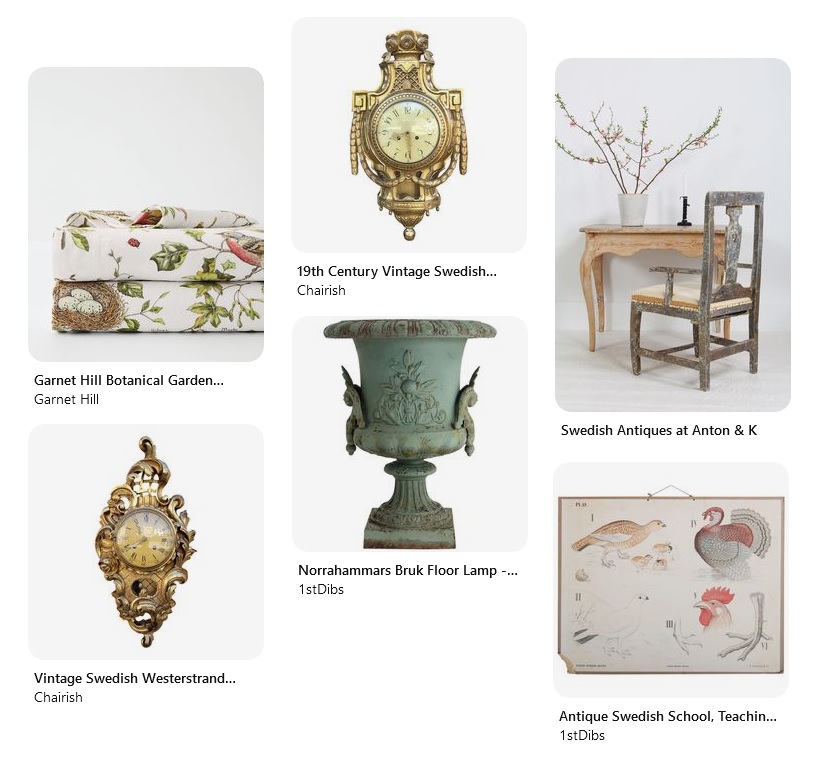
Here are 200 different types of Swedish antiques that a person can consider buying:
Gustavian-style dining table
Mora clock
Rococo armchair
Dala horse
Gustavian-style chandelier
Painted wooden chest
Baroque-style mirror
Biedermeier sofa
Folk art painted cupboard
Empire-style console table
Swedish tiled stove (kakelugn)
Rococo-style commode
Swedish corner cupboard (hörnskåp)
Scandinavian pine bench
Gustavian-style daybed
Mora clock with hand-painted details
Biedermeier drop-leaf table
Swedish folk art painted trunk
Gustavian-style desk
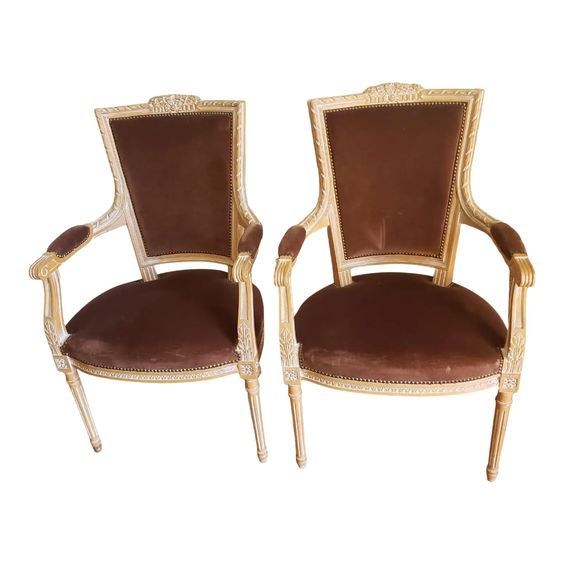
1930s Vintage Gustavian Style Swedish Empire Upholstered Armchairs – Chairish
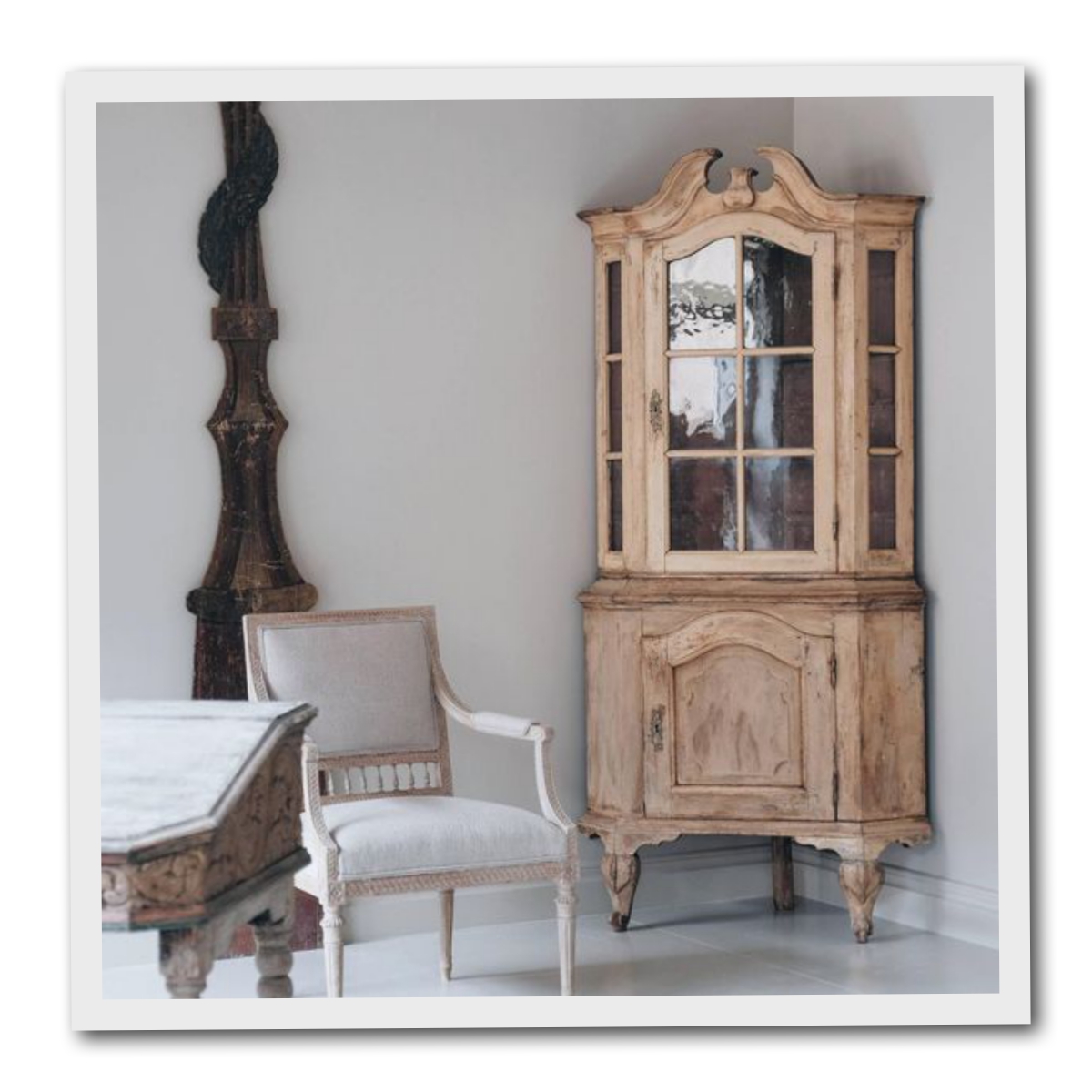
Swedish Antiques – 1st Dibs.com
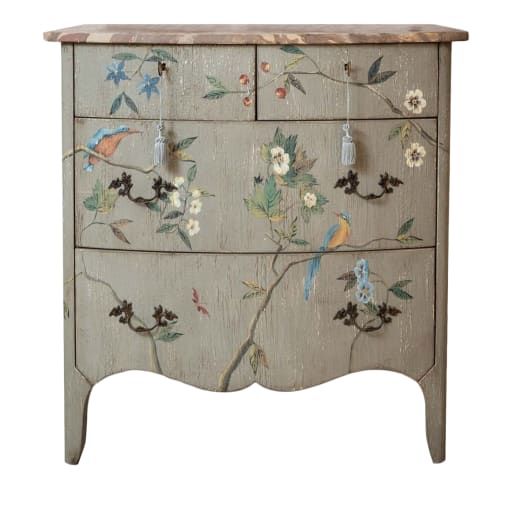
Chest of Drawers –Dorsoduro MouseBack Chest of Drawers
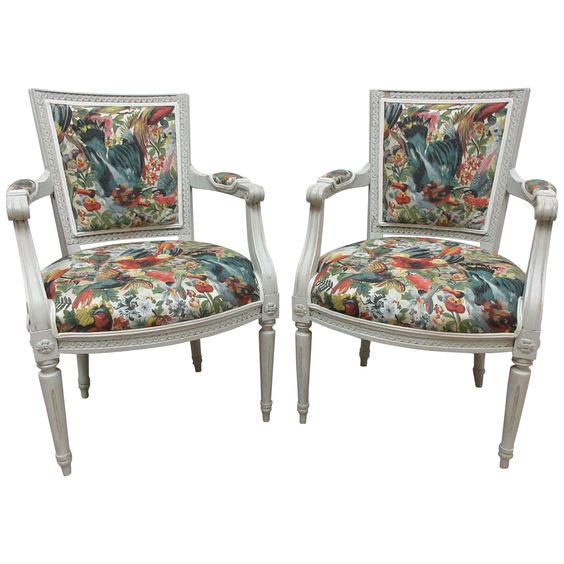 1stdibs Wood Gustavian Swedish Armchair -1stDibs
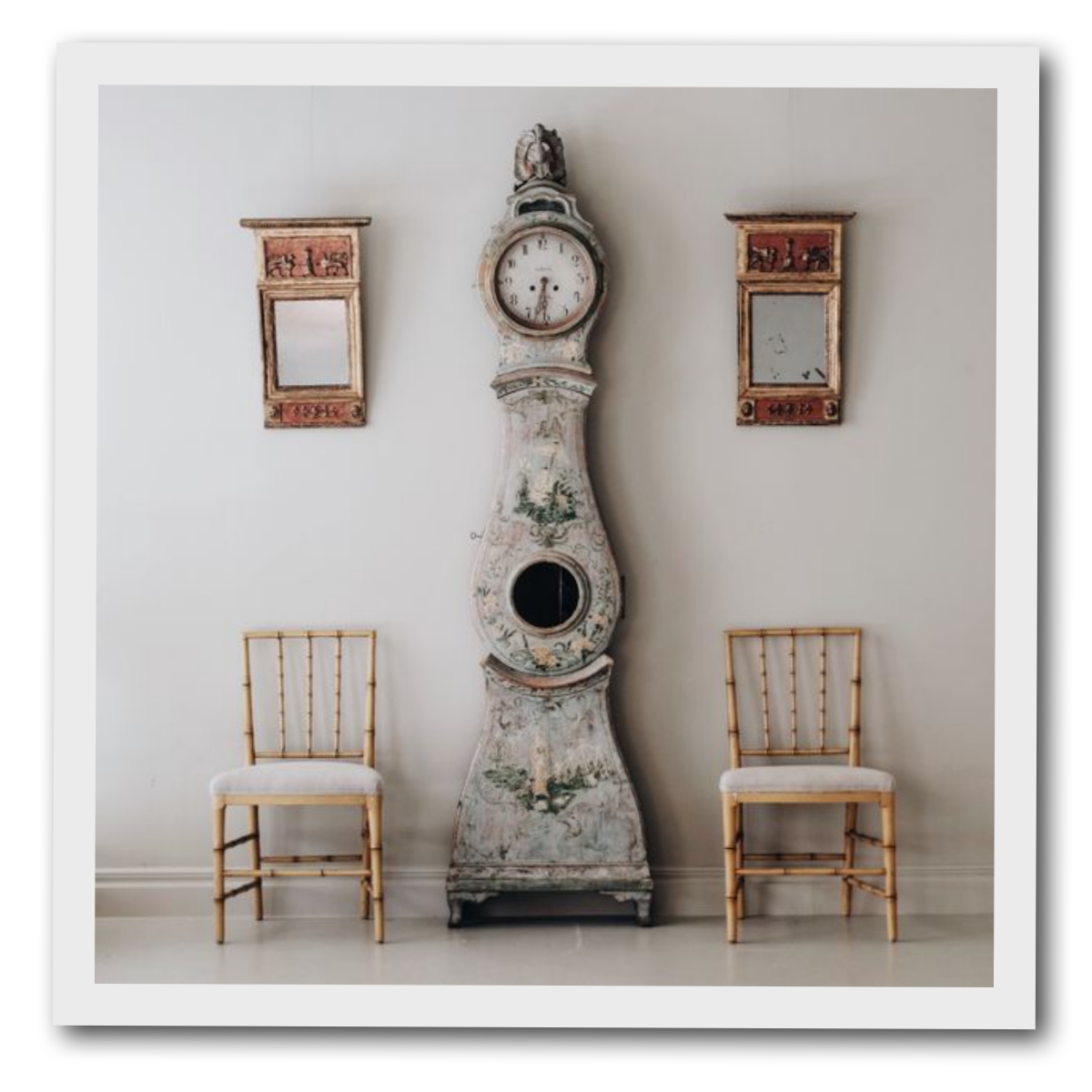
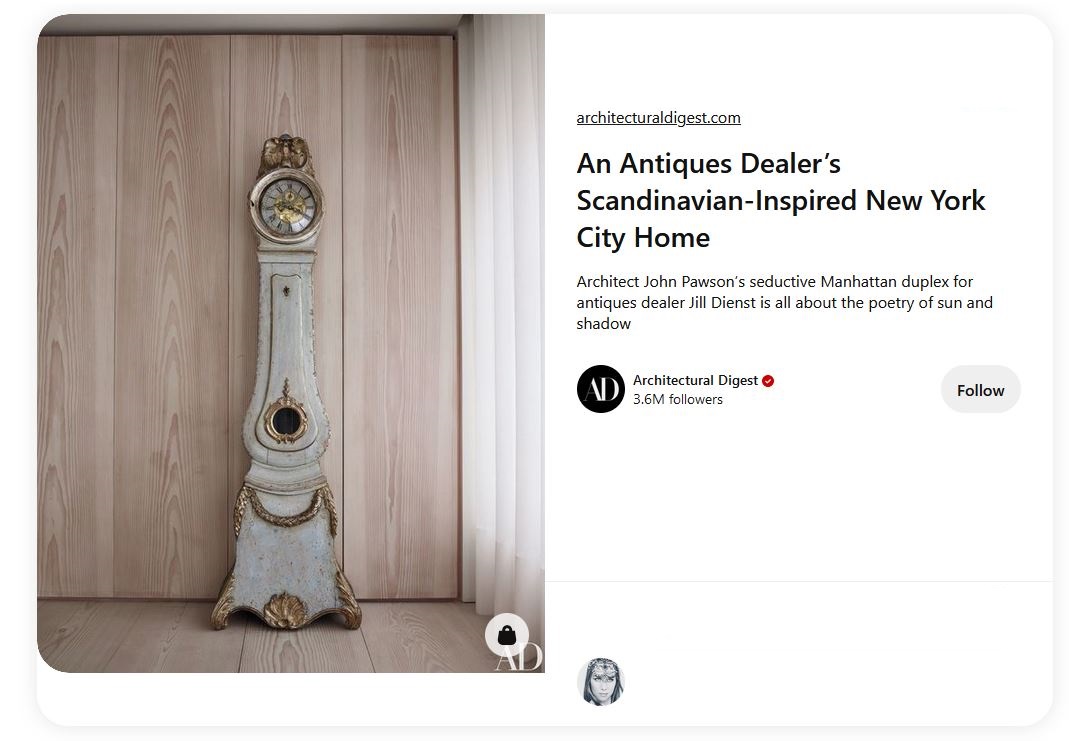
Mora Clocks – architecturaldigest.com
Scandinavian glass-front cabinet
Baroque-style gilded mirror
Dala horse rocking chair
Empire-style writing desk
Rococo-style settee
Swedish folk art painted sideboard
Gustavian-style bergère chair
Mora clock with hand-carved details
Biedermeier-style chest of drawers
Scandinavian farmhouse table
Gustavian-style chaise longue
Swedish painted armoire
Rococo-style display cabinet
Dala horse wall clock
Empire-style hall bench
Folk art painted dowry chest
Gustavian-style console table
Swedish painted kitchen cupboard
Biedermeier armchair
Scandinavian pine chest of drawers
Gustavian-style mirror
Mora clock with hand-painted floral motifs
Rococo-style candle sconces
Swedish painted wardrobe
Baroque-style secretary desk
Dala horse floor lamp
Empire-style card table
Folk art painted side table
Gustavian-style canopy bed
Swedish painted bookcase
Biedermeier dining chairs
Scandinavian painted settle
Mora clock with folk art motifs
Rococo-style wall console
Gustavian-style hall tree
Swedish painted linen press
Baroque-style hall mirror
Dala horse table lamp
Empire-style display cabinet
Folk art painted wall clock
Gustavian-style corner cupboard
Swedish painted trundle bed
Biedermeier drop-front secretary
Scandinavian pine armoire
Gustavian-style daybed with canopy
Mora clock with hand-carved figures
Rococo-style candle chandelier
Swedish painted chest of drawers
Baroque-style upholstered bench
Dala horse jewelry box
Empire-style round dining table
Folk art painted rocking chair
Gustavian-style armchair with matching footstool
Swedish painted display cabinet
Biedermeier-style tilt-top table
Scandinavian farmhouse bench with storage
Gustavian-style dressing table
Mora clock with painted landscape scene
Rococo-style gilded wall mirror
Swedish painted corner cabinet
Baroque-style console table with marble top
Dala horse wall hanging
Empire-style wine cabinet
Folk art painted hall bench
Gustavian-style settee with upholstered back
Swedish painted drop-leaf table
Biedermeier-style glass-front cabinet
Scandinavian painted chest of drawers
Gustavian-style candle sconces
Mora clock with hand-painted floral garlands
Rococo-style bergère chair
Swedish painted sideboard with carved details
Baroque-style gilded picture frame
Dala horse floor rug
Empire-style marble-top commode
Folk art painted spice cabinet
Gustavian-style trestle table
Swedish painted sofa
Biedermeier armchair with cane seat
Scandinavian pine side table
Gustavian-style wall mirror with gilded accents
Mora clock with hand-painted rosemaling
Rococo-style floor candelabra
Swedish painted bar cabinet
Baroque-style hall table
Dala horse decorative pillows
Empire-style drum table
Folk art painted wall shelf
Gustavian-style canopy daybed
Swedish painted secretaire bookcase
Biedermeier-style upholstered bench
Scandinavian painted hall tree
Gustavian-style hall bench with storage
Mora clock with hand-painted rural scenes
Rococo-style wall console with marble top
Swedish painted desk with hutch
Baroque-style gilded candelabra
Dala horse ceramic vase
Empire-style sideboard
Folk art painted nesting tables
Gustavian-style armchair with rush seat
Swedish painted wine cabinet
Biedermeier-style chest of drawers with inlaid details
Scandinavian pine wardrobe
Gustavian-style chandelier with crystal accents
Mora clock with hand-carved bird figures
Rococo-style gilded picture frame with floral motifs
Swedish painted drop-front secretary desk
Baroque-style upholstered armchair
Dala horse table runner
Empire-style marble-top console table
Folk art painted wall cabinet
Gustavian-style settee with rush seat
Swedish painted dining chairs
Biedermeier-style side table with drawer
Scandinavian painted settle bench
Gustavian-style dressing table with mirror
Mora clock with hand-painted bird motifs
Rococo-style wall candelabra with crystal drops
Swedish painted linen cupboard
Baroque-style gilded wall clock
Dala horse decorative plates
Empire-style round marble-top side table
Folk art painted hall table
Gustavian-style daybed with rush seat
Swedish painted corner cupboard with glass doors
Biedermeier-style drop-leaf dining table
Scandinavian pine bookcase
Gustavian-style candle chandelier with crystal pendants
Mora clock with hand-carved foliate motifs
Rococo-style gilded wall shelf with mirror
Swedish painted chest of drawers with floral motifs
Baroque-style upholstered settee
Dala horse wall tapestry
Empire-style marble-top console cabinet
Folk art painted wall mirror
Gustavian-style trestle dining table
Swedish painted sofa with upholstered seat
Biedermeier armchair with inlaid details
Scandinavian pine sideboard
Gustavian-style wall mirror with carved details
Mora clock with hand-painted rural landscapes
Rococo-style floor lamp with crystal accents
Swedish painted bar cart
Baroque-style hall mirror with gilded accents
Dala horse ceramic mugs
Empire-style marble-top sideboard
Folk art painted wall clock with pendulum
Gustavian-style canopy bed with drapes
Swedish painted secretaries
Biedermeier-style upholstered armchair
Scandinavian painted hall bench with storage
Gustavian-style hall tree with mirror
Mora clock with hand-carved figures of animals
Rococo-style wall console with mirrored top
Swedish painted desk with hidden compartments
Baroque-style gilded wall sconces
Dala horse decorative tea towels
Empire-style marble-top center table
Folk art painted wall shelf with hooks
Gustavian-style settee with cane seat
Swedish painted wine rack
Biedermeier-style chest of drawers with brass accents
Scandinavian pine cabinet
Gustavian-style chandelier with crystal drops
Mora clock with hand-painted floral wreaths
Rococo-style gilded picture frame with cherub motifs
Swedish painted drop-front writing desk
Baroque-style upholstered rocking chair
Dala horse ceramic candle holders
Empire-style marble-top console with mirror
Folk art painted wall cabinet with glass doors
Gustavian-style daybed with cane seat
Swedish painted linen press with carved details
Biedermeier-style drop-leaf side table
Scandinavian painted chest of drawers with floral patterns
Gustavian-style candle sconces with crystal accents
Mora clock with hand-carved lion figures
Rococo-style gilded wall mirror with floral garlands
Swedish painted corner cabinet with glass display
Baroque-style upholstered armchair with carved details
Gustavian cabinet
Mora clock
Dala horse
Swedish baroque mirror
Swedish painted chest
Scandinavian farmhouse table
Swedish Gustavian chair
Swedish grandfather clock
Swedish tile stove
Swedish Folk Art painting
Swedish trundle bed
Swedish tall case clock
Swedish Gustavian sofa
Swedish bonad (folk painting)
Swedish Gustavian desk
Swedish birch wood bowl
Swedish Art Deco chandelier
Swedish folk costume
Swedish Gustavian sideboard
Swedish Gustavian mirror
Swedish Gustavian dining table
Swedish Mora bench
Swedish Gustavian settee
Swedish folk textiles (rugs, linens, etc.)
Swedish Art Nouveau vase
Swedish Gustavian armoire
Swedish folk music instruments
Swedish Art Deco armchair
Swedish Gustavian chest of drawers
Swedish copper kettle
Swedish Art Nouveau candlesticks
Swedish Gustavian console table
Swedish Gustavian bed
Swedish glassware (Orrefors, Kosta Boda, etc.)
Swedish Art Nouveau jewelry
Swedish Gustavian bookcase
Swedish folk art wooden spoons
Swedish Art Deco sideboard
Swedish Gustavian hall bench
Swedish Delftware ceramics
Swedish Art Nouveau clock
Swedish Gustavian secretary desk
Swedish birch bark boxes
Swedish Art Deco table lamp
Swedish Gustavian corner cupboard
Swedish carved wooden figures
Swedish Art Nouveau silverware
Swedish Gustavian bergère chair
Swedish folk art textiles (weavings, embroidery, etc.)
Swedish Art Deco bar cart
Please note that availability and prices may vary, and it’s always recommended to do thorough research and consult with experts before making any purchases.

Rococo In The Nordic Countries
The Rococo style, which emerged in the early 18th century, originated in France and quickly spread throughout Europe, including the Nordic countries. While the Nordic countries, comprising Denmark, Sweden, Norway, Finland, and Iceland, were influenced by the broader European Rococo movement, they also showcased distinctive characteristics and adaptations that set them apart.
Danish Rococo: In Denmark, Rococo art and architecture were strongly influenced by French and German styles. Danish Rococo emphasized elegance, refinement, and symmetry. Architects like Nicolai Eigtved played a crucial role in shaping the Danish Rococo style, evident in buildings such as the royal palaces of Amalienborg and Christiansborg. Danish furniture of this period featured delicate, curving lines, often adorned with intricate carvings and gilding.
Swedish Rococo: Swedish Rococo, known as the Gustavian style, developed later than in other Nordic countries. It was influenced by French Rococo and neoclassical elements. Gustavian interiors showcased light colors, restrained ornamentation, and a preference for straight lines, reflecting a shift towards neoclassicism. The Swedish king, Gustav III, played a significant role in promoting this style, and it became synonymous with elegance and sophistication in Sweden.
Norwegian Rococo: Norway was under Danish rule during the height of the Rococo period, so Danish Rococo influences were prominent. However, Norwegian craftsmen and artisans infused their own regional characteristics into the style. Norwegian Rococo featured intricate woodcarvings, often depicting local flora and fauna, as well as a preference for vibrant colors. Examples can be seen in the elaborate woodwork found in stave churches and traditional rural buildings.
Finnish Rococo: Finland, then part of the Kingdom of Sweden, adopted Swedish Rococo influences. The Finnish interpretation of Rococo emphasized simplicity, lightness, and elegance. Finnish architects and craftsmen integrated Swedish neoclassical elements into their Rococo designs, reflecting a shift towards classicism. The famed architect Carl Fredrik Adelcrantz played a significant role in shaping Finnish Rococo.
Icelandic Rococo: As an isolated island nation, Iceland’s exposure to the Rococo style was relatively limited. However, the few examples of Rococo art and architecture in Iceland demonstrate a fusion of local influences with European Rococo. The Icelandic interpretation tended to incorporate simpler ornamentation and more rustic elements, often reflecting the country’s natural surroundings.
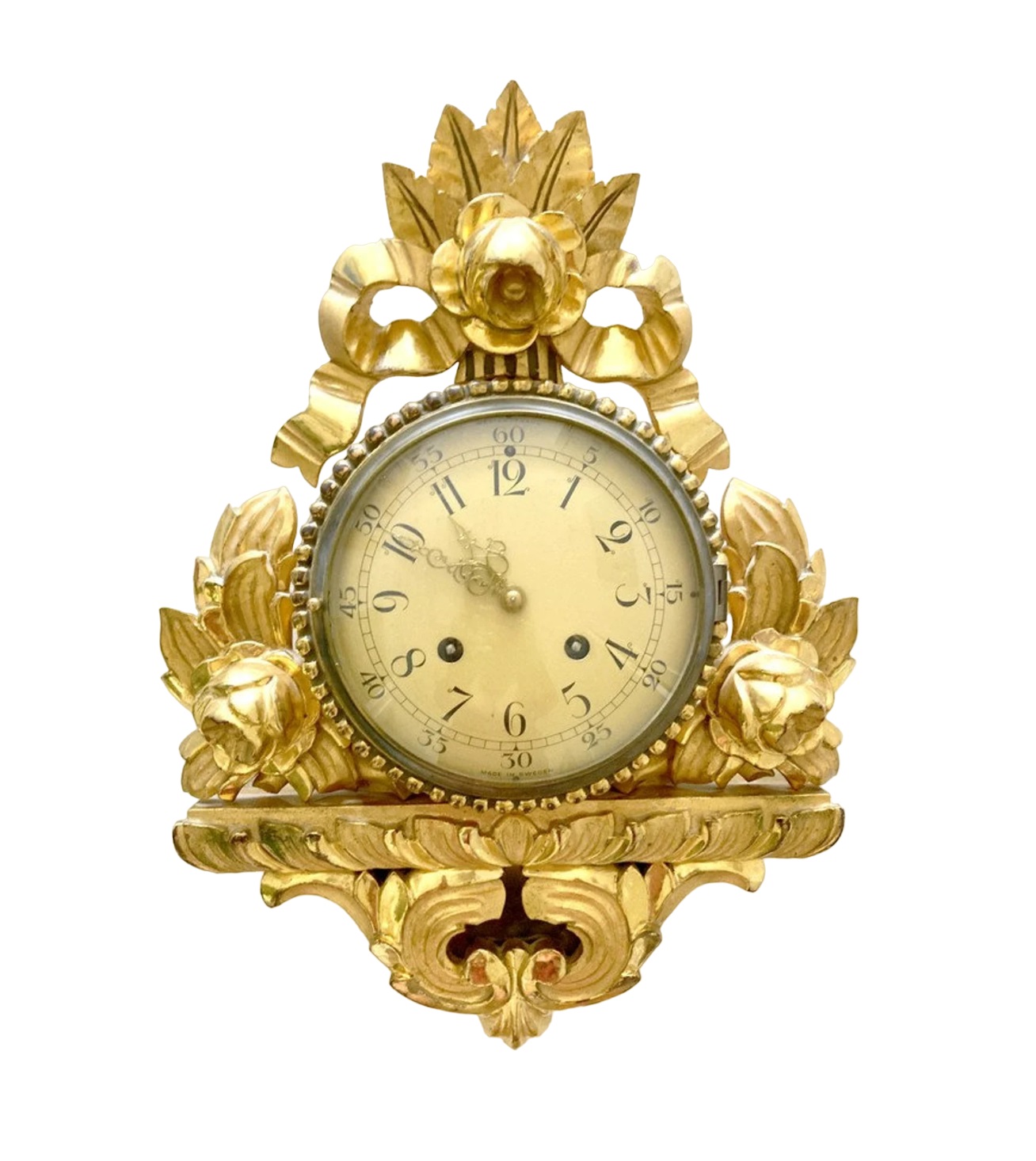
Antique Westerstrand Swedish Rococo Gilt Carved Wood CARTEL WALL CLOCK – Etsy
Overall, while the Rococo style in the Nordic countries shared common European influences, each country infused their own regional characteristics, resulting in distinct variations. Danish Rococo emphasized elegance and symmetry, Swedish Rococo transitioned towards neoclassicism, Norwegian Rococo incorporated local woodcarvings, Finnish Rococo leaned towards simplicity, and Icelandic Rococo fused local elements with European style. These variations highlight the diverse interpretations and adaptations of Rococo across the Nordic region.
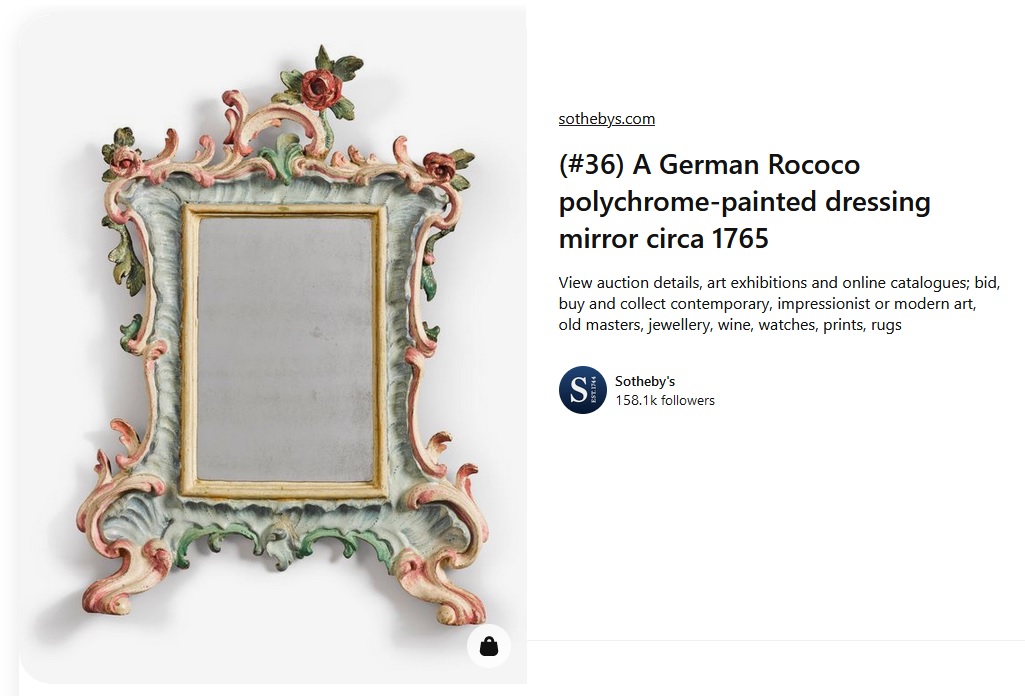
sothebys.com
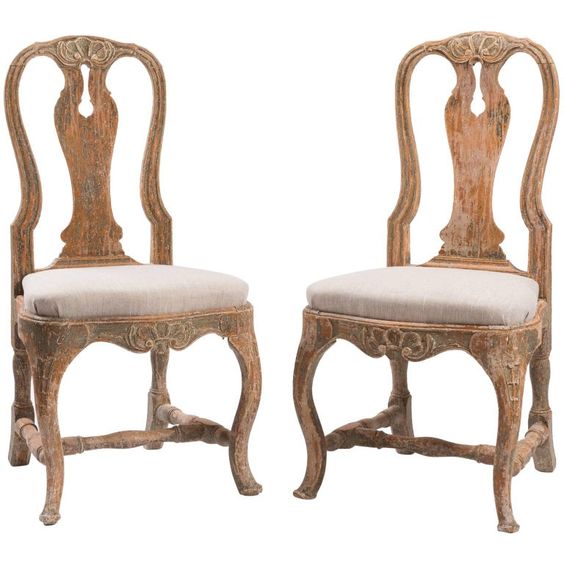
1stdibs.com
18th Century Swedish Rococo Chairs
About A pair of Swedish Rococo chairs with nice proportions and wooden Rococo carvings. Scraped to original paint and original seats with new linen. Manufactured in Stockholm, Sweden, circa 1760.
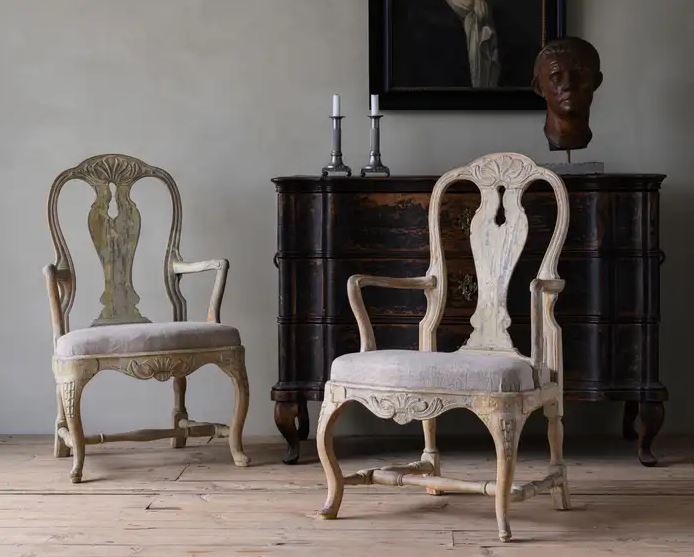
1stdibs Wood Rococo Swedish Armchair $9,200.00
………………
The Rococo style, characterized by its ornate and playful aesthetic, originated in France in the early 18th century and spread throughout Europe. While the Rococo style had a significant impact on the arts and architecture of several Nordic countries, including Sweden, Denmark, and Norway, it was adapted and interpreted differently in each region. Let’s explore the characteristics and variations of the Rococo style in the Nordic countries:
Sweden:
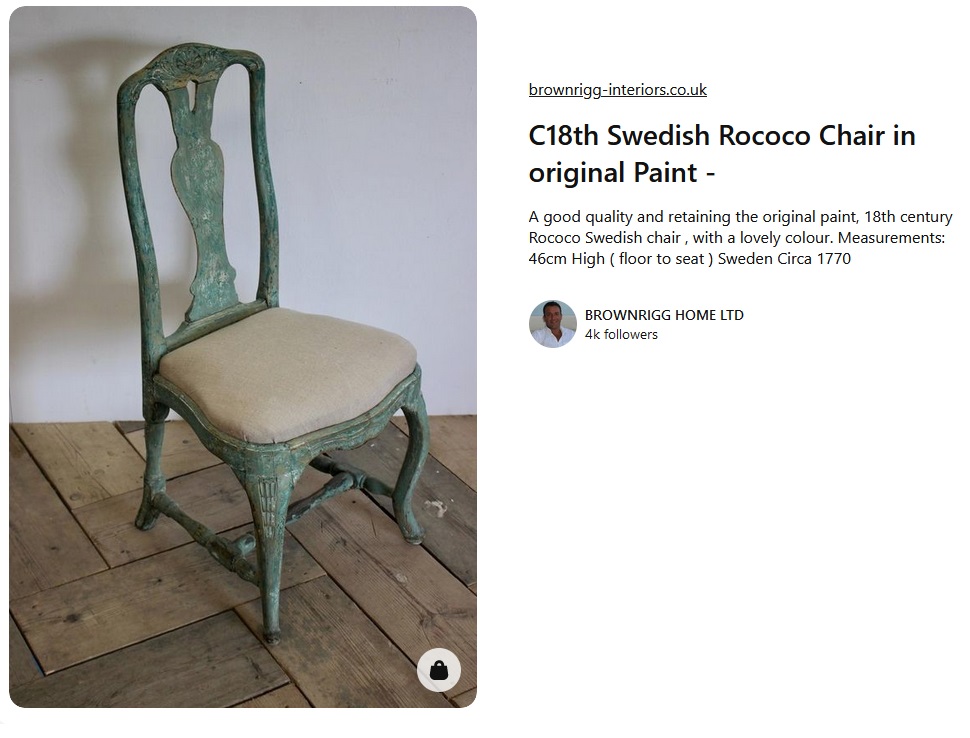
In Sweden, the Rococo style, known as “Rokoko,” emerged in the mid-18th century. Swedish Rococo was influenced by the French Rococo but had a distinctive national character. It incorporated elements of the Gustavian style, which focused on simplicity and neoclassical influences. Swedish Rococo emphasized lightness, elegance, and refinement. The furniture and interior design often featured delicate ornamentation, curved lines, and pastel colors. Rococo interiors in Sweden showcased painted paneling, gilded mirrors, and intricate stucco decorations.
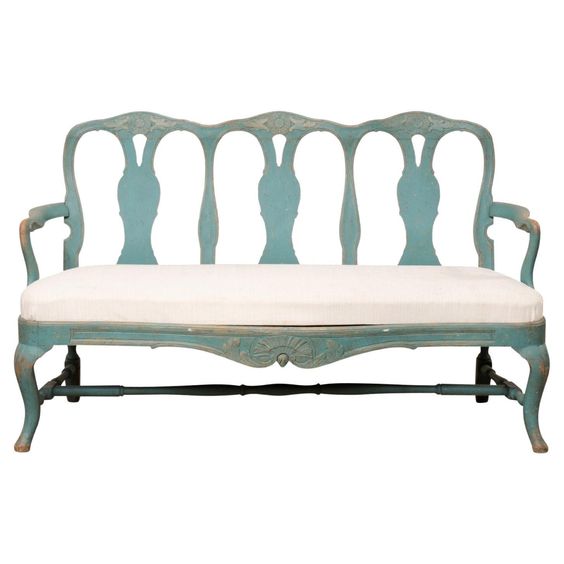
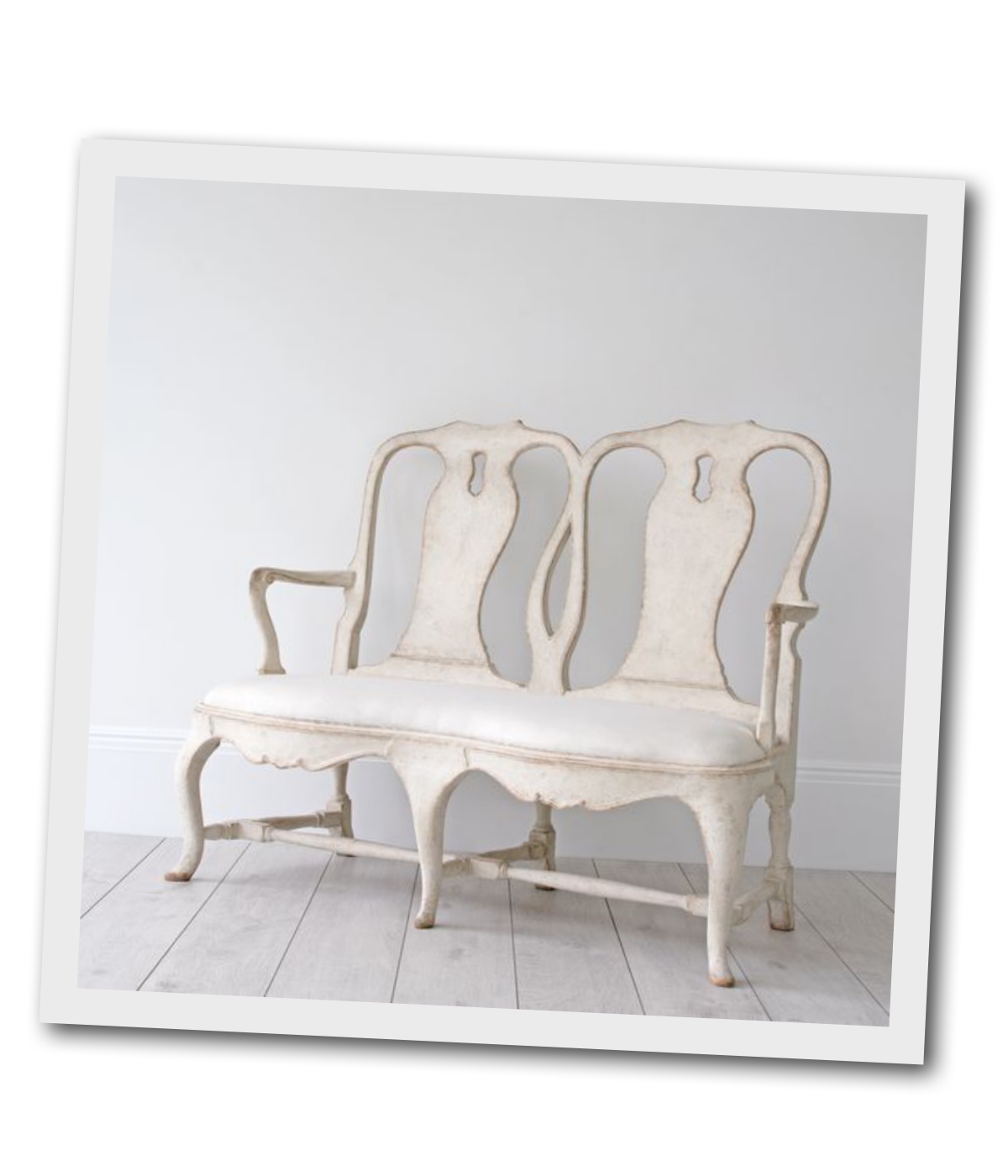
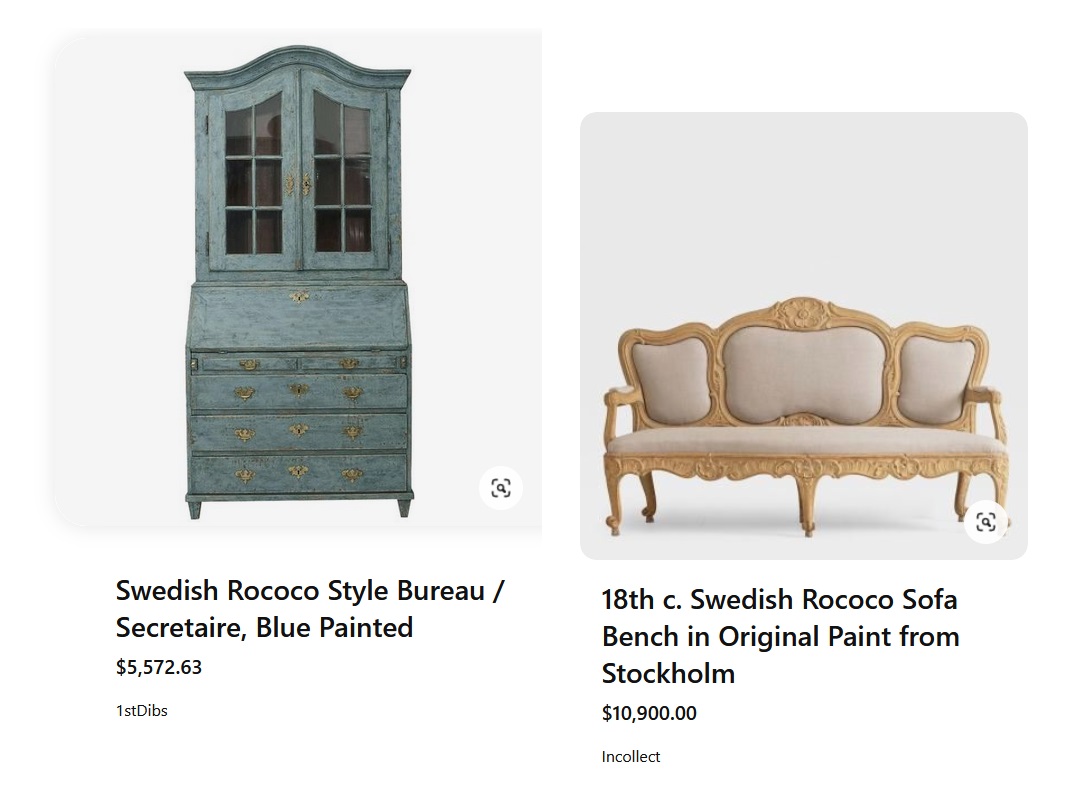
1stdibs Sofa – Period 3- Back Painted Bench Swedish Rococo Upholstery, Wood
$6,720.00 1stDibs
Denmark:
Denmark also embraced the Rococo style, which is known as “Rokoko” or “Rococo” in Danish. Danish Rococo emphasized asymmetry and organic forms. Furniture and interiors were characterized by intricate woodwork, curving lines, and an abundance of decorative elements like foliage, shells, and scrollwork. Danish Rococo incorporated motifs inspired by nature and often featured light and pastel colors. The royal palaces of Denmark, such as Frederiksborg Palace and Amalienborg Palace, exhibit remarkable examples of Rococo architecture and design.
Norway:
In Norway, the Rococo style, known as “Rokokko” or “Rococo” in Norwegian, found expression in both architecture and interior design. Norwegian Rococo often displayed a fusion of Rococo elements with traditional Norwegian craftsmanship and folk art. The Rococo interiors in Norway featured intricate woodcarvings, especially in the form of acanthus leaves, floral motifs, and swirling patterns. Buildings such as the Royal Palace in Oslo exemplify the Rococo influence in Norwegian architecture.
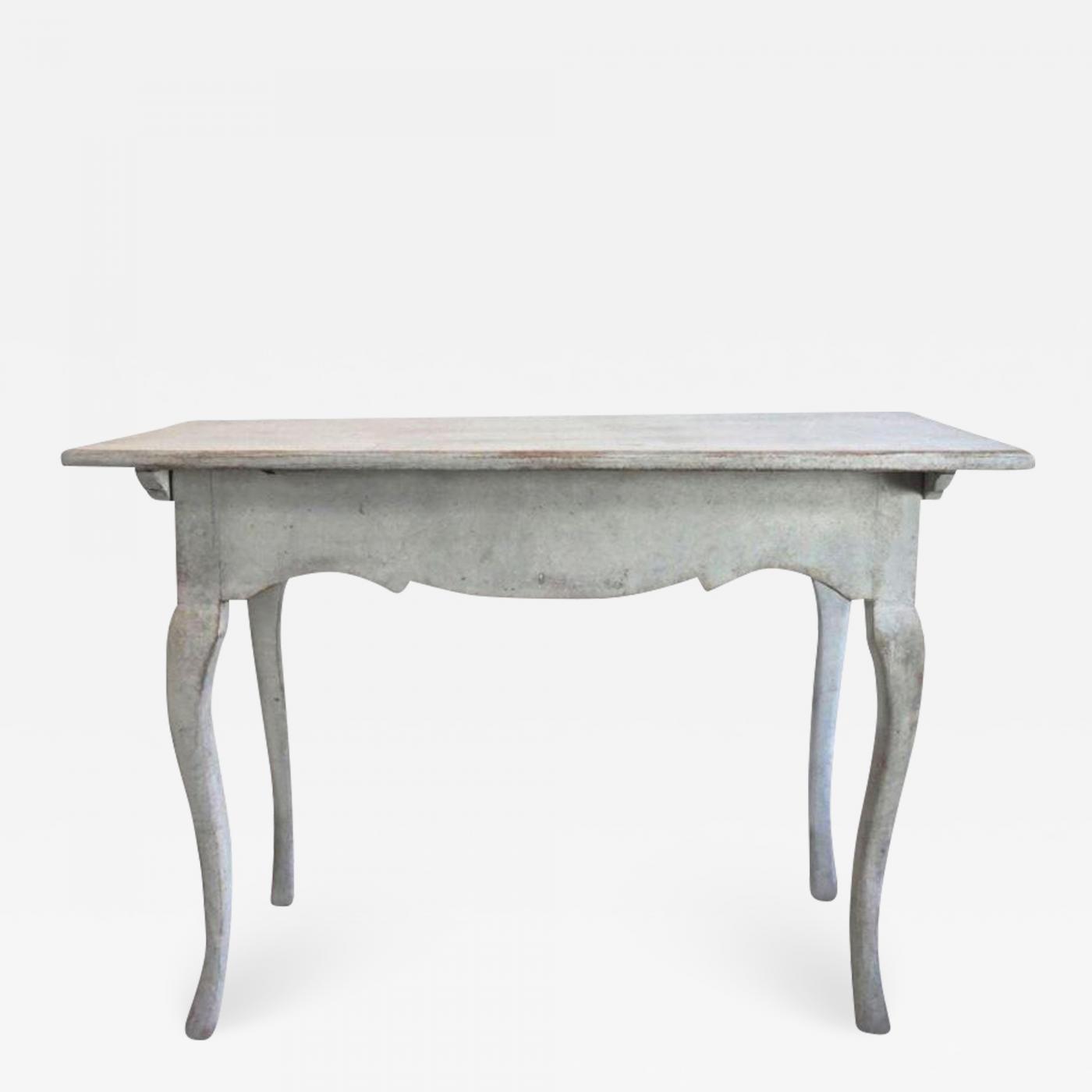
18TH C SWEDISH ROCOCO SIDE TABLE – In Collect
Despite these regional variations, the Nordic countries generally embraced the Rococo style as a way to demonstrate wealth, sophistication, and cultural refinement. The style was particularly popular among the nobility and upper classes, who commissioned lavish interiors, furniture, and art in the Rococo aesthetic.
It’s important to note that the Rococo style gradually gave way to neoclassical influences in the late 18th century, as tastes shifted towards simpler and more restrained forms. However, the legacy of Rococo can still be seen in many historic buildings, palaces, and museums across the Nordic countries, showcasing the region’s unique interpretation of this ornate and whimsical style.
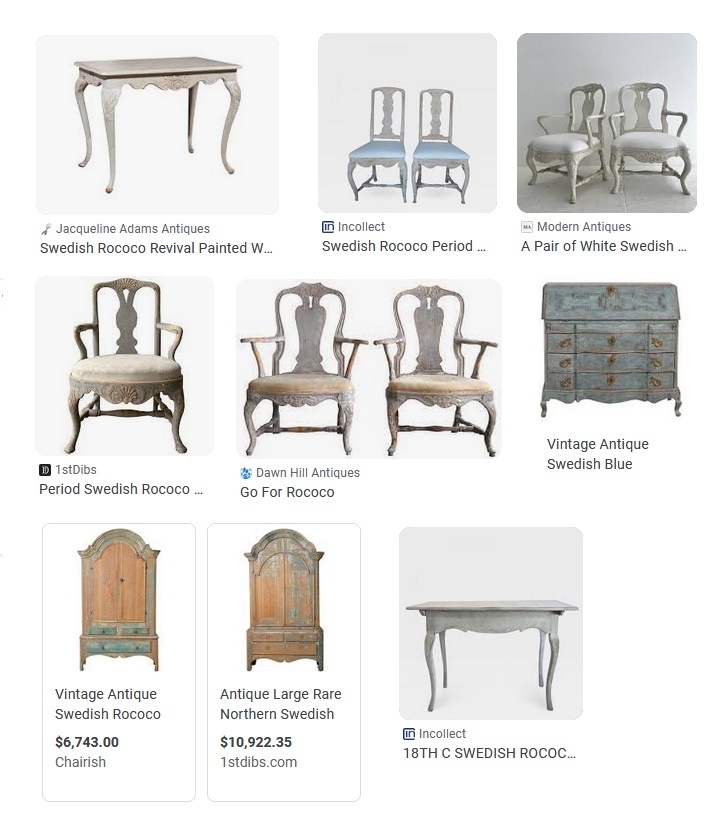
The Rococo Style in Sweden: A Delicate Blend of Elegance and Extravagance
The Rococo style, known for its ornate and whimsical designs, flourished in Sweden during the 18th century. This period, often referred to as the Gustavian era, was a time of great artistic and cultural refinement in the country. While the Rococo movement originated in France, it quickly spread throughout Europe, leaving its indelible mark on Swedish art, architecture, and interior design.
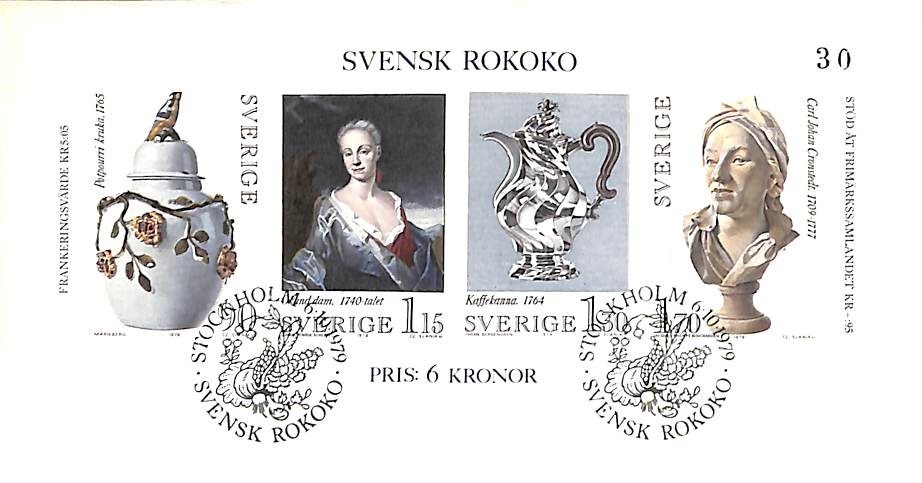
Stamp 1979, Sweden Swedish rococo s/s, 1979 – Collecting Stamps – PostBeeld – Online Stamp Shop – Collecting
In Sweden, the Rococo style was embraced by the aristocracy and the wealthy bourgeoisie, who sought to emulate the elegance and opulence associated with the French court. This period coincided with the reign of King Gustav III, whose personal taste and influence played a pivotal role in shaping the Swedish interpretation of Rococo.
One of the key characteristics of Rococo design is its emphasis on asymmetry and intricate detailing. Swedish Rococo architecture featured gracefully curved facades, ornamental embellishments, and elaborate stucco work. The interiors of buildings were adorned with delicate motifs, including shells, scrolls, flowers, and foliage. Furniture and decorative objects were often crafted from light-colored woods, such as birch or beech, and embellished with gilded accents.
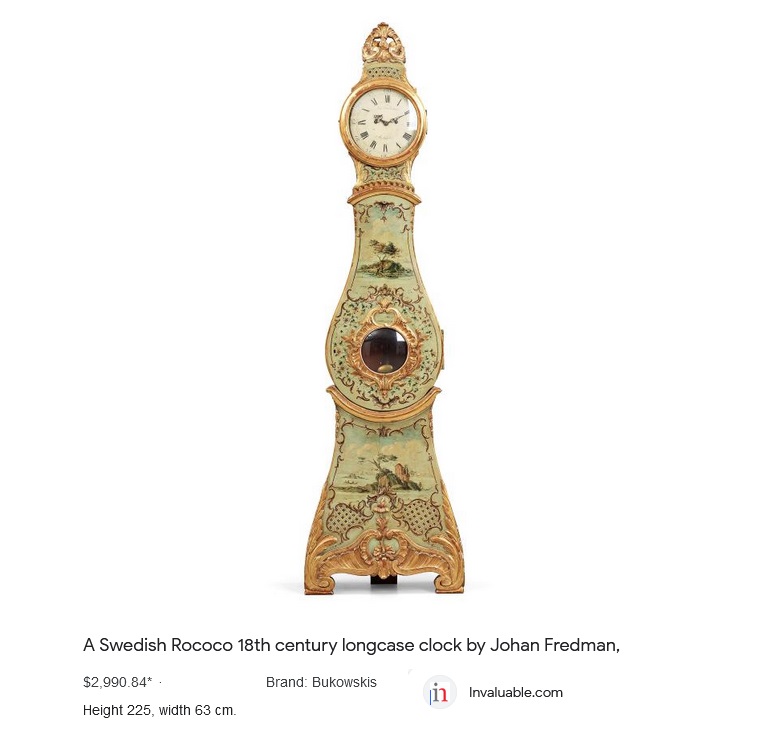
The Rococo style also had a significant impact on Swedish craftsmanship. Master artisans excelled in cabinetmaking, producing exquisite furniture pieces characterized by their lightness and grace. These pieces often featured slender legs, delicate carvings, and upholstery in soft, pastel-colored fabrics. Rococo-style mirrors, chandeliers, and porcelain became highly sought after, adding a touch of sophistication to the interiors.
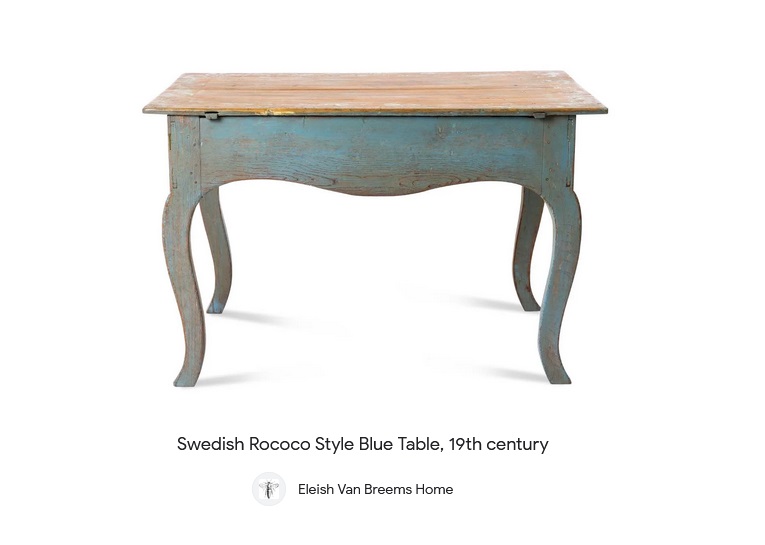
One prominent example of Swedish Rococo architecture is the Royal Palace in Stockholm. Designed by architect Nicodemus Tessin the Younger, it showcases the elegance and grandeur associated with the style. The interiors of the palace, particularly the Royal Apartments, feature elaborately decorated rooms with intricate stucco work, ornate furnishings, and beautiful tapestries.
While Rococo design was prevalent in the royal palaces and the homes of the upper class, its influence extended beyond the elite. The Rococo aesthetic trickled down to the middle class, with merchants and professionals incorporating elements of the style into their homes. This democratization of Rococo design contributed to its widespread popularity and enduring legacy in Swedish culture.
The Rococo era in Sweden was not solely focused on superficial beauty and decoration. It also fostered intellectual and cultural advancements. King Gustav III, a passionate patron of the arts, established the Royal Swedish Academy of Fine Arts and promoted the development of Swedish literature and theater. This period witnessed the rise of influential Swedish artists and writers, including Carl Fredrik Adelcrantz, Carl Michael Bellman, and Johan Tobias Sergel.
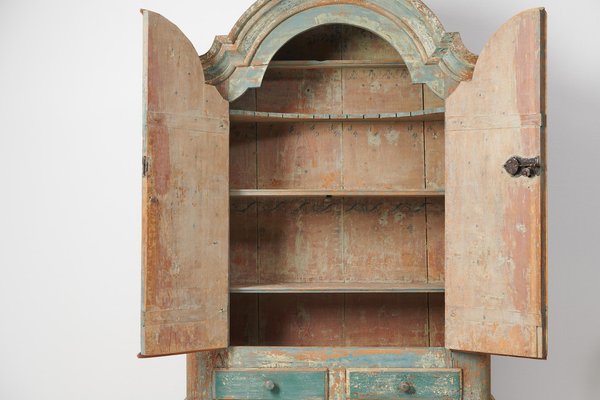
Antique Swedish Rococo Country Cabinet
Vintage Design Antique rococo country cabinet made by hand in solid Swedish pine.
Despite its popularity, the Rococo style eventually fell out of favor in Sweden. In the late 18th century, a shift towards neoclassicism, inspired by ancient Greek and Roman aesthetics, took hold. This transition was marked by simpler, more restrained designs that favored symmetry and clean lines over the elaborate ornamentation of Rococo.
However, the Rococo style’s impact on Swedish culture remains significant to this day. Many architectural landmarks and historical buildings continue to showcase the delicate and intricate beauty of the Rococo era. The influence of Rococo can also be seen in contemporary Swedish design, with echoes of its graceful lines and decorative motifs found in furniture, textiles, and decorative objects.
In conclusion, the Rococo style in Sweden during the 18th century brought a sense of elegance, luxury, and artistic refinement to the country. Its influence can still be seen in the architectural marvels, exquisite furniture, and decorative objects that have stood the test of time. The Rococo era in Sweden serves as a reminder of a bygone era of grandeur and artistic expression, and its legacy continues to inspire and captivate admirers of beauty and craftsmanship.
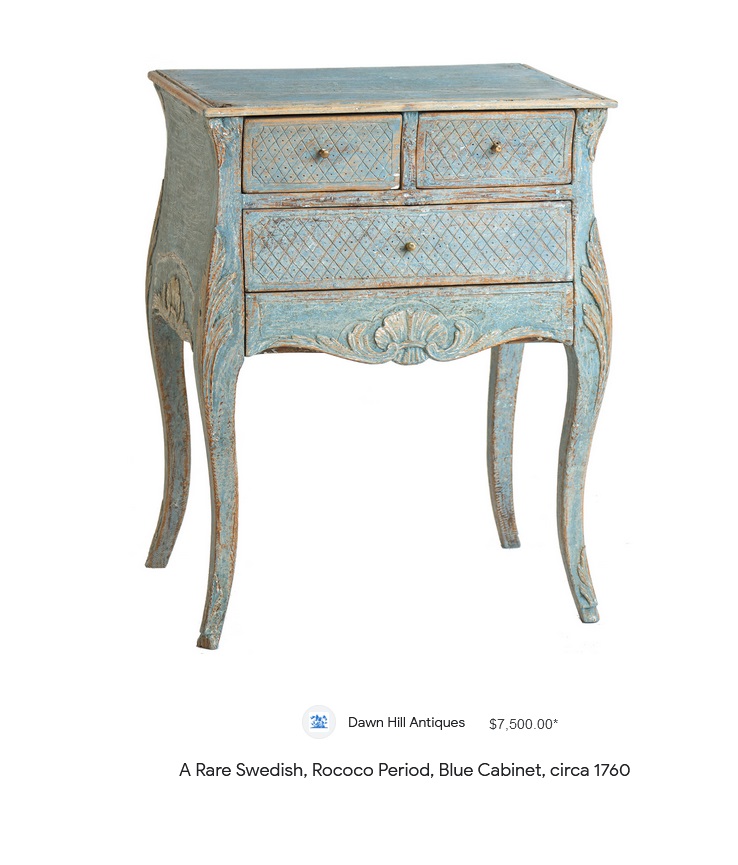
3 Swedish Must Haves – Decorating A Home Around Swedish Antiques
You love Swedish style but don’t know exactly where to start. Here are a few ideas for you to get going.
Swedish style is about simplicity, but it is anything but boring.
The look is centered around minimalism, but the furnishings can be very detailed. Have you ever considered working with rub on transfers? Use them on any sort of wooden item. Think of a stackable set of boxes, or a tray for your ottoman. Do up a showcase dresser. Add in hand painted details to blend the transfers into the distressed painted look.
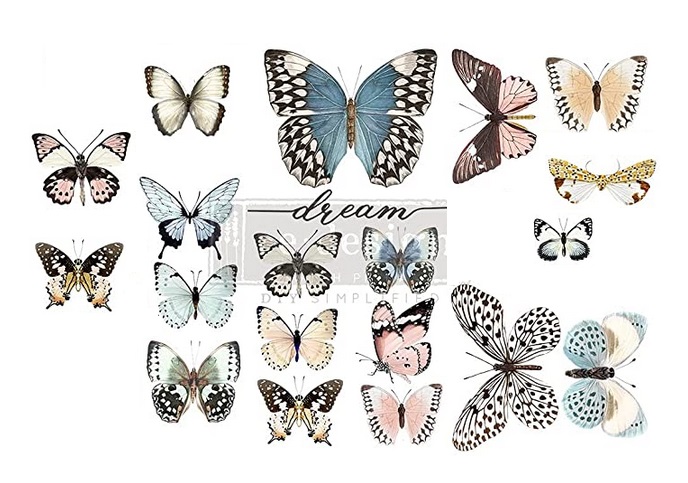
Rub on Butterflies – Do it yourself “painted looks” – Amazon
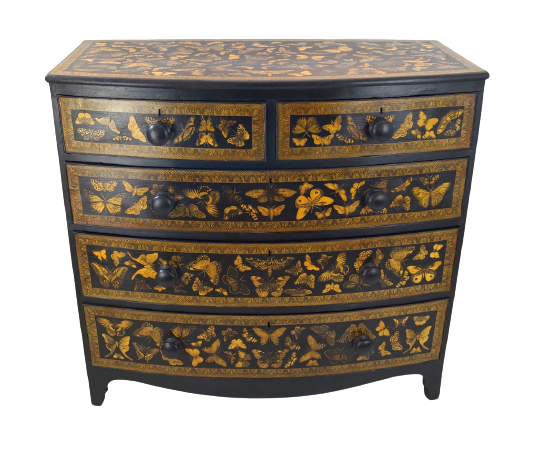 Butterfly Chest – antiques-atlas.com/
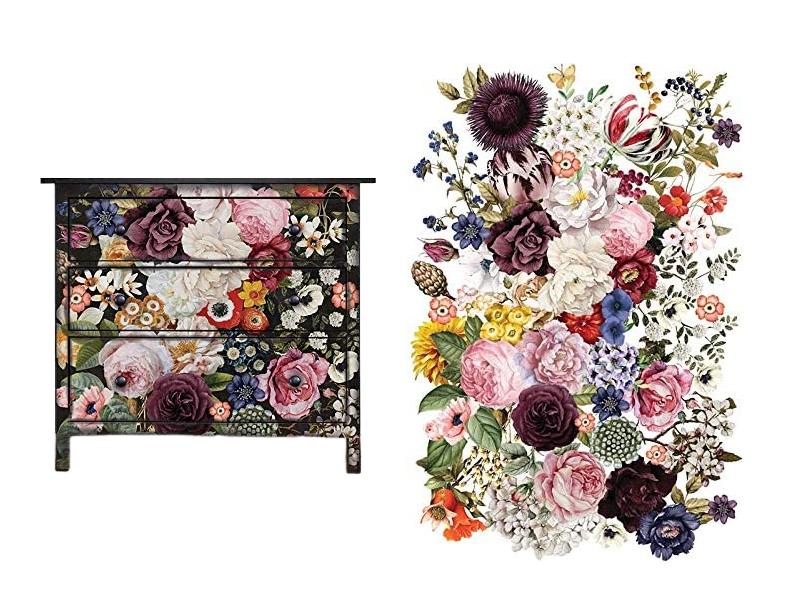
Floral Rub On Transfer – Amazon
1. Swedish Must Have’s – Wall Lights
Mirrors, gilt brass and crystal chandeliers have also been used for centuries in the northern countries to capture light as the winter nights were long. The reflections created light which extended the days. Here is an exceptional light that looks like an antique, but doesn’t use candles, but real lights!
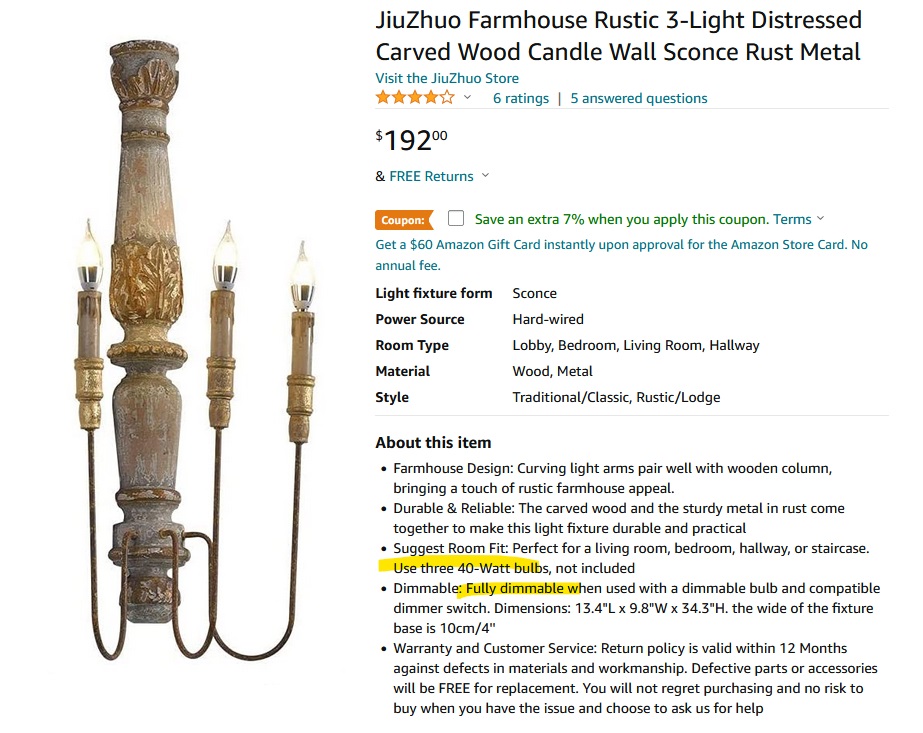
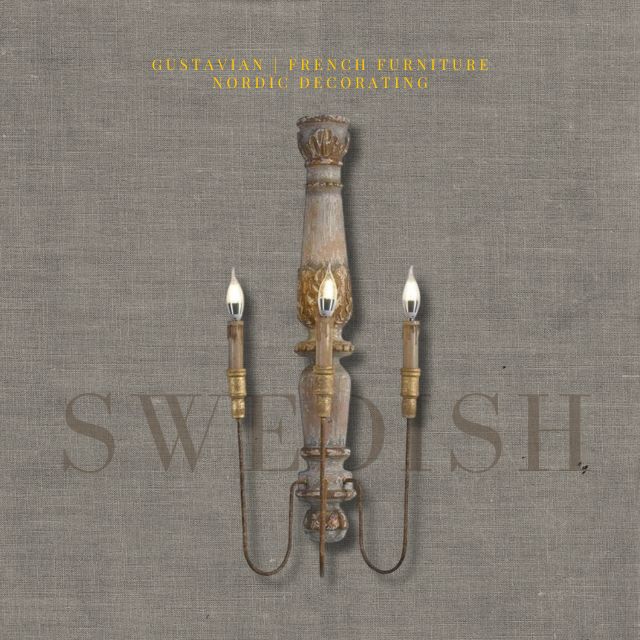
Distressed Wood 3-Light Candle Sconce – forget about candles. $192 Amazon
2. Swedish Must Have’s – Interesting And Detailed
Captivating Swedish interiors have their emphasis on texture. A few detailed, distressed or hand painted pieces can go a long way in creating this look. Think about really worn wood looks. How to do this yourself? Beat up your wood, and paint over the wood, and wipe it away. The painted glaze will settle into the worn and distressed areas giving you the look of a worn antique.
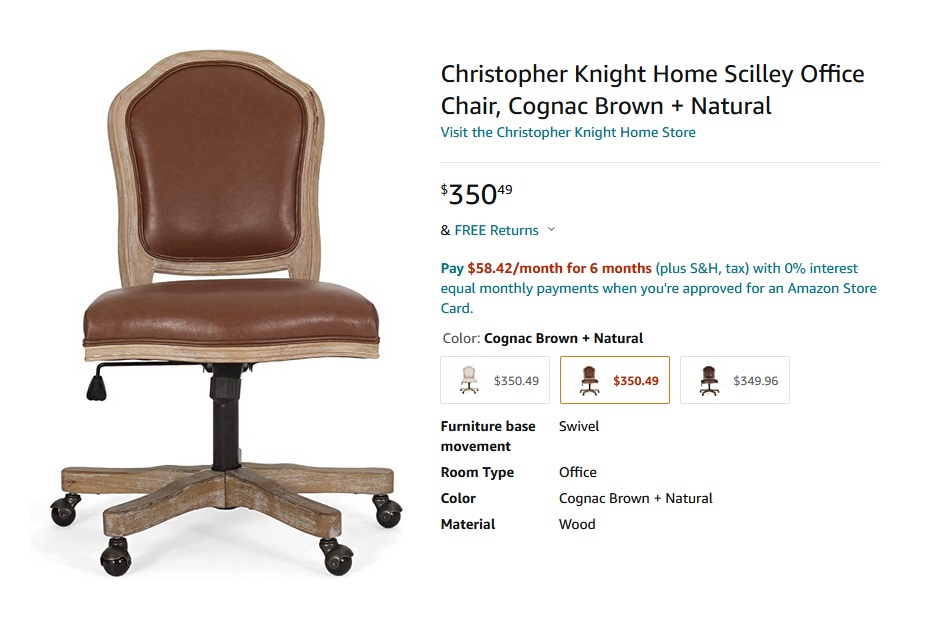
Cognac Brown Wood Office Chair – Amazon
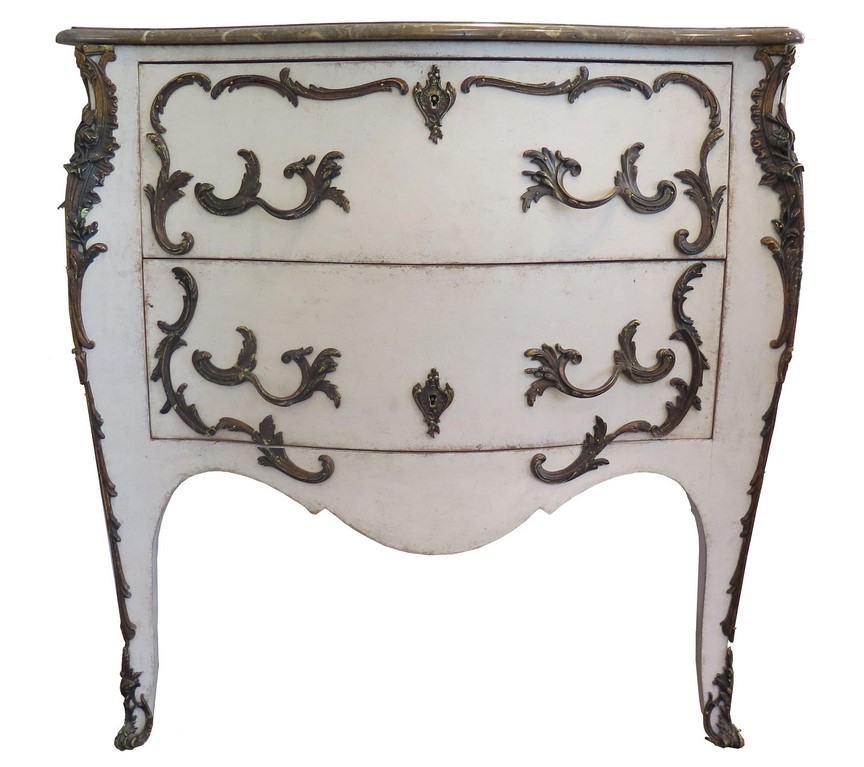
19th century Rococo Painted Commode – 1st Dibs
3. Swedish Must Have’s – Natural Fabrics
One really easy way of adding in color is doing it through pillow throws, or blankets. If you are wanting a particular color in your house, – get bedding, add some throws on your sofa.
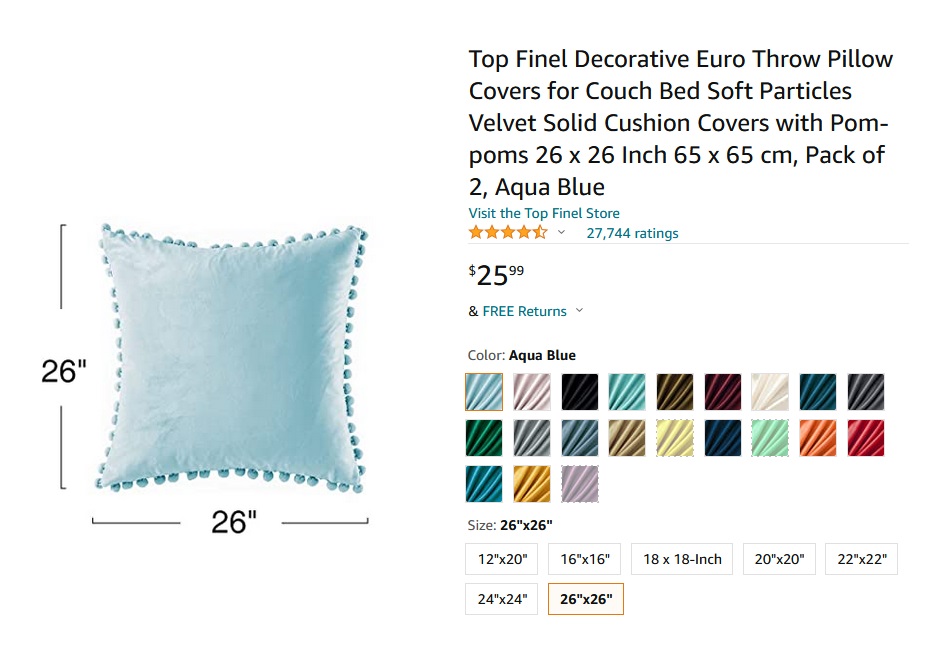
Velvet Cushion Covers In Sets Of 2 – Amazon
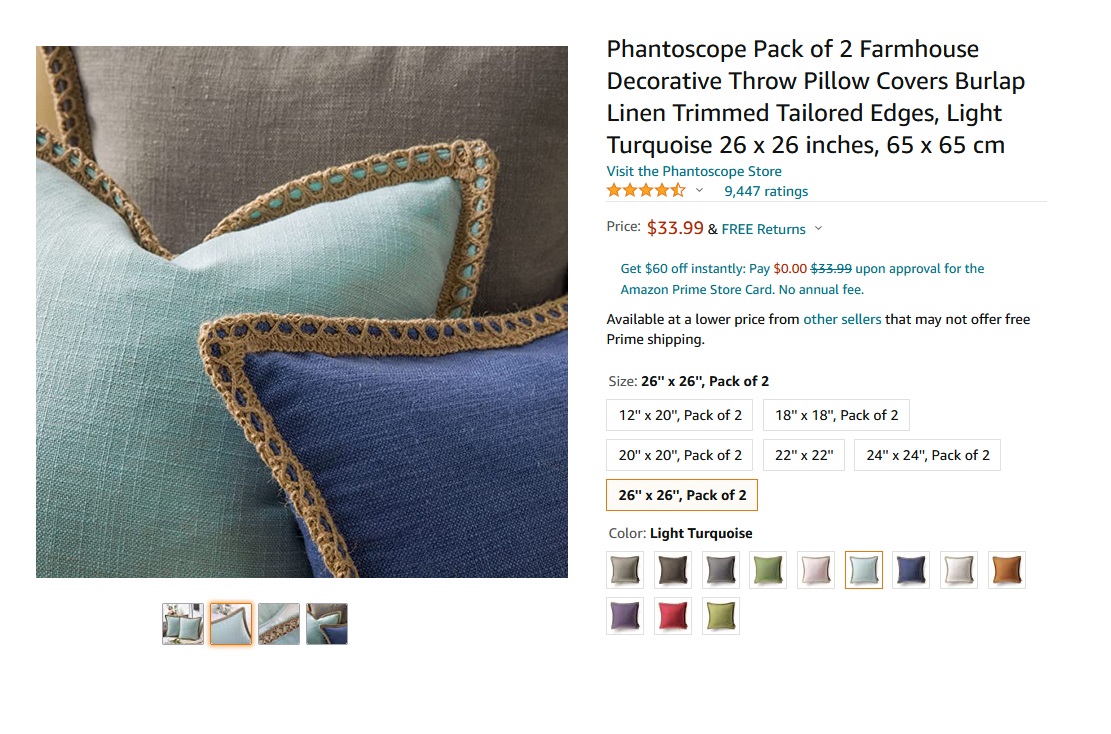
Linen Trimmed Tailored Edged Pillows Set Of 2 – Amazon
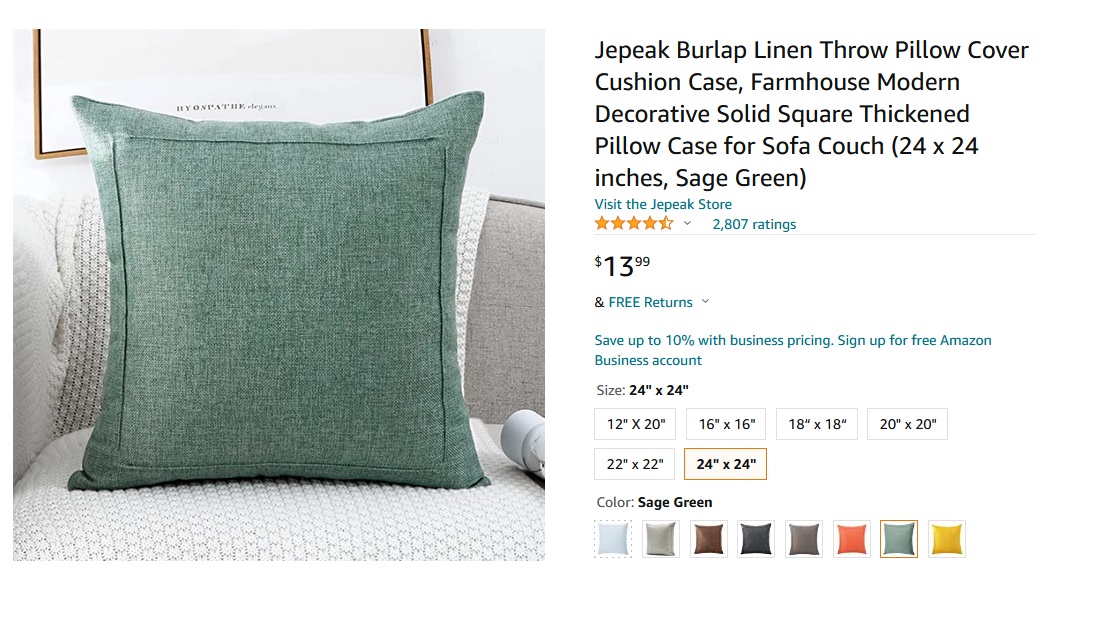
Jepeak Burlap Linen Throw – Amazon
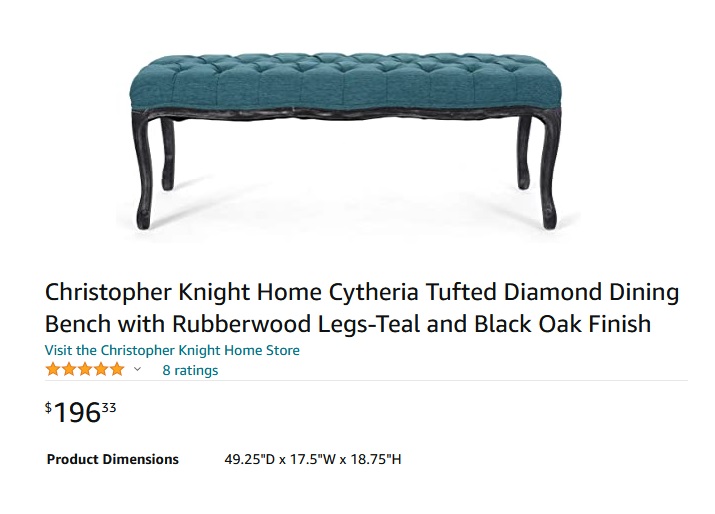
Teal and Black French Bench – Amazon
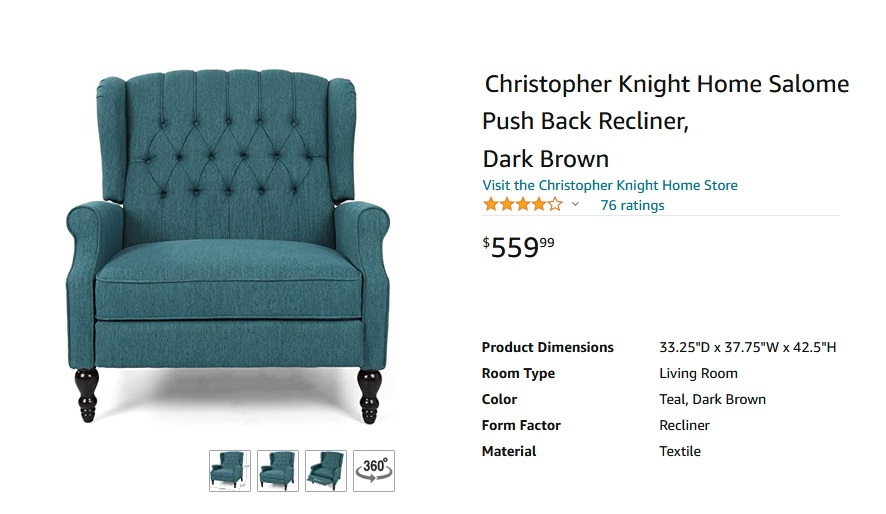 Spectacular Teal Recliner – Amazon
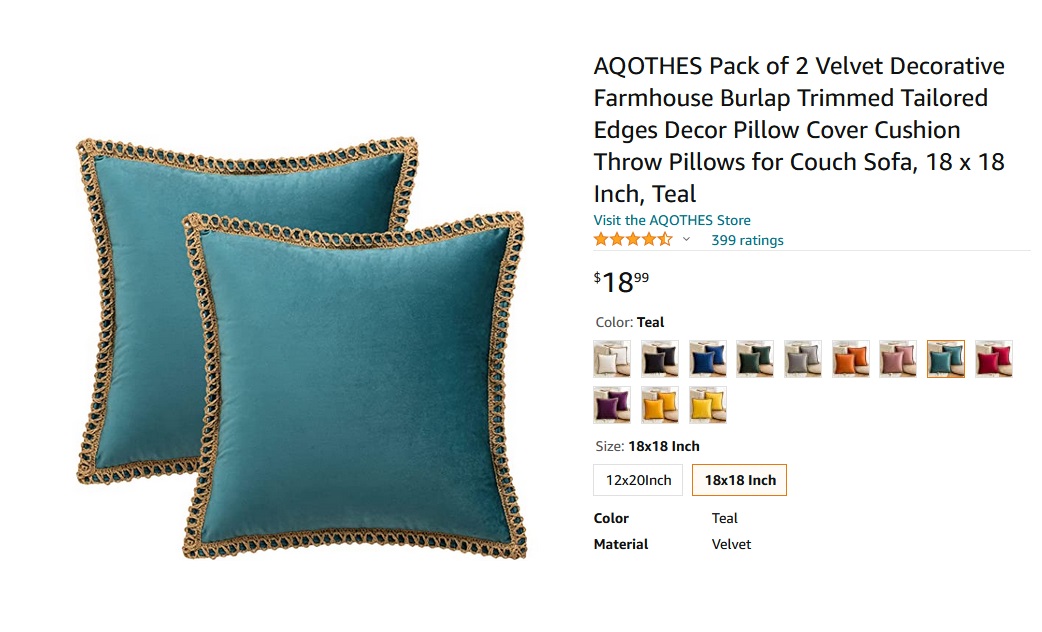 Velvet Trimmed Pillows – Set Of 2 – Amazon
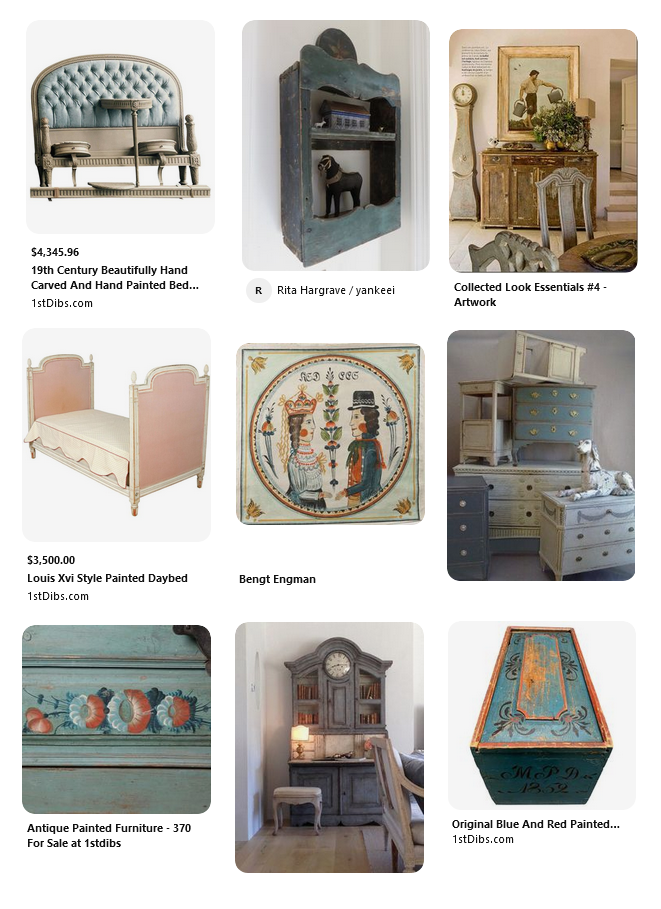 Notice the French pink upholstered bed above? It wouldn’t look the same without the gold painted details.
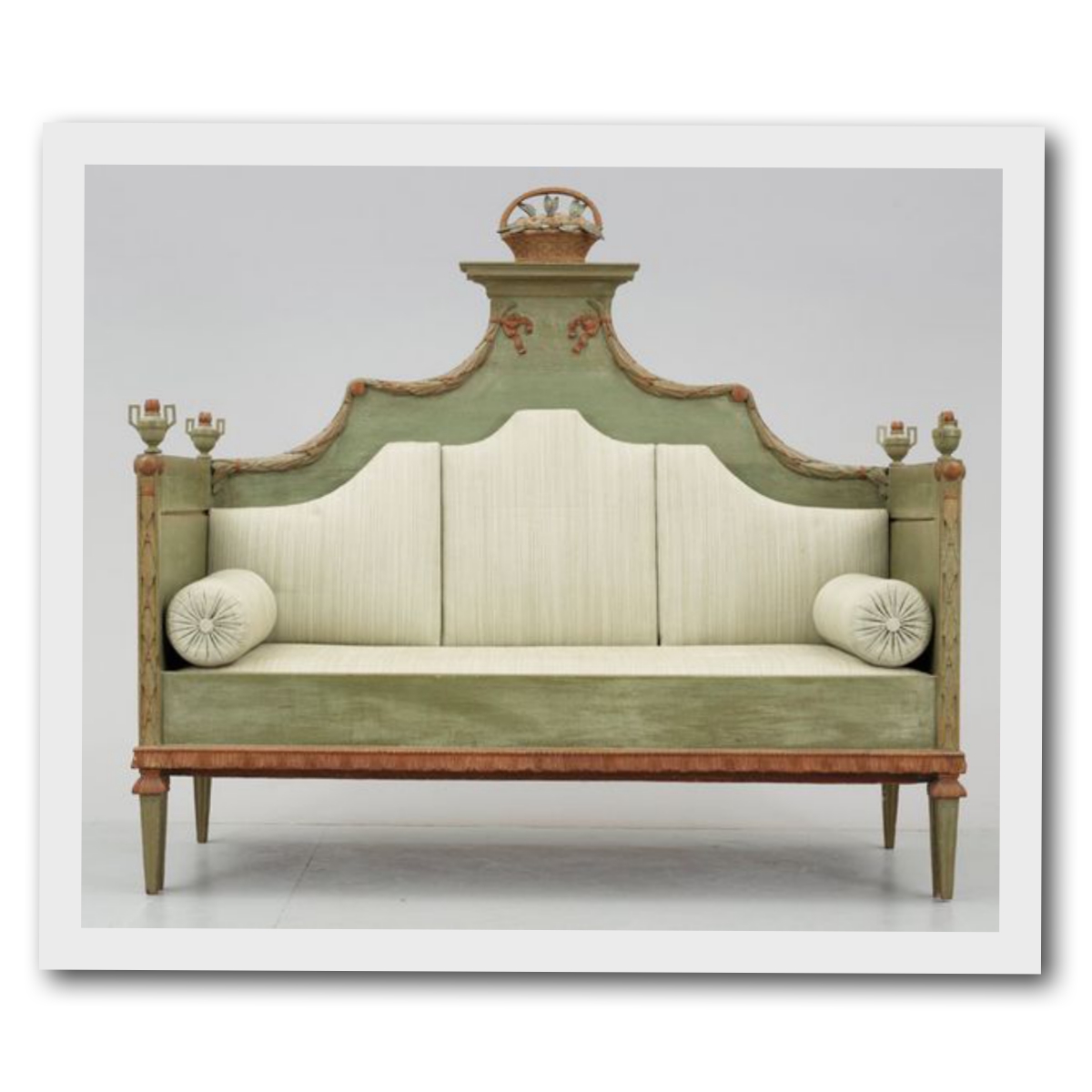
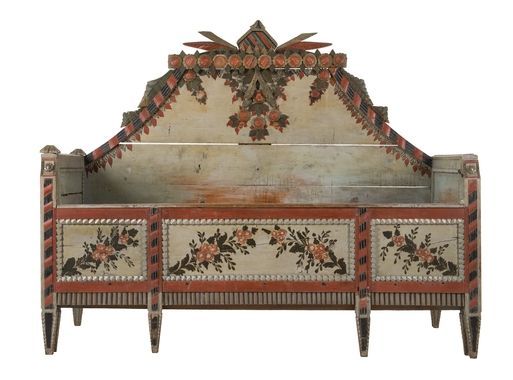 What a grand daybed – seen at digitaltmuseum.se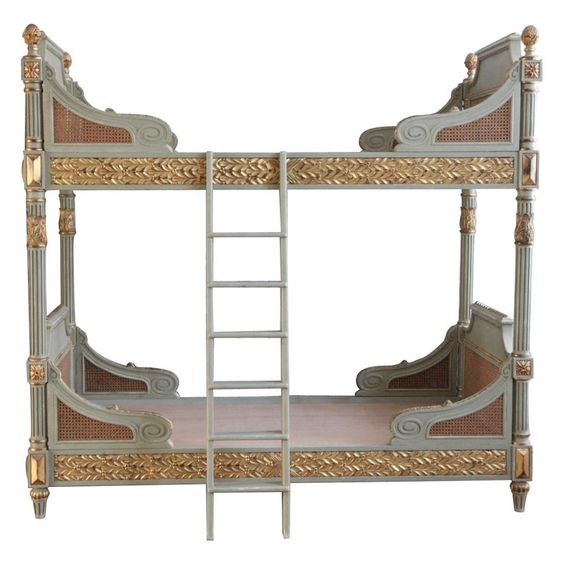
$12,057.62 Louis Xvi Style Bunk Beds/matching Pair Of Single Beds Made By La Maison London
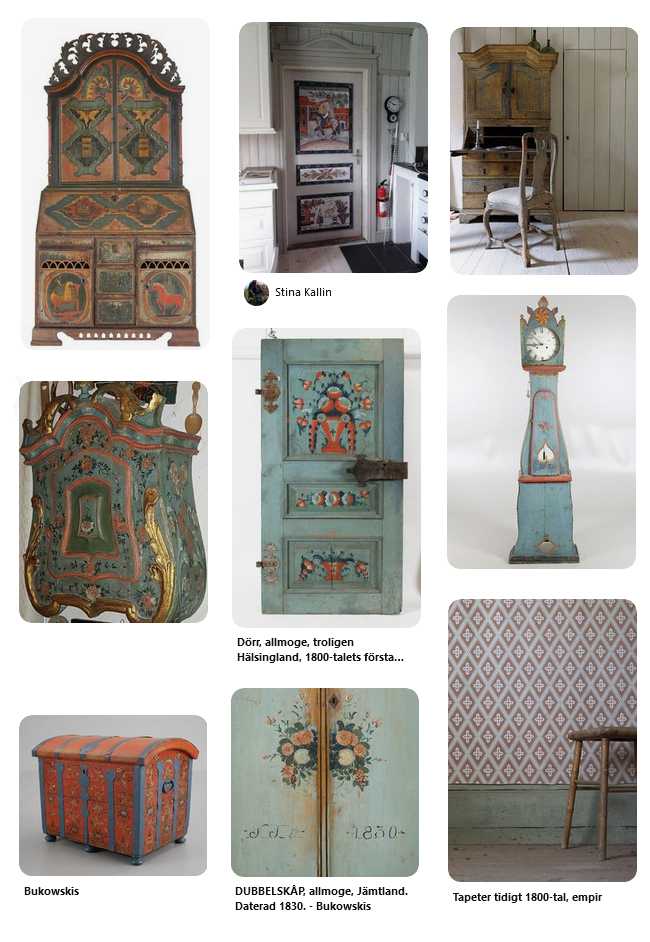
Intricate wallpaper often is a classic Swedish look.
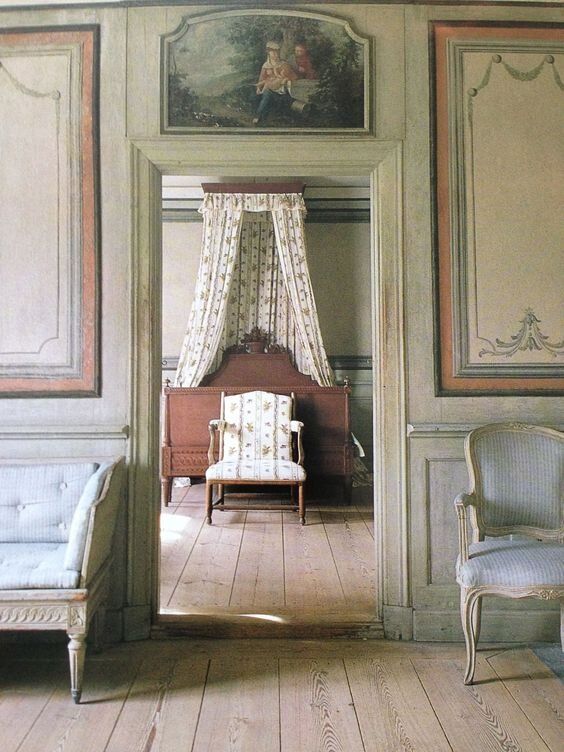
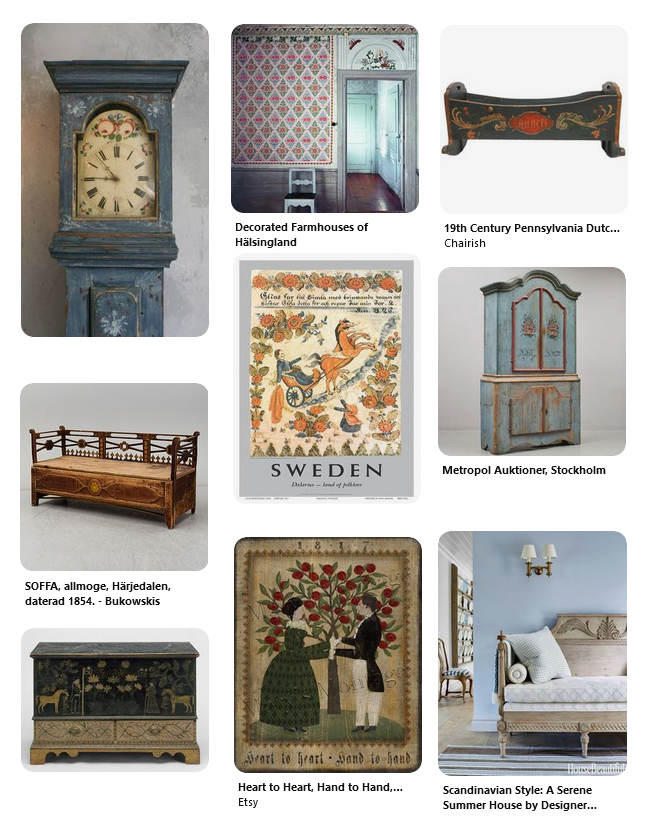
Stunning Folk art styled antiques. Burnt Red is a color seen amongst Swedish antiques
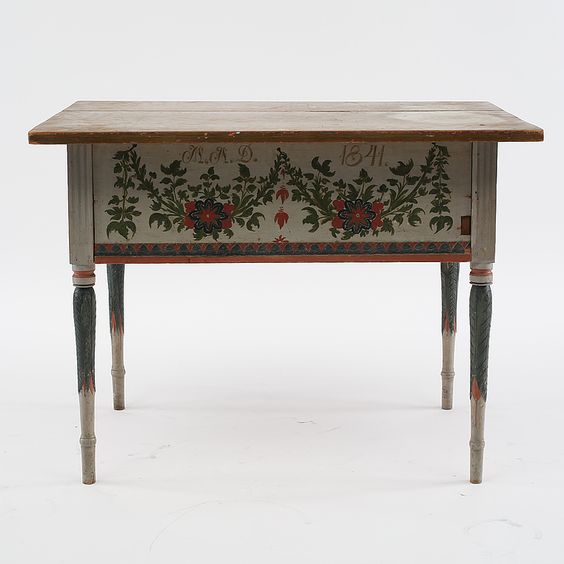
MÖSSBORD, Jämtland, daterat 1841. – Bukowskis
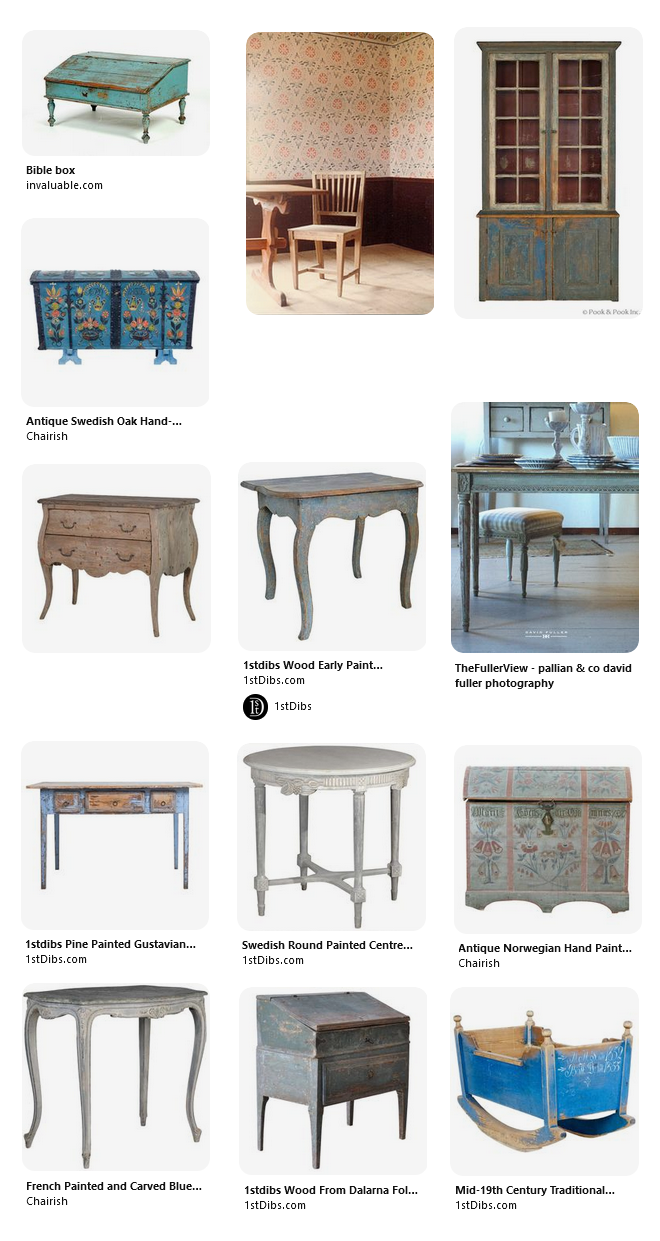
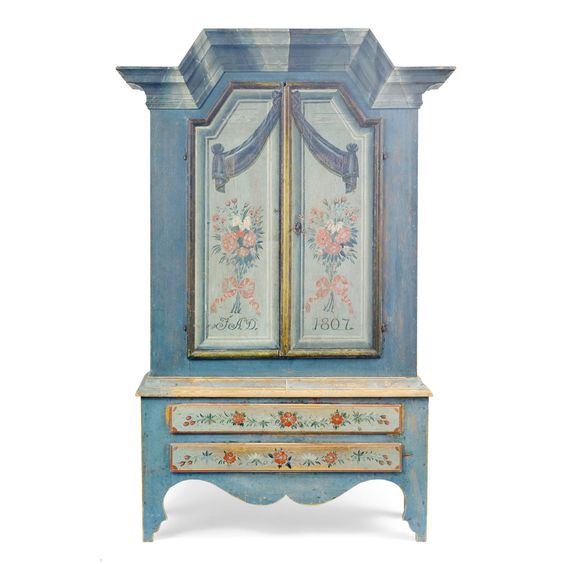
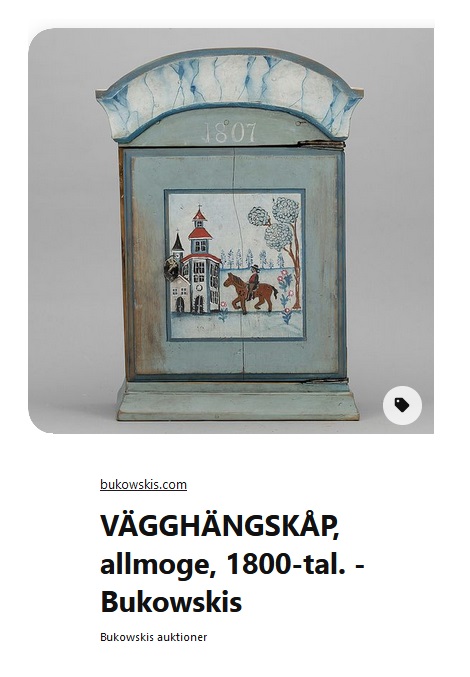
A Swedish cupboard dated 1807
Hand painted floral details stand out on this painted cupboard
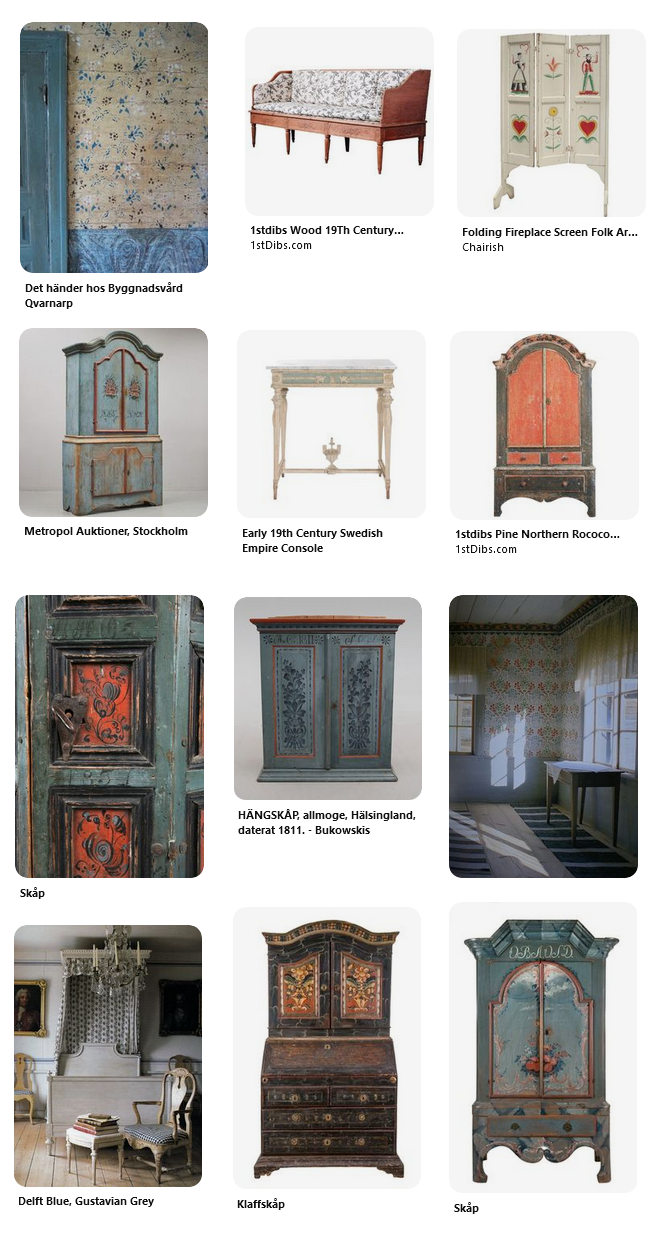 What colors do you like the best? If you were to invest in one piece today, what would it be?
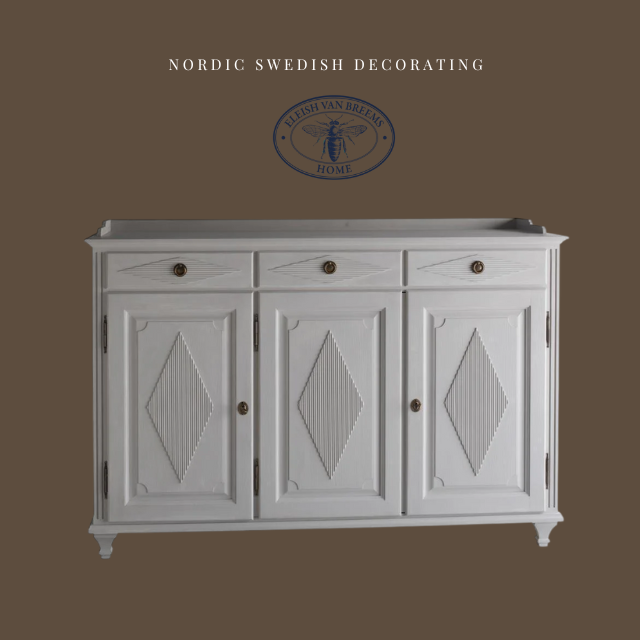
Q&A With Swedish Designers Edie Van Breems and Rhonda Eleish
Q: Clearly, you are scholars on Scandinavian style. For you, what is the essence of it?
A: Recognition of the importance of nature and the impact it has on interiors and overall lifestyles. Light, colors, and the functionality of daily living also play a huge role. In Sweden there is a wordbruskonst, which loosely translates to “useful art.” This respect for economy and intimacy with nature is an integral part of Scandinavia’s design psyche.
Q: Scandinavian antiques are usually made of humble materials, but painted to look like marbles, gilt, and fine woods. How do you make them work in modern spaces?
A: Antique pieces, by virtue of their patina and imperfections, add a depth and soulfulness to rooms that could otherwise be one-note and cold. A rough-hewn, rustic, painted farm table, for example, is going to look amazing with contemporary metal chairs or formal, tailored, upholstered dining chairs by sheer virtue of the contrast. An 18th-century Gustavian chandelier in a barn room or a rustic, painted farm chair in a severe, all-glass or marble contemporary bathroom becomes almost sculptural.
Read more at deringhall.com
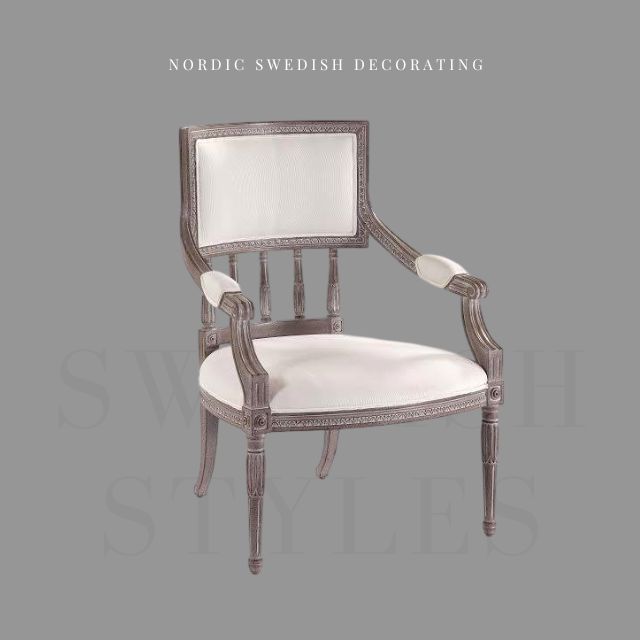
Colleen Martin, Founder of Swede Collection Tells Us Her Journey Of How She Began Reproducing Gustavian Furniture
 Gustavian Spindle-Back Dining Chair, SC0019
Swedish design in American interiors is at an all-time high. Chosen for its qualities not as a fad or trend. White and light interiors are loved by so many. Today I am talking to Colleen Martin, Founder of Swede Collection, in the hand-crafted segment of the furniture industry, who is living her life passion reproducing Swedish furniture, particularly from the Gustavian and Rococo periods. Colleen was making console tables when the need for new dining chairs for her home arose. When she couldn’t purchase what she wanted nor find anyone to make them for her, necessity being the mother of invention, she decided to make them for her line. Swede Collection is shown at High Point market in April and October. The line can be seen at www.swedefurniture.com.
Q: How did you get smitten and bitten by Swedish style?
Gustavian is my favorite style as it makes my heart sing. To me it is eloquent, romantic and refined with a simplistic beauty. I do like a few Rococo pieces as well. What I love is that Swedish pieces have never gone out of style 200 years and counting. They are lasting, enduring and inheritable due to their design. Because they are not overly embellished, you don’t get tired of the look.
I first decorated my homes in French antiques due to access as that was what was available in antique stores where I lived and as far as I could travel to antique shows. Keep in mind this was pre-Internet years so purchasing access was limited to as far as you could travel. Even though I lived in larger cities, Swedish antiques or reproductions were not available. I loved the straight legs of Louis XVI. I have always been a huge shelter magazine reader so that is where I first saw Swedish pieces and then realized Swedish was where my true love was which was similar to French Louis XVI. When the Internet made access easier, my passion for Swedish design intensified. One could see and purchase Swedish pieces in the US and Sweden easily.
Q: Why do you think people fall in love with the Swedish look?
The colors of white, pale blue/grey and pale aqua are very soothing to the soul. I find people who love Swedish style are deeply devoted to it. Perhaps it is the peaceful feeling people experience in light toned rooms where the furniture is not stark but not overdone either. Swedish pieces have great balance and detail. With the painted frames people get a departure from the brown tones of wood. Today, décor is all about the mix. What is so fabulous about Swedish design is that it fits smoothly in any décor and very surprisingly with contemporary.
Q: Why did you decide to reproduce Swedish pieces?
My mission was to make excellent quality hand-crafted and hand-carved Swedish furniture more accessible for everyone to enjoy in their homes. I traveled to Sweden and purchased antiques which I reproduce both in Gustavian and Rococo style. This is my passion. I wanted to bring back the hand-crafted pieces originally made in the workrooms in Stockholm by the masters. Swede produces unique pieces for interior designers but also has some pieces available to the public in the retail section. We are continuing to add to the website retail section smaller pieces that can be shipped via ground. Access to Swedish design is an important part of our mission.
Some of the master furniture makers that I admire are:
- Erik Ohrmark 1747-1813 who made chairs for Haga castle for Gustav III.
- Carl Fredrik Flodin 1754-1795
- Olof Roslin 1753
- Ephraim Stahl 1767-1820
- Johan Erik Hoglander 1780
- Petter Thunberg
- Johan Hammarstorm 1780
- Erik Holm 1774-1814
Although you read that Gustavian style furniture is credited to king Gustav living at Versailles, loving the French style but having the details relaxed for Swedish pieces in his homeland, I differ from that viewpoint by giving credit not to the king who was not a furniture designer, but credit to the master craftsmen and their apprentices working in their shops all over Sweden. The king may have commissioned their work for the royal properties but I believe the design was the masters’ who presented it to the king for his approval on the commission. I really don’t believe King Gustav came up with all these fabulous designs by himself. Pehr Ljung was a known master carver at the time who was called upon for difficult carvings. There were furniture “architects” and architects who did both buildings and the furniture within. Stockholm was a furniture center with many famous workrooms but these fabulous original designs were not exclusively created in Stockholm. Some masters specialized in making mirrors or clocks. I love researching these makers and am searching for information on women designers.
Q: In your decision to reproduce Swedish antiques, do you make exact copies?
I like to honor the original creator that inspires me but I do change the scale and some details so it is not an exact copy. People were much smaller in body size at that time and particularly their chairs are too small for today’s people to sit in comfortably especially larger men. I didn’t want my husband or a buyer to “perch” on the chair, I wanted him to comfortably sit in it. Comfort is king in what I do. There is no point in making something nobody can sit in. I also produce in Maple, Ash and Cherry not Swedish Pine. I do believe these masters would be proud and thrilled to see that their designs are loved 200 years later by my bringing them back to life for today’s homes. For the most part, I own the original of what I reproduce. There are a few items in my line that my talented crew was able to duplicate just from a photo of the antique.
Q: Can you find these signed original works for sale today?
Yes, in Sweden, England and the United States and it makes my heart pound to find initials carved into the frame. There is also a mark on furniture made for the royal properties. When you see the carved initials IL for example, remember an “I” is a “J” so this could be made by Johan Lindgren. Pieces reproduced 100 years ago of the originals created 200 years ago are fairly available to purchase today.
Although pieces can be found, price is another issue. A chair can run from $4,000 to 7,000. And, you may not be able to sit on it. That is the other reason I decided to reproduce these chairs – to make them affordable. Hand crafted chairs should be inheritable for generations to come and should last another 200 years just like their ancestors.
I made the finishes on Swede Collection pieces blend seamlessly with antique finishes. Unless you have an expert eye, you probably couldn’t tell the difference. Making the new pieces allows me to fill in the blanks smoothly where unattainable pieces can’t be acquired.
Q: Can you give us an example of what reproductions Swede Collection makes?
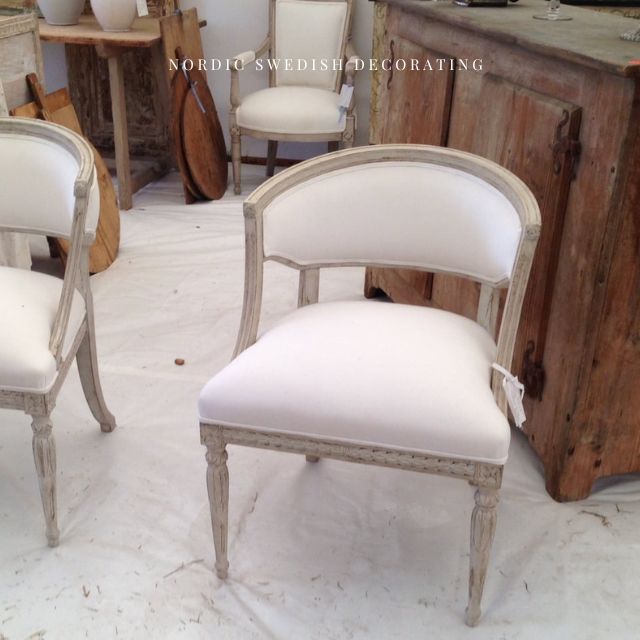
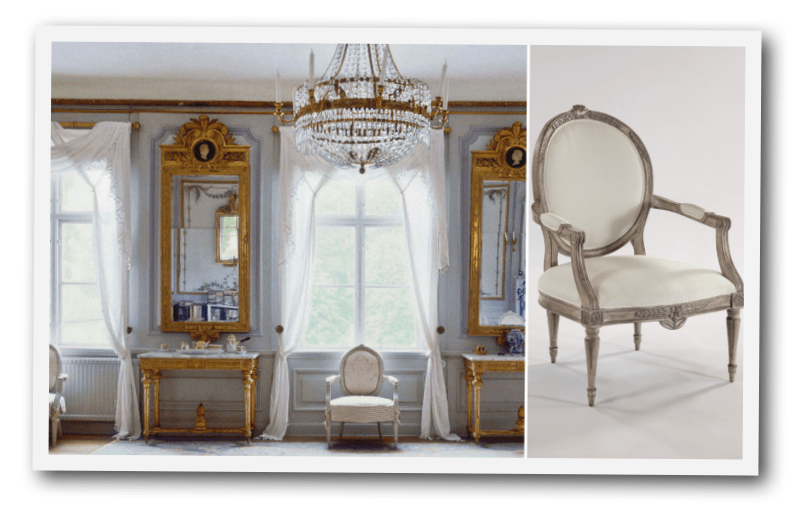 I fell in love with this chair at Sabylund Manor. Bukowski’s auction house in Stockholm sold a set of these as well. I believe they look identical to ones made by Johan Hammarstrom which my talented team copied.
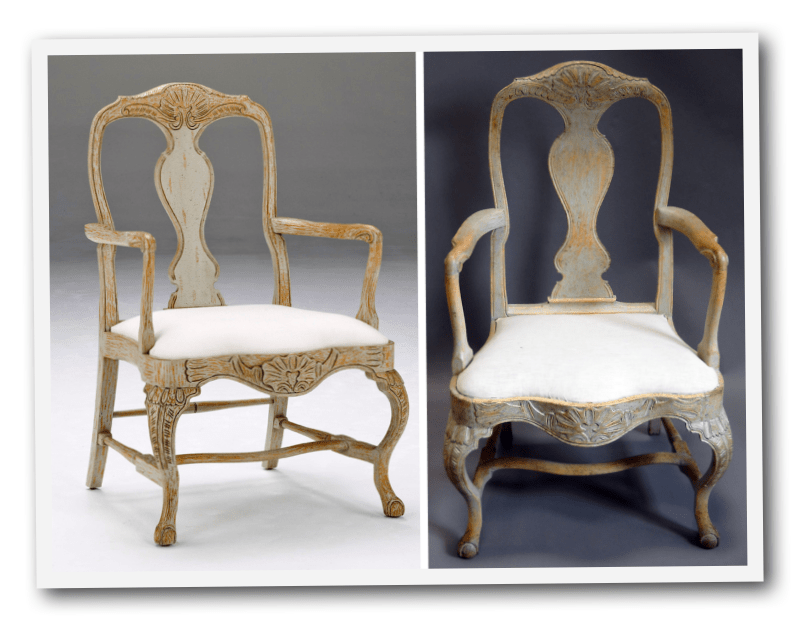
Above, these Rococo chairs have the original on the left and our newly copied one on the right.
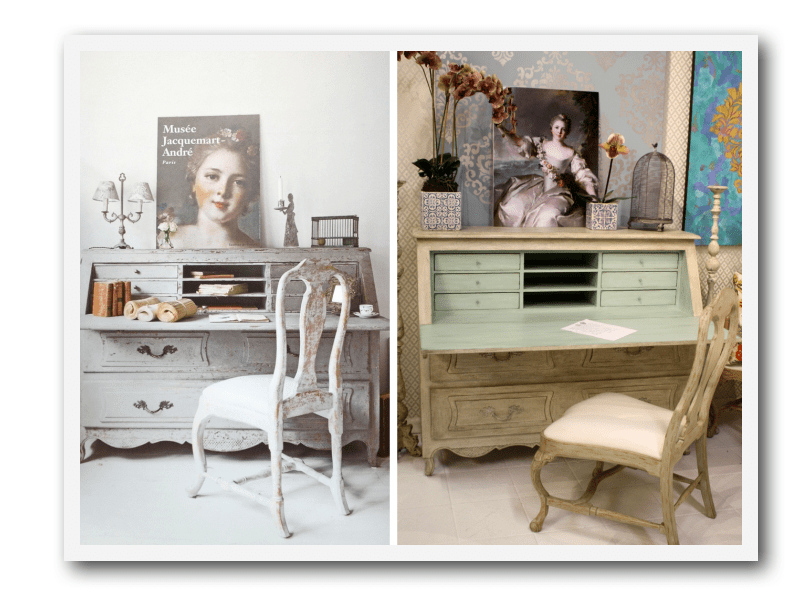 Everyone on Pinterest will recognize this desk in a home in The Netherlands on the left and Swede Collection’s version on the right.
We also went to Jacquemart-Andre museum in Paris and photoed the Nattier portrait which we made into a poster in a larger size.
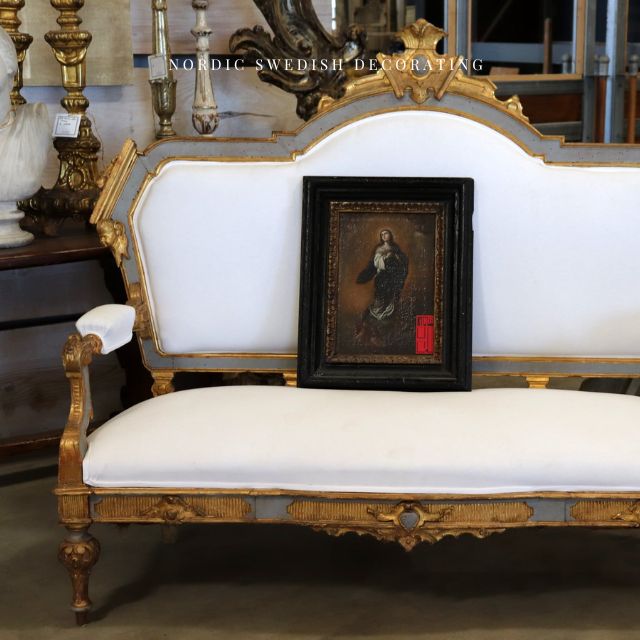
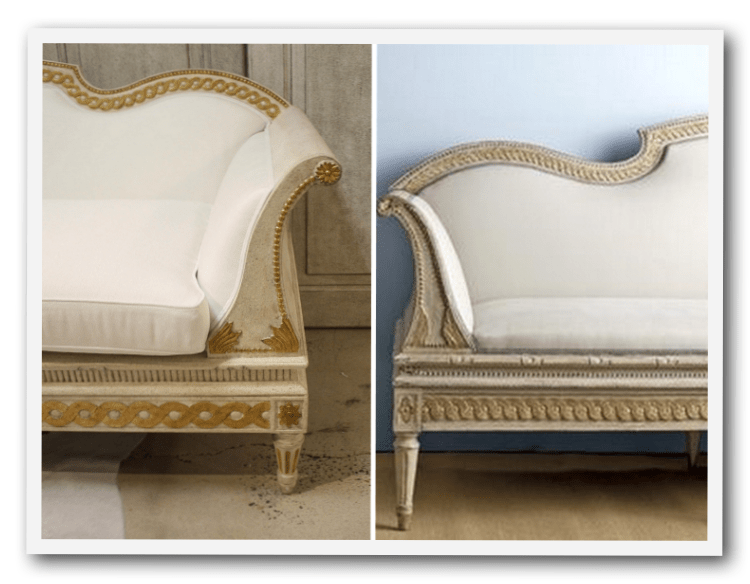 Here is another example. Antique sofa on right with Swede Collection sofa on left
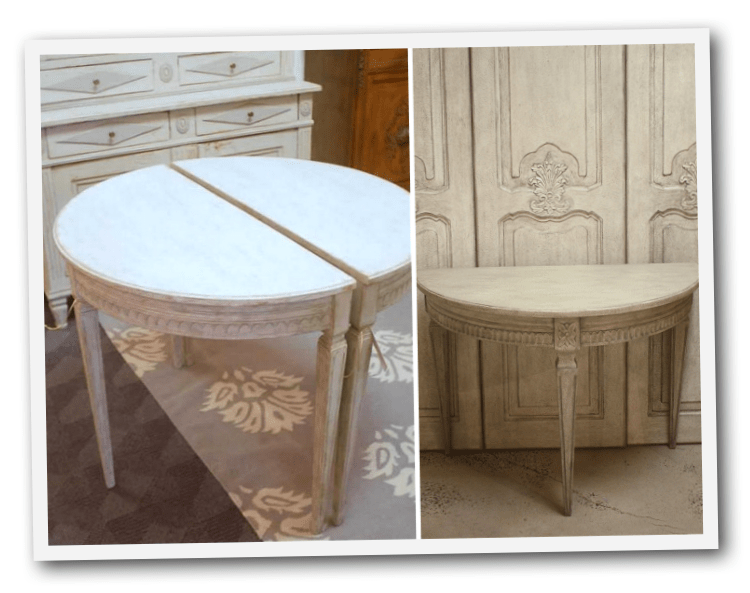 On the left are demilune tables brought back from Sweden on my 2014 trip and on the right the new Swede Collection one
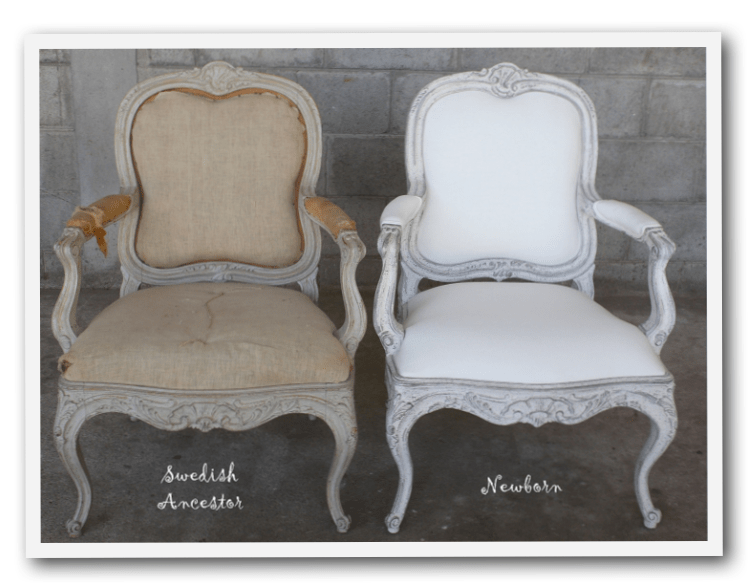 These Rococo chairs:
Q: What new pieces are you working on?
We made some hand-carved boiserie panels that buyers at market kept asking to be made into sliding doors. For April 2018 High Point market, we are introducing four sliding “barn doors”. What is different about ours is that they are elegant with hand carving on solid wood or antiqued mirror glass inserts in beautiful soft colors. You would never find them on a barn. They are great used between a master bath and bedroom instead of a traditional door. They are beautiful separators of any spaces within the home. And, we are always making more chairs and benches. We are also working on a massive tall candlestick like ones found in European cathedrals. There is a never-ending list of items to make. I am having the thrill of my lifetime making these pieces.
Visit Swedefurniture.com
Visit the 2017 Catalogue Here
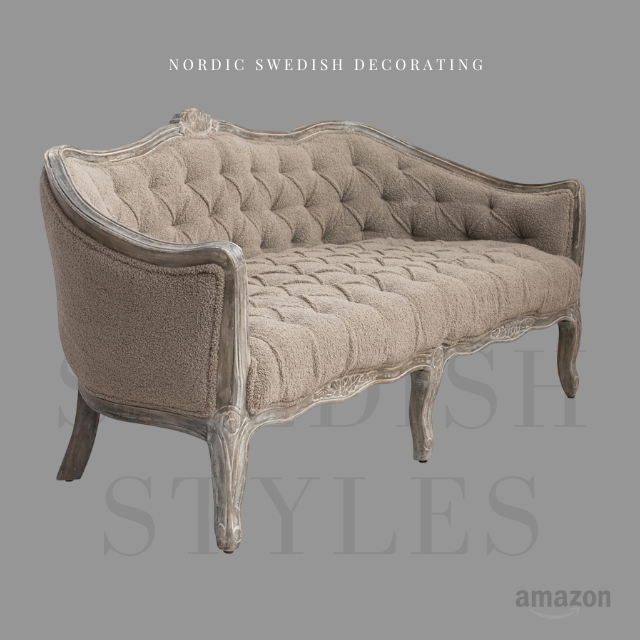
Swedish Furniture Design – What Makes The 1800’s So Obsessive
Co-Op Bouclé Pintucked Sofa – Amazon
Guest Post – Jason Phillips
The Scandinavians are known around the world for creating simple, stylish and functional furniture; its style reflects its origins, furniture and décor which maximized the available light and space. The look is minimal, yet honest with an earthy flavor. It is the perfect style to use when you are looking to revitalize an old, gloomy house and create a contemporary yet practical flare. To really get the 1800s Swedish feel in your home you will need to follow these tips:
1. Wooden Flooring
The flooring should be light and preferably wood, although a laminate will have the same effect. This allows the sunlight entering the house to bounce around the room and help to create a feeling of space, warmth and light. The bathroom is the only exception to this rule as a darker, warmer color will make the room feel more inviting.
2. Color Palettes Of Brown and Gray
The original Scandinavian design would be for white walls and a pale grey or light blue; either as a feature wall or as part of the design; the color of the furniture or the accessories. However, there have been several other influences in the Scandinavian scene and it is possible to introduce some bright colors through the accessories or even the flowers in the room. These will draw the eye and make the room feel friendly and inviting. It is also possible to opt for wood on one of the walls; it is a natural material and adds a layer of warmth to the property. If the wood is too yellow for your taste than it can be white washed or you can use grey oil to dilute the color.
3. Furniture Lines
The handmade designer furniture you use in your Scandinavian room must have clean lines. The majority of Swedish furniture elements will already have the lines you require. This simplistic approach will provide a calm, tranquil room in which to relax.
4. Functional Furniture
The Swedish pride themselves on providing stylish yet functional furniture. Every piece has a specific purpose and it is well designed for that purpose. This ethic should apply across the entire house; it avoids unnecessary clutter and encourages the simple, minimalistic style. Furniture may have been designed recently or may be genuine antique pieces. Either will work as the elements of design have stayed true throughout time; every Swedish piece has a classic beauty in its simplicity and will sit perfectly in a room today. The way this furniture has been designed allows it to blend with any room, creating a stylish, yet practical living area.
5. Corner Fire
Swedish winters are generally much colder than those in many other parts of the world. A fire is an essential part of surviving these winters. However, they are not the feature point of the room; they are seen as another piece of furniture. Swedish fires are often tiled and sit in the corner of the room. They are usually very simple in design and may hardly even be noticed with their doors closed. The corner approach also allows the heat to radiate out across the room effectively.
6. The Environment
The Swedish are well known for adding environmentally friendly features to their houses. This can be as simply as embracing the energy efficient light bulbs, to adding solar panels or a ground source heat pump. Insulation and triple glazing are also standard on new builds and help to create the warm, inviting interior of a Swedish house.
7. Less Is More
Scandinavian design does not incorporate an abundance of ornaments and accessories. The approach is minimalistic in order to keep the clean lines and bright spaces that they desire. Among the few accessories will usually be a plant or bunch of flowers to add a touch of the outside to the décor. Blend your minimalistic approach with natural materials and you will have a beautiful house that you can
actually live in!
Embrace the Swedish home design and transform your home into a welcoming, truly inviting living nest. Choose a dominant color that best lives up to your expectations, and don’t be afraid to improvise. Oversized throw pillows, flower pots with seasonal flowers and custom-made furniture items are everything you need for a Swedish-inspired home.
Swedish Reproduction Furniture At Solgarden

House Beautiful Magazine, 2002, Picture Credit solgarden.se

If you are looking for beautiful reproduction Swedish furniture, consider Solgarden. Solgarden has two lines of furniture, one named “classic”, and the other named “vintage”.
Solgarden Classic- This line is manufactured by a Swedish furniture maker and the timber is locally grown in Sweden. This line is inspired after authentic 1700s furniture found in Sweden. Within this line, you will find furniture inspired after gustavian, rococo and baroque styles. All of their furniture is hand painted adjacent to their store.
The pricing of the furniture includes a choice of color within their “Solgård Colours”. Their signature painting is a process that involves nine different applications. While you have the option to paint the furniture, you can also have it finished to a “worn” appearance that also gives the look and feel of antique furniture.
Solgarden Vintage- Here you’ll find beautiful pieces found around Sweden which have been restored and refreshed with paint or new fabric. Often times these pieces are one of a kind, very unique and special. If you are looking for something specific, which you cannot locate yourself, contact them, and they can do their best to locate that item. Solgarden also offers furniture painting, furniture upholstery and sewing services.
About Solgarden
The operation was named Solgarden, and was originally founded out of a yellow house. After a few years, the business grew and moved to Karlavagen 58 in Stockholm. It was in 1998 when the company changed owners, and over the years the business developed a passion for concentrating their efforts in Gustavian styled furniture, and it was there that special pieces were copied and reproduced. The level of painting evolved over the years, and the quality of the furniture just got better over time.
In 2012, Anki and Mary took over, and Solgarden opened the current store on Surbrunnsgatan 28 in Stockholm. Skilled painters and artists continue to paint furniture next to their shop, and they have expanded to also offer add one-of-a-kind older refurbished furniture along side their 1700s reproduction furniture. A customer can also take advantage of their upholstery and sewing services. If you need slipcovers made, upholstery for a chair, or settee, or bedding and drapery to be made, they can do that too.
Contact Solgarden:
- Surbrunnsgatan 28, 113 48 Stockholm
- +46 (0)8-663 93 60
- info@solgarden.se
- www.solgarden.se
This stunning feature was featured in House Beautiful back in 2002. Read all about Marianne von Kantzow’s apartment located on Strandvagen:
“Welcome to my latest love affair,” said the invitation to the launching of Solgarden’s new management four years ago; Marianne von Kantzow just abandoned her post as as a construction executive” to take the helm at one of Sweden’s premier makers of reproduction Gustavian furniture and objects. The daughter of Swedish aristocrats, she was raised in an 18th-century manor in the countryside north of Stockholm where “you could find not just Gustavian furniture but details of the style everywhere—walls decorated with painted canvas in colors such as pearl gray and decorated with swags of flowers in lovely pastels.” she remembers.
At Solgarden she offers furnishings that hark back to the years between 1770 and 1790, a golden age in Sweden during which King Ciustav III had his own love affair—with the fashions of the French court. Solgarden continues to discover antique pieces to reproduce, often with the help of the distinguished decorative arts scholar Lars Sjoberg. The company makes tables and chairs finished in the traditional 18th-century gray paint, but von Kantzow has also modernized the look of her furniture by using what she calls “Solgarden white.” This color, her trademark, is a soft “broken white” la European term for off-white) antiqued in her store’s workshop with eight layers of paint and one of wax.
Von Kantzow also tinkers with tradition in her nine-room apartment on Strandvagen, Stock-
holm’s Fifth Avenue. Divorced after a long marriage that produced five now grown children,
she left a picturesque weekend house on an island in the Stockholm archipelago and now lives
in town full time with her companion, a lawyer. “He and I have the same taste.” she reports,
although her decor is so “un-Swedish” that when she hosted her daughter’s engagement patty,
the young woman’s future mother -in-law expressed fears that her son might have to live with
Marianne von Kantzow’s aesthetic. “Swedes are generally afraid of strong colors on themselves and in their homes,” says von Kantzow. “They walk into my house and stare with their mouths open, and I can see they wish they could be as daring.”
The late 19th-century apartment overlooking the National Museum and the waterfront is decorated with the same colors that von Kantzow has used in all her houses. “I love while with other colors, preferably strong pastel tones of blue and pink.” she says, “They give love and happiness to a room.” Her color palette is both pleasing and practical. “I believe in color schemes that allow a person to move furniture from room to room without having to reupholster everything.
The apartment’s 15-foot ceilings and ample natural light are dramatic and accommodating. The piece de resistance is the drawing room, where against rosy pink walls von Kantzow has arranged two conversation groups, using her collection of signed late-18th-century furniture upholstered in pink velvet and blue period documentary fabrics. Anchoring two opposite walls, she has hung paintings close to her heart, one of her great aunt, the other showing a view of her beloved archipelago.
For the formal dining room she painted a forthright Wedgwood blue on her walls, along with Solgarden white for the panels. Two pieces immediately attract attention: a 19tg century cut-glass chandelier—a copy of one made for the Austrian empress Maria Teresa—and an 13th-century Dutch cabinet housing pan: of von Kamzow’s china and silver collections. Most of the dining chairs are 18th-century originals.
Von Kantzow- shows her playful side in the kitchen and study. The former took its surprising lime and pink accent colors from the heating stove installed at the time of the buildings construction. In the latter, von Kantzow uses a shack of sorts, complete with roof and trompe l’oeil scenery, as a walk in closet.
If only von Kantzow could enjoy her urban oasis more often. Like any good enterprising Swede, she works long hours—sometimes seven-day weeks. Fortunately her soothing yet stimulating shop makes up for it. Customers, she says, “come in and say things like ‘All this whiteness makes me calm,'” and they tend to stay a while, conversing deeply with strangers.
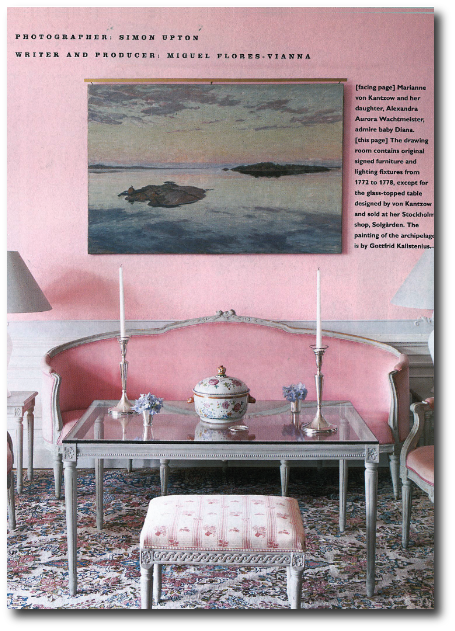
House Beautiful Magazine, 2002, Picture Credit solgarden.se
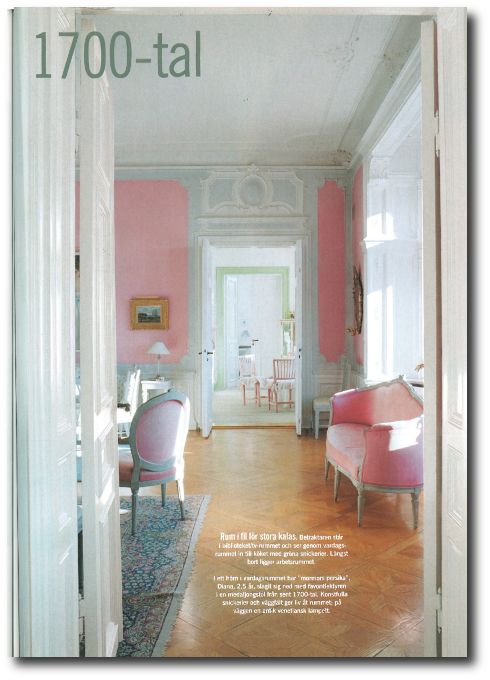
Pink Gustavian Interior -SKONAHEM
2004 Picture Credit solgarden.se
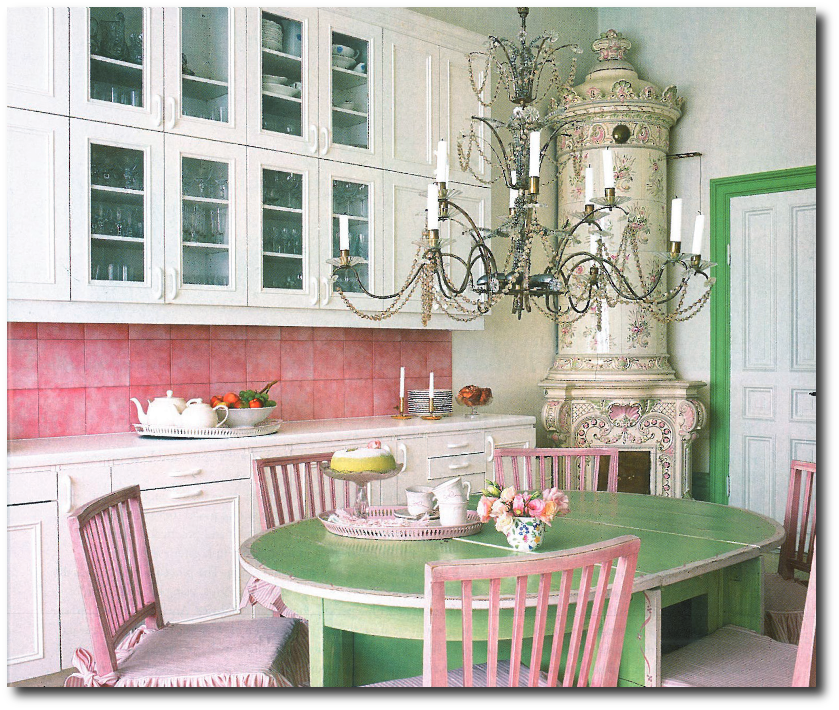
House Beautiful Magazine, 2002, Picture Credit solgarden.se
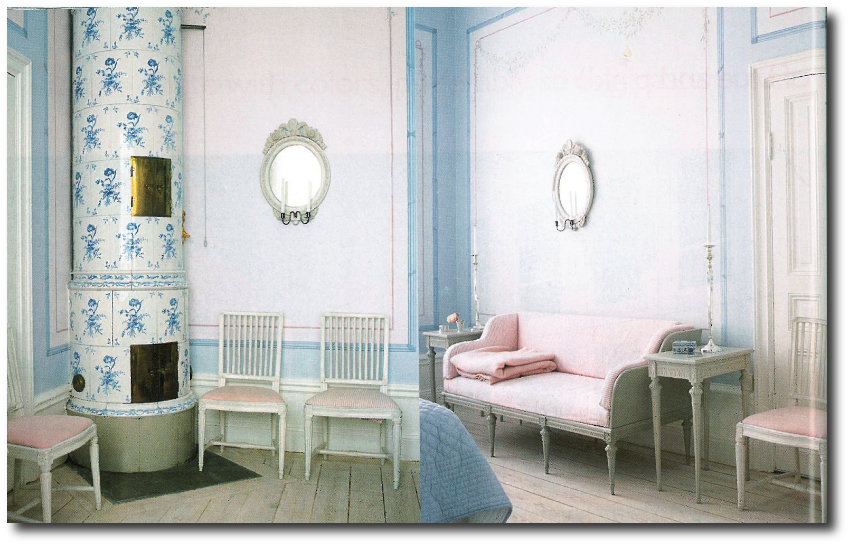
House Beautiful Magazine, 2002, Picture Credit solgarden.se
Pink Gustavian Interior -SKONAHEM
2004 Picture Credit solgarden.se
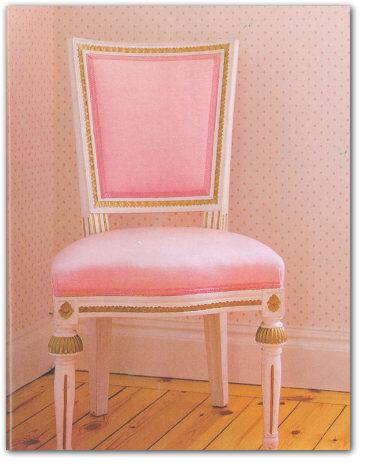
Pink Upholstered Gustavian Chair- GODS & GARDAR
2004 Picture Credit solgarden.se
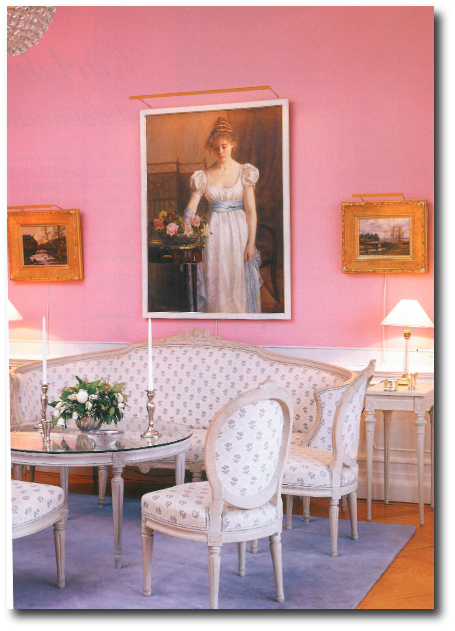
Gustavian Room – BAZAAR
2002 Picture Credit solgarden.se
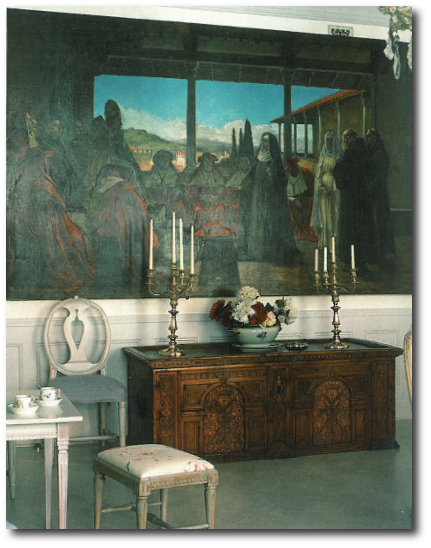
Swedish Interior, Designer Marianne von Kantzow Seen In Hem & Gardar Magazine, Featured At solgarden.se
More Picture Credits :
- Baby Swedish Toys In A Nordic Styled Interior – Picture Credit solgarden.se
- Swedish Interior, Designer Marianne von Kantzow Seen In Hem & Gardar Magazine, Featured At solgarden.se


New Research Suggests Swedish Furniture In The 1700’s May Have Had Strong Colors

The computer-generated image shows how Gottlieb Iwerssons bureau was color set from the beginning with stained inlays.
Furniture with inlay from the 1700s tend to be in a moderate brown color scale. But new research suggests that Gottlieb Iwerssons and the other Masters furniture had strong colors when they were new.
Elise Andersson at Carl Malmsten Furniture Studies presented his essay in Varying Shades of Brown where she runs the thesis that several of the 1700s masterful intarsiamöbler had a rich and expressive colors.
It is exciting to imagine how old things looked like when they were new, says Elise.
After a symposium in the Netherlands on stained wood Elise was inspired to investigate a bureau of master carpenter Gottlieb Iwersson (1750-1813). The bureau was a gift to King Gustav III and is currently banked in the Royal Collections.
Elise has looked closely at the paint residue on the furniture, studied the original drawing, examined sekretärens surface with UV light and read old beet recipes.
Emerges is a picture of a piece of furniture where the motifs were originally colored in blue, green, red and yellow against a light gray background – all framed by rosewood and amaranth, two popular woods for furniture production in the late 1700s.
Read More Of This Article At godsochgardar.se
Swedish Tripod Tilt-Top Candle Stand Tables
Tea tables were originally designed to serve tea. Some were designed to tilt like the pie table which could then be folded up and stored away.
Dutch painters were known to decorate the tops of these tables with landscapes starting in the late 17th century, and this following survived well into the 19th century. In the late 18th century the English style became extremely fashionable, and this style of table became extremely popular.
- Swedish Tea Tripod Tables- trouvais.com
- Swedish Painted Tilt Top Candle Stand From Eleish Van Breems Antiques
- Swedish Tilt Top Table Seen at Puckhaber Decorative Antiques
- London-Townhouse By designer Katrin Cargill
- Swedish Tripod Table Seen At Max Rollitt
- Swedish Tilt Top Table Seen at Puckhaber Decorative Antiques
- 19th Century Swedish Tilt-top Table- Lorfords Antiques
- 19th century Swedish tilt-top table –Lorfords Antiques, 19th Century Swedish Birch Square Tilt Top Table, Debenham Antiques Ltd
- Swedish Late Gustavian Alder Root Table D Larsson Interior.com
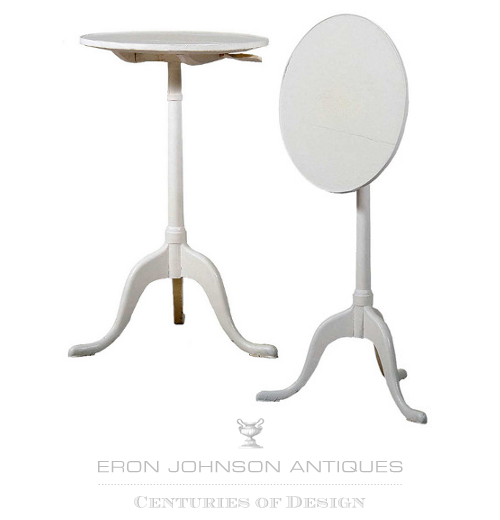 Swedish/English Painted Birch Round Tilt-top Tripod Table $295- Eron Johnson Antiques.com


Buy The Swedish Style For Less
Extra Links
- 19th Louis XVI Gilt Wood Cartel Clock- On Ebay
- Skalin Bell Chime Swedish Gustavian On Ebay
- Hau Junghans Rare 19th Cartel Clock $199 From Arek631 On Ebay
- Porcher sells a terrific stone top black granite bathroom vanity
- Small Antique French Bronze My French Touch On Ebay
- Hardware Antique French Brass Hook CoverMy French Touch On Ebay
- French Bronze Embellishment My French Touch On Ebay
- French / Swedish Looking Emmanuel Georges On Ebay
Designer Loveseat Emmanuel Georges On Ebay
- Designer Chair Emmanuel Georges On Ebay
- Swedish Looking Bow Mirror On Ebay UK
- Empire Pewter Bulged Footed Baby Cup $59.95 Amazon
- Candelabra Sconces Newport Treasure On Ebay
- Wood Carved Gilt Pair Plaques Sconces Panache1000 On Ebay
- Antique French Fabrics Loody Lady On Ebay
- Greenland Home Lorraine Quilt On Amazon
- Keyhole Drawer Pull The French Rooster On etsy
- Swedish Accessories- Buy From Extra Chic On Ebay
- Swedish French Antiques –Antiques Super On Ebay
- Swedish French la Maison Blanc On Ebay
- Bronze Furniture Crest On Ebay
- Efex Furniture Appliques
- Appliques Sold At Robyn Story Designs
Gustavian Furniture Seen In French Elle Decor

-Martha Stewart Larsson Desk in Black, $399
-Martha Stewart Living Larsson Cabinet $199
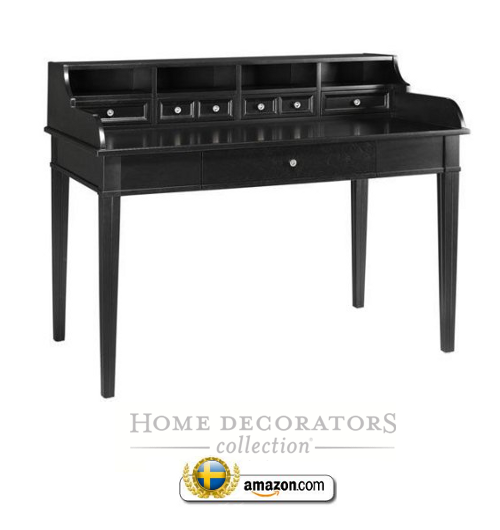
Martha Stewart Living Desk- $399- Amazon
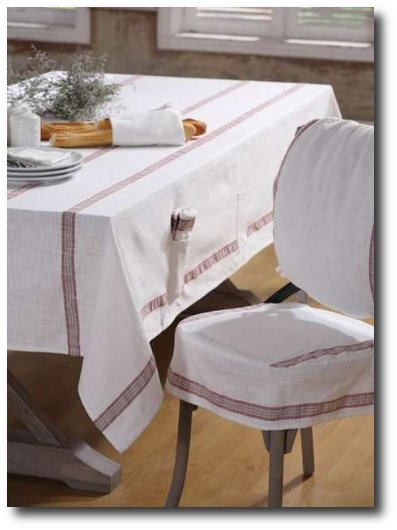
Red Striped Cotton Linen Table Cloth By Creative- Co-op
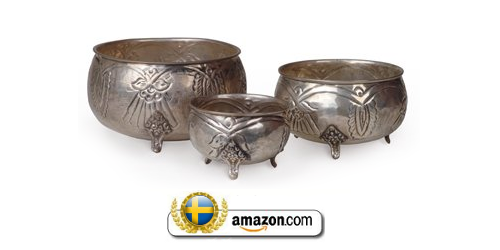
3 Pcs Round Bowl with Fleet – Antique Silver Finish, $12.95 + $10.49 shipping Amazon
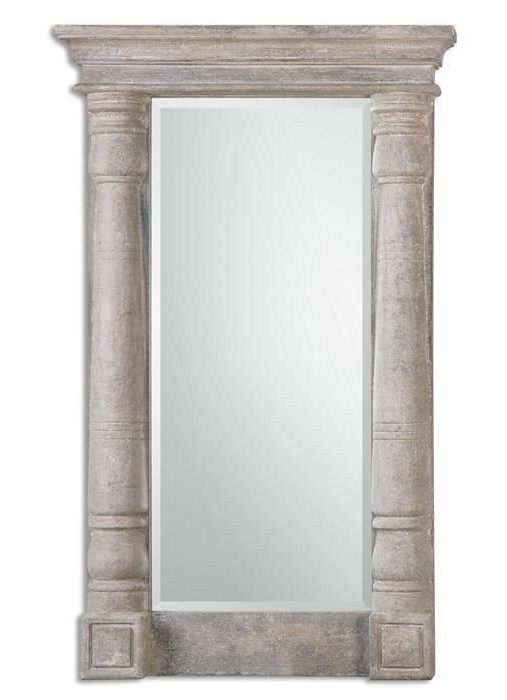
Uttermost 13918 Castelvetere Mirror $653 From Bling And Company On Ebay
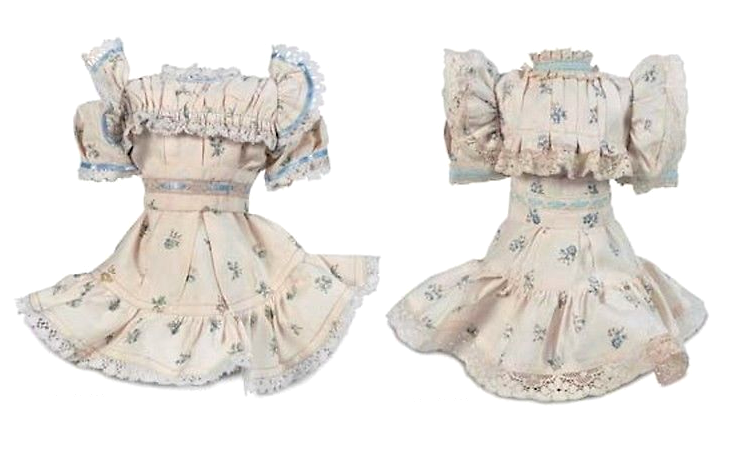
Reproduction Dolls and Doll Clothes From Mostly Dolls $44 On Ebay
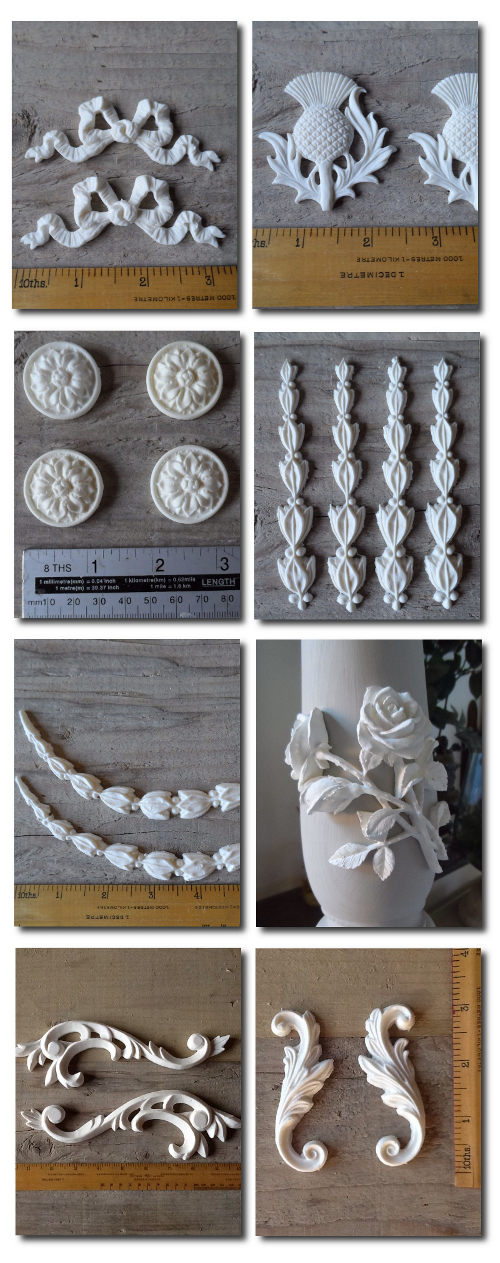
Swedish Looking Furniture Appliques On Ebay UK
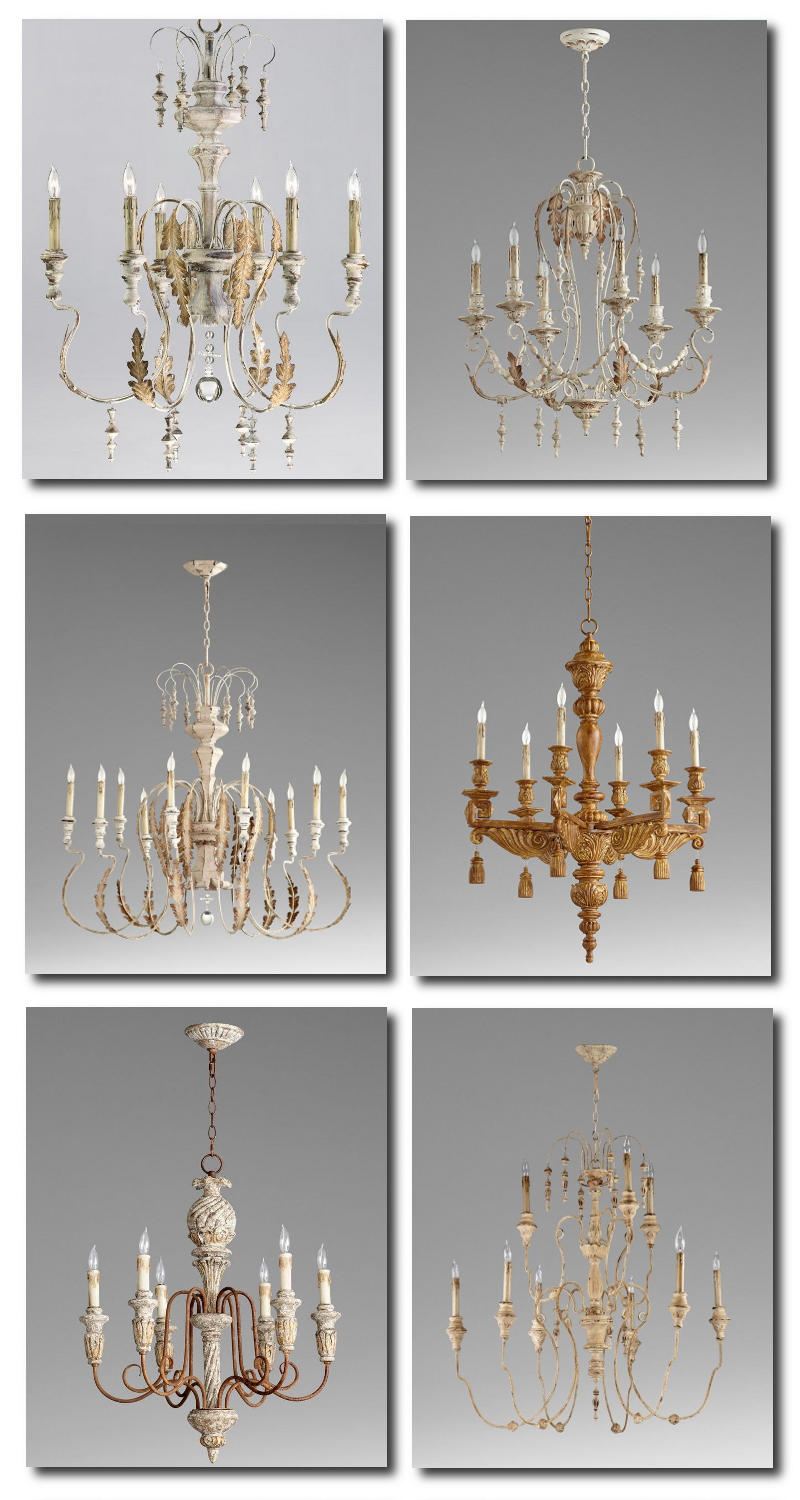
French Wood and Iron Chandeliers On Ebay

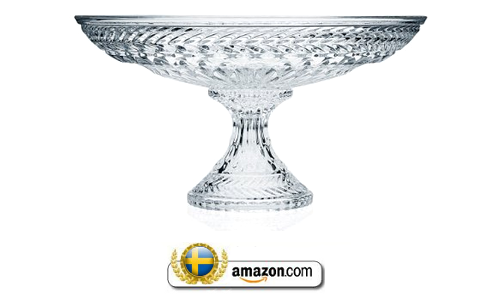
Symphony Crystal Footed Centerpiece Bowl
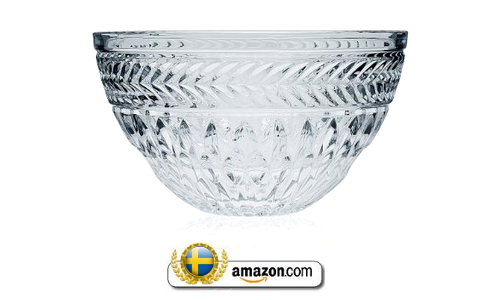
Symphony 11″ Crystal Footed Bowl