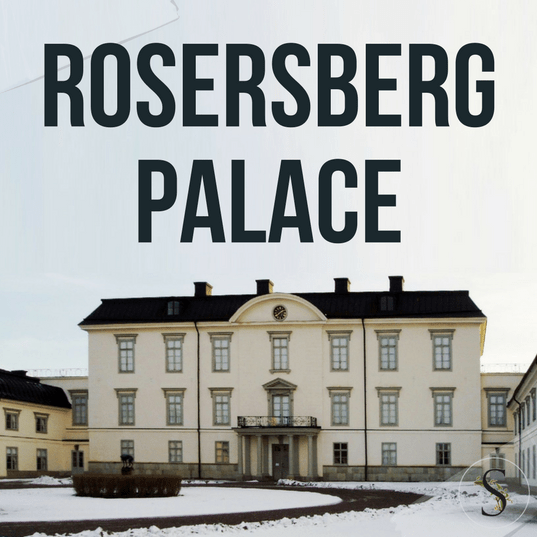
Sweden’s Empire Decorated Rosersberg Palace
Rosersberg Palace (Swedish: Rosersbergs slott) is one of the Royal Palaces of Sweden. Situated on the shores of Lake Mälaren, on the outskirts of Stockholm, it was built in the 1630s by the Oxenstierna family and became a royal palace in 1762. It was then that the state gave it to Duke Karl (later Karl XIII), the younger brother of Gustav III of Sweden.
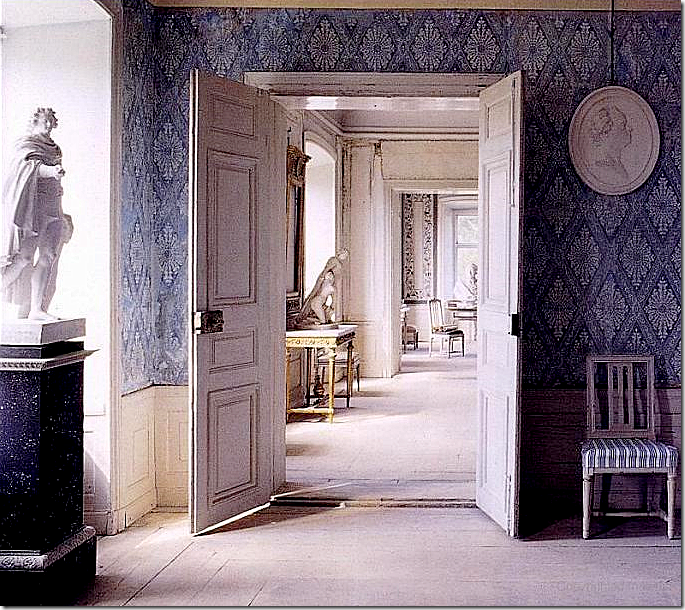
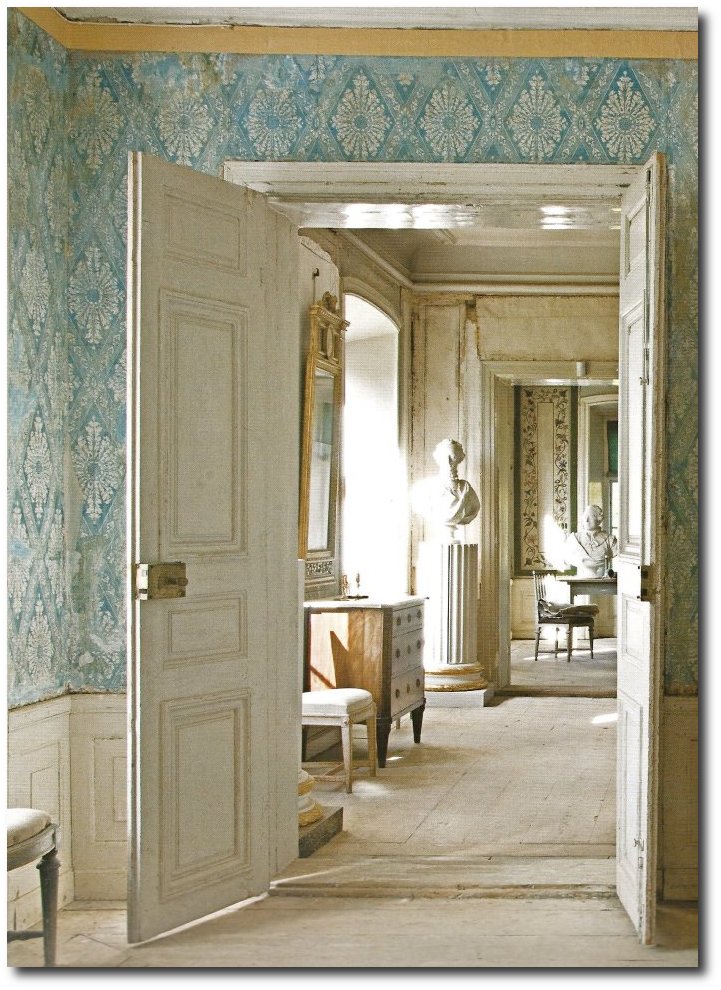
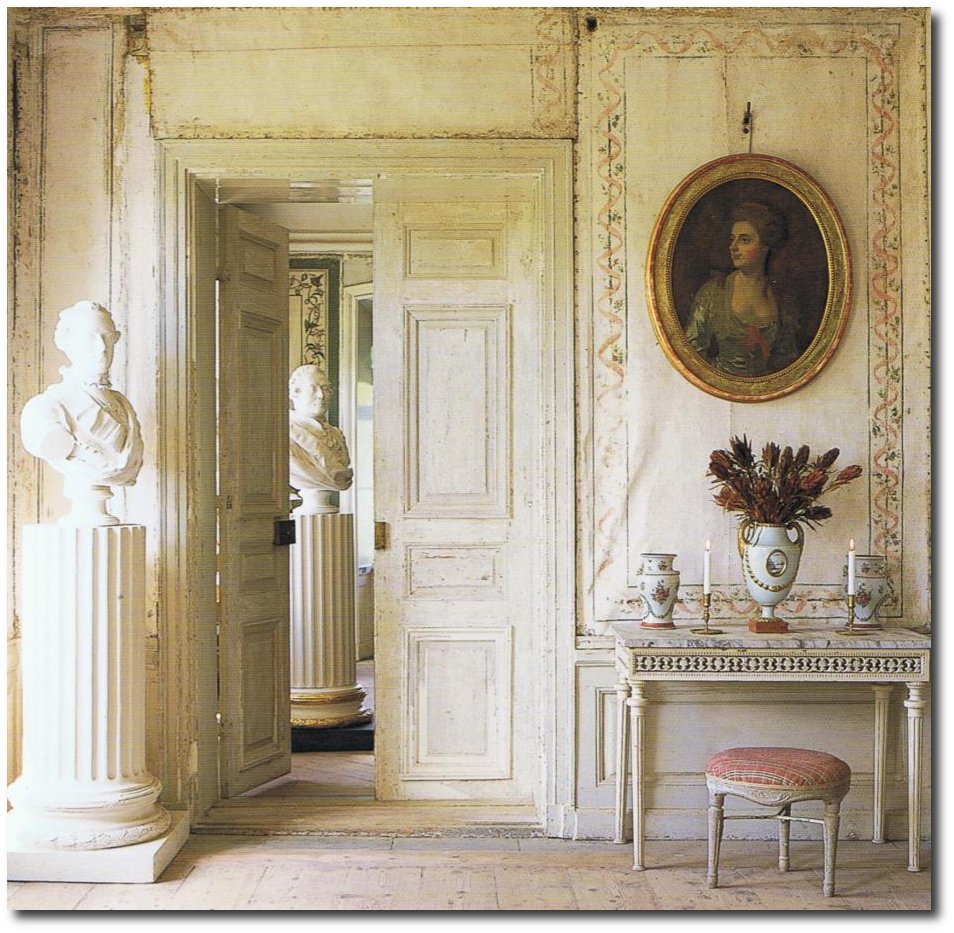
Today at Rosersberg the rooms remain almost untouched from the 1795-1825 period. The interior takes you back in time to the authentic royal interior from the turn of the 19th century.
The second half of the 17th century, the Renaissance Palace became to be dated. Chancery President Bengt Oxenstierna acquired the estate, and renovated the home in the Baroque style that was fashionable at the time. He sought out the country’s leading architect, Nicodemus Tessin the Younger, and new wings were added to the building. The tall Renaissance gables were taken down and the exterior of the building was updated with a new hipped roof.
Then in 1747, Rosersberg was acquired by Baron Erland Broman. More alterations to the buildings were directed by one of the country’s most prominent 18th century architects, Jean Eric Rehn. On Broman’s death in 1757, the property was acquired by the State.
The property was then placed at the disposal of the young Duke Karl (later King Karl XIII) of Södermanland.
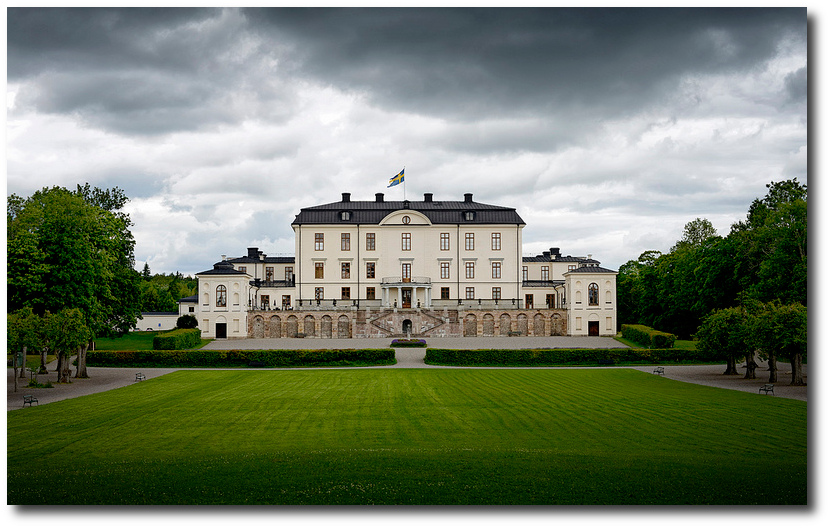
When Duke Karl (XIII) moved in around the 1760s, he modernized the palace in late Gustavian style. The interiors at Rosersberg Palace differ from the Gustavian style interiors of other royal palaces in Sweden. At Rosersberg the style has been known to trend after the Empire style. The palace combines the two styles: Neo-Classicism and the “Empire style”. Get some ideas from this beautiful castle for your own home.
- Sweden’s Rosersberg PalaceFrom Flicker
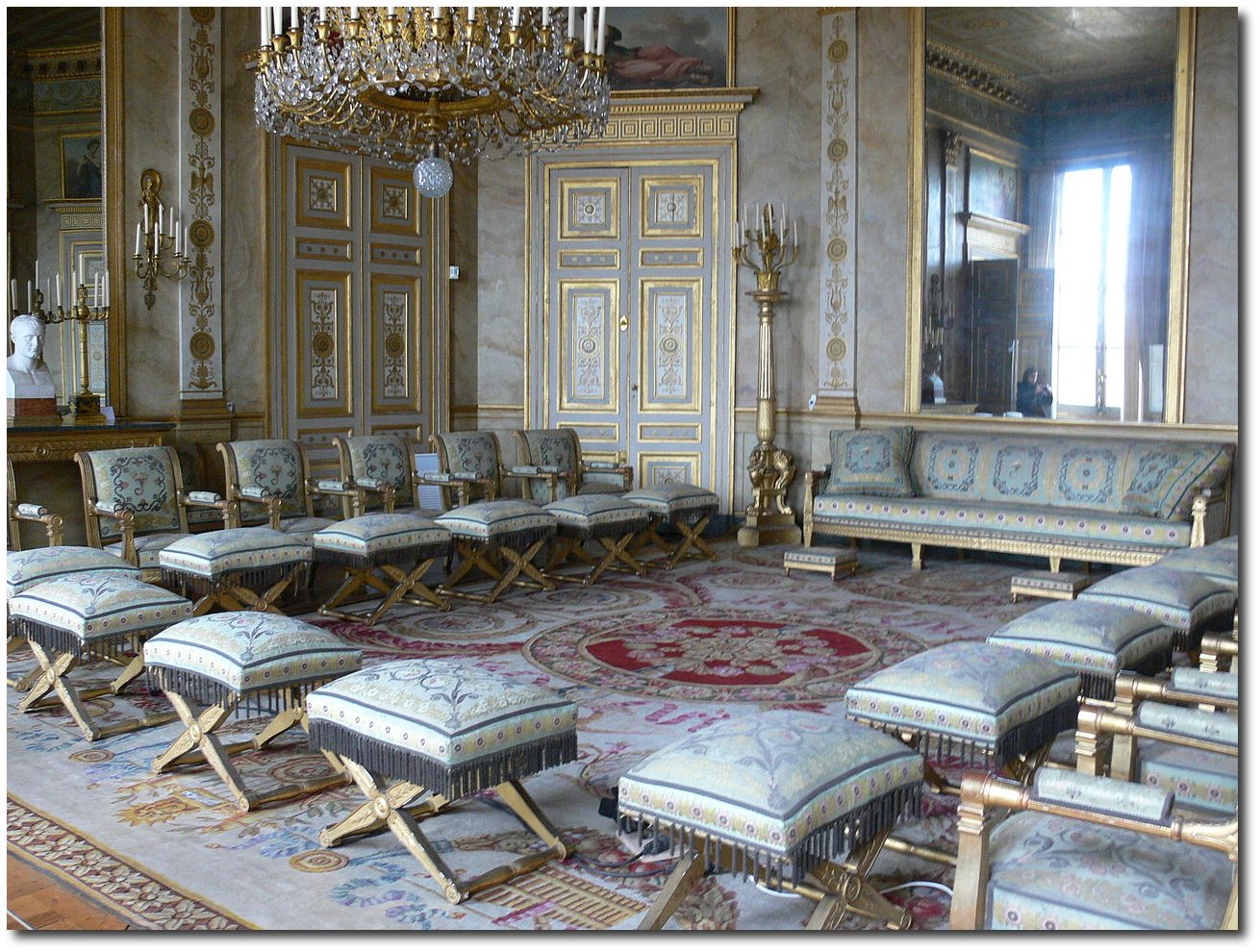
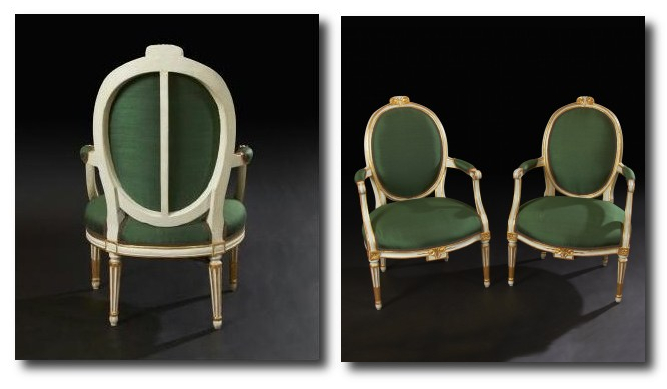
- Pair of Louis XVI carved and painted Fauteuils. Having oval backs, carved flower crest and apron on stop fluted legs.
- Photo Taken From Sw-Zamki.Narod.ru
- On the wall is a picture depicts the coronation of Karl XIV Johan. Photo Taken From Sw-Zamki.Narod.ru
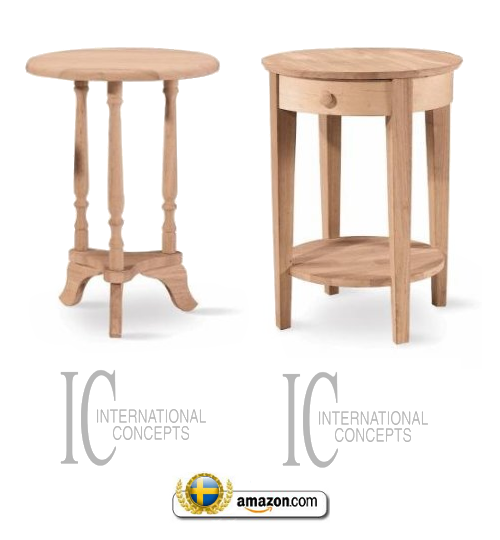
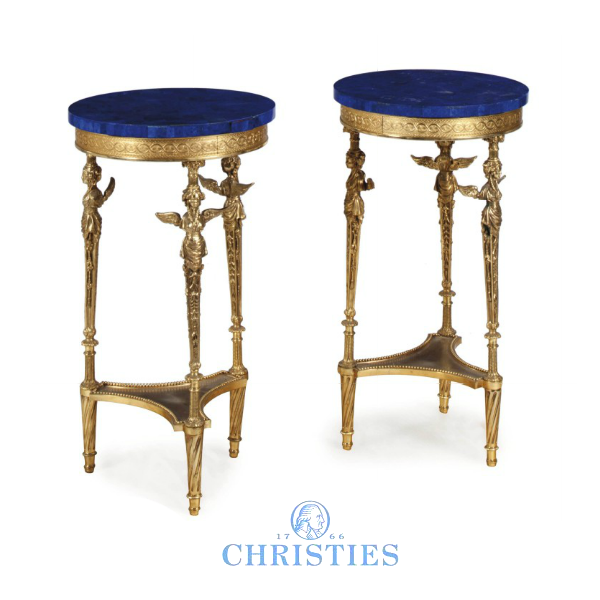
Turn this unfinished international concepts table, sold for $42 dollars into a thousand dollar table with an additional marble top and some paint. Consider white paint with gold accents for a classic Swedish style.
International Concepts Accent Round Table with Drawer- $104
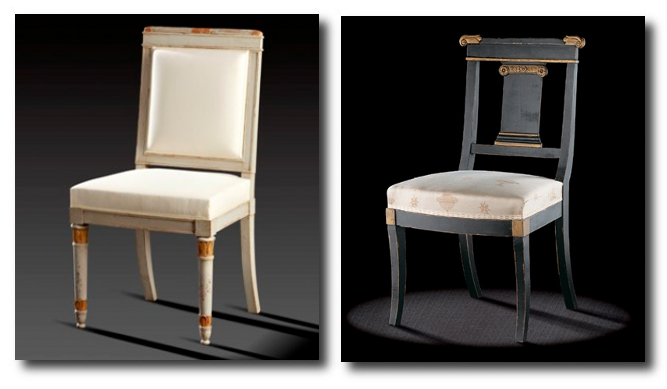
In this photo, you can see a neoclassical chair painted with a gray paint, outlined in a dark gray with white upholstery. Use the same color combinations with your painted furniture


The Most Beautiful Rococo Library In The World:The Anna Amalia Library
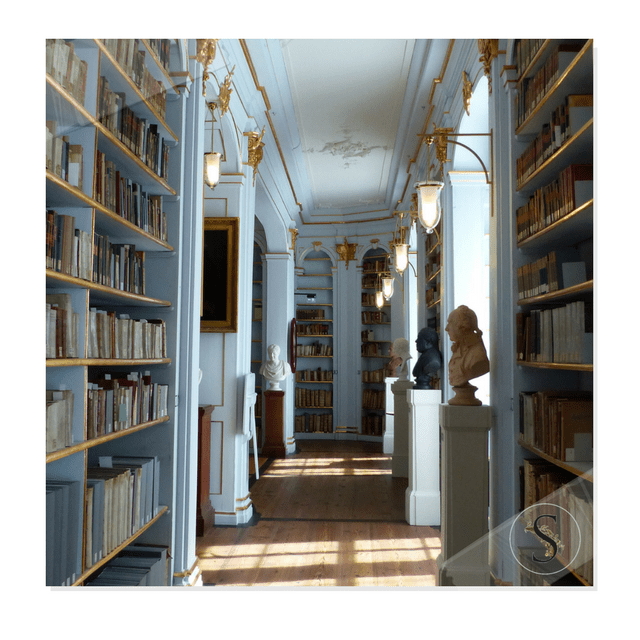
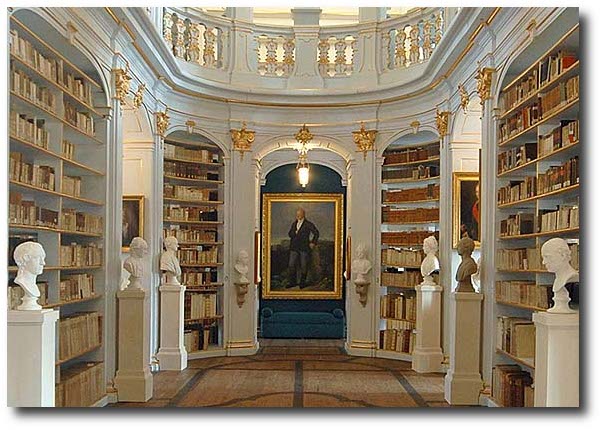
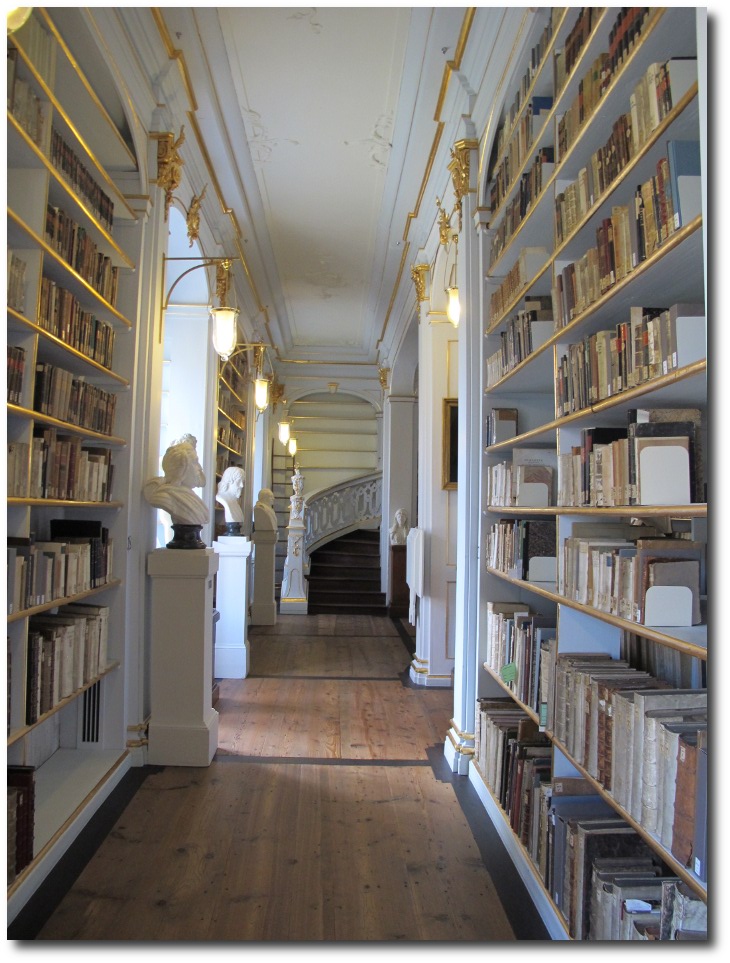
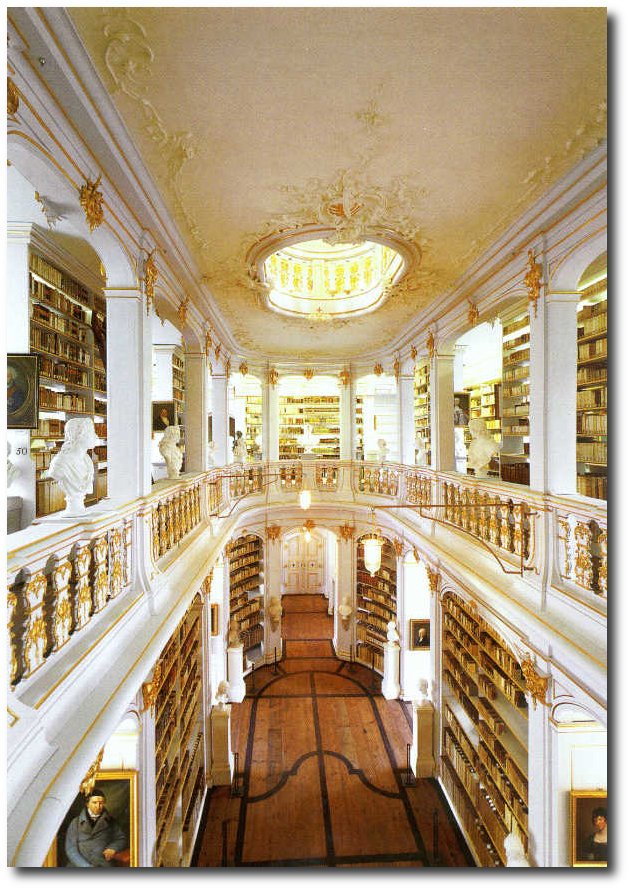
The Duchess Anna Amalia Library located in Weimar, Thuringia, Germany, is world famous for its oval Rococo architecture. The library one of the most breathtaking examples of Rococo design. The Rococo library houses a major collection of German literature and historical documents. The Duchess Anna Amalia Library is named for Anna Amalia, Duchess of Saxe-Weimar-Eisenach, who arranged in 1766 for the courtly book collection to be moved into the library.
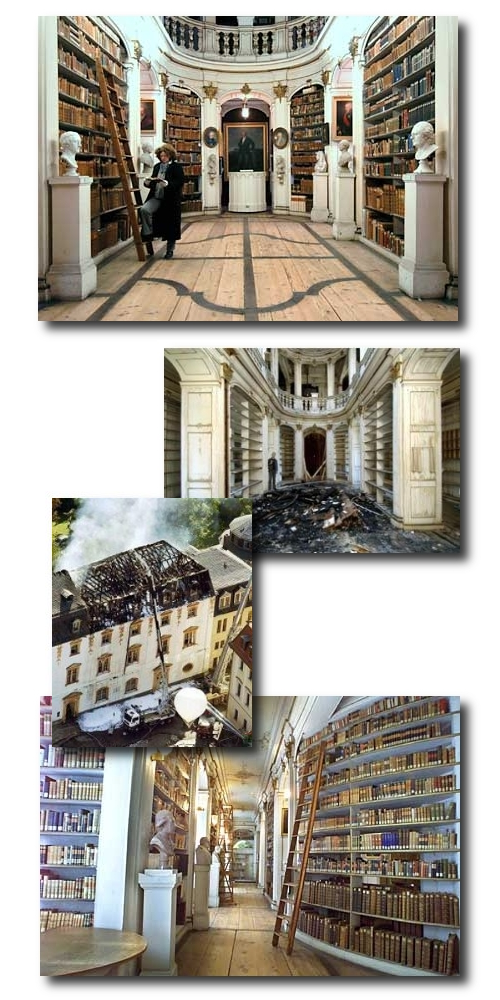
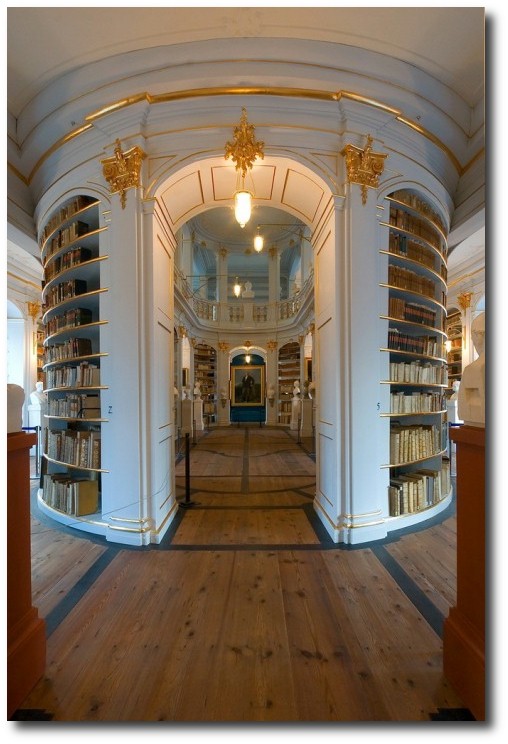
In the picture above, a photographer takes a picture of the in the middle of the room with a view of the front door. Three weeks after Candida Höfer had made their shots, a fire caught in the library, and burned about one million volumes. 50,000 volumes were saved, but many were irreplaceable, and of the 62,000 volumes that were damaged by fire or water, at least 36,000 were restored. Even though, a substantial amount of books were lost in the fire, there has been no loss of interest in the library.
The sad part of the account was the library was scheduled for the overdue renovation when an electrical fire struck the library in September, 2004, JUST weeks before the collection was to be moved for the renovation.
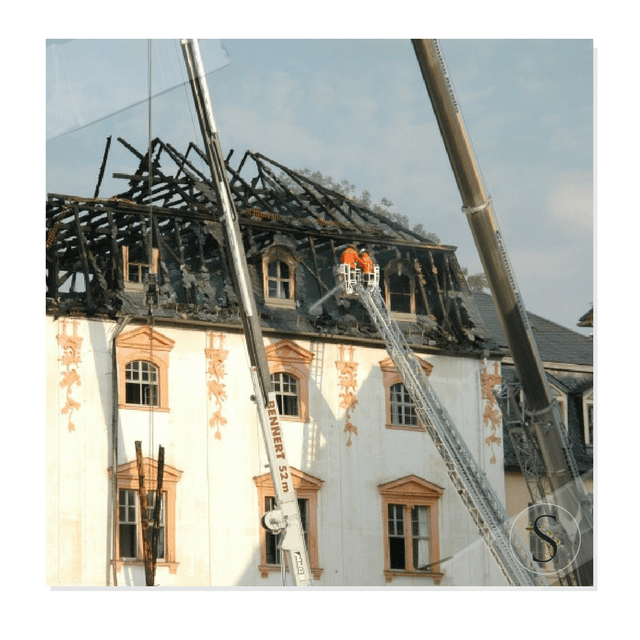
Thousands of precious books which had been preserved for two centuries, were destroyed by fire by a damaged electrical cable. The interest in preserving the library drew in almost 14 million dollars for the restoration and repurchasing of the books.
Check out this bm-online.de, link for some of the pictures of the restoration. The library was reopened in December 2007.
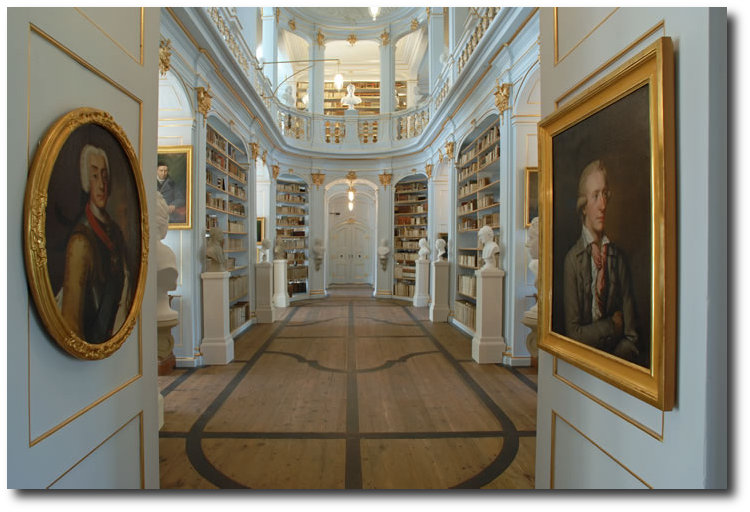
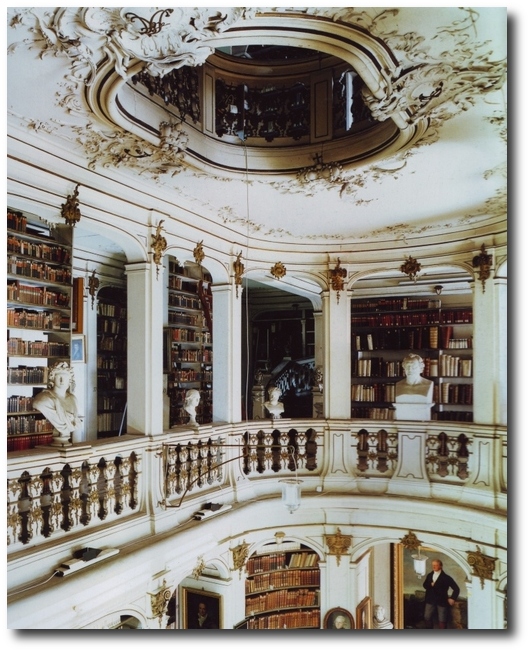
The Rococo hall continues to be one of the most beautiful libraries in the world. The hall has a narrow floor plan and an astounding ceiling height which leads the eye upward. The reading room is a lofty gilded gallery with busts of poets, paintings and bookcases set against white and blue walls. A light parquet floor and minimal furnishings create a dramatic contrast to the Rococo Hall which can be seen through the oval opening in the ceiling.
In The Most Beautiful Libraries in the World, writer Jacques Bosser provides a vivid description of the library’s interior: “The heart of the building was open, thus creating a vast central room for reading and preservation. It was surmounted by a sizable gallery replete with bookshelves. Encircling the hall, between
it and the castle, is a wide corridor with bookshelves on both sides. Its late-Rococo décor is sober, simple, charming, and functional. The floor is a parquet decorated in dark slats shaped like a carpet. Everywhere are paintings, framed drawings, and white marble busts of the celebrated visitors to this site, which had long been renowned through-out Europe” (Laubier and Bosser, 2003, p. 54).
See additional photos at Baulinks Website, Epoch Times
- holidaycheck.de
- Candida Höfer
- commons.wikimedia.org
- vebidoo.de
- gaab-weimar.de
- kastl.de
- germany.travel



4 Resources For Swedish Decorating
Swedish furniture has been sensationally popular the last 10 years as a style that is fresh for decorating the upscale home. Gustavian style has appeared in some of the more prominent decorating magazines in the US such as Veranda, Architectural Digest, World of Interiors and even more frequent in European magazines such as Campagne Decoration.
The casual appearance of lighter colored painted furniture has been popular for centuries. France was credited with the influence of the Swedish furniture in the 17th and 18th century. Many of the formal pieces found in the palace of Versailles were made over in the same shape and form, but painted instead of stained wood. The decadence of the French furniture couldn’t be copied because it was too costly for Sweden at the time, as well as Sweden has their own taste in mind.
In France, side tables were constructed from the most costliest woods, with decoration that took hours if not weeks to complete. French cabinet makers through the 17th century used techniques such as inlay, (pictures cut from ivory or wood, and set into wood), or marquetry, ( veneer composed of numerous woods, and stained which produced a pictorial mosaic), lacquering and japanning, (the application of numerous layers of varnish) were all costly, and time consuming.
While France had the best of the best, some say Sweden did a better job of re-interpreting the design elements seen in France such as the furniture by scaling down the formality. Linen was used instead of silk, paint was used instead of the stained wood, and faux painting replaced marble walls.
Borrow Interior Design Elements From Sweden For Your Own Home
Marks Of The Swedish Style
1. The Use of Paneled Walls (But In A Different Way)
The French were known for their paneled walls. Paneled walls are well known to be the most expensive and rich form of all wall treatments. Originally they were hand carved out of wood, as labor was inexpensive in the 1700′s. Today much of the decorative baroque looking ornaments are made from plaster. Wood panels once served to insulate a room from the cold stone frame of a building. It is also quite apparent that paneling was installed for decorative purposes as well.
Boiserie is the term used to define ornate and intricately carved wood panelling seen in some of the well-to-do French estates. The earliest known examples of boiseries were unpainted, but later the raised mouldings were often painted or gilded. For a great example of painted paneled walls, look at Charles Spada’s Country Home, which gives some great examples of 18th century color combinations. Martha Stewart shows a wonderful example in a green palette. A very formal dining room is done up in blue, and arches painted in oranges and pastel blush tones.
Boiseries were popular in seventeenth and eighteenth century French interior design and the Palace of Versailles. The panels not only appeared on the walls, but were also used to decorate doors, frames, cupboards and armoires as well. Often pictures would be set into the boiseries, the carving framing the picture rather like a conventional frame.
Decorating With Paint -Get This Look For Less….
Many of the wealthier Swedish people borrowed this look for their estate homes. Costly wood paneled walls were a far stretch for many of the Swedish people in that day, as it is for many people today. Paneled walls can cost thousands, and be tremendously time consuming.
Why not fake it with paint?
The Belvedere in the park of the Petit Trianon shows a fine example of what a person could do with paint to simulate the heavy ornamented look of the French style.
In Lars Sjoberg’s house featured in Country Style by Judith and Martin Miller featured walls with blue frames around them. Using two painted frames simulates the look of framed walls. Further in the post, you can see many more frames painted on the wall which do a beautiful job of showcasing furniture placed in front of it.
Picture Featured in Campagne Décoration
In the USA we have a chain of stores called Habitat For Humanity – Re-stores which carry all sorts of architectural elements from wood screens, to paint, sinks, and so forth, which are heavily discounted.
Here we see the paneled wall idea made from doors which are positioned side buy side. Consider purchasing similar styled doors in sets of 3, 5, or 7 which can be linked together using door hinges. As you can see here, it works!
Picture Credits– A Special Thanks to Aged And Gilded Blog, TweedlandThe Gentlemans Club, And
Lars Sjoberg’s Book- Classic Swedish Interiors
Here are some companies to keep in mind:
1. Decorators Supply– They have over 13,000 designs in their carving library. For over 100 years they have specialized in creating finely detailed composite replicas of the hand carved wood ornaments found in the most extravagant homes.
2. Bailey Interiors.com – Decorative Plaster Ornaments and Claws
3. Beaux-Artes offer decorative wall panels which can be used on walls and ceilings. Their products are cast from historic ornamentation and are available in over 20 different Finishes.
4. Victoria Larsen offers a number of ornamental frame molds which allow you to make dozens of your own molds in the privacy of your home. She also offers raised plaster stencils for the wall in a variety of patterns.
Consider a yearly subscription to Veranda, Architectural Digest, World of Interiors and Campagne Decoration.
We will be discussing accent furniture in Part 2, and Swedish painting techniques in Part 3
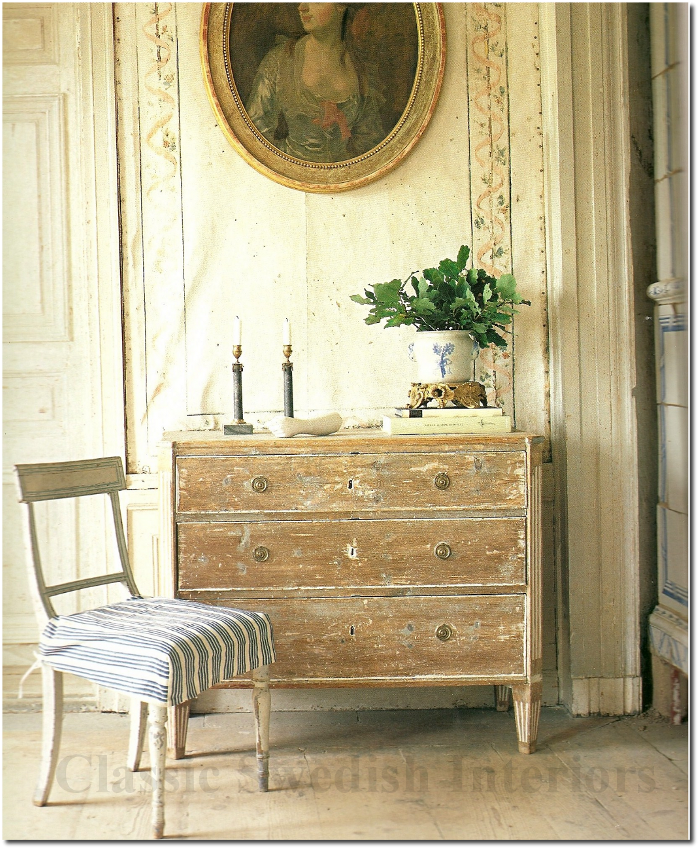
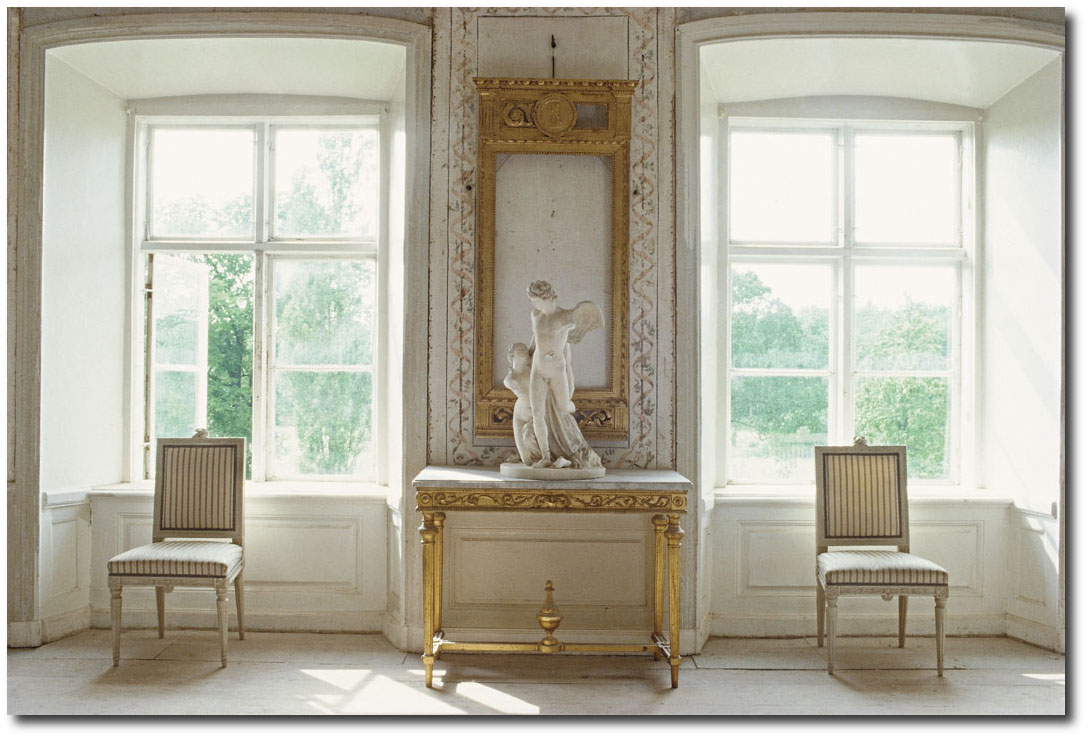
Check out Classic Swedish Interiors for more photos to get a better view of the far room

How Important Are Accent Pieces In A Swedish Home?
As we discussed in Part 1, Paneled walls can bring the Swedish flavor into your home and give you the Gustavian appeal you are after.
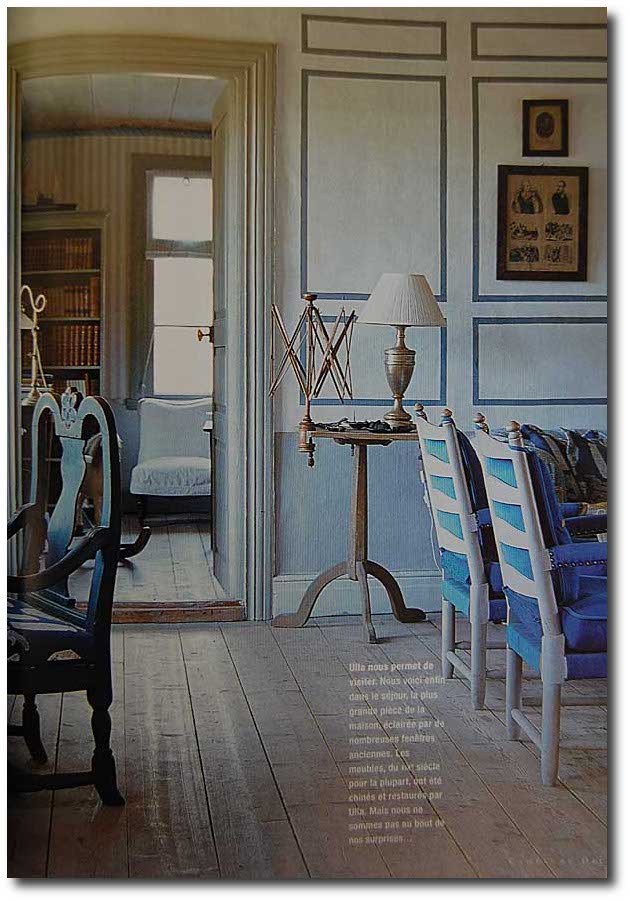
Another element that we see in Swedish historical homes are sitting areas using what we call today as “accent furniture”. It was common to find a number of sitting areas around the home using accent chairs, and tea tables.
2. Accent Furniture
Today accent furniture has become more popular again. We have been used to over-sized sofas, and forgotten what side chairs and tables can do for a room.
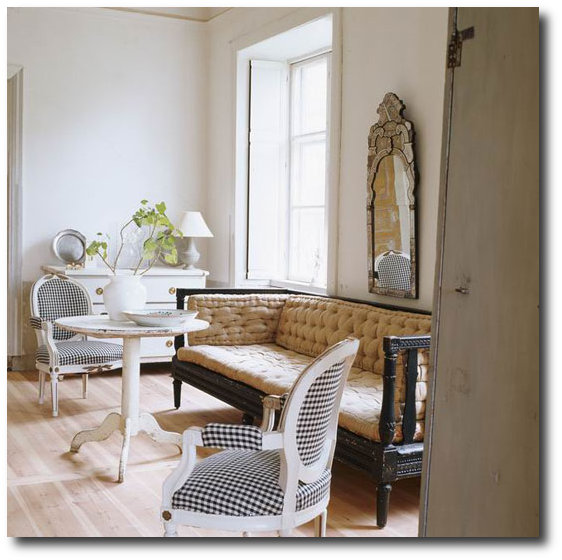
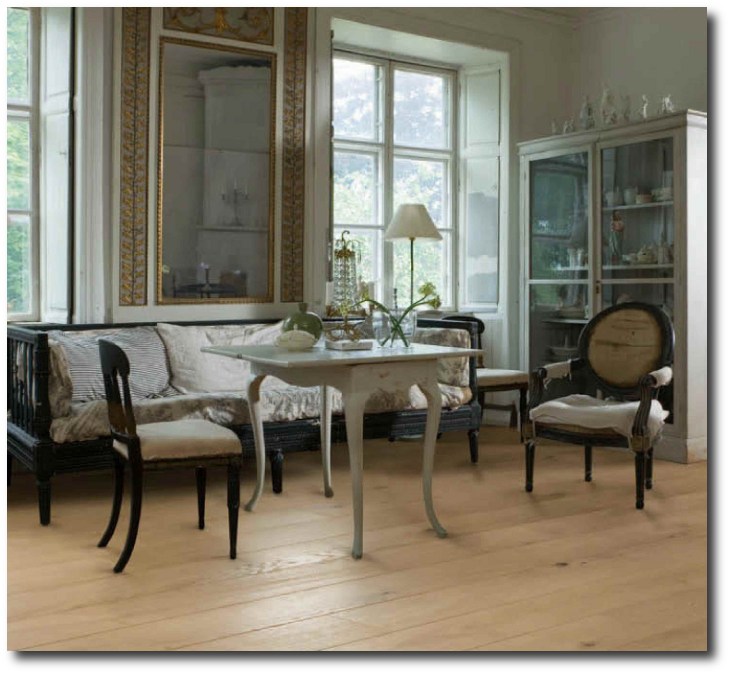
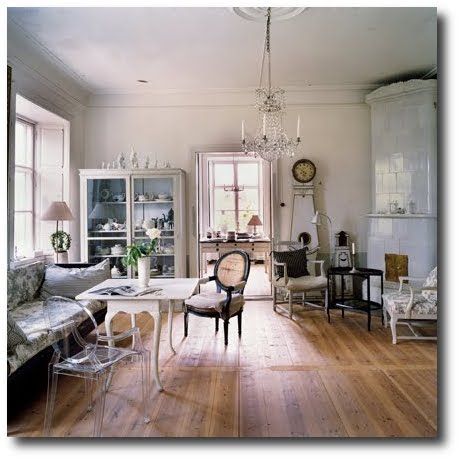
Swedish design is based around symmetrical looks. In the living room above, we see two white painted chairs in a Gustavian buffalo check paired with a black painted Swedish bench. In other photos of this room the black bench is paired with a Rococo table and the furniture seen in the rest of the home is moved around. Here we see a round white painted tripod tea table. Using accent furniture allows you to move the furniture around the house like they have done with Barbro’s home.
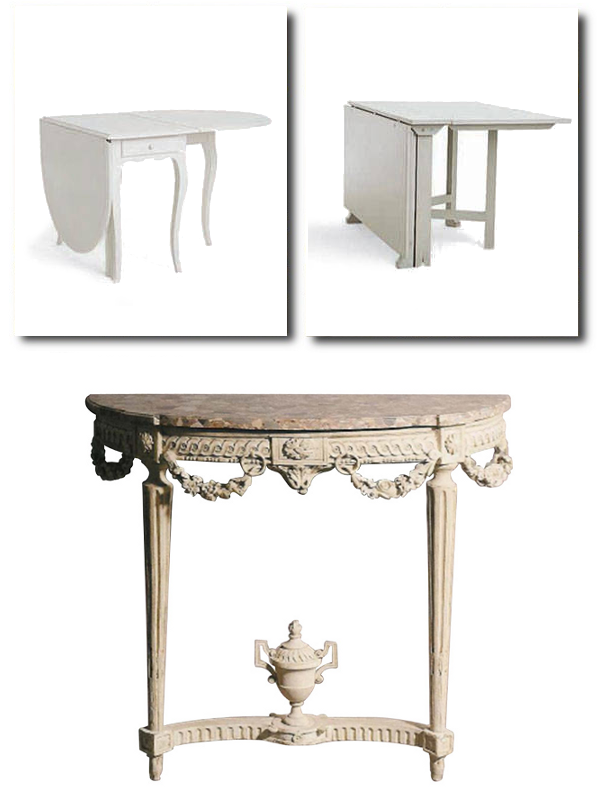
Smaller accent furniture became popular in France in the 17th & 18th centuries, and caught on in Sweden. The Accordion Side Table is one example of smaller scale furniture that existed in France. The accordion table itself wasn’t something seen in Sweden, but the idea of smaller tables became popular, or functional at the time.
Tables didn’t just look pretty, they served a purpose in the home. Side tables were practical for playing cards, having tea, and doing fine needlework. Writing tables were one of the most common uses for tables in this time. Tables with folding leaves were extremely popular in Sweden. Tables were pushed against the wall, and were then brought out for dinners, crafts, and schooling.
Sofa tables were designed to appear before sofas. These tables were long and narrow, and often had folding leaves which enabled the person to sit at the sofa and use the surface of the table without having to move the table closer to them. Consider adding a table paired with a sofa instead of a modern day lower “coffee table” that is seen in most homes. Or add a set of upholstered benches in front of your sofa to tie in matching upholstery.
Picture Credits– A Special Thanks to Campagne Decoration Magazine, Photos featured on Aged And Gilded Blog & Master Henry Blog


Painting Swedish Looking Furniture – 3 Tips / Part 3
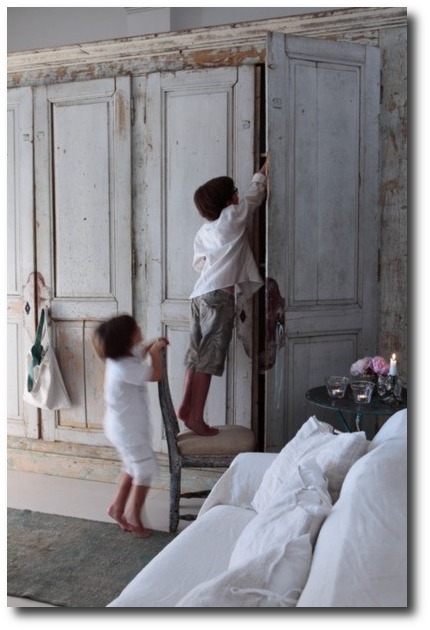 Picture Credit Habitania Work Rooms
As we discussed in Part 2, Accent furniture, such as Gustavian chairs, smaller tables, drop leaf tables, stools, and benches can be brought into the home, and used instead of the larger scaled furniture that we are used to today to achieve that Swedish Gustavian look.
Another element that draws people to the historical Swedish look is the painted furniture. There is an art to getting the rich patina that is seen on true antique furniture found in Sweden. Almost anyone can find vintage French furniture in their area which can be distressed using a number of techniques to give it a historical appeal.
In this early post I wrote, I describe some of the paint techniques I have used to achieve great white painted furniture.
Here are some of my best tips to getting realistic Swedish painted finishes……
1. Work with colors that are muted. If you have ever mixed paint before, think about the colors that are produced when black or white paint has been added to a color. In the 17th and 18th century, there was a limited color palette available, so black and white paint was added to an existing color to produce a shade that was darker or lighter. On one of my pinterest boards, I compile some colors that will give you ideas of ranges of hues that are very appropriate. Annie Sloan has a wonderful range of colors which all are muted, yet vibrant paint shades which I suspect were based off the French style that she is so attracted to. She has put together a fabulous palette of colors which would work in any French or Swedish styled home.
Don’t ever work with colors with really bright pigments. I cannot blame anyone for being confused as there are thousands of shades of paint to pick from. The furniture should look aged, and color appropriate for the century you are after. I guarantee you, getting a really nice finish on a piece of furniture doesn’t have to be complicated.
2. Strip Or Sand To Get Down To Bare Wood.
A raw wood piece of furniture is always the best to work with. Although finding a piece of furniture that is untouched with paint rarely happens. Starting off with a piece of furniture that is not painted is ideal, but if it does have paint, consider comparing the the color you have picked out to the color the furniture is painted in currently.
Would you mind having the original color showing through?
If not, consider spending the time stripping off the paint. A perfect strip job isn’t necessarily if you plan on re-painting it, but enough of the paint removed will give you a new wood surface to work off of.
I have seen black painted furniture with distressing showing white beneath, and it doesn’t look great. A base color of red looks terrific with black painted furniture, or just plain wood. If you don’t want to strip the furniture, (as it is a lot of work) consider giving a good deep sanding to the furniture, especially to the areas you plan on distressing.
Often times if stripping the furniture is something I don’t wish to do, I sand the furniture quite well as a first step, paint it in the color I plan on working with, and then sanding it again as a third step. This allows me to touch up the original paint color that shows through, while leaving some of the distressed areas that show off the wood. It is a lazy way of getting the finish, but the results are quite nice.
If you plan on doing multiple shades such as the chest below, consider colors that work really nicely together. White works nicely as a top color.
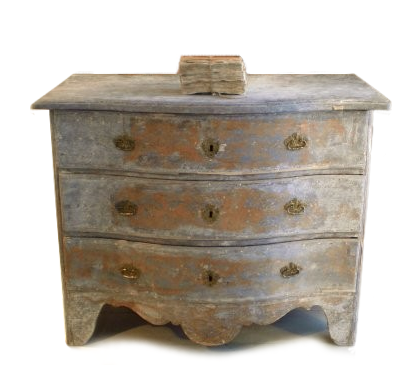
Swedish Distressed Chest From Atelier September
Distressing gives your piece of furniture a depth, which is often seen in Swedish antiques. I am not afraid of roughing up my furniture, and I am not afraid of altering an antique. Many antique dealers caution people from painting furniture, because it does loose the natural patina, and because of that, it often looses the value. This is a wise piece of advice to those people who are looking to “invest” in heirlooms for the value.
If you always wanted a white distressed cabinet, paint it, and don’t be afraid to do so. My motto is that you have to first love the piece, because after all, it is in YOUR home. Your children may have a totally different style in mind for their own home, so do what makes you happy, rather than looking at furniture as items to pass down to family.
I used to sell used furniture for a hobby, and always ran into the problems with paint sticking properly. Either you tore off your arm by sanding the heck out of every piece, or you ran the risk of the paint peeling later on, which lead me to use oil paint. Not every oil paint brand is the same. Some brands are so hard to work with, that they will make you pull your hair out. It is almost impossible to find oil paint in a finish that is either flat or eggshell. You won’t find glossy Swedish antique furniture, so don’t use it on your furniture. The look should either be eggshell, or satin.
Cover Stain By Zinsser is a fantastic oil primer which I discovered by accident, and almost was beside myself when I discovered how well it performs. You can buy this at Home Depot and almost every Hardware Store, and the best part of this paint is that it is TINTABLE in almost all the lighter shades of paint samples such as Behr, Martha Stewart, and so forth.
High Hide Odorless Oil Primer without Sanding – Odorless Primer

I bought the paint, because I couldn’t send out a piece of furniture which would later peel. I wanted a paint that could stick to anything and not scratch. Oil based paints are not environmentally friendly. The trade off with this paint is that it has a heavy smell which disappears after it has dried. You will need to use a paint respirator, and I emphasize that recommendation.
The most surprising aspect to Zinsser’s Coverstain Primer is that it is not a thick paint. It is rather thin, and goes on like spreadable butter. You rarely need an additional layer of paint, because it is oil after all, and isn’t like water based paints. Oil paints tend to self level as they dry, leaving almost no brush marks. Oil paints do cover well, and hold up wonderful. Unlike other oil paints, which can take up to a week to cure, this Coverstain dries to the touch in 3 hours, and cures over night.
The other reason why I recommend this product, is that it is sand-able. Almost every other oil paint brand I have tried doesn’t sand very well, and often leaves the finish needing an extra coat. Because Zinsser’s Coverstain dries flat (matte) sanding blends in rather nicely. In the past, I often added two coats of the tinted primer, and then sealed it with a Polycrylic
Polycrylic is one of the best finishes to use on white based furniture, because it doesn’t yellow over time, like polyurethane does. With the polycrylic, I would apply it with a brush, and then with a damp white cotton wash rag, I would just wash it off. This would give me a seal to the paint color, while at the same time, maintain the flat, or eggshell finish that I enjoyed.
Another tip I would recommend is to buy a good quality angle paint brush for water based paints. I have used these with my oil paints, and my brush sits in paint thinner for weeks, and it is still not damaged. Regular chip brushes are ok, and inexpensive enough to throw out, but a good quality brush won’t leave paint strokes. Someone suggested to me to invest in an expensive brush, and I pass on those words of wisdom.
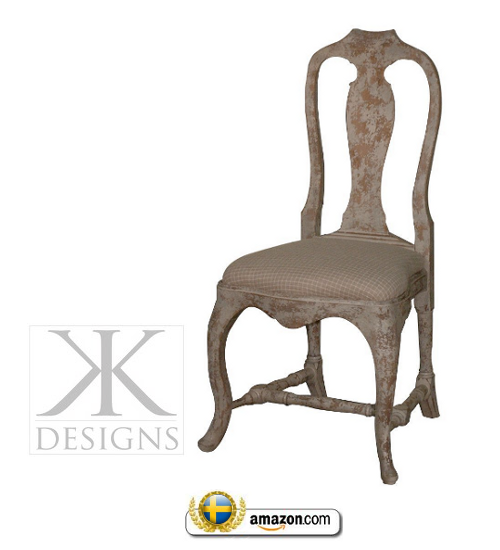
Swedish Accent Chair With A Fabulous Paint Finish $506
18th Century Buffet, circa 1760 Jane Moore Interiors in Houston
Picture Originally Featured on Indulge Decor Blog
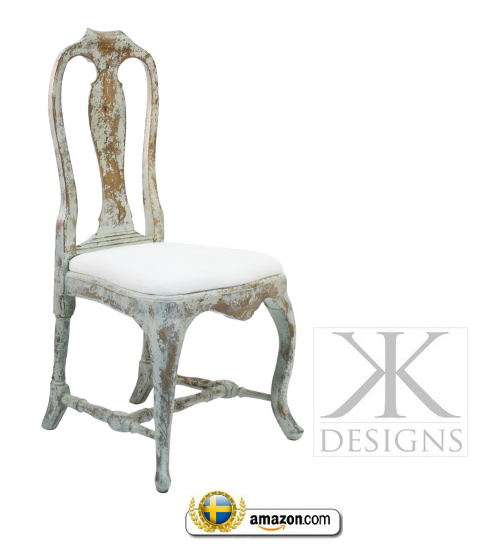
Stunning Swedish Styled White Painted Accent Chair
Neoclassical Swedish Styled Accent Chairs Sold In Pairs $983
3. Glaze Your Furniture With Brown Glaze…..
Glazing is so easy, it takes minutes. If you can wipe your table after dinner, you have the skills to glaze! It is that easy. A glaze is a translucent binder which paint pigment is added to the mixture to produce a translucent color. You can buy glaze mixed together at your local hardware much like ordering paint, or you can buy glaze alone and mix in paint yourself.
Buying brown glaze already mixed will go a far way if you paint furniture for a living. I used it on all my painted pieces, including my white furniture.
Blend & Glaze Decorative Painting Liquid

Ralph Lauren Faux Technique Glaze


I have discovered that glaze can be applied in two ways. You can apply it with a paint brush, let it stand for 3 minutes, and take it off with a slightly damp rag. With white furniture, even though you may feel you removed a lot of the glaze, the little bit that is left gives your furniture that slight change in color.
With flat finished white furniture, I give some wise words of wisdom. Add a coat of polycrlic before you glaze. You could even dilute the polycrylic with a slight bit of water, OR, just brush on a very small amount on to your furniture, such as dry brushing techniques. The reason for this, is that your furniture can turn a shade of brown, which is not what you are after. White furniture will have a hue of brown, but you don’t want the glaze to STAIN the paint.
Another trick is to work with a creamy white, not a bright modern white. Your whites should always have undertones of brown or green in them. When glazing white furniture, if the finish is flat or eggshell, you will need to work fast in pulling off that glaze. If the finish is satin, you will have a bit more time.
For painted furniture such as blue, or darker paint colors, glaze can be added, and it makes a world of difference. Often times I just paint on the glaze, such as you would just dry brushing the furniture. I use the term “dry brushing” as your paint brush isn’t loaded with paint. A small amount is necessary to make a dramatic difference. A brighter colored blue, will be muted when brown glaze is added, so experiment with brighter paint shades with brown glaze, you might be surprised what beautiful finishes can be achieved.
These Swedish chairs were likely scraped down to the original paint
Look how nice white upholstery looks with gray paint.
Originally featured on Romantiskahem.blog
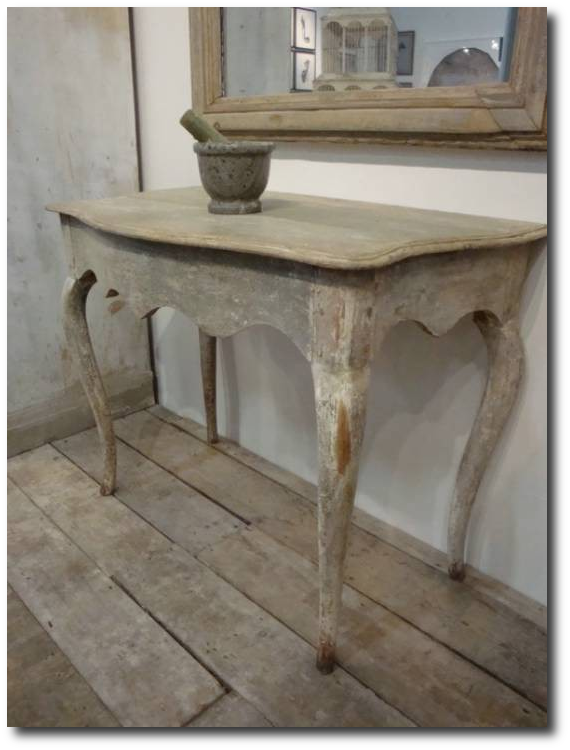
This beautiful console table featured on The Paper Mulberry Blog, originally from Appley Hoare Antiques
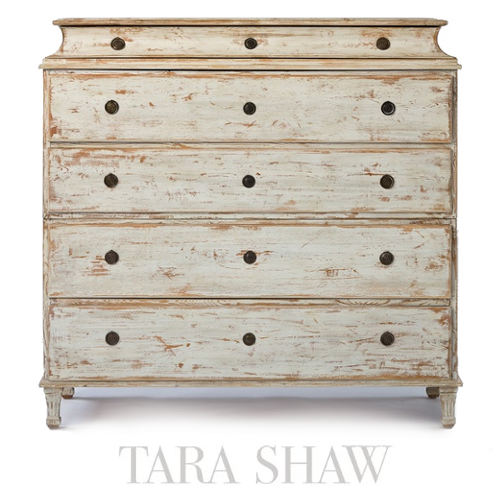
Tara Shaw Swedish Chest- Coach Barn Now Sells Tara Shaw’s Collection
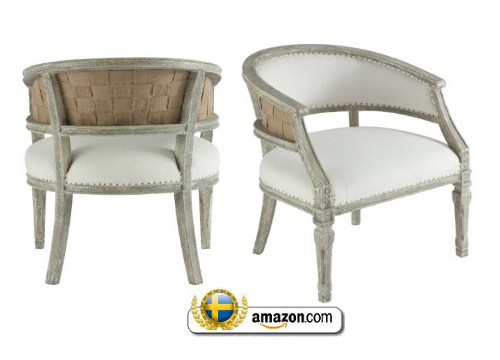
Reproduction Swedish Tub Chairs From Amazon $775
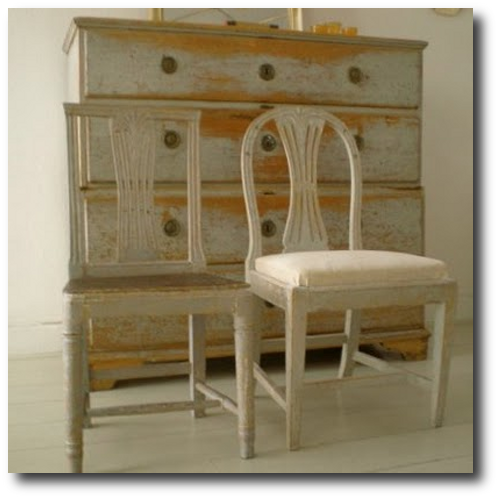
Swedish Distressed Chest From Atelier September
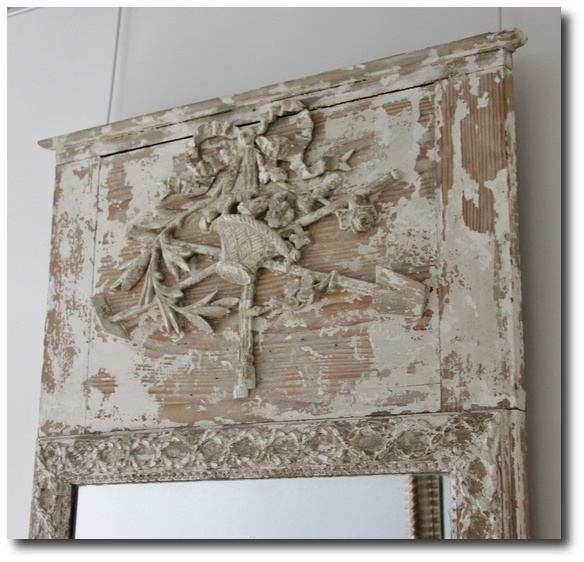
A Stunning Trumeau Mirror From Tone on Tone Antiques,
Featured on Henhurst Interior Blog
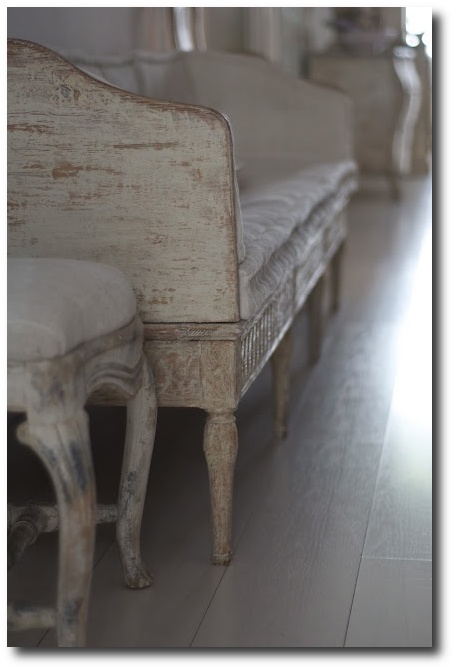
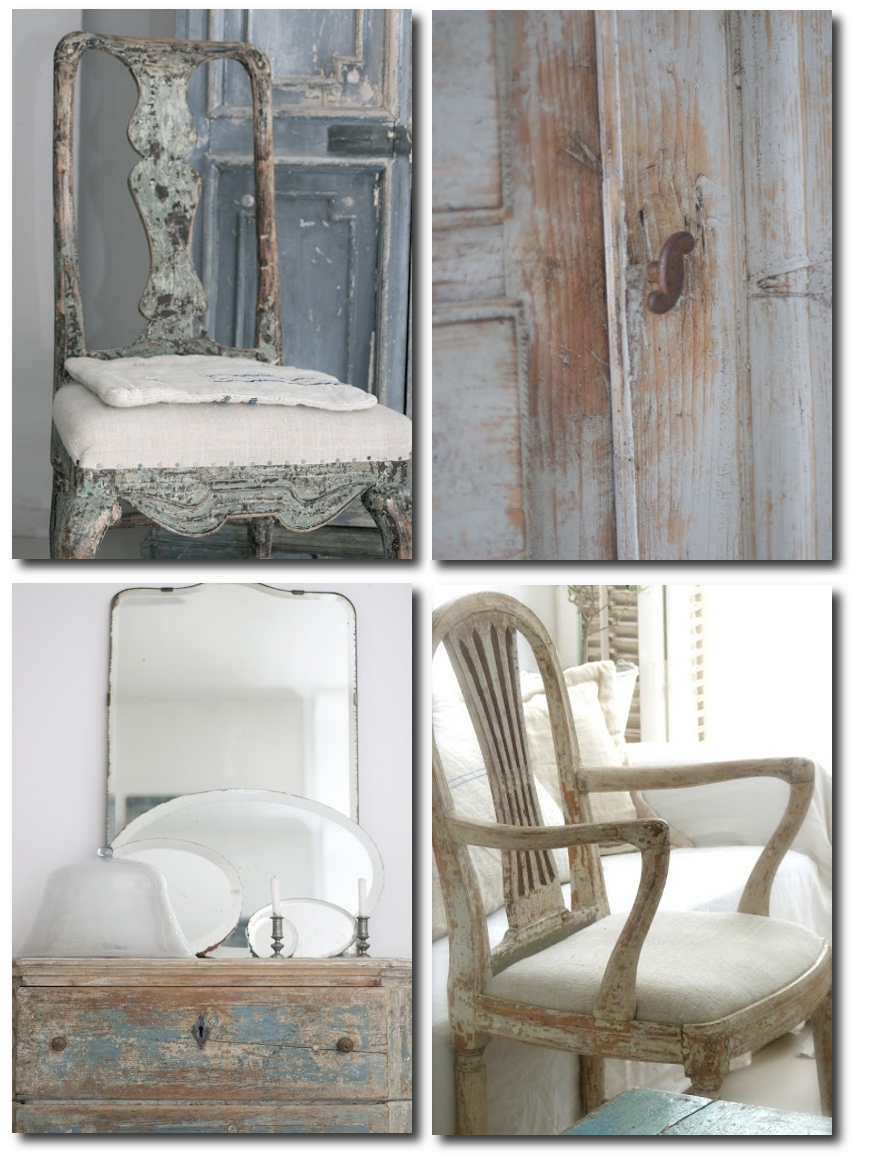
Swedish Aged Paint Finishes From Antiqbr Blog
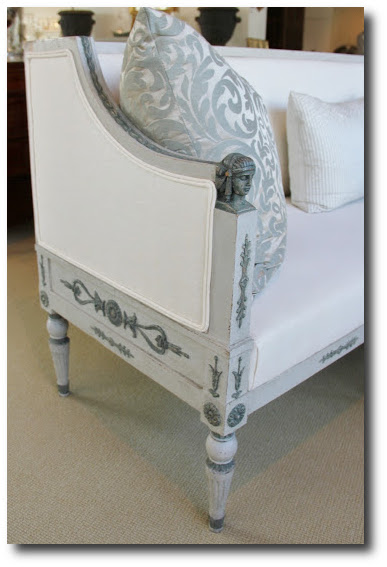
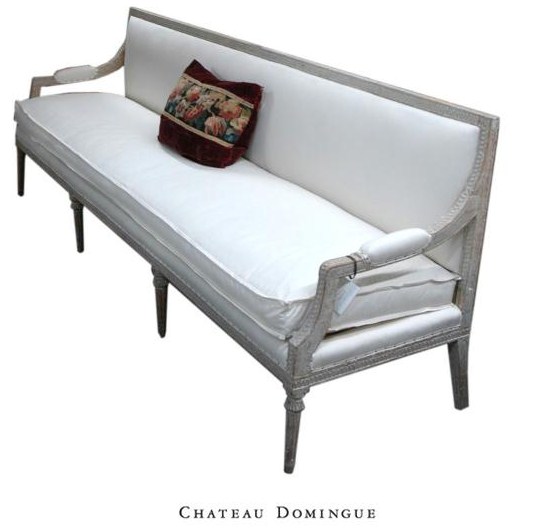
An extravagant painted sofa in terrific blue gray paint with painted ormolu
From Tone on Tone Antiques Featured on Featured on Henhurst Interior Blog
Swedish Aged Paint Finishes From Antiqbr Blog
A Few Previous Articles Of Interest
- – White Painted French Furniture– The French Provincial Furniture
- –25 Ideas Of How To Incorporate Orange, Pink and Coral Into Your Home- The French Provincial Furniture
- – Ideas For Embellishing Painted Furniture– The French Provincial Furniture
- –French Provence Red Check Textiles– The French Provincial Furniture
- –Distressing Painted French Provincial Furniture
Breathtaking Weathered Dining Tables You Can Buy Online
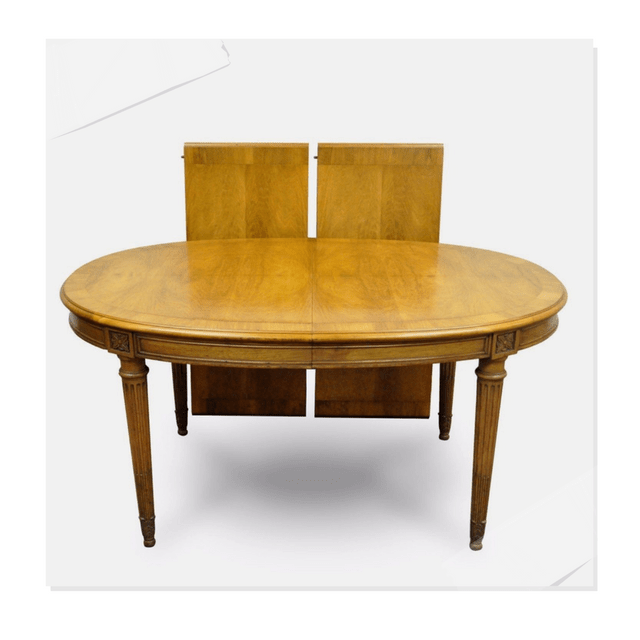
French Louis XVI Directoire Provincial Walnut Dining Table- Quality Is Key On Ebay $765
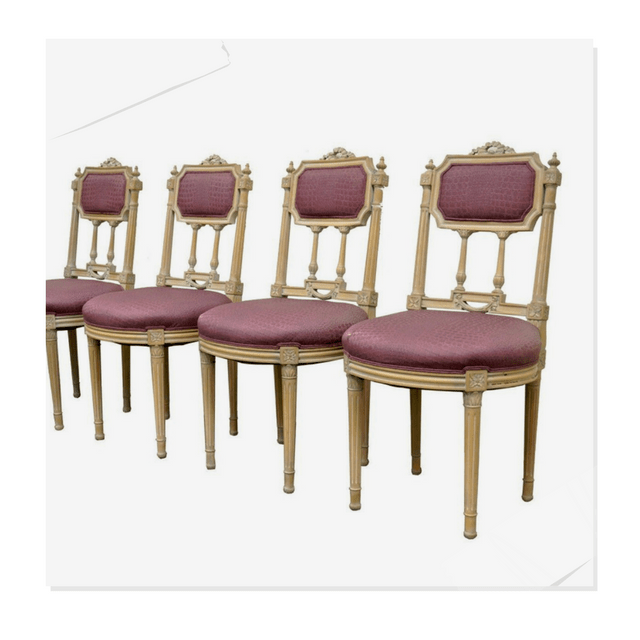
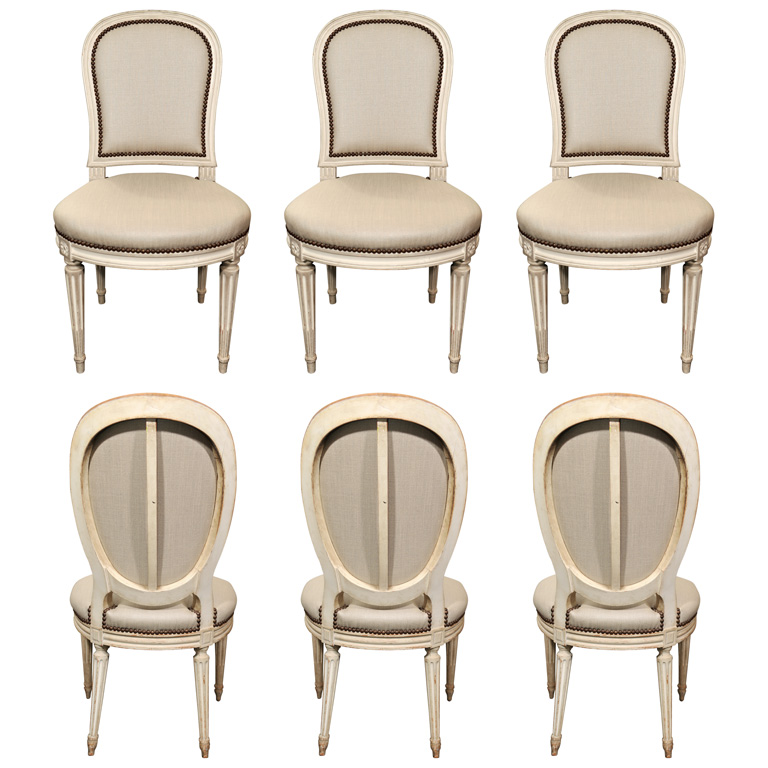
French Louis XVI Style Drape & Bow Carved Painted Dining Chairs $1436 Quality Is Key On Ebay
Consider this stunning Maison table available from World Bazaar Exotics on ebay, listed at $1,188 for your Swedish Gustavian styled home.
Dimensions: 48″ Version: 48W X 47D X 31H, 68W with leaf, 72″ Version: 72W X 47D X 31H, 92W with leaf
This outstanding table with timeless 18th century style is crafted out of solid oak with aged finishing techniques that will surely impress you and all your guests. This deep grey finish will work quite perfectly in a Gustavian styled home. This table includes one 20″ drop-in leaf extension.
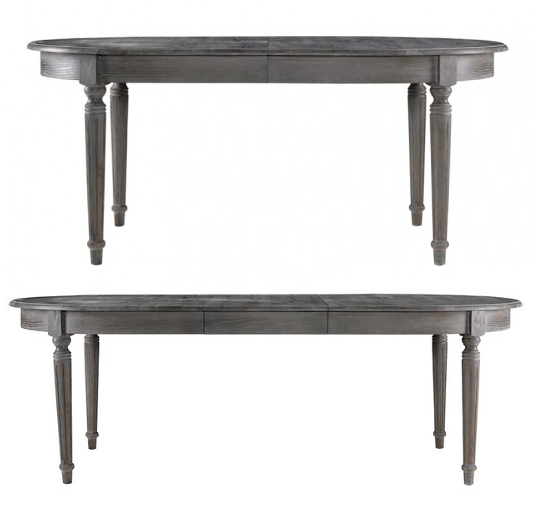
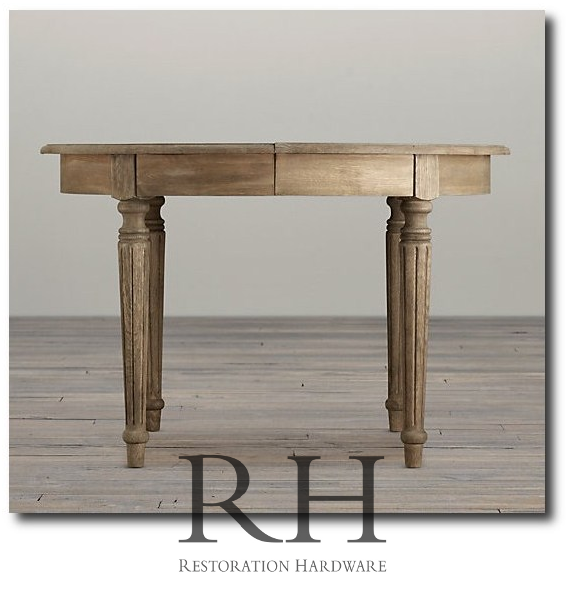
Restoration Hardware also sold a very comparable table inspired by 19th-century French Empire design. RH’s table is also built from solid oak, and had a full skirt and slender tapered fluted legs. A weathered finish also lends itself to a look that has been aged for years. RH’s price ranges from $695 – $1495
Restoration Hardware’s French Oval Table
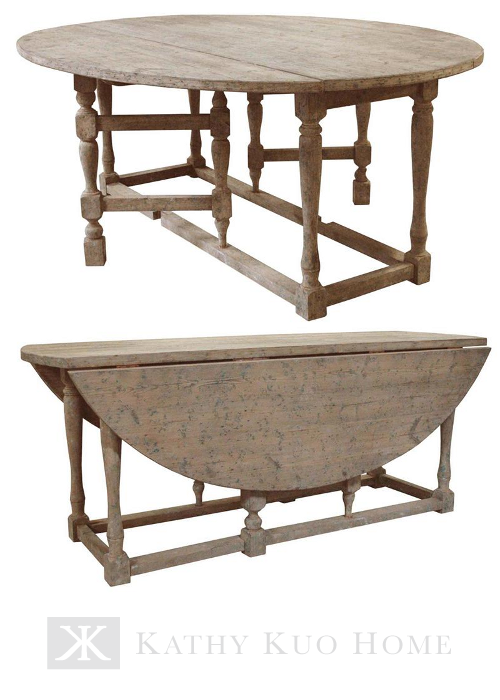
Gustavian Oval Gate Leg Table
Gustavian furnishings have an uncanny ability to express serious sophistication without ever veering into the indulgent, foo-foo, or precious. This oval dining room table is a classic example of serious form following the functionality that only a drop leaf surface can provide. Whether placed in a loft of cottage, city apartment or large estate, this piece just works. 31 inches high x 63 inches wide x 77.5 inches long
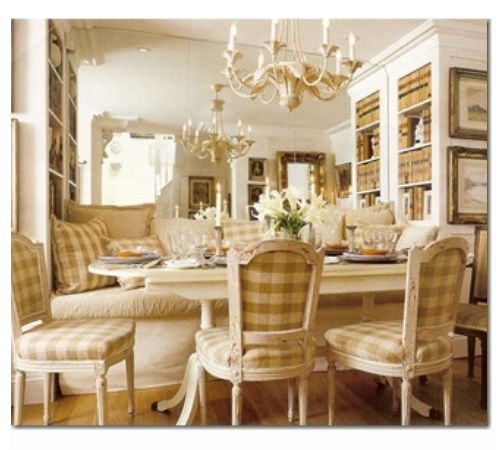
Swedish Dining From Traditional Home, April 2007
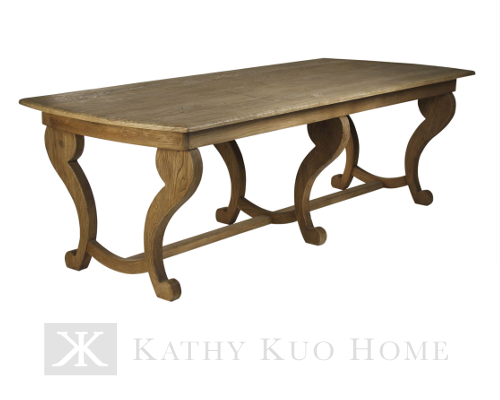
French Country Louis Dining Table $3,348
A graceful 18th century style piece reminiscent of the French country aesthetic, this generous dining table will please those devoted to beauty and simplicity. Fashioned from solid oak and elm, the rounded edges and legs create a gentle, rustic effect.
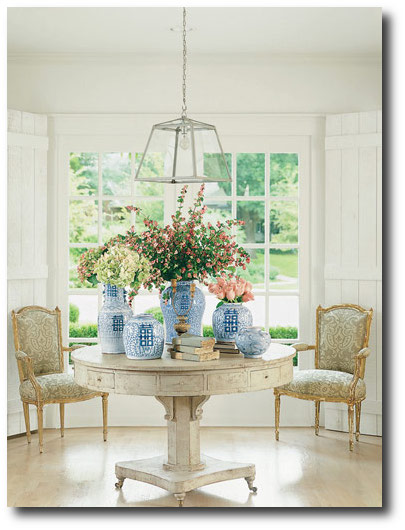
Beautiful White Rent Table – Seen In The Home of Shannon Bowers
Carl Larsson Table From The Gustavian Collection
Louis Extension Dining Table French White Solid Hardwood- Buy it on Ebay
The Napoleon collection faithfully captures the romantic feel of vintage, painted furniture from the French countryside. Featuring gently curved frames made of solid hardwood, brightly colored then rubbed down on the edges. Adds a soft splash of vibrance to any setting. $2,200.00 71″ to 91″ x 43″ x 30″, (91″ fully extended ) Oak wood
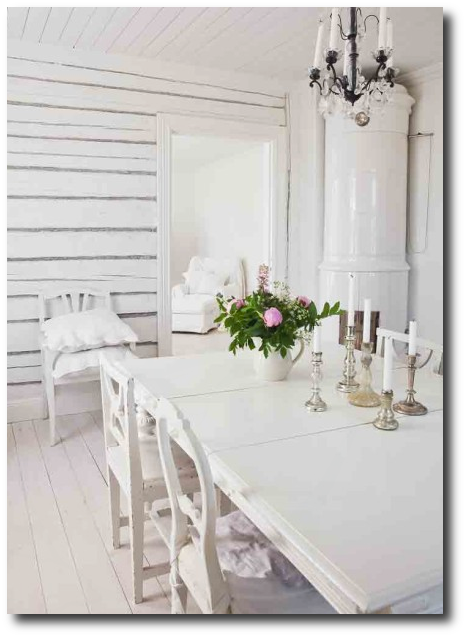
Harlequin Set of Twelve French Dining Chairs in Grey Linen Antony Tood
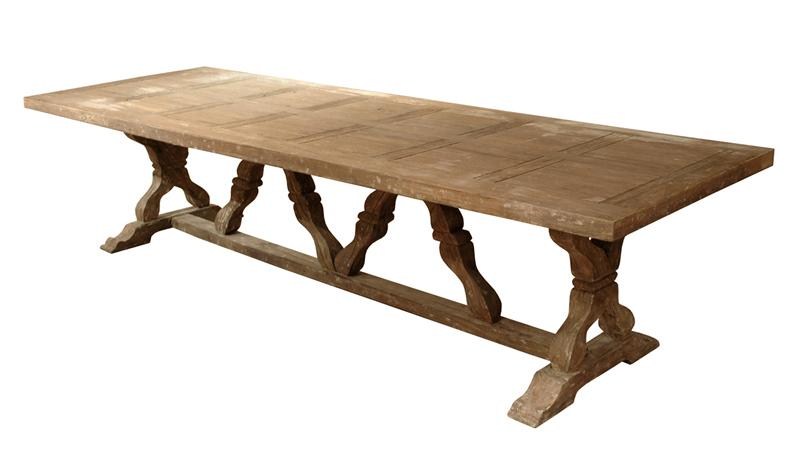
Linley Heavy Distress Farm House 14 Person Trestle Dining Table $3,938.00
The Perfectly Imperfect Home: How to Decorate and Live Well
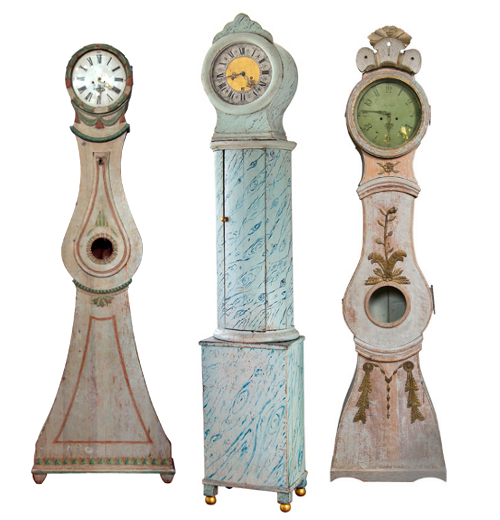
Swedish Mora Floor Clocks
Mora Clock in Salmon Paint Sweden, Circa 1820, Tall case clock signed “Matts Jonson/Mora”, Sweden circa 1820. Wonderful salmon paint with gilded detail, all having an exceptional patina. Original clockworks have been newly cleaned and adjusted
Swedish Mora Clock Painted In A Soft Blue With Cream Painted Carved Accents From A Tyner Antiques
Sweden Circa 1790 Early Mora clock, Sweden circa 1790, in original pale salmon paint. The bonnet features beaded detail around the face and the crown, as well as oval glass panels on either side for viewing the clockworks. Both the bonnet and case retain their early, rounded glass. All original with newly cleaned and regulated clockworks Cupboards and Roses
Below:
1. Swedish Painted Pine Tall Case Clock, C. 1780, of the Rococo Style with carved and polychromed case detail. Mora movement and original paint decoration – Lillian August Designs
2. A Swedish tall clock in a rare pillar design with and original faux painting resembling marble. The face is an unusual combination of metal exterior with a gilded center echoing the gilt paint on the feet. The clock is in working order with the added feature of a calendar. Sweden, circa 1800. Dawn Hill Antiques
3. Swedish tall case clock, c.1780-1800, of the Gustavian period, the rococo case carved with neoclassic gilded motifs and retaining traces or its original paint. Mora movement. Lillian August Designs
Below:
1. Mora clock, Sweden circa 1820, with dial signed “P. Svensson / Rageröd.” Scandinavian pine case with reeded panels and dentil molding under the bonnet. The original clockworks have been newly cleaned and regulated. Sold By Cupboards & Roses
2.Sweden Circa 1848 “Mora” clock, Sweden dated 1848, with a beautifully carved case retaining its original painted decoration including the two sets of initials commemorating a marriage. Inside the case is a record of the clock’s provenance which reads,”Carl Nilsson, 1786-1850. Worked as a clockmaker in Northern Slätthult, Jönköping County. Buried in the cemetery of Villstad. This clock was purchased June 13, 1964 by Emil Johansson.” Sold By Cupboards & Roses
3.Antique Black Swedish Mora Grandfather Clock, circa 1850, Antique Swedish Black Painted Grandfather Clock. The lovely curves of this clock are typical of the Mora grandfather clocks, famous from Sweden. Sold by Scandinavian Antiques
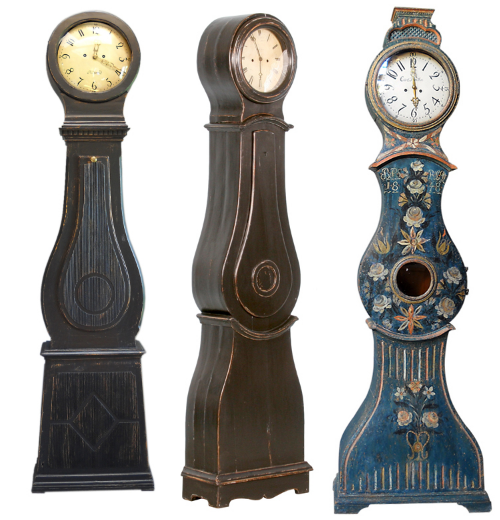
Swedish Mora Clock From swedishinteriordesign.co.uk
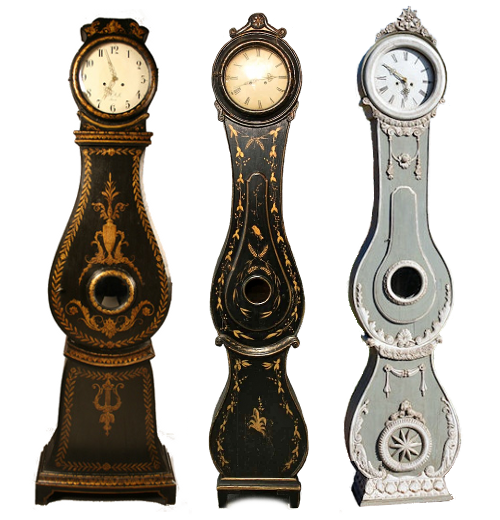
Swedish Mora Clocks From swedish-clocks.com, rlgoins.com, Swedish Interior Design
Shannon Bowers Home, Swedish Design- Painted Blue Mora Clock
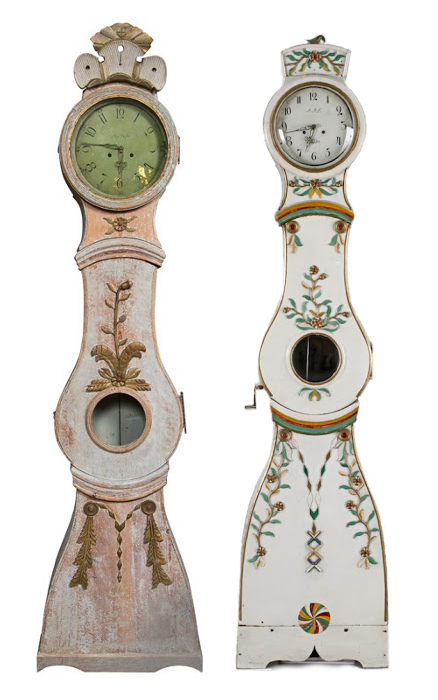
Swedish Painted Pine Tall Case Clock, C. 1780 Lillian August Designs, Swedish Interior Design
5 Space Saving Pieces For The Swedish Home
One of the things I enjoy the most about Swedish furniture is its clean lines and compact nature. Bessie of the housing crunch and the typically small living quarters in that area of the world, the furniture they make is ideal for tight living. If you have a small apartment or home, then Swedish furniture may be a great type of furnishings for you to use. Here are some good space-saving ideas:
1. No arms – Chairs and couches with no arms or every low arms opens up a room and make it more comfortable visually. The lack of arms on chairs also makes them easier to slide under a table or get out of the way when you need extra room.
2. Multipurpose – There are many pieces of multipurpose furnishings that are unique to Swedish furniture. Many times you will see things like a loft bed with a desk underneath or a couch that doubles as a bed. These ways of making furniture more useful are great ideas in a small home.
3. Storage – Storage is also a big issue. Many Swedish homes do not have closets or they have very little space in them. That is why storage is so important. Bringing back the idea of multipurpose use, you will find that many Swedish designed benches also raise up so that you can store things inside them. Footstools do the same thing in the living area, as do coffee tables. Anything that can hold something will. They even put storage drawers under the beds.
4. Clean lines – Clean, uncomplicated lines mean that the room looks bigger than it really is. You do not want a lot of heavy furnishings taking up the space. Instead, think thin and organic with unvarnished wood and exposed metal fittings.
5. Easy to assemble – The trials and tribulations of living in a small space is that when you have to move you have to get everything as compact as possible. That is where easy to assemble and disassemble furniture comes in hands. If you can move something in a box instead of trying to heft it down a flight or two of stairs it is much more convenient.
As you can see, Swedish furniture is ideal for tight living. If you have a small home and want to make it feel like a larger space, Swedish furniture might be your answer.
Author Bio:
Paul and his wife Julie both spend quite a bit of time coming up with ideas, blogging, and researching all things related to childcare through “babysittingjobs.com/”.
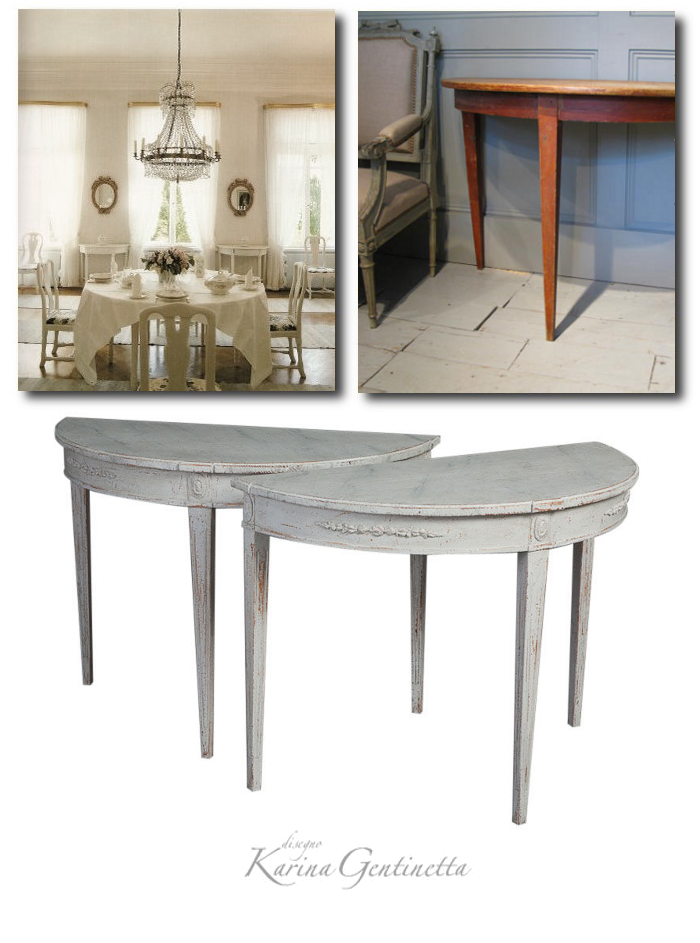
Swedish Tables and Console Ideas From Victoria Magazine 2001
Gustavian Style Dining Chairs Seller Cupboards & Roses
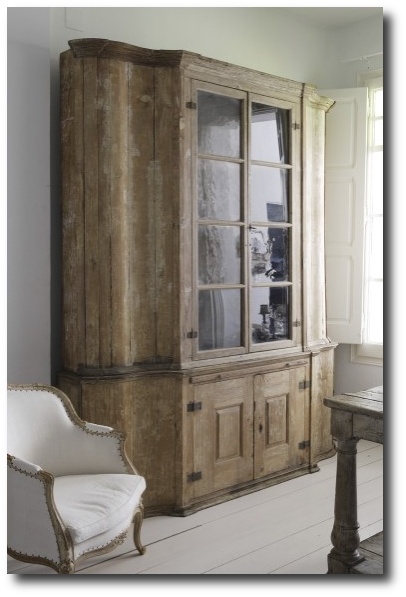
Photos: Enrique Menossi Para Antiq
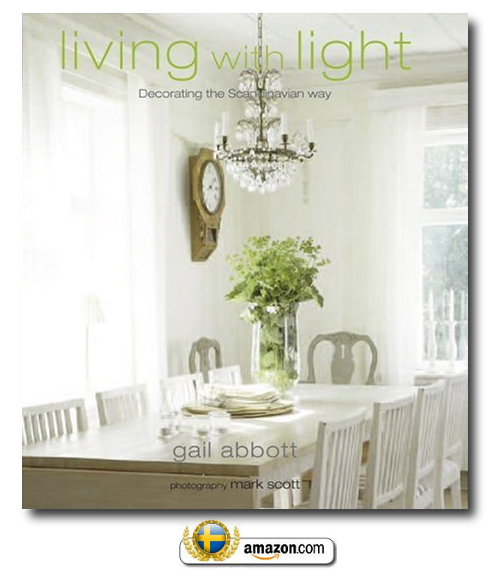
Living With Light:The Scandinavian Way
The colours used in many Scandinavian homes are whites, neutrals and the tones and hues of nature – the grey blues of a northern lake at dawn or the cool vanilla light of the midnight sun.
Surfaces are painted pale, or emboldened with blocks of bright white. Windows, triple glazed to keep in the heat in winter, are dressed with fine, unlined fabrics to let in the maximum amount of light, and mirrors reflect every gleam of precious daylight or candlelight into nooks and niches.
The home of the artist/fashion designer J Morgan Puett
Swedish Dining Chairs From Circa Antiques on One Kings Lane
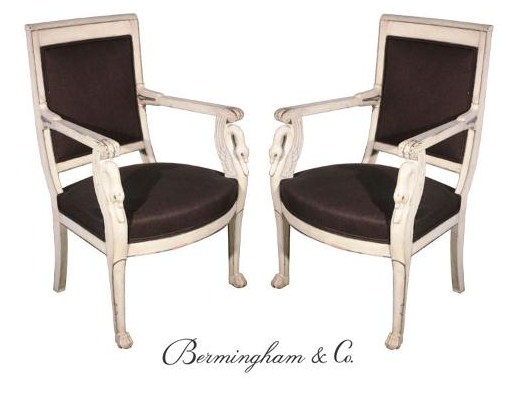
Late Rococo Chairs- Gronsoe Castle Sweden 1780- Lief Almont Antiques
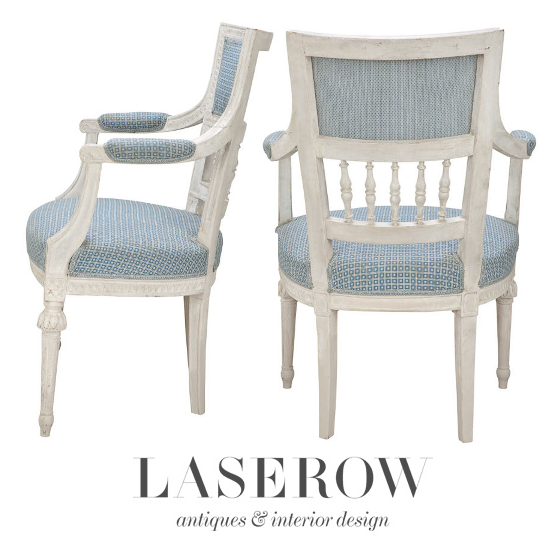
Swedish Side Chairs- Laserow Antiques
Another Photo From Living With Light:The Scandinavian Way
I like to bring the same unstructured look to choosing furniture too, and this house in Sweden (see more like this in ‘Living With Light’) has the ideal combination of practicality and charm. The hand-woven rag rugs are traditional in Sweden, and are often handed down through the generations.- Gail Abbott – Drop Leaf Swedish Dining Table


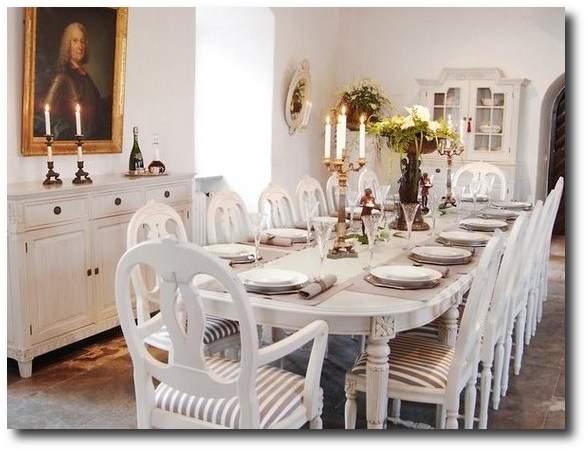
Affordable Holiday Dining Décor That Looks Like It Was Done by the Pros- Grace Kelly
Decorating for the winter holidays does not have to be arduous or expensive. A professional look is easy by following even a few of the following hints. There are some simple rules of which to be aware before diving into the list of ideas.
First, one should work with the look that he already has in the dining room. For example, a rustic looking room could be decorated with an abundance of natural outdoor elements. On the other hand, a formal dining room may call for a more ornate look.
Second, one should always decorate in a way that feels comfortable to him. Most decorating can be done simply using items that the individual already has while obtaining a couple other pieces affordably. The key is to use the imagination to take indoor decorations, pieces from the outdoors and a few affordable add-ons to decorate just like the professionals.
Theme and Colors
The first step in decorating a dining room for the holidays is choosing a theme. A few options include rustic, elegant, country, modern or eclectic. In addition, the individual may choose to decorate around one or two simple items, such as snowflakes, pinecones, flowers or fruits. A good point to remember is that a theme does not have to be overdone to be meaningful. Professional decorators often prefer to use one or two main décor pieces that will catch the eye.
The second step is choosing a color scheme. Many prefer using a traditional palette of reds and greens. However, modern options would include shades of blue, shades of green, or an all white setting. A dining room will look quite elegant when outfitted in metallic colors.

Plants
Plants are the perfect way to enliven a room. They provide natural bursts of color and fresh scents. There are several ways to use fresh plants in a dining room.
§ Poinsettias are a staple for the holiday season. Because poinsettias come in varieties of reds and whites, they will match a variety of color schemes.
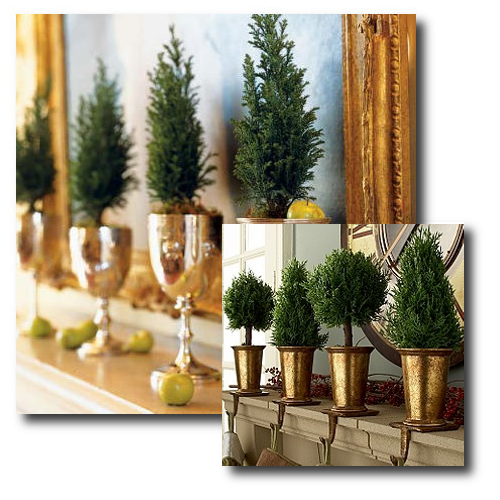
§ An environmentally friendly option is to place evergreen tree saplings on the table or the floor; in the spring, they can be planted outdoors.
The Table
The dining room table is the perfect place for creativity. The ideas for decorating here are as limitless as one’s imagination. First choose the color and design of the dishes, tablecloth and napkin.
§ Napkin rings are essential for a polished look. These can be store-bought or homemade using florist’s wire and greenery from a craft store.
§ Nametags make seating easy. The tags can be decorated with stamps, printed or hand-written on specialty paper, wired to sprigs of greenery or set in spray-painted pinecones.
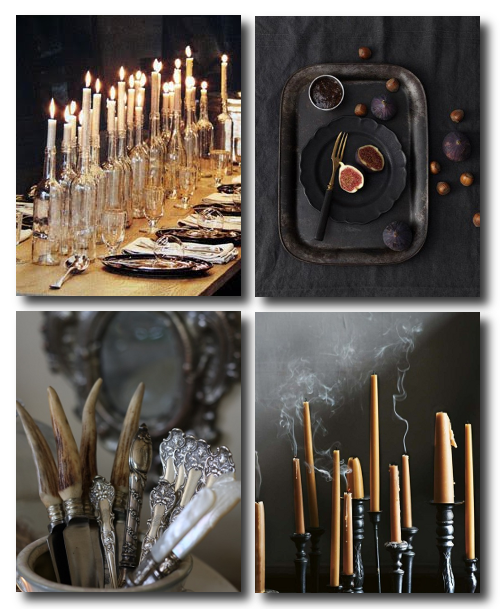
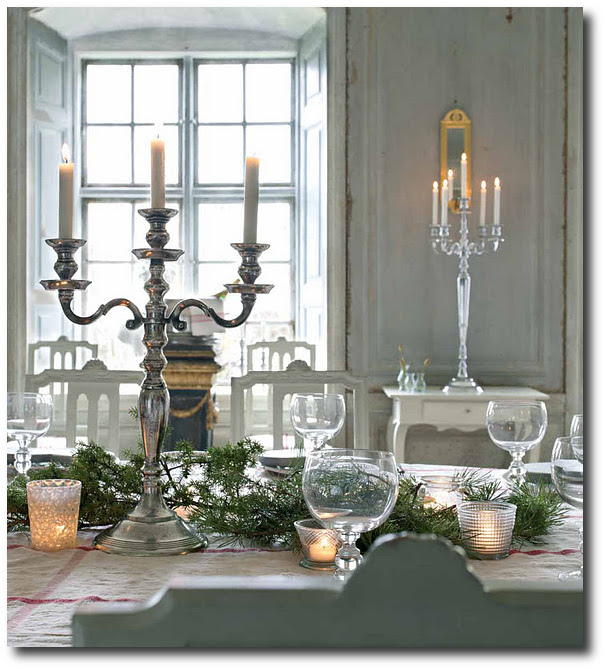
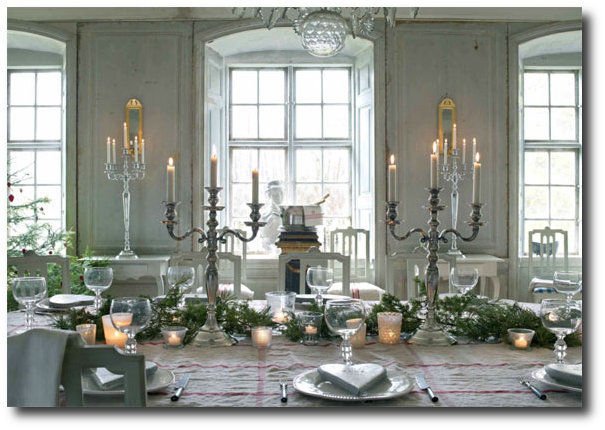
§ Candles provide ambiance. Floating candles, set in short glass bowl filled with cranberries and water, will not block one’s view across the table. Pillar candles in varying widths and heights will look elegant when placed on glass pedestals.
§ A rustic look can be achieved with branches from evergreens or hardwoods placed in tall, straight glass vases. They will fit into a holiday theme when coated with metallic spray paint or fake snow, which can be found at craft stores.
§ Fruit always looks welcoming and can often be found on sale during this time of year. Citrus fruits provide bursts of color when placed in tall glass hurricane vases.
§ Those who have bulb ornaments left over after decorating can place these in glass bowls or vases for a festive centerpiece.
The Rest of the Room
After the table is decorated, one should not forget about the rest of the room. For a cohesive holiday look, doorways, windows and more can be decorated. For example, wreaths provide a cheery welcome when hung on windows. Fake or real evergreen branches can be placed around doorframes. Holly can be hung from a chandelier.
Holidays are the perfect time to get together with family and friends. Decorating the dining room for celebrations can be done affordably using many items one may already have around the home or yard. A professional look is simple to achieve with a simplistic, themed design.
Author Bio
Grace Kelly writes for Zintro, a marketplace of experts in various fields that helps connect investors, lawyers, analysts, designers, entrepreneurs, and more. Find an expert by discipline on Zintro.com consultant directory.
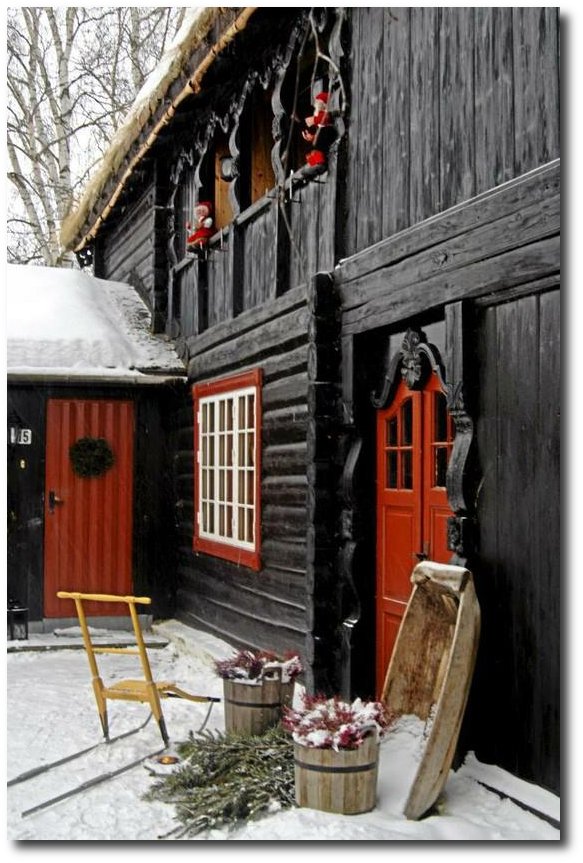
The main house dates from 1819. Stolper and gable boards are beautifully carved by Per Haugen from Lom, one of the masters in this demanding and traditional art© FOTO: Nils Petter Dale
EPOK Norge – Swedish Furniture
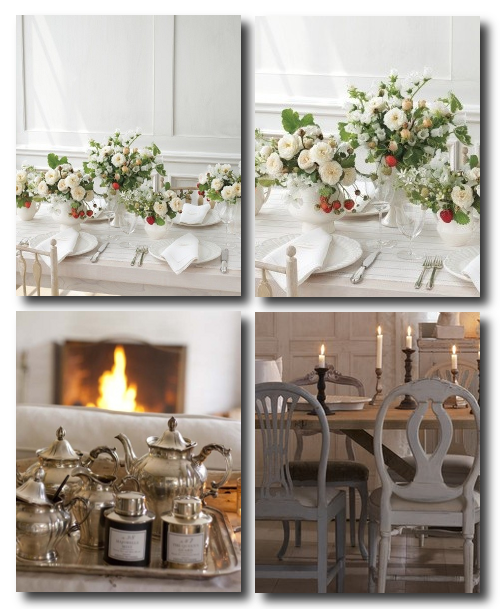
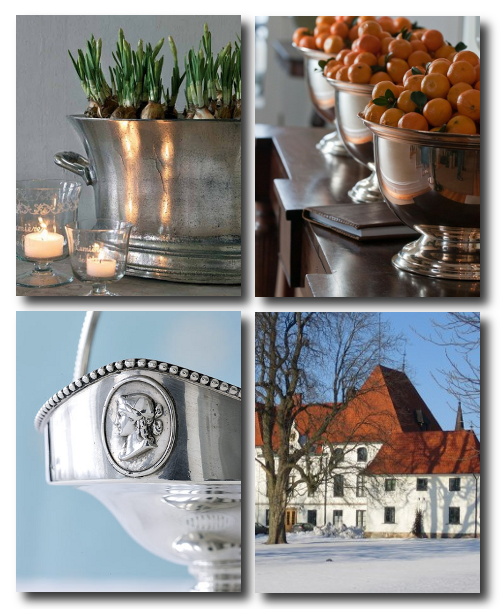
Swedish Gustavian Interiors From The Affari Catalogue
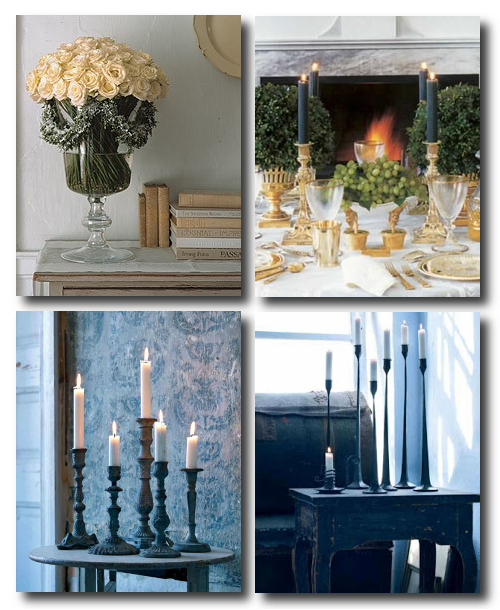
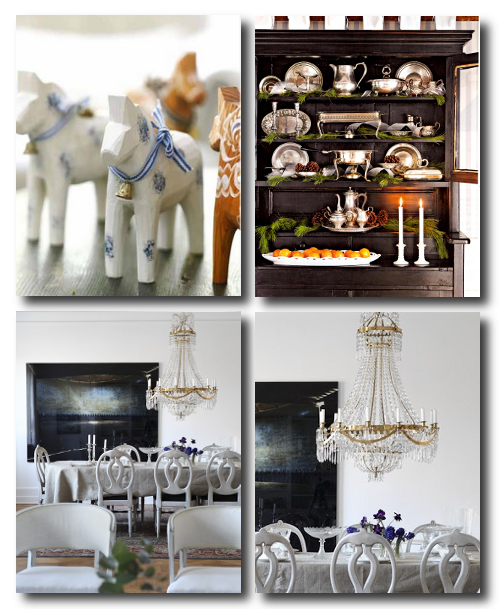
Country Swedish Style From The Affari Catalogue
Designer Colette van den Thillart’s European Decorating Style
Picture Credit-Toronto’s Best Dressed
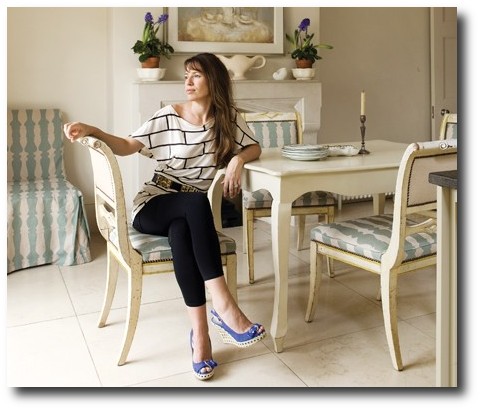
Designer Colette van den Thillart is a very talented designer whose work has been featured in some of the biggest magazines such as Canadian House & Home Magazine and Traditional Home. This Canadian designer works as the creative director of NH Design and certainly doesn’t mind breaking the rules and going her own way.
Colette is currently working on an 18th Century estate in Denmark that we hope to see some time soon. We cannot wait to see what this beautiful home looks like, and whether she will keep with the traditional schemes that are often found in 18th century or if she will incorporate modern elements in to the design.
Achica Living had an interesting interview with Thillart, where she gave her top 10 unexpected design tips. In the Achica Living article she suggests to create multi purpose rooms, than typical living-rooms, kitchens and bedrooms. She suggests in vertical houses with tall walls that libraries could be incorporated into dining rooms.
Here are some excellent examples:
1. Home Beautiful Magazine features a wonderful dining space with an extravagant cabinet that reminds me of some of the elements in the Drottningholm Palace Library. Designer Myra Hoefer’s California home’s unique library and office features a large table perfect hosting dinner parties.
2. This dining room features a round table with brighter green colored slipcovers. The wall cabinets have wired fronts exposing a large collection of books.
3. This Ketchum, Idaho home features a lengthy white painted table with a large collection of antique books featured on built in black bookcases.
4. This dining room features a paired down approach, with books stacked on industrial metal shelves. The look gives this room a clean look, yet the books give this room a lot of detail to look at.
All The Best Blog also interviewed Thilart, and here are some of the questions and answers I found most interesting…..
Q: What books are currently on your bedside table?
A: Savage Beauty – The Life of Edna St. Vincent Millay by Nancy Milford
Citizen of the World – The Life of Pierre Elliott Trudeau by John English
The Book of Symbols– Reflections on Archetypal Images, Taschen
Redeeming Features – Nicky Haslam
French painted blue and gold dining chairs featured in Traditional Home Magazine
Watch this video featuring Colette van den Thillart, who adds European touches to a classic Ontario cottage without losing its rustic feel. Barn boards and crockery lamps work beautifully with Windsor chairs, antiques and pretty designer fabrics
A sitting area within the master bedroom doubles the comfort and elegance. The lilac-and-white bedroom was inspired by Canada’s northern light. The headboard was custom designed by Colette.- Traditional Home Magazine
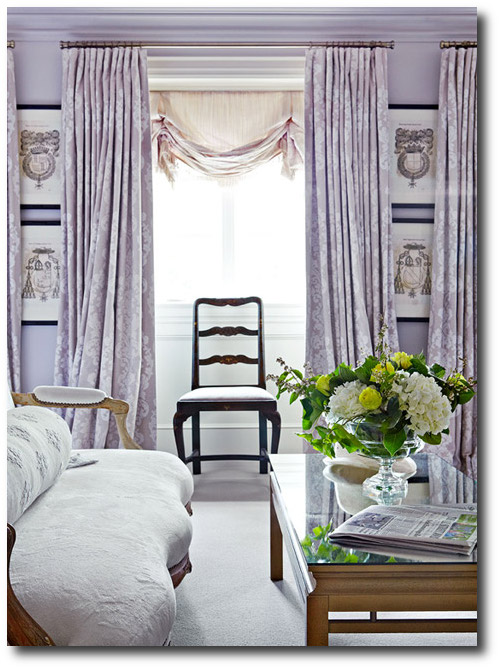
18th-century engravings, Lilac Draperies – French Sofa
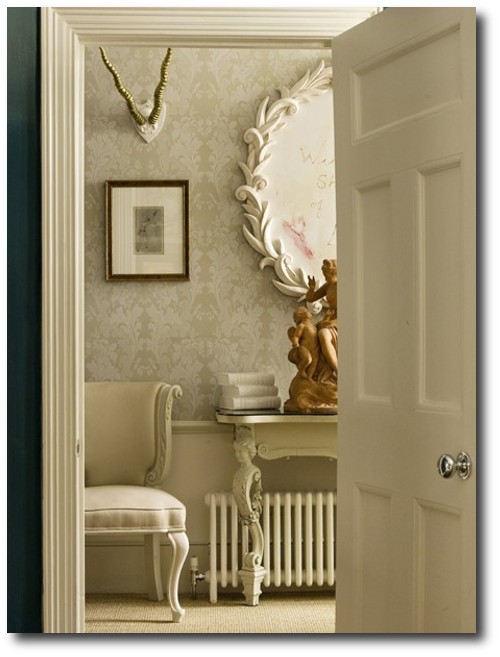 The hallway is a study in neutrals with wall-to-wall seagrass and patterned wallpaper. Colette accessorized the foyer with gilded antlers, a unique art piece with a plaster frame and warm white furnishings, including an 18th-century Russian side chair. From Canadian House & Home
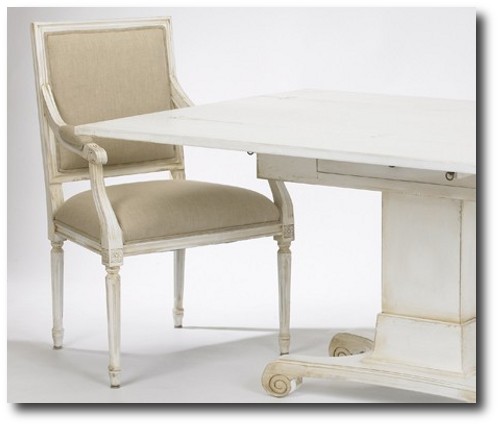
This pedestal table with matching cane back chairs features a hand-rubbed grey finish. Beige linen seats complete the upscale look.
Gustav Foldover Table and Chairs. Table, $1998; armchair, $699. Available at The Art Shoppe.
See more products inspired by Colette van den Thillart’s London home, featured in our January 2011 issue, in our gallery. Plus, watch a tour of Colette’s cottage.
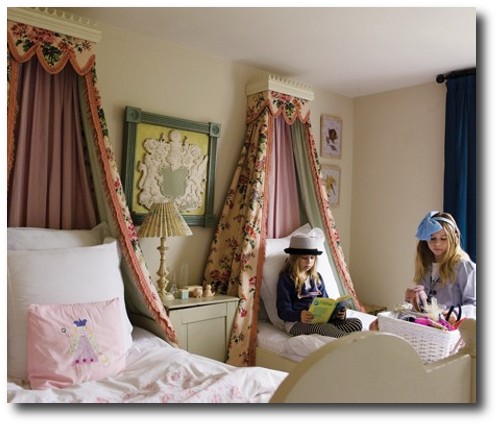
Designer Colette van den Thillart’s daughters, Ava, 9, and Hannah, 11. Each bed is framed by a chintz canopy for a soft and romantic look.