Wood Plank Flooring, A Swedish Design Must Have – Part 1
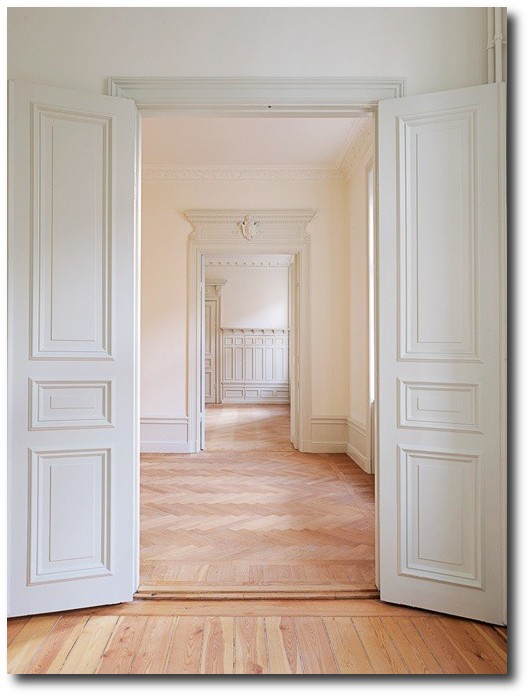
Wood floors are one of the most recognized design feature of the Swedish Gustavian look. Rustic planked wood is a top choice for flooring in the design industry. Wood floors are easy to maintain, and they are associated with the utmost quality and taste. Hardwood flooring will outlast carpet in any competition making it a smart investment.
If you have children or pets, carpet gets dirty. Pets that come in and out of the house bring dirt back into the home, and over time, the carpets become soiled. In this situation, carpeting only looks good after they are shampooed. While I am not here to beat up carpet, as there are many styles of carpet that are elegant choices, wood flooring maintains better over the years. Even if you decide to go with one of the less expensive wood alternatives, you are assured that this look is easier to maintain than carpet.
It wasn’t until the Baroque Era began, that wood flooring became an option for the home. Before 1625, most European houses continued to have dirt floors. Wealthy families utilized elm or oak boards which were held on joists. Once wood floors gained popularity, it became known as a more affluent design choice. Throughout the 17th and 18th century wood flooring flourished. Solid wood plank flooring, was installed in many homes, and many trend setting homes painted their floors. Upscale homes installed the richer designs such as parquet and marquetry wood patterns. Wood flooring today is still the most desired flooring, surpassing stone flooring.


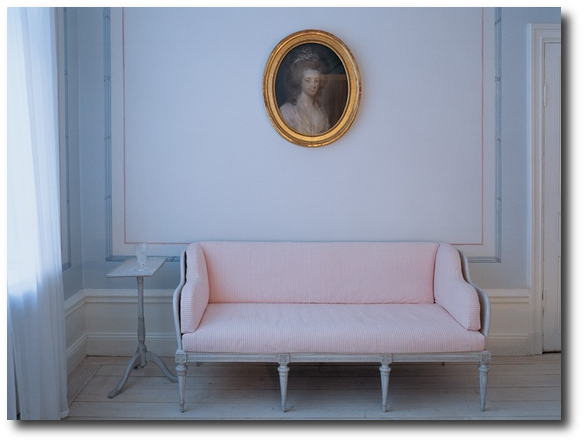

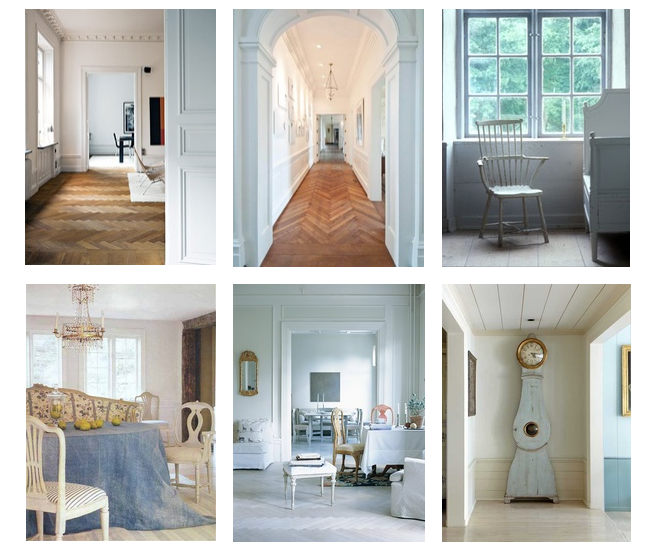
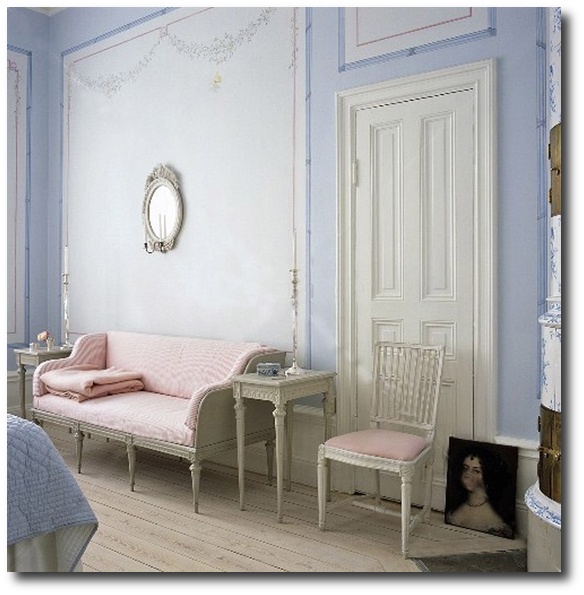
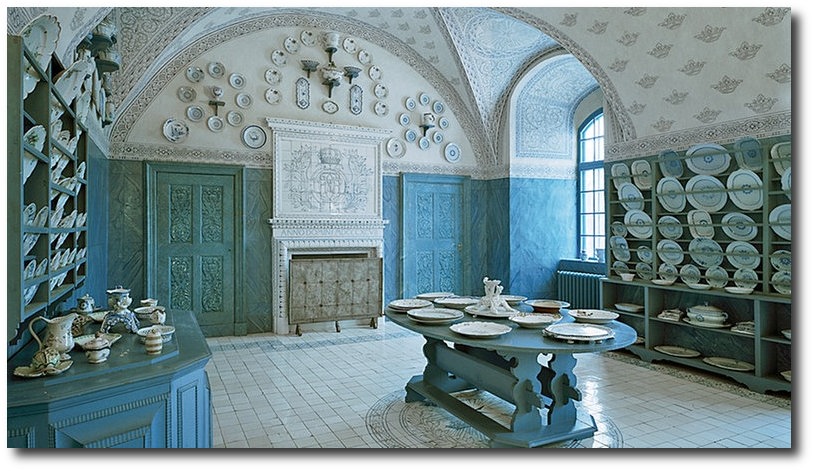
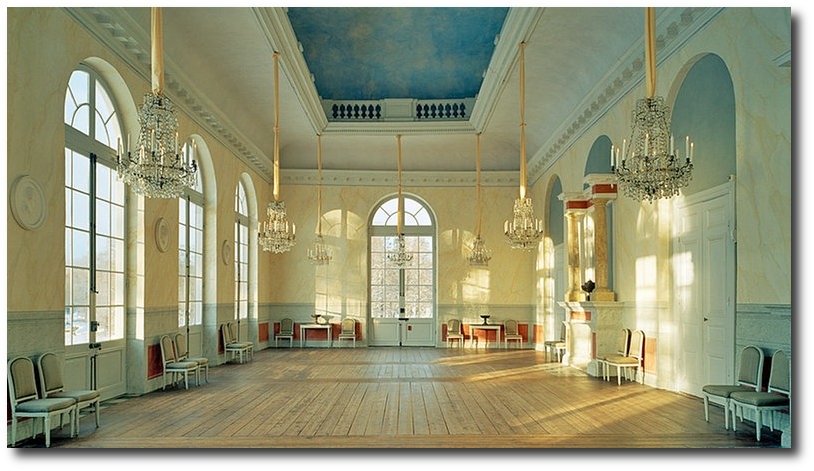
Svartsjö Palace In Sweden
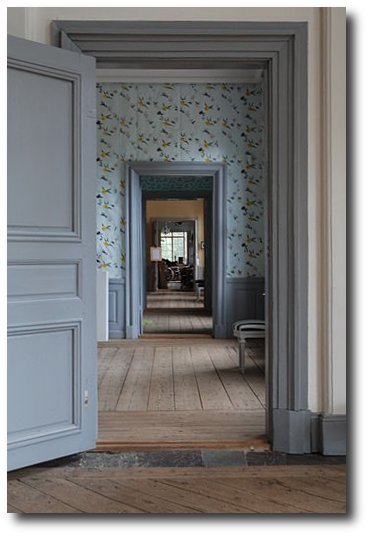
Svartsjö Palace In Sweden

Svartsjö Palace In Sweden
Vinyl Plank Flooring, A Swedish Design Must Have – Part 2
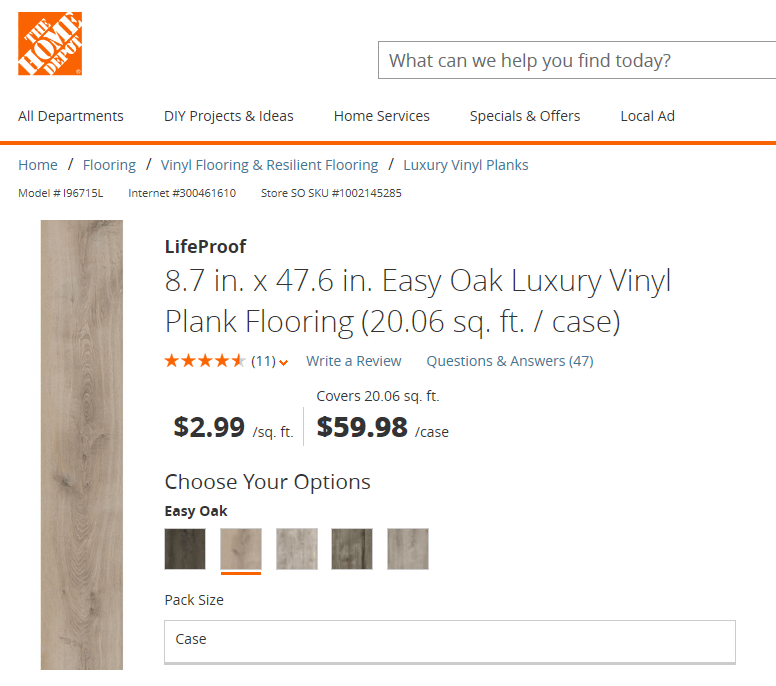
See this option at Home Depot
If you’re a do-it-yourself type of person who isn’t afraid of tackling renovations, then this is an article is a must-read if you are planning on replacing your flooring. Every home is under a budget when renovations come into play. If are a few inexpensive alternatives for the rich look of hardwood flooring.
Inexpensive Options For The Wood Floor Looks
Vinyl Plank “Peel and Stick” Flooring.
Vinyl wood plank floor is a rather new idea that has become popular in the last several years. Everyone is familiar with the “peel and stick tiles”, now they have come out with a “peel and stick plank” that replicates plank flooring. If you want to save some money and install the flooring yourself, this might be an option to consider.
Pros For Vinyl Plank “Peel and Stick Flooring”
All that is required to install theses floors is a utility knife with a sharp blade and a tape measure. Peel-n-stick vinyl flooring means the adhesive has already been applied to the back of the vinyl, and all that’s required to install the vinyl plank is to peel off the protective paper and firmly press the plank in place. Unlike wood flooring, vinyl wood plank floors don’t require a miter saw to complete the cuts around the room. Vinyl planks can be cut to the appropriate size with nothing more than a good utility knife and a metal ruler.
-Lowes Style Selections put together a very simple video guide of how to install the Peel & stick vinyl plank floor. These tips will give you a professional look- Here
-In this video, a customer makes a video of how to install plank flooring. What I love about this video is this customer is an every day person who hasn’t installed flooring before. If you are considering buying this flooring, and are worried about how to install it, this video will put your mind at ease- Here
-One Ladies Kitchen Transformation here
Many companies have mimicked numerous varieties of wood in countless colors. The reason vinyl has become so popular is the material is durable and easy to clean, and anyone can install it. You can spill almost anything on the floor, and not worry if it will stain the flooring like you would with wood.
Our floor has a large sheet of vinyl flooring that is meant to look like hardwood and it has held up quite well since we have lived in our home. I could drag a large piece of furniture across the floor, and it likely wouldn’t scratch like laminate would.
Large sheets of vinyl are pretty complicated to install for the average DIY homeowner, where as the individual planks make it easy for any homeowner to install with ease. You could easily do a room over the weekend yourself, and I suppose you could haul these boxes home in your car compared to rolls of vinyl.
Protile 4″ x 36″ Vinyl Plank in White Wash -36.-Square Feet per Carton $47
On the Voices Yahoo Site, One Customer gives this product an in-depth review, here are some of the comments I found interesting:
“Seeing our strong interest but still sensing some hesitancy, the Home Depot employee told us that WalMart had been installing this flooring in upgrades to many of its stores. In fact, he suggested that we go visit our own local WalMart to see TrafficMaster Allure flooring in use – they had installed it a year ago. We went, we looked closely, and we were impressed. Regardless of what you think of WalMart as a flooring reference, you know that they get lots of people through their stores and the flooring they use has to hold up. The TrafficMaster Allure flooring looked great in WalMart.”
“While on the carport, several hundred dollars worth of Traffic Master Allure was subjected to two bouts of heavy rain that flooded our carport and soaked our boxes of wood vinyl flooring. We were very concerned that we had lost our flooring but we opened the ruined boxes and let the TrafficMaster vinyl planks air dry. Surprisingly, everything seemed to be fine. The vinyl wood planks dried perfectly, the adhesive was still plenty sticky, and there was no warping at all.”
“Cost-wise, at $2.39 a square foot, TrafficMaster Allure is about the same price as the average floor tile, comparable in price to Pergo laminate flooring and half the price of hardwood flooring. Additional cost savings can be found because it is entirely possible that you can install this flooring by yourself – even if you aren’t an experienced do-it-yourselfer. It is also much quicker to install time-wise than a tile floor. My only complaint would be in selection choices at the store. There were several color choices in stock at Home Depot and no one mentioned that even more choices were readily available online”
Cons For Peel and Stick Plank Flooring:
Apartment Therapy did up a post called “TrafficMaster Allure Vinyl Flooring” where they posted comments from a Home Depot employee left on their website. Check out the post and look over the dozens of comments left on the article, before purchasing the product.
1. Peel and Stick Plank Flooring IS Not for Concrete Flooring.
This style of flooring is meant to be used in rooms that are normally kept at room temperature, (65 to 85 degrees). If you are thinking about using it in a basement, or sun room that are rather cold, then vinyl plank flooring is not for you.
On the Buzzillions website, the picture above shows Traffic Master flooring installed over concrete, and it looks horrible. “I installed my Allure floor in Oct of 2008 over concrete floors (30 year old house, basement, previously I had carpet down with zero water issues) . In the spring of 2008 the below started. I can scrap up the glue and clean up the floor only to see the same thing happen again within 2weeks…. I’m planning to go to them to see what they can offer as a replacement”
2. The Pattern Wears Off
Vinyl wood plank floors cannot be re-finished and have a relatively short life-span compare to solid wood floors.
Depending on the thickness, manufacturer, and foot traffic volume, vinyl wood plank floors might only last a short amount of time. After the floor has reached the end of its life, it will have to be removed and a new floor installed.
Solid wood floors on the other hand afford the homeowner the ability to re-finish them several times, even allowing for the ability to change stain variations and colors as they re-decorate.
One customer leaves this comment:
“I put it down in my kitchen over a smooth surface (vinyl sheet over plywood), but after a few years the edges turned white as well as several areas where the “wood” surface wore off leaving big areas of white. We use gentle cleaners and there are only a few people living in the house so it doesn’t get tons of traffic. I love the product for the ease and look, but now I have to replace my floor after only a few years!”
3. Look Closer, It Does Look Like Plastic.
Vinyl hardwood has become quite popular, because people want a nice look for less. In our modern society, almost everything is faux, and many people are perfectly content with it. Many people aren’t snobs about their interior, and aren’t particular about the style of furniture, color schemes, matching drapery and so forth. If you are a person that is rather particular, vinyl floor may bother you because it is plastic, and not real wood. Vinyl isn’t cheap, and yet costs quite a bit of money, and it doesn’t even compare to real wood. So if you think the faux look might bother you, I would suggest getting real wood.
Zoffany’s Wallpaper collection, Gustavus 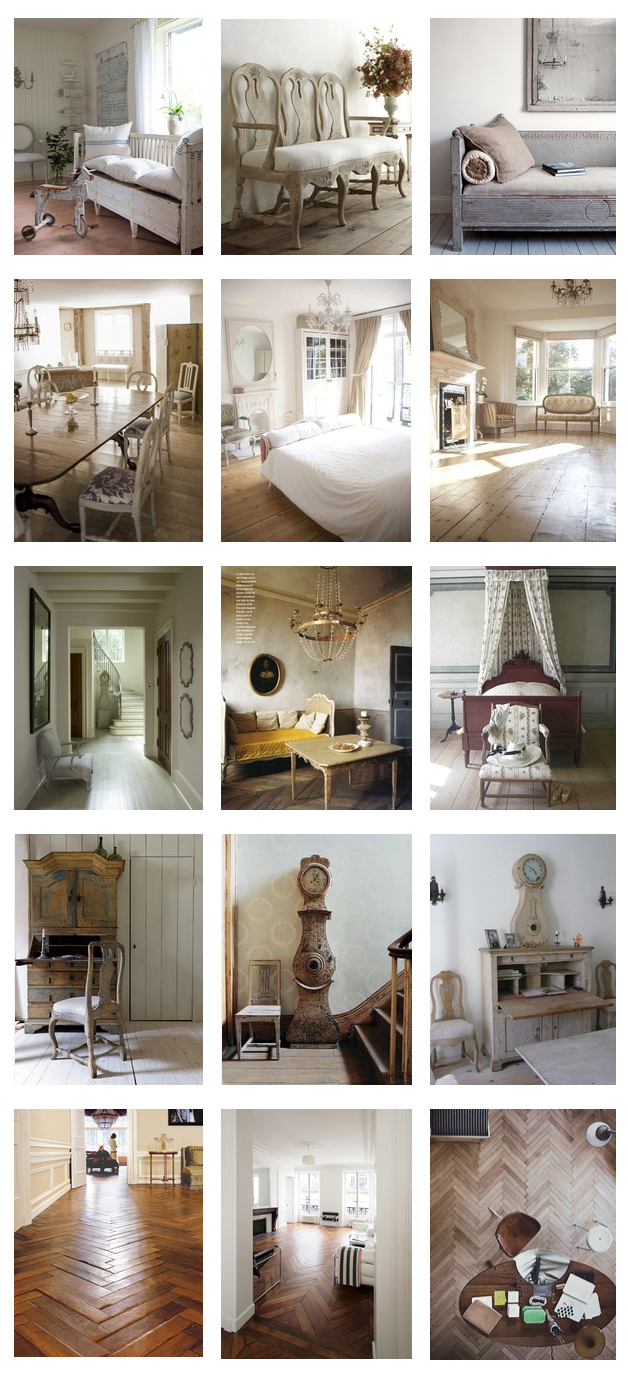
Check Out ALL the colors from Hangzhou Enzo I/E Trading Co., Ltd.
Laminate Wood Flooring, A Swedish Design Must Have – Part 3
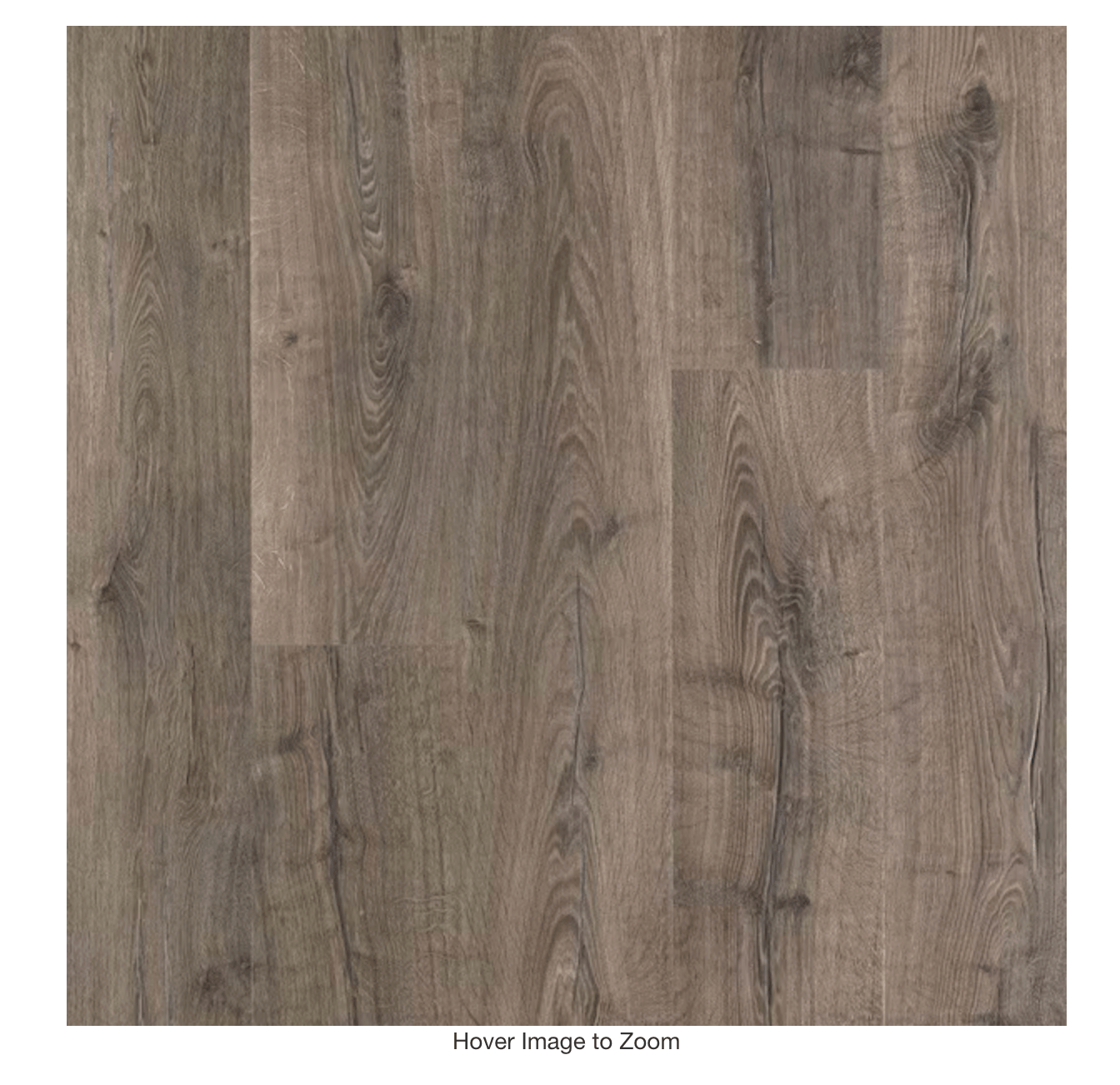
Laminate Floors- Are They Worth The Money? Some would say heck yes!
Laminate flooring is a multi-layer, synthetic flooring product which simulates wood, marble, limestone and granite, using a photograph installed beneath a clear protective layer. This image closely resembles a natural material, but the difference becomes apparent upon close inspection. Common woods are available such as maple, oak and pine, and more exotic species, such as Brazilian cherry, mahogany and walnut can be purchased. Beneath the photographic layer is an inner core composed of melamine resin and fiberboard materials. Pergo® is the most popular brand of laminate flooring, although other manufacturers include DuPont® and Witex®.
Laminate can look nice as well, but also are subject to failure just like any product choice. Here are a few disadvantages to the flooring.
– The biggest draw back to laminate is you cannot refinish it. Dings add to the character of true wood floors, and often times people bang them with chains and gouge them to get the authentic feel of time worn wood floors. One scratch in laminate floors and you simply cannot fix it. You must be careful with high heels, kids toys, and moving of furniture to keep your floors in excellent condition.
– Extreme temperature changes can cause the boards to pull away from one another.
-Panels can push up against each other at the joints, creating un-level high points. This is common where the boards were not installed with sufficient expansion space.
– Warping and buckling issues are caused by high humidity or excessive surface moisture, or a lack of a sufficient moisture barrier. Hardwood floors, by contrast, are naturally more resistant to moisture damage, as they will swell and shrink to accommodate changes in moisture
-Mold will occur when excessive moisture is present. Mold is a serious threat to home owners and can cause permanent serious health concerns.
– Patterns sometimes don’t always match from package to package. This can be very obvious and beyond the control of a consumer.
-The inner core can expand because it is made out of high-density fiberboard. If you have any moisture issues, or even if you didn’t lay down a sufficient enough moisture barrier, your flooring will swell and fall apart.
-Formaldehyde-outgassing, which originates from the melamine resin in various laminate floors. Chemically sensitive individuals may have reactions to particular brands of laminate or vinyl flooring.
A customer leaves this comment about Traffic Master:
“My family got very ill after this product was installed in our house. Apparently it was off-gassing causing headaches, body aches, runny noses and more. When we called the manufacturer, they quickly arranged to have the floor removed and reimbursed us in full. Obviously we are not the first ones to have a health issue with this product. It should NOT BE SOLD!”
Laminate floors look great, and can be the ideal choice for nice exotic wood floors without the cost of wood Many people want the high end looks, and this allows them to get the look for less than the real thing.
Plywood Plank Flooring, A Swedish Design Must Have – Part 4
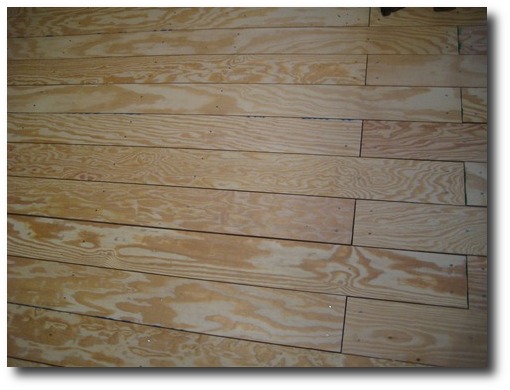
I stumbled across a DIY trend out there where people are cutting their own “planks” out of plywood. It seems rather unusual at first, but the results really surprised me. You get the look of real wood flooring which you can sand, paint, stain, varnish, or white wash, for fractions of the cost.
“We tore up nasty old carpet, then cut grooves in the plywood that was under the carpet to replicate plank flooring with a skill saw – and used a dremel to get closer to the walls. This worked better than the router which was recommended in the web article I got this idea from. We stained and then did three coats of poly. Everyone’s amazed that this isn’t ‘real’ plank flooring! We varied the width of the planks, using a 2×4 as a guide.”
There are a couple of links I want to share that might move you in the direction of considering this look.
1. Layers Of Learning Blog Flooring Transformation
Layers Of Learning Blog posted absolutely stunning photos of a room that they used plywood cut into 6″ strips of wood.
They mention in their article that plywood floors allowed them to transform their WHOLE house because of the low cost of the materials. This certainly a reason to consider this option. Many people can only afford a couple rooms with the other options. Plywood is so inexpensive, that you can do it yourself, and it is affordable.
Plywood gives you the option to cut wide planks with real grain. For those of you who want the REAL thing, this would be an affordable way of getting the look for less.
Buying plywood allows you to do one room at a time. It doesn’t matter if your project takes you a couple months to a year to complete, because plywood is practically the same from store to store. The finishing process allows you to dent, distress, and apply paint or stain which unifies the space.
Another plus to plywood floors is if something is spilled on the floors, which ruins several boards, all they would have to do is rip up the damaged boards, and replace them with the same finishing paint, stain or varnish!
Here are some of their costs:
Living room – 20′x13′ which equals 260 square feet.
$13.97 each on 9 sheets of 11/32″ “CD” grade plywood = $125.73, See the rest of the break down on their blog Layers Of Learning Blog
Here are some of their tips to consider.
Don’t Buy the Premium Brand Of Plywood
“There are different grades of plywood. “A” grade is the nicest, it comes with one very clean and sanded side. This is not what we went with because, as the guy at Lowe’s said, we can sand it ourselves and save big $$$. A sheet of “A” grade plywood costs about $28 in our market, but a sheet of “C” grade plywood is only about $14.”
Let The Wood Adjust To The Temperature Of The Room
” After the plywood is cut, stack it in the room where you’ll be laying it for a couple of days.”
2. Quarry Orchard Blog
Quarry Orchard Blog also put together a beautiful floor made from Plywood. In their “Plywood To Plank Flooring Tutorial“
They decided to tackle a redoing the room above their garage with a square footage of approximately 533. They decided to go with 6 inch strips that were all 8 feet long. They were shocked that it only took them an hour and 45 minutes to cut the sheets into the planks.
A Couple Tips From The Quarry Orchard Blog
– They started with the first board and squared it with the wall, leaving a 1/16 inch gap between the first board and the wall.
– Be sure to use a nail punch to make sure that the nails at least flush with the flooring.
– Clean up the look by being sure the nails are all in line and evenly spaced. Have a helper that can measure and mark the wood. They measured every 16 inches for each nail. Consider making a jig to help with the measuring and marking for where the nails are to go. This will enable you to line up the previous board and mark rather than measure for every single nail.
Check out the final pictures of this room! What a transformation!
A Break Down Of Their Material Costs:
16 sheets of 15/32 pine plywood @ $16.49 per sheet
9 gigantic tubes of Liquid Nail @ $4.75 each
10 lbs of cut nails (ordered from Tremont Nail Company) @ $69.63 (includes s&h)
4 gallons of Varathane polyurethane @ $37.46 per gallon
2 quarts of stain @ $9.99 each
3. Tidbits From The Tremaynes Blog
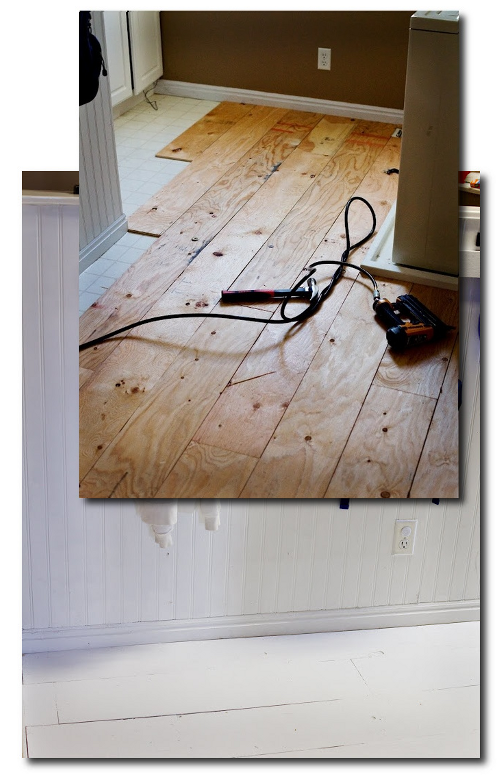
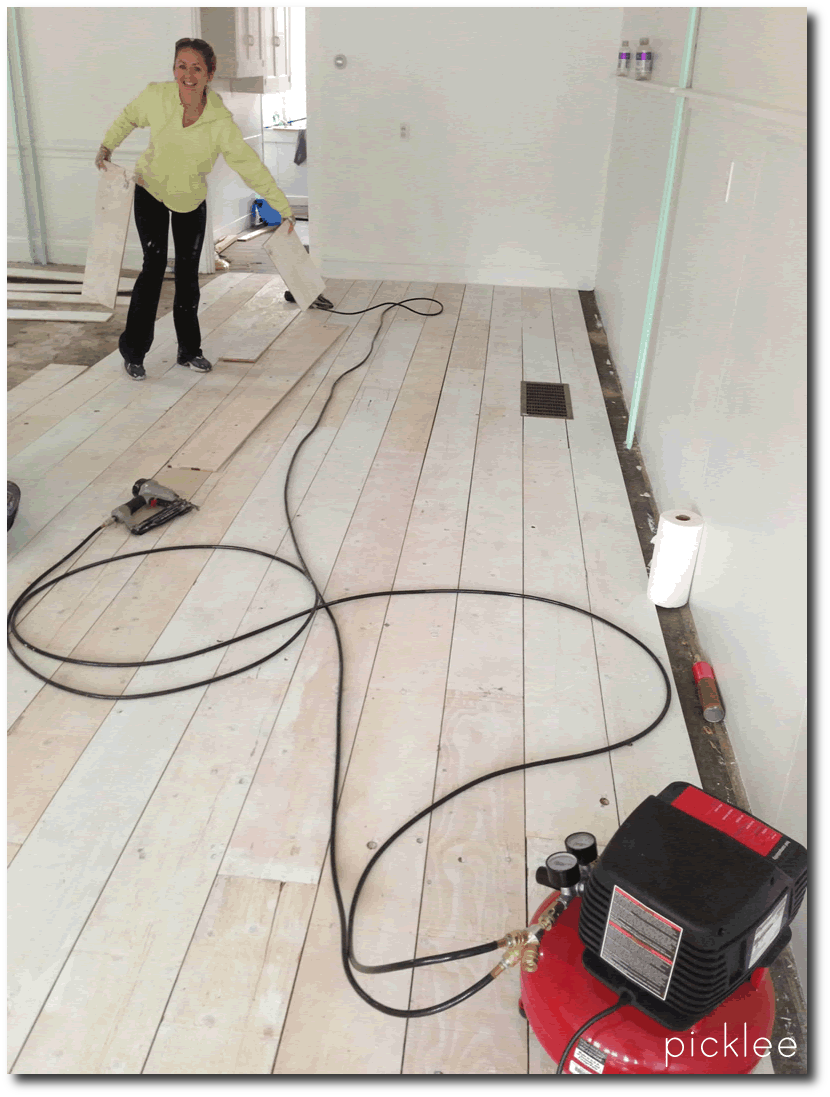
For their stunning transformation they used 4×8 sheets of plywood; cut into 8 inch strips, and laid it like a regular hardwood floor. They used an old nailgun, some pennies to space out the wood, for the old farmhouse-style look. The cost was $60. Fabulous!!
About to open a shop in Newport, RI, store owner Jordan decided to tackle the outdated carpet flooring that came with the shop. Being that the shop was a historic home built in the early 1700′s, she wanted something more period appropriate.
She decided to go with the standard 1/2″ thick 4′ x 8′ sheets at a cost of just under $20 each. In order to have zero waste, she chose to have the boards cut into 8 inch by 8 foot lengths, giving her six planks per sheet of plywood.
When she got back to the shop, she laid them out, and sanded all rough edges and splinters, and decided to white wash them before nailing them down. She mixed up 1/4 CeCe Caldwells Simply White Chalk Paint and 3/4 water. She then used a roller attached to a broom handle to apply a coat of the white washed paint to all of the planks.
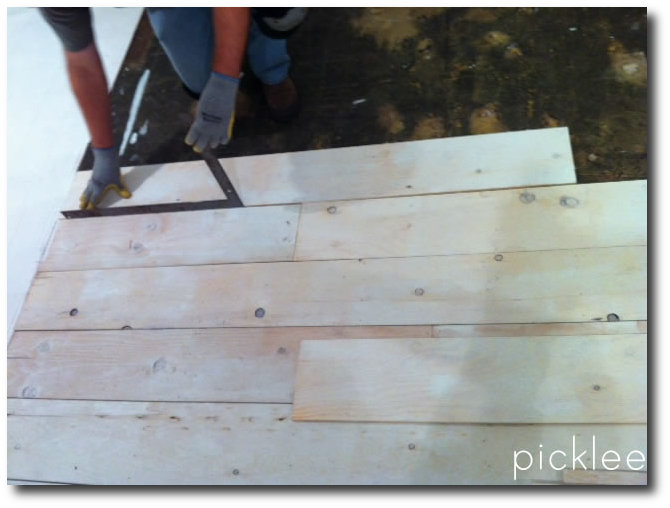
After all the planks were dry, her fiance Brett, started working on nailing the planks to the flooring. They used Bostik flooring adhesive to the backs of the plywood planks, which were then laid into place and nailed into the floor. Brett used 1 1/2″ nails and shot them in on an angle. The nails were spaced out about every 12″, placing two all along either side of each plank. Brett used a metal straight edge for a spacing guide, which gave the perfect distance between planks. As Brett went on nailing down the boards, he used a table saw to cut some of them into different lengths so that the boards would have more of a staggered look.
Some Additional Period Looks To Give You Inspiration:
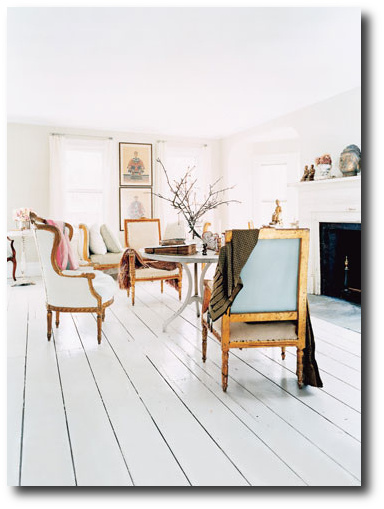
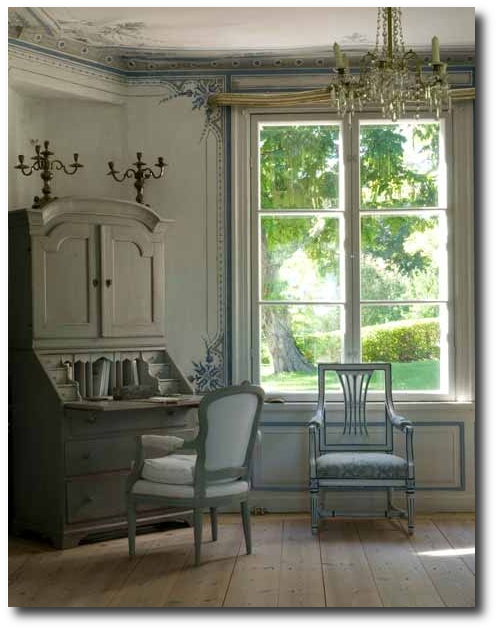
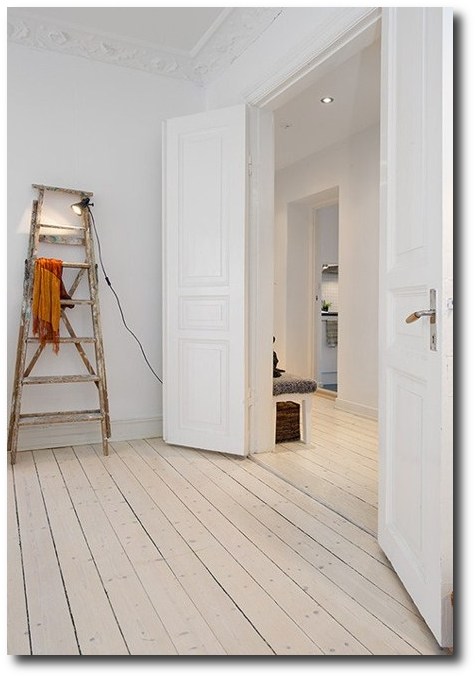
- Stunning Antiques With White Washed Flooring- Unknown Source
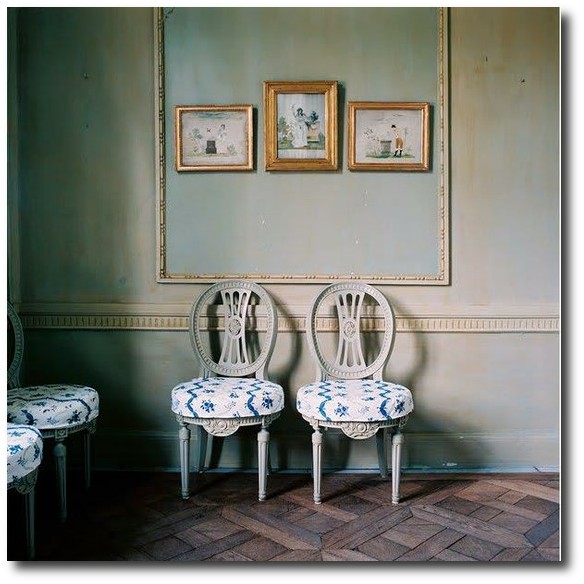
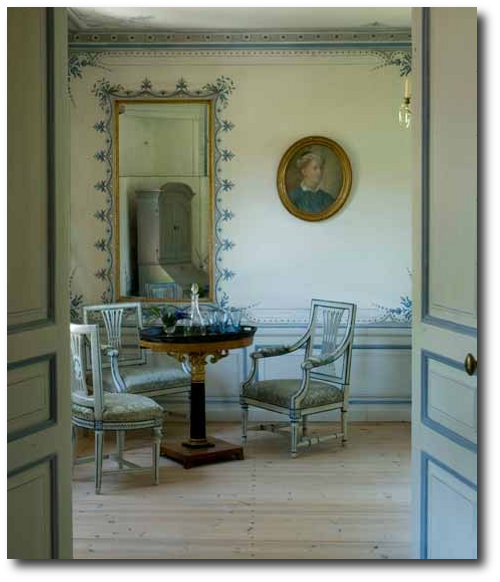
- THE SWEDISH ROOM by Lars Sjoeberg and Ursula Sjoeberg,
- Photographs by Ingalill Snitt
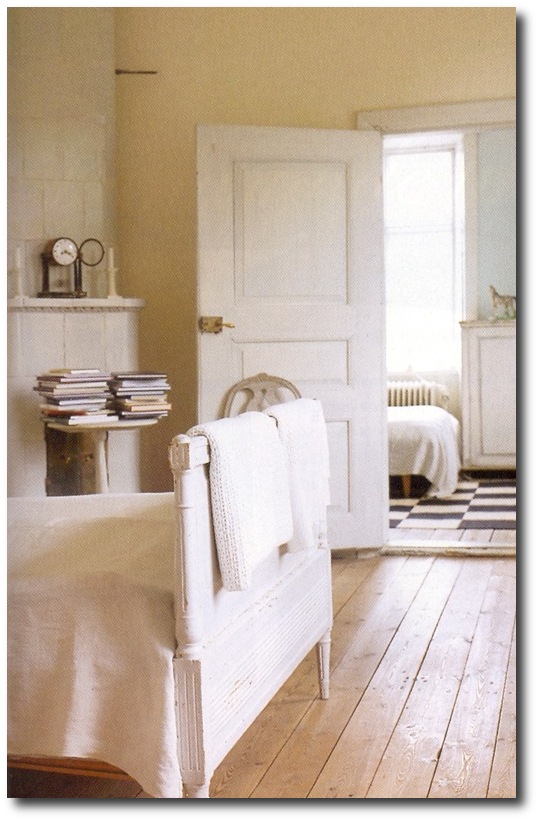
- Classic Swedish Home With Wood Flooring- Painted White Gustavian Bed
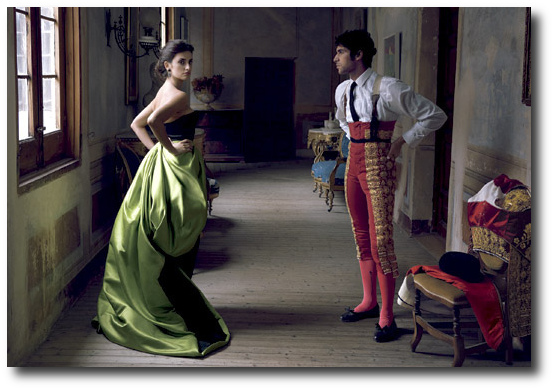
- Beautiful Planked Wood Floors White WashedCayetano Rivera Ordóñez & Penelope Cruz in Armani Privé – Made in Spain
- Photographed by Annie Leibovitz for US Vogue December 2007
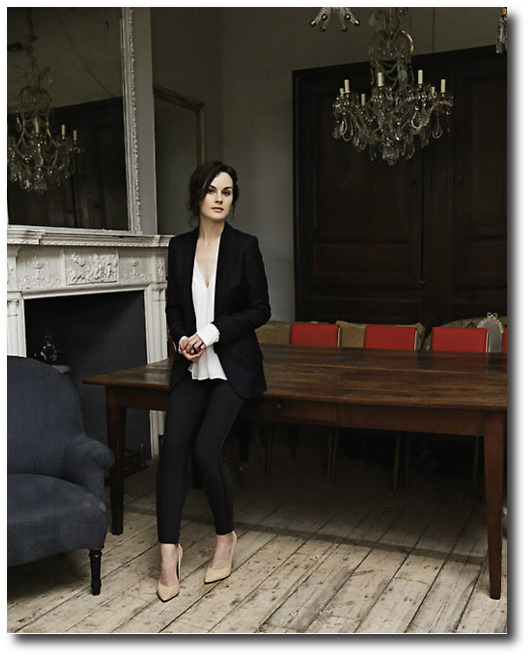
- Distressed Wood Flooring- Make your plywood floors aged with translucent glazes
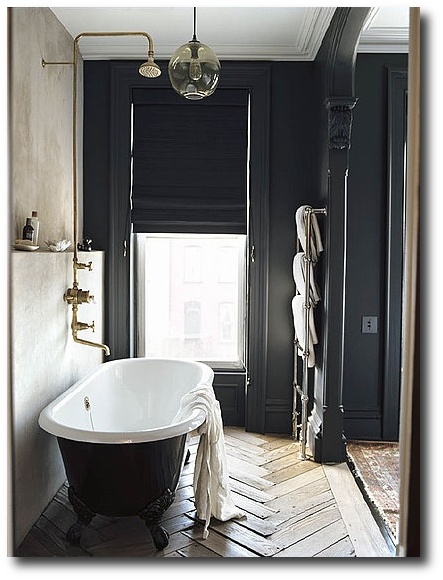
- Herringbone floors add personality in Jenna Lyons Brooklyn Townhouse.



Painted Wood Flooring, A Swedish Design Must Have – Part 5
Painted wood floors are making a come back, and we believe that painted floors will become even more popular than we see today. In the past, finer homes installed decorative parquet floors and inlaid patterns. In the 17th and 18th century paint also was the means to create these decorative patterns on the floor, many which mimicked parquetry. Painted wood floors made it possible for more light to enter into the home, as the winter season in Sweden was quite dark. Rustic unfinished wood over time, darkens, and painting the wood just seemed like a practical approach of having a brighter home without spending a bundle.
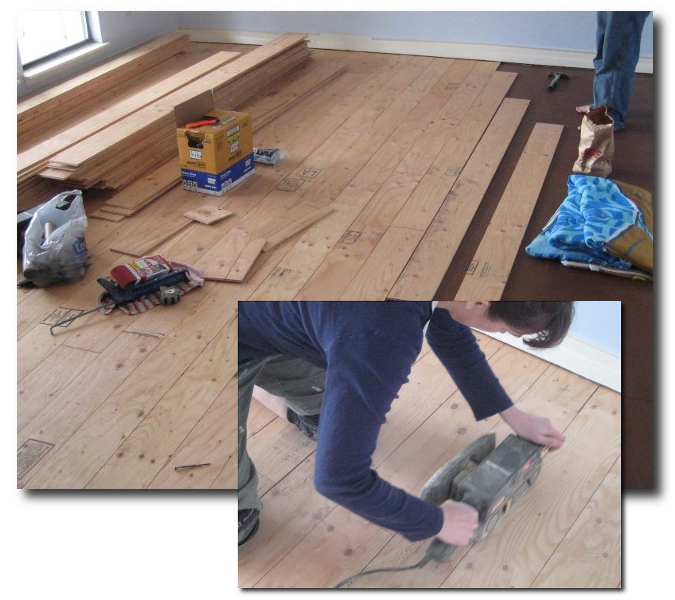
Raw wood accepts paint so much nicer, and allows the paint to distress beautifully over time. Sanding wood, allows the paint to soak into the wood, compared to painting over varathane floors which may scratch easier with foot traffic. Homeowners with existing floors often have to carefully think carefully about how they go about re-finishing their wood floors,because the process can be pretty involved. Refinishing wood floors can seem more labourous than painting, and often times it is. Sanding wood floors can be a time-consuming task.
There are a couple steps that cannot be skipped and we list them out below:
1. Prep
This involves removing your furniture from the room. Once you start belt sanding the floors, there will be dust everywhere. It can be a bit time consuming sealing off the house with drop cloths, or plastic tarp, but it is necessary for a great finish.
2. Sanding
The most time labourous part by far is sanding. Using a belt sander will kick up a ton of saw dust, and cleaning up the dust, which ends up everywhere becomes a tedious job. Sanding an entire floor can take up to 4 hours or several days depending on the size of the room.
Renting industrial professional tools saved my husband and I a lot of time when we refinished parquet floors in a rental in Virginia. Drum sanders are large machines that can handle large floors, and are very easy to operate. Drum Sanders can be rented at around $40 to $50 per day. I would highly recommend it than using a small scale sander that you can buy from a Hardware store.
Most homeowners choose to rent the specialty equipment and then purchase the more standard tools at their local hardware stores. Edge or orbital sanders are terrific for sanding the edges of the floor that the drum sanders cannot reach. A handheld power tool lets you tackle the tight corners, and are worth purchasing outright from Home Depot or Amazon. They allow you tools for additional furniture projects in the future.
3. Staining, or Painting
While everyone in the design community has their favorite paint brands, I would highly suggest going with a oil based paint. Oil holds up longer and has a tougher finish than any water based brands.
I would highly suggest sanding your room down to its bare wood, before painting. Painting over an existing paint is always possible, but the extra work pays off when the paint naturally distresses over time, which shows the wood through rather than an unsightly under color.
Sanding down to the natural wood also allows you to pickle the floors. White washed floors in my opinion are much nicer than painting the floors, because the wood gives the room a bit of depth and natural appeal.
In this post I show a photo of the Behr Wood Stain that is highly recommended. The stain is available in a number of colors, and evens out nicer than just paint that is mixed with water. Behr has a number of colors available that are off white, gray, beige that would work nicely with the Swedish interior schemes. Mixing paint with a bit of water or stain work rather nicely.
Many people suggest applying paint with a professional paint brush which gives a smooth finish, rather than with a roller, which creates a stippled finish. Today you can purchase smooth rollers which can be used with extension pole to apply paint. Rollers are inexpensive ranging from $4 to $7 per pack. A pole will be anywhere from $5 to $40, depending on length and material.
You can choose a variety of different approaches with your paint choices….
If you decide to work with an existing painted floor, a great oil based primer is “Coverstain by Zinsser” This paint can be tinted almost any lighter color, dries very fast, and can be mixed with most other oil paints. Coverstain is in fact a primer that will adhere to almost anything, and would be a fantastic choice for the floors.
One gals review of Coverstain -“Zinsser oiled based primer is like gold”
(Please note that Kilz or Coverstain primers should never be used on concrete floors. Go to Lowes or Home Depot, and buy stain or paint made just for concrete floors. Concrete stain doesn’t flake off on concrete like paint does)
As a top coat on your wood floors, you can purchase a Water-based polyurethane clear varnish, to seal in the tinted paint, or purchase water based, or oil based paint for your top coat. I have tinted this paint many shades of gray, blue, green and yellow. It is marvelous on furniture. This primer dries flat, allowing almost any other paint to be applied to it. It serves as your primer and your base paint, allowing you to just then seal the color in with a water based sealant.
If you are working with a previous painted floor, floors need to be sanded for the paint to stick properly. The worst is when you skip sanding, and the first time you move a furniture piece only to have the paint come off in sheets, or scratch. You will have regretted not sanding.
Sand first, and then paint the floors with a paint formulated for the flooring. We had painted our deck with paint formulated for the outside, and we are so glad we spent the extra money, because rain or snow, the paint hasn’t chipped.
4. Sealing
Polyurethane is an oil based sealant, that is NOT suggested for lighter colored paints. If you use this over your floors, in a week or a matter of days, the floors will have a tinge of yellow. You might then have to consider re-painting your white floors.
Polyurethane works perfect on unpainted wood, or on darker paint colors such as red, navy, black and so forth. A water based varnish is required for lighter based floor colors such as light gray, white, or cream.
You’ll have to wait 6 hours for each coat of polyurethane sealant to dry. It is recommended that most floors require at least 3 coats to achieve best results, and many professionals suggest 24 hours in between each coat of urethane. It also takes up to 3 days before you can move furniture back into the room and walk on the floors again.
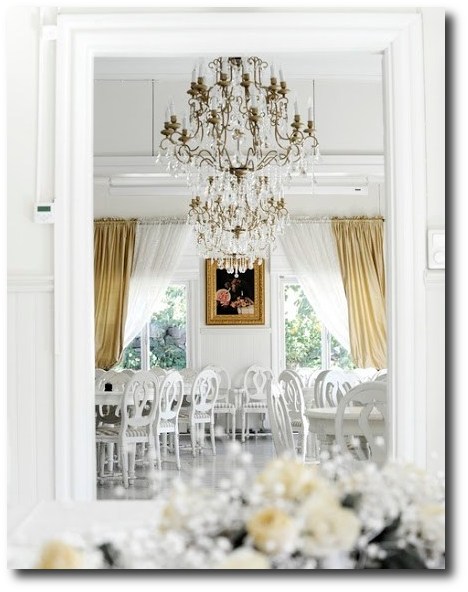
Onni Hotelli Kuvia Picture Credit Ranskalainenpatonki.blogspot
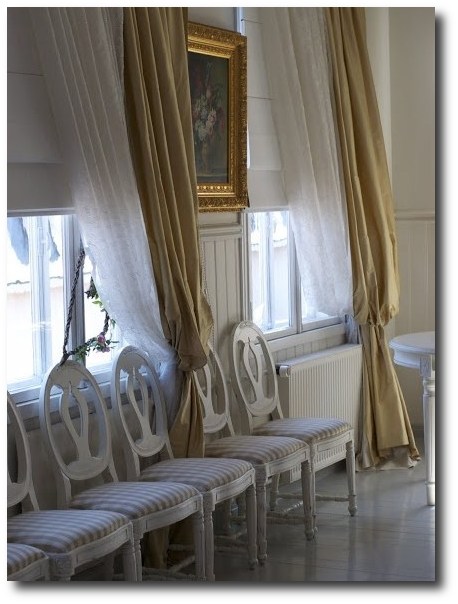
Onni Hotelli Kuvia Picture Credit Ranskalainenpatonki.blogspot
Belle Maison Corbeille Bed- Featured in Swedish Decorated Room With Painted Floors
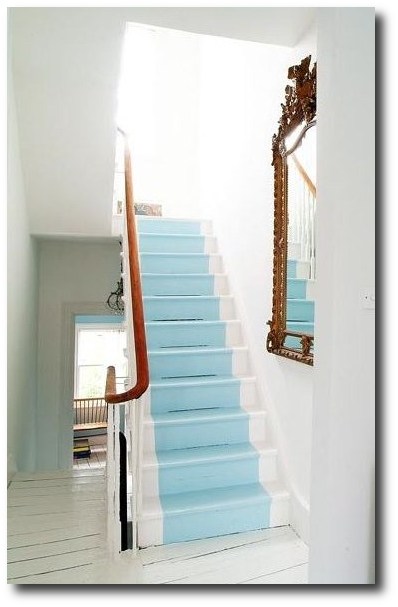
Blue Painted Wood Stairs
A Colonial Floor Makeover by Sara Kate
Sara Kate and her husband painted their summer house floors in an oil paint. Here are some of their remarks……..
“Moving the furniture was easy, the problem was working with the paint. I made a big mistake in laying the second coat on too thick and painting on a rainy day. The humidity and the thickness caused the paint to wrinkle, clot and appear dull and matted. I had to work hard to undo my mistake.”
They suggest using a Polyurethane based porch and floor enamel. After cutting the edges with a
brush, roll on a thin coat with a 1/4 inch roller. Keeping the heat on insures the paint will dry fast. He then suggests to roll at least two more thin layers and allow at least 24 hours between coats
Here are a couple of tips from the comment section of the article.
“Three simple lessons from eveyone’s paint woes: 1)PRIME- Frankly, no one wants to do this but priming is not a paint company scam – especially on a floor. Primer is NOT paint (anyone who’s had the lowly job of brush cleaner -such as I- can tell you that primer is much harder than paint to clean out of a brush. Pros, in my experience, will often designate some brushes for primer only). Think of it as glue that will hold the paint onto whatever’s beneath it. (and, yeah, tinting the primer is a nice trick and the paint store should do this). 2)PATIENCE. I assume you are all painting with a gloss finish. 24 hours minimum on this. 3) Relax with the dusting! Dust falls. Your sweet new floors are gonna trap some dust as they dry. “
“An alkyd paint dries overnight, but takes 28 days to cure to maximum hardness.”
“A response to a fainted floors in a rental apartment- I know you didn’t want to put down a rug to lighten the floor, but how about painting a floor cloth? You can get a large canvas drop cloth from a home improvement centre, Paint it with any kind of paint you want. After it is dry, put at least 2 coats of polyurethane sealer on, letting dry completely between coats. You are in control of the design, you don’t have to worry about putting the floor back to a rental state because you can lift the cloth and take it with you!”
“Katherine – A Painter – To those who asked about painting various surfaces, and those who asked about primer: Sanding and primer are twin keys to getting paint to adhere to almost any surface. Start with a clean surface — remove grease, wax, and anything chalky. If there’s any gloss or if you’re concerned about adhesion, do a light sanding with 150 0r 200 sandpaper. On a floor, you can use a floor sander with a screen… available at a rental shop. All you want to do is de-gloss so the primer has something to hold onto. (If you’re going over polyurethane, you have to scuff it up diligently, because poly doesn’t want to stick to anything.) Then prime with any of the primer-sealers that mention “excellent adhesion” on the label. Kilz, BIN, Bullseye… these are a few of the big names. A water-based primer-sealer is fine. If you’re making a drastic color change, look for a primer that is int0 tint-able, and tint it in the direction of your final color, but not necessarily matching the final color. The only time you will have a problem is when the surface is already painted and the existing paint isn’t adhering well. There isn’t much you can do about that, short of removing that old paint.”
“Red paint is difficult because red pigments are transparent therefore they need many more coats to give a good coverage – the purer and clearer the red the more transparent it is – burgundy reds and terracotta reds will cover better as they have other pigments in them which are not transparent”
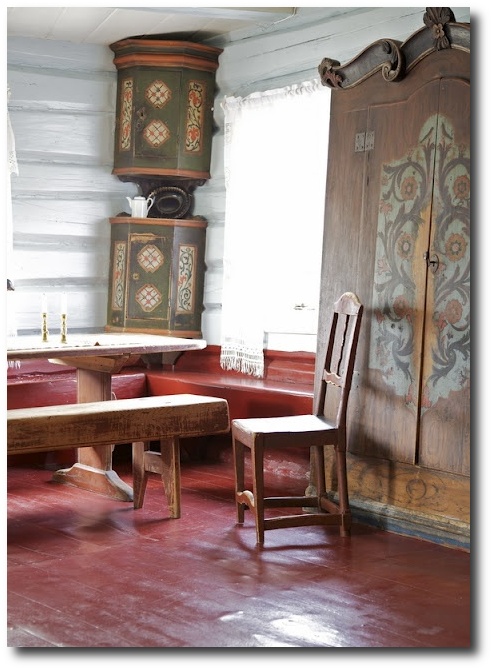
“When I stained my concrete, I got the acid at B. Moore. Instead of painting concrete, stain it instead. Staining is much prettier. B.Moore has many colors of concrete stains. Regarding the wood floors, they are worth so much more sanded and stained. To cut the cost, only hire out the sanding, and do the staining and sealing yourself. You will save at least half. I discovered this myself when some floor guys failed to return to finish my floors. I had only paid a small deposit, and they had finished the sanding. When I realized how easy and cheap it was going to be to finish the floor myself, I was thrilled they had deserted me.”
“All kinds of great coatings for all different applications (floors, countertops, faux stone/granite, etc.) are available at ArmorPoxy.com. I’ve used several of their products and all with great success. Particularly fabulous is the “For Dummies Bath Refinishing Kit”. You can use it on your tub, sink, tile, etc. and it makes everything look like brand new white porcelain. It’s truly amazing and easy to use. I did my bathroom more than 2 years ago and it still looks amazing….”
Another interesting comment-
“Concrete can be a tricky beast, especially in a basement or former garage that might have dampness or oily spills on the floor. You’ll have to clean and degrease the floor thoroughly, and if it has a very smooth, shiny surface you’ll need to etch it with muriatic acid to give it some tooth. There are special primers for concrete floors–use one. It really will make a difference. I painted the workroom floor in my basement without using a concrete primer, and the mineral salts in the concrete came up through the paint. I then had to strip away as much paint as I could, re-prime with concrete primer, and re-paint in order to fix the problem. Don’t be me. Use the primer the first time, and save yourself the headache.
Plywood, chipboard, and particle-board subfloors are easy to paint–sand the rough spots, prime, paint. Use an oil-based primer suitable for raw wood in order to keep stains from rising up through the paint.
If you think you might want to change the color every few years or so, don’t apply a water-based polyurethane, as it will keep future layers from sticking as well. Just paint the floor, touch it up as needed, and repaint as desired. The higher the paint gloss, the better it holds up, so use either high-gloss or semi-gloss, rather than urethane.
Use oil-based primers, yucky as they are. They block stains far better than latex primers, and provide better adhesion. Given how much wear a floor takes, and how much work it is to re-paint, do it right the first time. You can use latex paint over them, and subsequent paint jobs will not have to be re-primed (unless you’ve worn through to bare wood, but spot-priming will take care of that). If you have a really stubborn rust or dye stain that bleeds through oil-based primers, pigmented shellac will usually kill it (it’s the one thing that keeps the Calcimine often used as an interior finish in old houses at bay, and that stuff is pure evil).
 Swedish Flooring Looks From Domino Magazine
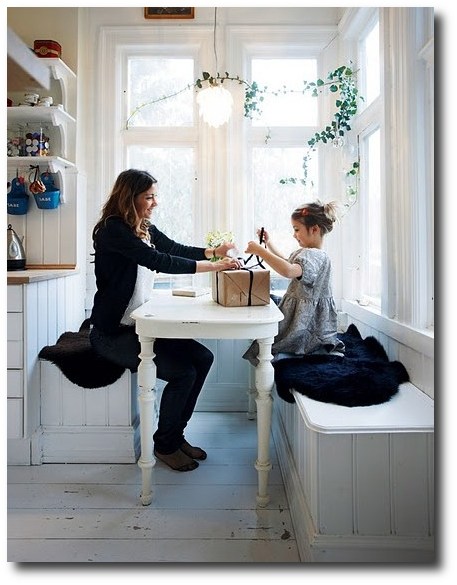
Swedish Interiors With White Painted Wood Floors
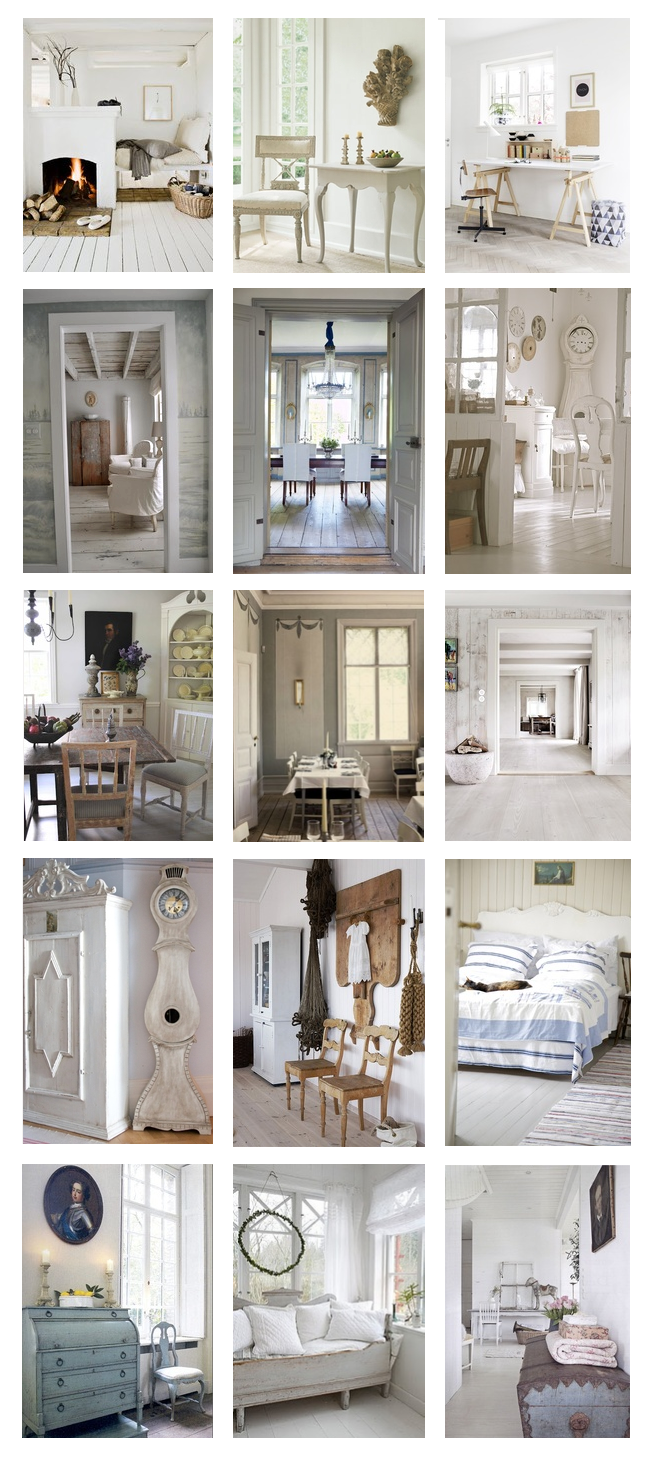 Swedish Interior With White Painted Floors


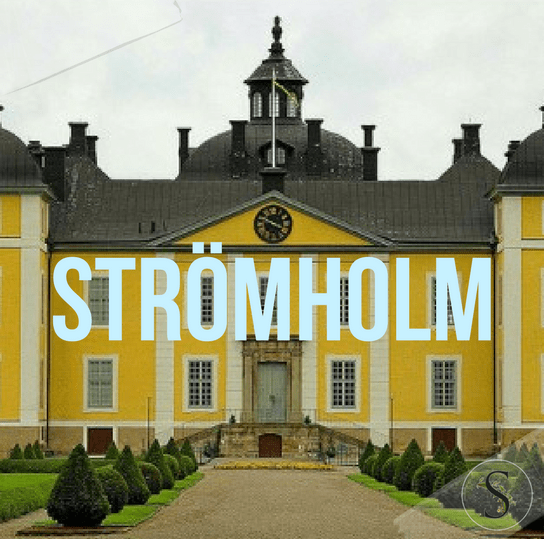
The Romantic Baroque Style: Part 1- Stromholm
If the Renaissance history is of interest to you, chances are you will love Baroque style. It is a design style isn’t that commonly seen in magazines, because the antiques are harder to find. If you are thinking about a design that is different and unique, this is certainly it! Baroque style originated in the 1600s in Italy before spreading throughout the rest of Europe. It originated in Rome, where the style was representative of the Catholic church, and was later adopted in the court of Louis XIV at Versailles. From there, the style spread to The Netherlands and Britain, and went on for almost two entire centuries, and became a less dramatic by the time the end of the 1700s.
Baroque didn’t go out of fashion suddenly. Rococo style was adopted, beginning in France in the late 1720s, especially for interiors, but the Baroque style continued to be used in architecture and interior design until the clean lines of Neoclassicism became the dominant style in the later 18th century.
Baroque style is a very ornamented style. Characteristics of this furniture are heavy, grand, theatrical, elaborate, and often rich in molding. The furniture is often very heavy detailed, did we say very heavy detailed? It is common to find baroque pieces which are intricately hand carved, such as turned legs and twisted columns. Louis XIV style is considered to the most identified example of Baroque style.
Baroque furniture is often larger in size. Canopy post beds are a good example of this. They were often grand with an excessive amount of carving. Cabinets, beds and chairs are all common pieces of furniture made in the Baroque style.
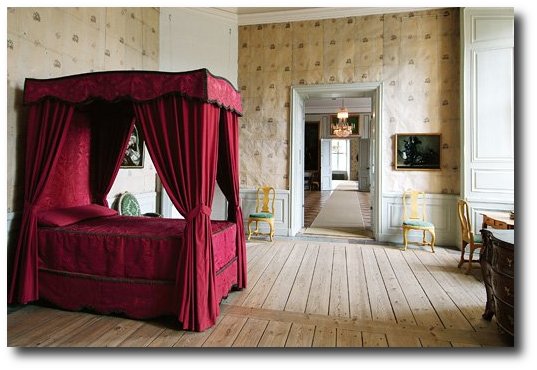
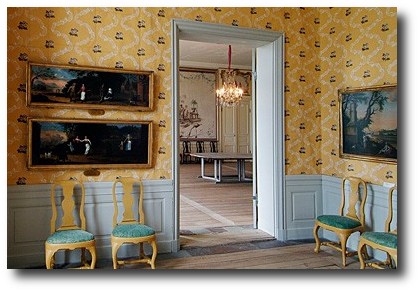
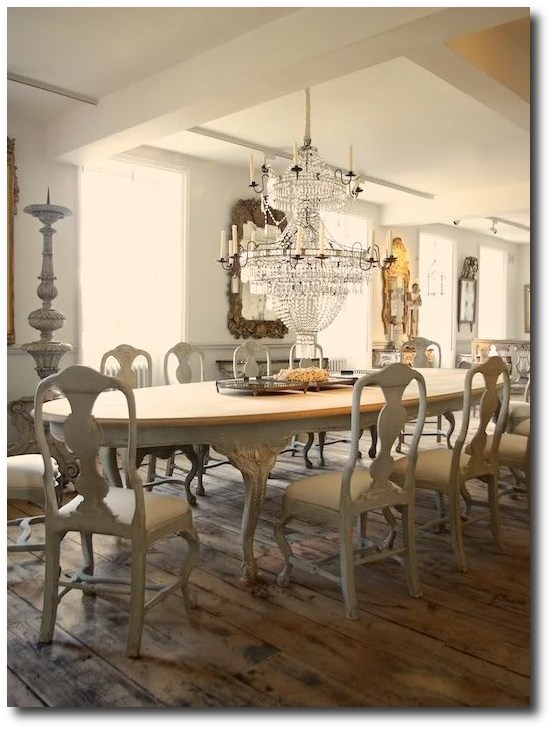
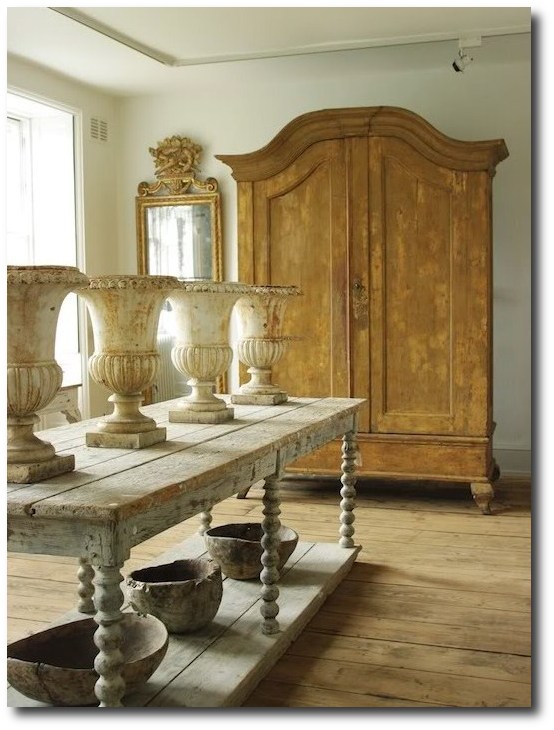
Sweden’s Strömholm’s yellow palace embraces the baroque style. This palace is a perfect mix between the baroque style with a Swedish flavor that is not at all Italian. Strömholm is located on the largest of three islands in the Kolbäckså river delta at Lake Mälaren. King Gustav Vasa had a farm on the property during the 1500’s. In 1560 the current castle was built between 1669 and 1681 for Queen Hedvig Eleonare. Strömsholm palace is one of the countries best examples of Baroque style. The Palace has royal interiors that are well preserved.
Additional Furniture To Admire
– A Swedish Baroque Table with Original Paintwork 1720s
-A mid 18th Century Swedish baroque drop-leaf table with its original blue paint
-A Swedish Baroque Centre Table circa 1750
-In Love With Swedish Baroque Mirrors
-Swedish Baroque drop-leaf table with original paint- Dienst + Dotter Antiques Picture 11
– Swedish Tray Topped Tea Table. Scraped to original blue paint. Beautifully shaped top with edge molding.Balustra shaped base on three legs.

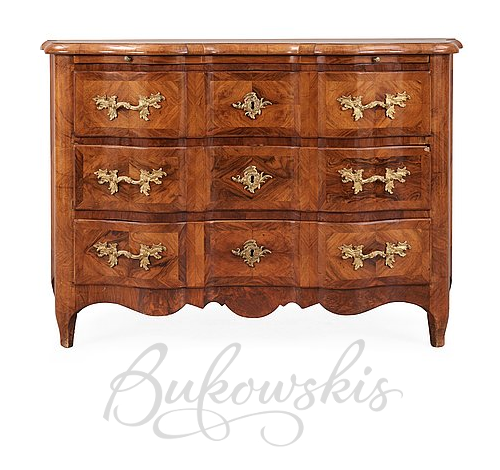
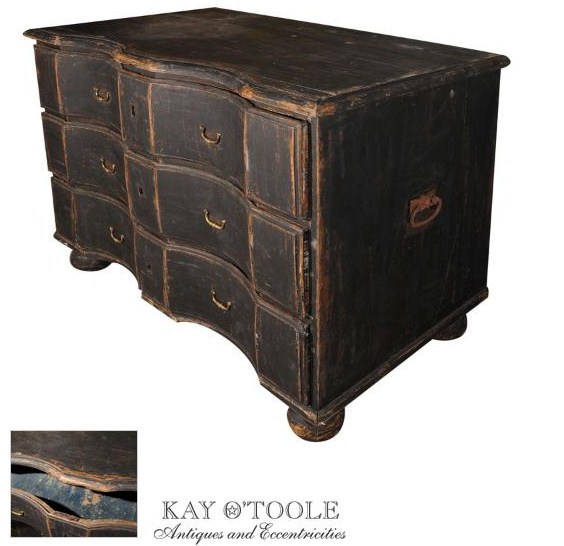
A Swedish late Baroque 18th Century commode, attributed to J. H. Fürloh.
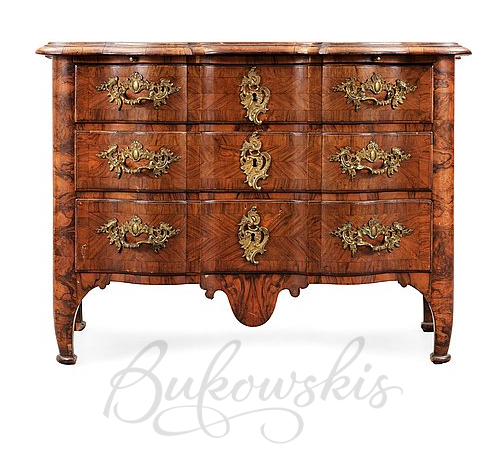
A Swedish late Baroque 18th Century Commode
Baroque Furniture From Augustus Brandt Antiques- Check out more pictures here
The Romantic Baroque Style: Part 2 King Gustav Vasa

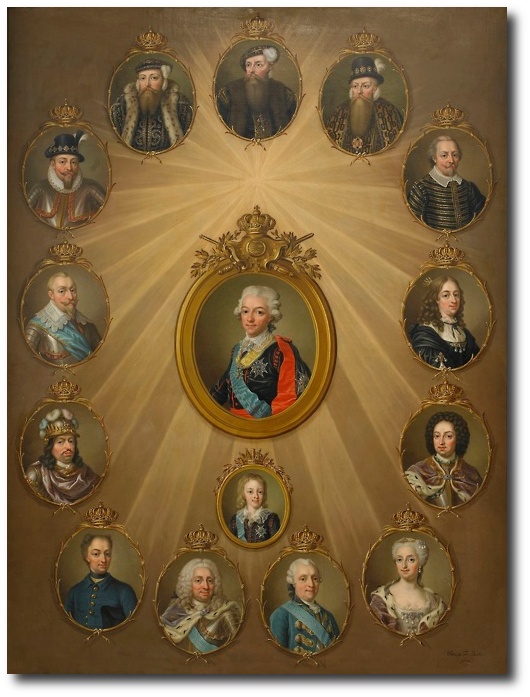
Gustav I of Sweden, born under the name Gustav Vasa (12 May 1496– 29 September 1560), was known one of the most powerful kings in Swedish history.
Gustav was the son of a Swedish senator and of a noble family whom played a prominent part in aristocratic politics of 15th-century Scandinavia. He was raised in the courts of Sweden, and participated in the fighting against Denmark. In fact, the connections his family had with the royalty at the time, supplied Sweden with three regents.
Gustav fought in the army of Sten Sture the Younger against Christian II of Denmark in 1517–18. Sweden at that time was a part of a union consisting of the Nordic countries (Denmark, Norway, Sweden and Finland), but the union was a mess in many ways. The Danish king, Christian II tried to dismantle the union by using brute force. King Christian attacked Sweden in 1520, and the Swedish Regent was killed. It was then that Gustav found himself held hostage in Denmark, but later returned to Sweden when the King promised to show leniency towards those nobles who wanted to fight back.
The Danish king, Christian II then called a “friendly” meeting with all of the officials, but Gustav chose to stay home. Gustav found himself spared because of that decision. Christian II rounded up the nobles, and bishops and had them beheaded in the Great Square in Stockholm. Gustav’s father, brother-in-law and uncles were murdered, together with about 75 other men in a mass execution known as “the Blood-bath of Stockholm”.
The Vasa family lands were confiscated, and most of Gustav’s family were imprisoned. Instead of hiding or running, he rose to the occasion and started fighting back by engaging the people of Sweden to rise up for their country. He started sowing the seeds of rebellion against Christian II . The army of Denmark pursued him, but he managed to escape which many tales of these adventures are told today. He managed to receive backing from the Hanseatic League, which also wanted the Danish king weakened. This union allowed him to gather together a sizeable army, and in 1521 he was elected Regent of Sweden. This army then attacked the Danes in several engagements, and step by step managed to oust the Danish king.
Gustav pushed through to establish Sweden’s independence, and his leadership through this time may have been what was responsible for his election as king. In 1523, at the age of 27, Gustavus was elected King of Sweden. He set about reforming the country, using methods inspired by rulers like Henry VII and Henry VIII of England.
Gustav made Sweden an independent state and gave his country, for the first time in a century, nearly 40 years of stable and intelligent government. Gustav managed to unite Sweden, and also laid the foundation for Sweden’s professional army that was to make Sweden into a regional superpower in the 17th century. He managed to shape the foundation for modern Sweden.
Beyond those great achievements, he ranks among the heroes of Swedish history because of his struggle to turn Sweden from a Catholic country to a Renaissance state with a Protestant church. This was by far some of the hardest wars many countries had to battle.
In the documentary A Lamp In The Dark: Untold History of the Bible, goes into great detail the tremendous struggle individuals had to endure throughout the Middle Ages. I highly recommend watching this documentary on You tube to gain a better appreciation for the battle against the Catholic church.
The Catholic church was against having the bible in the hands of the common man, and threatened imprisonment and death to any persons who disobeyed their rule. Valiant warriors of the faith in England such as John Wycliffe, William Tyndale, Martin Luther, considered the cost for the sake of sharing the Gospel that salvation IS through Jesus ALONE, not through works, or anything else. They rejected the notion that the Catholic church set forth such as “sacrament” which individuals had to confess their sins to a priest instead of through prayer to our heavenly father to forgive our sins. (1 John 2:1-2)
The Catholic church positioned itself in control of individuals souls (salvation), and even went as far to ask money from people whose loved ones had died whom could be removed from “Purgatory” (Hell), which they taught every believer goes first, which was contrary to scripture. The Catholic church’s sheer dominance made them extremely wealthy because of the vast amount of people willing to paying money to remove their loved ones from the “Purgatory”, and this allowed the Catholic empire to throw their weight around in many countries. Believers also fought ideas brought by the Catholic church that the Pope was Yahweh himself on earth, stated by Pope Leo XIII, Pope Innocent III, and Pope Boniface VIII, which contradicted scripture. Once the common people were able to read the Bible, through the Protestant Reformation, they could hold the Catholic church accountable by the scriptures themselves.
Gustav fought hard to ensure the triumph of Lutheranism (named after Martin Luther), and the suppression of Roman Catholic customs. Gustav Vasa has been known as the founder of modern Sweden, and the “father of the nation”. Gustav looked up to Moses, whom he believed to have also liberated his people and established a sovereign state. Gustav I’s breaking with the Catholic Church is virtually simultaneous with Henry VIII doing the same in England; both kings acted following a similar pattern.
To understand the Baroque period, a person must take into account the religious and political tensions at the time. The Catholic church during this time was a very powerful entity and one of the biggest customers of of art. During the seventeenth century artists were being asked by the Catholic Church to create pieces of art which then could transend a message through which could be then understood by the uneducated common people.
The Catholic Church through this time was going through some major changes known as the period of ‘Counter – Reformation’ which began with institutional changes within the Catholic church as we discussed earlier. The clergy recognized that they could communicate through art by using the more theatrical ‘Baroque’ interpretation of religious themes. The Church buildings were designed and decorated in such a way which the Catholic church itself was trying to build it’s own empire kingdom apart from the Kingdom of God which we are told through the bible was the bodies of his people, not buildings and objects.
The mass amount of wealth church accumulated through using the very word of God in deceptive ways allowed them to buy thousands of paintings, thousands of statues, and buildings that were the best of the best through this time period. They owned the nicest buildings, and the most beautiful art across Europe, so it was no wonder why their style at the time became the design that many copied in architecture, interior design and so forth.
The upper classes ALSO loved to show off their wealth and saw this new style as rich, and unreachable for the common folks, so they embraced it, hoping to stand out. Wood carvings appeared lavish, and obviously was a style that many of the peasants could not afford. Baroque art and architecture was one approch they used to wave their money for the world to see.
From Italy, Baroque quickly spread to essentially every country in Europe. Each country incorporated its own customs and heritage with Baroque. Some were more extravagant and others more conservative with the design style. In Italy we saw tremendous detail in the furniture, where as in Sweden we saw more of a refinement with the style. The overblown carved details were softened, and mimimized. During the middle of the 16th century the Baroque Era gradually gave way to the Rococo, and this wave of style change hit each country at a different time in history.
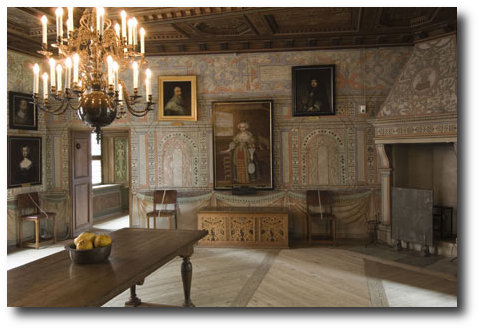
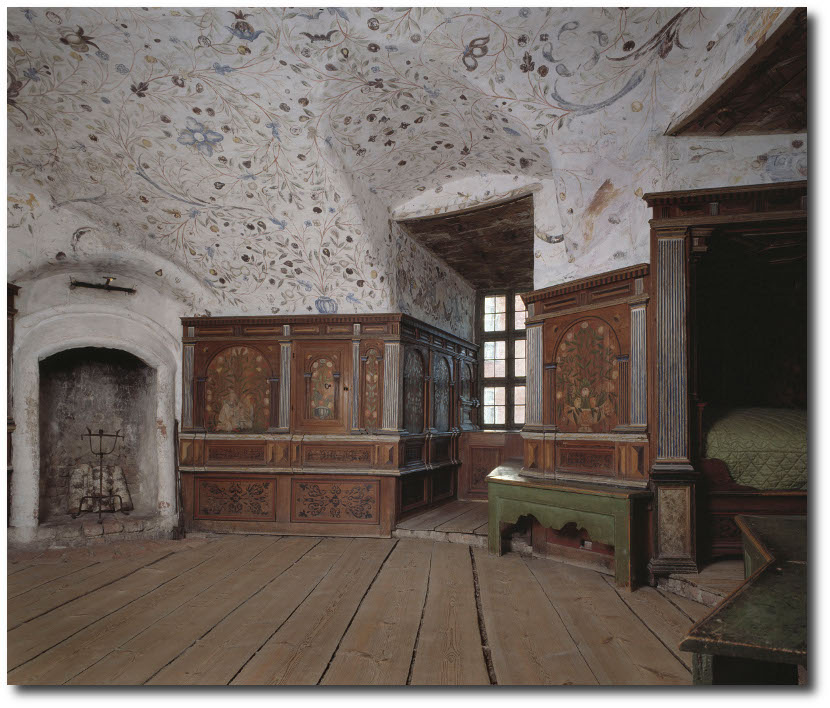
Gripsholm Castle belongs to the famous castles in Sweden.
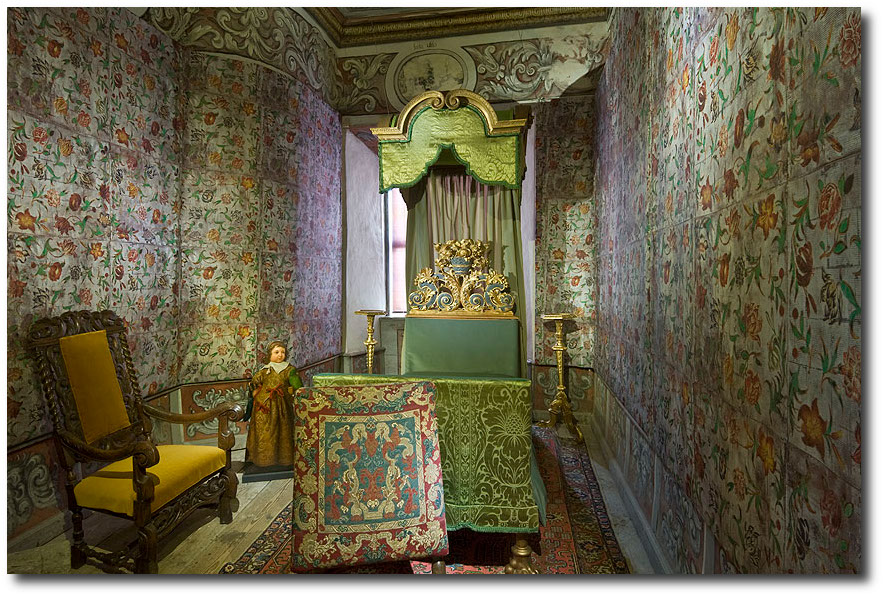
This view shows how kings slept in the chamber of Charles IX.
Gripsholm Castle, Stockholm – Home of King Vasa And The Royal Family
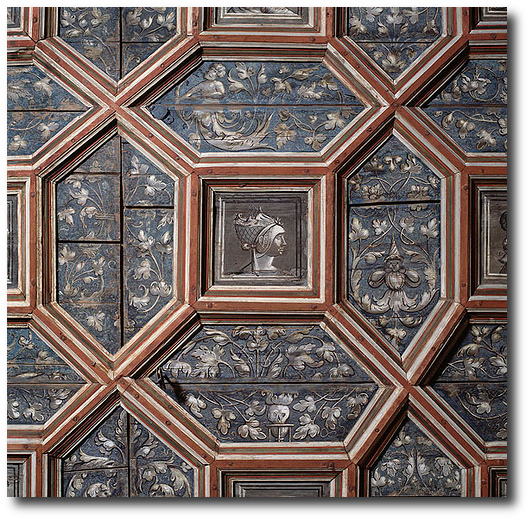
Gripsholm interiors – Roof decorations National Museum Stockholm’s Flicker
Swedish Baroque Style Seen in The Linnaeus House -Elmar Eye’s photostream
National Museum Stockholm’s Flicker
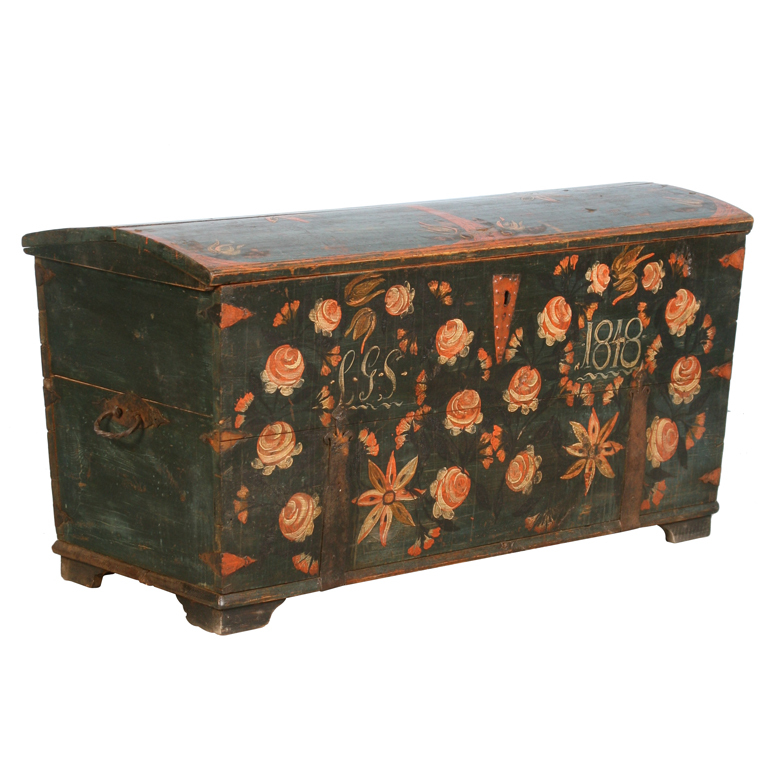
Antique Original Painted Swedish Trunk, dated 1848 From Scandinavian Antiques
The reign of continued with Gustav’s sons Eric XIV, John III, John’s son Sigismund, and finally Gustav’s youngest son Charles IX.
Under Eric XIV the Reformation in Sweden proceeded on the same lines as during the reign of his Gustav Vasa, retaining all the old Catholic customs not considered contrary to Scripture.
After 1544, when the Council of Trent had formally been declared, the new teachings set forth by the Catholic church became obvious to that the Christian Bible, and the Catholic church were quite different. In fact, The Catholic Church created horrible laws at the Council of Trent that made it a death sentence for anyone who said the bread and wine used in Holy Communion were only symbolic. Sadly this entire history of the Catholic church has been covered up. Today the laws set forth in the Council of Trent still stand, and are upheld by the current Pope. The Popes during Vatican II Council have accepted the entire ratification of the entire council on this decree (Council of Trent, Session 13 Chapter VIII, Contradicting Hebrew 9:27-28; 10:11,12, 15)
King Gustav Vasa went on to publish a bible in Swedish for the people of his country. If he attended the “the Blood-bath of Stockholm” perhaps Sweden wouldn’t have Yahweh’s holy word, and perhaps never knew what Yeshua (Jesus) did on the cross for them. The Swedish Bible was published in 1540-41. The men behind the translation were Laurentius Andreae and the Petri brothers Olaus and Laurentius. Of them, Archbishop Laurentius is regarded as the main person. However, had the work not been commissioned by the Swedish King Gustav Vasa, who had in effect broken with the Pope in Rome in the 1520s, the work would not have been possible. The Bible follows the German version by Martin Luther from 1526 closely, not only in language, but in the fonts used and the typography as a whole. The Danish version, printed a few years earlier, also did this.
Charles Spada’s Normandy Home- See Part 1 and Part 2
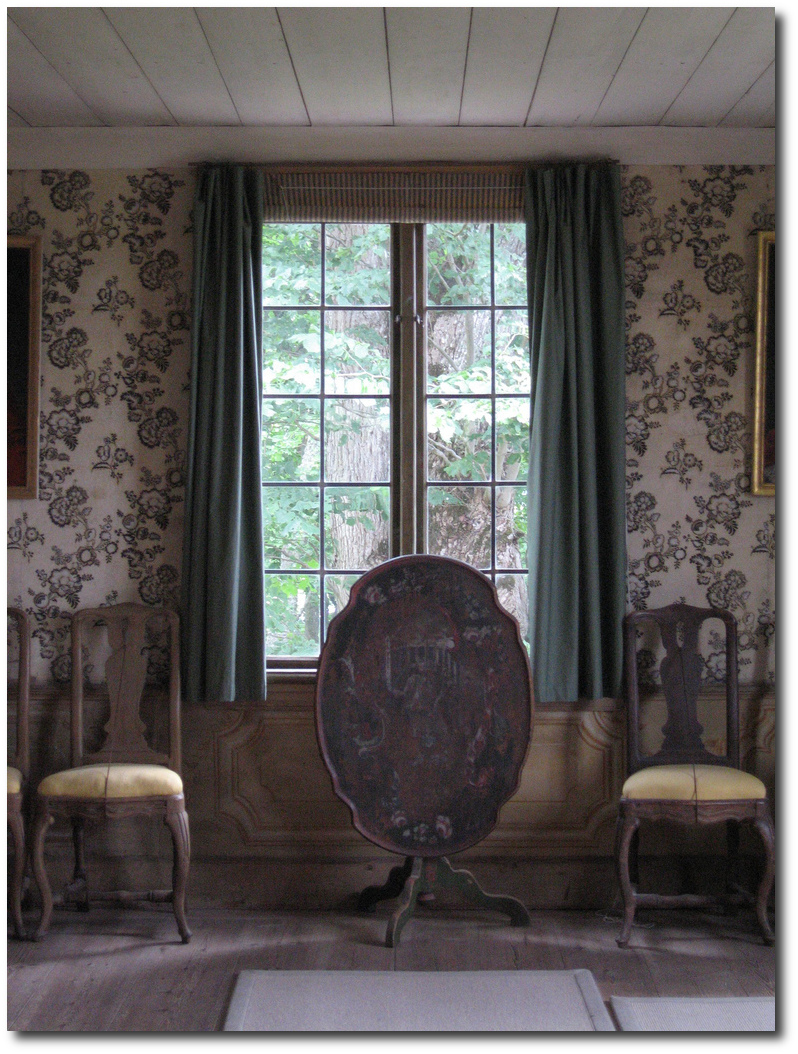
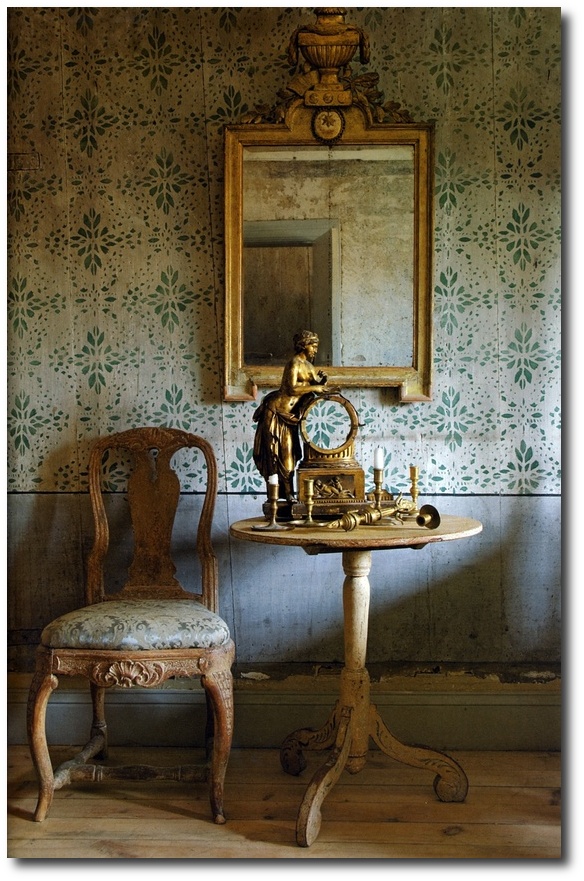
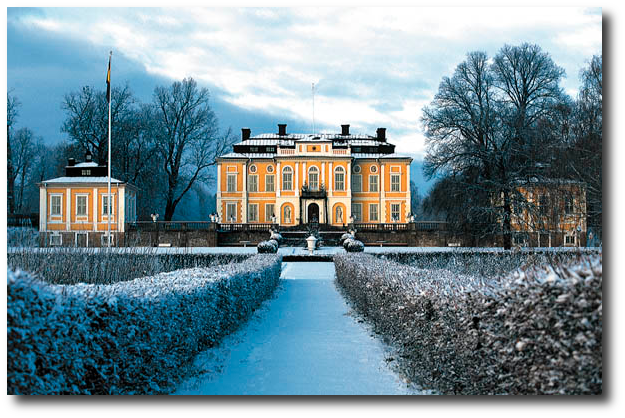
The Romantic Baroque Style: Part 3 Skokloster & Steninge Palace
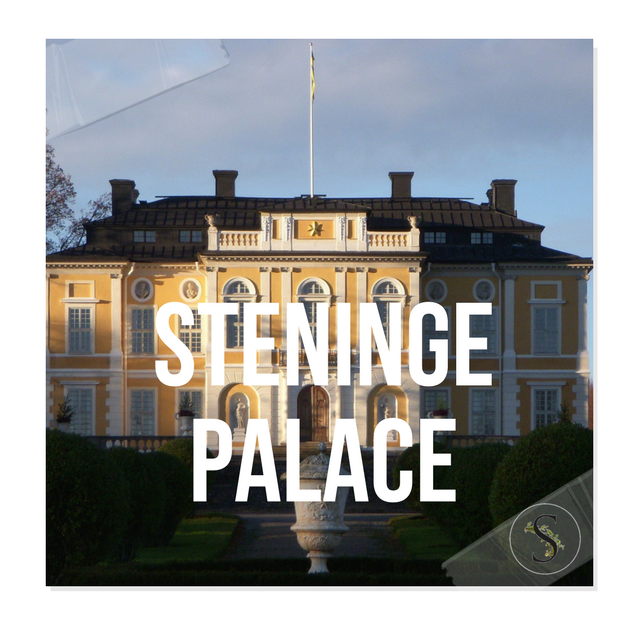
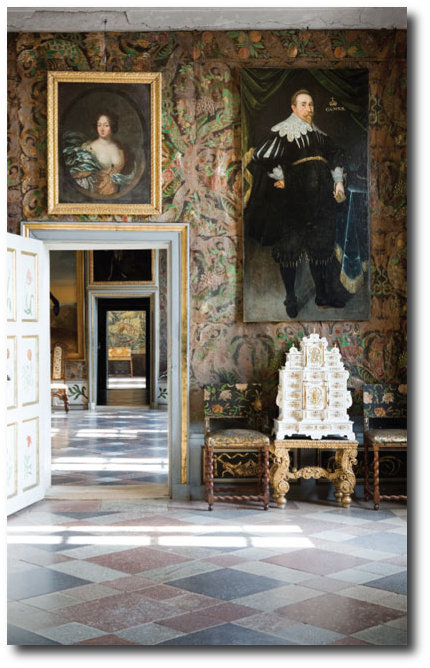
Swedish Skokloster Castle In the Baroque Style
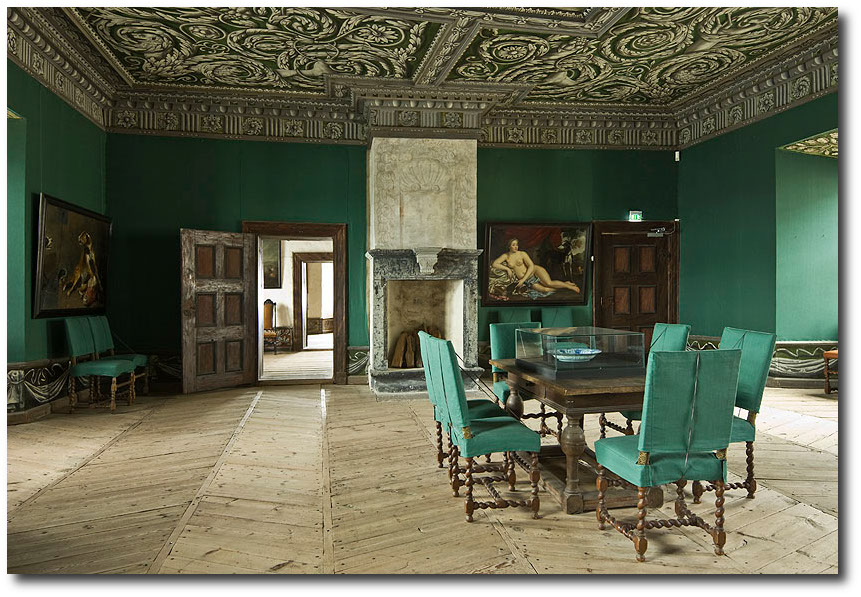
King’s Hall in Skokloster Castle, Sweden
Steninge Palace, is called “Sweden’s most beautiful and perfect baroque building” Steninge, another palace located in Sweden stretches back to the 13th century. The palace has had countless owners; the Gyllenstierna (1649-1735) and von Fersen (1736-1839). In 1667, Carl Gyllenstierna 1649-1723, inherited the Steninge estate from his mother. His close relationship with the queen allowed him to develop the Steninge estate and the beautiful areas around Mälaren.
In 1680 the well-known architect Nicodemus Tessin the Younger was asked to design the Palace which were completed in 1705. Tessin was strongly inspired by the Baroque architectural style of Italian and French castles. This castle has only a few very small pictures of the interior, so sadly the interior isn’t photographed at large and available to the public. Nicodemus Tessin designed Steninge Palace with a blend of the Italian and French Baroque style with Swedish taste. It is said later that Tessin the Younger regarded Steninge Palace as his masterpiece.
Skokloster Castle is another castle in Sweden decorated in the Baroque styles, and is said to be one of the most important Baroque castles in Europe. Skokloster Castle was built as a residence between 1654 and 1676, when Sweden was a great power. Even to 17th century people, the imposing white building with its corner towers made a fairytale, ancient impression.
Steninge Palace Photographed By Keith Samuelson.com
See Information on Steninge Palace Here
Skokloster Castle From Adventures of A Far Traveler Blog
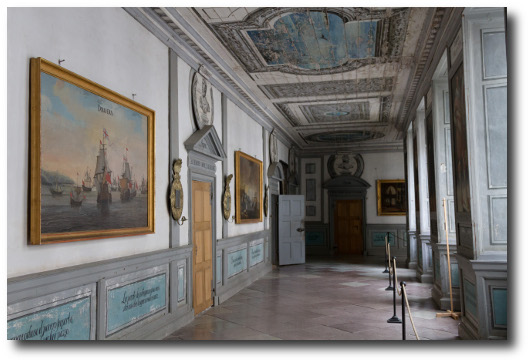
Skokloster Hallway – Photo Credit Richard Aufreiter
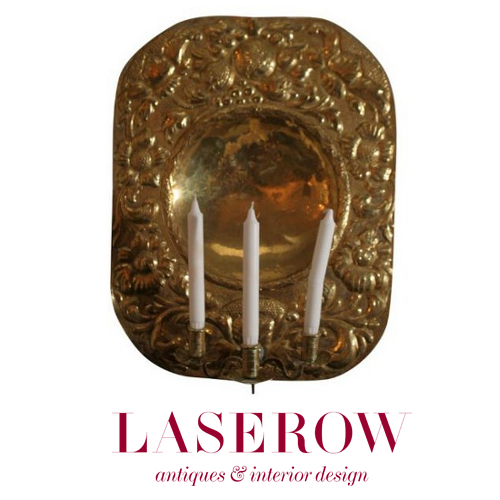
Large Swedish Baroque Brass Wall Sconce
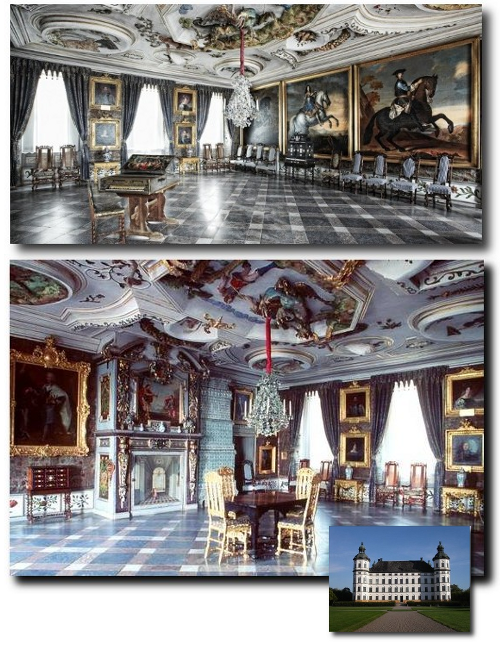
Skokloster Castle
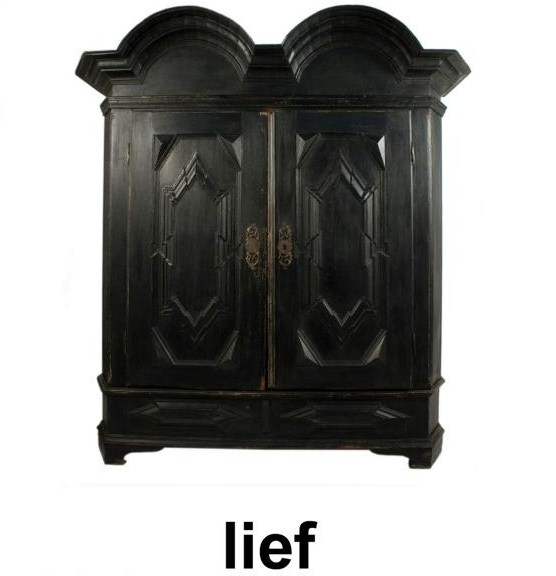
Two Door Black Swedish Baroque Cabinet 1770
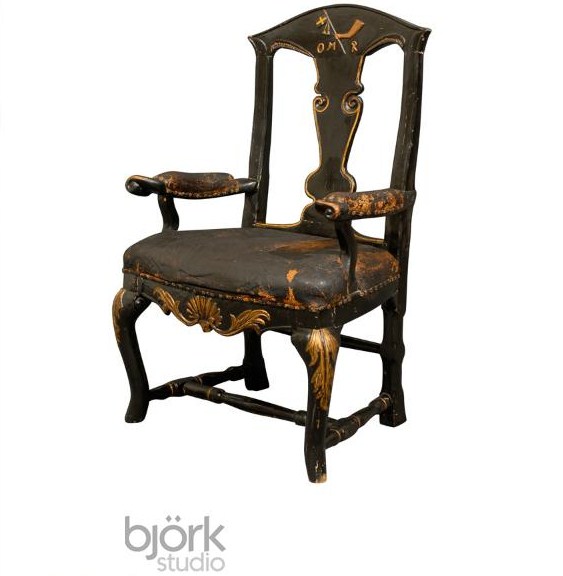
Swedish Baroque Captain’s Arm Chair c. 1750
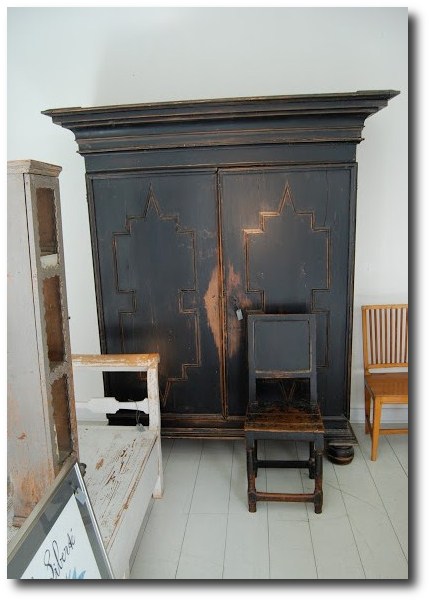
Swedish Baroque Cabinet and Chairs From romantiskahem.blog
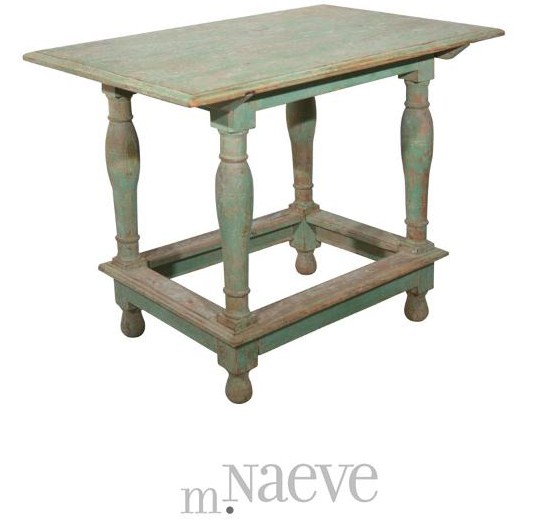
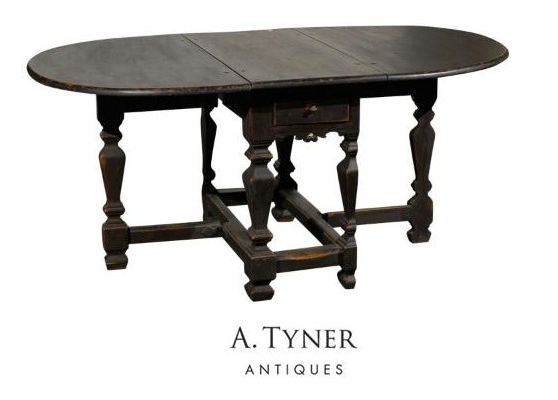
18th Century, A Swedish Baroque Drop Leaf Table.
Drawers on each end of the center section. Split-leg support on each side.
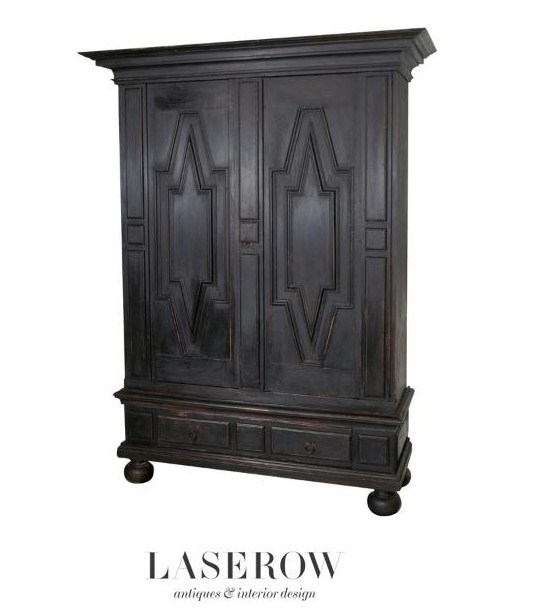
The Romantic Baroque Style: Part 4 – A Collectors Home

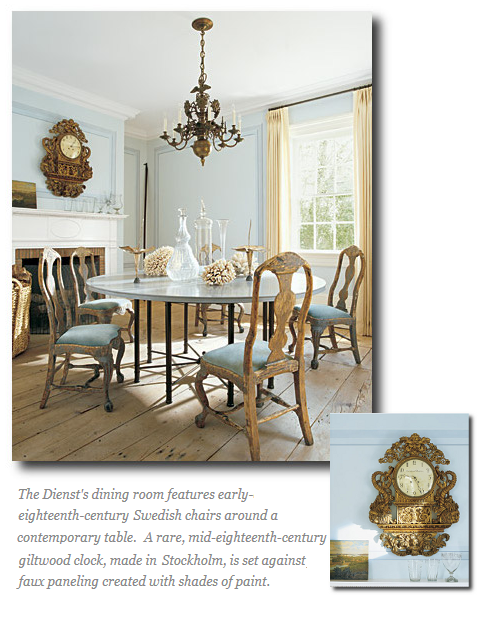
The Dienst’s Home
A Baroque Wing Chair Upholstered In Gray Linen, sits beside a Baroque Chest
In Sweden, the Middle Ages lasted for approximately 500 years, until Gustav I of Sweden seized power in 1523. Most all of the buildings were constructed out of timer, until the 12th century, where stone became the predominant building material for the construction of the churches. Lund Cathedral, and Husaby Church are excellent examples of this style. The Gothic style brought brick to Sweden as a new fashionable building material, and many of the cathedrals were fashioned out of brick, while others were made of limestone. 1,500 of Sweden’s 4,000 churches from the Middle Ages survive from this period. The 13th century city walls around Visby are some of the best-preserved medieval city walls in Europe, and in fact, the street layout of Stockholm’s Old City still can be seen designed with a medieval flavor.
Sweden rose to a great Power in the 17th century, the privileged class and government began to build again. The idea of the architect and designer was established and the profession developed. During this time works of Simon De la Vallée and Nicodemus Tessin the Elder became well known in Sweden. The work of Nicodemus Tessin the Younger moved the architectural development in Sweden during this time into High Baroque, such as Stockholm Palace.
As we discussed in Part 1, a notable example of the Baroque style in Sweden was seen in Strömholm. In part 2, we discussed King Gustav Vasa, whom was the ruling power at the time, and how the Catholic church dominated the design circles which influenced art across Europe and abroad. In Part 3, we discussed both Skokloster & Steninge Palace as striking examples of the Baroque style, which architect Nicodemus Tessin the Younger was responsible for. In part 4 and 5 we hope to inspire you to achieve this look in your own home looking at an example of a collector of Swedish antiques and what they did for their own home working with Baroque Swedish antiques in particular.
Jill Dienst’s owner of Dicost + Doner specializes in Scandinavian antiques from the 17th century to the mid-20th century. Jill Dienst’s passion for collecting for her own home over the years paved the way for her success as an antique dealer. Before opening up her own business, Jill Dienst spent decades at some of the finest institutions in the art, which allowed her to gain an appreciation for antiques and design world.
All images and information from Martha Stewart.
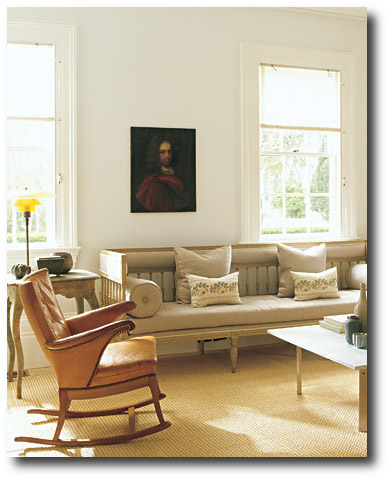
The centerpiece of the living room is a Gustavian sofa, which has been
upholstered in plain linen.
Mid-twentieth-century pieces by Danish designer Poul
Henningsen are mixed into the room
The simple, roll-up window shades are the same kind used in Swedish manor
houses, but these are made from a sheer fabric.
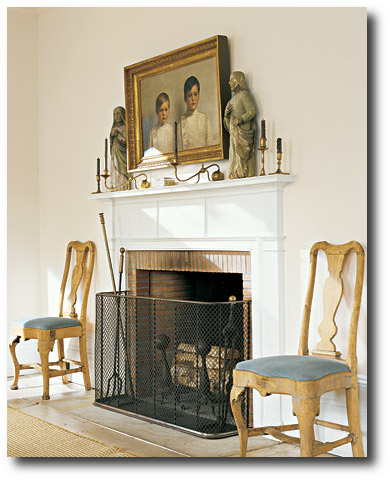 The living room walls and mantel were painted slightly different variations of
the same color.
The painting is a 1911 portrait of Swedish boys in school uniforms sit above the mantel.
The statues came from a rustic church in southern Sweden.
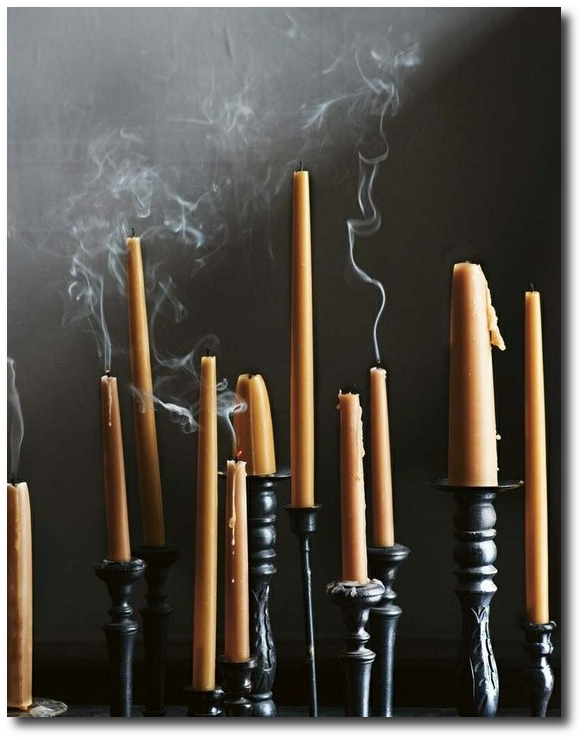
The candlesticks work beautifully with the gilt portrait of the Swedish boys
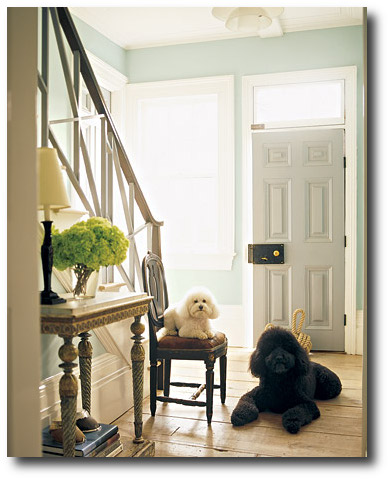 A black painted Gustavian chair and Gustavian giltwood console sit in the entryway
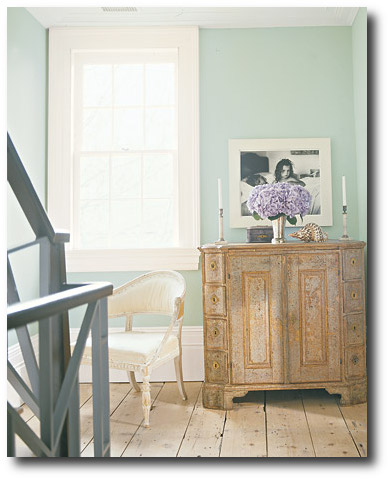
The second-floor landing features a large baroque cabinet from Sweden, which
retains its original paint.
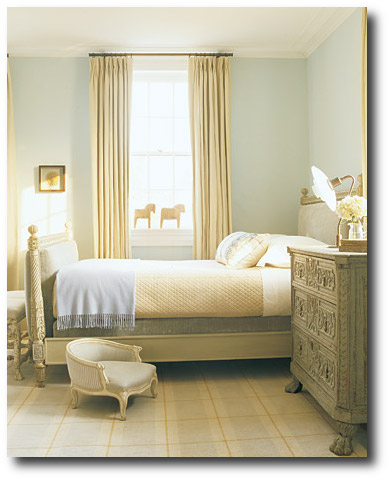
In their daughter’s room, a nineteenth-century bed has been reupholstered in a
heavy velvet.
French nineteenth-century chair by the bed. Dala horses, a traditional motif of Dalarna, Sweden sit in the window. The carved chest is German.
The Romantic Baroque Style: Part 5 Add Color
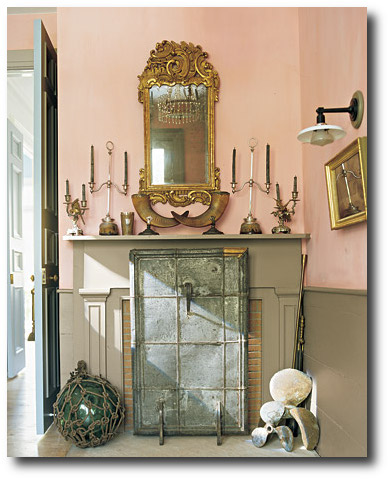 The Dienst’s home is an excellent example of a home decorated around the Baroque themes with a distinct Scandinavian design. The Baroque styles originate in Italy so most commonly we see examples of this style from that region, but rarely from the north or the south or any other region for that matter. In addition, the Dienst’s home is designed around some of the very best Swedish antiques making their home inspirational to all who are hoping to project this style for their own homes.
With so many modern variations of this style, there is no right or wrong when it comes to decorating and color. In fact, you may find that many top designers tend to embrace color to an extreme when working with the Gothic / Renaissance interiors. Many modern professional styled homes set around the Baroque period style tend to favor brighter colored interiors which do give the really primitive styled furniture a modern, updated look. Hot pinks, cobalt blues, reds and bright yellows mixed with the Baroque antiques give rooms a very premium designer feel.
You’ll also find that Baroque furniture is also painted in a plethora of colors. Painted furniture in hues of purples, blues, greens, reds, yellows, oranges can then be matched up with paint colors that work with the original paint on the antiques.
Fresco wall painting can also capture the picturesque look into a room. Stuccoing it can add that castle appeal that are seen in the ancient stone buildings. Many of the Swedish Baroque castles featured elaboate walls covered in wallpaper. Choose wallpaper with a colorful, detailed, motif pattern can still fit into the Baroque schemes.
While many people like to keep the windows rather minimal, study the designs to see what appeals to you best. Windows have been known to be one of the main characteristics of Baroque designs. Consider buying heavier draperies made from velvet, damask or silk which can be hung in a modern way. With this approch, your home can look updated using the right styles of fabrics without it looking like a museum.
Flooring, can truly make a break a room all on its own. Paint can transform a room without much cost, so I always suggest that any budget should be spent on flooring, and a few carefully chosen period antiques. Sweden has been known for its vast forests, so it made sense that flooring was made from wood. You simply cannot go wrong with pine flooring. Pine flooring also allows you to get away with vibrant paint shades on the wall, and almost any wallpaper pattern.
Baroque styled interiors rarely used rugs or carpeting. Rooms in the Baroque era usually used geometrical-patterned wood flooring. Besides parquet flooring, you can also use marble and stone floor tiles that were also used during that period. Make your own stone for the floor or walls using concrete molds. There are a variety of shapes and styles making period stone features inexpensive to produce at home.
Baroque furniture is typically large and heavy. With the modern bedrooms being much smaller in size, plan the furniture out before purchasing to make sure everything will fit to the bedroom. Consider investing your bedroom budget on a bed. A canopy bed with ornate carving and tall posts from which you can hang drapery would be an ideal choice.
Upholstered chairs are an easy way to match up patterns that match the drapery, bed canopy and the color of the wall. The bedding should match the theme of the drapery, wallpaper, upholstery, and the bed canopy. Ikat patterns have become tremendously popular in the last several years. There are so many different versions of this ethnic, bold weaving style that is likely one of the oldest patterns in existence. Get some examples from Kelli Ford & Kristen Fitzgibbons. Look for combinations of colors paired with white. Indigo and ocher and vibrant contrasting colors would be a great choice for a Baroque interior.
Period styled decor will also strengthen the overall design. Consider a combination of candlesticks and lamps. Choose a heavy crystal chandelier with both brass and glass to enhance the Baroque feeling. Add ceramic vases and bowls with floral oriental patterns to enhance a room that has color, or lack of color. Invest in large scale paintings or very heavy mirrors with ornate gilded frames.
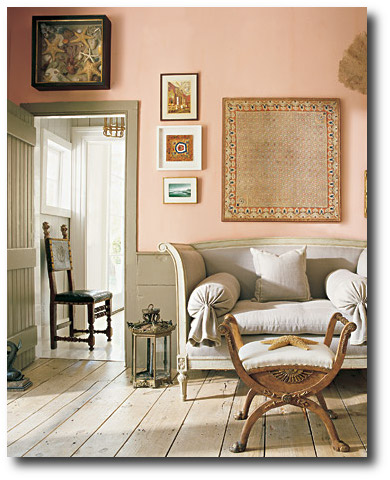
In the two pink rooms, Dienst’s small parlor off the entry features an early-baroque spark screen. The mirror is Danish rococo, and the crystal chandelier it reflects is Gustavian. Brass propellers complete the look. Gray wainscoting and bare floors soften the vivid color of the walls, which are adorned with an array of small paintings, sea fans, and a framed collection of starfish. The Gustavian settee is upholstered in linen, the stool is from the mid-nineteenth century, and the side chair is baroque. A mid-twentieth-century Danish lamp stands on the floor by the settee.
Reclaimed Wood Dining Table From A Tyner Antiques
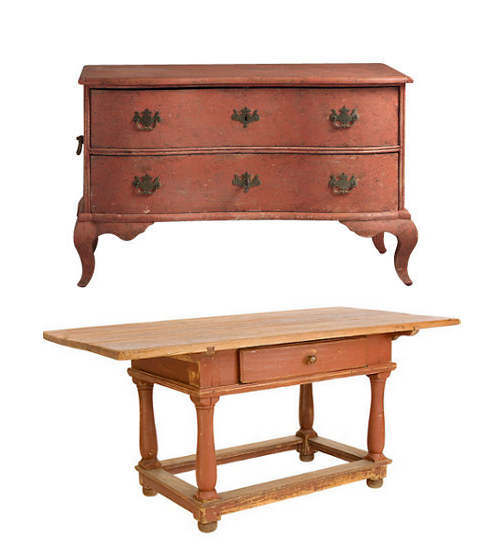
A.Pair of Swedish Baroque Commodes
B. A late-18th-century Baroque Swedish table with center drawer. Original red paint.
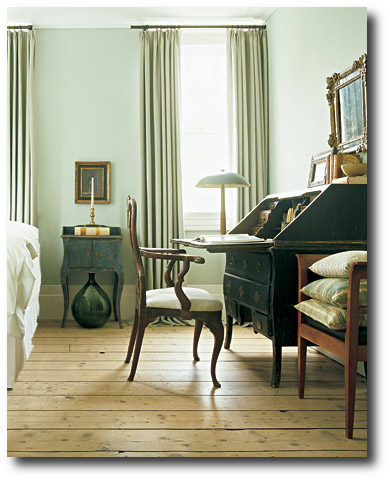 A black painted baroque Swedish desk sits in a guest bedroom.
The small side cabinet is rococo, and
the lamp is Danish.
Swedish Baroque Table From the 18th Century
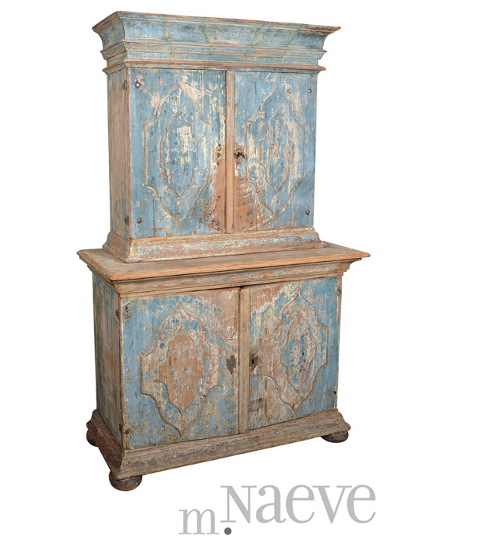
Beautiful Swedish Baroque cabinet in original blue paint
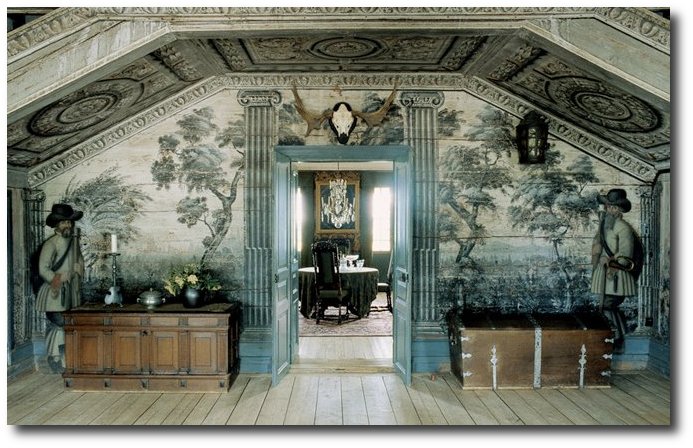
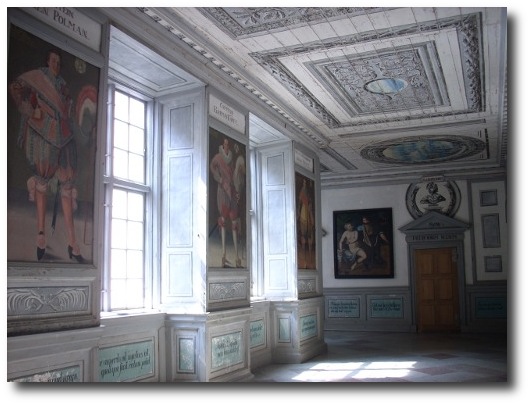
Landscapes on wood panel decorate the entry at Sandemar Manor in Sweden.
National Museum Stockholm’s Flicker
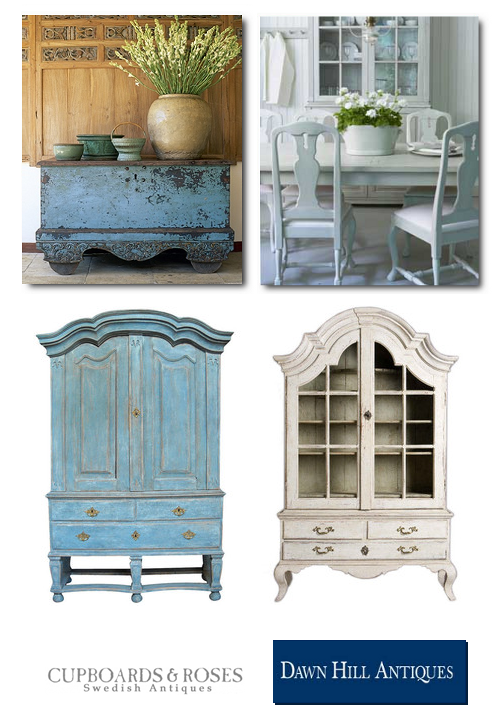
Picture Credit Home Beautiful Magazine , A. Tyner Antiques
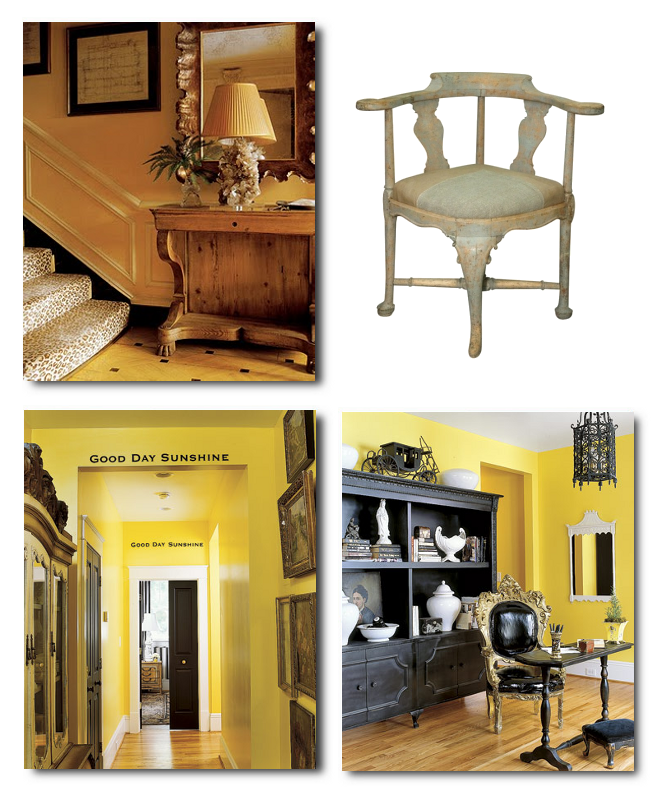
Designer Miles Redd, Using Yellow In A Baroque Styled Room