Swedish Furniture From Bukowski Market
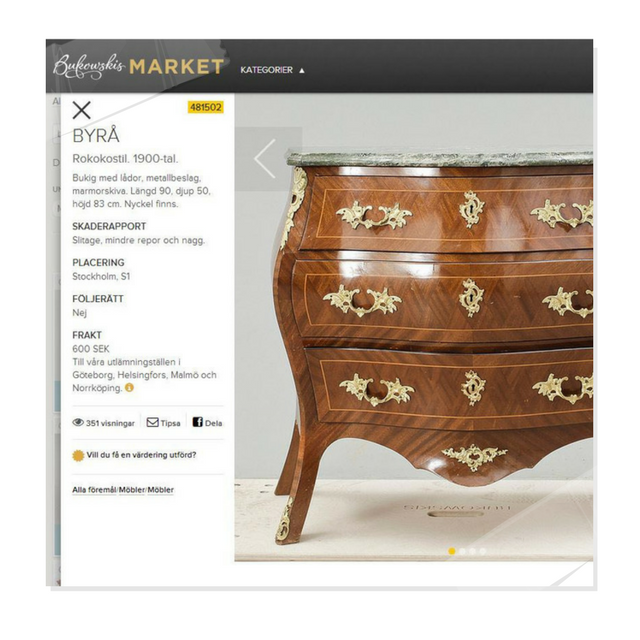
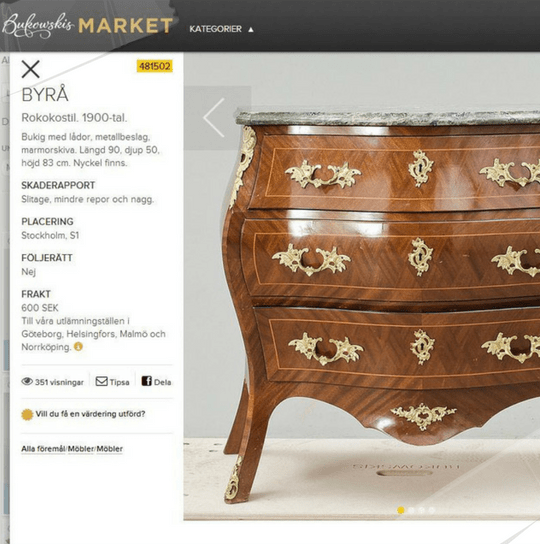
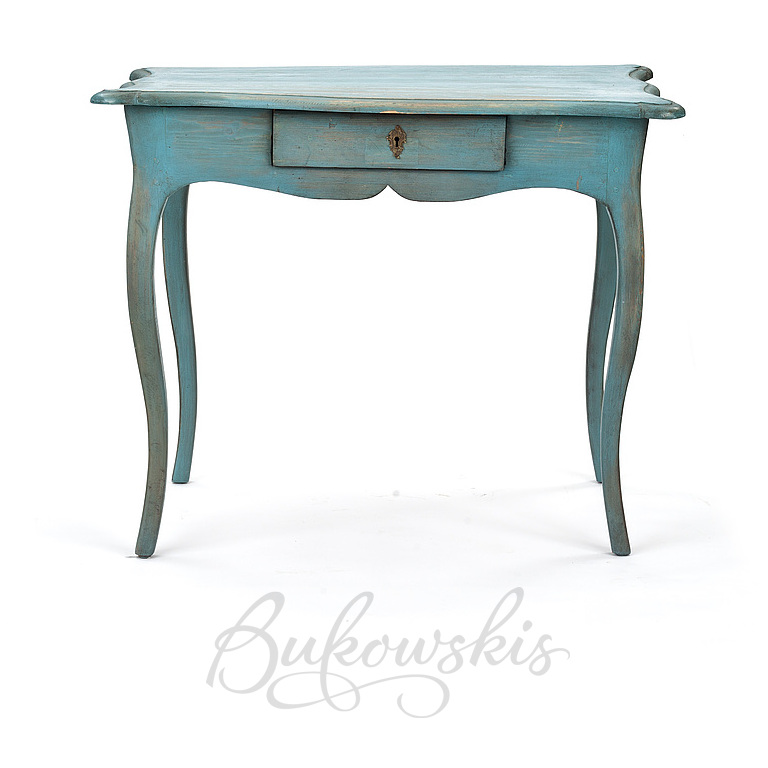 Rococo Desk 1700’s
Bukowski is the leading auction house founded in 1870 by the Polish nobleman Henryk Bukowski. Bukowski Market also happens to be Sweden and Finland’s largest on-line internet site for quality auctions. Bukowski Market offers modern capabilities to the auction experience; one that combines online shopping with spectacular antiques and reliable expertise.
Bukowski pairs together buyers and sellers from around the world and allows antiques to be brought to the public for sale. All items sold at Bukowski have been reviewed by experts in showrooms in Stockholm, Gothenburg, Malmö, Helsinki, and Norrköping. Bukowski offers a large assortment of antiques, design, art and decorative items for all tastes. Before bidding from Bukowski, be sure to look at their terms of sale, and have your shipping and pick up arrangements set before bidding.
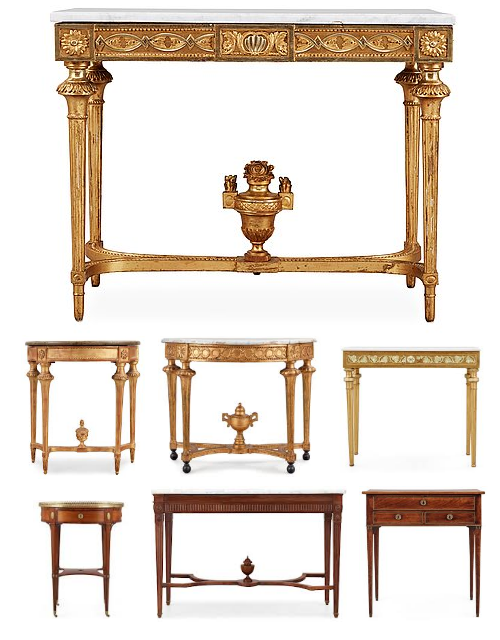
Designers Pick Their Favorite Gray Paints
Picture Credit –Scandinavian Antiques Co On Ebay
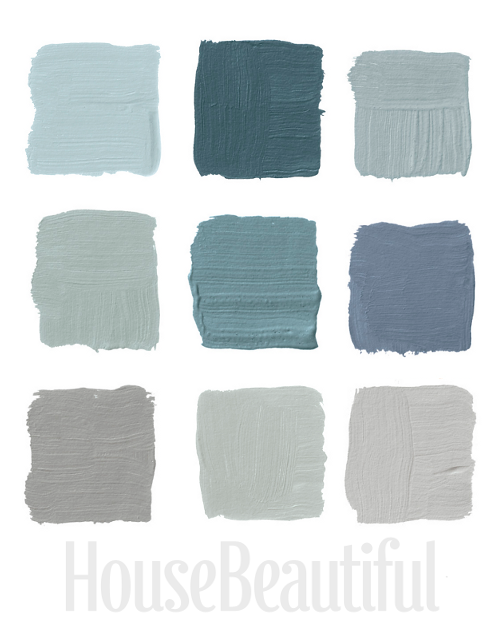
Featured above are the colors, Top Row: Pratt & Lambert’s Argent 1322, Farrow & Ball’s Claydon Blue 87, Farrow & Ball’s Green Blue 84, Middle Row, Farrow & Ball’s Light Blue 22, Benjamin Moore’s Sea Star 2123-30, Benjamin Moore’s Wolf Gray 2127-40 Bottom Row, Benjamin Moore’s Graytint 1611, Sherwin-Williams’s Magnetic Gray SW-7058, Benjamin Moore’s Stone Harbor 2111-50
Home Beautiful featured an article on 26 Designers who shared their favorite Grays. Gray painted interiors can be the perfect color palette for Swedish Gustavian or Rococo antique furniture. Gray can showcase antiques like no other color, because it is neutral, and doesn’t compete with the furniture and decor. The last thing you want after spending thousands on a piece of furniture, is to have someone notice anything but what you spent your hard earned money on! Pair your painted gray antiques with a backdrop of white gray interior walls and trim, and add a punch of color with your upholstery, accessories, and flowers.
Many of the designers featured in the article, were those of Richard Gluckman, Stephanie Stokes, David Kleinberg, Tori Golub, Stephen Sills, Phoebe Howard, Steven Gambrel, Gerrie Bremermann, and Sharone Einhorn and Honey Walters.
Here are just a few of the designer quotes:
“Mesquite is a flattering light moss green without much yellow. I love it because it doesn’t shout ‘I’m green!’ It says, ‘I’m a very beautiful color.'” –Jennifer Garrigues, Benjamin Moore’s Mesquite 501
“Lago Argentino is a glacier lake in Patagonia, and it’s the most amazing color, an aqua, milky because as the ice melts it pulls minerals off the mountain. I stayed in an inn with a stunning view of the Perito Moreno glacier.” –Suzanne Rheinstein , Ralph Lauren Paint’s Blue-Green GH81
“For me, the most appealing colors in summer are not hot but cool. You don’t need to be reminded of the sun and heat — you’re in it. What you want is a cool breeze through the pine trees, like this chalky gray green.” –Frank Roop, Benjamin Moores Soft Fern 2144-40
“In my cutting garden I have morning glories climbing over a lattice obelisk painted this wonderful silvery sage green. It reminds me of lavender leaves.” –Michael Whaley, Benjamin Moores Cedar Grove 444
“I have a big, hugely functional Georgian Revival lawyer’s desk in tired dry mahogany, bought from a tired dry lawyer. I painted it this pale gray-green in an oil-base stain finish, cleanable, very calm, but not so pale that it dies. The gimmick is the old-fashioned desk in an unexpected color. It catches light and makes for a more interesting surface.” –Carey Maloney, Donald Kaufman Color Collections DKC-10
“It’s kind of robin’s egg blue, and with mahogany furniture and neutral upholstery, it looks great. I see dining rooms as mostly evening rooms, and this has life to it. It’s very soothing.” –Mariette Himes Gomez, Benjamin Moore’s Sage Tint 458
“Green is the great neutral, all the way from pond scum to soft sage or pale celery. I recently moved into a new house surrounded by greenery, and when I was thinking of what color I might use for a drapery lining, it came to me to reflect the green that is present year-round right outside that window.” –Barbara Barry – Donald Kaufman Color Collection’s DKC-8
“This is the color of the sky in Old Master paintings, when the varnish has yellowed; it’s luminous. Paint just the floor and you’d feel as if you were floating.” –Thomas Jayne, Benjamin Moore’s Heavenly Blue
“In my cutting garden I have morning glories climbing over a lattice obelisk painted this wonderful silvery sage green. It reminds me of lavender leaves.” –Michael Whaley, Benjamin Moore’s Cedar Grove 444
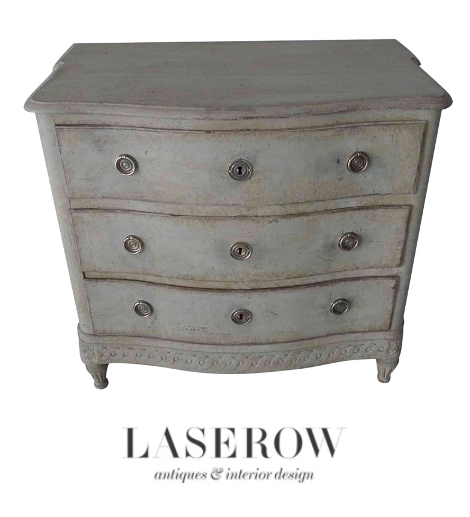 Gray Painted Swedish Furniture – Laserow Antiques
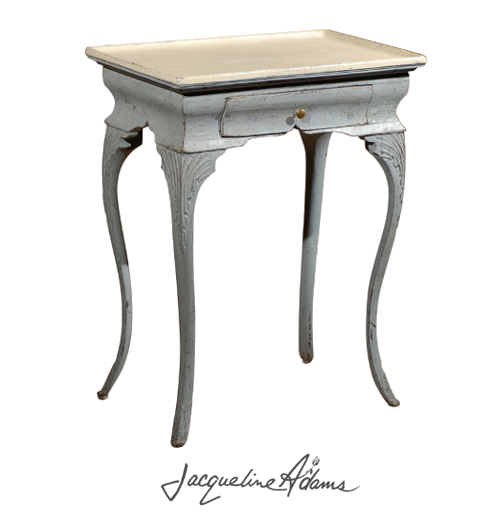
18th Century Swedish Tray Table – Jacqueline Adams Antiques
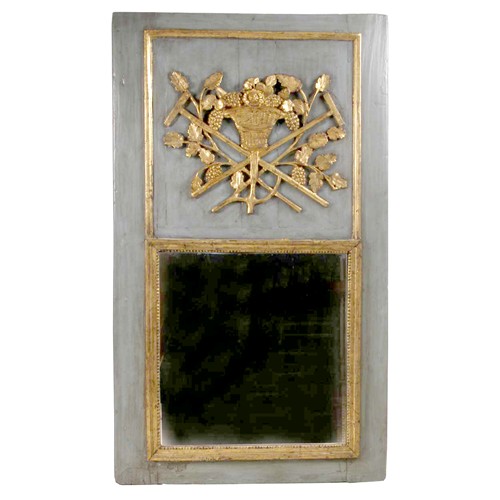
This mirror would have been part of a room paneling. It features a beautifully hand carved and gilded top panel of a basket with flowers and grape bunches before crossed mallets and grape branches and is surrounded with a square, gilt molded frame. Beneath is a square mirror framed with a beaded, molded edge

Designer Martha Angus Loves Gustavian Style
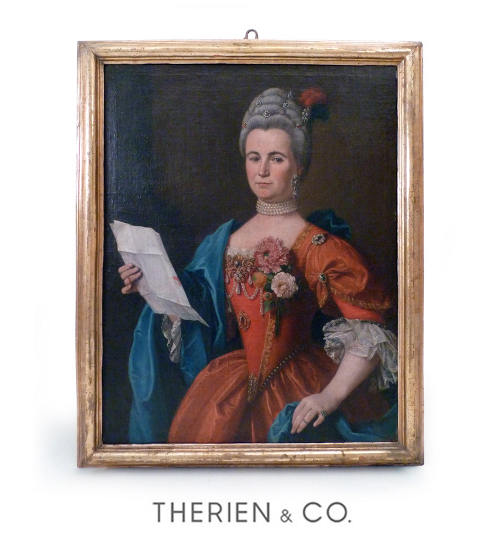 Swedish Portrait -the figure of noble women, in courtdress, within giltwood frame
The Style Saloniste posted an interview with designer Martha Angus, founder of the San Francisco-based firm, Martha Angus Inc. about her favorite style and paint colors. It turns out she loves the Gustavian Swedish styles, and gives out the paint colors she uses most often in her designs.
Q- Favorite design period?
Martha Angus: Gustavian. It’s late eighteenth-century, and feels like Louis XVI but not as grandiose. In addition, I love the painted finishes typical of the period, often in gray. Swedish design can offer a type of low-key opulence. During the Gustavian period, a light wash of paint in earth colors of light blue, gray, green and yellow was used instead of gilding. The prices of antiques vary, depending on the object. They’re now very collectible, so prices are rising fast. I’ve seen some fantastic examples at the Marche Paul-Bert at the Paris flea market, Clignancourt.
My favorite local source for Gustavian furniture is Therien & Company in Los Angeles (as well as the Therien & Co 20th-century collection at their gallery in San Francisco.)
Q: Your most versatile paint color?
Martha Angus: It’s Benjamin Moore and my special mix of half Decorator White mixed with half Linen. Works every time.
The finest paints are those designed by Donald Kaufman in New York. They are all elegant and multi-dimension and complex, so you could pick one with your eyes closed.
I’m a big fan of Farrow & Ball, colors: Parma Gray, Folly Green and Mouse’s Back are very individual and give rooms character.

Q: Which fabric could you use over and over?
MA: Heavy Belgian linen by Henry Calvin Fabrics, # 8793 “Mail Bag Linen” texture in natural. To the trade, Henry Calvin Fabrics, 151 Vermont Street, San Francisco, 415-565-1981. I often use antique textiles, tapestries, and pillows from Kathleen Taylor, The Lotus Collection, 445 Jackson Street, San Francisco, 415-398-8115.
Home Dit also features an interview with Martha Angus, where she reveals more of her love for French and Gustavian antiques.
Q: Tell us about the moment when you decided to follow a career in the field of interior design.
Martha Angus: I always felt like an artist growing up. I moved around constantly for my father’s career, so the whole idea of ‘home’, a place where you feel comfortable and can settle into, is the most important thing in the world to me. When I was a child, I absolutely fell in love with color, especially coloring books. I became so passionate about art and color, I thought “Oh, wow!” this is all I ever want to do, which led me to
eventually study painting at Carnegie Mellon and the Ecole des Beaux Arts de Paris.
When I came out of college the options for a female artist were quite limited yet art has always been a driving force in my career. As a young artist fresh out of school, I got my start as a fashion illustrator and textile designer in New York City. That eventually led to store design and high-end residential design. My work and interests are always evolving but I never abandoned my first love –painting and contemporary art. To this day, art is the most important feature in my designs. It’s usually the first thing I discuss when starting a new project.
Q:Where do you look for an obscure source of inspiration?
Martha Angus: I find inspiration in my usual trips to the Paris flea markets. I believe my ideal shop would include that sense of history, unstated elegance and fun that the French do so well. As in my projects, my ideal shop would include timeless and elegant items such a Gustavian settee or a weathered neoclassical zinc planter paired with a super chic custom designed plexi-glass bench upholstered in zebra silk-screen hide and bold Ellworth Kelly prints.
Q:What would be your recommendation for “what to do first” in a decorating project?
Martha Angus: Start with a good floor plan and remember that upholstery is the key. High quality upholstery can go a long way. Not only is it a good investment but it also brings a sense of tailoring and richness that other items can’t. Once the art and essential furniture items have been selected, accessorizing can do wonders. Scented candles and cashmere throws add a sense of luxury to a room without a significant investment. I always include small trays and boxes that bring the project down to a warm and livable level.
I always say that art is the most important aspect of a space, aside from the people collecting it. I live for bold, statement art. High art should not be treated as a mere decorative item that accessorizes a room, but almost a living element of the space – something with a very distinct personality.
Q: What’s your current paint color obsession?
Martha Angus: I believe in airy, fresh spaces that usually call for very subtle neutrals so that I can come in later and play with fun splashes of color in art, fabrics or accessories. When it comes to paint I find myself constantly going back to some Farrow and Ball colors precisely because they have that timeless elegance that relates so well with my philosophy. Some of my favorites are Middleton Pink and Arsenic.Throughout my career I have always recommended Benjamin Moore’s decorator’s white for its freshness and vibrancy. I have a life-long love affair with textiles of every kind. In fact my career started in New York City as a textile designer and fashion illustrator. I believe David Hicks style fabrics are classic and always so chic.
Q : What advice do you have for someone with a new house to decorate and perhaps a limited budget?
Martha Angus: Small changes can go a long way. I also advise my team to use color as envelopes for a room. Soft neutrals like French Gray or even Decorator’s White are great colors for walls, ceilings and trim because they can give an atmospheric look to a room and make it timeless, standing the test of time and whimsy trends. The one item I would recommend investing in is good upholstery pieces. The big items should also be covered in a neutral material that can stand the test of time. It will not only look good but will wear well for many years to come.
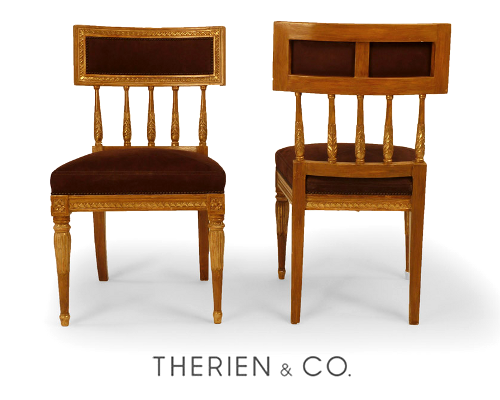
Pair of Swedish Late Gustavian Side Chairs- the rectangular upholstered crest rail within carved and moulded frame on foliate carved spindle supports, over upholstered seat with carved and moulded apron flanked by rosette filled blocks, raised on foliate carved round section tapering legs ending in toupee feet
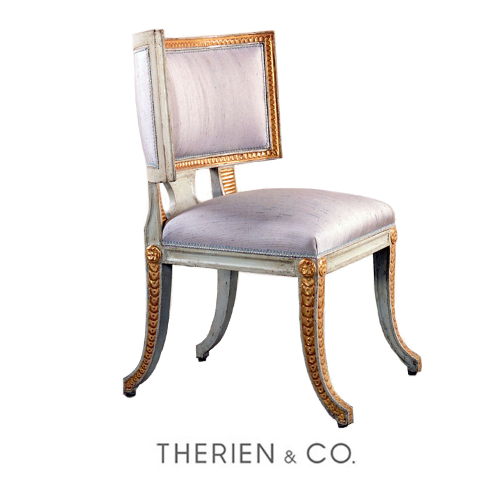 The Neoclassical period replaced the Rococo influences during the second half of the eighteenth century. Cabinet makers responded to the excavation of Herculaneum and Pompeii with great fervor, eliminating the robust naturalistic forms of the Rococo in favor of delicate colors and a less exaggerated line. The Klismos, the original antique form of this chair, was brought to light late in the Neoclassical period in Sweden as well as other countries. The Gustavian, another name for this chair, was developed during the reign of Gustavian III who seized power in 1771. This chair is believed to have been made for the marvelous pavilion at Haga, the summer home of Swedish royalty
Pair of Roman Neoclassic Painted And Parcel Gilt Armchairs with horseshoe shaped foliate carved back with downswept arms, joined to Greek key carved seat and raised on tapering fluted legs
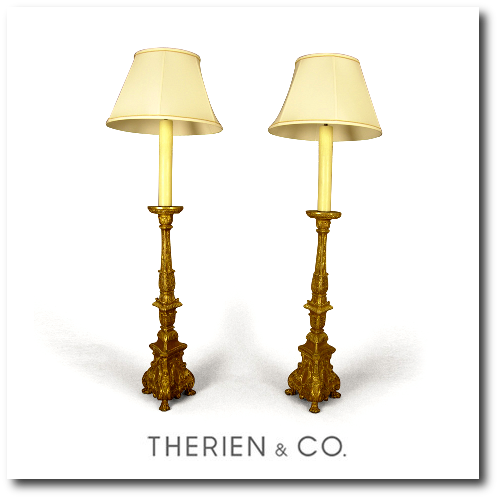
Pair Of Swedish Baroque Giltwood Candlesticks each of compound foliate and gadrooned tripartite form rising to flaring foliate sheathed bobeche, raised on conforming scrolling volute base, centering ribboned and foliate swagged cabochon medallion and ending in lion paw feet; now electrified and fitted with beeswax candle and calf skin shade
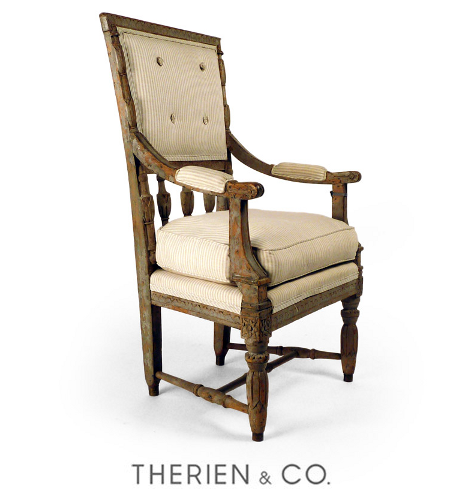
Swedish Neoclassic Painted Armchair- the upholstered back within conforming moulded and carved flaring frame, over urn shaped carved spindles joined by down swept supports to upholstered seat, raised on stylized foliate carved swelling round section legs ending in brass sabots and headed by rosette filled carved corner blocks; the whole retaining original paint
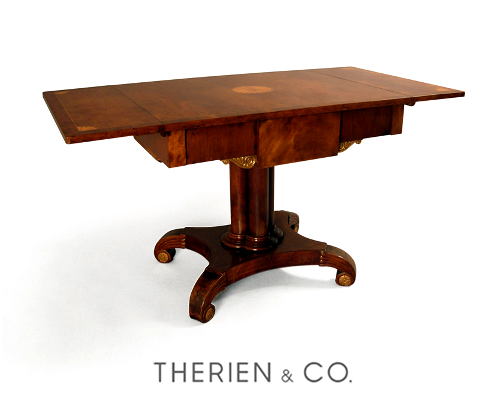
Swedish Karl Johan Mahogany Satinwood and Olivewood and Parcel Gilt Sofa Table- the rectangular top with satinwood stringing centering satinwood and olivewood inlaid central patera medallion and corresponding corners, with two drop leaves over breakfront apron incorporating single drawer, flanked by relief carved foliate volutes, on cluster columnar support in the early English taste, with molded socle and concave platform ending in foliate carved downward scrolling feet centering floral medallions


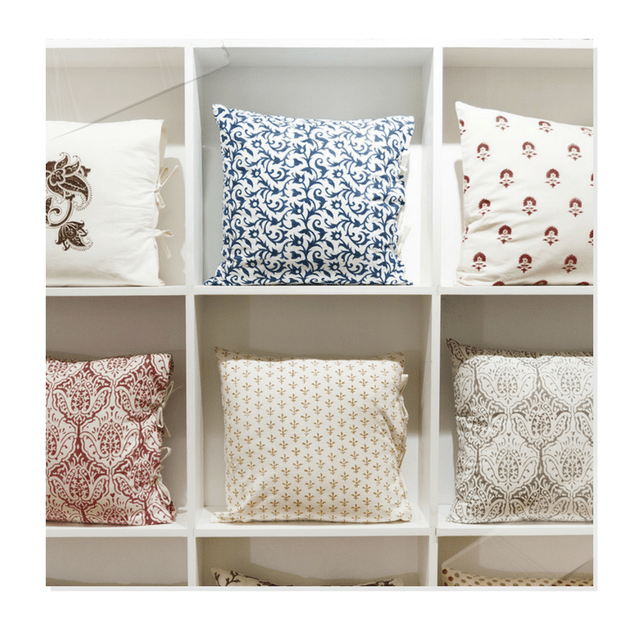
Les Indiennes Fabrics

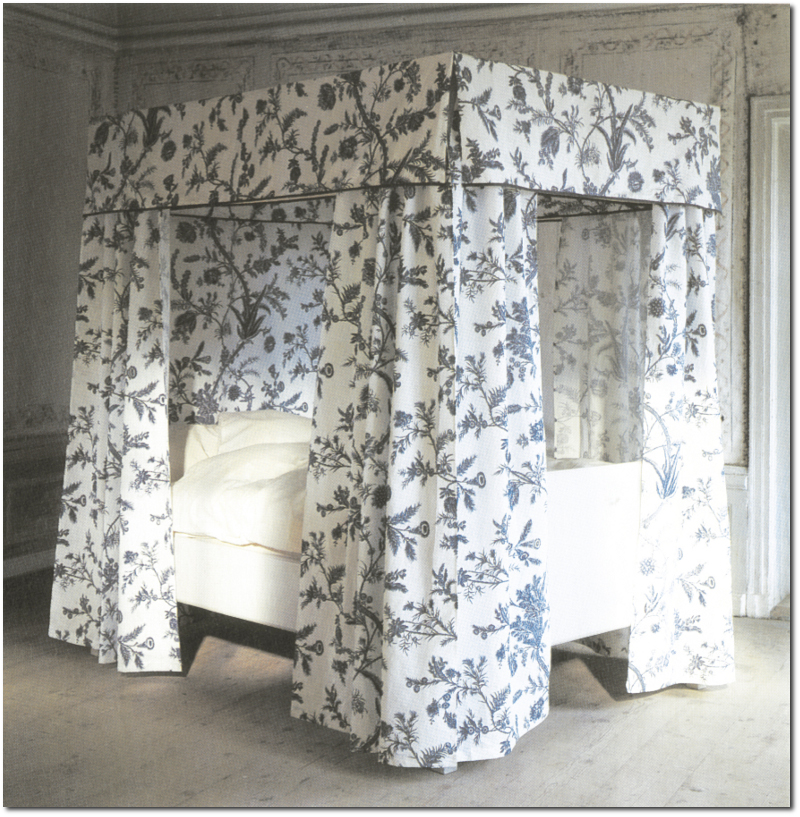
Mary Mulcahy’s designs, first developed for her block-printed textiles, now grace the wall with the Les Indiennes collection by IVM Prints. The 12 hand-screened wallpapers include Rayure, left, and Veronique, both in indigo; additional colors are offered, Seen in Elle Decor April 2011
The company Les Indiennes is known for their beautiful hand-blocked textiles. Founder, Mary Mulcahy had a desire to find naturally dyed cotton, with large scale single colored motifs, but was unable to locate fabrics close to what she had in mind, so she created her own. Her concept started to take form after running into a craftsman in southern India, who knew exactly what she was after. In fact, the craftsman was one of the very few artists who still practiced the ancient art of kalamkari, which was an extremely complex and rare method of printing on fabric.
The Kalamkari Process:
1. Fabric Preparation- Cotton fabric is initially softened and bleached. This process needs to be done before any printing takes place. The process involves bales of organic cotton which are repeatedly rinsed and beaten against large rocks, then laid out on the grass to bleach in the sun. These steps ensure that the fabric will feel soft and luxurious, and so that the color application remains bright and vibrant.
2. Block Printing- After the fabric has been softened and lightened, printing begins. Craftsmen dip hand-carved wood blocks in dyes and presses them into the cotton. The dyes are derived from plants, roots, earth, and rock. One can only imagine the great care, and measurements taken to ensure the patterns are straight and line up with one another. Today we take for granted large printing machinery, when at one time, much of this work was done by hand. At Les Indiennes, the fabric is printed by hand, and hours go into each fabric panel. After the patterns are applied, the printed fabric is air dried for at least two days.
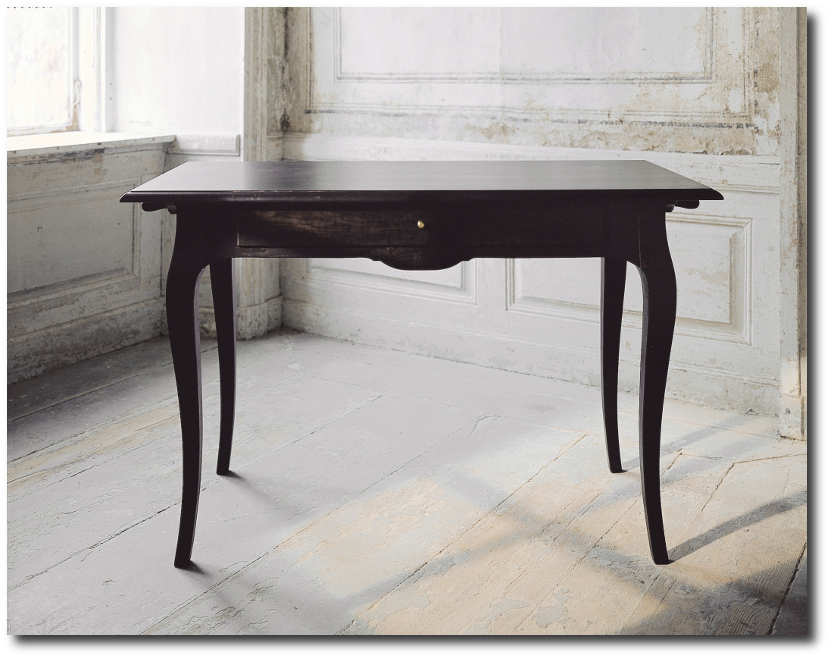
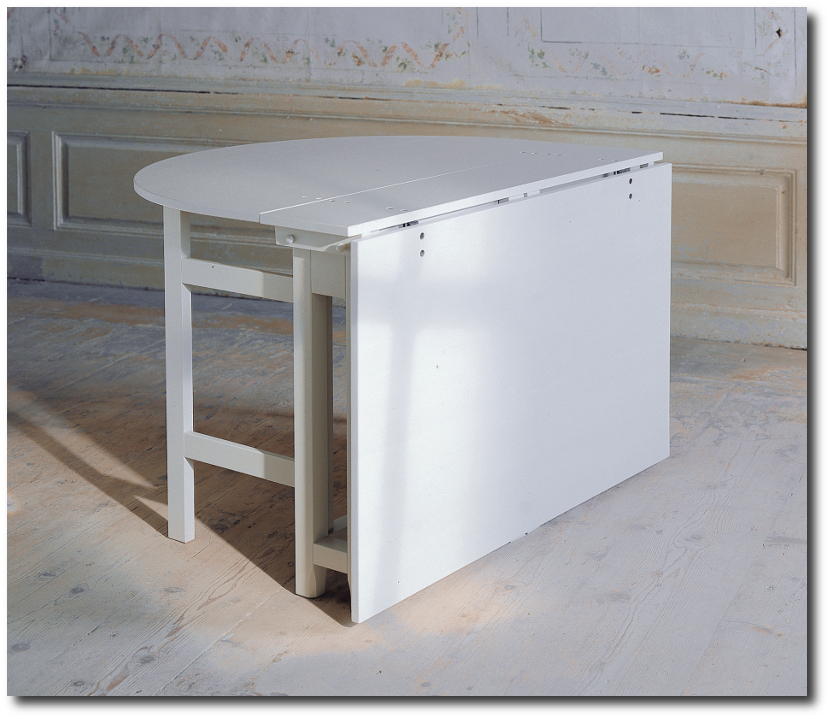
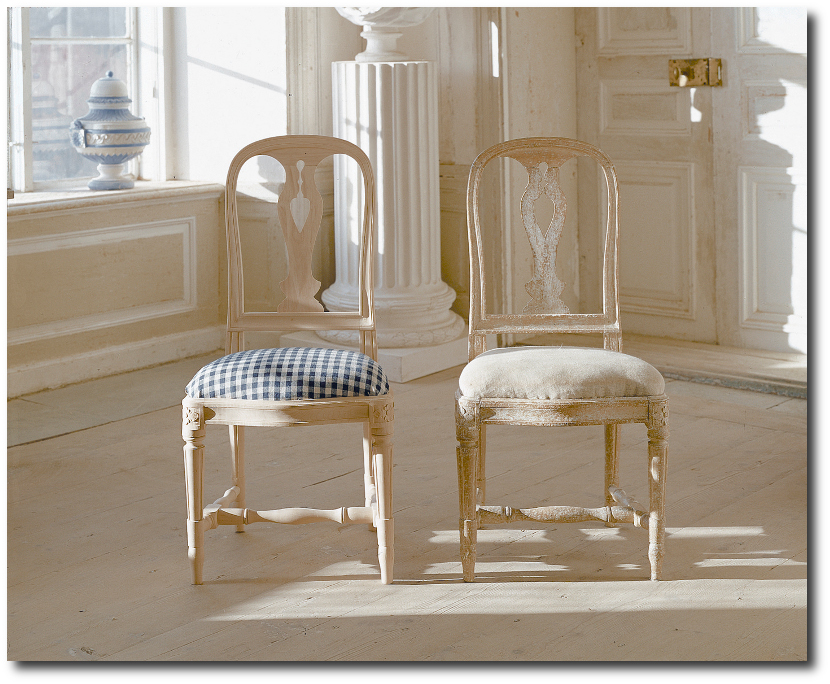
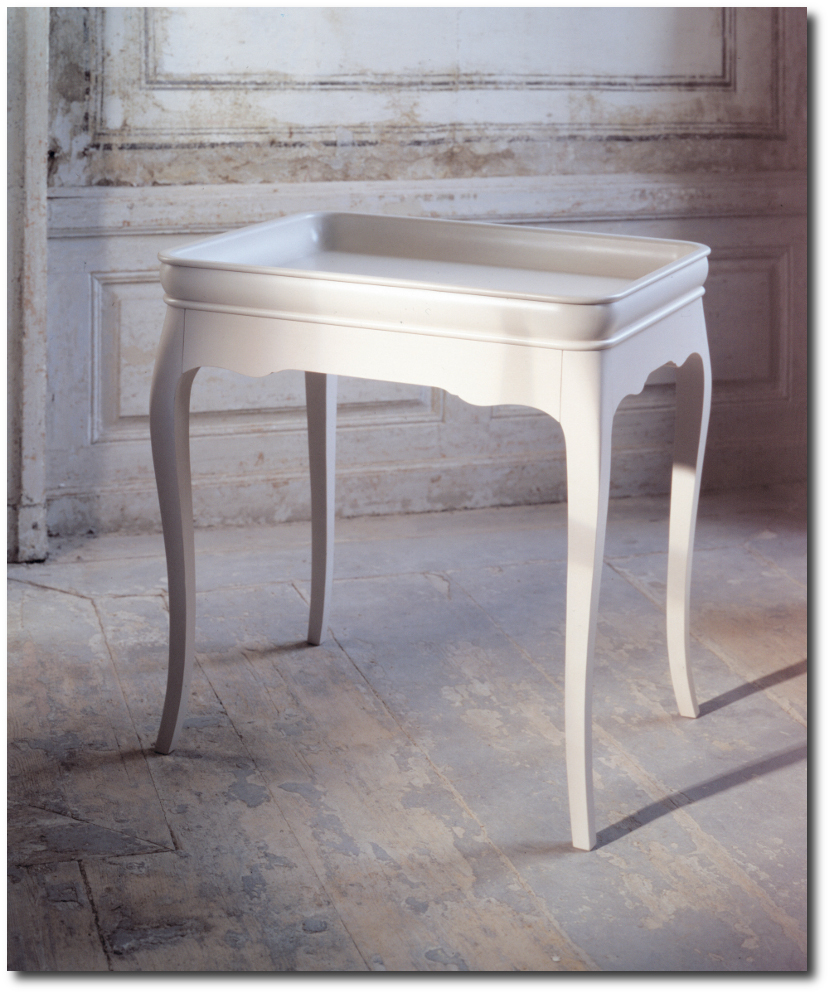
The 1700 Collection Swedish Furniture
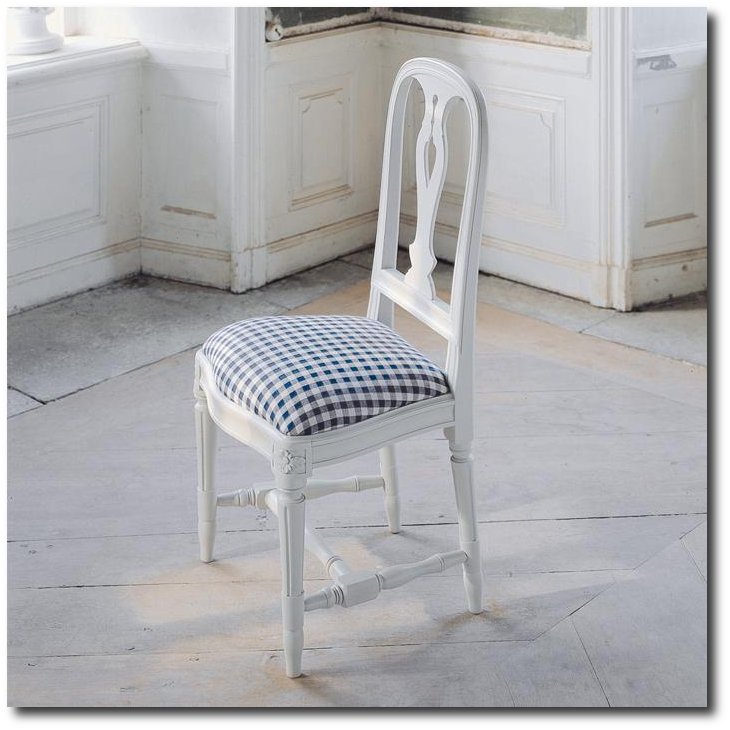
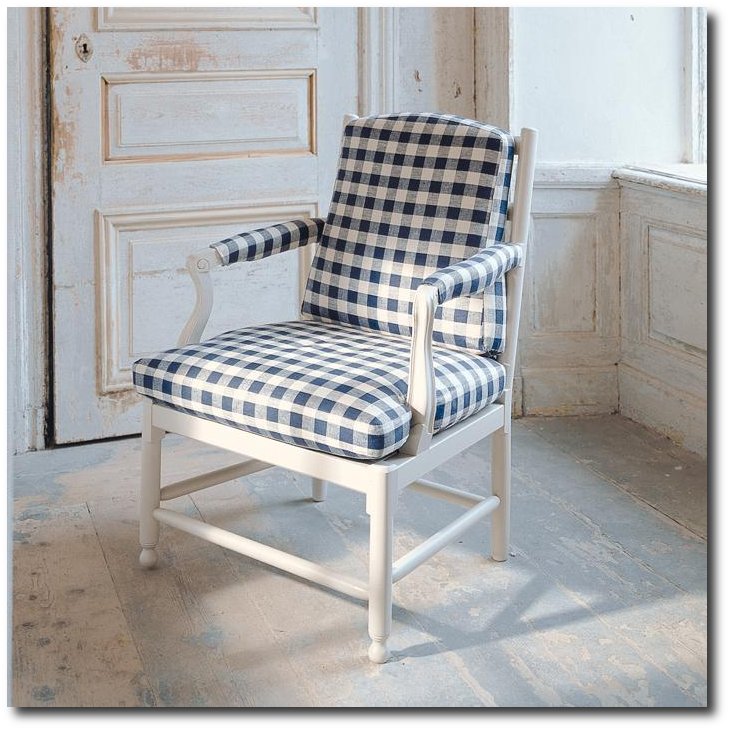
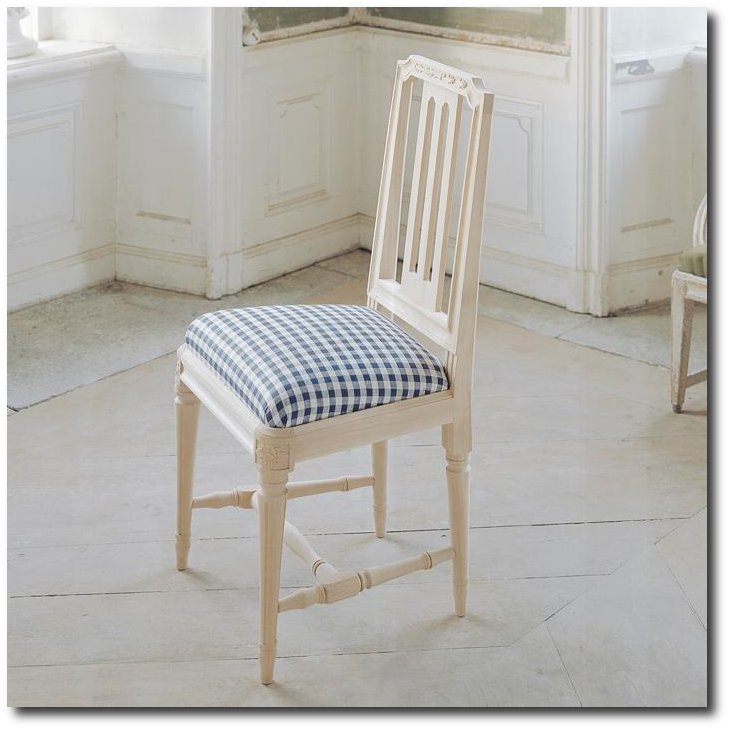
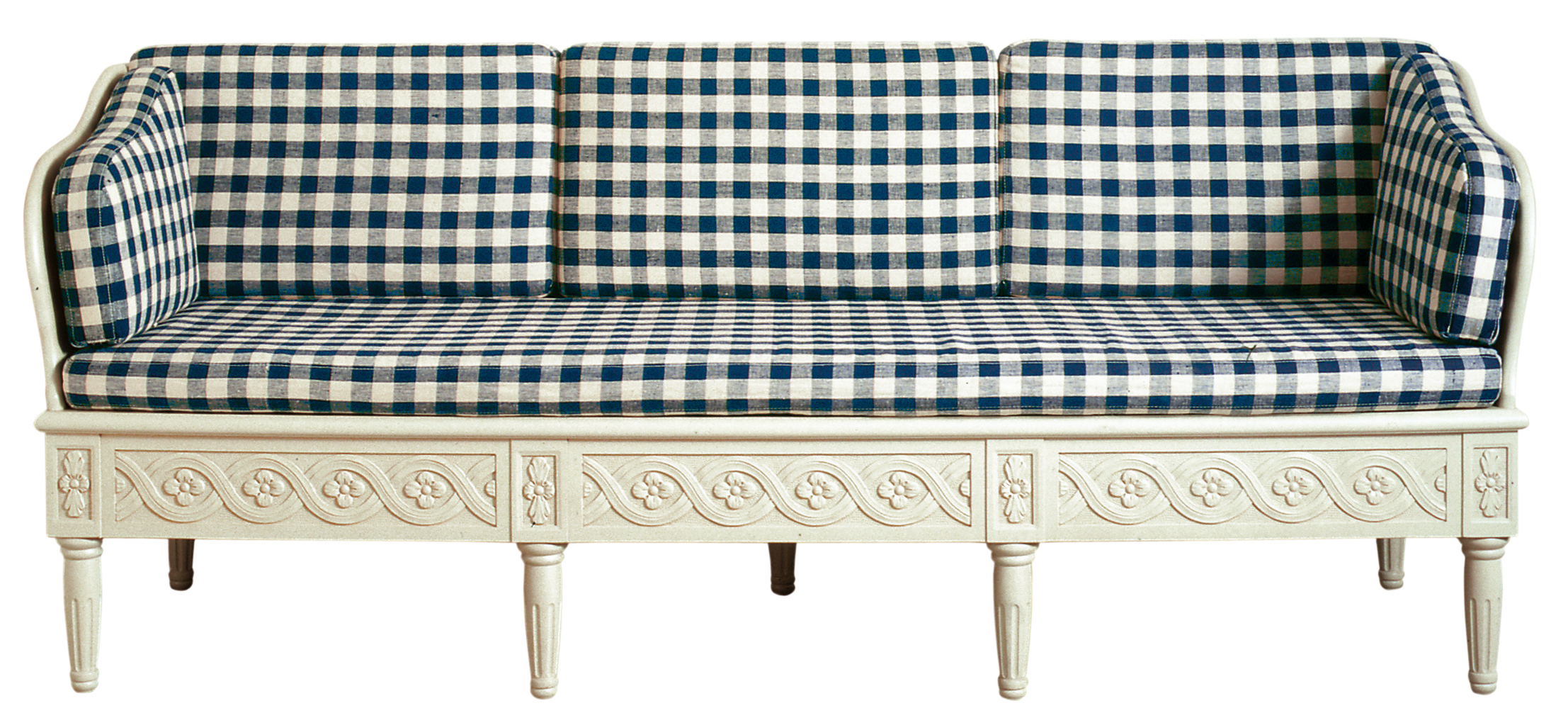
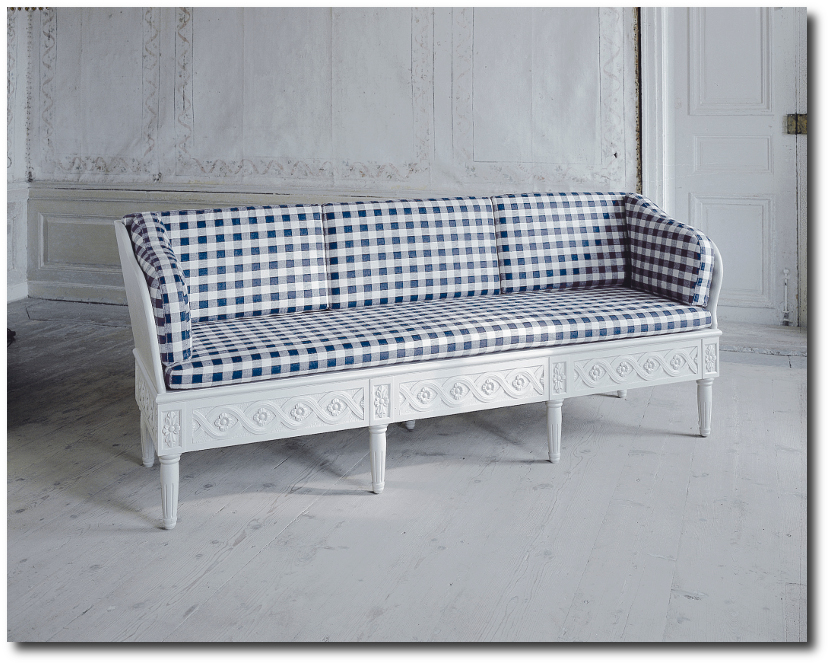
The 1700 Collection Swedish Furniture produces furniture that combines the elegant shapes of the furniture found in 18th century Sweden. With the cooperation between the Swedish National Museum of Fine Arts and furniture manufacturer MOVE Möbler & Bohag, they created several authentic replicas of selected pieces of furniture originating from Swedish castles, manors and salons of fashionable health resorts.
The craftsmanship behind each handmade piece remains true to the original. Skilled woodworkers sign each piece next to the seal of the National Museum of Fine Arts. The furniture is made from the woods found in Sweden such as birch, alder and pine.
If you are hoping to purchase a reproduction that is as close to the original antiques, the 1700 collection is deeply rooted in the 18th Century. The collection is a preservation of the Swedish cultural heritage, also giving you an elegant piece of furniture from this era.
Möbler AB
Smyge
Strandv. 71. SE- 231 79 SMYGEHAMN.
Sweden

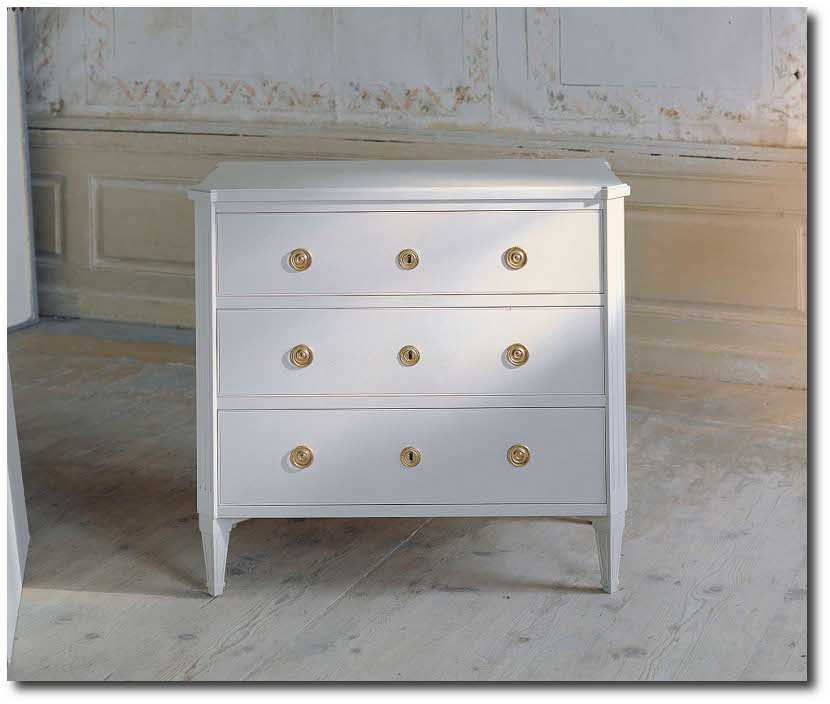

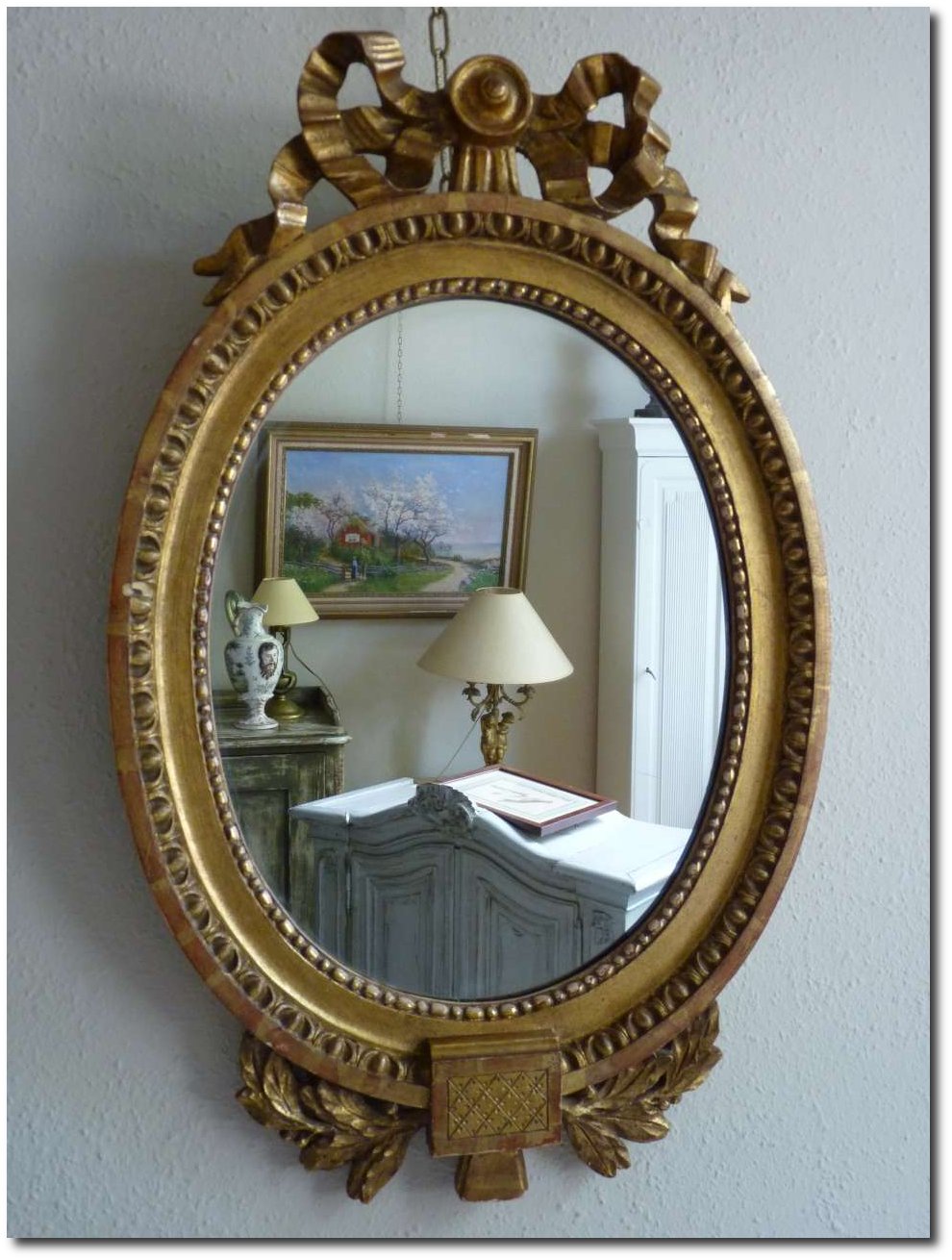
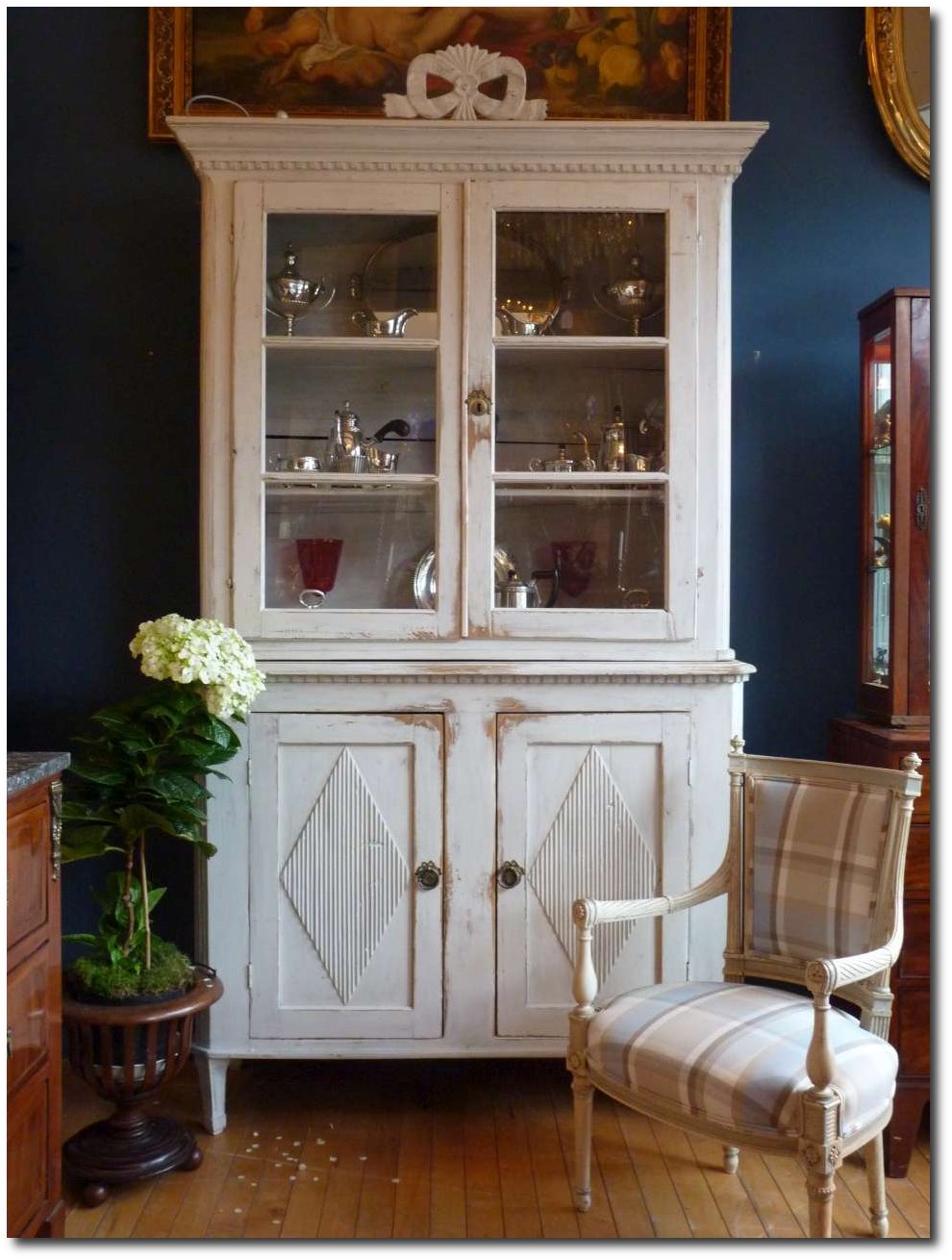
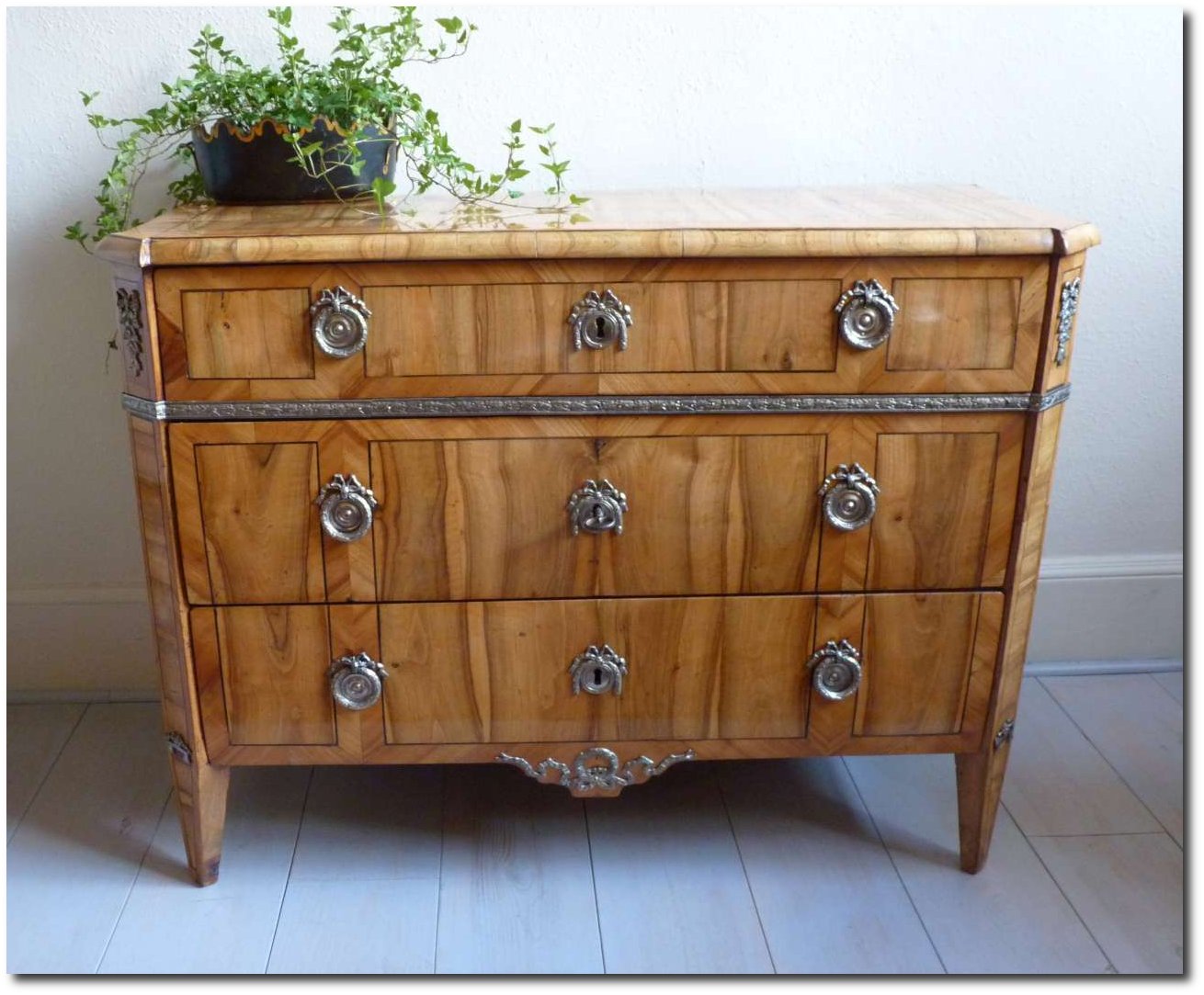
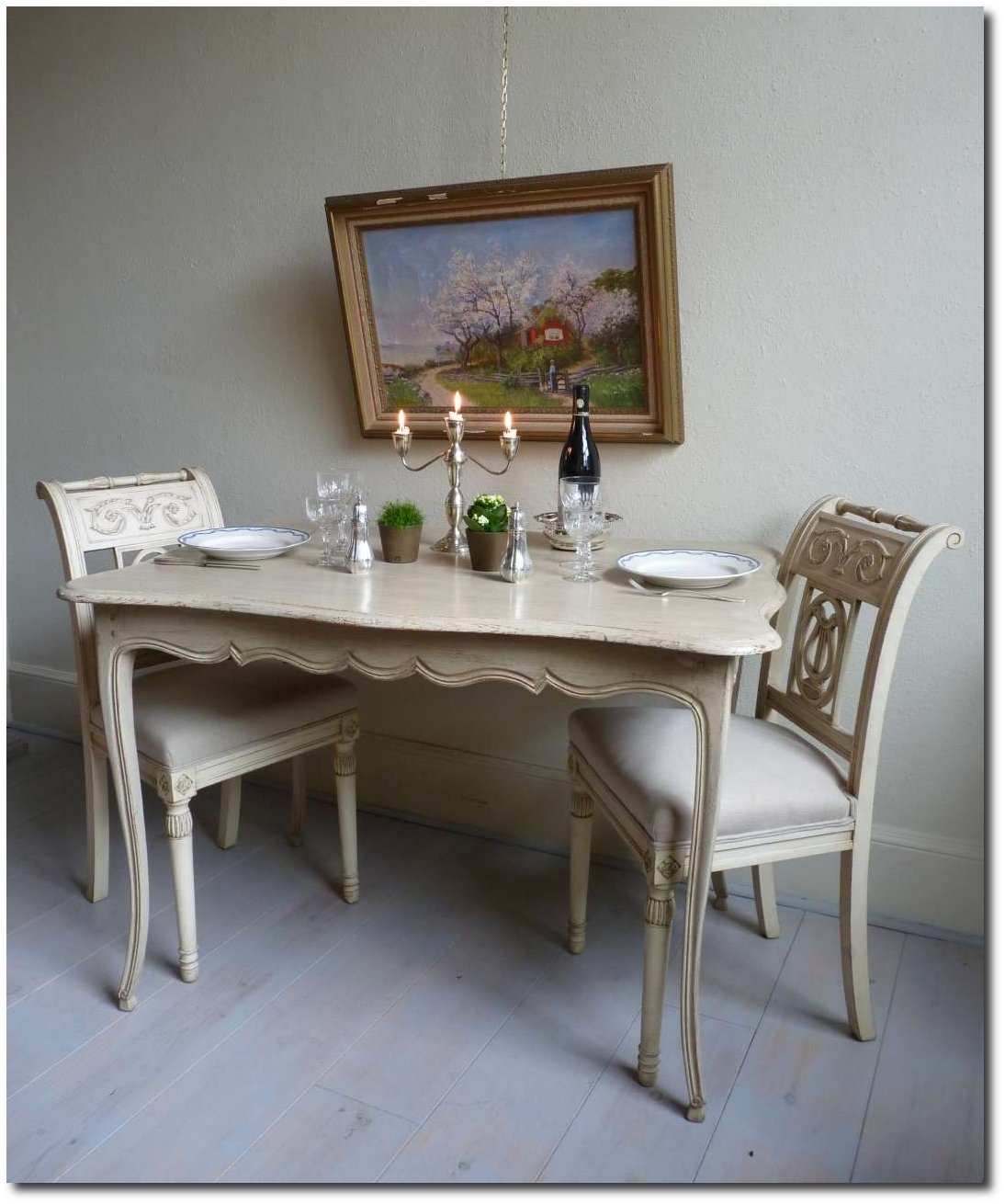
30 Spectacular Picks From Frantz Hemeleers Antiques
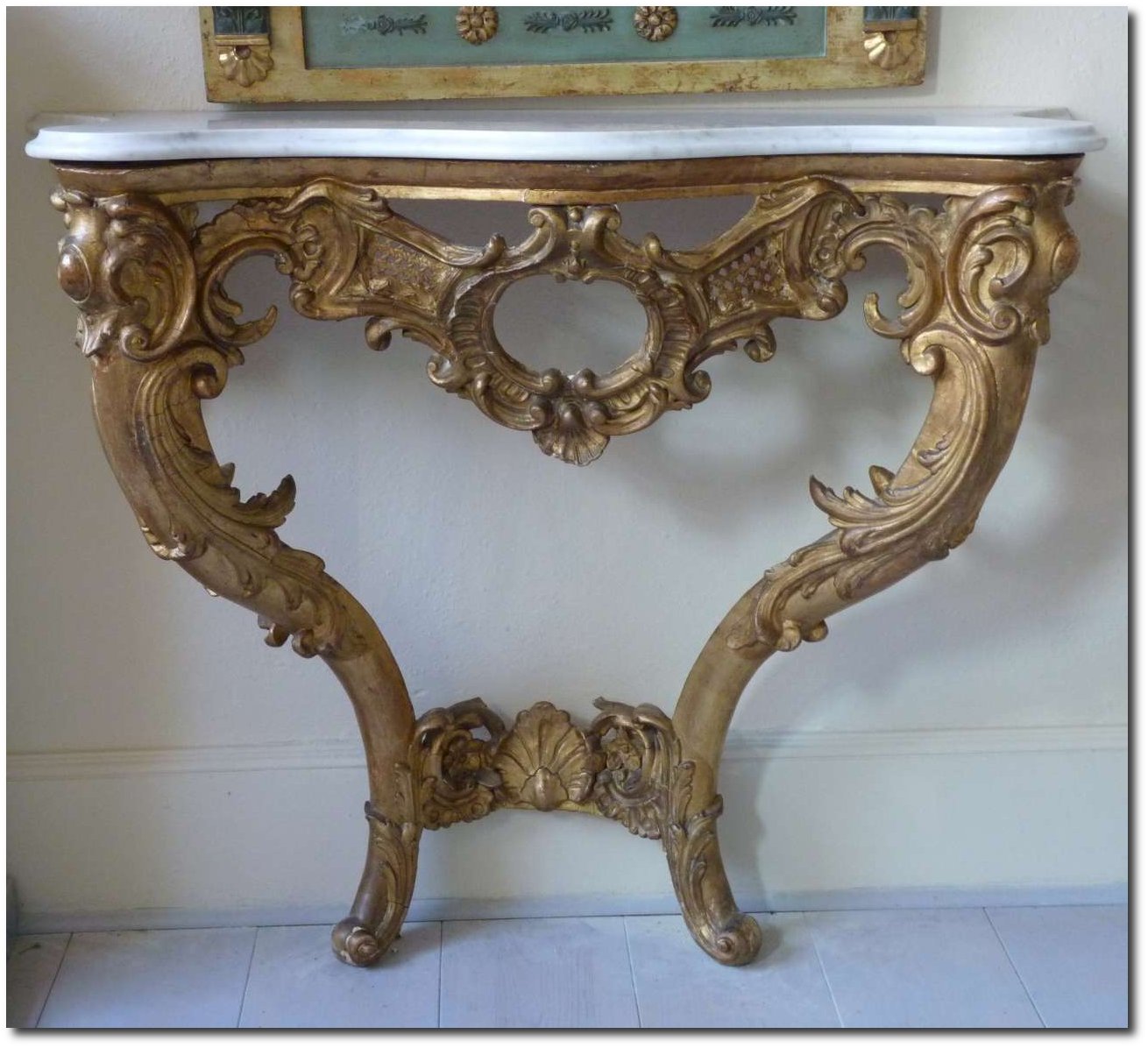
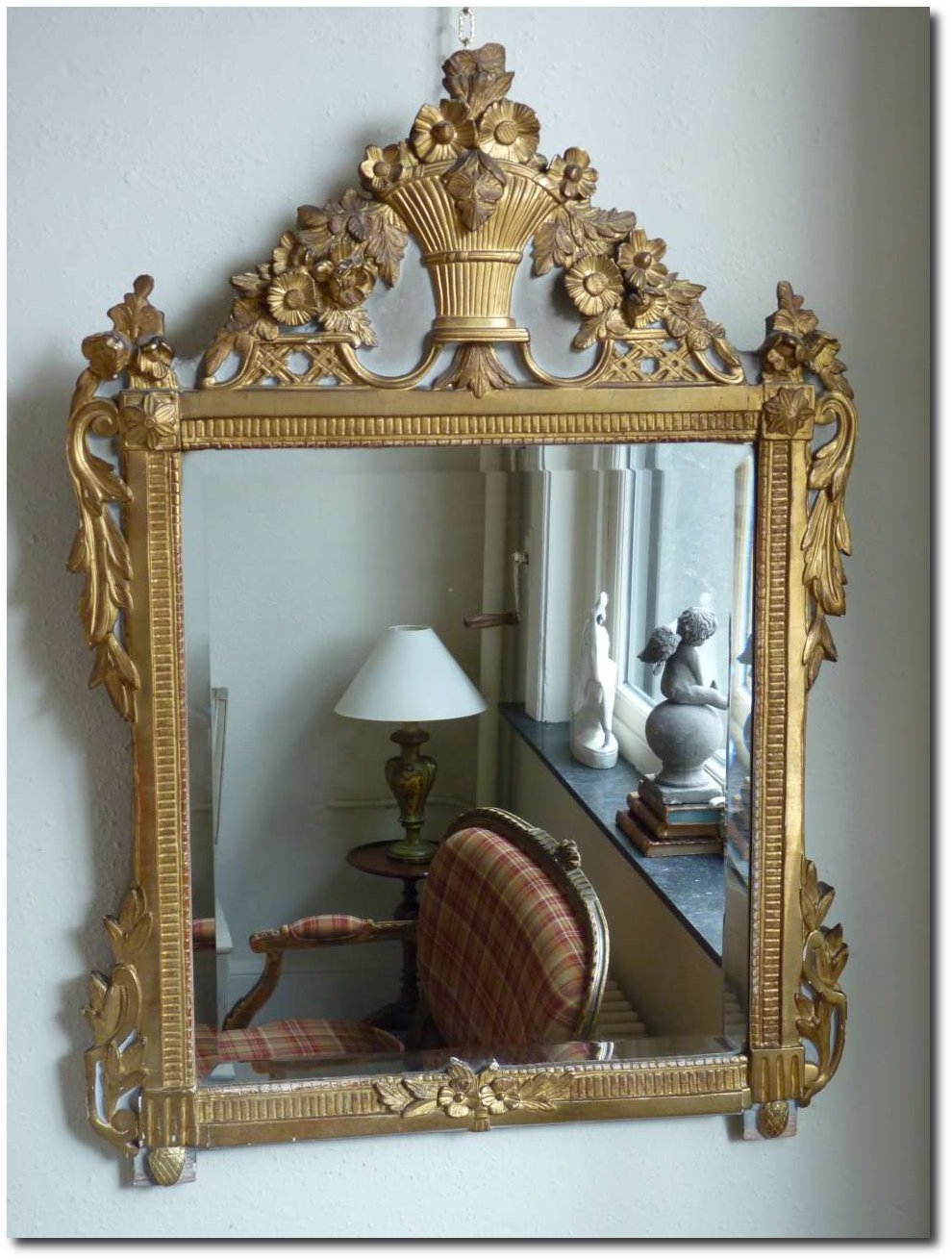
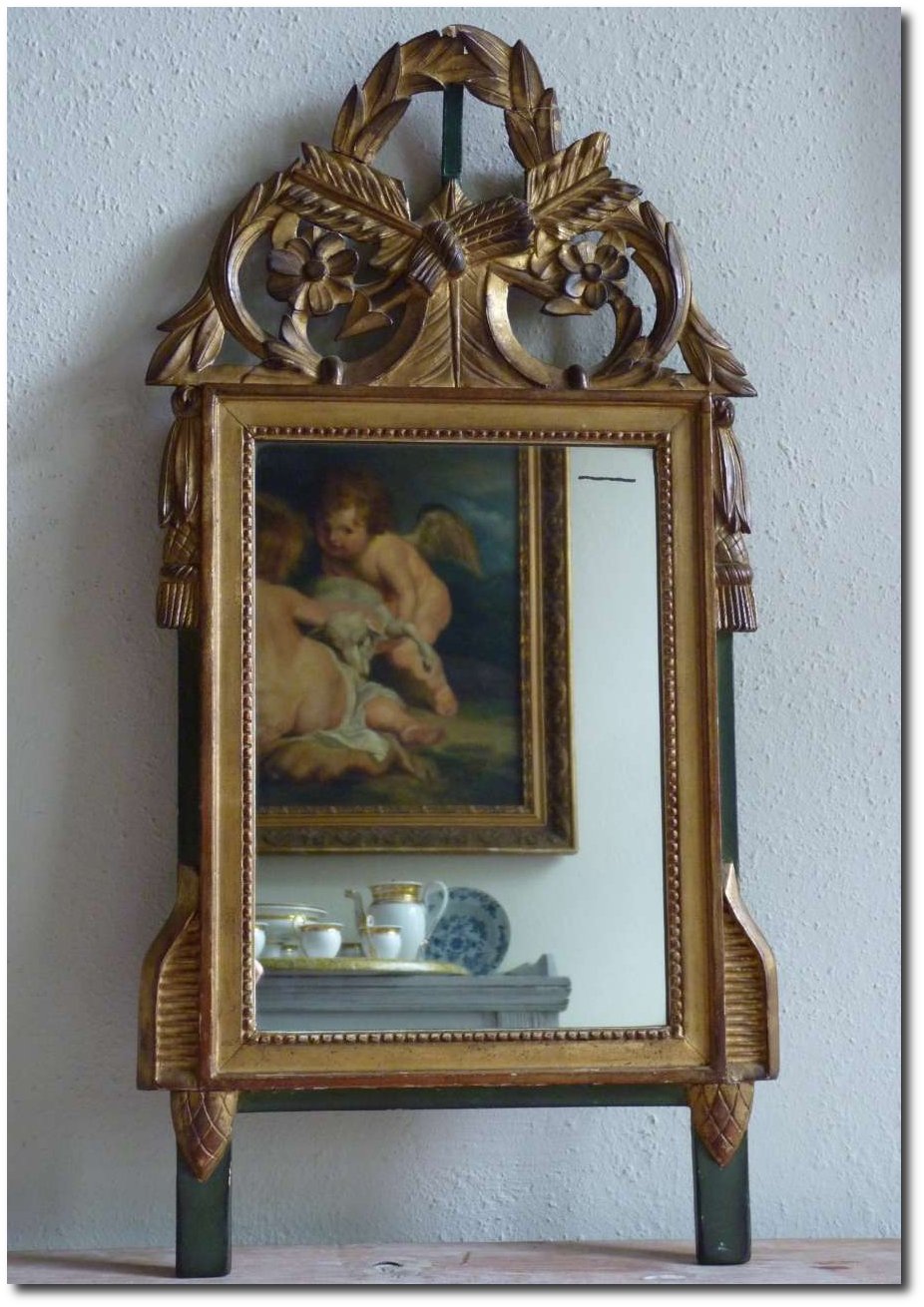
In 1975, Frantz Hemeleers opened a small shop in Etterbeek (Brussels), and over time, it has been known as the place to get quality antiques. Gradually over time, the business acquired more substantial antiques of higher quality, such as polished wood, and marquetry. Today the company features antiques which have been brought in from France, England, Spain, and Sweden. They are known to carry stock consisting of furniture and objects from French, English, Swedish and Belgian from the 17th, 18th, 19th and 20th century.
To ensure the best quality antiques for your home, their furniture passes through the hands of the carpenter before being offered to customers. Besides a wide selection of furniture such as desks, bookcases, tables, chairs, sofas, cabinets, and consoles, Frantz Hemeleers offers a range of paintings, lamps, chandeliers, bronzes, mirrors, and silverware.
Visit this shop in person at the address below, or find them online at Frantz Hemeleers
Frantz Hemeleers Antiques
Avenue des Casernes 61
1040 Bruxelles
Tél. 02.640.29.16
Fax. 02.640.83.21
Email. info@frantzhemeleers.com
- All Furniture Pictures Found At Frantz Hemeleers Antiques




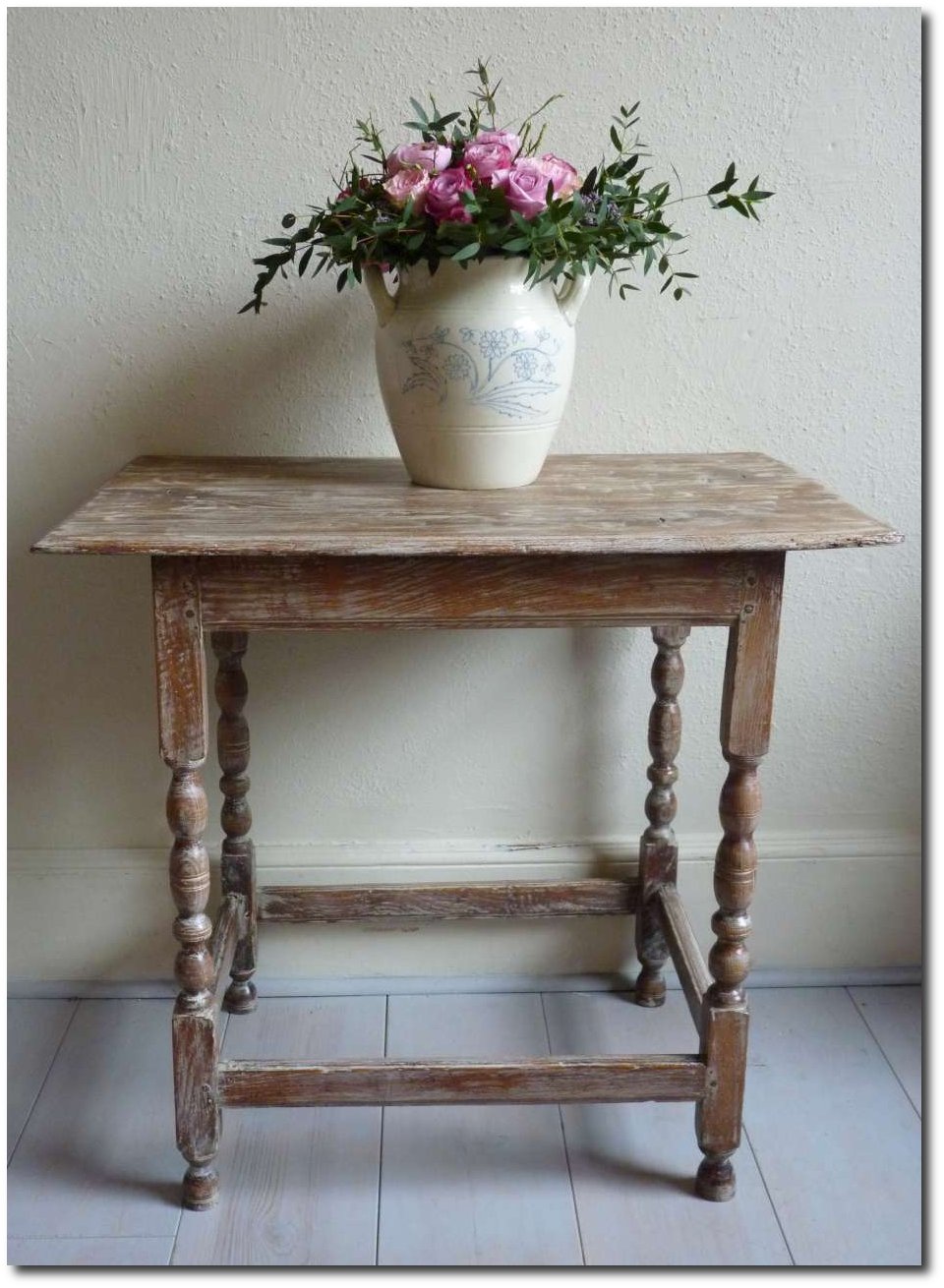
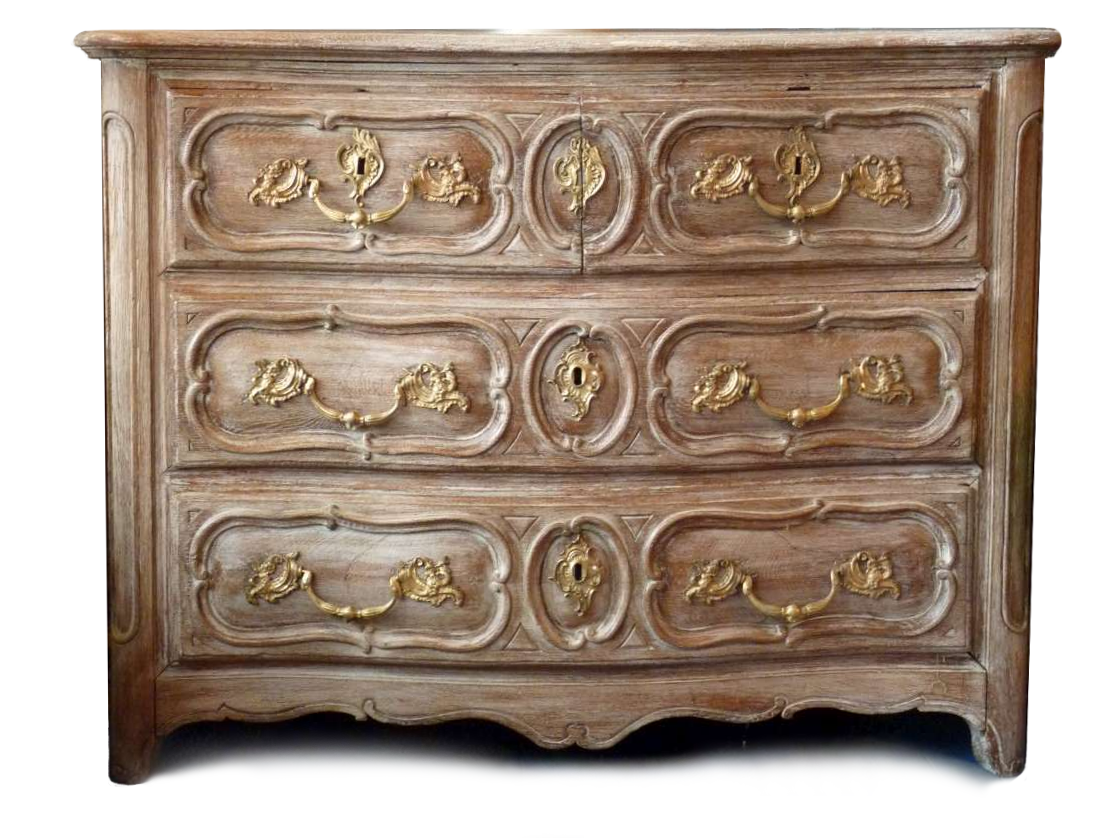

Go Bold With Red- Part 1 Grand Sophisticated Interiors
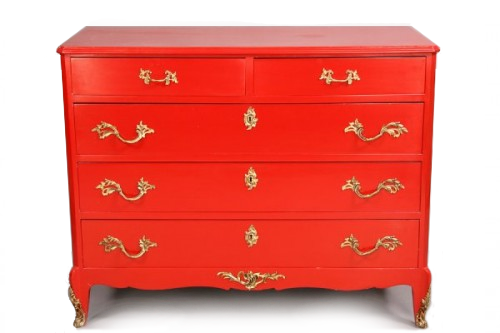
French Commode Lacquered Red From Live Auctioneers
The color red is grand, and is a color everyone considers for their home at one time or another. The color red is a symbol of privilege and wealth. Official seals often use the red, as a gesture of confidence and authority. Red can make a statement in your home in a very powerful way, although it can be hard to execute. We show you 5 ways to pull off this color with success.
5 Ways Of Using Red In Your Home
1. Use Red In The Kitchen Or Entry Way
Red is the color of passion and has been known to stimulate blood pressure and heart rate. Red also sparks passion, love, and enthusiasm, so it is color often used in romantic restaurants. What better place to encourage conversation and hunger, than at the dinner table.
Consider painting your dining room table red. Instead of painting the whole table red, leave the top untouched, in it’s natural wood state. To add a Swedish touch, consider painting the details in gold. In this post, you can see how lovely a red can look in a country provincial style.
2. Use Red In A Pattern on Decoupaged Furniture
There are many ways of decorating with red other than painting your walls. One way of doing this is decoupaging furniture. Decoupaging is rather easy, and you can execute the process a number of ways.
One way is to use cut outs. Simply find an image you like from a magazine or on the Internet, and photocopy it several times over, which you can then cut out, and apply it to a piece of furniture. This Swedish tiled stove would be an excellent example of how lovely a red floral pattern would look on a chest.
You can even take fabric and glue it to a chest, with modge podge glue. Add pattern into your home, or finish off a room based around patterns by decoupaging your furniture.
Inspirational Posts On Decoupaged Furniture
How To Decoupage Furniture– The Swedish Furniture
Louis XV Style Red Lacquer Side Table From Hastening Antiques – Provincial Furniture
4 Easy Steps To Decoupage Beautiful Furniture– The White Dresser
Decoupage Is Simple! Update Your Kids Furniture– Kids Room Decor
Swedish Interiors: How To Decorate With The Color Red– The Swedish Furniture
3. Use Red In Acessories
-Add a bit of a modern glam using abstract art with bold touches of red. Consider using a heavy ornate frame with a modern poster. Modern Styled Paintings or Posters would add a modern touch in a home with plenty of antiques.
–Juju wall hats are a perfect way of adding a bold touch of red in a room. You can purchase these hats in a number of vibrant colors, which can be placed above a dresser, a console table to add in a bold touch of color into your room.
-Below you see the Stockholm apartment in Sweden with the red room. Below it shows a picture of the living room based in white with natural wood furniture. If you want a room based in lighter colors, consider a large area rug in red, like they did. An over-sized floor rug can make a bold impression.
– Another way of adding saturated color into your rooms is to accessorize with red wool blankets. Point blankets can add a rustic touch to your home, and can be thrown over the sofa, or used on the bed, or stacked on a shelf.
– Chairs are a great way of implementing red into a room. Chair frames can be painted red, or upholstered in red fabric.
-If red walls are a bit too risky for you to consider then why not consider red and white bedding? Paint your bed-frame red, with touches of gold, and consider getting a comforter, sheets,a pillowcases all in red. Or paint the frame gold and red, and go with an all white sheeting as you see below.
- Audience room in Gripsholm Castle, Mariefred, Sweden
- Gripsholm Castle – Here
- Gripsholm Castle- www.flickr.com
- Mauve Colored Walls- Gripsholm Castle- members.virtualtourist.com
- Mauve Colored Walls- Gripsholm Castle Here
- Original Photo From Lars Bolander’s Book- Scandinavian Design
- Jacques Jean Baptiste Tilliard Settee The Getty Museum
- Mariedal Castle
- Governor’s Palace in Stockholm.
- Stockholm Sweden Wallpaper-toptravellists.net
- A visit to Cottage And Garden in Newport,Henhurst Interiors
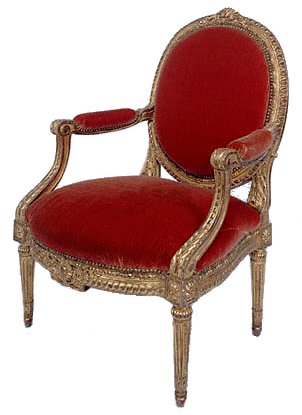
Velvet Covered Chair- The Getty Museum
Michael Perlmutter Architectural Photography
Swedish Apartment In Stockholm, Sweden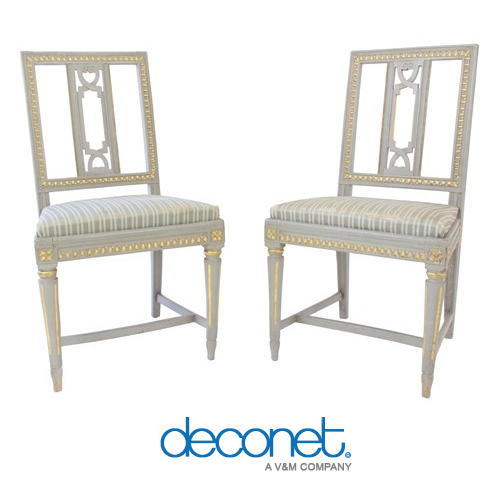
Old fine Gustavian Chairs- Buy them at Scandiadecor
Swedish Apartment In Stockholm, Sweden
Mrs Blandings posted some beautiful pictures of a home decorated in the Swedish style that originally was featured in Veranda’s July/August 2001 issue.
You can see the house is based around whites with accents of green. A solid red upholstery on a white painted chair can look amazing.
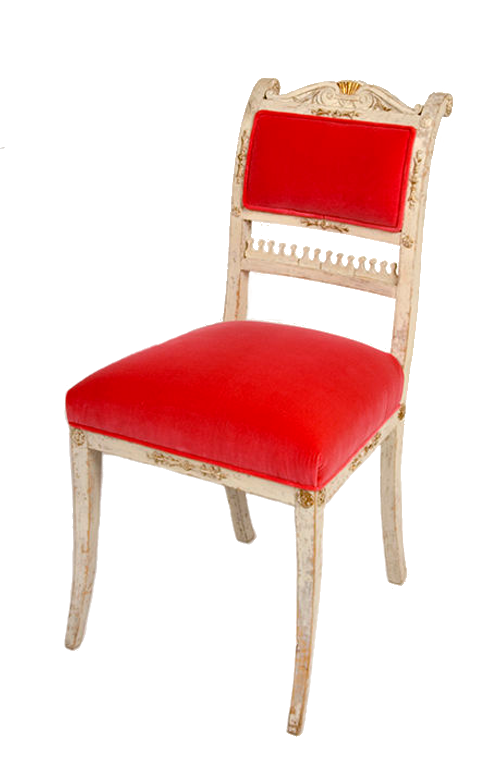
A White Gustavian Chair is upholstered in red fabric. Look how the frame is distressed.
Featured on Karina Gentinetta’s Blog
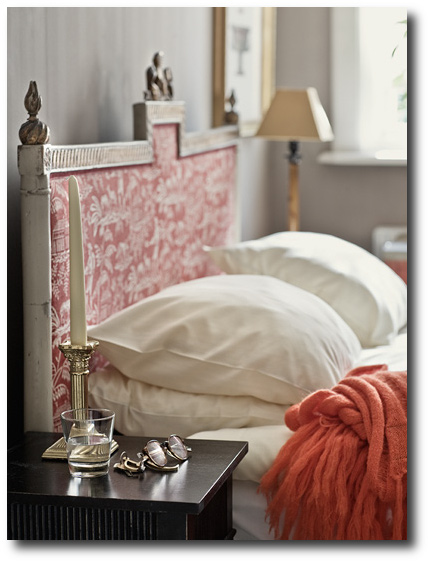
Stunning Swedish Upholstered Headboard From Wreta Gestgifveri
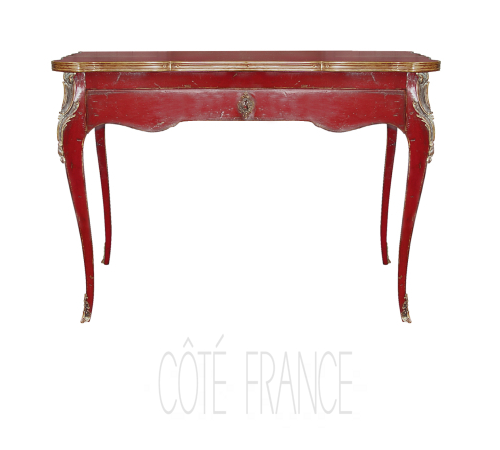
LOUIS XV Bureau with red lacquer finish- From Cote France

Krafft, Per (1724-1793)
Portrait of Carl Mikael Bellmann (1740-1795) Gripsholm Castle
Collection
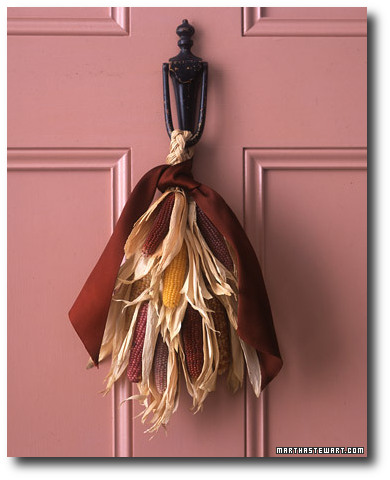
Mauve Painted Door With Rust Colored Ribbon- Martha Stewart
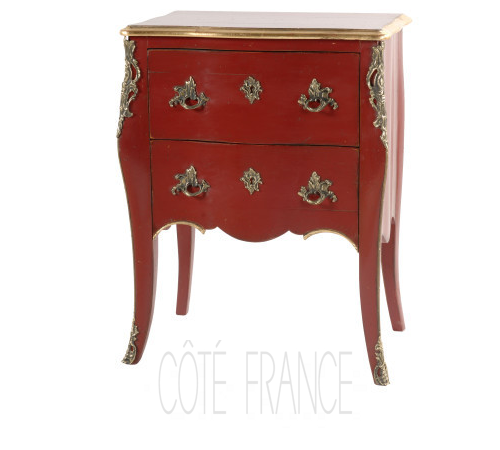
Commode in Red- French Furniture From Cote France
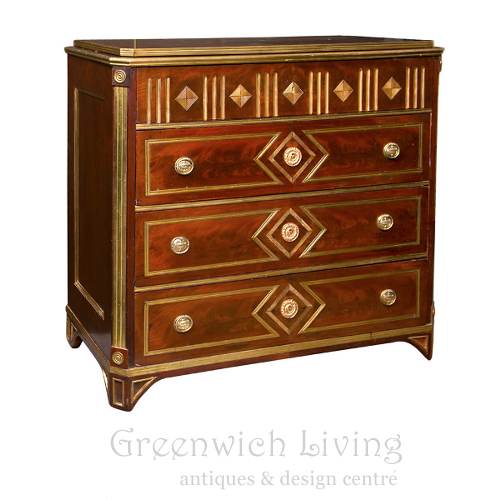
A Fine Russian Neoclassical Commode – Chest Greenwich Living
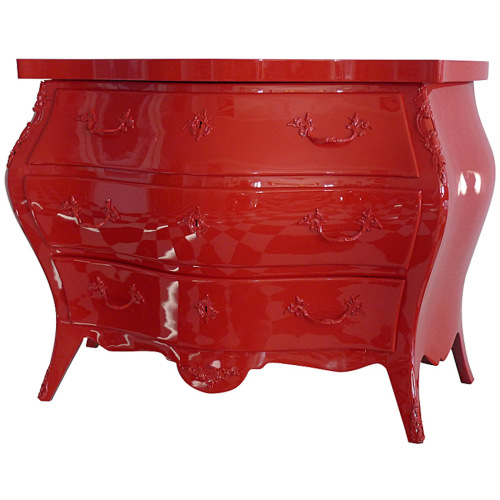
Red high gloss lacquered bombay chest. Design by Laserow Antiques & Interior Design. See this chest together with art by Carolina Gynning and sculptures by Agneta Gynning at the exhibition Gynning X 2. Featured on Old Vs New
Get THIS Reproduction of King Gustav III-Magnolia Box
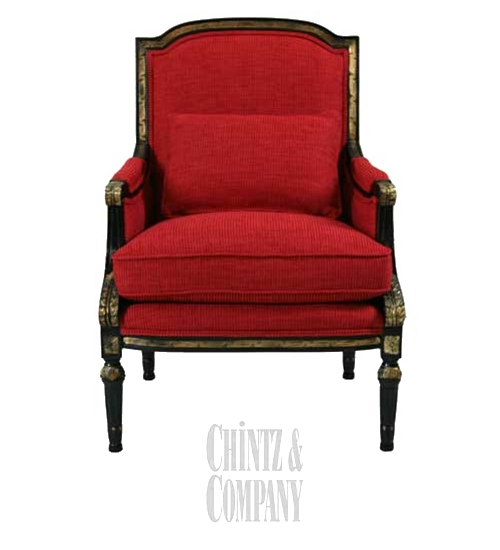
Swedish Looking Black and Gold Chair With Red Upholstery From Chintz & Company
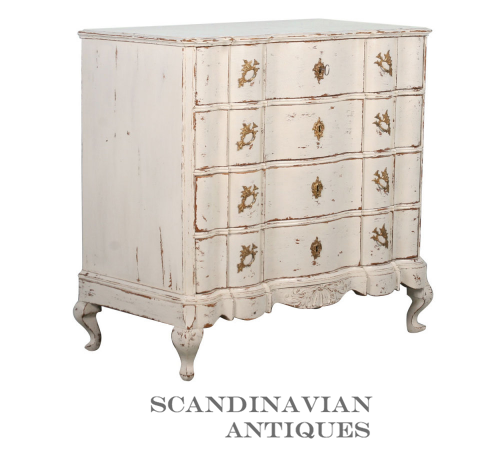
Antique Swedish White Chest of Drawers, circa 1750
This striking chest of drawers sits on cabriolet feet, the serpentine front adding to its strong appeal. The chest is oak, and was just given a white painted/distressed finish in the Gustavian style. Please note the close up photos to examine the superb painted finish; in person the piece is truly striking and one is drawn in with a desire to touch it. The chest of 4 drawers is one piece and rests upon the base and feet, which is how these large chest of drawers were designed. Scandinavian Antiques- Denver CO
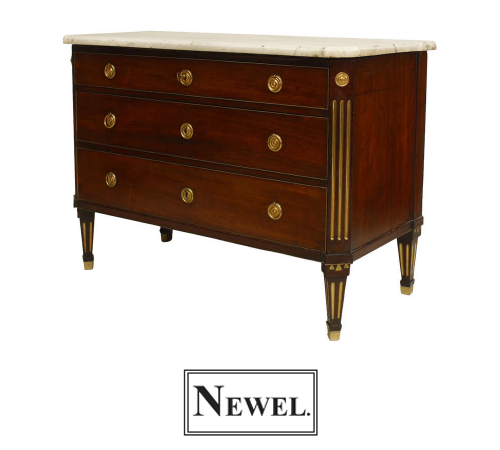
Swedish mahogany commode. The piece features three drawers, brass trim and pulls, fluted sides and legs, and a white marble top. $39,500 Newel – New York
Go Bold With Red- Nordic Country Interiors
To start thinking about how you would like to include red in your home, here are a couple questions you must ask yourself:
- Into which room do you want to add red? kitchen, living, bath or entryway?
- How prominent do you want the color to be? All over color or an accent pieces in red?
- How much daylight is in the room? morning, afternoon, or both?
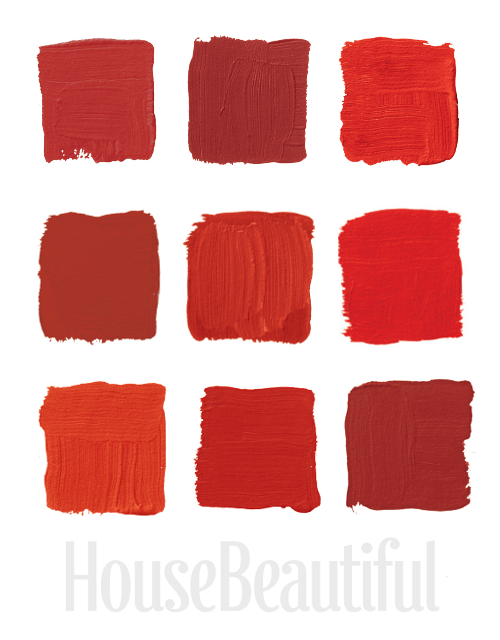
House Beauiful compiled 24 of the best reds from the top leading designers. Here are my favorite 9 red shades of paint from their selection of 24
TOP ROW:
1.”This is a really deep coral, kind of like a cheerful Chinese red. Pinks and reds to me are synonymous with frozen drinks and relaxing.” –Richard Mishaan, Benjamin Moore’s Chili Pepper 2004-20
2.”When I look for red, I want a pure, true red, like the color in the American flag. Ralph Lauren does absolutely the best. It’s the essence of red. It makes me think of boating or polo.” –Suzanne Kasler , Ralph Lauren Paint’s Dressage Red TH41
3. “Red never goes out of style. It’s full of life — always fresh, always fun to wake up to. We go for reds with less blue in them and more orange because they’re happier to live with.” –William Diamond and Anthony Baratta, Ralph Lauren Paint’s Lattice Red IB57
MIDDLE ROW:
4. “It’s a true, deep red. I like the temperature of it: it’s a bit cooler. But a little red goes a long way. It’s good in areas where you don’t spend much time or in boring areas that need a strong burst of color.” –Roderick Shade Pictured, Benjamin Moore’s Million Dollar Red 2003-10
5. Benjamin Moore’s Redstone was used in Eldon Wong’s cupboard.
6. “All my life I’ve pursued the perfect red. I can never get painters to mix it for me. It’s exactly as if I’d said “I want Rococo with a spot of Gothic in it and a bit of Buddhist temple” — they have no idea what I’m talking about.” –Diana Vreeland, Benjamin Moore’s Red 2000-10
BOTTOM ROW:
7. “Red is the color of excitement, and I tend to go for corally orange reds. With red, you know you’ve arrived and you glance in the mirror and realize how great you look and breeze right in.” –Keith Irvine, Benjamin Moore’s Salsa 2009-20
8.”I prefer the warm, vibrant reds to the historic reds, which are beautiful but sedate. This is a daring red, a real fire engine red. It has a playfulness that reminds me of a little red schoolhouse.” –Ruthie Sommers, Fine Paints of Europe’s Dutchlac Brilliant Tulip Red W1001B-M
9.”Lately I’m on this anti-completely-neutral kick. You have to have some seasoning in your rooms. Sangria is good, universal-donor red — not too blue, not too orange, not too dark.” –Elissa Cullman, Benjamin Moore’s Sangria 2006-20
Get samples of your chosen color, and paint a large section of your wall to determine what color looks best through out the day. Some colors will appear more grayed, while others may appear more saturated.
4. Paint Your Furniture Red Than The Walls
If you want an all-white based room, consider painting larger furniture pieces in red. In this post we show you a red provincial chest in a country style.
For a rustic country look, start by striping your furniture of it’s prior paint and urethane. I find using a heat gun the best way to strip furniture without using chemicals. Ideally you want the wood to soak in the paint, which will allow you to distress it better, when it is dry. I find even if I paint a piece of furniture that has urethane on top, the sanding doesn’t look as great compared to wood that is raw. Use a flat or satin red paint on the piece. Distressing is the key to this look. Later, adding brown glaze to the top of the paint, which you can either paint on, or wipe off will blend the wood and paint color together to give you that aged look. These three steps have allowed me the best results to achieving an old world antique painted furniture looks. Don’t be afraid of going crazy with the distressing. You cannot go wrong with over distressing, expecially when you start with raw wood. You can always go back, touch up the areas that have too little paint, and distress again to blend the areas together.
5. Combine Red With Natural Wood or Black Painted Furniture
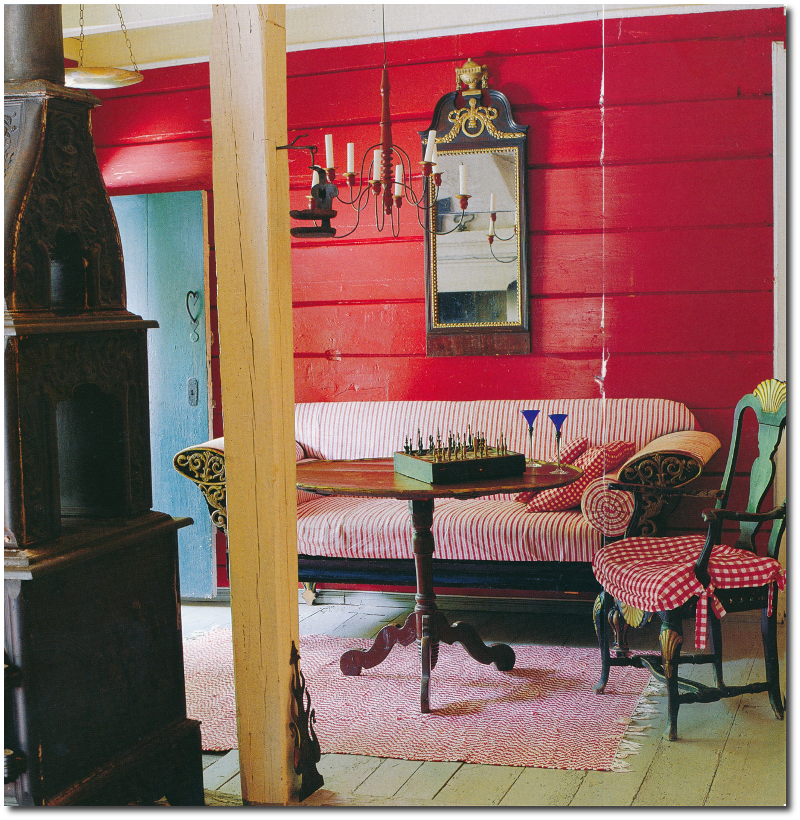
The picture below shows a Scandinavian entry way in a traditional red, featured in Lars Bolander’s Book- Scandinavian Design, this entryway is furnished like a real room instead of a transit area. A black painted rococo side chair with gold details contrasts nicely against the red painted plank walls.
- If you choose to paint your walls red, such as the room below, consider placing furniture that is painted and heavily detailed. White, black or natural wood furniture looks the best against saturated colored walls such as the picture below. Find furniture with some detailing. Perhaps a solid wood unfinished chest with gold detailing. Another way to go in the picture below is a wood chest with black detailing.
- Staffan Johansson From Palm Beach Daily News
- Lars Bolander’s Book- Scandinavian Design
- D.LARSSON Interiör & Antikhandel
- Louise Bourgeois exhibition at the Nordic Watercolour museum-Camillaengman.blog
- Distressed Red Chest From Gruvgatan13 Blog
- House To Home
- Swedish-style Dining Room – House to Home Magazine
- Varke magazine at scandinaviankitchens.com
- Combine Red and Gray Together-Næslund Antikviteter
- Mora clock from Lone Ranger Antiques
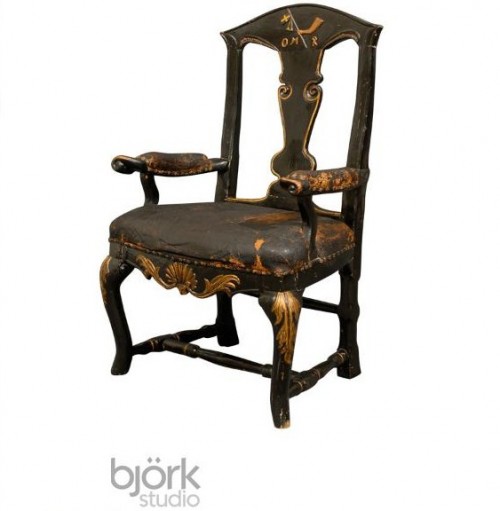
Swedish Baroque Captain’s Arm Chair c. 1750
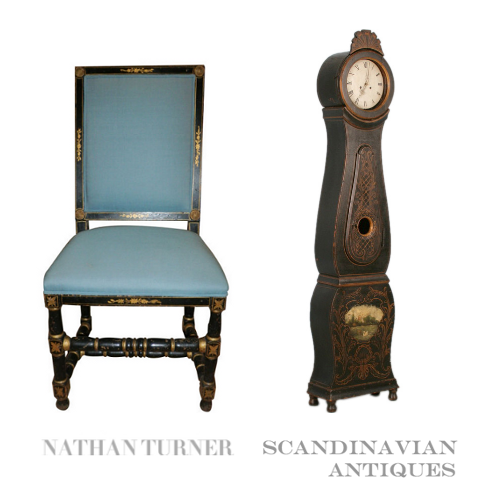
Beautiful 18th Century Swedish Chair. Painted black with intricate gold-leaf detail.
This lovely grandfather clock boasts the traditional curves of the Swedish Mora design. The original black paint is accented with gold flourish detail, while the bottom has a lovely pastoral scene with lake and swan in forefront.
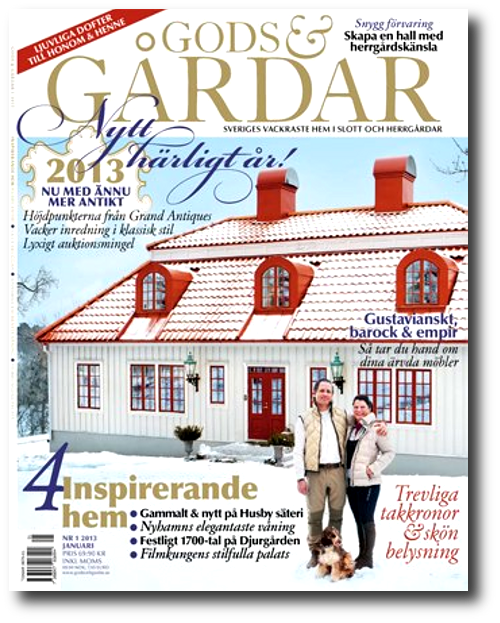
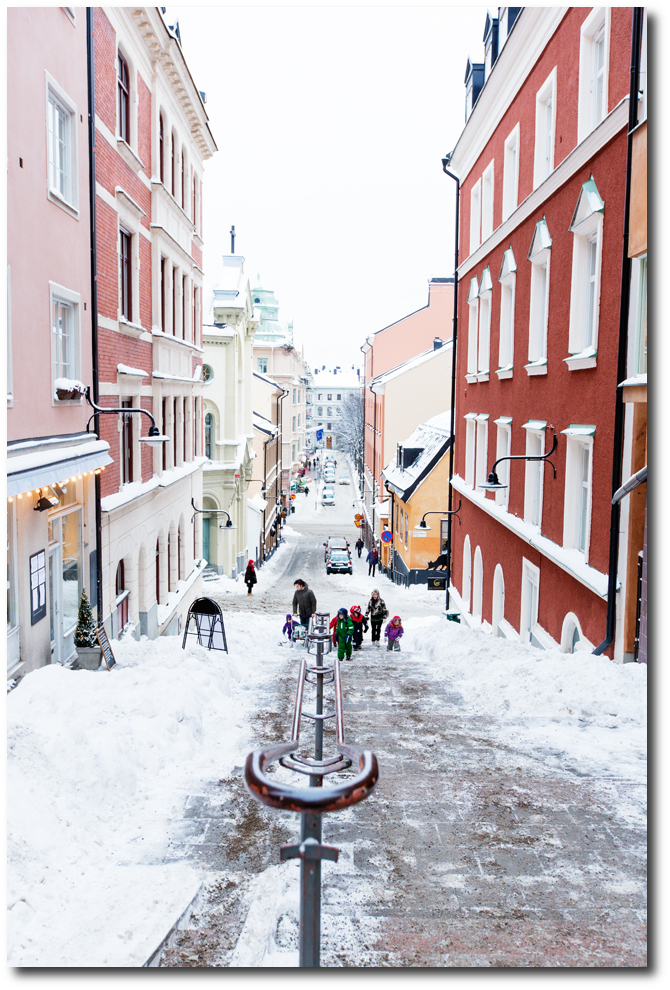
2012 Swedish Winter Photo from Fantastic Frank
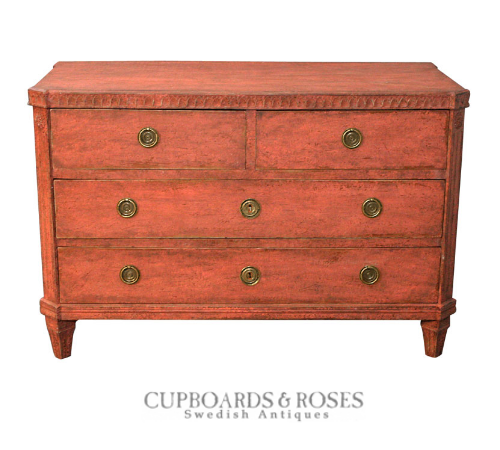
Period Gustavian two over two chest of drawers in red paint. Egg and dart molding at the top, with fluting and carved rosettes on the chamfered sides. Cupboards & Roses
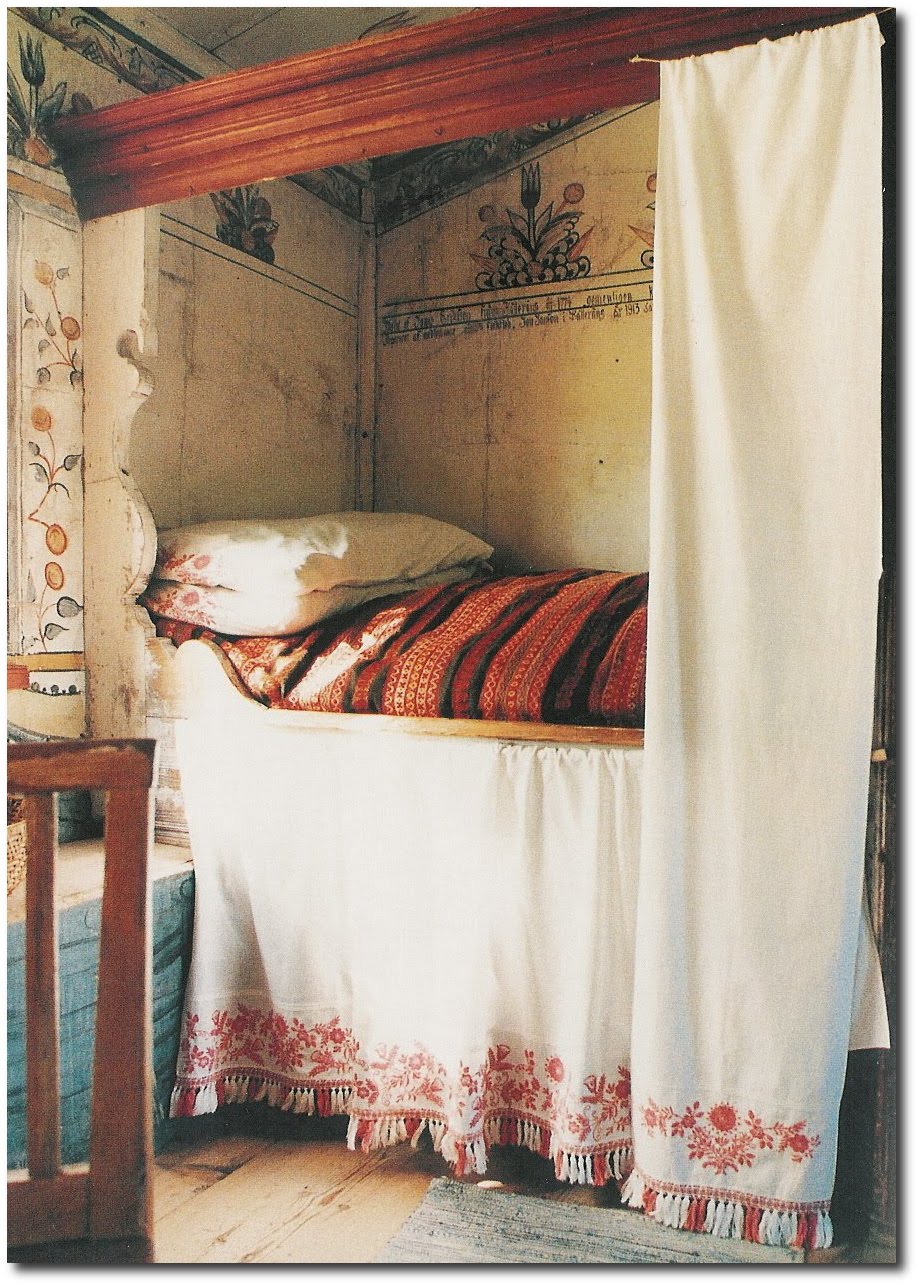
Swedish Cupboard Bed From Moon To Moon Blog
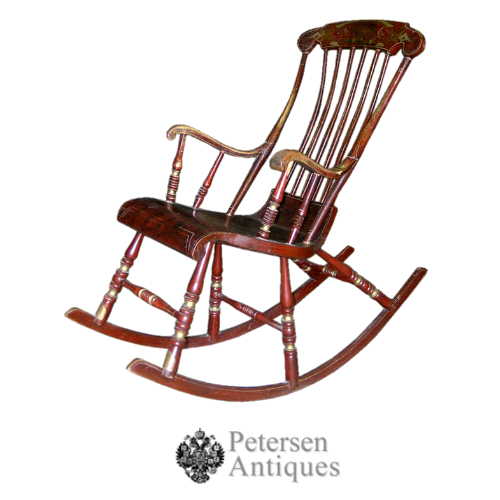
Classic Swedish rocking chair with unusual paint. These chairs were usually painted black.
The wood grain and floral finish is rare. This six legged style was made between 1830 and 1850, after that the 4 legged version took over.
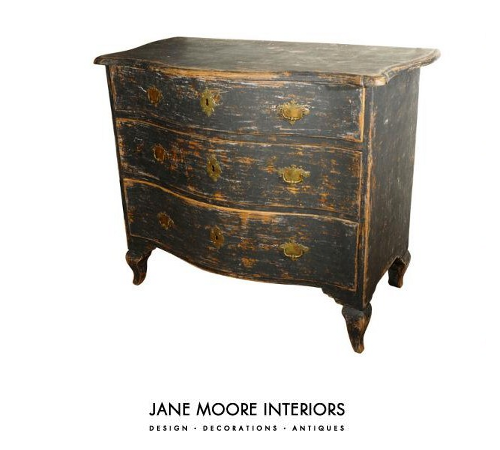
18th C. Swedish Rococo black painted chest with rare brass hardware decorated with crown and cross, circa 1760.
Swedish at Tone on Tone Antiques
Swedish Gustavian Bench, 18th century, with traditional “Falu” red paint
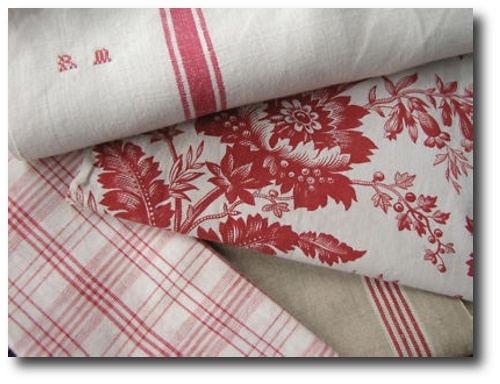
Antique Vintage French Fabric ~ Project Bundle From Loody Lady on EBAY
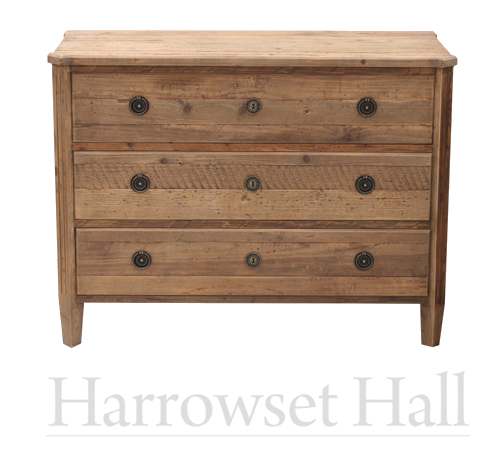
With its simplified lines and absence of ornament, our classic Gustavian Chest captures the rustic charm that is an essential element of Provincial home decor. The warmth and beauty of bleached reclaimed elm sets off its casual design and fine craftsmanship, as well as providing a lived-in authenticity. Harrowset Hall Furniture
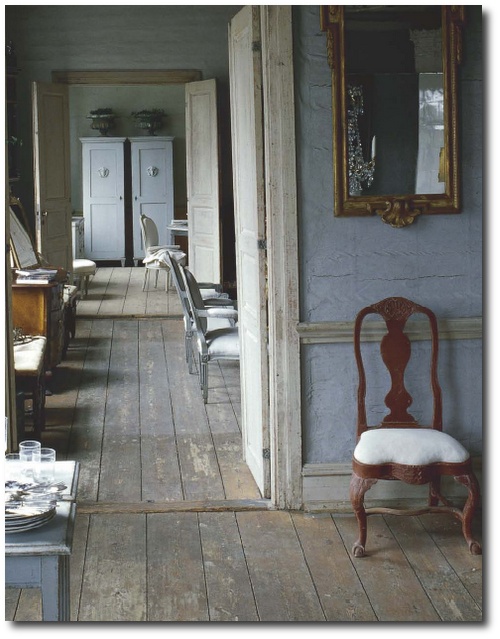
A Close up of the chair
The French Elle Decor December 2008 issue
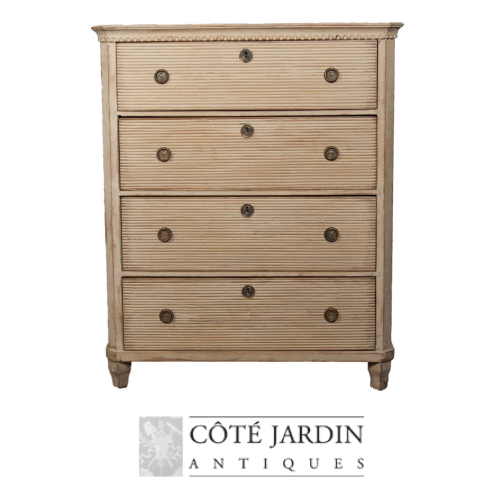
A Bleached/Painted Gustavian Commode with Reeded Front- $5,500
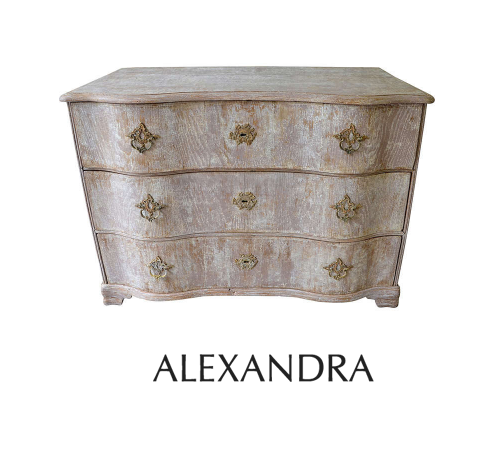
Baroque Commode Germany circa 1760
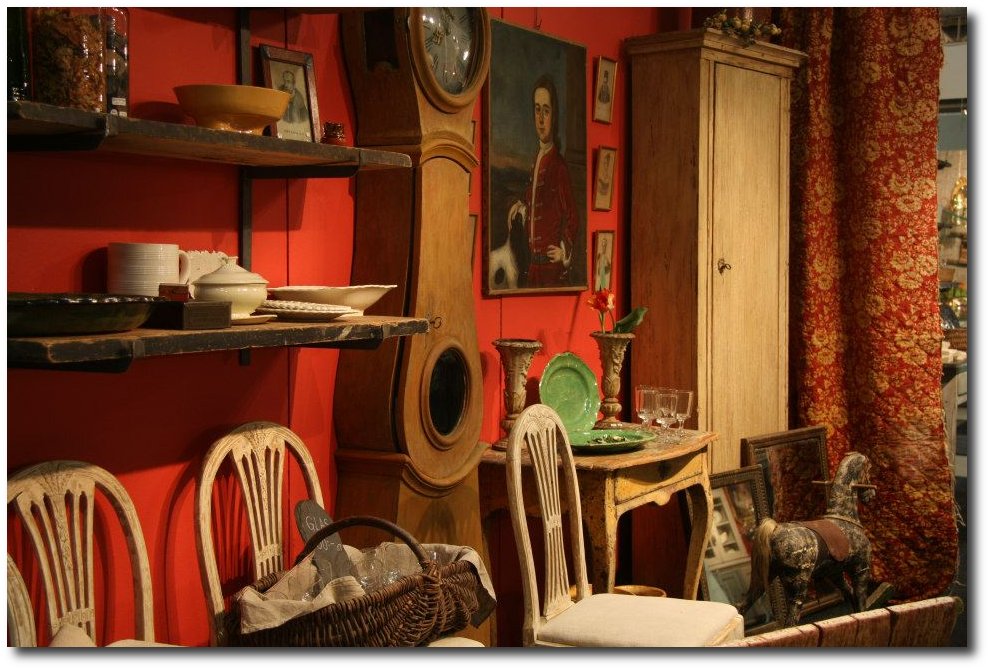
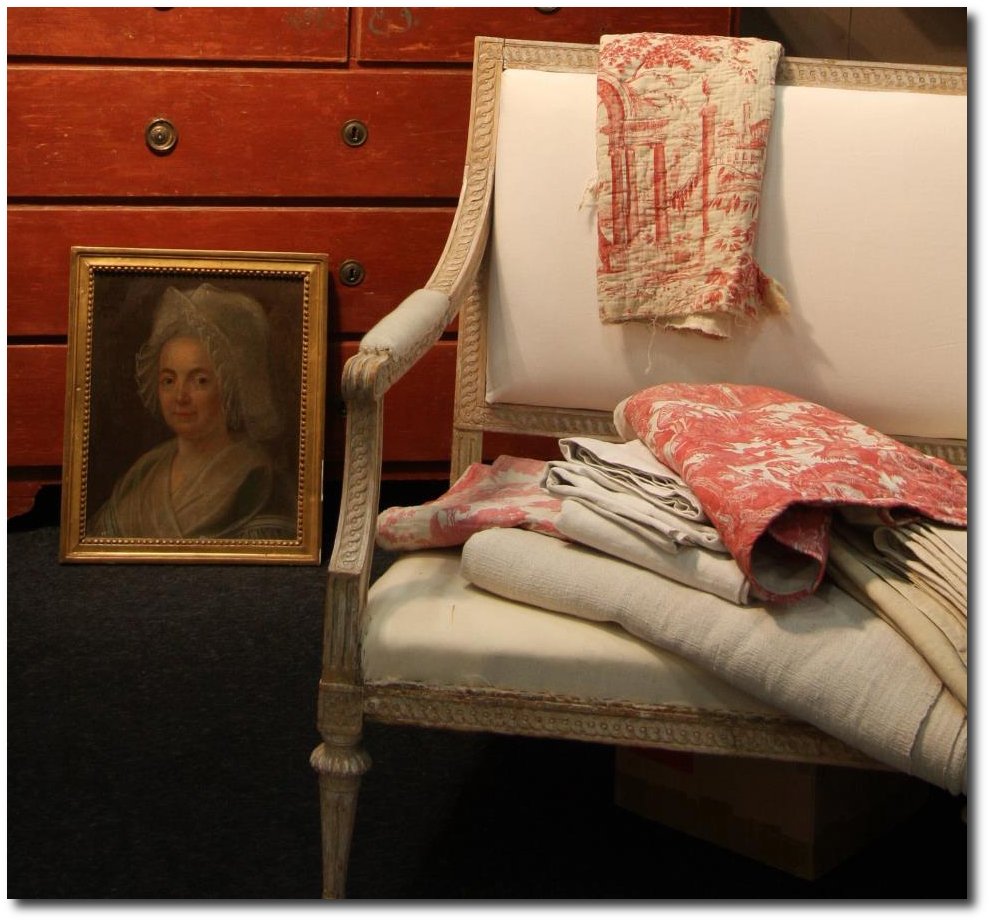
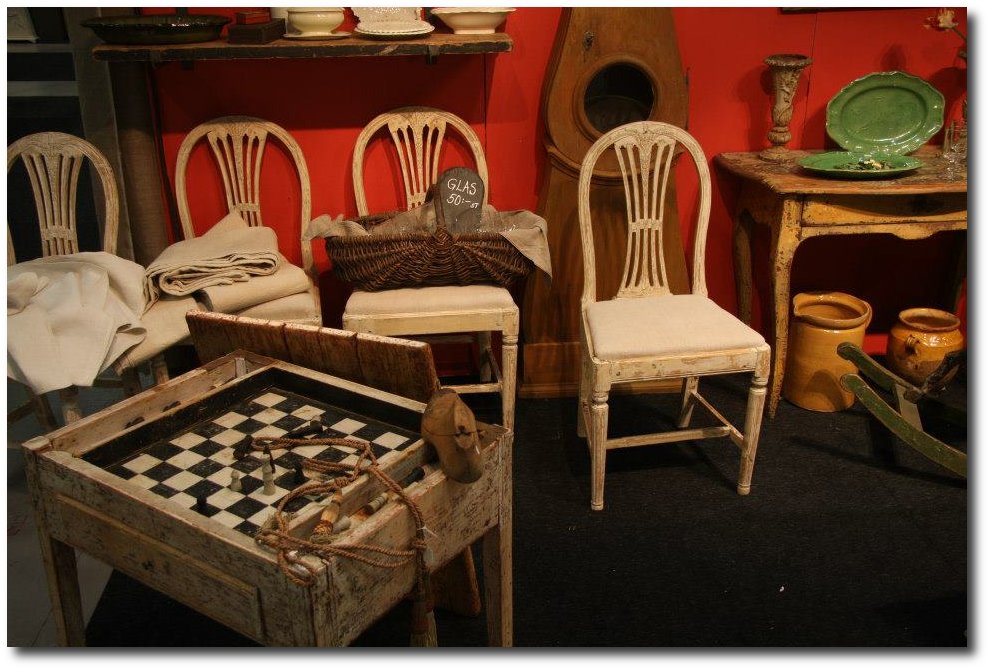

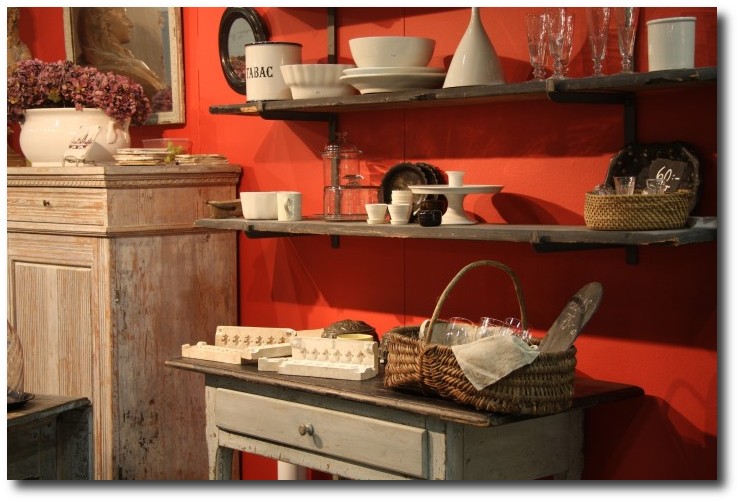
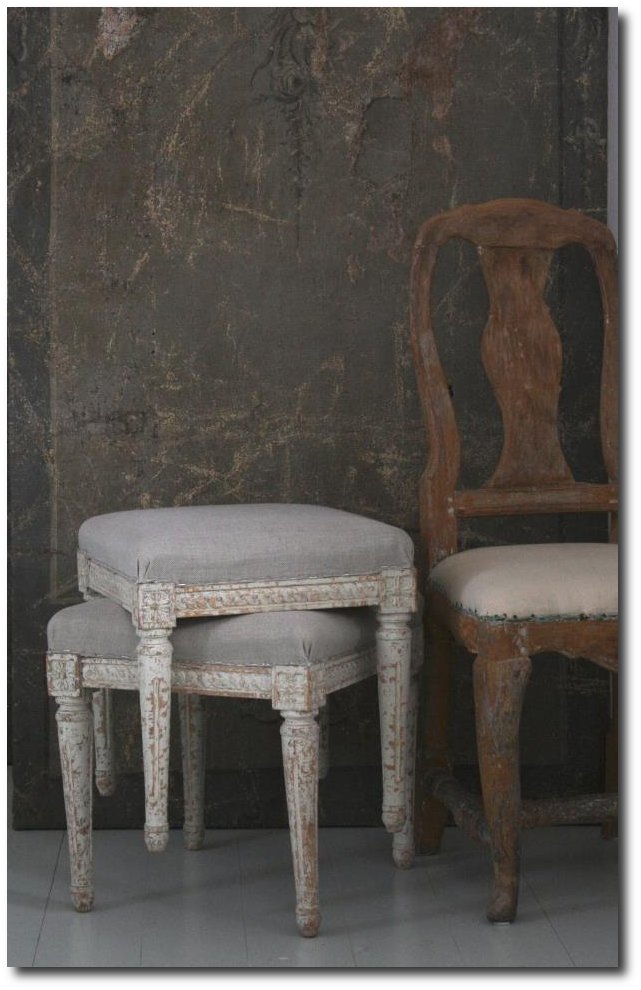

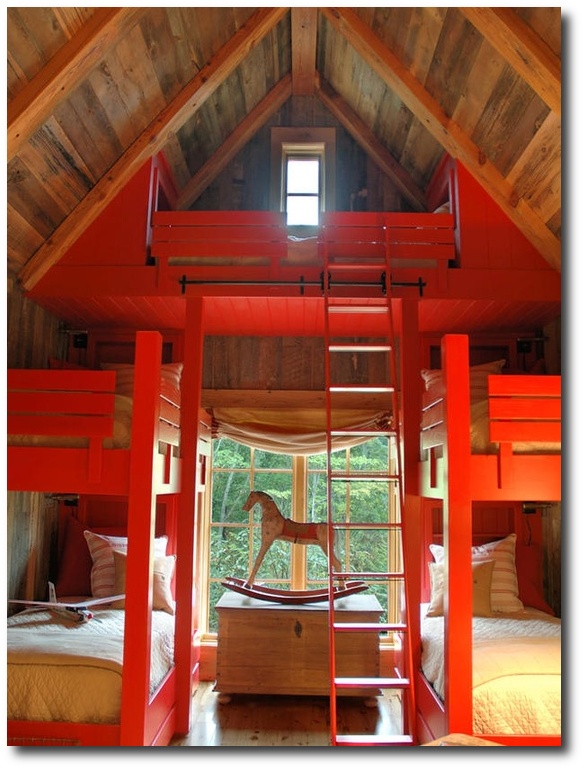
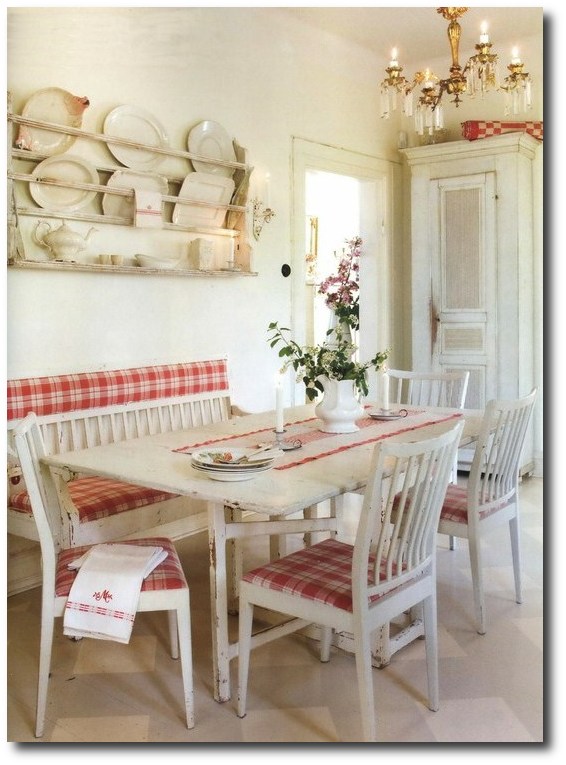

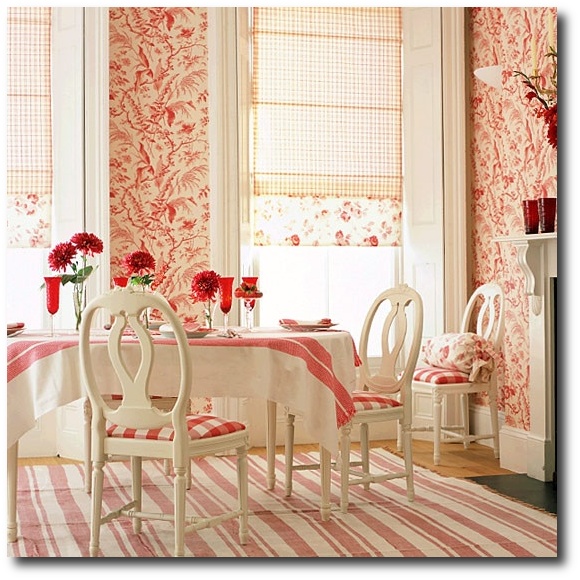

4 Resources For Swedish Decorating
Swedish furniture has been sensationally popular the last 10 years as a style that is fresh for decorating the upscale home. Gustavian style has appeared in some of the more prominent decorating magazines in the US such as Veranda, Architectural Digest, World of Interiors and even more frequent in European magazines such as Campagne Decoration.
The casual appearance of lighter colored painted furniture has been popular for centuries. France was credited with the influence of the Swedish furniture in the 17th and 18th century. Many of the formal pieces found in the palace of Versailles were made over in the same shape and form, but painted instead of stained wood. The decadence of the French furniture couldn’t be copied because it was too costly for Sweden at the time, as well as Sweden has their own taste in mind.
In France, side tables were constructed from the most costliest woods, with decoration that took hours if not weeks to complete. French cabinet makers through the 17th century used techniques such as inlay, (pictures cut from ivory or wood, and set into wood), or marquetry, ( veneer composed of numerous woods, and stained which produced a pictorial mosaic), lacquering and japanning, (the application of numerous layers of varnish) were all costly, and time consuming.
While France had the best of the best, some say Sweden did a better job of re-interpreting the design elements seen in France such as the furniture by scaling down the formality. Linen was used instead of silk, paint was used instead of the stained wood, and faux painting replaced marble walls.
Borrow Interior Design Elements From Sweden For Your Own Home
Marks Of The Swedish Style
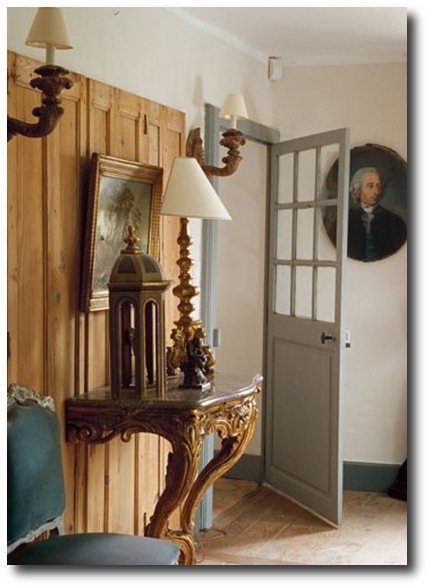
1. The Use of Paneled Walls (But In A Different Way)
The French were known for their paneled walls. Paneled walls are well known to be the most expensive and rich form of all wall treatments. Originally they were hand carved out of wood, as labor was inexpensive in the 1700′s. Today much of the decorative baroque looking ornaments are made from plaster. Wood panels once served to insulate a room from the cold stone frame of a building. It is also quite apparent that paneling was installed for decorative purposes as well.
Boiserie is the term used to define ornate and intricately carved wood panelling seen in some of the well-to-do French estates. The earliest known examples of boiseries were unpainted, but later the raised mouldings were often painted or gilded. For a great example of painted paneled walls, look at Charles Spada’s Country Home, which gives some great examples of 18th century color combinations. Martha Stewart shows a wonderful example in a green palette. A very formal dining room is done up in blue, and arches painted in oranges and pastel blush tones.
Boiseries were popular in seventeenth and eighteenth century French interior design and the Palace of Versailles. The panels not only appeared on the walls, but were also used to decorate doors, frames, cupboards and armoires as well. Often pictures would be set into the boiseries, the carving framing the picture rather like a conventional frame.
Decorating With Paint -Get This Look For Less….
Many of the wealthier Swedish people borrowed this look for their estate homes. Costly wood paneled walls were a far stretch for many of the Swedish people in that day, as it is for many people today. Paneled walls can cost thousands, and be tremendously time consuming.
Why not fake it with paint?
The Belvedere in the park of the Petit Trianon shows a fine example of what a person could do with paint to simulate the heavy ornamented look of the French style.
In Lars Sjoberg’s house featured in Country Style by Judith and Martin Miller featured walls with blue frames around them. Using two painted frames simulates the look of framed walls. Further in the post, you can see many more frames painted on the wall which do a beautiful job of showcasing furniture placed in front of it.
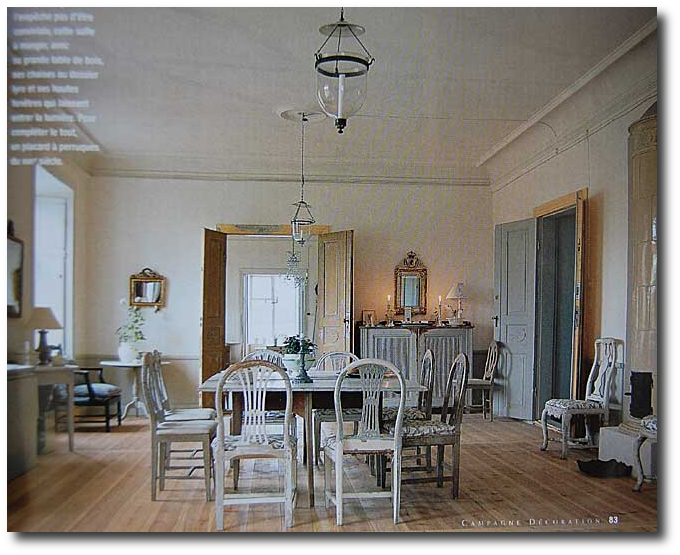
Picture Featured in Campagne Décoration
In the USA we have a chain of stores called Habitat For Humanity – Re-stores which carry all sorts of architectural elements from wood screens, to paint, sinks, and so forth, which are heavily discounted.
Here we see the paneled wall idea made from doors which are positioned side buy side. Consider purchasing similar styled doors in sets of 3, 5, or 7 which can be linked together using door hinges. As you can see here, it works!
Picture Credits– A Special Thanks to Aged And Gilded Blog, TweedlandThe Gentlemans Club, And
Lars Sjoberg’s Book- Classic Swedish Interiors
Here are some companies to keep in mind:
1. Decorators Supply– They have over 13,000 designs in their carving library. For over 100 years they have specialized in creating finely detailed composite replicas of the hand carved wood ornaments found in the most extravagant homes.
2. Bailey Interiors.com – Decorative Plaster Ornaments and Claws
3. Beaux-Artes offer decorative wall panels which can be used on walls and ceilings. Their products are cast from historic ornamentation and are available in over 20 different Finishes.
4. Victoria Larsen offers a number of ornamental frame molds which allow you to make dozens of your own molds in the privacy of your home. She also offers raised plaster stencils for the wall in a variety of patterns.
Consider a yearly subscription to Veranda, Architectural Digest, World of Interiors and Campagne Decoration.
We will be discussing accent furniture in Part 2, and Swedish painting techniques in Part 3
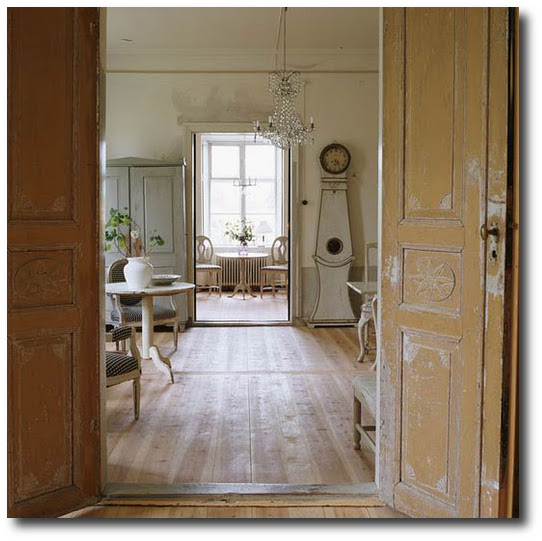
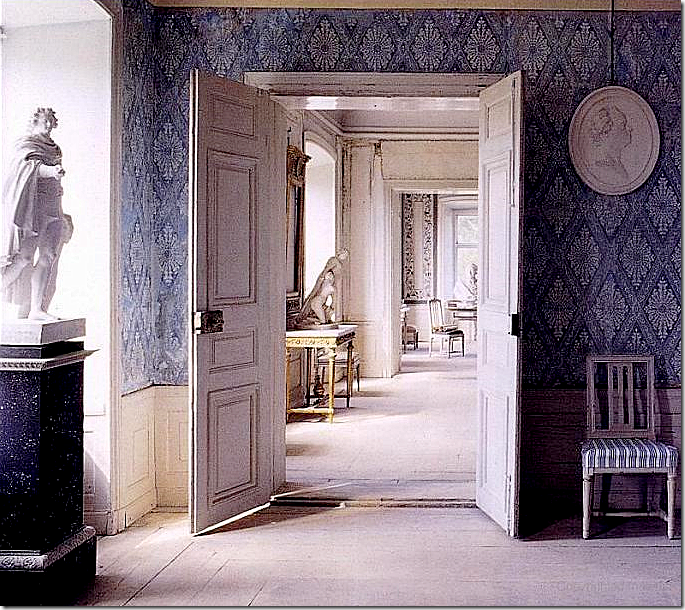
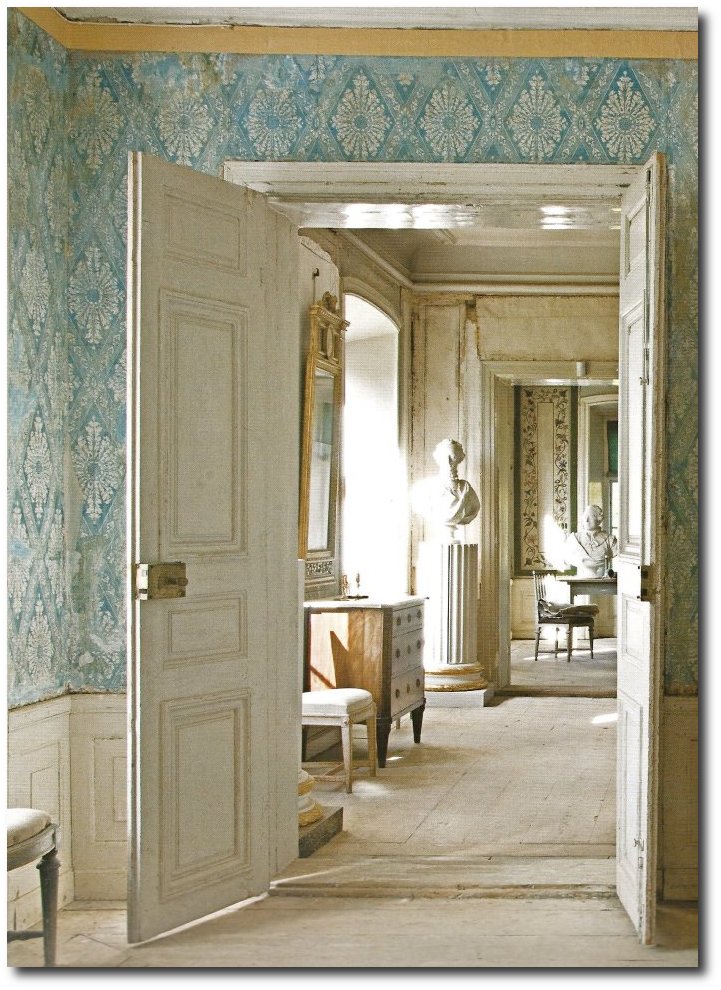
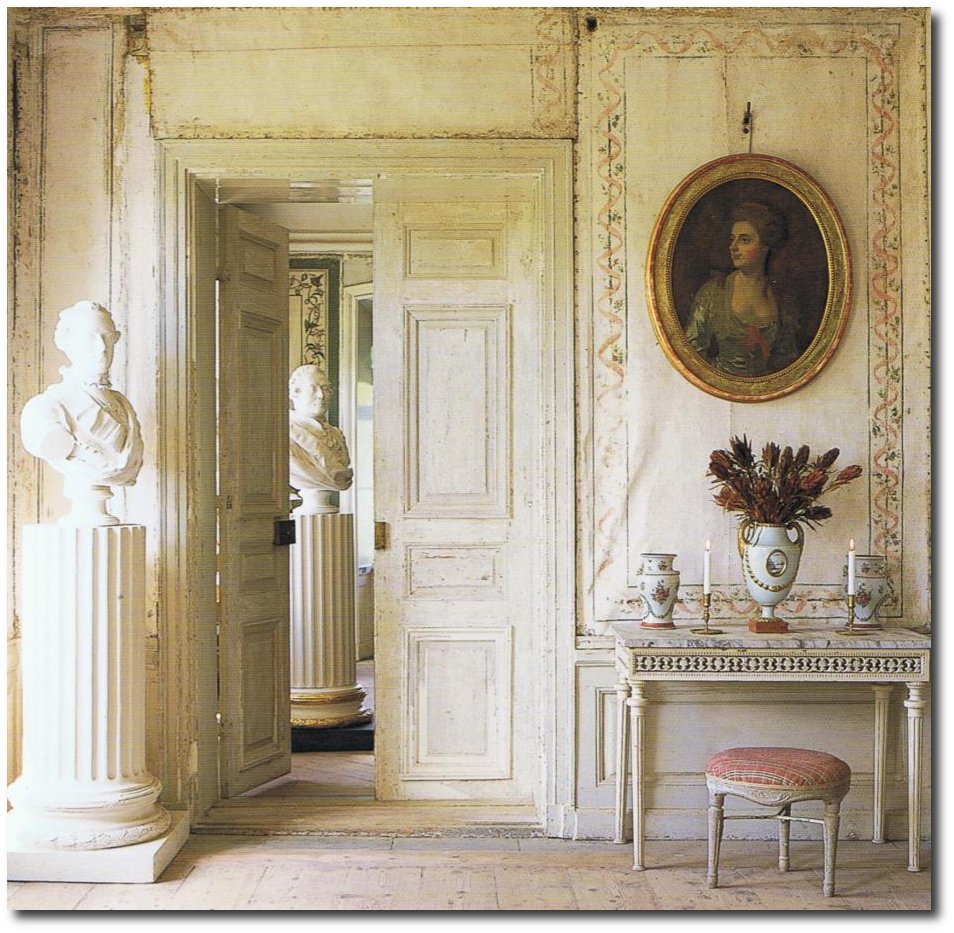
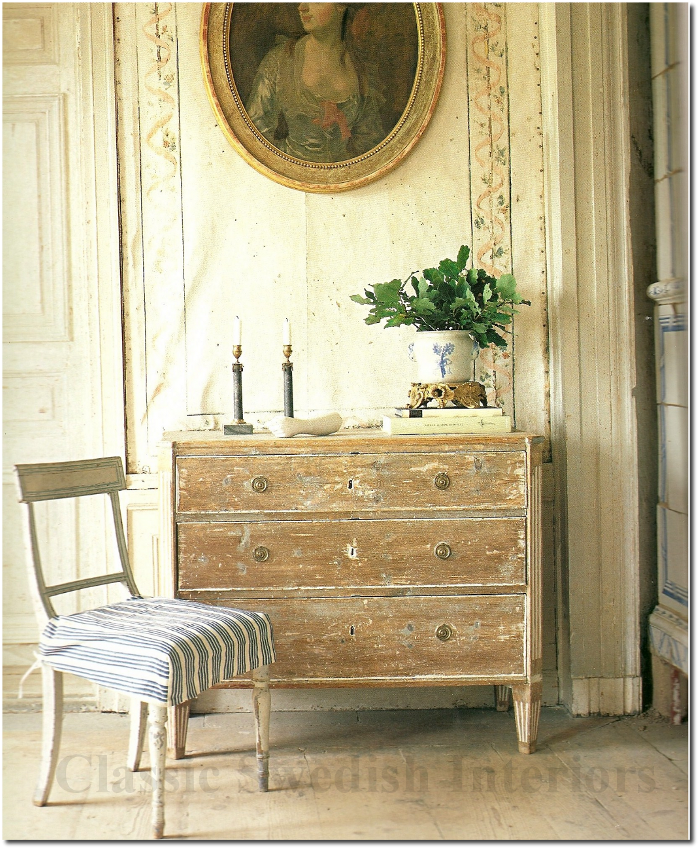
Check out Classic Swedish Interiors for more photos to get a better view of the far room

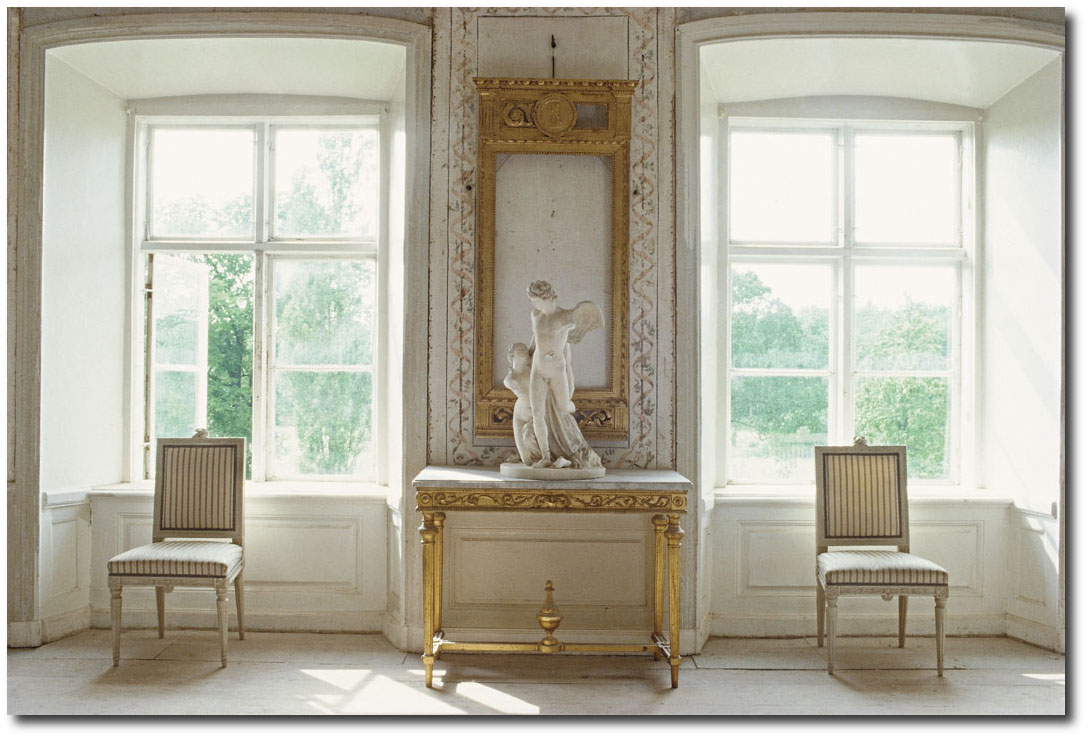
How Important Are Accent Pieces In A Swedish Home?
As we discussed in Part 1, Paneled walls can bring the Swedish flavor into your home and give you the Gustavian appeal you are after.
Another element that we see in Swedish historical homes are sitting areas using what we call today as “accent furniture”. It was common to find a number of sitting areas around the home using accent chairs, and tea tables.
2. Accent Furniture
Today accent furniture has become more popular again. We have been used to over-sized sofas, and forgotten what side chairs and tables can do for a room.
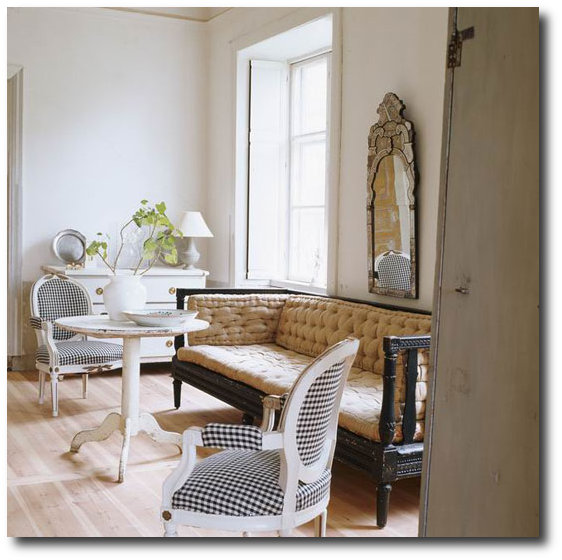
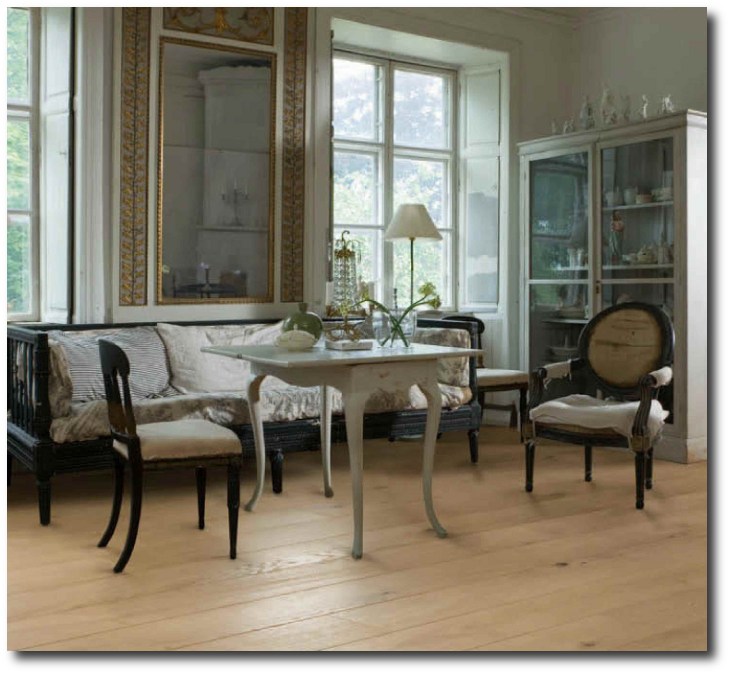
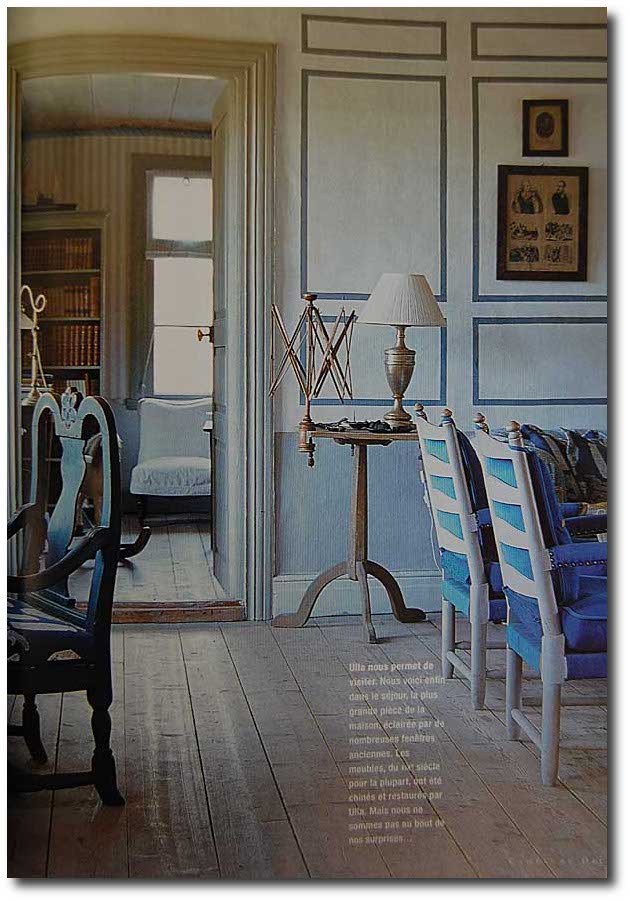
Swedish design is based around symmetrical looks. In the living room above, we see two white painted chairs in a Gustavian buffalo check paired with a black painted Swedish bench. In other photos of this room the black bench is paired with a Rococo table and the furniture seen in the rest of the home is moved around. Here we see a round white painted tripod tea table. Using accent furniture allows you to move the furniture around the house like they have done with Barbro’s home.
Smaller accent furniture became popular in France in the 17th & 18th centuries, and caught on in Sweden. The Accordion Side Table is one example of smaller scale furniture that existed in France. The accordion table itself wasn’t something seen in Sweden, but the idea of smaller tables became popular, or functional at the time.
Tables didn’t just look pretty, they served a purpose in the home. Side tables were practical for playing cards, having tea, and doing fine needlework. Writing tables were one of the most common uses for tables in this time. Tables with folding leaves were extremely popular in Sweden. Tables were pushed against the wall, and were then brought out for dinners, crafts, and schooling.
Sofa tables were designed to appear before sofas. These tables were long and narrow, and often had folding leaves which enabled the person to sit at the sofa and use the surface of the table without having to move the table closer to them. Consider adding a table paired with a sofa instead of a modern day lower “coffee table” that is seen in most homes. Or add a set of upholstered benches in front of your sofa to tie in matching upholstery.
Picture Credits– A Special Thanks to Campagne Decoration Magazine, Photos featured on Aged And Gilded Blog & Master Henry Blog