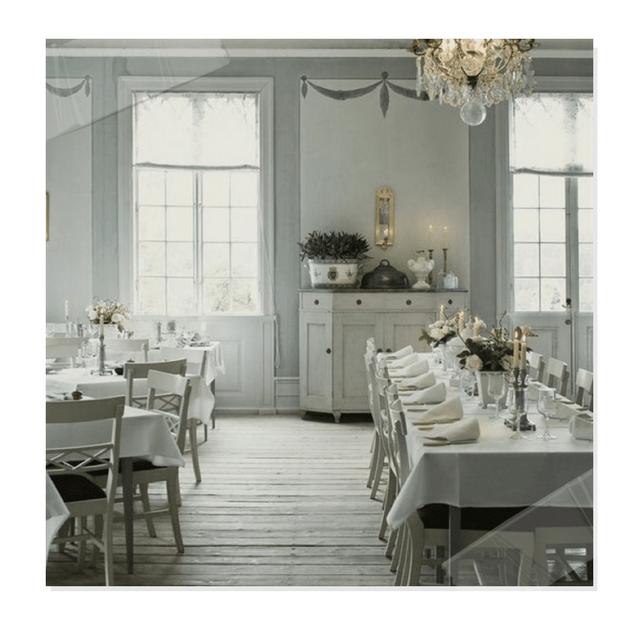
The Swedish Wreta Gestgifveri Inn
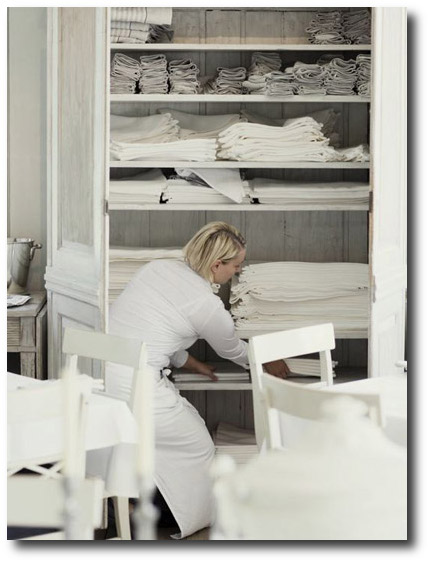
Take a trip back in time to Carl Larsson’s turn-of-the-century romanticism by dining and taking in a breath of fresh air of all things Swedish at the Wreta Gestgifveri Inn. Lose yourself in the romance of the 17th century baroque period, and forget the tv, work, and stresses of this day.
When Owner Jim Grundstrom, one of Sweden’s most accomplished interior designers, first saw the seventeenth century building, it was empty, and lacked any sort of style. Seeing beyond the battered interior, he saw the potential of restoring it back to it’s orginal form and opening it up as a boutique country hotel. This hotel gives you the choice of several different styled rooms, ranging from Gustavian, Empire and rustic folk art.
Around The Area
Only 20 minutes out of Stockholm is the Högberga farm and a magnificent view over the water. In about an hour you will find Rånäs Castle, Ulvhälls Estate and Wreta Gestgifveri.
1.5 hours north reaches you Gimo Estate in Northern Roslagen and Söderforsgatan Mansion at Dalälvens beach. Hotels Havsbaden, Chub Estate and Söderköpings Brunn are all two hours away.
The Upper Floor In The Main Building:
The Mamsells Kammare room is one of the oldest rooms in the guesthouse, showing off a country feel with a touch of red. The Kuskens Kammare is another old room, and may have been one of the rooms where the coachmen stayed. The von Fersens Kabinett room, has an elegant feel, and was inspired by the late 18th century frequent guests, Axel von Fersenis. The Bernadotterummet Room is a room decorated around the true Empire style, named after Crown Prince Karl Johan Bernadotte’s visit to Wreta in 1816.
The Gustavianska Gemaket room is a late-Gustavian-style room looking out over the apple orchard. The Hårlemanska Gemaket Room is named after the castle architect Carl Hårleman, who was a frequent guest at Wreta in olden times. The Kolonialrummet Room is an example of how the Swedish East India Company’s journeys to Southeast Asia influenced some Swedish manor houses. The Gestgifverisviten Room is where he Gustavian meets the Empire style. A warm welcome awaits you in this bedroom and lounge.
Paint It White He Says…. Washington Interior Designer Darryl Carter – Swedish Decorating

Washington, D.C., interior designer Darryl Carter certainly has made a memorable mark on the color white. Fifteen years ago he had a busy career as a lawyer when he decided to change course and open his own interior-design firm. He made a name for himself by transforming rooms that were grounded in a neutral palettes with an appreciation for showcasing art and antiques. Swedish interiors have always been known for their white based interiors. In an interview by Veranda, designer Darryl Carter gives his best tips for using the color white in your home.
1. Pick Your Paint First
“It’s not a cop out,” he insists. “It’s a way to harmonize a house in its entirety.” Once you’ve chosen your paint, select textiles next—preferably a hue that closely matches the walls. “Navigate the drapery into the wall color so that you are not so aware of the window treatment,” he suggests.
2. Paint Your Architecture In White
He says that architecture looks best in white. He gives an example pointing to a bookshelf cabinet in a Virginia townhouse which was painted to blend into the walls. The coffered ceiling was also painted the same color, which added a subtle architectural element to the space.
3. Don’t Shy Away From White Or Cream Around Kids
He tells Veranda, that you don’t have to sacrifice style and serenity because there’s a toddler in the house. “There is a presumption that neutral cannot be kid-friendly,” says Carter.
“Instead of shying away from softer shades, he suggests changing the materials. Try enamel finishes and high-gloss paint in high-traffic areas, as well as durable faux leather and outdoor fabrics for upholstered pieces that withstand the wear and tear of young children”
4. Unite Your Kids Rooms Into The Rest Of The House
Carter encourages parents to integrate their child’s room into the larger experience of the home.
“You don’t want to open the door and suddenly wonder where you’ve landed,” he says.
In one family home, Carter created a space in the child’s room which matched the overall modern style of the family’s home. Over time, parents can adjust the space with different pillows and textiles as the child matures.
5. A White Backdrop Makes Antiques Feel Modern.
I love a monumental secretary in a white space,” says Carter. Despite its size, he says, the piece could easily be lost in a wallpapered room.
“People often tell me that my rooms are very modern,” he says, “but generally they are populated with a lot of antiques.”
6. Experiment With Finishes.
“A material change in the same color can be a very subtle way to articulate the architecture of a space,” he says.
In one space, the cabinets are lacquered, the walls were matte, and the floors are reclaimed barn flooring, all washed in the same shade.
7. Revamp Old Pieces With A Coat Of Paint.
“I have redefined so many things in my house with a coat of paint,” says Carter. In the breakfast room of his D.C. home, the apothecary is now black. His latest temptation? Sepia paint, to give the Gustavian dining chairs a khaki color.
8. Be consistent, Inside And Out.
The exterior of a D.C. home was featured in Veranda’s May/June 2012 issue. Carter wanted the exterior to honor the style and presence of its surroundings. The house was painted, then power-washed until some of the original brick showed through to suggest age.
“As you approach a house, you are getting a sense of what it is,” says Carter. “I think it’s important, when you open the door, that the interior is consistent with the exterior’s approach. And then when you go out into the rear garden—the same thing.”
More About Darryl Carter:
His Website- www.darrylcarter.com
Darryl Carter On Facebook
Interesting Articles:
- – Home Decorating Ideas: DarrylCarter‘s DC Townhouse –Elle Decor
- – Darryl Carter’s New Store |DC by Design Blog
- – DarrylCarter‘s Paint Tips – Veranda –Veranda.com
- – DarrylCarter Updates A Home Near Washington, D.C. :Architectural Digest
- – DarrylCarter Paint Colors-Benjamin Moore
- – DarrylCarter and the thrill of the hunt –Washington Post
Darryl Carter Books
Darryl Carter Colors by Benjamin Moore, perfectly encapsulates his painting philosophy: “It’s more about tonality than saturation. I always suggest the fainter color.” For more on Carter’s design philosophy, his new book, The Collected Home ($24, Amazon)
The New Traditional, Darryl Carter laid out the principles of his recognized design, which balances comfort with a subtle color palette to achieve a timeless style. Darryl explores the essence of what brings a home to life, from textures to furniture to unexpected objects.
The Collected Home dazzles with gorgeous photographs of rooms that are extraordinary. Darryl provides advice for approaching home design, Lavishly illustrated, this book is a must-have for anyone who desires a home that feels richly layered, full of character, and unquestionably calm.
Reviews:
As a designer, every time I see Darryl’s work, I marvel at his talent to “white out” what would otherwise be same old traditional or colonial spaces. In other words, he can take your typical (and sometimes cluttered) design and edit it, clarify it to such a poetic yet livable state, that you wonder how modern it is despite the very colonial roots. Not that anything is wrong with color or traditional design (I’m a fan of both), but his work feels like the antithesis to hundreds of well-designed but boring spaces that seem to have a complete lack of innovative design given the modern world we live in. His second book, The Collected Home, is a heart-felt rendition of some of his latest work, his aesthetics and guiding principles. I particularly enjoyed the photographs that beautifully illustrate his strong emphasis on architectural integrity and how little ornamentation you really need if the bones are exceptionally designed. A personal favorite quote from the book, as he describes his first show house experience “..young and intimidated by the veteran designers also presenting their work, I thought, “This is not at all the way a home should be experienced.”” Knowing the context, I can completely relate to that feeling – Raji Radhakrishnan / Murali Narasimhan
By NJLeoOH
This book inspired me. I sat through only about 10-15 pages before jumping up, moving furniture, shelves, display items, putting items away and taking others out for prominent positioning. I discovered my colors (which were there all along but I didn’t see them!). Highly recommend and have shared my copy with friends for their own inspiration.
Modernism was in part a reaction to the excessive ornamentation that characterized the late Nineteenth and early Twentieth Century. Modernists craved clean lines and simplicity. Function rather than beauty dictated form. Some early modernists thinkers decried ornamentation as a crime. In pursuit of their aesthetic project, the modernists rejected 2,500 years of classical wisdom.It is into this hotly waged conflict that Darryl Carter enters. With great tact, Carter strips away excessive ornamentation and works his way back to the nature inspired origins of classical thought. He is able to find common ground between these two not so disimilar aesthetics. Carter has the artist’s gift of mixing what initially appear to be dissimilar objects and finding a coherent overall vision. His “cool” approach reminds of Swedish neo-classicism. This is Carter’s second book. Like his first book, “The Collected Home” is a great success. Highly recommended.
Picture Credits :
- The Relished Roost Blog
- Elle Decor
- Veranda Magazine
- Veranda Magazine
- June 2012 Elle Decor
- Veranda
- Elle Decor
- Architectural Digest
- Darryl Carter via 1stdibs
- Darryl Carter-Veranda Magazine
- Elle Decor
- Darryl Carter-One Kings Lane
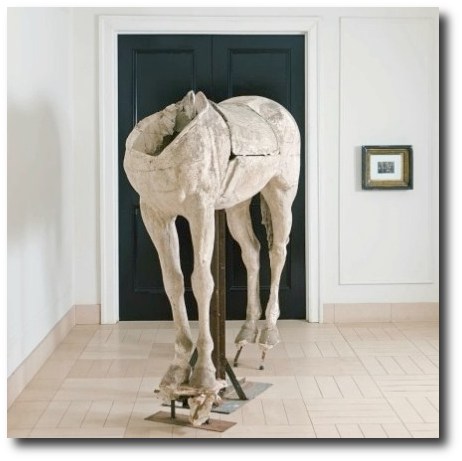 Darryl Carter- Seen On The Relished Roost Blog
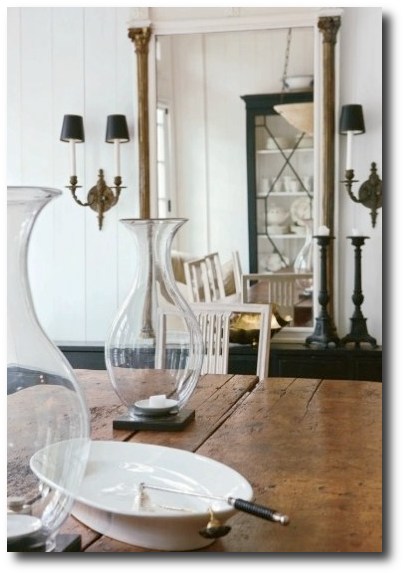 Darryl Carter- Seen On The Relished Roost Blog
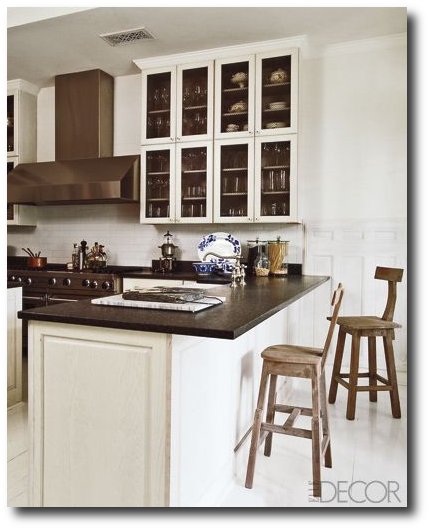 Darryl Carter- Elle Decor


5 Pro Painting Tips For Black Furniture

Anyone can paint a piece of furniture black, but there are certain tricks to make your painted pieces appear more valuable than they really are. Many of us feel that sensation of discovering a beautiful piece of furniture at a garage or estate sale, and then dreaming of what to do with it next. If you are anything like me, scrolling through pictures of paint chips, and color combinations can be a thrilling experience.
If you love lighter colored interiors such as white, light blue, or mint green, then black furniture might be a consideration for your interior. Painting a piece of furniture black can create tremendous contrast for your interior. Here are a couple tips to making your painted furniture look antique:
1. Use Matte Paint
You won’t find shiny finishes on the old antique furniture in Sweden. This article won’t cover the modern black painted furniture that one would expect to see in the 50’s or 60’s , but rather the aged furniture that someone could come across 100 or more years ago.
When selecting a sheen, consider starting out with a matte finish. Once the piece is dry you can add either a tinted wax or a tinted glaze to the final finish to give it even more depth. The sheen will then produce a look between flat and satin. Starting out with a low sheen will keep the overall finish looking rustic even after you apply additional paints.
2. Paint Your Hardware
While there are so many ways to feature hardware on black painted furniture, painting the hardware can be a smart way to making a black piece look understated yet elegant. Take a look at a French Provincial chest painted in olive by Knack Studios. The hardware was painted and carefully distressed. In this case, a little bit of distressing went a long way. Compare that photo, with this photo of a black painted bombe chest which is also painted in black. The hardware is painted, but not distressed. While bombe chests are considered some of the most spectacular pieces of furniture, this piece falls short for me.
– Darken your hardware with chemicals. Rockler sells a brass darkening solution that ages brass, copper and bronze metal. It allows you to change the color gradually so you can control how dark the final product turns out.
– American Accents by Rustoleum sells an Oil Rubbed Bronze spray paint that I have used on many pieces of my own furniture. After the paint has dried, simply distress the hardware with a sponge sander.
3. Show Off The Wood With Distressing
Adding a bit of interest to your furniture can go a long way. There are several ways to add patina. Two ways that come to mind is by distressing, and another is by layering paint.
A: Distressing is a sure way of adding depth and interest to a vintage piece of furniture. Some people like a LOT of distressing, and others like MINIMAL distressing. It is rather interesting to see how people fall into those two categories. Look at a few pictures on pinterest to decide what appeals to you. The best thing about distressing is if you go too far, simply just repaint the areas, which will tone down the distressing.
Style 1 – A Little Distressing:
Well cared for furniture that really isn’t moved a lot over the years will only have a little bit of distressing. When I think of a little bit of distressing, I think of my own grandparents home. I can remember a china cabinet sitting in the exact same spot for 30 years or longer. When this same china cabinet was passed to my cousin, it was in perfect condition.
This look is favored by many painters. A little distressing can go a long way. Areas to distress would be around the knobs on a chest of drawers, the legs of chairs, the back of chairs, and around drawer sides. The trick to distressing is to look for the areas where natural wear would occur. On a desk for example, arms would naturally rest on the front portion of the desk, so that would be the area to remove paint.
Style 2: A LOT of Distressing:
This is the style that I tend to enjoy the most. It can be a tricky finish to accomplish, and I will show you how I have achieved my personal looks over the years.
When I first began painting, I always made sure I primed my furniture, because I wanted the paint to stick to the furniture. I was afraid of the paint lifting off the furniture, so I always made sure I primed. As I experimented and advanced in my painting, I found I was pretty limited when it came to distressing as black primer doesn’t exist. I would buy gray primer, and see the gray paint in the areas I distressed. It wasn’t until much later, (almost a year later) that I discovered if I sanded well I could skip the primer all together. Many of the pieces I worked on were wood, and not metal, or plastic. The options then started opening up for me.
A few years later when I stopped turning over furniture, and just worked on my own furniture, I discovered the real trick to getting the Swedish finishes were to remove the polyurethane, stains or paint all together. I found the raw wood went a long way to getting the results I was after.
I have always been attracted the paint finishes that looked as though they have been left out in the outside elements for several years. Layering your paint with this technique can really open up the overall finish.
Distressing Tricks:
Sponge sanders found at your local hardware store can be a great tool for distressing I have found using a sponge sanders can give you the flexibility and control than electric sanders. Using a hand electric sander can take off A LOT of paint, which often times forces you to go back and repaint some of the areas. Using a hand electric sander might come in handy if you have several layers of paint that you want to expose. Another trick is to remove the paint before the paint is dry. Many of us have used this technique because it is simply easier. With sponge sanders, purchase the ones what work with water. In this instance, have a warm bucket of water and wash out your sponge sander as you go.
4. Add Patina To Your Black Paint Finishes
When it comes to really ornate furniture such as Louis XV styled furniture, why not highlight some of the intricate details? One simple way to do this is with paint. Often times painters will try to replicate this aged look by applying a beige or gray paint to bring out the beautiful depths of heavily carved furniture.
How is this done? Glaze is the easiest way to achieve this look. Simply mix half and half paint to glaze ratio in a bowl. I have simply painted on the glaze in the past, and with a wash cloth, wiped it off within a few minutes. The glaze paint mix will dry to have a transparent look, than a solid paint look. This works great in corners of detail where dust would collect over time.
Many years ago, I highlighted an black painted empire dresser with light gray paint. I wasn’t pleased with the look, because the gray painted areas looked too heavy, than natural.
I washed it off and noticed that the watered down remnants of paint that were left, perfectly highlighted the areas. It did a remarkable job of making the dresser look more expensive than it was. If you do plan on trying out this technique, dilute your beige/gray paint with a glaze, and be sure to have a damp rag to remove the extra paint. Just a little highlighting paint will go a long way.
Black Metal Furniture:
I never considered using a green wash on black until I had seen it done on an antique metal canister, so I tried it for myself. Simply mix together a bit of a grayed green color with glaze. Like the gray / beige paint in the suggestion above, you can remove the paint with a wash cloth, or create a sponged effect with the glaze on the paint to get the look of rust. Like any aged furniture, you want to try to leave the green paint where rust would normally happen. I have used it on ornate chairs, and it has really pushed the value of my furniture up a notch.
One solid color all-over looks fantastic on most pieces of furniture. While occasionally you may come across a piece where you can break up the paint with the natural wood. Consider adding dimension to your desks, dining table, side tables, which all have tops that can be left in it’s natural raw wood. Consider washing the wood (paint diluted with water) over raw wood, and painting the rest of the piece a solid black.
Paint the can be another way of adding depth. Painting only some of the areas of your furniture can allow for a more unique and interesting look. For example, the inside of a secretary can be left in it’s natural wood, or painted a different color.
If you have paint tips to share, please leave a comment below. Please link to your blog or website to your articles about painted furniture. We look forward to hearing from you.

Painted Black Furniture Swedish Desk – Picture Credit Master Henry Blog
Black painted writing desk, Sweden circa 1760 with slant front and two over two
drawers. The interior in blue paint has multiple drawers and cubbies, with two
hidden compartments. Simple bun feet. (Depth when open is 34″.)
Black painted Swedish period (1650-1750) Baroque chest of drawers.- Old Is New Blog
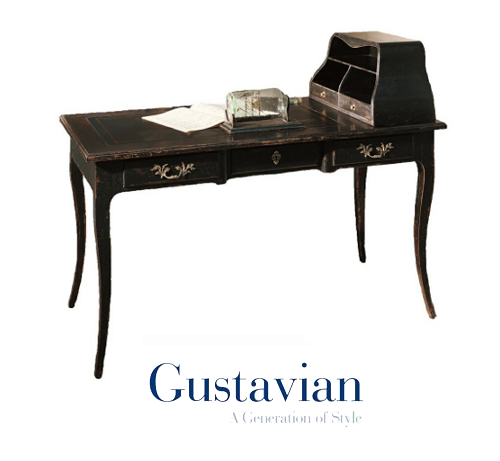
Marie Desk– Swedish Furniture By Gustavian Price: £2,600.00
Rustic Wire Baskets – Painted Furniture Glass Cloches From Næslund Antikviteter
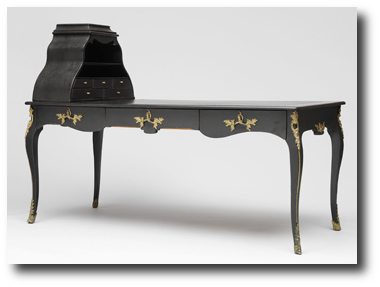 Swedish Rococo Desk. Black lacquered Stockholm Work with gilt bronze fittings.
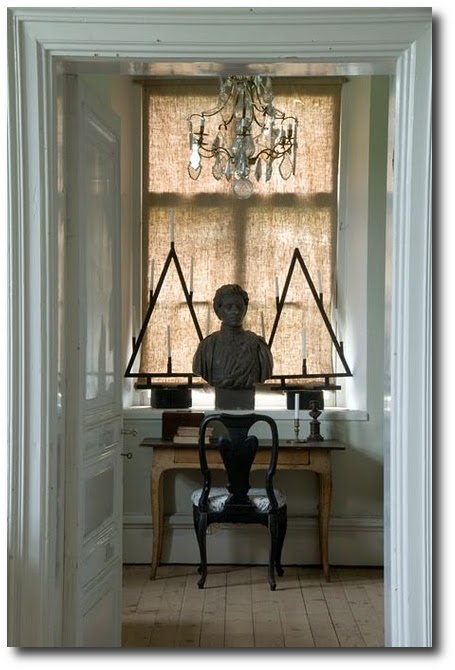 This beautiful picture credited to Lars Sjoberg was featured on the Swedish Blog Designe
Swedish Decorating With Rustic Looks – Sköna Hem
Rustic Elegance – Sköna Hem
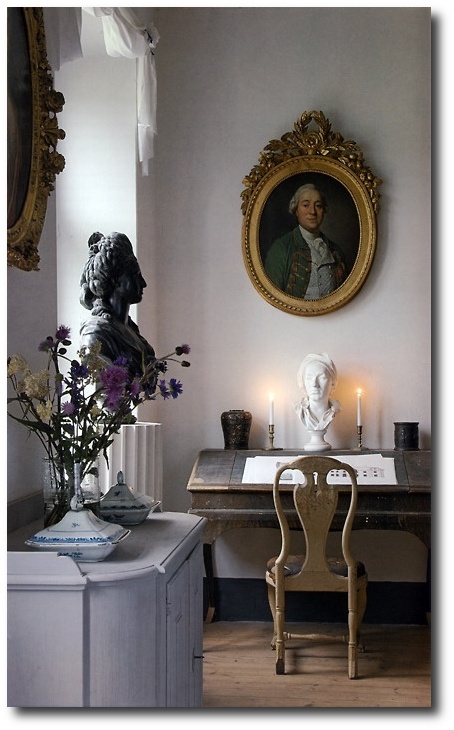 via:thedecorista.tumblr
Rustic Elegance – Sköna Hem
Chest of three drawers, Denmark circa 1750, with serpentine drawer fronts,
shaped top, and bracket base. The hardware and painted surface are original
Rustic Elegance – Sköna Hem
Black Painted Mora Clock From Tone on Tone
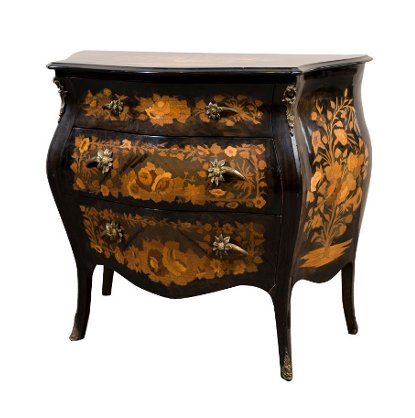
French Louis XV Hand Painted Commode –Carrocel Restorations
Each facet of this commode has intricately hand-placed inlay using old-world techniques. The inlays are absolutely beautiful. The ebony finish on the wood is a great contrast to the more vibrant inlay. Also, take note of the smooth clean lines that flow up and down the piece – met at top and bottom with solid brass floral carvings. This piece would certainly be a welcome addition to a hallway entrance, bedroom, or living room.
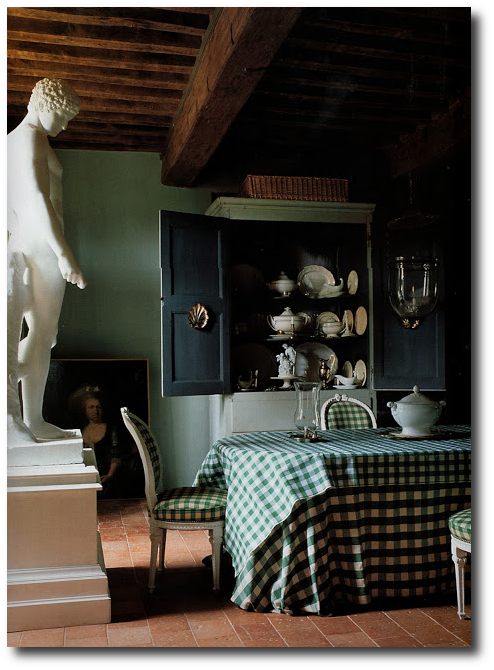 The Dining Room At An 18th Century Manor House In Burgundy
The World of Interiors, Jun 2005 genusloci.blogspot.com
Christopher Howe offers a very unique stock. Since the age of 20, he has acquired items dating from the 17th through to the 20th centuries. Most of his stock is available to view online or can be seen in his shop located on the prestigious Pimlico Road in London.
Distressed Swedish Antiques From Næslund Antikviteter
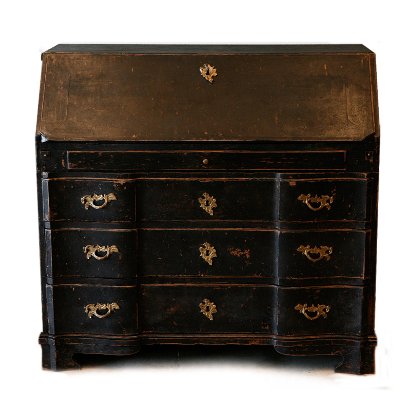 Galerie Half in Los Angeles is selling a stunning Swedish secretary which is still painted in its original milk-painted finish. The distressed paint and its brass handles really provide a great contrast against the black paint. You can see that this secretary has a really dark painted finish that you often don’t get with normal latex paint. The color is striking and would look terrific against a classic gray painted wall.


The Swedish Artist Carl Larsson
 Guest Post- Dawn- Bella Visione Blog
Carl Larsson is Sweden’s most recognized artist who depicted his idyllic life, with wife Karin and their children, in exquisite delicate watercolor paintings.
Born in Stockholm in 1853, he grew up in less than idyllic surroundings, being left by his father for his mother to rear. She worked diligently as a laundress, but earned very little. They lived in squalled conditions and he learned to work very hard as well.
At thirteen he was urged by his school teacher to apply for entry to the Stockholm Academy for Fine Arts. He was accepted, but it took some time for him to acclimate to the new, more refined surroundings.
He continued through school, became an illustrator and later moved to Paris to become an artist. He started painting in oils, but in 1882 having moved to Grez, (a Scandinavian artists’ colony) he transitioned to watercolors, which he mastered in six short months.
This is where he met Karin Bergoo and they soon married in 1883. Five years later Karin’s father gave the couple the house Lilla Hyttnas at Sanborn. This was to be the setting for many of Larsson’s paintings, capturing his life as it unfolded with his wife and their many children.
There were two major influences, whether knowingly or not, that shaped the creativity that took place within the walls of the Larsson home.
In 1891 a major exhibition of the Gustavian Style was compiled, this was in response to the look becoming popular once again in Sweden. This happened to be within the same time frame that the drawing room at Sanborn was redecorated in the fashion it still is today. The Gustavian tenets of light, refinement and unpretentious elegance are evident.
There was also a movement taking place that had begun in England, as a rejection to the over-opulent, mass-produced, poor quality furnishings that was being churned out during the latter portion of the Victorian era.
William Morris, influenced by the writings John Ruskin, longed for a return to quality, hand-crafted, thoughtful goods that harkened back to the medieval period. This was to become known as the Arts and Crafts Movement and became popular in the US as well with the works of Gustav Stickley.
The paintings of Carl Larsson capture this desire for a hands-on, real life, where the pieces in the home are beautiful, useful and lovingly created. Karin’s weavings and embroideries add texture and personality to each room. Older pieces of furniture were often painted and then embellished with portraits or motifs to create one of a kind works of art.
The rooms were meant to be lived in, enjoyed and be a place of security and comfort to the family, something Carl Larsson experienced very little when he was a child.
The legacy the Larsson’s left at Sanborn inspire those that experience its beauty to integrate a small part into their own lives.
About Dawn:
Dawn is the author of the Bella Visione Blog. This interior designer has lived in four countries on three continents and lives to blog about her strong desire for travel and adventure. Today she lives in Minnesota, where she runs a a full-service interior design studio. Casa Bella Design
offers a wide range of services including re-models, space planning, interior design and more. Her interior design studio specializes in European, Gustavian and Scandinavian style.
- Carl Larsson A Self Portrait -18×27$30
- Carl Larsson A Young Girl with a Doll – Premium Print $30
- Lisbeth Med Docka – Carl Larsson Sweden
- Larsson Carl Stina BergooSom Canvas $30 From Canvas Art USA



A Guesthouse Decorated in The Swedish Style
In the August 2010 issue of Home Beautiful, an editorial was written up on a garage in Salt Lake City which was transformed into a relaxing guest house with an overall Swedish design. Designers Marshall Watson and Jeffrey Kilmer took the everyday average space we all forget about and utilized the property in an entirely new way.
This concept of using the garage space has become even more popular in recent years as the need to accommodate “boomerang” children and aging parents has made many of us re-think the space we already own.
Many homes have attached or detached garages, and these spaces can be turned to very nice living accommodations. As with any project, you’ll want to make sure that you comply with local ordinances and building codes before undertaking such a project.
When converting a garage into to livable space, there’s always the issue of what to do with the garage door opening. A good solution is to keep a garage door in the original opening. By doing so, you can keep with the overall exterior look of the house.
Another option is to install carriage-style garage doors which feature decorative windows. These doors allow you the functionality of windows on the inside while maintaining the original garage look on the exterior. Another option is to replace the garage doors with large scale windows or doors which will fill the opening.
One of the most challenging aspects of this sort of renovation is the option of a bathroom. Additional plumbing requires tying into the existing plumbing lines which can be problematic and challenging. An additional bathroom is always a nice amenity to have for those additional guests, so investigating ways to add this possibility is worth doing.
About the Swedish Salt Lake City Garage Transformation:
After looking at the pictures of the Salt Lake City interior, one would never suspect it was a garage to begin with. Bead board paneling frames a fireplace where a gilded 19th century Italian mirror gives the living room a refined look. Porcelain garden stools are scaled perfectly for a pair of 18th century Swedish chairs. A Swedish sofa with embroidered crewel work add a natural, yet refined look for this room. A traditional mora clock in the entry way sets the mood for the whole guest house.
Subscribe to Home Beautiful- House Beautiful (1-year auto-renewal) $15 dollars ($1.50/issue)
Borrow Elements From This Home:
– Pairs of French Bergeres- Ebay
– Gingham check black curtain drapes W46 X L42 $25- Amazon
-Ivory & Orange Faux Silk Checks Curtains 52″W X 84″L – $38- Amazon
-Juliet Heavy Satin Embroidered Faux Silk Curtain Panel 52″W X 108″L – $295 Amazon
-Howard Elliott Bright Gold Lead 37″ Round Wall Mirror -$299 Amazon
-Uttermost Valent Blue Accent Table- $217 Amazon
-Two’s Company Gold Leaf Round Wall Mirrors, Set of 3- $136 Amazon
-Hickory Manor Round Rose Mirror, Cream Gold Silver- $292 Amazon
-Howard Miller Grandfather Clock $3K – Amazon
-Howard Miller Joslin Grandfather Clock- 3K Amazon
-Traditional Grandfather Clock with Chime from Coaster $230 Ebay
-Uttermost Cadey Side Table-$283- Amazon
-Howard Miller Chili Red Mora Clock For $1K Amazon
Commentary from the House Beautiful article:
FRANCES SCHULTZ: Sometimes the guesthouse is the second-Hand Rose of decorating, but this is a little jewel box.
MARSHALL WATSON: The owners treat their guests like family, and most of the time they actually are family. Between them they have seven children-two still at home and five grown and away who return frequently to visit.
Jeffrey KILMER: She wanted the house to be a fantasy escape, for her visitors to have a feeling of being transported into a foreign environment that
was cozy and warm.
FRANCES SCHULTZ- That Swedish Mora clock as you enter really sets up the whole scheme.
MW: You also feel, ‘Boy, I’m entering a really special space.’ You’re enthusiastic and drawn in. Even though you enter directly into the main room, it creates the feeling of an entry distinct from the room.
IK: And as opposed to a painting or a mirror, the clock is three-dimensional, so it adds depth and enhances the sense of space.
FRANCES SCHULTZ- Small spaces allow the luxury of less. And yet there seems to be everything here you need.
IK:- It’s laid out comfortably. The living room and dining room pieces are small scale, but still very comfortable. There’s not a lot of stuff here, but everything
has its function. We’ve kept the seating arrangements pulled away from the walls. If you create space beyond the furniture, it adds volume to a room.
MW: And there’s no upholstery to the floor. There are a lot of legs, and that creates that air space, which in turn creates an open feeling. But you have to be careful. In a large area a lot of legs will look like too many ballerinas on tiptoes.
FRANCES SCHULTZ- That elaborate gilt mirror is a bit brazen for a Nordic country cottage. Did it come from an ancestor’s castle?
MW: Well, it’s from somebody’s ancestral castle,and it works here for several reasons: It’s in a rather squashed space, so to put a square mirror there would not have been nearly as interesting. Also, a bull’s-eye expands the room. As for its elaborateness, you know the mantel was—and [still is—the place where you put your best pieces.
So the idea is that this was handed down through generations, and it was going here because it was the finest thing given to us by Grandmother.
FRANCES SCHULTZ- The lanterns seem to be the only place in the room where you’ve played up the scale. How big are they?
JK: About 18 inches tall and 13 across. There weren’t a lot of lamps, and we needed something to anchor the space. The two large lanterns delineate the living and dining spaces and give an intimacy to each,but at the same time pull them together.
MW: We also used downlighting in this room,and rather dramatically on that wonderful wall of wood that’s the fireplace wall. There’s a hidden door at the left of the fireplace to conceal a closet and television—that’s easy to do with beadboard.
It was typical of both Swedish and American Colonial houses to have wood paneling on the fireplace wall, since it was the focus of the room, and the rest of the room would be lath and plaster. We added beams also to give that cozy feeling of a very old
house with low ceilings.
FRANCES SCHULTZ– The kitchen blends so seamlessly into the room that
I almost missed it.
M W: We love to do kitchens, but we hardly ever do a ‘normal’ kitchen. We try to find an antique and adapt it to a kitchen cabinet door-front, whether it’s a rustic couple of boards from a wash stand or a wonderful Gustavian sideboard, which is what these were inspired by.
FRANCES SCHULTZ-There’s an element of depth in everything, from the fabrics to the furniture to the layers of color and glazing on the painted surfaces.
MW: In a small space you view things close at hand,so in many ways the detail is more important than it might be in a grander space.
FRANCES SCHULTZ- Which is not to say you don’t have elements of grandness. The clock, the mirror, that amazing headboard. Talk about going for Baroque.
MW: And if it ain’t Baroque, don’t fix it. Isn’t it fabulous? It was part of a large cartouche that came from Austria. It’s pine, and in two pieces mounted directly to the wall. We thought it was reminiscent of a chalet in Europe where you’d throw this one
enormous piece in a room. It makes the room feel a little larger, and everything else holds together.
FRANCES SCHULTZ-The house may be small and relatively sparse, but there are big gestures.
MW: You don’t have to have a lot of pieces in the room if the pieces have a lot of character. We do many large projects, and it’s wonderful to have these great, large rooms for entertaining. Yet invariably the couple finds the smallest, coziest study or
library to live in. In our everyday lives we want to feel enveloped and protected, don’t we?
The surprise of a gilded 19th-century Italian mirror “gives the living area a great jolt,” Watson says. Porcelain garden stools are perfectly scaled for the pair of 18th-century Swedish chairs.
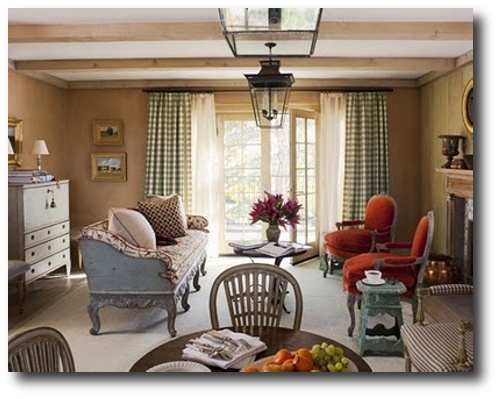
The house is on a promontory that overlooks a canyon: “There are several resorts in the region, so it gets a lot of use, winter and summer,” Kilmer says. Seating is arranged away from the walls, giving the room an airy, open feel. The cushion on the painted antique sofa is covered in Hinson’s Classic Crewelwork and shaped to follow the lines of the wooden seat. Curtains are Mariefred by Country Swedish. Sofa and drop-front desk from Evergreen Antiques.
Beautifully effecting patina and age, decorative painter Judy Mulligan applied multiple layers of pigment and glaze to kitchen cabinets and walls. The narrowness of the Dennis & Leen Formations dining table “allows for intimate, lively conversation,” Watson says. English Hepplewhite-style chairs are covered in La Seyne by Brunschwig & Fils. Sub-Zero refrigerator with custom panels; Viking range and hood.
Gustavian Three Seater Sofa By Gustavian sells a traditional Swedish 18th Century sofa made from solid birch wood with hemp fibre in supporting weave. Seat and back cushions in natural rubber and coconut fibre. Hand carved floral pattern on the front. Price: £3,200.00
White Painted Gustavian or French Style Carved Wood Sofa – A very decorative white painted Gustavian or French Style carved wood sofa, modified to accept comfortable upholstered cushions $4,950.00 FS Henemader Antiques


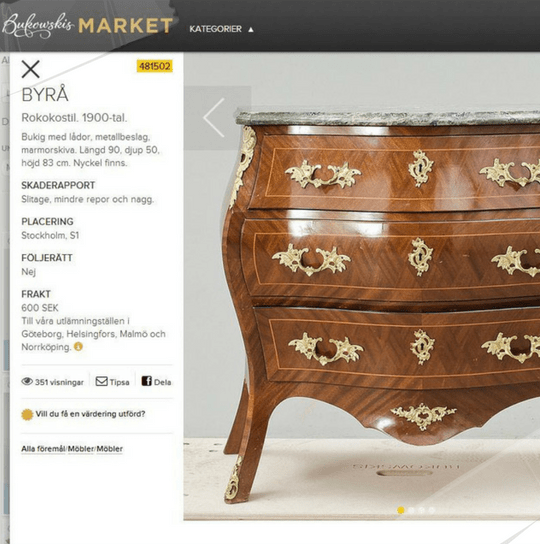
Swedish Furniture From Bukowski Market
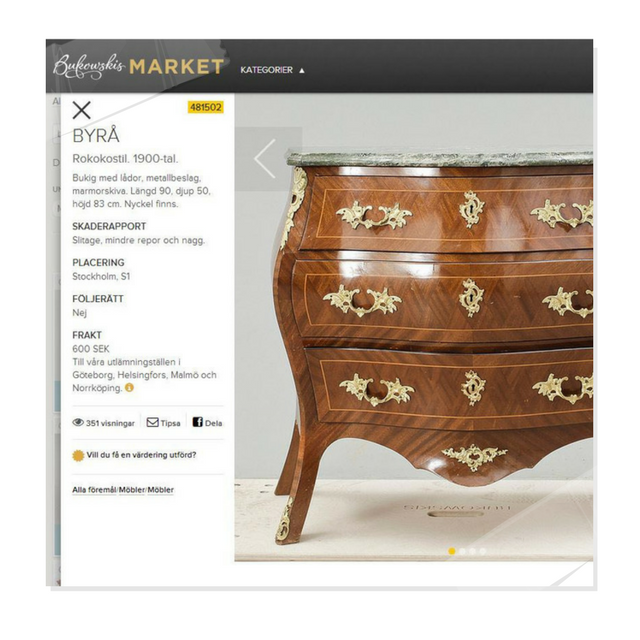
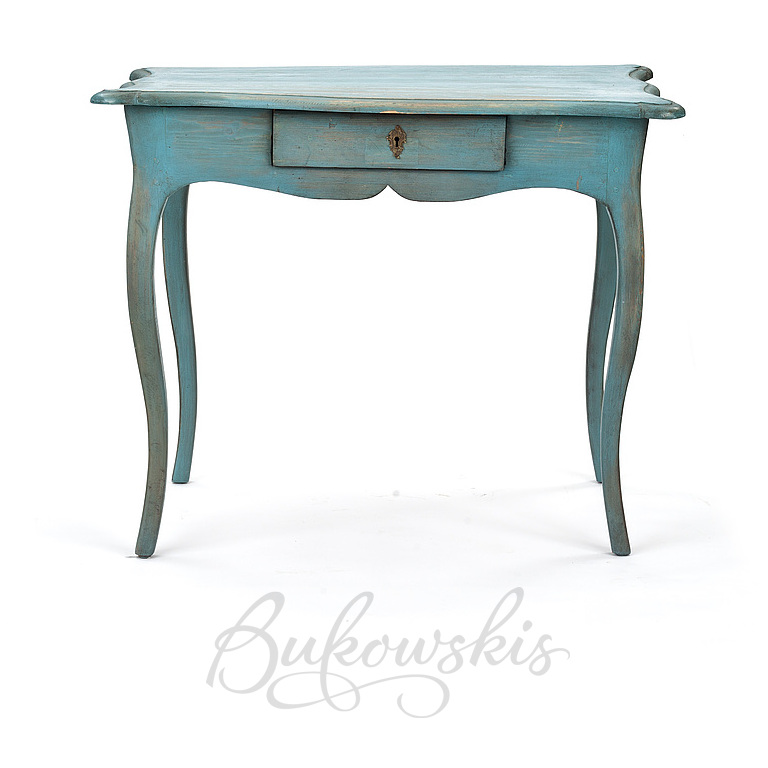 Rococo Desk 1700’s
Bukowski is the leading auction house founded in 1870 by the Polish nobleman Henryk Bukowski. Bukowski Market also happens to be Sweden and Finland’s largest on-line internet site for quality auctions. Bukowski Market offers modern capabilities to the auction experience; one that combines online shopping with spectacular antiques and reliable expertise.
Bukowski pairs together buyers and sellers from around the world and allows antiques to be brought to the public for sale. All items sold at Bukowski have been reviewed by experts in showrooms in Stockholm, Gothenburg, Malmö, Helsinki, and Norrköping. Bukowski offers a large assortment of antiques, design, art and decorative items for all tastes. Before bidding from Bukowski, be sure to look at their terms of sale, and have your shipping and pick up arrangements set before bidding.
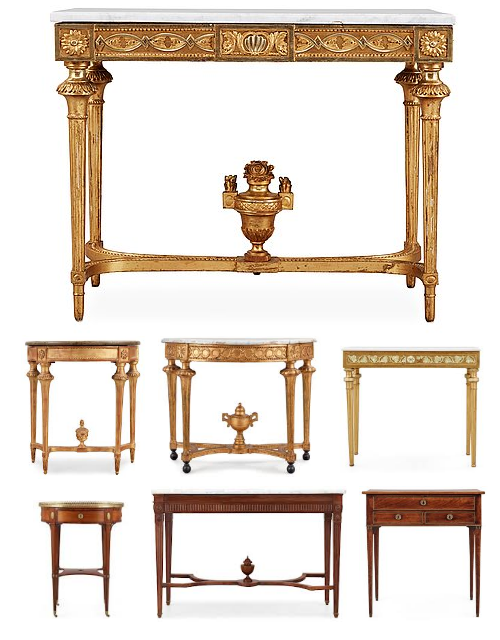

216 Selections From Wallpaper Direct – Swedish Decorating
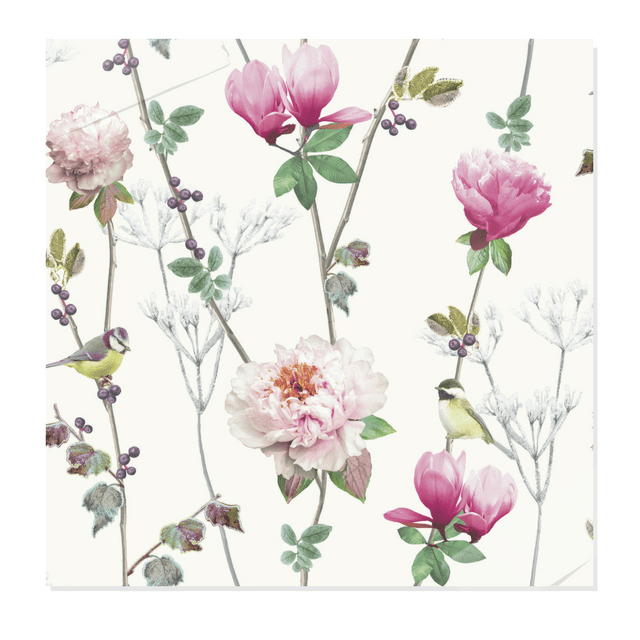
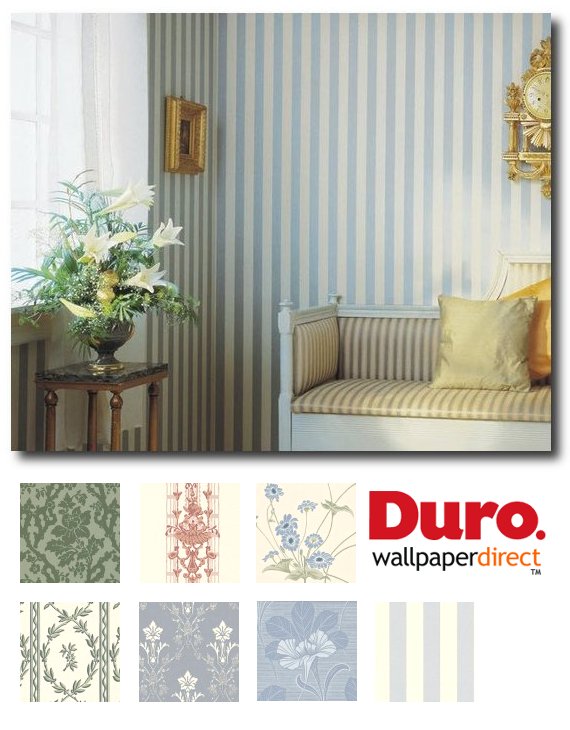
Duro Wallpaper From Sweden
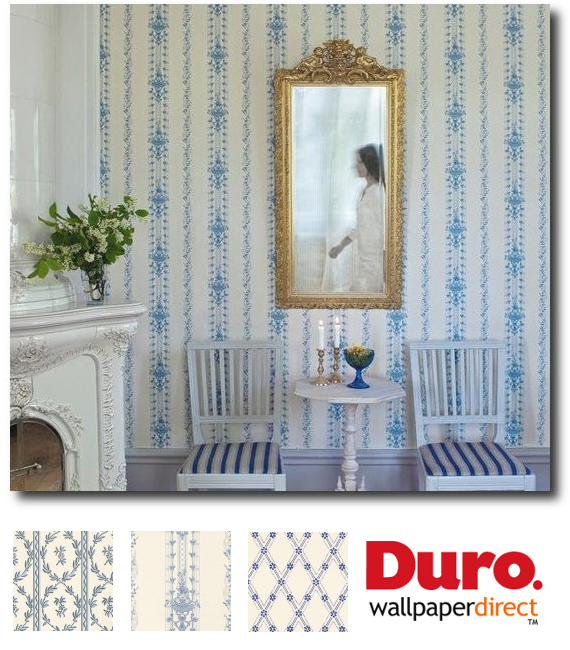
Duro, for the first time is now offered in the USA. Duro is a family-owned company and leading brand in Sweden, has been around since 1930, and is one of only 120 companies to be appointed to the Royal Court and has had this distinction since 1946.
The printing process used by Duro uses ten times the standard amount of ink to create a distinctive, rich look, similar to hand-printed papers. They also have started a green initiative during the 1960s and eliminated PVCs, developed their own water-based inks and uses only solvent free coatings.
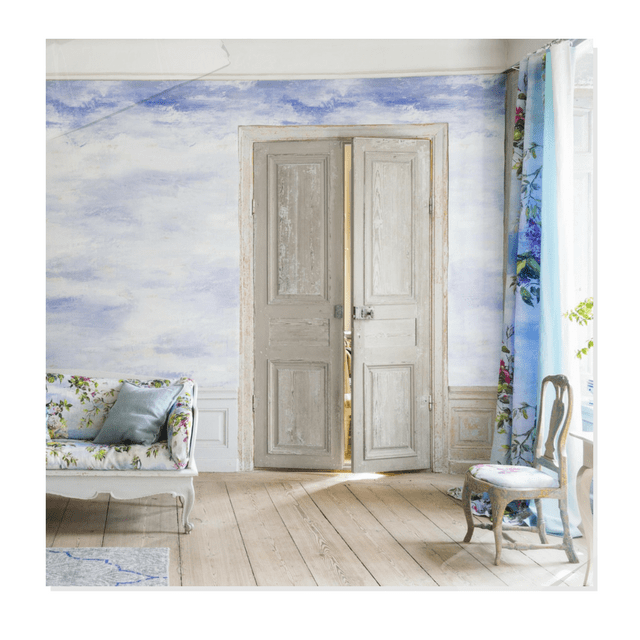
Cielo Panel by Designers Guild
Make Your Own Folding Screens With Wallaper and Wood
 Gammalsvenska Collection By Duro From Wallpaper Direct
Thibault Design
About Wallpaper Direct:
Wallpaper has been selling wallpaper online since 1999. They carry over 4,000 different wallpaper patterns. To understand the volume of their business, they have approximately 10,000 wallpaper samples on hand, and dispatch 40,000 samples per month through the mail.
Wallpaper Direct is a trading name of C. Brewer & Sons Ltd. and is part of the BREWERS group of companies. C. Brewer & Sons is one of the country’s oldest decorators’ merchants, established in 1904. Brewers holds the Royal Warrant for the supply of decorating materials to The Queen. Brewers is a family run business with more than 146 stores selling an extensive range of decorating materials. Paint and wallpaper is what they specialize in.
Wallpaper Direct has two distinct websites. One for their international clients, and another for the United States. We’ve been supplying equally discerning customers in the USA from our UK site since we launched Wallpaper Direct online in 1999, and now we’re open for business with a new American company Wallpaper Direct Inc with a dedicated team in Tennessee.
Wallpaper Direct
Call Toll Free on: 1-855-823-9754
Email: help@wallpaperdirect.com
Wallpaperdirect Inc.
PO Box 1258
155 D-2 Durham Drive
Maynardville
TN 37807
Uses For Wallpaper Other Than Walls:
Do you want to create a wow factor with wallpaper? Here are a couple of tips how you can transform your home and simple every day objects with wallpaper:
1. Mod Podge Photo Mats With Wallpaper
Wallpaper can be used as Artwork. Frame pieces of wallpaper and group these frames together to create a miniature art gallery. OR, consider covering picture mats with wallpaper. Simply use mod podge which can be applied to empty mats.
-Craig Frames Collage Frame- From $20 on Amazon
-Accent Design Framing Mat Double 5″x 7″Ivory/Gold- Amazon
-Accent Design Mat 8″x 10″ 4 Openings- Amazon
– Accent Design Mat- 2 Openings, – Amazon
2. Wallpaper Your Closets
Consider transforming your walk in closet, pantry or linen closet with a statement of yourself using wallpaper. Wallpaper the walls, and consider buying storage boxes, which you can then cover with the wallpaper for a unifying effect. Closets allow you to experiment with bold patterns, and outspoken colors.
– Darice 8/9/10-Inch Paper Mache Round Box- New From $6- Amazon

3. Mod Podge Wallpaper To Furniture
One of the best artists to site, would be Bryonie Porter’s Wallpaper Furniture. You can see how wallpaper can go a long way on furniture. Transform a vintage chest with wallpaper, or consider adding interest to glass display cabinets. Add wallpaper inside a chest of drawers, or inside of a wardrobe. Apply two or three coats of clear polycrylic (not polyurethane as it will yellow it) to protect the wallpaper, sanding gently with a very fine sandpaper between coats of varnish. Use wallpaper as drawer liners. Line the inside of a drawer with wallpaper cut to fit. Attach with double-stick tape so the lining won’t shift when you’re rummaging in the drawers.
Additional Links:
– Decoupage Is Simple! Update Your Kids Furniture- Kids Room Decor
– Decoupage Map Wallpaper Dressers & Kids Map Decor- Kids Room Decor
– 30 Mod Podge Project Ideas – The Painted Furniture
Previous Posts For Inspiration:
-Swedish Interiors: The Chinese Pavilion- here
-Swedish Styled Wallpaper- here
-How To Decoupage Furniture- here
Ben Dhong’s combined classic Swedish antiques in a residence for a finance executive in San Francisco’s Marina. Ben Dhong left the world of finance to intern with designer Martha Angus. He later launched his own design firm, Benjamin Dhong Interior Design, and today Ben works for clients around the country,and has his work published in House Beautiful.

The Gustavian Inspired Room:
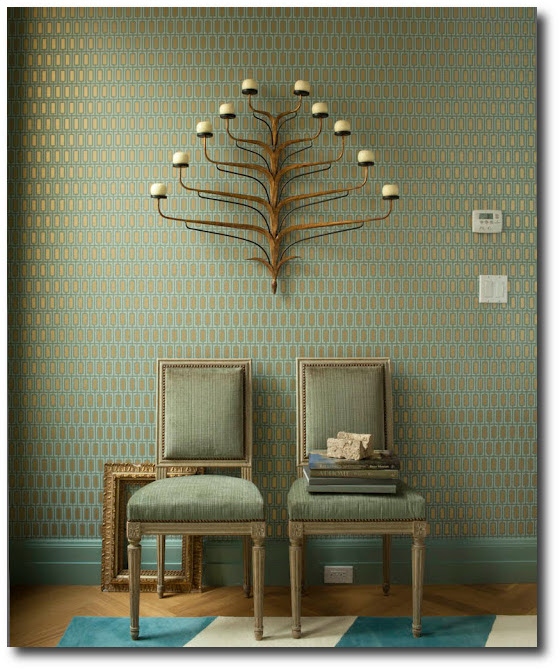
“This room is all about my love of contrasts and how to highlight what you love about something by pairing it with something that brings out that essence.” The wallpaper sets an entirely different direction for the Swedish antiques placed in this room. It goes to show you the power of wallpaper.
Combine the New with the Old:
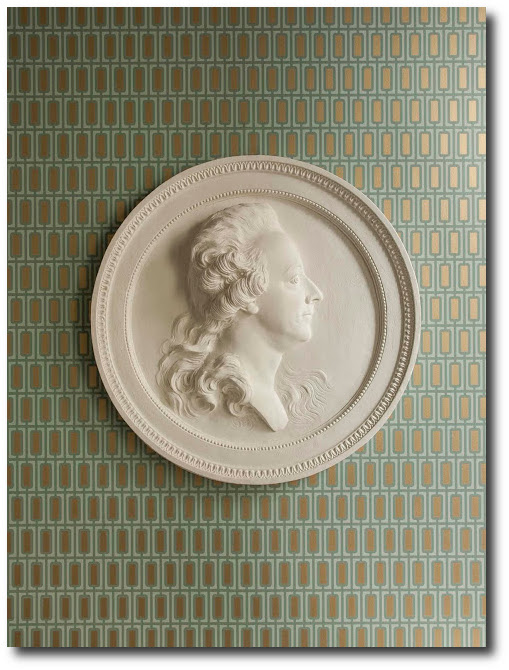
The wallpaper’s field of gold blocks creates a modern backdrop. The plaster medallion of king Gustav pops like a piece of modern sculpture, and gives the room a focal point. The polished silver Saarinen style base pops against the carpet, and the Louis XVI-style chairs bring in the rich flavor of Sweden into to the room. Ben brings a very fresh approach to classical design.
1. Great Design Doesn’t Have To Be Expensive
“I play a fun game with people and tell them that in this room is something from west elm, ikea, restoration hardware and marshalls and make them try to find it….it all proves that chic doesn’t have to be expensive.”
2. Elevate Your Overall Collections With A Few High End Pieces
“I like creating confident rooms in which everything is not shouting at you “look at me”. It’s a low-keyed confidence. The ability to pair the precious with the humble. One of my joys is to elevate the humble and treat the valuable as an everyday object”
3. Just Focus On What You Like Rather Than Just “Expensive”
“For years I couldn’t figure out if I’m a traditionalist that likes modern things or a modernist that has a strong sense of history. I’m now comfortable with dropping the labels. Beautiful design is timeless.”
4. Layer In Points Of Interest
“I love layering textures in the same color tones. It brings a richness in a very understated way“.
“I adore contrasts. There is a wonderful tension between the contrast of a rough linen with a rich velvet, or a distressed wood with a silver bowl. I find that tension exhilarating.”
5. Choose Furniture That Has An Edge Of Beauty
“Great thought goes into the combination of a room. Some pieces must speak, while others must be sotto voce. The addition of a new piece may very well require removing something to keep it balanced.”
“I like my rooms to have a bit of intellectual heft…A sense of history and erudition but never pompous.”
Furniture Credits:
Dining chairs: Vintage Louis XVI Style chairs, Tara Shaw Antiques
Wallcovering: turquoise and gold geometric metallic pattern, “Margot,” by Sandberg
Dining table: Hammered nickel table base by Julian Chichester and vintage Knoll top from Converso
Chandelier: white plaster from Donzella Gallery.
Statue: “Attitude” by Paul van Lith, Erickson Fine Art Gallery.
Relief: Plaster Medallion of King Gustav from Real Gustavian.
Carpet: custom turquoise and cream diagonal stripe wool carpet, designed by Benjamin Dhong.

A Look Behind The National Museum of Stockholm

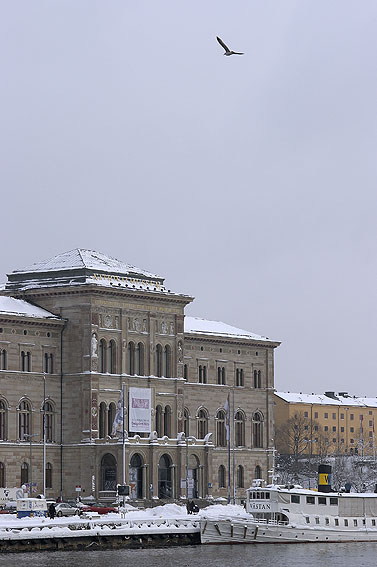
If you plan on visiting Sweden, then don’t miss the chance to go to the National Museum of Stockholm. I stumbled across some of their pictures on Flicker, and thought you would find them as interesting as I have. Fotograf Alex Hinchcliffe’s photostream shows a photo with a model in one of the rooms. This museum would be a wonderful place to spend the day.
Artists such as Rembrandt, Rubens, Goya, Renoir, and Degas are common as The National Museum contains about 16,000 collections of paintings and sculptures. They feature artwork from the late Middle Ages up to the beginning of the 20th century, and the French 18th century collection is regarded as one of the best in the world. The Royal Castles Collections were owned by the State, and today many of the collections appear at the National Museum. Enjoy paintings, engravings, drawings and sculptures that once existed in Gripsholm, Drottningholm, Strömsholm, Rosersberg and Ulriksdal.
National Museum of Stockholm
Be Apart Of Their Guilded Tours- See Their Schedule Here
Questions about the museums exhibitions and programs etc. info@nationalmuseum.se
Address: Nationalmuseum Box 16176 S-103 24 Stockholm Sweden
Switchboard: +46 8-5195 4300 24 h Info: +46 8-5195 4410 Fax: +46 8-5195 4450
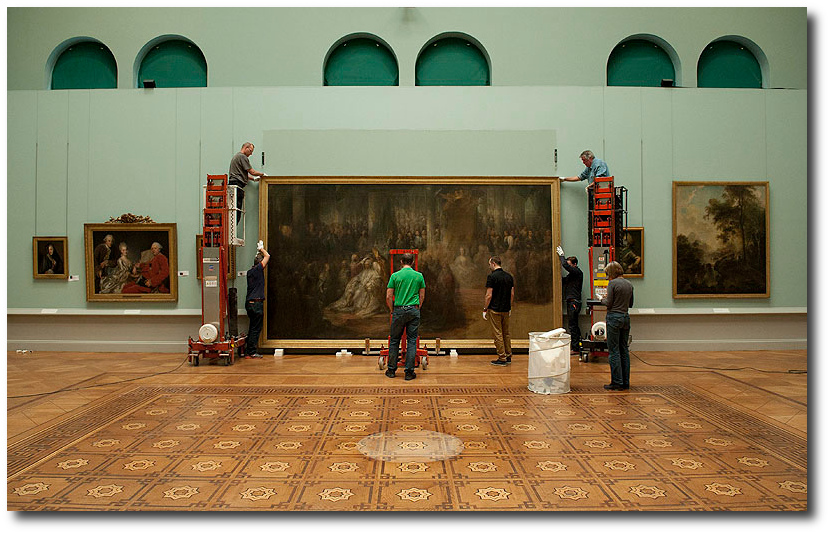
Check out the beautiful wall colors and the patterned floor. The marble pedestal and the white color of the sculpture provide a great contrast. The classic gold paintings look terrific against the blue walls.
Moving out- featured on flicker
Pride & Prejudice, 27 September 2012–20 January 2013
National Museum of Stockholm – Gold Leafing A Frame

Swedish Interiors From The National Museum of Stockholm-
Troms l’oeil painting by Johan Sylvius in the stairwell at Drottningholm Palace
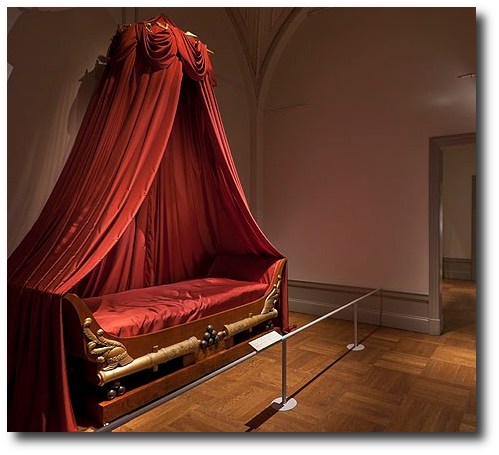
National Museum of Stockholm – Exhibition Napoleon Karl Johan Alexander
Exhibition Napoleon- September 30th 2010 – January 23 2011.
Alexander Roslin, 2007-2008
Gripsholm Interiors Featured On National Museum of Stockholm Flicker
Matsal Dining Hall Featured on National Museum of Stockholm




Antique Swedish Dealer Jane Moore’s Home Veranda Magazine
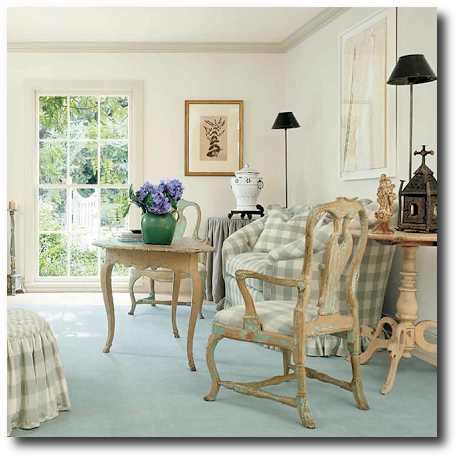
Veranda featured a wonderfully Swedish home way back in their March 08 issue of a home designed by Jane Moore. This home was also featured in the book Swedish Country Interiors by Rhonda Eleish & Edie Van Breems which was published in 2009. Indulge Decor Blog put together a terrific job of comparing the home in each of the publications, and noted what changed and what did not.
This home was decorated in both Swedish and French antiques. Among all the antiques that stood out were the chairs which were featured in the house. The chairs sitting in the living room, have detailing paint in light blue, which perfectly contrasts the sandy colored linen.
Swedish rococo chairs are paired with a check upholstered couch and feature a heavily distressed paint finish with colors of green. In the sitting area, a pale blue rug seems to be the perfect choice to add color amongst simple Swedish rococo chairs. This room is simple and elegant, and the furniture seems to add so much of the interest in this room.
About Jane Moore:
Those who follow the Swedish and French decorating circles know all about Jane Moore. Her interior designs have been admired for years. Jane Moore is an interior designer and antiques importer from Houston. Early in Jane’s career she imported primarily English antiques. It wasn’t until she traveled to France that she fell in love with the Provence style. Impressed by the cottages and farmhouses, it influenced her whole design compass. She later traveled to Sweden and found more of the humble countryside she saw in France.
“Everything was so simple. They copied from the French, but in a more rustic way. I loved that.”
Jane Moore’s work has been published in Veranda Magazine and Southern Accents Magazine more than once. Her work was also included in The Houses of Veranda book by former Veranda editor Lisa Newsom. Jane and Lisa Newsom are now connected by family. Jane’s daughter, Shannon, is married to Lisa’s son, Andrew, and the pair (Lisa and Andrew) own the Wisteria catalog.
Veranda featured an article titled “5 Design Tips To Live By– in which Jane Moore gave her top 5 tips when it comes to decorating.
Consider Your Environment
“One of the most important rules of decorating is to let your environment help you make decisions about your home. For example, I have always lived in Houston, where it is very hot and humid. As a result, I always pick cool colors that come from nature—soft blues, greens, grays—because when I come in out of the heat, I want to be refreshed. Wherever I am, I look outside and bring that in”
Edit Your Home, and Keep Only Things That Work With Your Current Style
“In each stage of life, we have different needs. Many of us want to keep holding on to things from each stage. We feel that if we hold on to what’s safe, we don’t have to deal with what’s changing.It’s hard for a lot of people to get rid of what was given to them or what they bought with their own money in their earlier stages of life. But as we grow and mature, our likes and dislikes change, and that’s okay! Don’t hold onto what doesn’t fit anymore.”
“We all love a lot of different things and different looks. Decide what you love the very most, where you feel the most comfortable, what’s the most peaceful to you. Once you’ve done that, carefully edit out what doesn’t enhance that look or feeling. I started my career doing almost all English, but as I grew to love the Provençal and Swedish aesthetics, I let go of those English things, even though I still loved them. The same goes for people with a lot of bright, colorful pieces who want to transition to something serene and neutral. With each object, ask: ‘Is this going to fit in?”
Be Who YOU Are, and Not Someone Else
“Many of us have things we don’t necessarily love, but we live with them because they have sentimental value: heirlooms, gifts, things we didn’t know how to say ‘no’ to. What I tell my clients is this: Be in the moment as it is right now. ‘It’s your moment. Let’s do what makes you happy, what makes you have a good feeling when you’re home.’ Those before us—grandmothers, mothers, friends—had their time to enjoy what they loved, but that doesn’t necessarily mean we have to love it, too.
Buy things you LOVE, LOVE, LOVE
Avoid buying what I call ‘fillers.’ Instead, buy only what you absolutely love, what you simply cannot live without. A good rule of thumb: If you see it, don’t buy it right away. Then if you keep thinking about it, go back and buy it, because you’ll always be sorry if you don’t. Most of the time it costs more than you thought you’d ever spend. Buy it anyway. A few years from now, it will be even harder to find and cost twice as much. For example, I have this 18th-century hand-carved angel on my mantle—it wasn’t anything I was looking for, but when I saw it, it just touched me. I didn’t buy it immediately, though. I thought
about it for 24 hours, and I still just had to have it. At the time, I was trying to rationalize purchasing it, thinking ‘Oh, someday my daughter will love it, or my granddaughter will love it,’ Then I thought, ‘No. I love it, and if they choose not to have it in their homes someday, that’s all right.’
Contact Jane Moore:
2930 Virginia St. Houston, Texas 77098
Phone (713) 526-6113
Jane Moore Interiors On Facebook
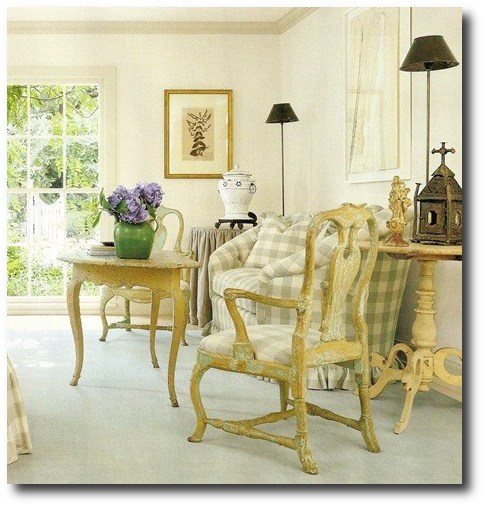
Gustavian Room Designed By Jane Moore Featured in Veranda March 08
Also seen on “Houstonian Great Jane Moore”- Cote de Texas
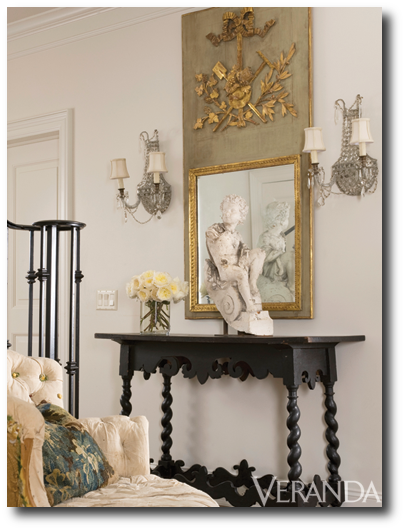
A stunning Trumeau Mirror- Seen On Veranda
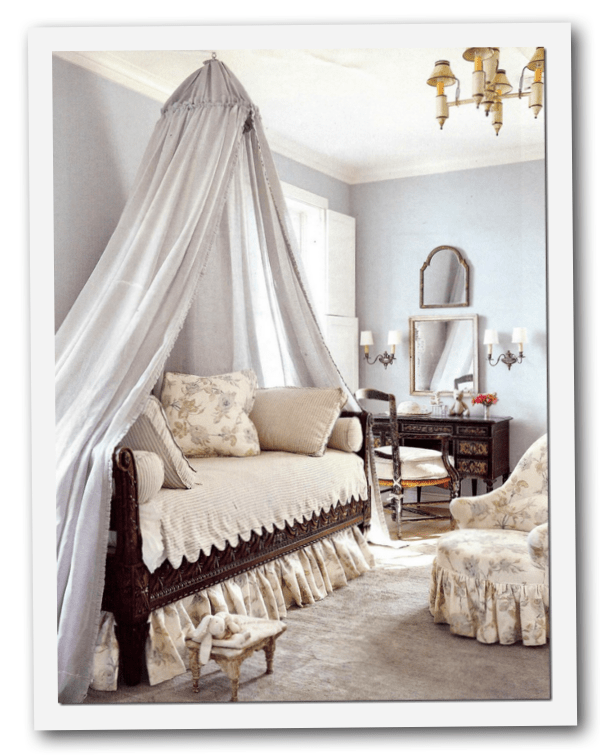


Swedish Gustavian Designed by Jane Moore Featured in Veranda March 08 Featured on Cote De Texas

Swedish Gustavian Designed by Jane Moore Featured in Veranda March 08 Featured on Cote De Texas


Swedish Gustavian Decorating by Jane Moore Featured in Veranda March 08


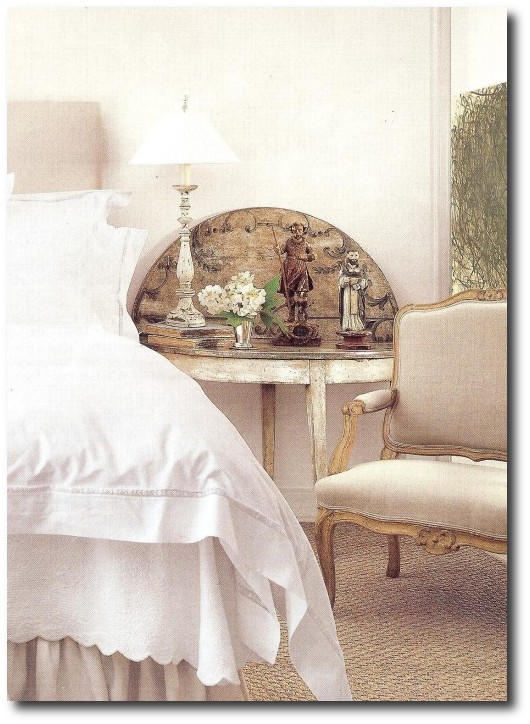


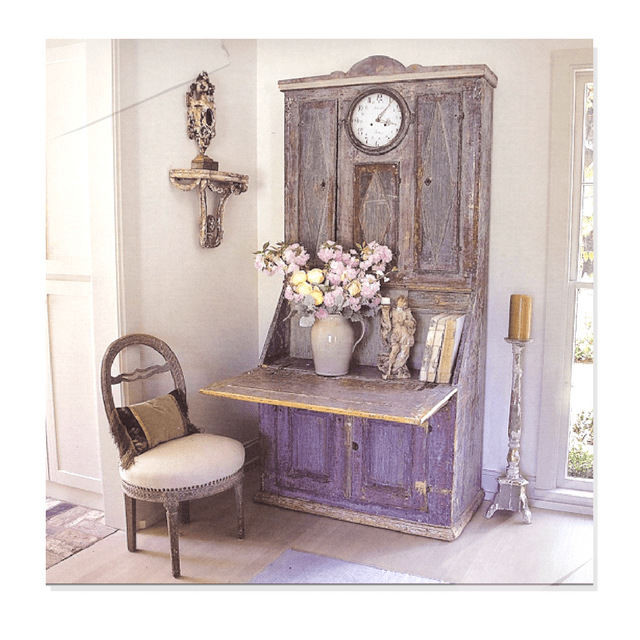
A Swedish Collected Home In Upstate New York – Swedish Gustavian Decorating
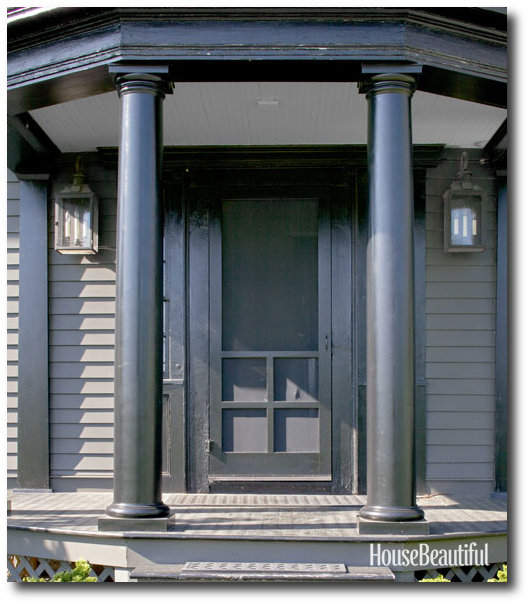
In the March 2013 issue of House Beautiful Magazine, featured a home with a unique flair for the Scandinavian style. The owner spent years collecting Swedish pieces, and together with her designer, Charles O. Schwarz III, they created a home that captures all the charm of a period Swedish interior.
To give warmth to the home, Schwarz installed planking on the walls and bead board on the ceiling and painted it all Farrow & Ball Picture Gallery Red. beautifully they mix the red with rustic wood.In the breakfast room, dark blue walls add so much drama. The Gustavian chandelier and mirrored sconces which draw attention to themselves in this dark room, as the lights are turned down and the candles are lit at night.
The home is surrounded by neutral furnishings and paint colors. This color combination can be seen in the rugs, the choice of cabinetry, tile work in the bathroom and the soft Scandinavian furnishings. A beautiful selection of wallpaper is seen throughout the house in the living room, and several bedrooms, adding a softness to this home. Farrow & Ball’s Ringwold wallpaper complements the living room’s creamy checkerboard flooring, which was painted by the previous owner. Pay special attention to the choice of paint colors on the trim work, which nicely blends with the overall theme of each room, while at the same time highlights the beautiful architecture of this Greek revival home. See so many more beautiful pictures of his home at the House Beautiful website