Swedish Antique Mirrors
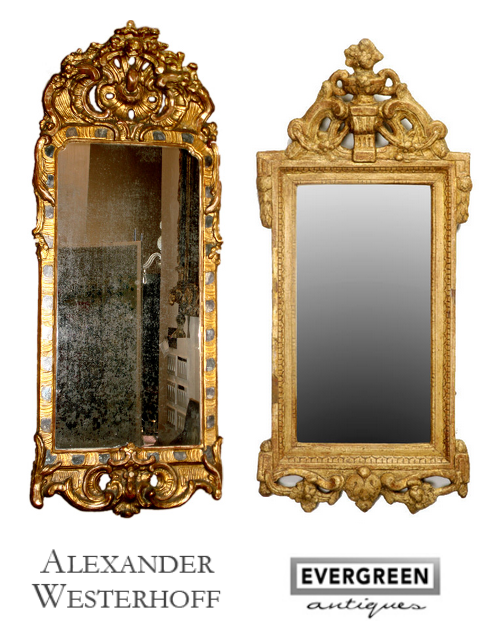
Period 18th Century Danish or Swedish Mid-18th Century Pier Mirror
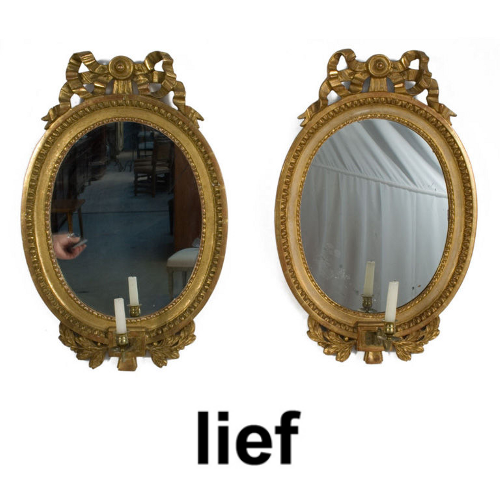
A small Swedish Gustavian giltwood mirror, Late 18th Century
Swedish mirrors have undergone a number of styles since they were introduced in the country in the 1600s.
German glass makers helped to lead the way, and they created mirrors in the baroque style of their home country. This included carved frames and a single pane of glass. Carvings could be simple or ornate, and frames could be square or rectangle, as seen in this mirror From Cupboards and Roses
Mirrors could also be made more ornate by hanging a curtain over them. This added a bit of flair and formality to the mirror.
A century or so later, more people began acquiring mirrors and the style switched to that of Swedish Rococo. This style featured carvings of shells or arabesques, and the frames were gilded and asymmetrical.
Shortly thereafter, another style evolved. The Gustavian style saw mirrors that were influenced by neoclassical aesthetics. Frames were richly carved and featured intricate leaves, ribbons and crests.
These neoclassical mirrors feature a pair of sphinxes on each mirror on either side of a fruit-bearing
pedestal.
By the early 19th century, the aesthetic was changing again. Roman and Egyptian influences made themselves known, and mirrors featured carvings of things such as lions, sphinxes, and griffins. The frames also took on a distinctive shape, with semi-circular domes at the top and straight edges along the bottom.
This Swedish pier mirror, shows neoclassical details inspired by Napoleon’s Egyptian campaign.
By the middle of the century, mirrors became much more common in everyday households, and production methods became more base. Decoupaged frames became common, or they were veneered.
The style evolution of Swedish antique furniture mirrors was influenced by a number of factors, and it produced some gorgeous mirrors that make excellent collector’s items now.
What is your favorite style of Swedish antique furniture mirror? Share your thoughts or your finds in the comments!
About the Author:
Alexis Bonari writes for one of the largest open databases of college funding opportunities. Specific topics like scholarships for cosmetology school are described in detail to provide multiple resources for students.
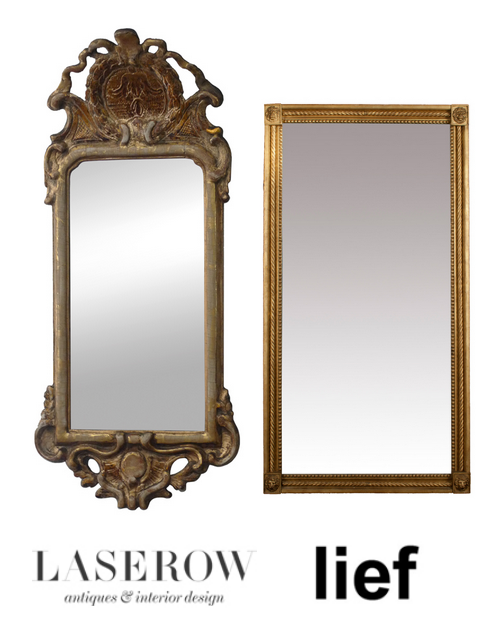
Swedish Transition Rococo/ Gustavian Mirror
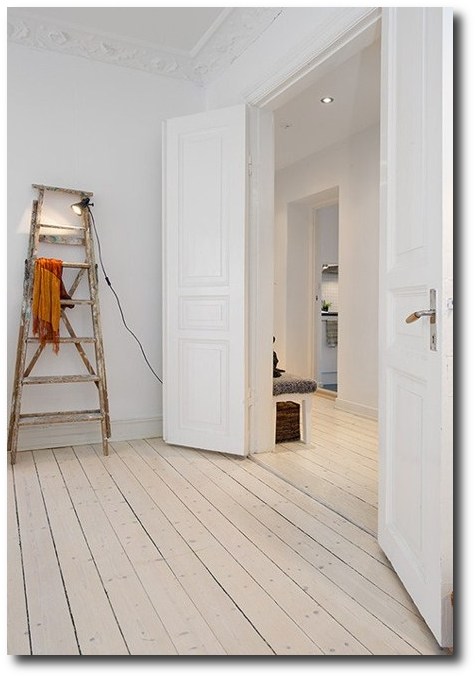
Turn Of The Century Apartment In Sweden- Interior Design Files
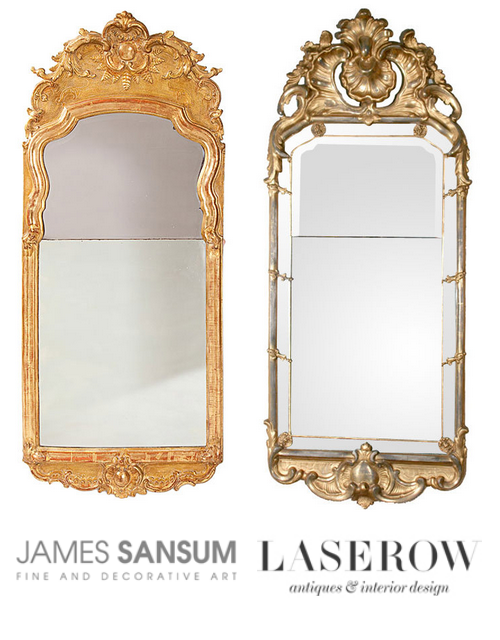
This fine Swedish Adolf Fredrik period rococo gilt wood mirror has carved C-scrolls and foliate motifs.
Swedish Rococo Mirror with gold leaf on wood carved frame and a mirrored
inner frame. Stamped NM (Niklas Meunier), active between 1754-1797.
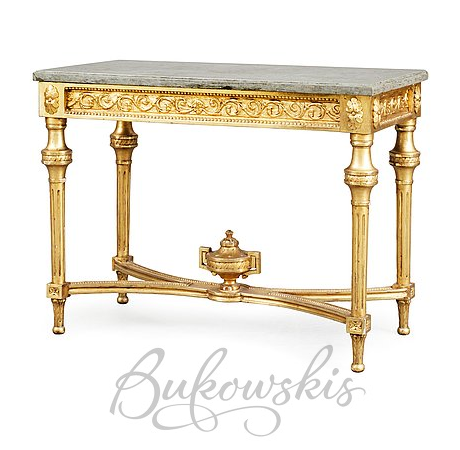
Parlor Table Gustavian Style
Wedding at Trollenas Castle (Trollenäs Slott) in southern Sweden
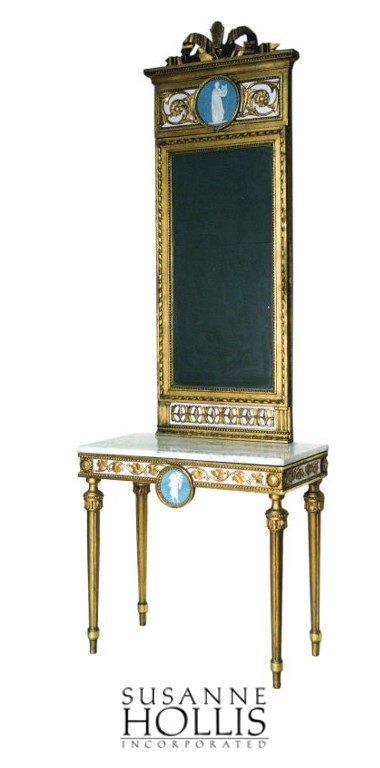
Swedish neoclassic console and mirror. The console having a veined white marble top above a frieze with carved foliate motifs and a central medallion, sitting on tapered fluted legs.The rectangular mirror having a plate within a robed border surmounting a rectangular top crest and medallion within foliate ribbon.
de Gournay Wallpaper
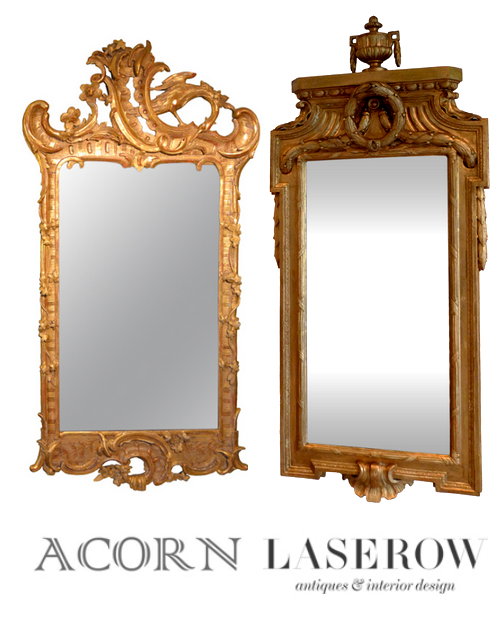 Danish Rococo Mirror 1750– Dietrich Schäffer, born 1730 in Keyla, Thuringia – died 1778, was a German Royal Court carpenter employed at the Danish Court in Copenhagen in the 18th Century. He was one of the main Rococo furniture artists of the time.
Lars Sjöberg and his Swedish manor Ekensberg- World Of Interiors Fall 2008
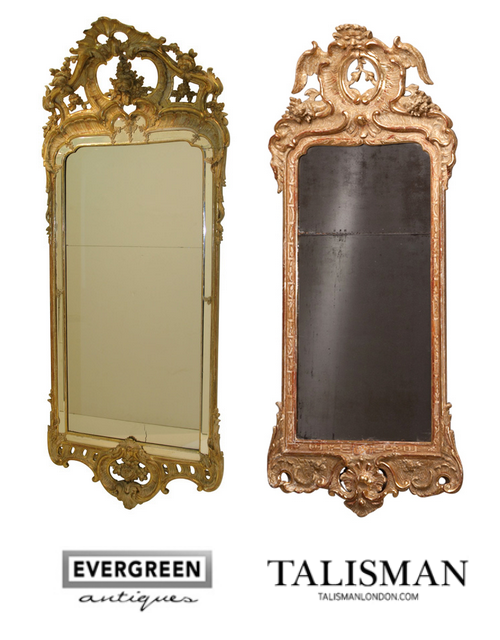
A Swedish Rococo gitwood mirror, Third Quarter 18th Century, the divided mirror plate surrounded by a molded giltwood frame with a beveled glass panel, surmounted with a pierced shell, foliate and scrolled crest, the lower section with similar carving.
A Superb Swedish Rococo Gold Gilt Mirror circa 1760
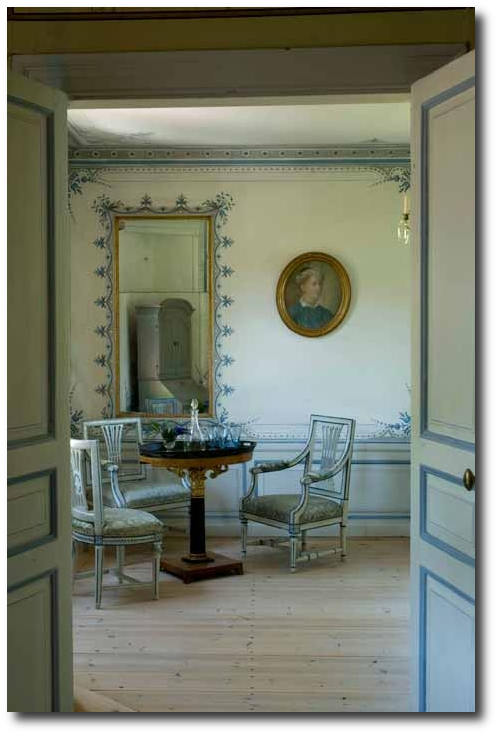
Swedish Interiors- Originally Uploaded From Kristin Fägerskjöld on Pinterest
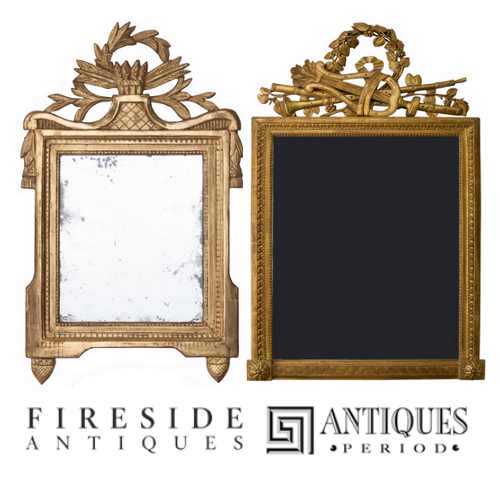
French Directoire Period Giltwood Trumeau Mirror-A petit French Directoire period giltwood trumeau mirror with sheath of wheat cartouche and other neoclassical detailing (Circa 1790). Nice old mercury glass.
Petit Louis XVI Period Giltwood Trumeau Mirror-A petit French Louis XVI period giltwood mirror with a pair of doves and wreath cartouche, laurel leaves and other neoclassical detailing, and nice old mercury glass (“trumeau de marriage”) (Circa 1780).
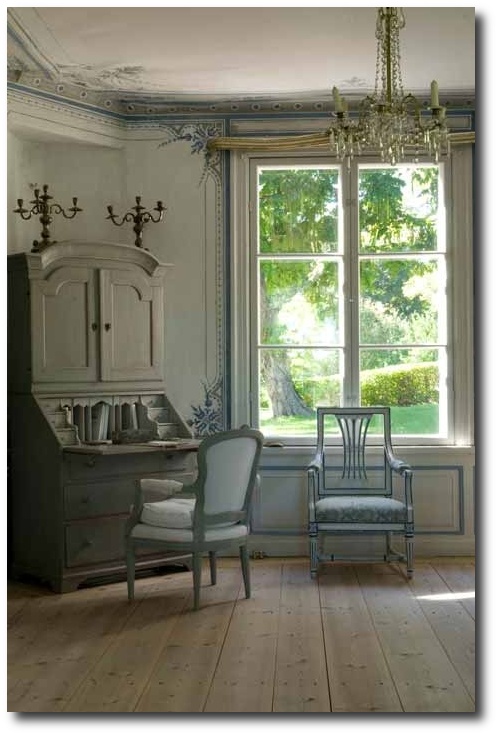
Swedish Interiors- Originally Uploaded From Kristin Fägerskjöld on Pinterest
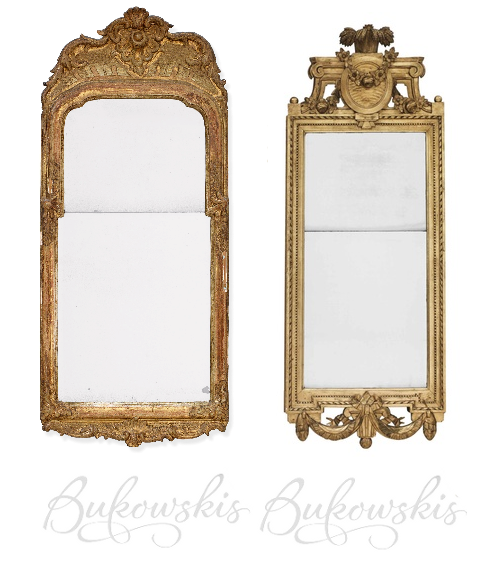
Gustaviansk crested with wheat signed Johan Åkerblad, Stockholm circa 1760- Gustavian Mirrors
How To Decorate A Child’s Room In The Swedish Style
Children dream in vivid color, and anything is possible to them, so why not create a room fit just for their personalities? When it comes to decorating your child’s room, you simply cannot go wrong, because almost anything is pleasing to them. Even if you try to create something special, they are overjoyed at your choices! Children love rooms where they can express themselves, and be creative. Imagination and playtime, – think of those two concepts while you are gathering ideas for their room, and you will do well with an overall theme…..
Most parents feel they can go a bit more daring in a child’s bedroom than what they would do for the rest of the house, which is why it is so darn fun to design kids rooms- you can be a bit crazy and get away with it.
Here are a couple tips to getting a great look for your kids room decor……
1. Invest In A Few Key Pieces- Don’t be afraid of buying an expensive piece of furniture for your kids room. A great chest, or genuine chair can stay in their room for years, and stay in the guest room when they move out and get married.
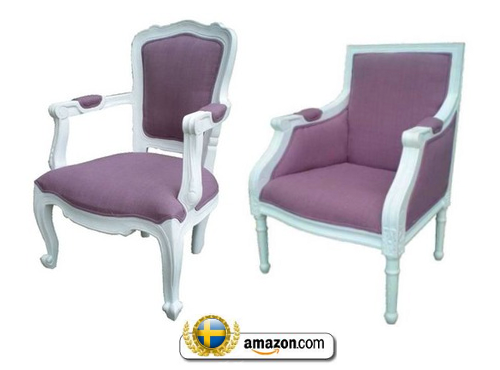
A great vintage reproduction play table would be a great focal point in a child’s room. Functional pieces that are also visually attractive should be the goal. This Louis XVI Child’s chair would match the Swedish styles quite well. Consider upholstering it with material that matches your child’s drapes and bedspread. This play-table would be great in a little boys room where red, and dark blue would say “I am a Boy“.
Get the general look of the Swedish style, by re-purposeing furniture. Change the hardware, paint furniture, and use a lot of distressing techniques to get the old appeal into the overall look. Buy transfer-ware tea sets for your little girl, and use a vintage french provincial end table, and re-purpose it with child’s chairs. Add wheels to the bottom of the end table to lift the table higher to give your children’s legs room to stretch out. French style play tables aren’t so common, so get the look using a vintage french end table.
Decorating doesn’t have to be expensive. Look out for vintage toys at your local flea markets, antique stores and thrift stores for great looking toys to decorate with. Wood has always been a signature style of the Swedish look. Melissa & Doug have great faux food which will make you want to join in for “tea time”
2. Decorate With Vintage Toys- Antique wood furniture can be painted, and roughed up unlike plastic. Greenleaf Doll Houses come in kits which you can set up, and paint. A vintage nightstand from ebay or craigslist might be a perfect match for a dollhouse. Customize the table to match the dollhouse.
Buy a wood rocking horse, and paint it yourself. You CAN get these horses for less than $1800! On ebay some of the vintage horses sell for $150 or so, which would allow you to customize it yourself. Kids are pretty rough on furniture, so putting genuine antiques in their room, isn’t the best of ideas. Buy something that looks great, but also something that if it gets damaged, you won’t be bent out of shape over. Invest in a few key pieces for their room, such as a bed, or a chest. The bigger pieces will set the theme, rather than the smaller items.
3. Invest In Storage Furniture– Kids have a heck of a lot of toys, and spending money on decorating a kids room does no good if there is no place to house their endless play toys. Ikea has a number of shelving which can be stacked and customized. The Expedit series has worked well for organizing kids toy collections. Organize your kids toy collections with shoe boxes. Buy matching bookshelves which you can devote an entire wall to. Back your child’s bed up to the bookshelves, which costs you only a couple of inches of space, but also save you from walking all over their toys.
For more ideas check out my pinterest page devoted to Children’s rooms……
Children Looking Into A Swedish Antique Shop- Credit
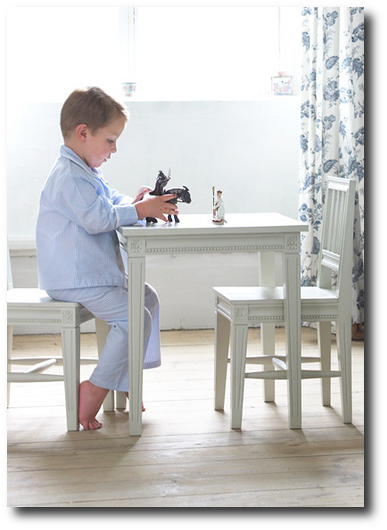
This boy is sitting by a lovely Gustavian childs table. The table has hand carved fleur medallions and a hand carved pearl bead border. The small Gustavian childs chair has the same hand carved pearl bead border. –blog.dnevnik.hr
Childrens Room With Swedish Bench
3D wallpaper from an installation by Swedish Deisgn Front Group
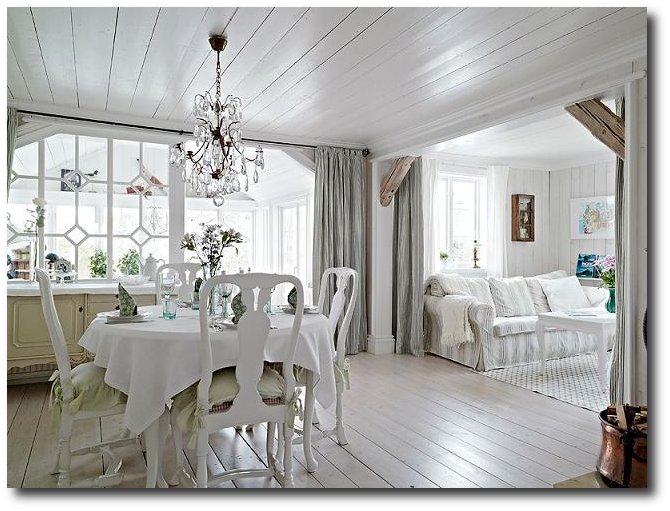
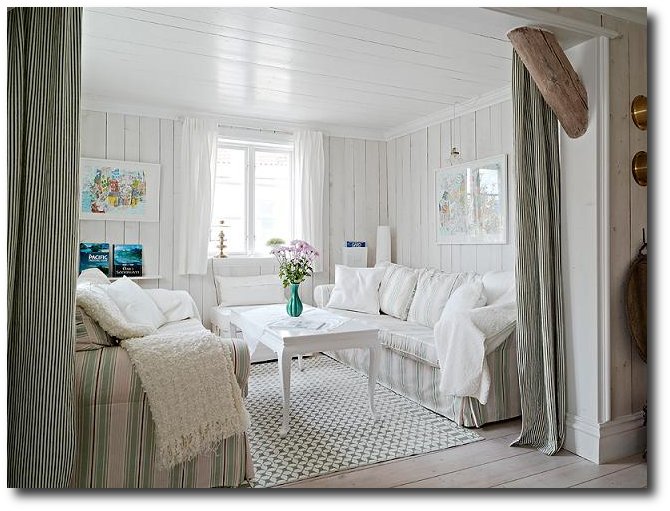
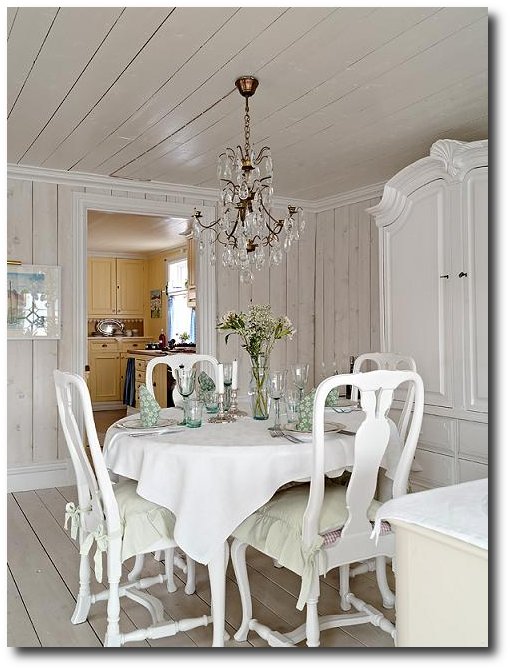
This beautiful old house was built in Sweden in 1972 and then renovated with elements of the Gustavian style. Shades of ivory and white make the interior look light and airy. Restored wooden floors, painted beams and old furniture in combination with white create a simple and elegant atmosphere. To see the rest of this renovated 1972 Swedish farmhouse, read the story on the Inspiring Interiors blog.
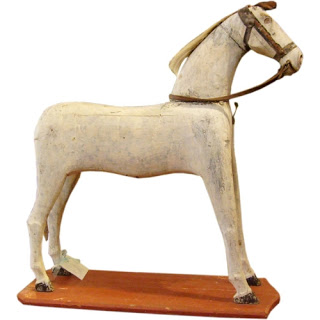
Wooden Antique Horse – patmonroeantiques.com
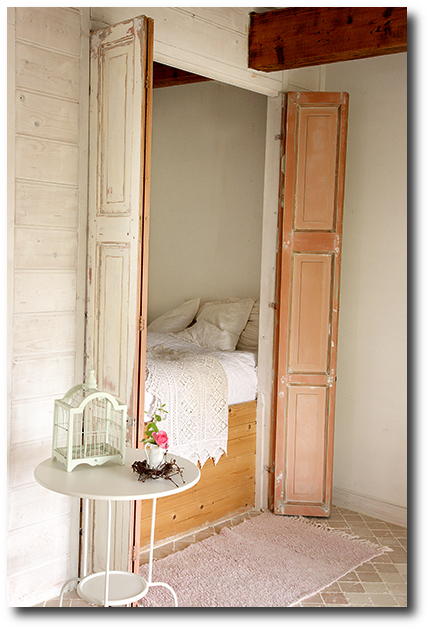
Bedsteads were up in the 19th century used a lot, especially in the rural areas in farms . One of the advantages of a bedstead was that through daytime use, the curtains or doors could be closed, making thius style of furniture open to being in the living room in smaller homes. Bedsteads also took on the appearance of a closet, where behind closed doors a bed would funtion through the night, while the day time, a working area with table and chairs, sofas could allow a person functional living. Another advantage was that a bedstead retained heat well. The small space, or closet locked in the body heat of the sleepers.
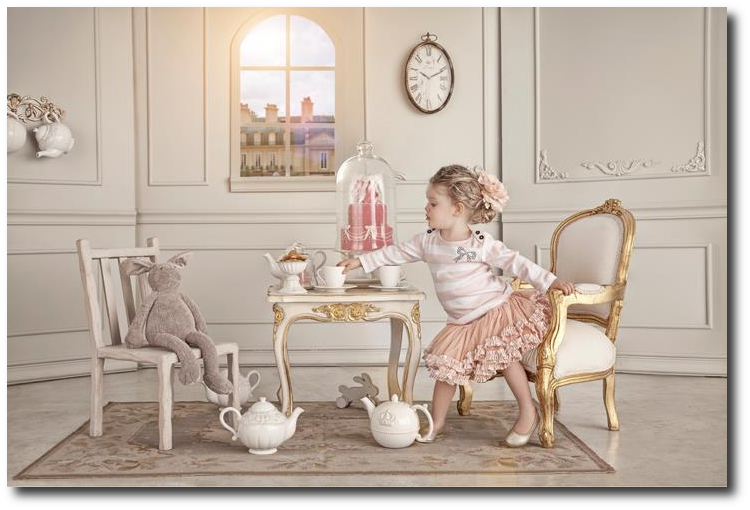
Kids Photography by Nina Say Cheese
Swedish Gustavian Louis XVI period painted chest of drawers with raised
reeded detail , three drawers and dental molding around the top.- Berkshire Home & Antiques
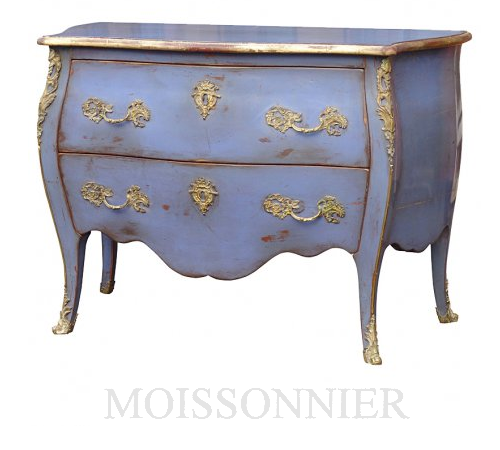
French Commodes – Available Through Cote France
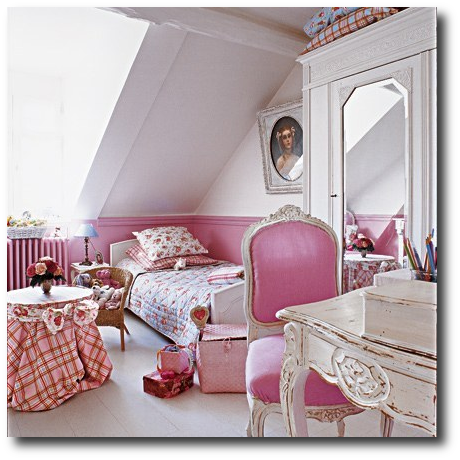
Photo credit: Marie Claire Maison
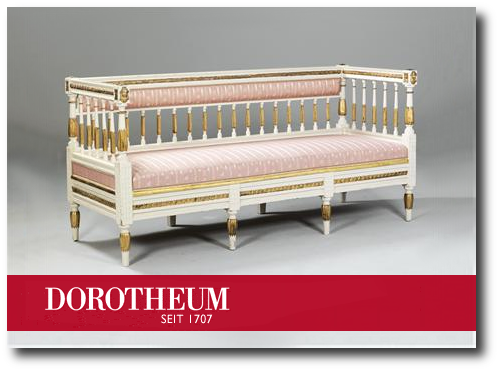
Gustavian period – Neo-Classical bench seat,Sweden, end of the 18th century.
A hard and softwood bench later partly painted in white, with openwork decoration in the form of acanthus leaves, painted with gold. Dorotheum
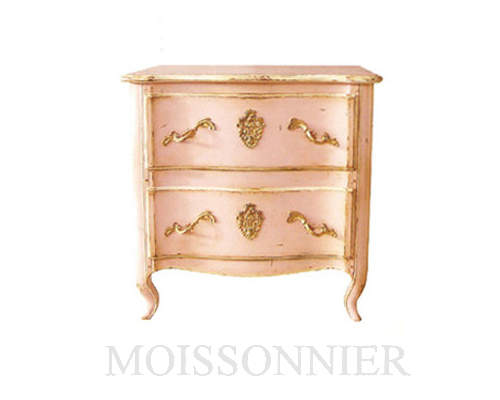
25 Ideas Of How To Incorporate Orange, Pink and Coral Into Your Home- French Provincial Furniture
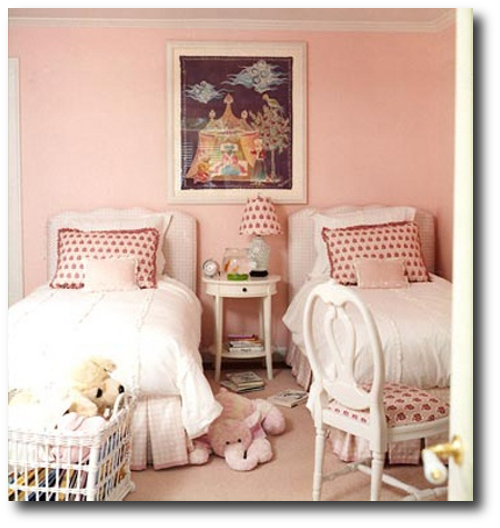
Domino Magazine
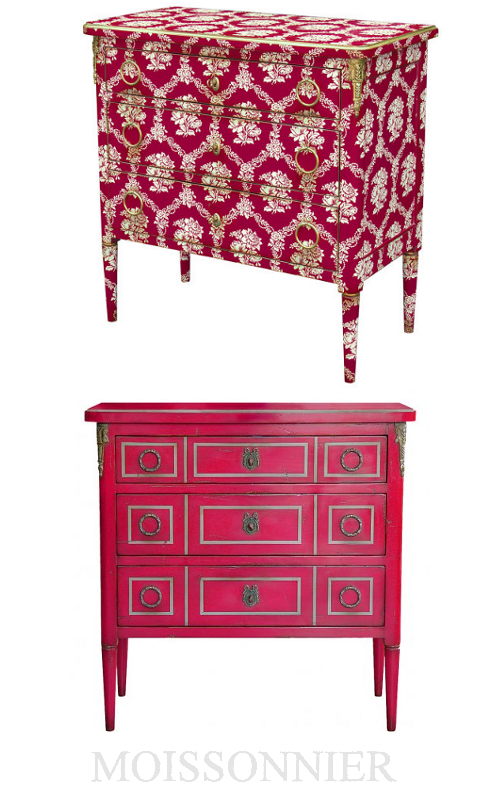
Commode Gabriel- Available Through Cote France
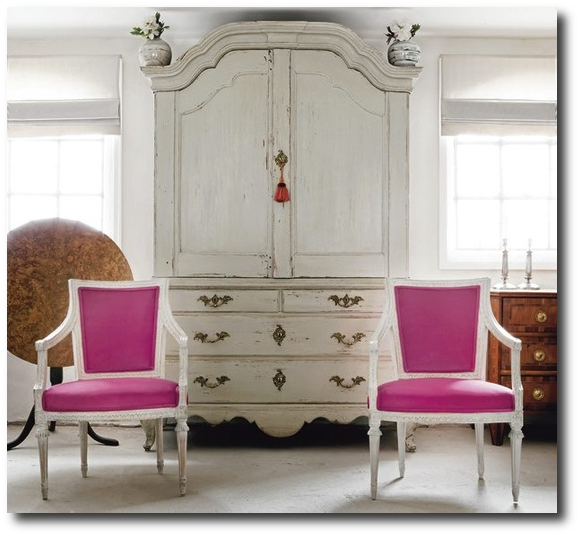
Get Some Ideas From These Colorful Gustavian Chairs sold through Brownrigg
A fine set of six, early 19th century, painted Gustavian dining chairs, retaining the original paint, and been recently reupholstered by us in a vintage linen hand dyed in pink, with a double piping contrast vintage linen, again hand dyed in yellow. Sweden Circa 1800
Karin Laserow Antiques –Gods & Gårdar
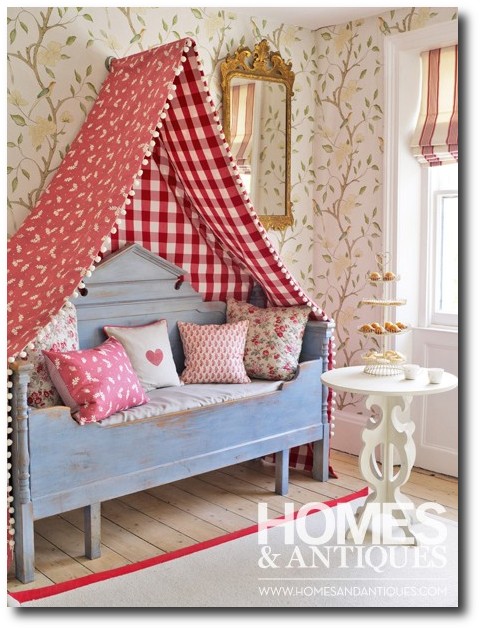
Sasha Waddell -Homes & Antiques September 2010
Katie Ridder Rooms Available through Amazon- Seen On Peak Of Chic Blog
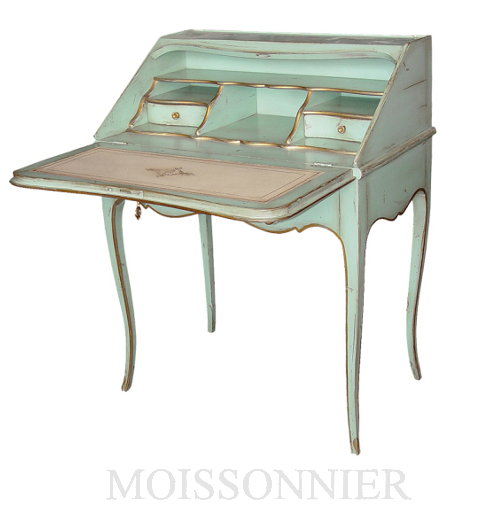
Swedish Folk Art hung on the wall can add whimsy to a room.
Consider hanging a colorful handmade quilt on the wall.
Photo Credit- Project Nursery
Swedish Slipcover Ideas From In My Carport Blog
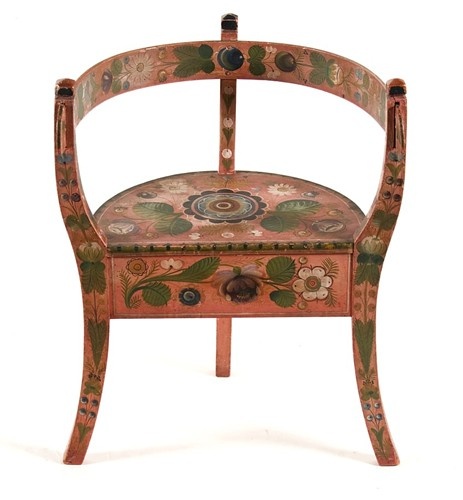
Norwegian Corner Chair With Salmon Background- Jeff R. Bridgman American Antiques
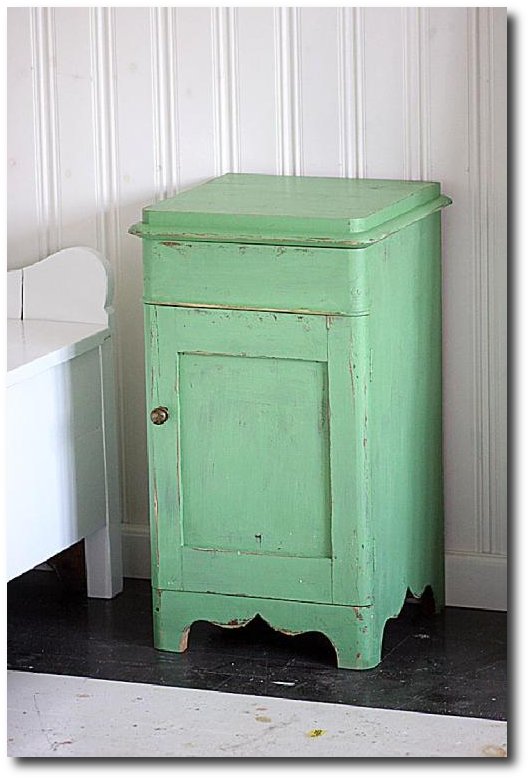
Nordic Style Bedside Cabinet – Nordin Farm Blog- Orginally Featured at Ville Kulla
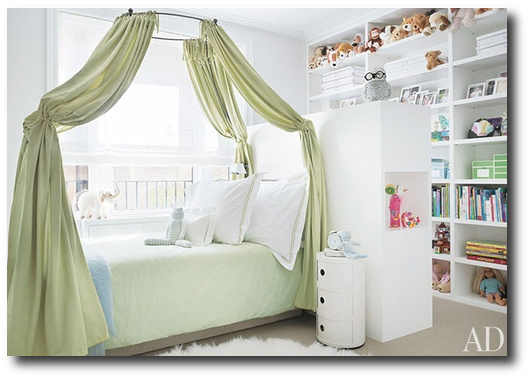
A canopy bed by Anthropologie is draped with a Pierre Frey cotton; the side table is by Kartell.
A Perfect Boys Bedroom With Classic Swedish Check By Bibelotte
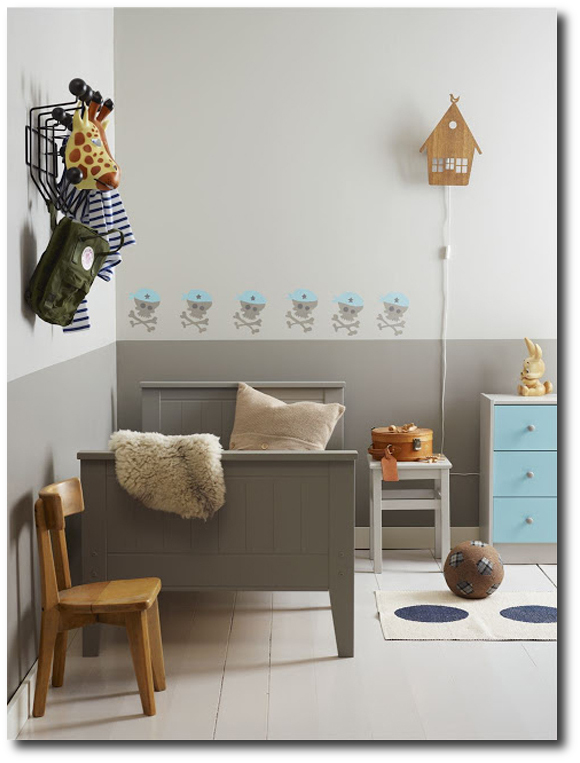
The Norwegian paint company Jotun has created a catalog of inspiring children’s environments to show exactly how best to use their paints
The Norwegian paint company Jotun
French Commodes – Available Through Cote France

Milk Magazine -Norway Photographed by Sandie Carol Dougnac
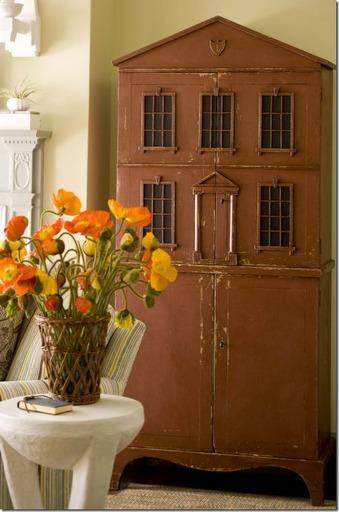
Use Vintage Cabinets and Dressers and Make Your Own Standing Dollhouse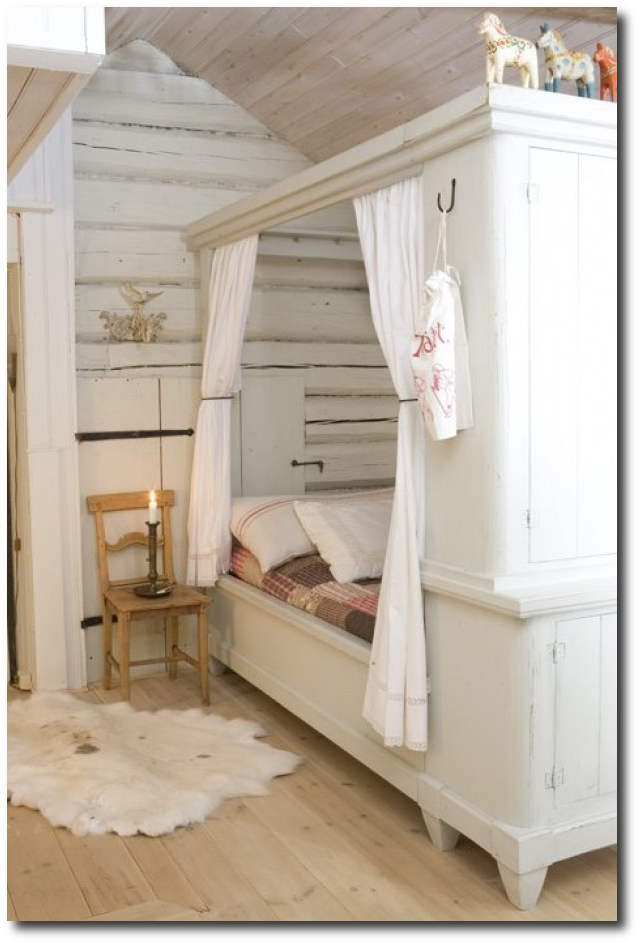
Ruby Beets Swedish Rustic Home
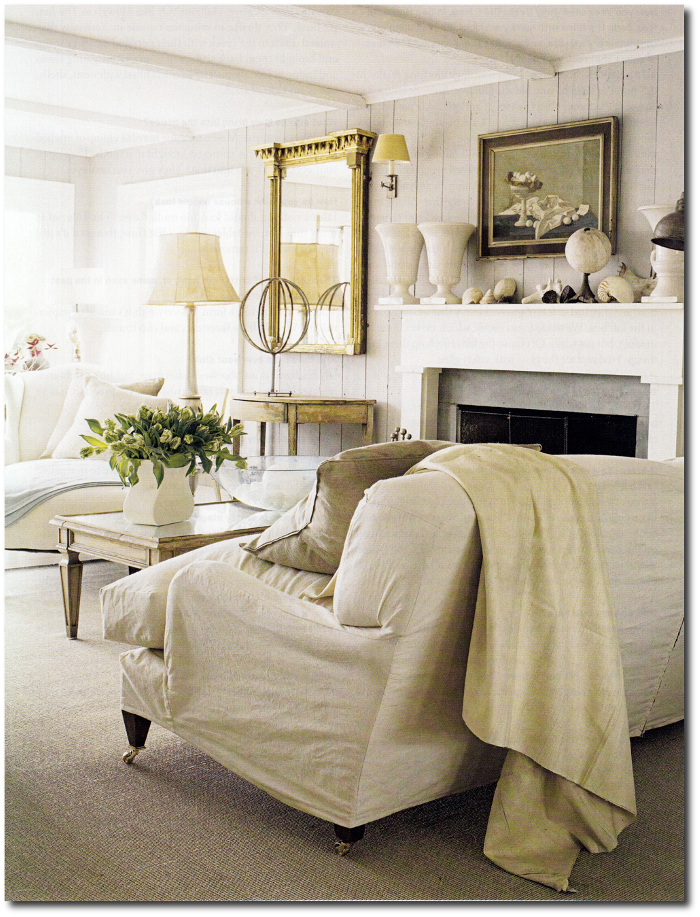
In a corner of the living room, a 1940s mercury glass lamp stands on a rough, round Empire-style table next to two 1920s Scandinavian painted chairs. The graceful wing-backed chaise dates from the 1930s and is upholstered in simple white canvas duck, with natural linen pillows from Ruby Beets.- House Beautiful Magazine
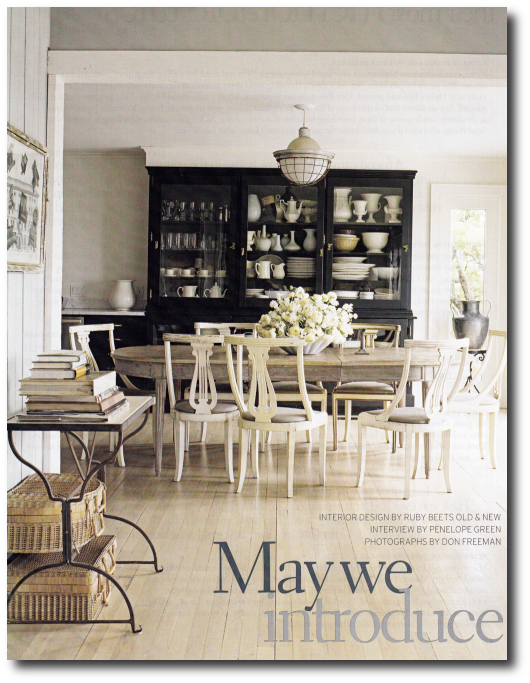
If you haven’t ever seen Ruby Beets home, you are in for a treat. Featured in House Beautiful Magazine back in July of ’06 , this house has the perfect mix of old world charm,and rustic surprises that make it very interesting to the eye. The raw painted furniture, iron decorative items, wood panels and paint color choices are particular elements of the interior styles found in Sweden.
If you enjoy the country cottage looks, but want something more upscale, borrow ideas from this home. Here are a couple suggestions from this interior.
1. Have Slipcovers Made- Spend the extra money and have tailored slipcovers made that will give you the comfortable feel like this home. Swedish textiles were mostly made from organic materials. Consider materials like muslin, duck, or canvas. Many people are taking drop cloths sold in hardware stores and bleaching them. Today you can buy pure white duck or canvas cloth in off white, and various shades of cream, and blue amongst other colors.
2. Invest in Great Antiques– I am not one of those people who are afraid of touching antiques. My best advice, is if you find a sensational chair, improve it and make it your own. Buy the upholstery fabric that makes you happy. Buy the hardware that you will enjoy looking at day after day. Make it YOU!
It is amazing what a strip job will do for your wood furniture. Taking off the varnish will allow the paint to sink into the wood, that when you do to distress the wood, the overall finish looks so much better than painting it alone. For years I have used a chemical stripper until I bought a heat gun, and I never knew that stripping furniture was soooooo easy and fast! If you want to get a rustic look for your furniture, working with the bare wood is the ticket to high quality Swedish looks.
3. Use Black Somewhere- Swedish interiors are usually based around light colors such as blue, light greens, gray and so forth. You would be amazed how nice black stands out against a lightly colored wall. I used to love black painted furniture, that everything was painted black until I fell in love with lighter painted furniture, and all of our furniture was repainted in white or gray. Our walls in our house are painted a light blue, and after debating what color to paint a hallway floor clock, I decided to plunge for black, and was it ever a great decision! Everyone comments on it, because it sure stands out against the lighter colored walls. Contrast can be a surprise! Black colored furniture looks exceptionally well in lighter interiors. Even if you have just one piece in black, it can look sensational!
Here are some of the comments from Ruby Beets featured in Home Beautiful that were particularly interesting
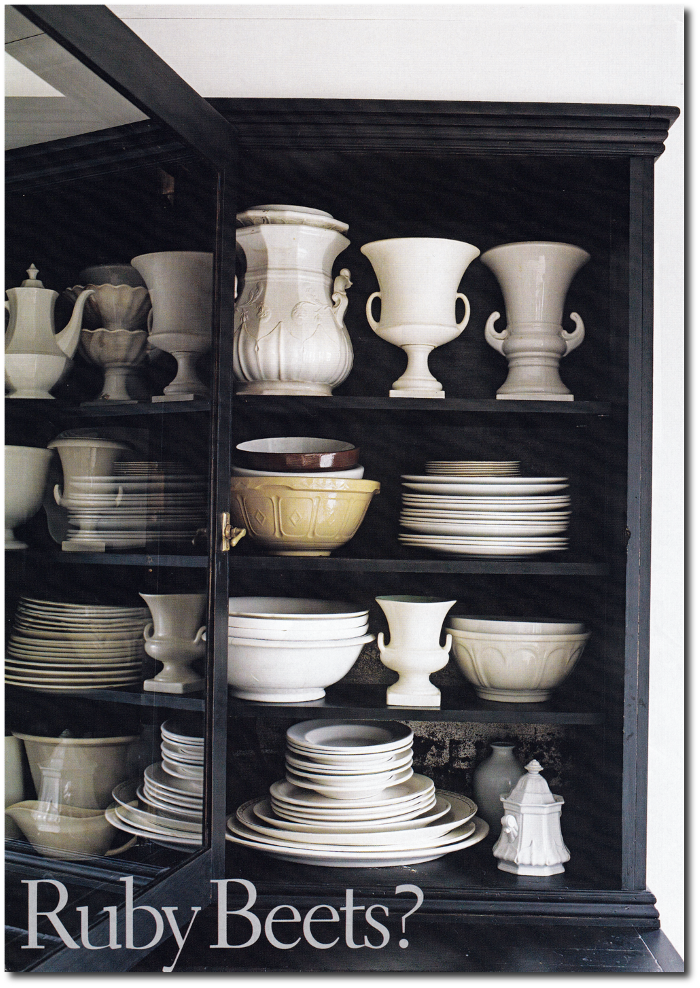
“I was a vintage clothing dealer in the’70s. I’ve been buying old stuff forever. Ruby Beets used to be about the found object school of antiques. My partner and I would buy a dresser and it would have peeling paint and we thought that was romantic. But now we want the drawers to work—enough with the drawer bottoms falling out! The new store is a cleaner, more modern and edited version of what we used to do. My house is too. Life is irritating enough at a certain age. Anyway, I like a lot of white, you can see that. All the furniture is slip-covered in muslin or cotton duck so I can remove it and wash it, which I do every six weeks. I guess, unless something horrible happens. I like big graphic shapes. Those white dishes and things in the kitchen cabinets, some are vintage and some are new ironstone, which we carry in the store. That cabinet we
bought from the local hardware store here. It went out of business, and they had 52 feet of glass cabinetry that we took and put in the kitchen. ”
“When you walk in, you don’t know what age the house is, but it feels like something old. I love it because it feels transparent inside. Hie boards are painted gray like the sea in winter, and because we have no near neighbors we have nothing on the windows—you can see from the front door all the way through to the water at the back. You can see a lighthouse in the distance. The girls used to say they lived in a lighthouse.”
“My husband is an obsessed fisherman, but he’s catch-and-release. He also collects taxidermy fish. He probably has 50 or 40 in his office.”
What is the significance of the name, Ruby Beets?-“Oh. I don’t know. I made it up years ago. But it’s catchy, right?”

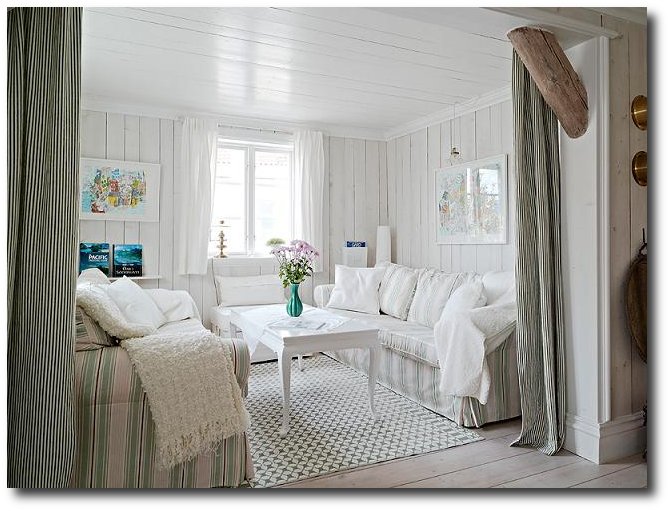
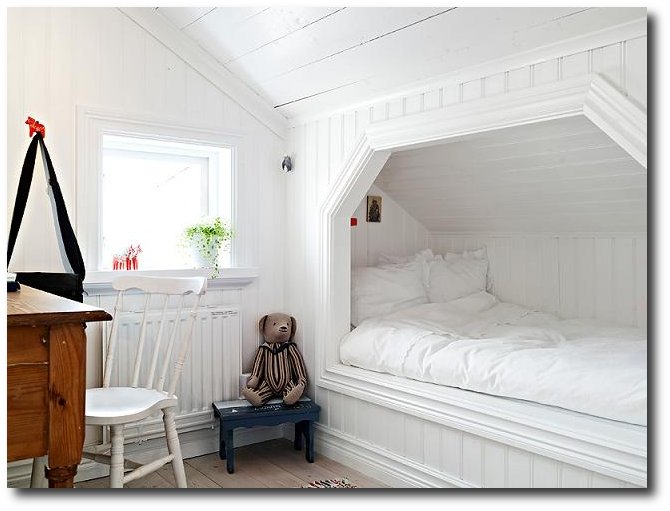
The Country Side Of Sweden- An All White Based Home
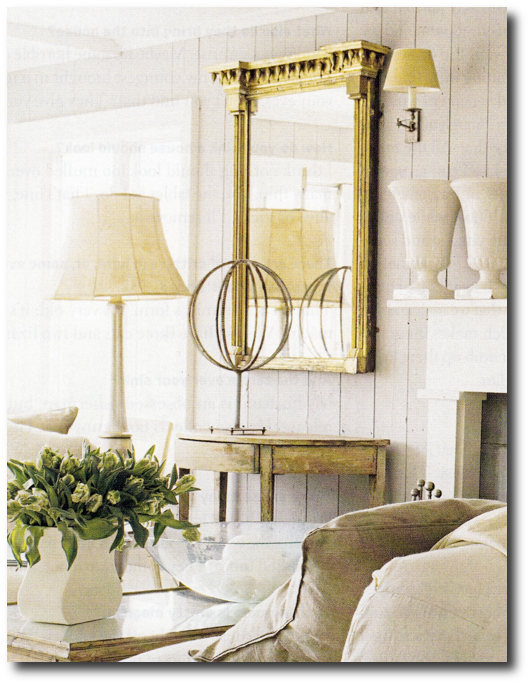
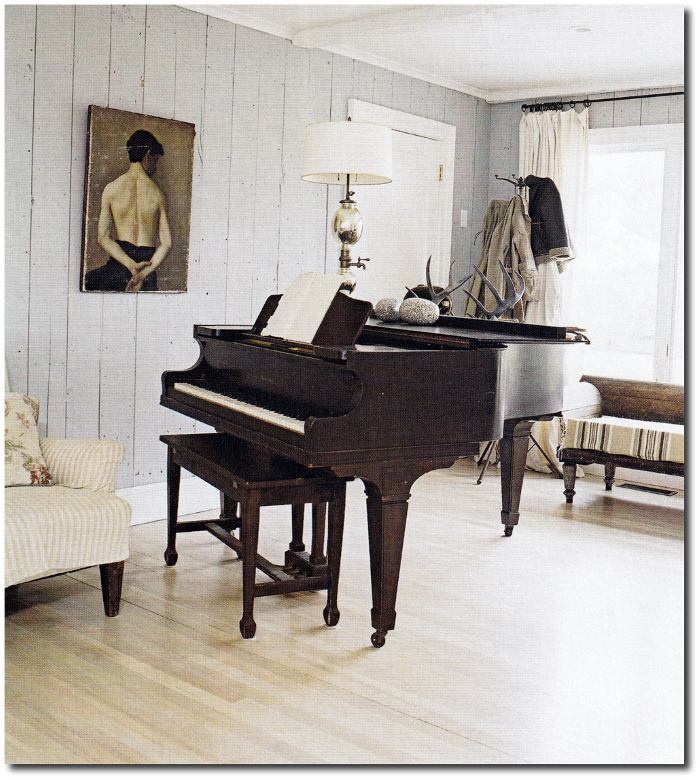
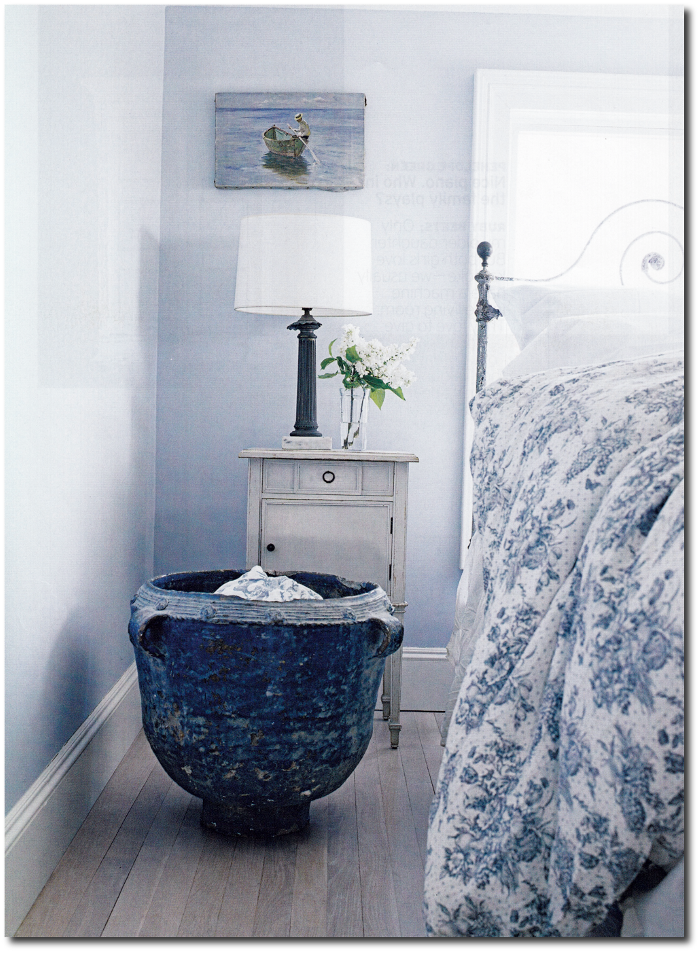
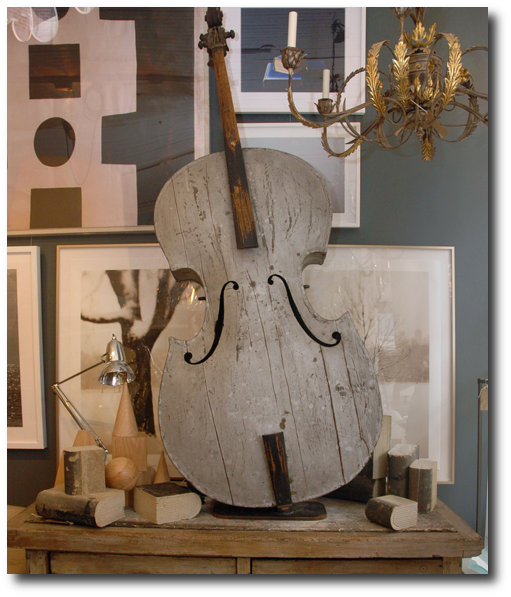
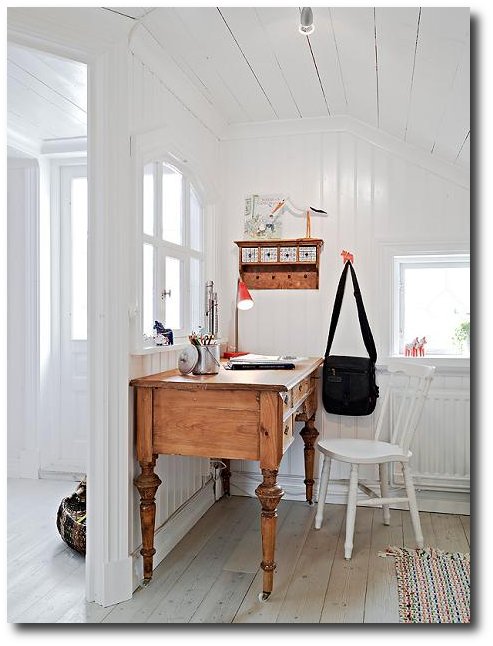
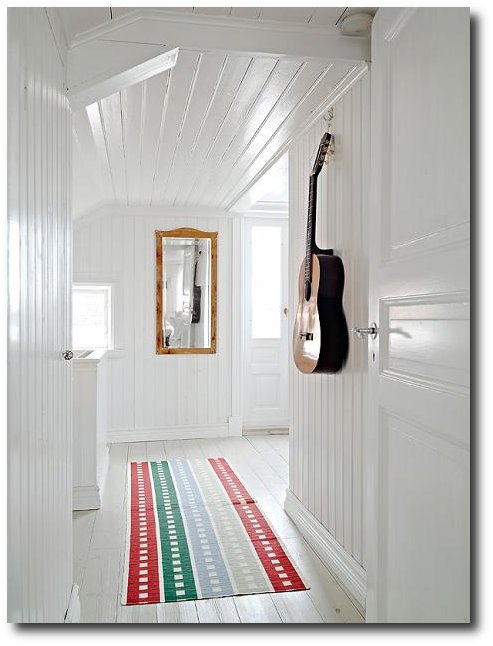
Wood has always played an integral part in the Swedish home life. Beech, birch and pine are the most popular woods in the Nordic region. Hardwoods such as mahogany were rarely used in Sweden as they would have to be imported, as well as the blonder woods were native to the land making it practical to make everything out of wood other than the kitchen sink. Swedish design is known for their use of pale wood, paneling, and solid wood furniture. Furniture was often elaborately painted, or left bare. In this country home we see this very design; shades of white, minimal design, and outstanding Swedish wood furniture.
Tips From This Interior To Your Home:
1. Add Interest- This Swedish interior is based around whites. They add an interesting floor mat to spice things up. A guitar hangs on the wall, which adds a stamp of personality into the home. Make your textiles count in a minimal home. Consider fabrics that have a Swedish styled patterns. Look for upholstery fabric, slipcovers, tablecloths with a distinct Swedish design.
2. Skip Painting Some Pieces. If you are hoping to decorate around white, add in plenty of untouched wood pieces to the overall scheme. Raw wood furniture can be very beautiful. This directoire style chest is washed with solid paint in a unique way that shows off the wood, but at the same time presents a very rustic edge to the style. Use the paint technique for your own wood pieces. Give a Swedish touch to these raw pieces by adding a oil rubbed hardware…. The rustic details won’t be overlooked.
3. Hang Swedish Styled Art- Look around for one of a kind art for your walls. Find a local artist who can create dimensional embroidery for your walls. Pick up 9 identical frames, and have the artist create a story or pattern that can be told through the embroidery. Add color into your home through the thread. Opt for brighter reds, yellow or blues.



Akerö in Södermanland, Sweden
In the region of Bettna there are Manor houses abound, the most famous being Åkerö, beautifully positioned on the shores of lake Yngaren. The old mother tree to the famous Åkerö apple still stands in the gardens. The castle has its own apple variety. The parent tree was planted in 1759 and still stands in the park and gives fruit every year. Buildings have been on the property since the 1200s. Several of the farm’s owners have belonged to Sweden’s most distinguished noble families; Natt och Dag, Tott, Sture and Bielke.
In the mid 1500’s a castle was built with turrets and towers that are depicted in Dahlberg’s “Suecia Antiqua”. A part of the palace was burned a hundred years later and never refurbished.
The members of the Tessin family have been important in Swedish history. Nicodemus Tessin the Elder arrived there in 1636 and, alongside Jean de Vallée, became the country’s leading architect. His most famous work is Drottningholm Palace, which was completed by his son, Nicodemus Tessin the Younger, an even more significant architect whose major work is the Royal Palace in Stockholm. Nicodemus the Younger’s son, Carl Gustaf Tessin, was formally in charge of completing the Royal Palace, but was more noted as a diplomat and politician than as an architect. Carl Gustaf was one of the founders of the Hat Party and became one of the 1700s most important politicians with titles such as councilors, top Marshall and the Office of the President, the latter equal to the prime minister.
Carl-Gustaf Tessin purchased Åkerö in 1748. Carl-Gustaf Tessin was then superintendent of the Royal Palace . The architect Carl Harleman was good friends with Tessin, and when CG Tessin wanted to retire from political life, they settled on the land and hired Carl Harleman. Harleman then designed the main building and proposed two wings. The result was one of the most beautiful rococo seats were filled with art treasures of Europe’s leading artists. As ambassador in Paris and during trips to Italy and Vienna had CG Tessin acquired a sound knowledge of architecture and art.
Åkerö manor is beautifully surrounded by water from all sides. Beautiful maples, ash and linden trees are planted all around. Wall paintings, mirrors, door lintels, floors and countless antiques fill the space of the castle. . The National Museum has a large part of Tessin’s art collection at the Royal Library in Stockholm. Nowadays, concerts are put on at Åkerö Manor in cooperation with Södermanlands Music & Theater.
There are not many pictures of Akerö, just these three below
Akerö in Södermanland, Sweden- Picture 1
Akerö in Södermanland, Sweden- Picture 2
Akerö in Södermanland, Sweden- Picture 3

Books Available on Amazon:
Nicodemus Tessin the Elder: Architecture in Sweden in the Age of Greatness
Nicodemus Tessin the Elder was an architect, gentleman, and founder of the artistic dynasty that was immensely influential at the Swedish court in the seventeenth and eighteenth centuries. He was architect to the crown, to the nobility, and to the city of Stockholm, and he supplied buildings for a wide range of functions, from palaces to banks, courthouses, and fortifications. His unusually extensive travels in the Netherlands, Italy, France and Germany provided him with a comprehensive picture of contemporary European architecture, which he drew on as he synthesized a new group of buildings that would attract
international attention as models for princely architecture. His productivity required a new approach to architecture, and he was part of the first generation of architects in northern Europe to develop the architectural studio, distinguishing the design process from the business of building, and in the
process recreating himself as the modern architect.
Essays on Scandinavian History
This book examines important aspects of the history of Sweden and its Nordic neighbors between the later eighteenth and the beginning of the twenty-first century. Historian H. Arnold Barton has selected thirteen of the numerous essays he has published over the past forty years on the history of Scandinavia.
This is a companion volume to Barton’s The Old Country and the New, an essay collection on Swedish emigration and the Swedes in America. Included here are studies of the special significance of the eighteenth century in Sweden’s history and culture, the relationship of King Gustaf III to the eighteenth-century Enlightenment, the impact of the American Revolution in Sweden, and Gustaf III’s ambitions in the East Baltic region. Also detailed are the king’s early reaction to the French Revolution and his efforts to
organize a European coalition to crush it, a reassessment of the reign and internal reforms of Gustaf IV Adolf, and the Swedish succession crises of 1809 and 1810.
In addition, Barton examines the increasing tension between the Pan-Scandinavian movement and the rising Finnish national movement. He deals with the historians of the Danish Agrarian Reforms of 1784-1814, parallel developments in Finland and Norway between 1808 and 1917, the discovery of Norway abroad, Swedish national romanticism, and Sweden’s transition from a warfare state to a welfare
state, now exemplifying the rational and humane ideals of the twentieth century.
Essays on Scandinavian History highlights important topics in the history of the Scandinavian region, which has remained all too little known outside the Nordic lands themselves, while also offering broader perspectives on Europe since the mid-eighteenth century. Twelve keyed-to-text illustrations, a bibliography of Barton’s publications on Scandinavian history, essay endnotes, and an index augment this work.
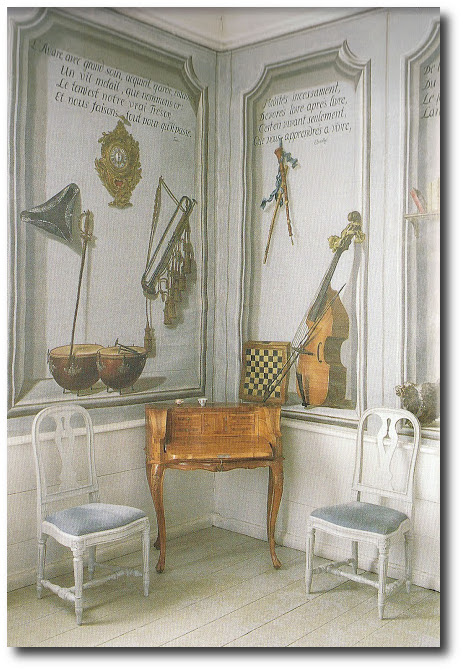
A ‘musical’ Trompe l’oeil in one of the rooms of Akerö in Södermanland,
Sweden with a Rococo “Bonheur du Jour” Picture Credit –La Pouyette Blog
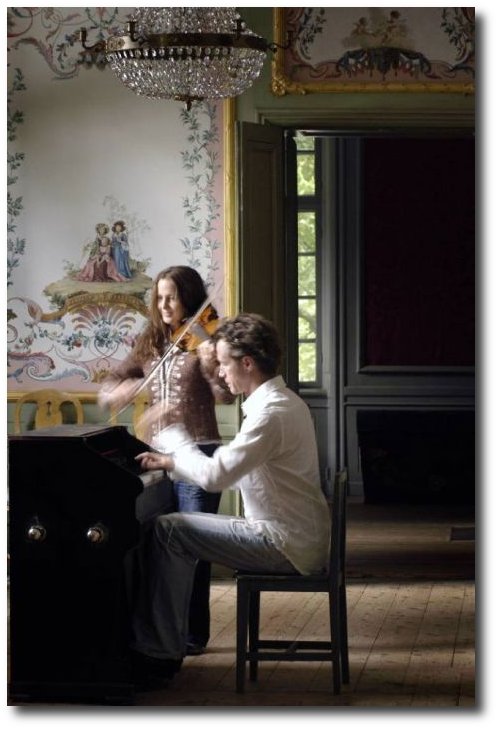
Akerö in Södermanland, Sweden –Credit
Reproduction Paintings From Fine Art China
Check out how they can take YOUR picture and paint your face in place of your favorite painting
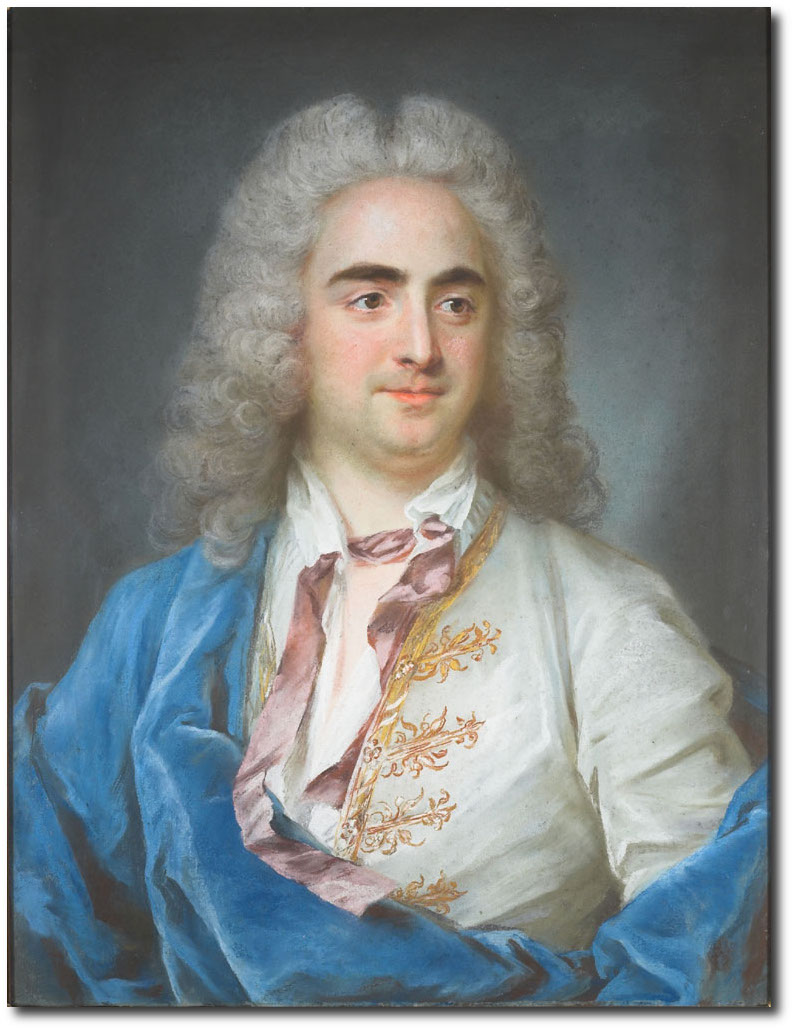
About Gustaf Lundberg- The Painter.
Swedish, 1695-1786,Swedish painter and pastellist. He was orphaned early and brought up by his grandfather, the goldsmith Fredrik Richter (1636-1714). In 1710 he was briefly apprenticed to David von Krafft (1655-1724). Against von Krafft’s advice, and at his own expense, he travelled to Paris in 1717. He
studied first with Hyacinthe Rigaud, Nicolas de Largillierre. He also studied drawing under Pierre-Jacques Cazes at the Ecole des Beaux-Arts. In 1720 Rosalba Carriera came to Paris from Italy, bringing with her the fashionable technique of drawing in pastel chalks. Lundberg became her pupil and within a year had mastered the medium, charming the Parisians with his portraits. Until the arrival of Carriera, he had worked only in oils but then turned exclusively to pastels.
He received portrait commissions from Louis XV (reg 1715-74), notably for those of his young queen Maria Leszczynska and of her parents Stanislav I Leszczynski and Catherine Opalinska (both 1725; Upplands Vesby, priv. col.), who at that time were living at Chambord.

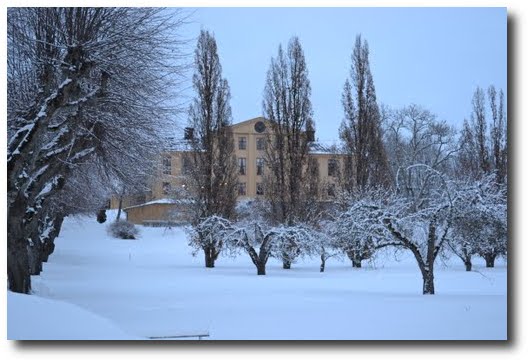
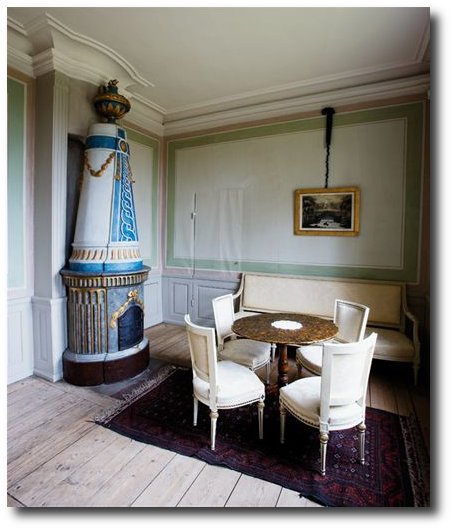
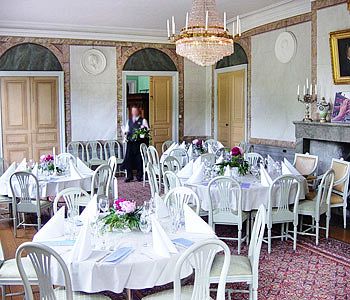
Krusenberg Herrgård: An 18th Century Swedish Luxury Hotel
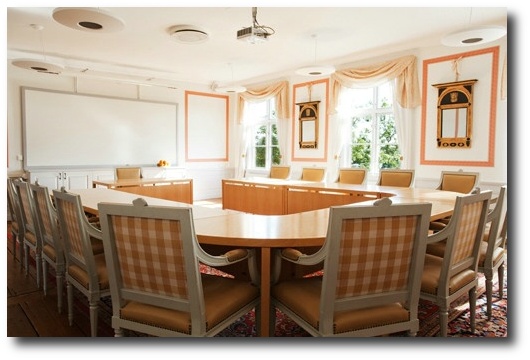
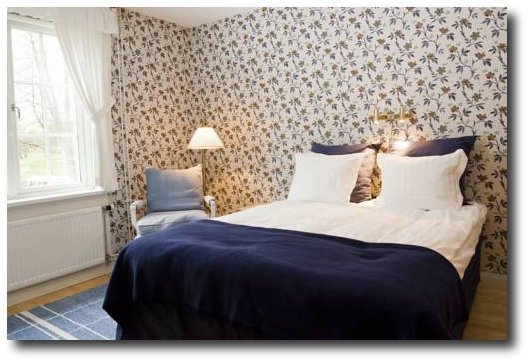
Krusenberg Herrgård is an extravagant hotel beautifully situated by Ekoln, a bay in Lake Mälaren. The estate dates back to the mid-15th century and is now a first-class hotel and conference facility that has retained its genuine style and old charm.
The manor house was built in 1802, and the wings date from the 18th century. Enjoy a walk through their large park and apple orchard with more than 100 old apple trees. The artist Gustaf Cederström, who grew up on the estate, painted his best-known work,”Karl XII´s likfärd”(The funeral transport of Charles XII) .
About the Hotel:
When staying at Krusenberg you can take the opportunity to take a tour with a canoe or rowboat which is supplied from the hotel. In winter, the situation is ideal for skating. The latest addition Sjöporten is a newly built house with exclusive sauna and spa. The building is right on the water’s edge and includes two wood-burning saunas with magnificent views of Lake Mälaren. Upstairs there is a spa area with treatment rooms and relaxdel. The house is built and furnished to suit those who appreciate “the good life”.
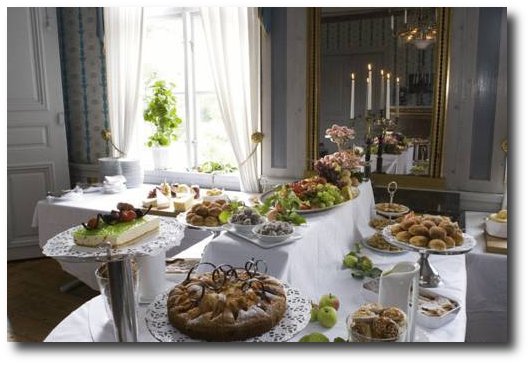
Manor house accommodates our renowned restaurant serving carefully prepared food in season. The kitchen is home not only cooks but also to their very own pastry chef who bakes fresh bread and pastries for every meal. Meals are served in the main building’s beautiful dining rooms. At this hotel you can also take the opportunity to relax in one of the most prestigious salons.
Manorhouse is 25 minutes from the airport and within easy reach of both the Stockholm and Uppsala. The hotel also offers a historical walking tour with a guide. Active guests will appreciate the petanque court and the tennis court. Meals are accompanied with wines from the manor’s wine cellar.
Krusenberg Herrgård is only 25 minutes from Stockholm’s Arlanda Airport and conveniently situated for both Stockholm and Uppsala. Uppsala city centre is 20 minute drive away. Sweden’s oldest town, Sigtuna, is 18 km from the Krusenberg Herrgård.
See the official website here
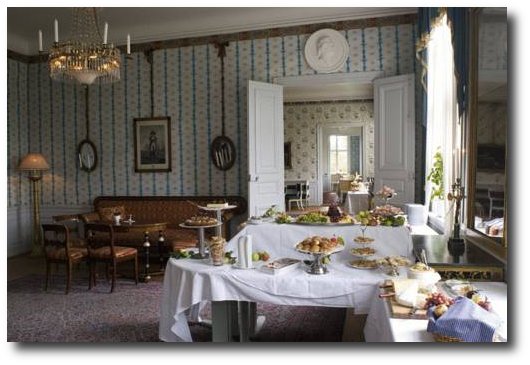
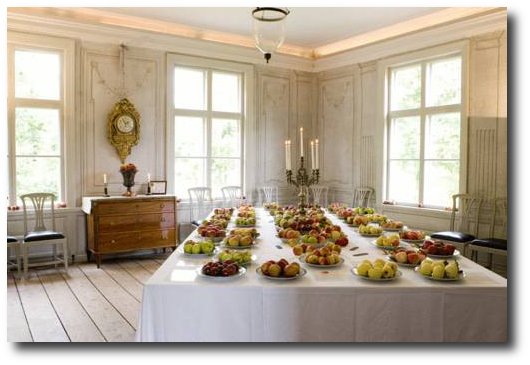
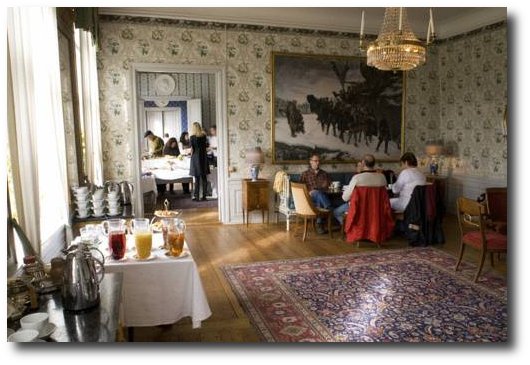

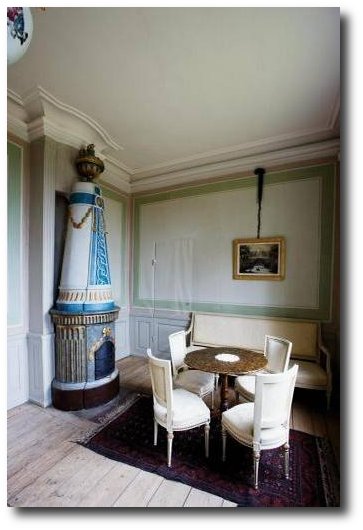


Wood Plank Flooring, A Swedish Design Must Have – Part 1
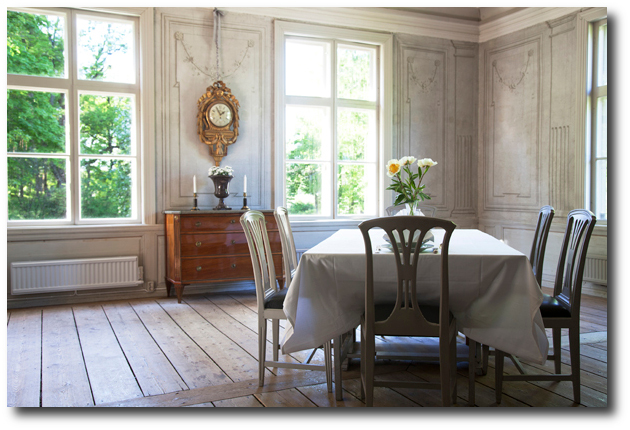
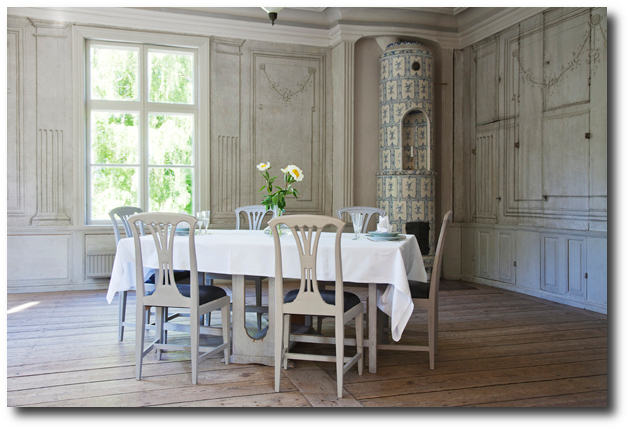
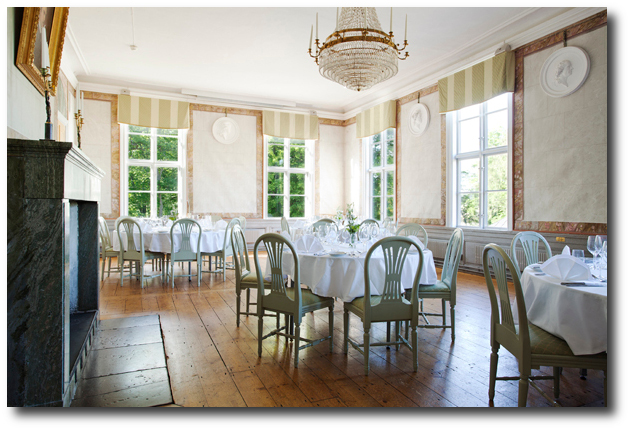
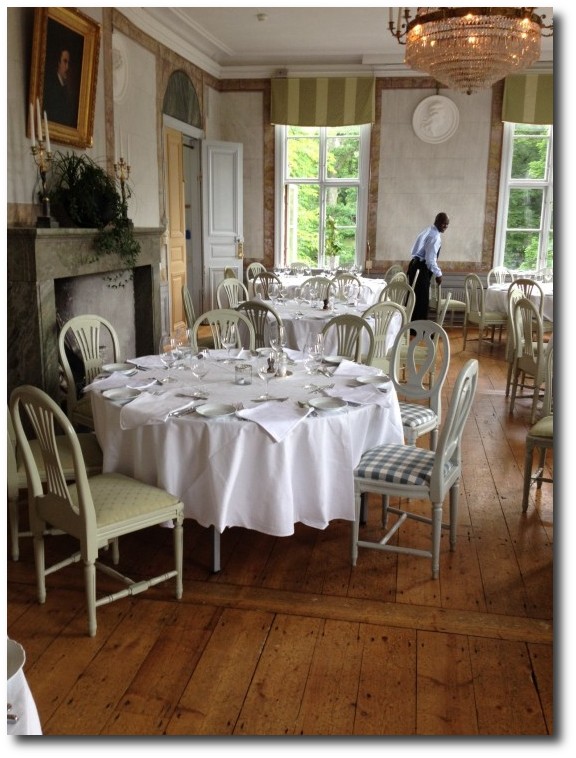
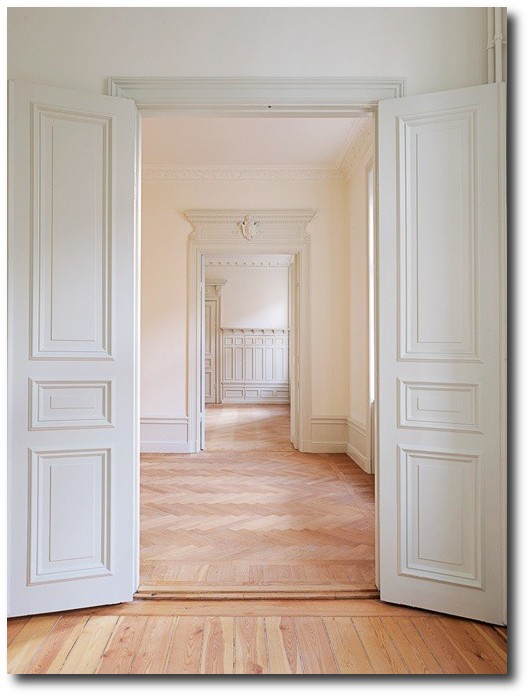
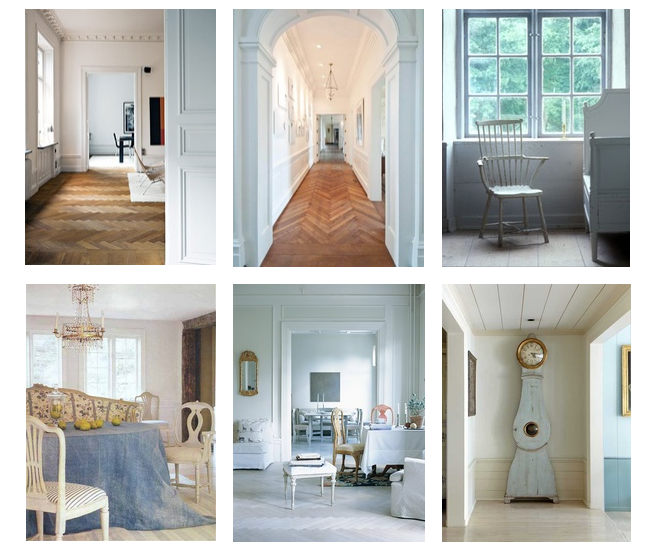
Wood floors are one of the most recognized design feature of the Swedish Gustavian look. Rustic planked wood is a top choice for flooring in the design industry. Wood floors are easy to maintain, and they are associated with the utmost quality and taste. Hardwood flooring will outlast carpet in any competition making it a smart investment.
If you have children or pets, carpet gets dirty. Pets that come in and out of the house bring dirt back into the home, and over time, the carpets become soiled. In this situation, carpeting only looks good after they are shampooed. While I am not here to beat up carpet, as there are many styles of carpet that are elegant choices, wood flooring maintains better over the years. Even if you decide to go with one of the less expensive wood alternatives, you are assured that this look is easier to maintain than carpet.
It wasn’t until the Baroque Era began, that wood flooring became an option for the home. Before 1625, most European houses continued to have dirt floors. Wealthy families utilized elm or oak boards which were held on joists. Once wood floors gained popularity, it became known as a more affluent design choice. Throughout the 17th and 18th century wood flooring flourished. Solid wood plank flooring, was installed in many homes, and many trend setting homes painted their floors. Upscale homes installed the richer designs such as parquet and marquetry wood patterns. Wood flooring today is still the most desired flooring, surpassing stone flooring.



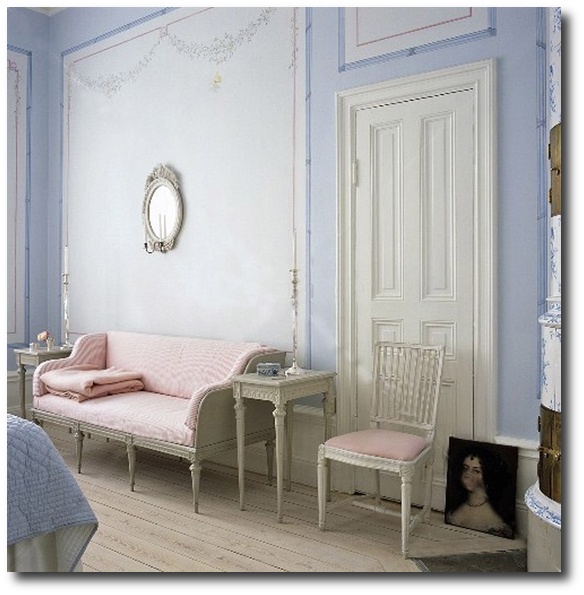
Svartsjö Palace In Sweden
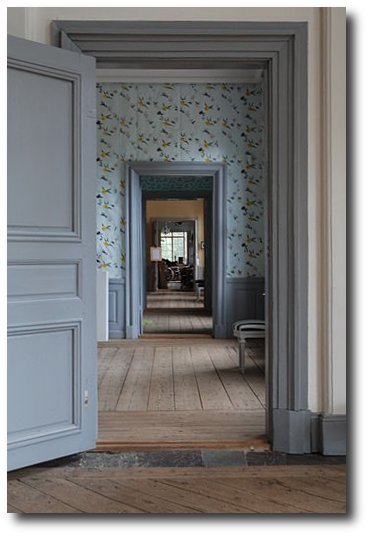
Svartsjö Palace In Sweden

Svartsjö Palace In Sweden
Vinyl Plank Flooring, A Swedish Design Must Have – Part 2
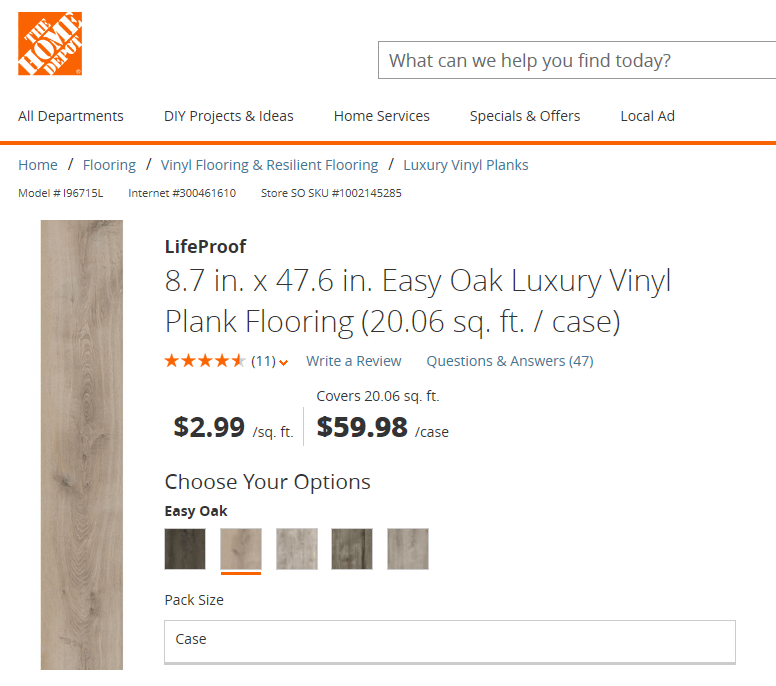
See this option at Home Depot
If you’re a do-it-yourself type of person who isn’t afraid of tackling renovations, then this is an article is a must-read if you are planning on replacing your flooring. Every home is under a budget when renovations come into play. If are a few inexpensive alternatives for the rich look of hardwood flooring.
Inexpensive Options For The Wood Floor Looks
Vinyl Plank “Peel and Stick” Flooring.
Vinyl wood plank floor is a rather new idea that has become popular in the last several years. Everyone is familiar with the “peel and stick tiles”, now they have come out with a “peel and stick plank” that replicates plank flooring. If you want to save some money and install the flooring yourself, this might be an option to consider.
Pros For Vinyl Plank “Peel and Stick Flooring”
All that is required to install theses floors is a utility knife with a sharp blade and a tape measure. Peel-n-stick vinyl flooring means the adhesive has already been applied to the back of the vinyl, and all that’s required to install the vinyl plank is to peel off the protective paper and firmly press the plank in place. Unlike wood flooring, vinyl wood plank floors don’t require a miter saw to complete the cuts around the room. Vinyl planks can be cut to the appropriate size with nothing more than a good utility knife and a metal ruler.
-Lowes Style Selections put together a very simple video guide of how to install the Peel & stick vinyl plank floor. These tips will give you a professional look- Here
-In this video, a customer makes a video of how to install plank flooring. What I love about this video is this customer is an every day person who hasn’t installed flooring before. If you are considering buying this flooring, and are worried about how to install it, this video will put your mind at ease- Here
-One Ladies Kitchen Transformation here
Many companies have mimicked numerous varieties of wood in countless colors. The reason vinyl has become so popular is the material is durable and easy to clean, and anyone can install it. You can spill almost anything on the floor, and not worry if it will stain the flooring like you would with wood.
Our floor has a large sheet of vinyl flooring that is meant to look like hardwood and it has held up quite well since we have lived in our home. I could drag a large piece of furniture across the floor, and it likely wouldn’t scratch like laminate would.
Large sheets of vinyl are pretty complicated to install for the average DIY homeowner, where as the individual planks make it easy for any homeowner to install with ease. You could easily do a room over the weekend yourself, and I suppose you could haul these boxes home in your car compared to rolls of vinyl.
Protile 4″ x 36″ Vinyl Plank in White Wash -36.-Square Feet per Carton $47
On the Voices Yahoo Site, One Customer gives this product an in-depth review, here are some of the comments I found interesting:
“Seeing our strong interest but still sensing some hesitancy, the Home Depot employee told us that WalMart had been installing this flooring in upgrades to many of its stores. In fact, he suggested that we go visit our own local WalMart to see TrafficMaster Allure flooring in use – they had installed it a year ago. We went, we looked closely, and we were impressed. Regardless of what you think of WalMart as a flooring reference, you know that they get lots of people through their stores and the flooring they use has to hold up. The TrafficMaster Allure flooring looked great in WalMart.”
“While on the carport, several hundred dollars worth of Traffic Master Allure was subjected to two bouts of heavy rain that flooded our carport and soaked our boxes of wood vinyl flooring. We were very concerned that we had lost our flooring but we opened the ruined boxes and let the TrafficMaster vinyl planks air dry. Surprisingly, everything seemed to be fine. The vinyl wood planks dried perfectly, the adhesive was still plenty sticky, and there was no warping at all.”
“Cost-wise, at $2.39 a square foot, TrafficMaster Allure is about the same price as the average floor tile, comparable in price to Pergo laminate flooring and half the price of hardwood flooring. Additional cost savings can be found because it is entirely possible that you can install this flooring by yourself – even if you aren’t an experienced do-it-yourselfer. It is also much quicker to install time-wise than a tile floor. My only complaint would be in selection choices at the store. There were several color choices in stock at Home Depot and no one mentioned that even more choices were readily available online”
Cons For Peel and Stick Plank Flooring:
Apartment Therapy did up a post called “TrafficMaster Allure Vinyl Flooring” where they posted comments from a Home Depot employee left on their website. Check out the post and look over the dozens of comments left on the article, before purchasing the product.
1. Peel and Stick Plank Flooring IS Not for Concrete Flooring.
This style of flooring is meant to be used in rooms that are normally kept at room temperature, (65 to 85 degrees). If you are thinking about using it in a basement, or sun room that are rather cold, then vinyl plank flooring is not for you.
On the Buzzillions website, the picture above shows Traffic Master flooring installed over concrete, and it looks horrible. “I installed my Allure floor in Oct of 2008 over concrete floors (30 year old house, basement, previously I had carpet down with zero water issues) . In the spring of 2008 the below started. I can scrap up the glue and clean up the floor only to see the same thing happen again within 2weeks…. I’m planning to go to them to see what they can offer as a replacement”
2. The Pattern Wears Off
Vinyl wood plank floors cannot be re-finished and have a relatively short life-span compare to solid wood floors.
Depending on the thickness, manufacturer, and foot traffic volume, vinyl wood plank floors might only last a short amount of time. After the floor has reached the end of its life, it will have to be removed and a new floor installed.
Solid wood floors on the other hand afford the homeowner the ability to re-finish them several times, even allowing for the ability to change stain variations and colors as they re-decorate.
One customer leaves this comment:
“I put it down in my kitchen over a smooth surface (vinyl sheet over plywood), but after a few years the edges turned white as well as several areas where the “wood” surface wore off leaving big areas of white. We use gentle cleaners and there are only a few people living in the house so it doesn’t get tons of traffic. I love the product for the ease and look, but now I have to replace my floor after only a few years!”
3. Look Closer, It Does Look Like Plastic.
Vinyl hardwood has become quite popular, because people want a nice look for less. In our modern society, almost everything is faux, and many people are perfectly content with it. Many people aren’t snobs about their interior, and aren’t particular about the style of furniture, color schemes, matching drapery and so forth. If you are a person that is rather particular, vinyl floor may bother you because it is plastic, and not real wood. Vinyl isn’t cheap, and yet costs quite a bit of money, and it doesn’t even compare to real wood. So if you think the faux look might bother you, I would suggest getting real wood.
Zoffany’s Wallpaper collection, Gustavus 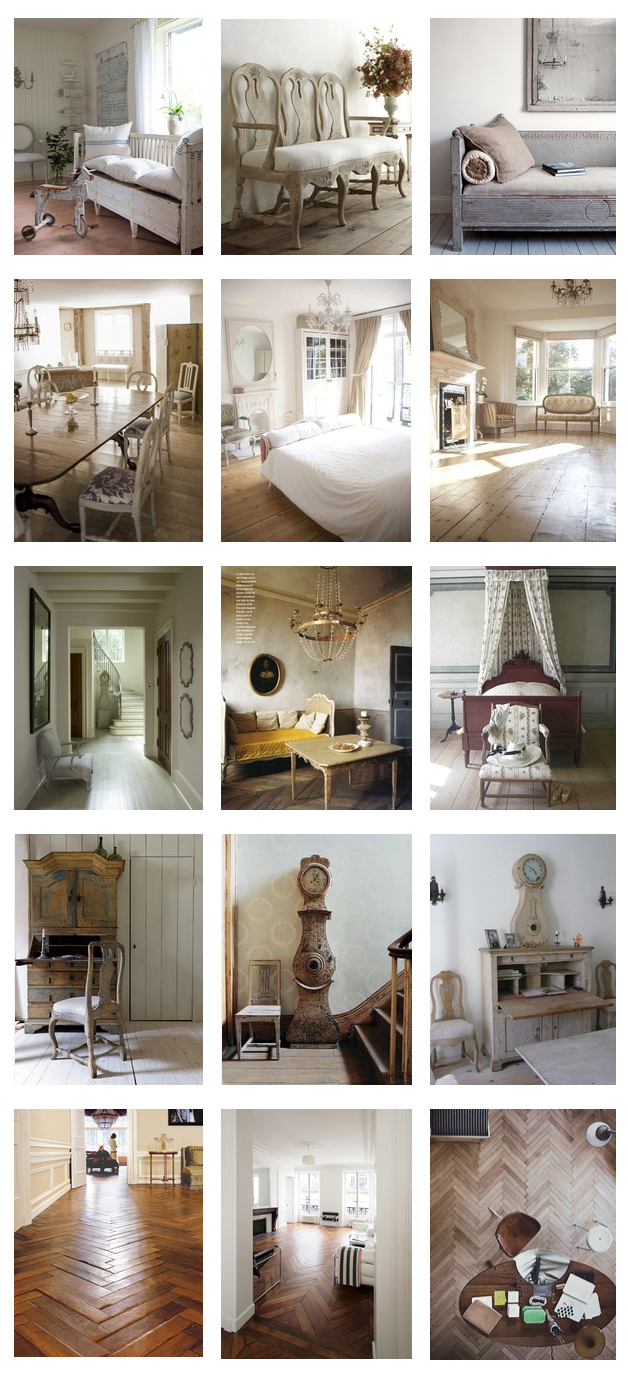
Check Out ALL the colors from Hangzhou Enzo I/E Trading Co., Ltd.
Laminate Wood Flooring, A Swedish Design Must Have – Part 3
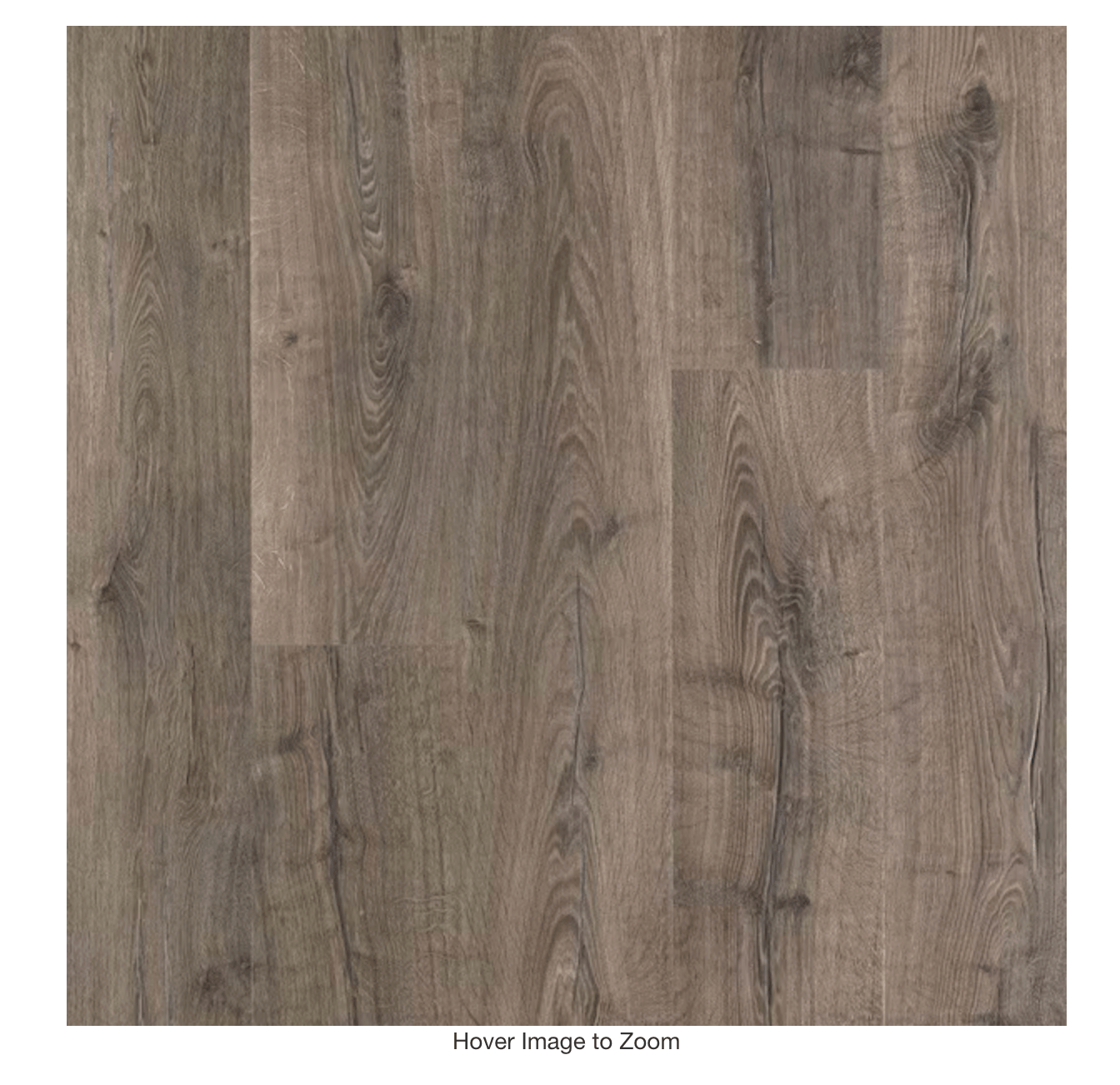
Laminate Floors- Are They Worth The Money? Some would say heck yes!
Laminate flooring is a multi-layer, synthetic flooring product which simulates wood, marble, limestone and granite, using a photograph installed beneath a clear protective layer. This image closely resembles a natural material, but the difference becomes apparent upon close inspection. Common woods are available such as maple, oak and pine, and more exotic species, such as Brazilian cherry, mahogany and walnut can be purchased. Beneath the photographic layer is an inner core composed of melamine resin and fiberboard materials. Pergo® is the most popular brand of laminate flooring, although other manufacturers include DuPont® and Witex®.
Laminate can look nice as well, but also are subject to failure just like any product choice. Here are a few disadvantages to the flooring.
– The biggest draw back to laminate is you cannot refinish it. Dings add to the character of true wood floors, and often times people bang them with chains and gouge them to get the authentic feel of time worn wood floors. One scratch in laminate floors and you simply cannot fix it. You must be careful with high heels, kids toys, and moving of furniture to keep your floors in excellent condition.
– Extreme temperature changes can cause the boards to pull away from one another.
-Panels can push up against each other at the joints, creating un-level high points. This is common where the boards were not installed with sufficient expansion space.
– Warping and buckling issues are caused by high humidity or excessive surface moisture, or a lack of a sufficient moisture barrier. Hardwood floors, by contrast, are naturally more resistant to moisture damage, as they will swell and shrink to accommodate changes in moisture
-Mold will occur when excessive moisture is present. Mold is a serious threat to home owners and can cause permanent serious health concerns.
– Patterns sometimes don’t always match from package to package. This can be very obvious and beyond the control of a consumer.
-The inner core can expand because it is made out of high-density fiberboard. If you have any moisture issues, or even if you didn’t lay down a sufficient enough moisture barrier, your flooring will swell and fall apart.
-Formaldehyde-outgassing, which originates from the melamine resin in various laminate floors. Chemically sensitive individuals may have reactions to particular brands of laminate or vinyl flooring.
A customer leaves this comment about Traffic Master:
“My family got very ill after this product was installed in our house. Apparently it was off-gassing causing headaches, body aches, runny noses and more. When we called the manufacturer, they quickly arranged to have the floor removed and reimbursed us in full. Obviously we are not the first ones to have a health issue with this product. It should NOT BE SOLD!”
Laminate floors look great, and can be the ideal choice for nice exotic wood floors without the cost of wood Many people want the high end looks, and this allows them to get the look for less than the real thing.
Plywood Plank Flooring, A Swedish Design Must Have – Part 4
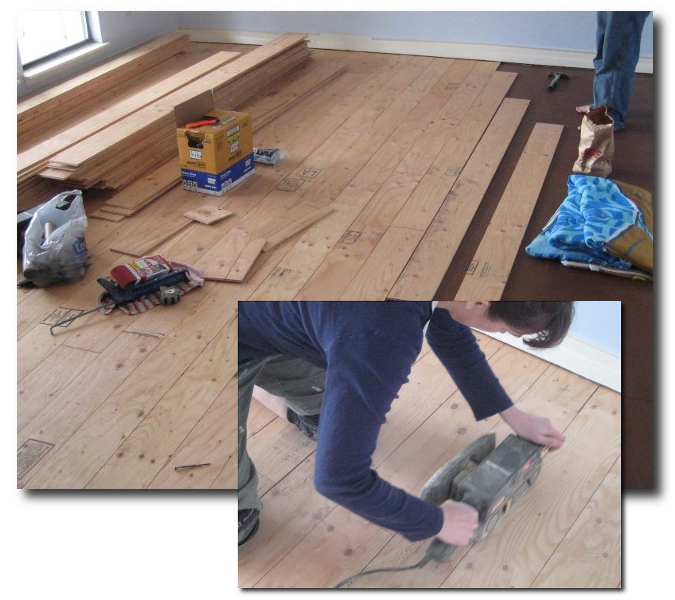
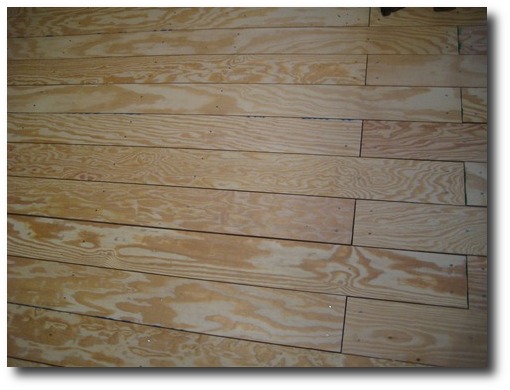
I stumbled across a DIY trend out there where people are cutting their own “planks” out of plywood. It seems rather unusual at first, but the results really surprised me. You get the look of real wood flooring which you can sand, paint, stain, varnish, or white wash, for fractions of the cost.
“We tore up nasty old carpet, then cut grooves in the plywood that was under the carpet to replicate plank flooring with a skill saw – and used a dremel to get closer to the walls. This worked better than the router which was recommended in the web article I got this idea from. We stained and then did three coats of poly. Everyone’s amazed that this isn’t ‘real’ plank flooring! We varied the width of the planks, using a 2×4 as a guide.”
There are a couple of links I want to share that might move you in the direction of considering this look.
1. Layers Of Learning Blog Flooring Transformation
Layers Of Learning Blog posted absolutely stunning photos of a room that they used plywood cut into 6″ strips of wood.
They mention in their article that plywood floors allowed them to transform their WHOLE house because of the low cost of the materials. This certainly a reason to consider this option. Many people can only afford a couple rooms with the other options. Plywood is so inexpensive, that you can do it yourself, and it is affordable.
Plywood gives you the option to cut wide planks with real grain. For those of you who want the REAL thing, this would be an affordable way of getting the look for less.
Buying plywood allows you to do one room at a time. It doesn’t matter if your project takes you a couple months to a year to complete, because plywood is practically the same from store to store. The finishing process allows you to dent, distress, and apply paint or stain which unifies the space.
Another plus to plywood floors is if something is spilled on the floors, which ruins several boards, all they would have to do is rip up the damaged boards, and replace them with the same finishing paint, stain or varnish!
Here are some of their costs:
Living room – 20′x13′ which equals 260 square feet.
$13.97 each on 9 sheets of 11/32″ “CD” grade plywood = $125.73, See the rest of the break down on their blog Layers Of Learning Blog
Here are some of their tips to consider.
Don’t Buy the Premium Brand Of Plywood
“There are different grades of plywood. “A” grade is the nicest, it comes with one very clean and sanded side. This is not what we went with because, as the guy at Lowe’s said, we can sand it ourselves and save big $$$. A sheet of “A” grade plywood costs about $28 in our market, but a sheet of “C” grade plywood is only about $14.”
Let The Wood Adjust To The Temperature Of The Room
” After the plywood is cut, stack it in the room where you’ll be laying it for a couple of days.”
2. Quarry Orchard Blog
Quarry Orchard Blog also put together a beautiful floor made from Plywood. In their “Plywood To Plank Flooring Tutorial“
They decided to tackle a redoing the room above their garage with a square footage of approximately 533. They decided to go with 6 inch strips that were all 8 feet long. They were shocked that it only took them an hour and 45 minutes to cut the sheets into the planks.
A Couple Tips From The Quarry Orchard Blog
– They started with the first board and squared it with the wall, leaving a 1/16 inch gap between the first board and the wall.
– Be sure to use a nail punch to make sure that the nails at least flush with the flooring.
– Clean up the look by being sure the nails are all in line and evenly spaced. Have a helper that can measure and mark the wood. They measured every 16 inches for each nail. Consider making a jig to help with the measuring and marking for where the nails are to go. This will enable you to line up the previous board and mark rather than measure for every single nail.
Check out the final pictures of this room! What a transformation!
A Break Down Of Their Material Costs:
16 sheets of 15/32 pine plywood @ $16.49 per sheet
9 gigantic tubes of Liquid Nail @ $4.75 each
10 lbs of cut nails (ordered from Tremont Nail Company) @ $69.63 (includes s&h)
4 gallons of Varathane polyurethane @ $37.46 per gallon
2 quarts of stain @ $9.99 each
3. Tidbits From The Tremaynes Blog
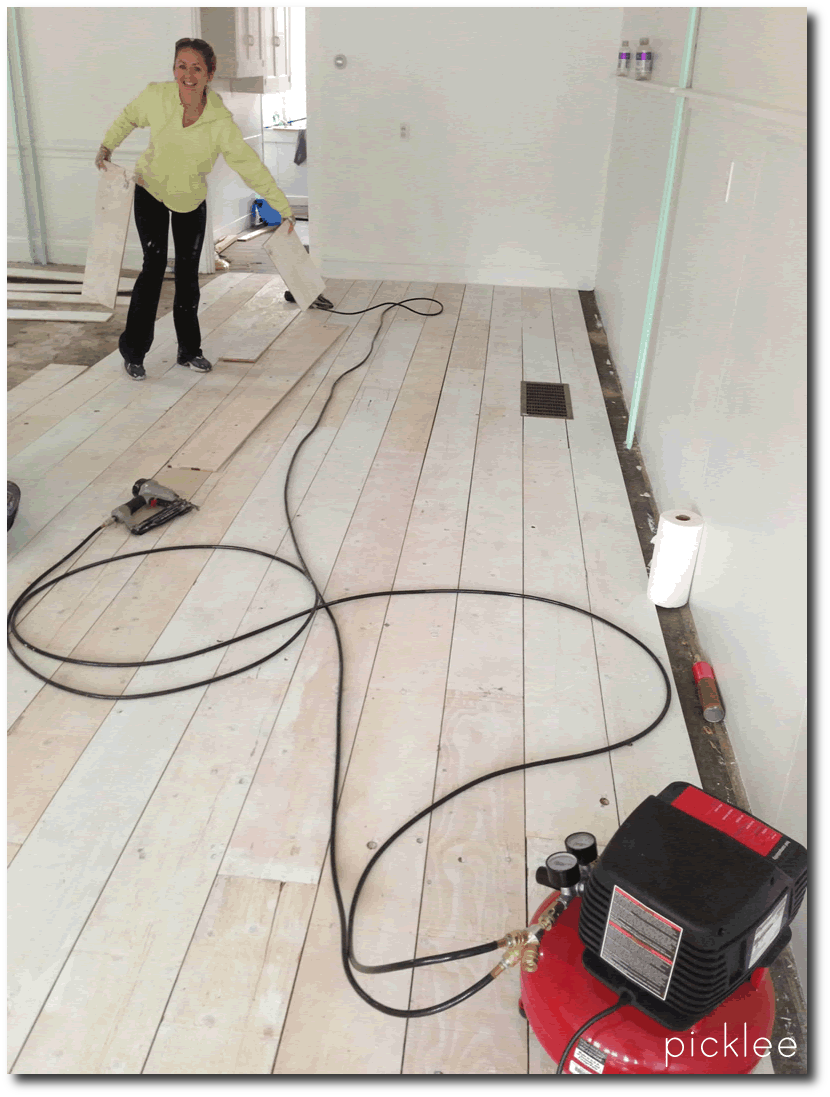
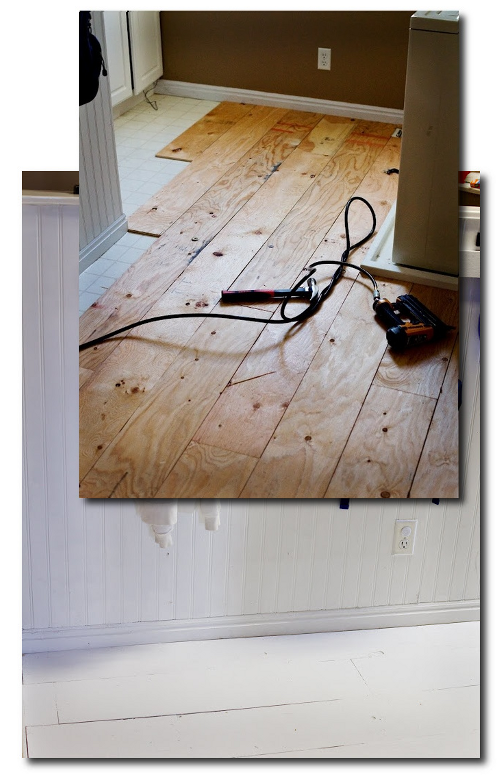
For their stunning transformation they used 4×8 sheets of plywood; cut into 8 inch strips, and laid it like a regular hardwood floor. They used an old nailgun, some pennies to space out the wood, for the old farmhouse-style look. The cost was $60. Fabulous!!
About to open a shop in Newport, RI, store owner Jordan decided to tackle the outdated carpet flooring that came with the shop. Being that the shop was a historic home built in the early 1700′s, she wanted something more period appropriate.
She decided to go with the standard 1/2″ thick 4′ x 8′ sheets at a cost of just under $20 each. In order to have zero waste, she chose to have the boards cut into 8 inch by 8 foot lengths, giving her six planks per sheet of plywood.
When she got back to the shop, she laid them out, and sanded all rough edges and splinters, and decided to white wash them before nailing them down. She mixed up 1/4 CeCe Caldwells Simply White Chalk Paint and 3/4 water. She then used a roller attached to a broom handle to apply a coat of the white washed paint to all of the planks.
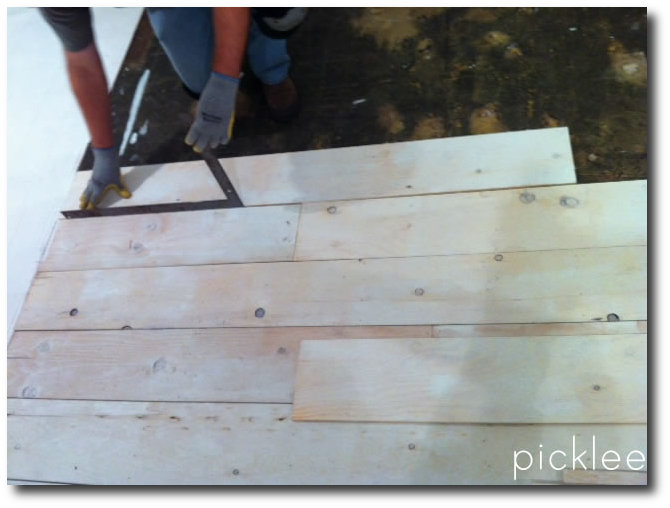
After all the planks were dry, her fiance Brett, started working on nailing the planks to the flooring. They used Bostik flooring adhesive to the backs of the plywood planks, which were then laid into place and nailed into the floor. Brett used 1 1/2″ nails and shot them in on an angle. The nails were spaced out about every 12″, placing two all along either side of each plank. Brett used a metal straight edge for a spacing guide, which gave the perfect distance between planks. As Brett went on nailing down the boards, he used a table saw to cut some of them into different lengths so that the boards would have more of a staggered look.
Some Additional Period Looks To Give You Inspiration:
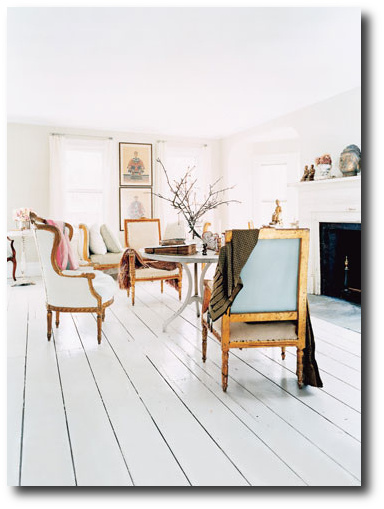
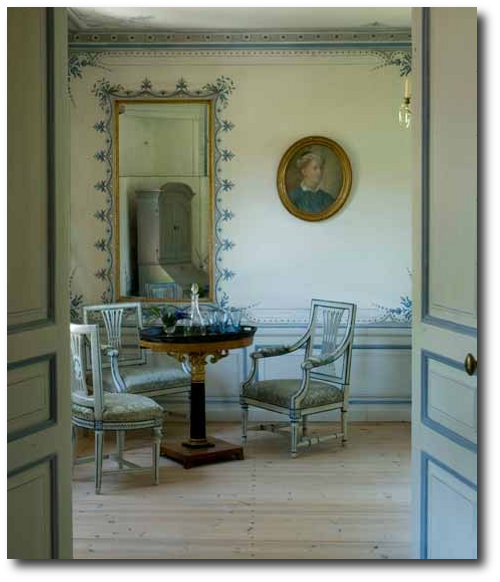
- Stunning Antiques With White Washed Flooring- Unknown Source
- THE SWEDISH ROOM by Lars Sjoeberg and Ursula Sjoeberg,
- Photographs by Ingalill Snitt
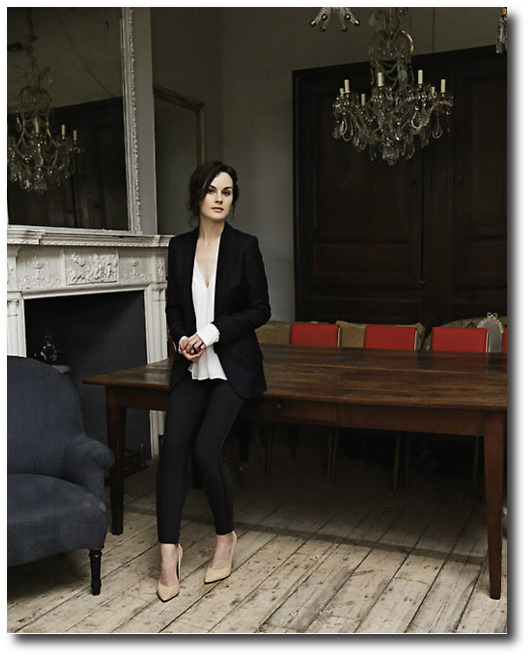
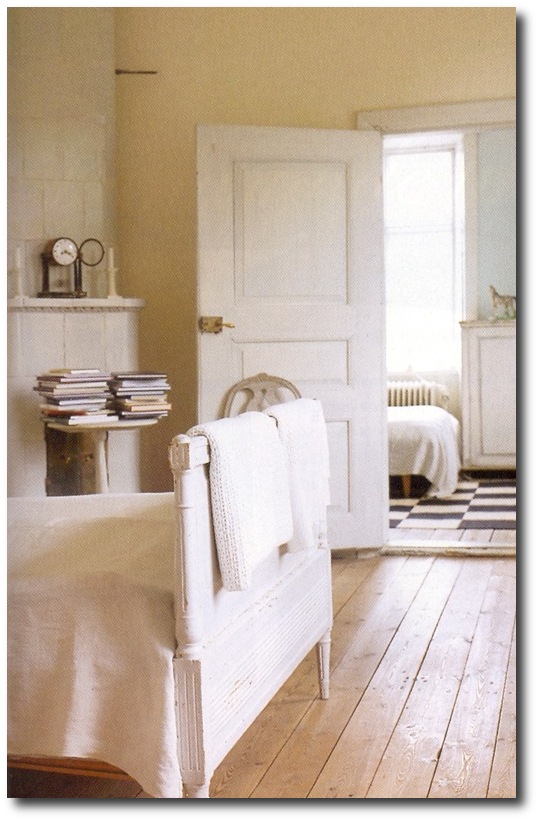
- Classic Swedish Home With Wood Flooring- Painted White Gustavian Bed
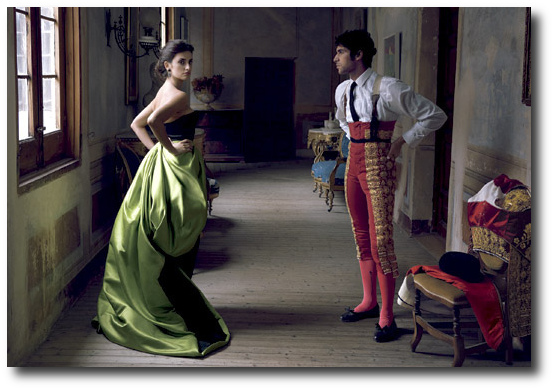
- Beautiful Planked Wood Floors White WashedCayetano Rivera Ordóñez & Penelope Cruz in Armani Privé – Made in Spain
- Photographed by Annie Leibovitz for US Vogue December 2007
- Distressed Wood Flooring- Make your plywood floors aged with translucent glazes
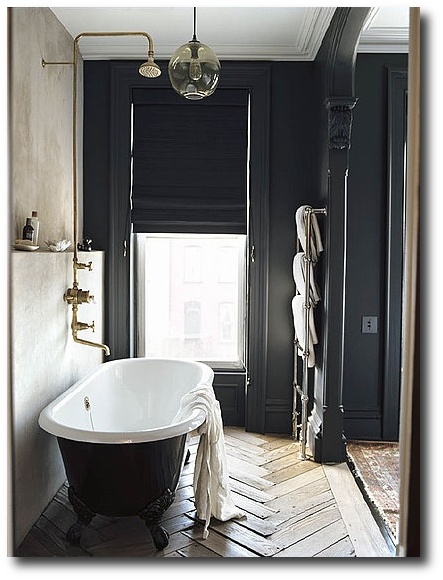
- Herringbone floors add personality in Jenna Lyons Brooklyn Townhouse.