A Look Behind The National Museum of Stockholm

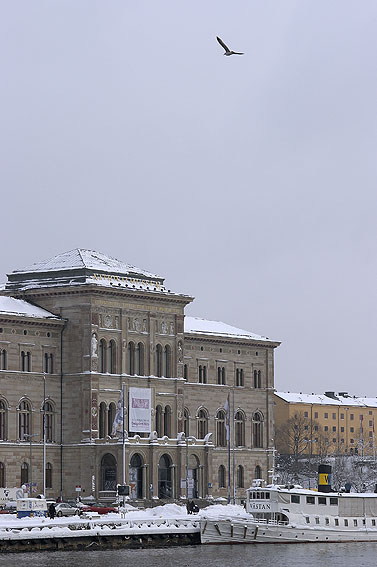
If you plan on visiting Sweden, then don’t miss the chance to go to the National Museum of Stockholm. I stumbled across some of their pictures on Flicker, and thought you would find them as interesting as I have. Fotograf Alex Hinchcliffe’s photostream shows a photo with a model in one of the rooms. This museum would be a wonderful place to spend the day.
Artists such as Rembrandt, Rubens, Goya, Renoir, and Degas are common as The National Museum contains about 16,000 collections of paintings and sculptures. They feature artwork from the late Middle Ages up to the beginning of the 20th century, and the French 18th century collection is regarded as one of the best in the world. The Royal Castles Collections were owned by the State, and today many of the collections appear at the National Museum. Enjoy paintings, engravings, drawings and sculptures that once existed in Gripsholm, Drottningholm, Strömsholm, Rosersberg and Ulriksdal.
National Museum of Stockholm
Be Apart Of Their Guilded Tours- See Their Schedule Here
Questions about the museums exhibitions and programs etc. info@nationalmuseum.se
Address: Nationalmuseum Box 16176 S-103 24 Stockholm Sweden
Switchboard: +46 8-5195 4300 24 h Info: +46 8-5195 4410 Fax: +46 8-5195 4450
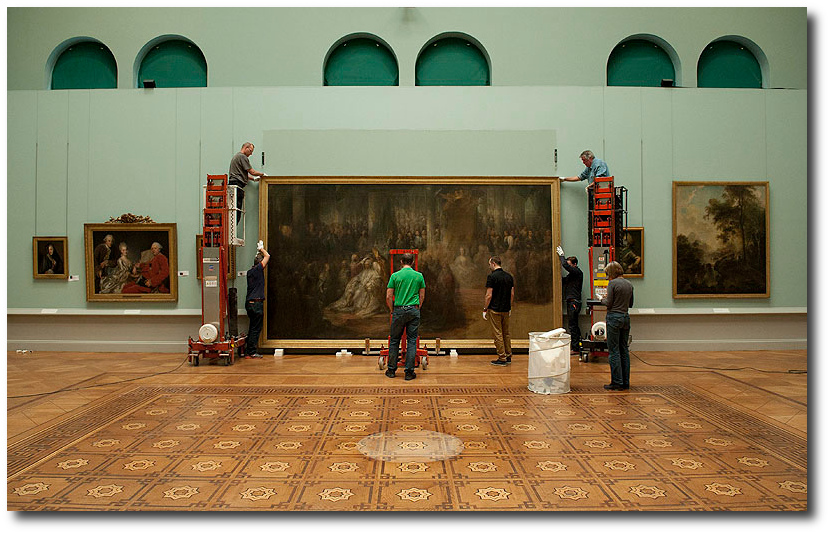
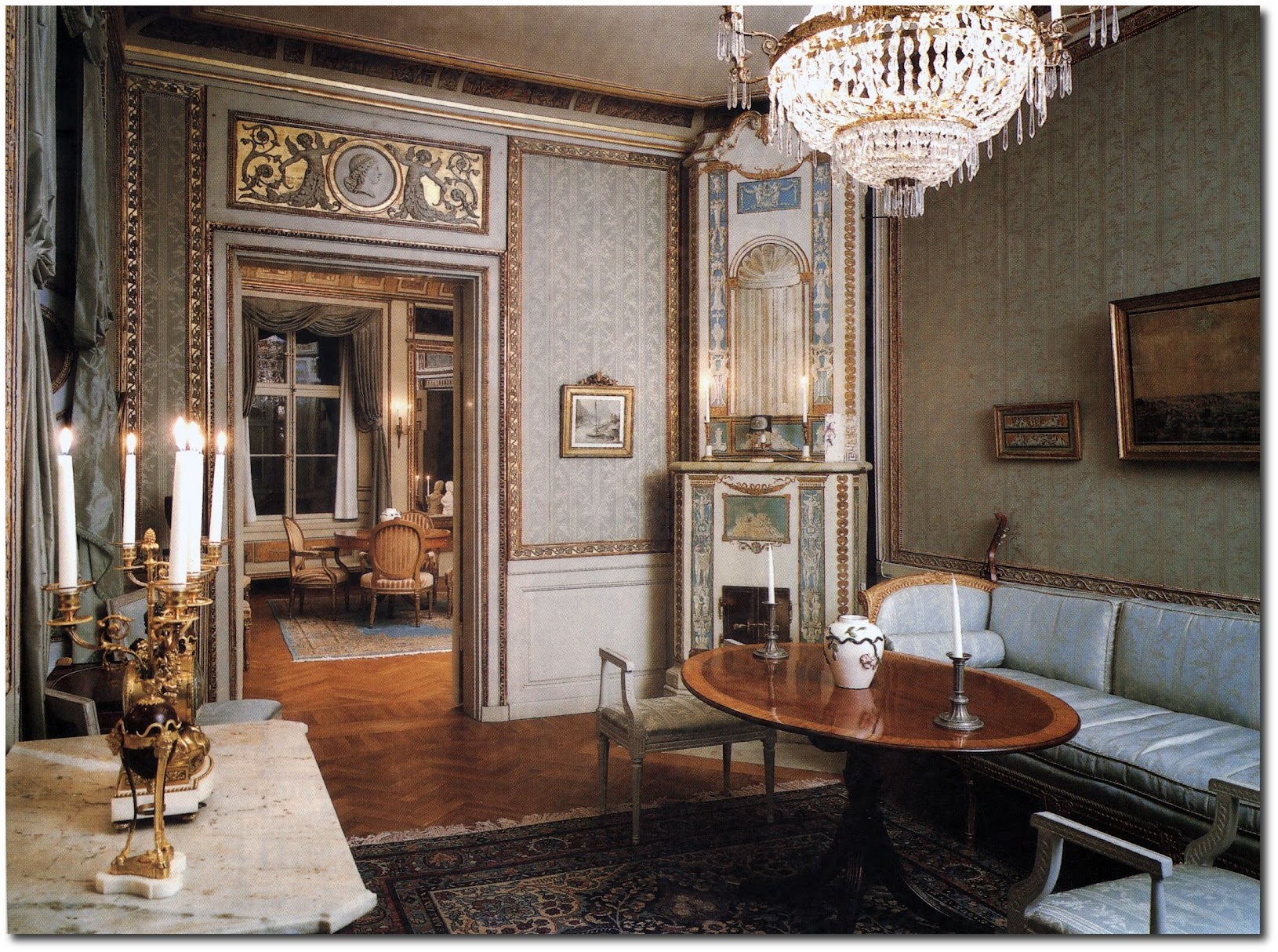
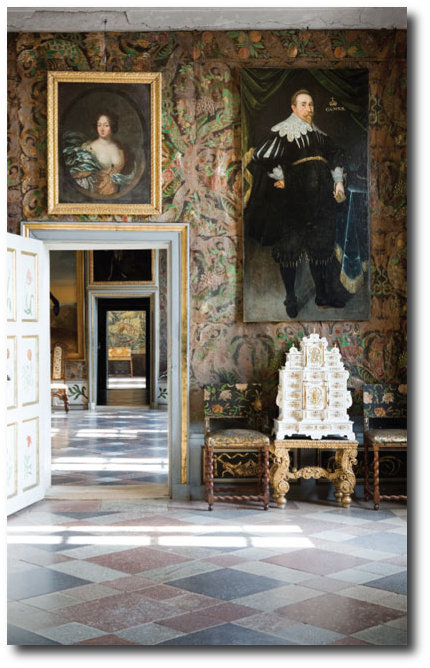
Check out the beautiful wall colors and the patterned floor. The marble pedestal and the white color of the sculpture provide a great contrast. The classic gold paintings look terrific against the blue walls.
Moving out- featured on flicker
Pride & Prejudice, 27 September 2012–20 January 2013
National Museum of Stockholm – Gold Leafing A Frame

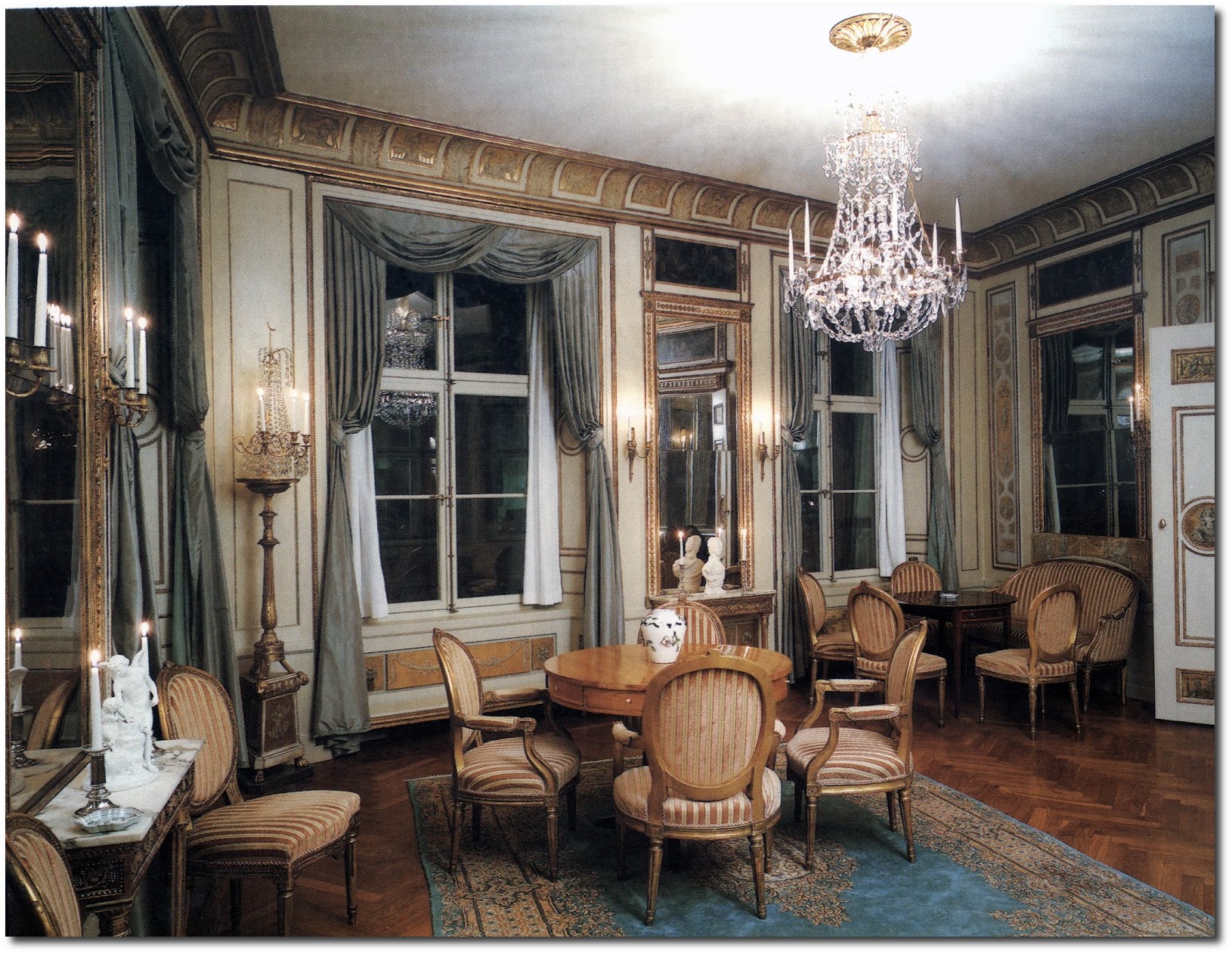
Swedish Interiors From The National Museum of Stockholm-
Troms l’oeil painting by Johan Sylvius in the stairwell at Drottningholm Palace
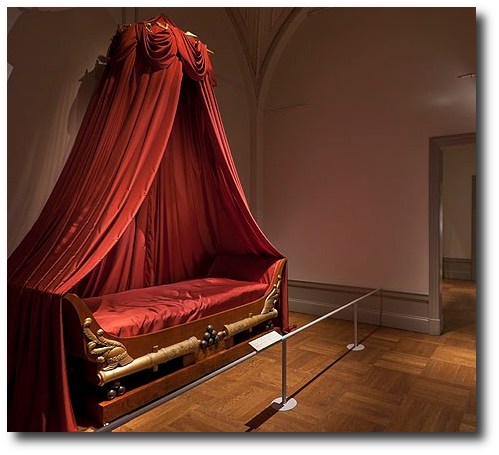
National Museum of Stockholm – Exhibition Napoleon Karl Johan Alexander
Exhibition Napoleon- September 30th 2010 – January 23 2011.
Alexander Roslin, 2007-2008
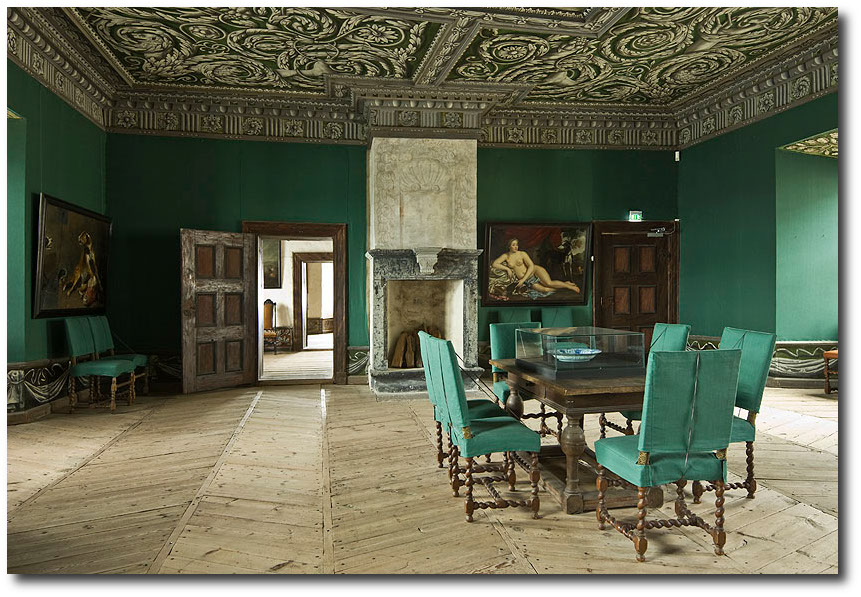
Gripsholm Interiors Featured On National Museum of Stockholm Flicker
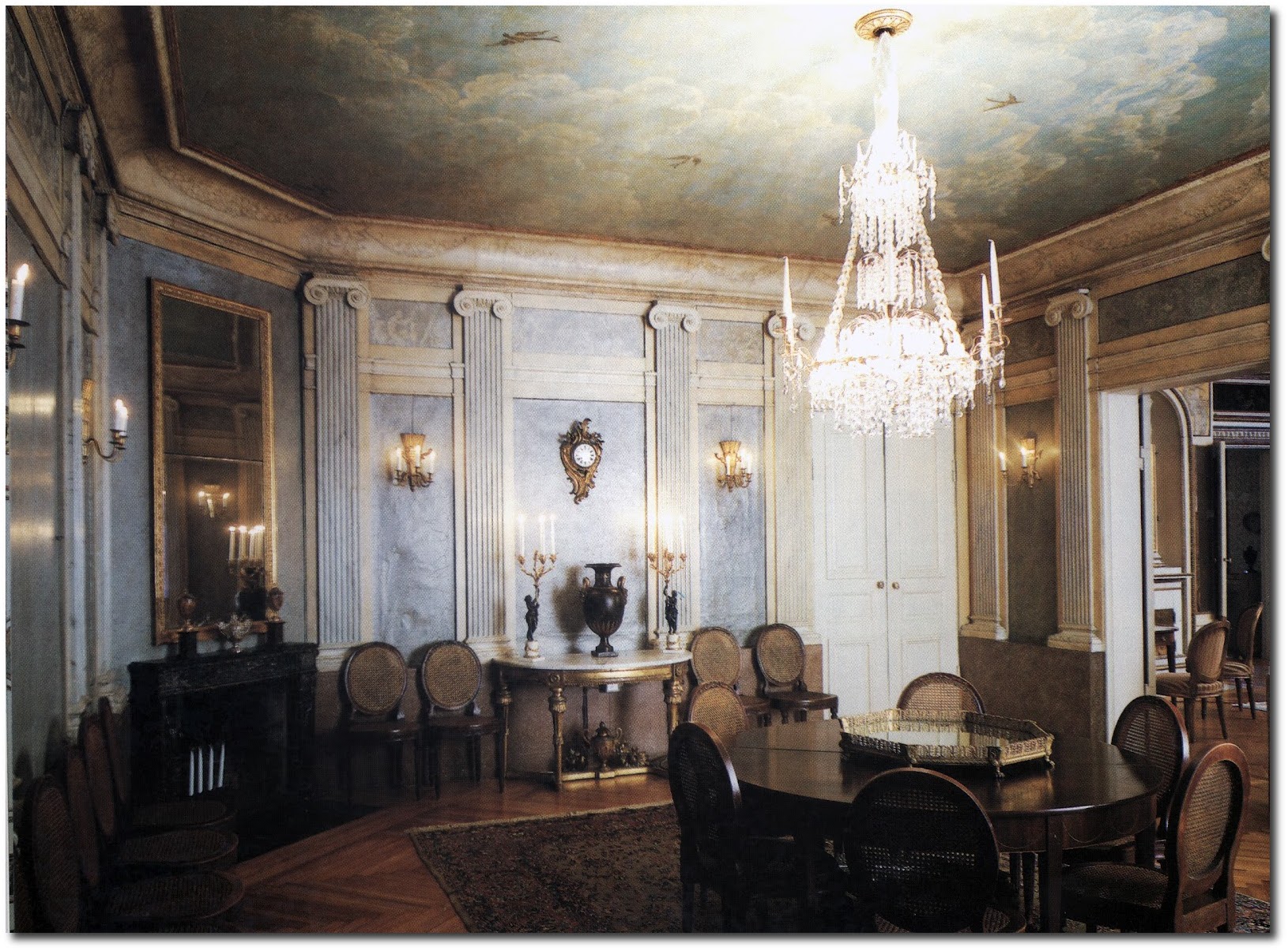
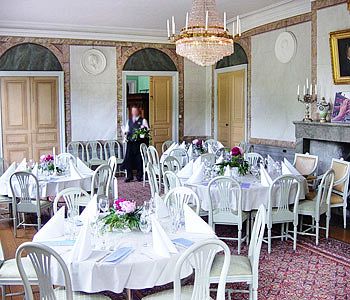
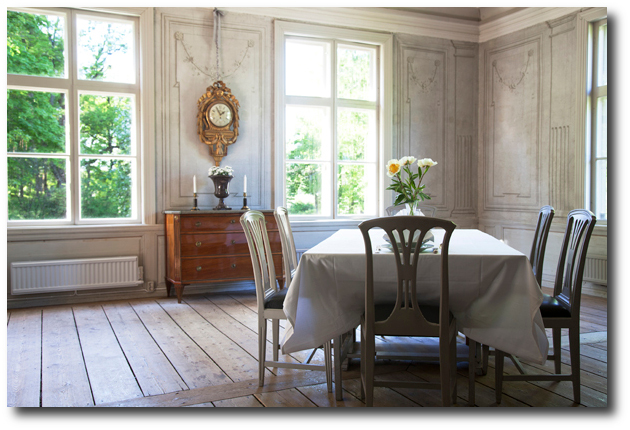
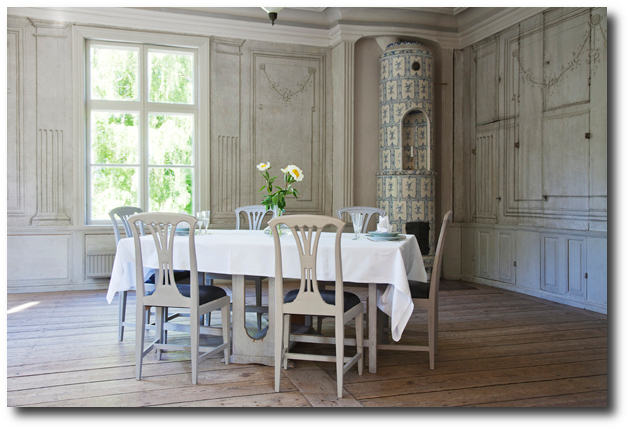
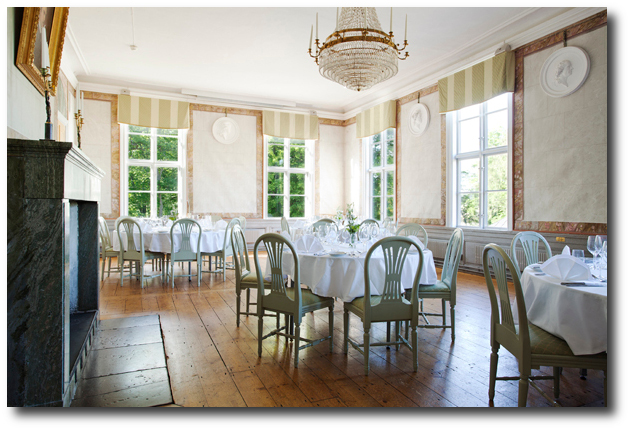
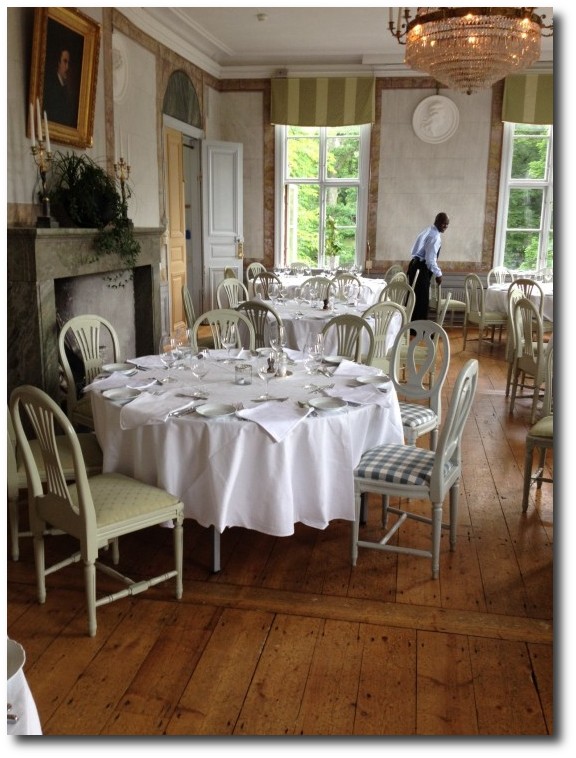
Matsal Dining Hall Featured on National Museum of Stockholm




The History Behind Empire Furniture From The Karl Johan Period -Liza Laserow
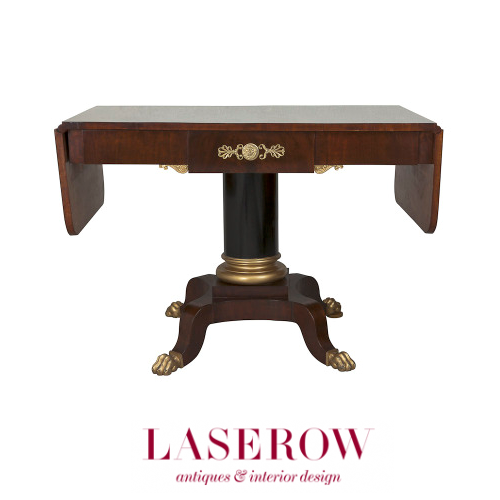 Drop leaf table made in Stockholm, Sweden. Details according to the periods highest fashion such as lion feet and lions head. The drawers keyhole is elegantly hidden behind the gilded lions head.
Authored By Liza Laserow
1810 the french officer Jean Babtiste Bernadotte came to southern Sweden accompanied by one of Napoleons marshals Monsieur Bernadotte , the man who was going to become King Karl XIV Johan. It was at this time the French Empire style came to Sweden. Napoleons architects: Charles Percier and Pierre Fontaine developed the style in France during the late 1790. They took Neoclassicism and gave it heavier look. Inspired by the roman empires strong lined art and architecture warlike attributes such as eagles, shields, helmets and spears became important symbols of the period. The glory years for this period was between 1804-1814 when Napoleon I was the emperor which also gave the period its name; Empire. During 1830 the style got softer and late Empire and in southern part of Sweden it got blonder – Biedermeier.
Mahognay with gilded details dominated the periods materials for furniture and mirrors and it was during this period the wallpaper was introduced in the form of panoramic views with classical ruins. Silk upholstery with matching window treatments in strong colors such as green, lemon yellow, red or gold was the highest fashion. Sweden also got its first silk weaving mill thanks to a Swede who smuggled a weaving chair to Sweden from France.
Read more about Swedish porphyry during the Karl Johan period.
About The Author
Liza Laserow, the daughter of the mother-daughter-owned company Laserow Antiques. Born and raised in Sweden, Liza moved to New York City, where, though she had trained to be a lawyer. Her mother, Karin, founded a showroom in Sweden 30 years ago and, in 2009, Liza helped launch a Laserow Antiques outpost in the New York Design Center in Manhattan. The exquisite gallery features furniture curated from Sweden’s most significant periods—Baroque, Rococo, Gustavian, and Empire—spanning from 1650 to 1820.
Follow Liza’s Blog, Old Is New,
Laserow Antiques Website
Laserow Antiques On 1st Dibs
Britahill
Brandstadvägen 612,
SE 275 67 Vollsjö
Sweden
Phone: +46 (0) 416 352 52
Cell: +46 708 13 52 30
1st Dibs @NYDC
200 Lexington Avenue, 10th Floor #63
New York New York 10016
USA
+1 212 988 9194
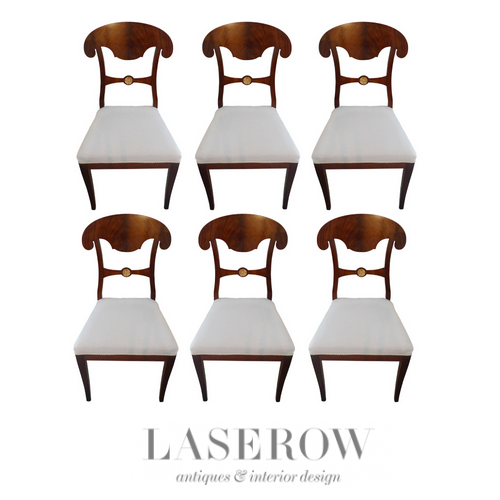
A set of 6 Empire dining chairs made in Sweden during the Karl Johan
Period. Frame in mahogany with gilded flower detail on black splat.
Newly upholstered.
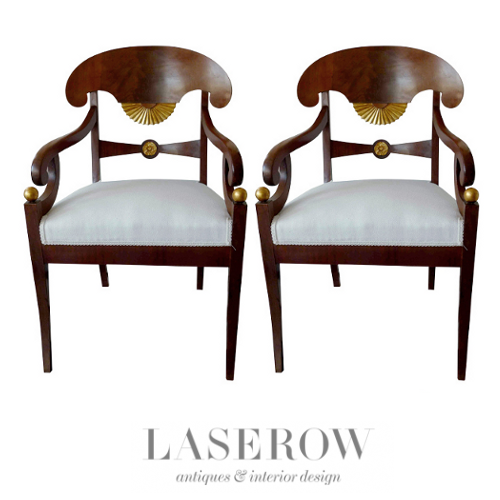
A pair of empire desk chairs in mahogany with gilded details in shapes of balls, flowers and fan
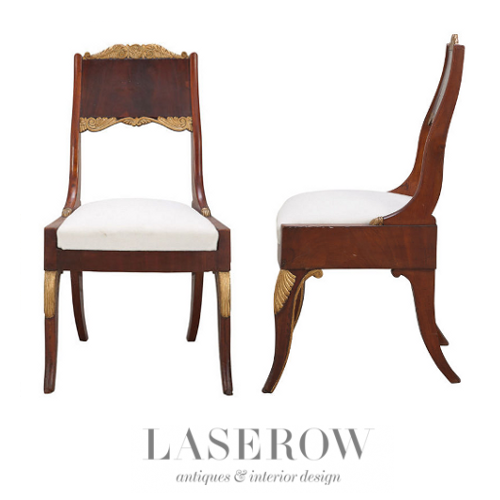
Pair of Russian Empire Mahogany Side Chairs
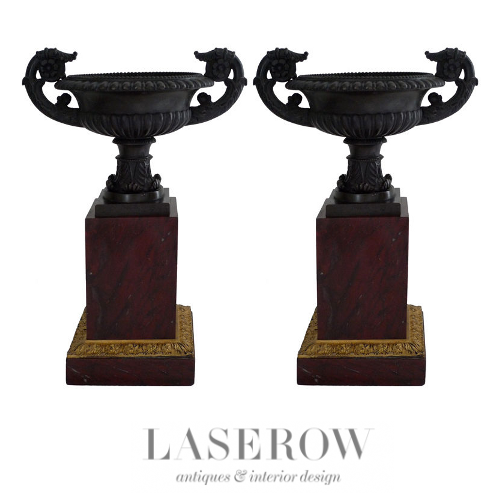
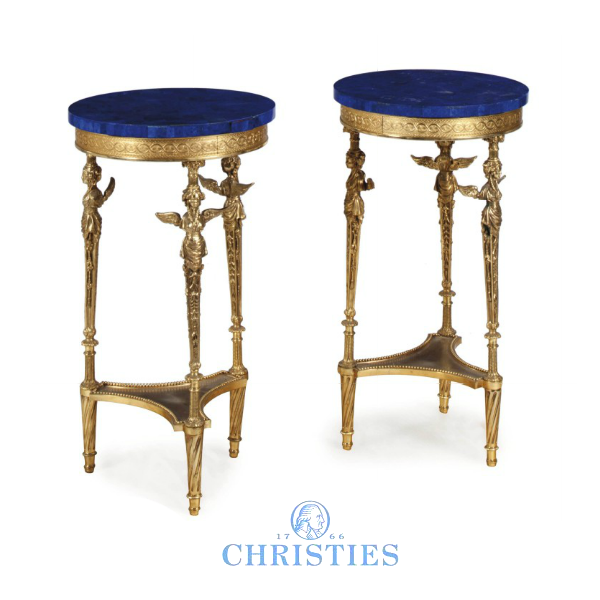
A pair of Tazzas from the late part of the Empire period. Made in Red French Marble, patinated bronze with decor of gilt bronze.
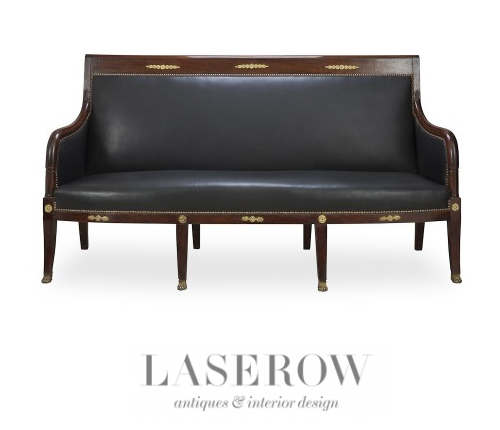
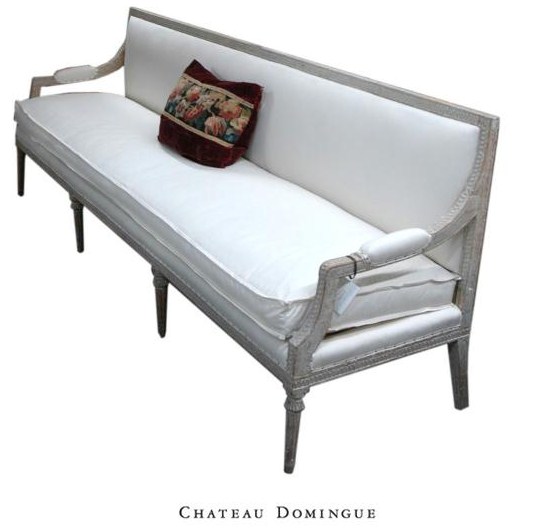
Sofa from the Empire period made in France. Frame of dark polished mahogany with gilt bronze decorations. 4 front legs ending with lion feet in gilt bronze.
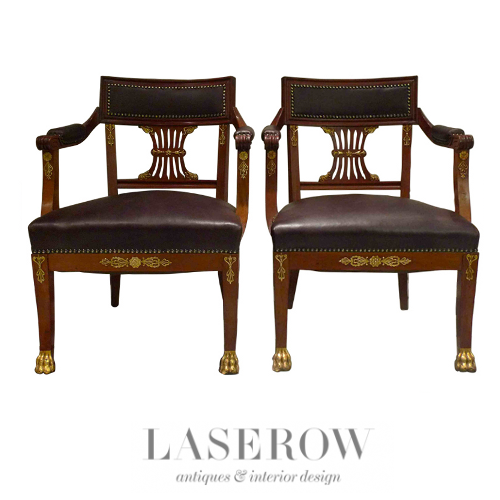
A pair of French desk chairs (can be sold separately as well) made in
Mahogany and decorated with polished bronze details. Legs ending with
lions feet. Upholstered in dark brown vintage leather.
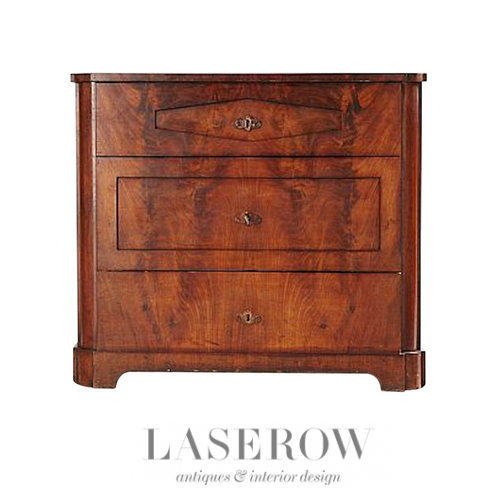
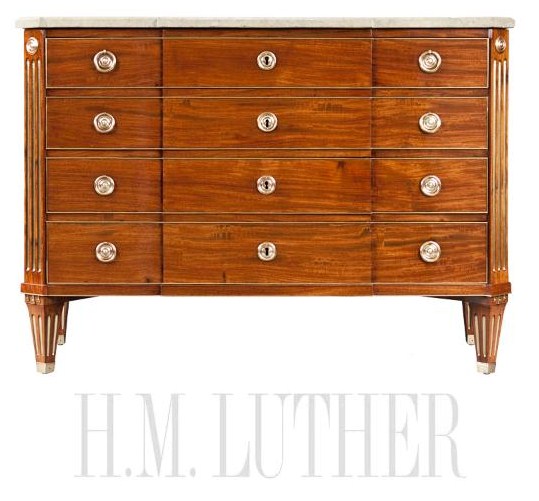
Swedish mahogany chest of drawers amde during the Karl Johan period
1820-1830. Simple carvings on drawers front and rounded corners.
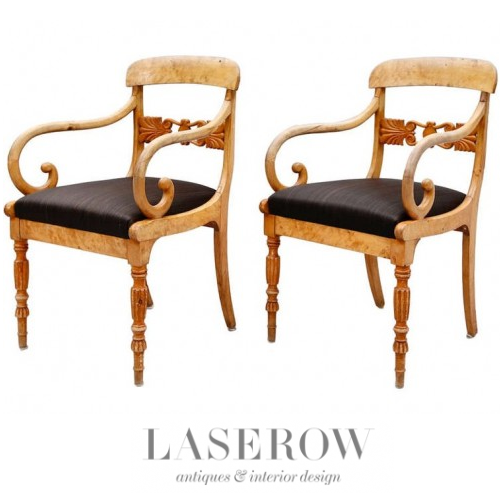
A pair of Swedish Biedermeier armchairs in light birch made during the mid 19th Century ca 1840.
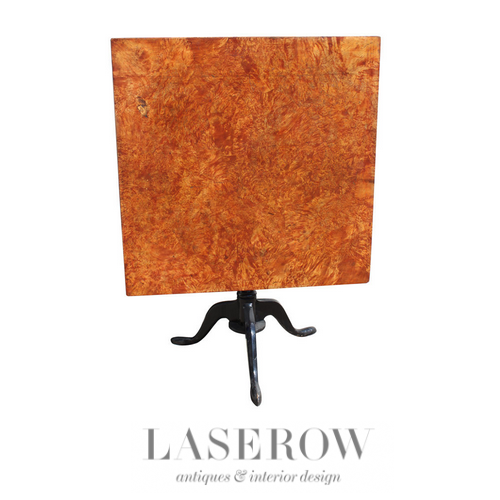
A Swedish Karl Johan Alder Root Tablein a very good quality. Top made by inlayed alder root standing on a blackened tripod base.
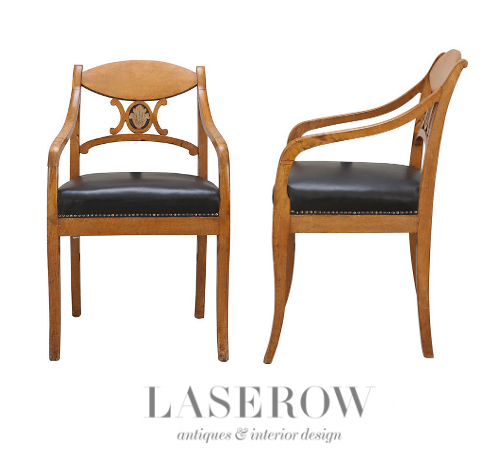
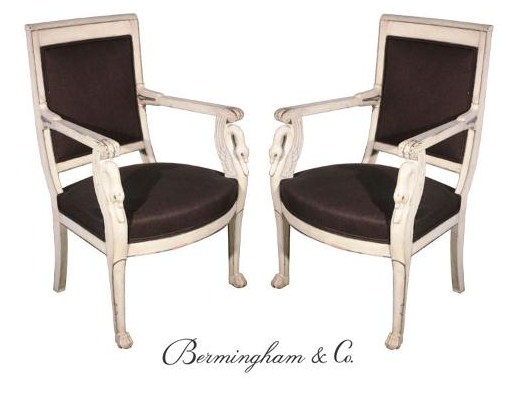
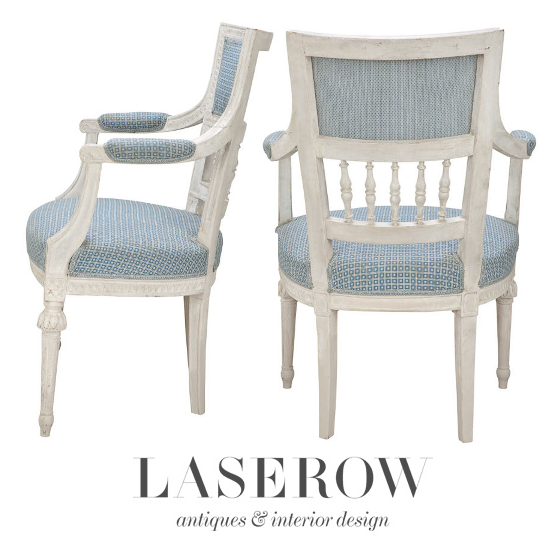
A Pair of Swedish Karl Johan Armchairs
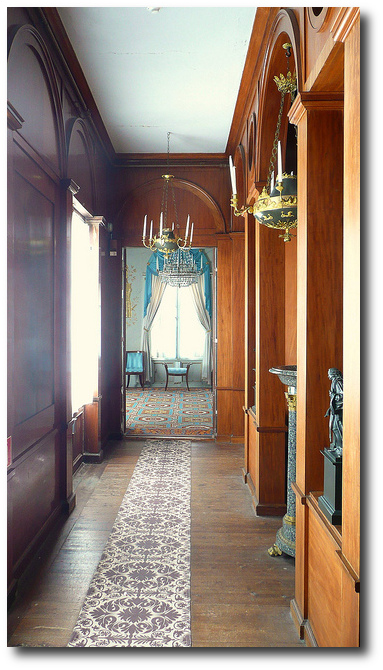
Rosendal Palace- Picture Credits- Faun070 On Flicker
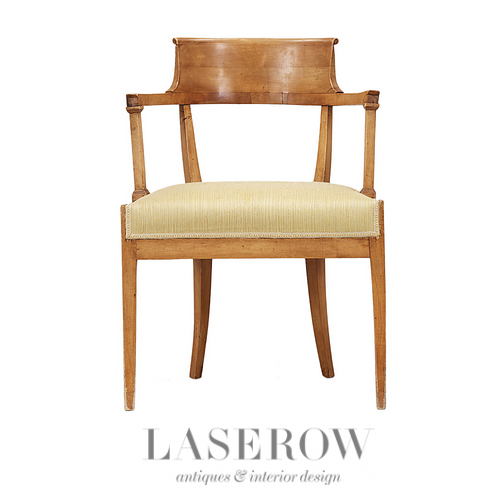
A single Empire desk chair made during the Empire period early 1800’s in Sweden.
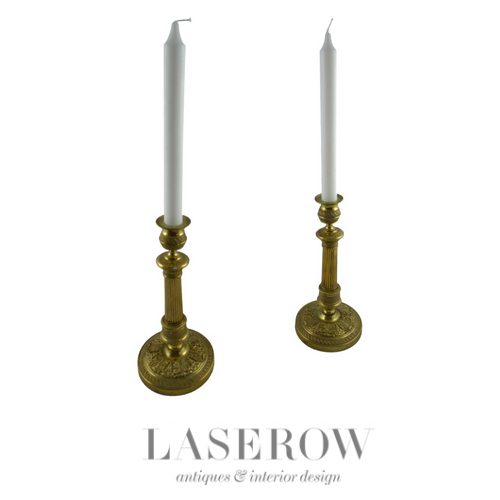
A pair of candlesticks made during the empire period 1810-1830 in
France. Urn shaped candleholders and a rounded channeled body standing
on a round foot decorated with flowers.
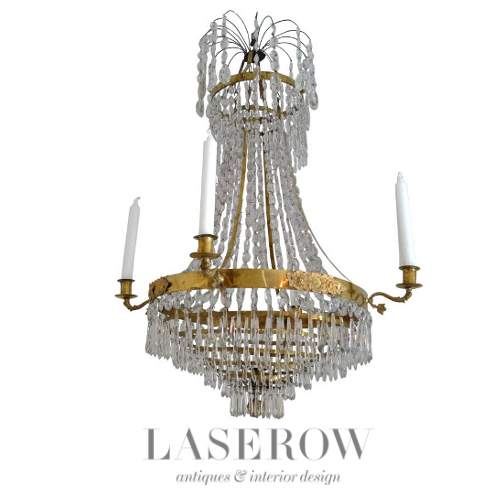
A exquisite crystal chandelier from the early part of 19th Century and
Karl Johan period. Frame made on brass with gilt bronze details. Diamond
shaped crystals. Four arms for candles and one in the middle of lower
basket Calles “welcoming candle”. All original.
An exquisite tall gilt wood mirror made during the Karl Johan period
with a demi lune shaped molding. A rectangular ending decorated with
leaves.
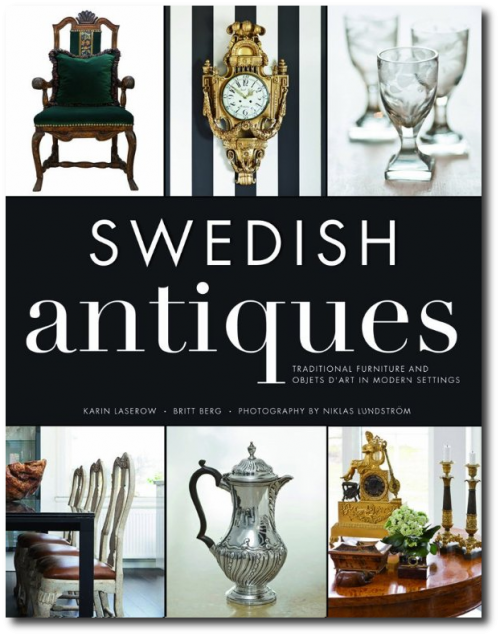
Antiques In A Modern Settings By Karin Laserow
A comprehensive guide to blending beautiful antiques into a modern home.
Incorporating antique furniture and art into a modern home may seem like a contradiction, but Karin Laserow and Britt Berg show just how easy it is and how stunning the results can be. Highlighting the rich traditions of Swedish furniture and other décor, this full-color guide begins by explaining the basics of antique furniture, from style histories to the nuanced differences of Baroque, Rococo, Empire, Gustavian, Art Nouveau, and more, with striking photographs throughout. Readers are taught how to tell the difference between old and new, how to evaluate antiques, and how to determine whether repairing, repainting, and refinishing are worthwhile decisions for protecting antique investments.
The Baroque Style Of Switzerland
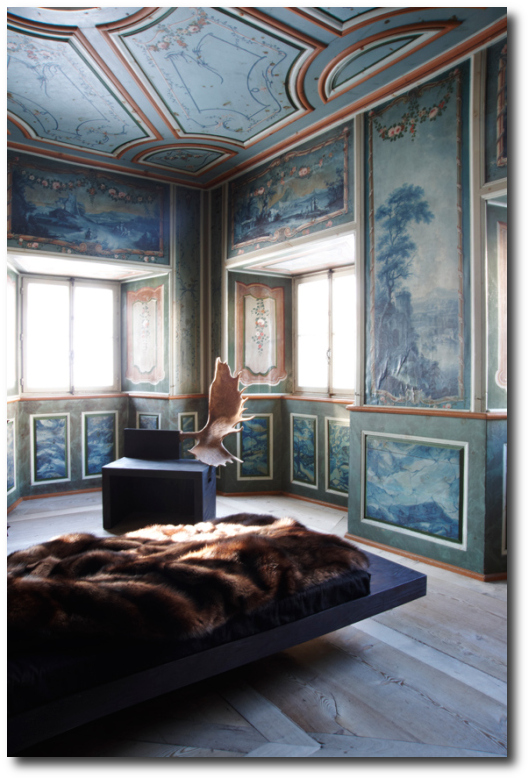
Chesa Planta house, located in Samedan, a picturesque village 6 km northeast of St Mortitz, Switzerland featured an exhibition of Rich Owens’s exquisite furniture designs photographed by Adrien Dirand. The collection was minimalistic, evoking a sense of goth meets luxury. Owens’ minimal aesthetic contrasted perfectly with baroque grandeur of the chateau. Some of the highlights included the bone chairs with stag antler backs, and a petrified wood sofa. Built in 1595, the house had been restored to convey the look of an 18th century Engadin aristocratic home. “Engadin” or “Engadine” identifies a long valley in the Swiss Alps located in southeast Switzerland. The Engadin is protected by high mountains on all sides and is famous for its sunny climate, beautiful landscapes, and outdoor activities.
There is a strong architectural presence of the Romanesque style in Switzerland, which can be found in the cathedrals, castles and fortresses around the country. The Gothic and Baroque style became fashionable through the Renaissance, where a large number of architectural masters came from Italy. The hand painting of the walls in the Chesa Planta house shows a Italian influence which is found in the region. Switzerland lies at the crossroads of several major European cultures, which includes three major languages, German, French and Italian which form the national languages of Switzerland, along with Romansh, spoken by a small minority. Therefore Swiss culture is characterised by diversity, which is reflected in a wide range of traditional customs, which also influenced the art and interior design of the country through history.
Folk art was kept alive all over the country. In Switzerland, it is mostly expressed in painting, dance, music, embroidery and wood carving. The most common form of woodcarving found in Switzerland is called chip carving. Chip carving decoration is normally found on everyday objects, such as milk stools, wooden spoons, or walking sticks. In some areas, the façades of houses are richly decorated using woodcarving. Embroidery has been a common element on historical traditional clothing in Switzerland. Embroidery has always been used for the decoration of fabric, but because the art is time intensive, it is sold for premium prices. Embroidery was something that served as an art in the home in past centuries and today is often found in tourist outlets where vintage and antique products are sold.
Interesting Books
–Swiss Furniture and Interiors in the 20th Century by Arthur Ruegg and Arthur Rüegg– For the first time, the development of interiors and furniture in Switzerland from the end of the nineteenth century to the present day have been surveyed and documented. A fully illustrated catalogue of over 300 objects from furniture to ceramics and household objects and around 150 biographies conclude the publication.
–Mountain Houses by Philippe Saharoff and Gwenaëlle Leprat–Nowhere is the beauty of living in the mountains more evident than in the Alps, where the spectacular landscape has given rise to equally
gorgeous homes. In Mountain Houses, photographer Philippe Saharoff takes us to 30 of these lovely chalets, farmhouses, and cottages, located in Chamonix, Gstaad, and other picturesque towns of
the Swiss and French Alps. More than 300 stunning photographs, taken in all seasons, bring the rustic charm and timeless comfort of each home to life. While wood and stone are the predominant materials,
the houses are decorated in a wide range of styles.
–Alpine Interiors (Interiors (Taschen)) by Beate Wedekind and TASCHEN–If you think that laying your hat in the Alps means having to choose between a rustic mountain hut or a log-burning ski lodge, then you’ll be
amazed when you get a glimpse of this latest inspiring volume in the Interiors series. The mountains of the Alps are a unique terrain unlike anything else in Europe, thus when constructing and decorating a place
to live, architects and designers have to be conscious of adapting to the extremes of landscape and climate. The desire to make your home a beautiful thing, to find a balance between Function and elegance,
becomes particularly significant in the Alpine region. Primarily Famous as a location for skiing resorts and muesli, the Alps straddle the borders of so many European countries, and this has allowed for a lively
interaction and exchange between many peoples and cultures. The selections in this book are impeccable. For example Reinhold Messner’s castle. There’s everything From baroque villas to farmhouses, famous
designers/ architects to the ordinary Alp-lander with very good taste.
For More Inspiration See These Posts:
The Romantic Baroque Style: Part 1- Stromholm
The Romantic Baroque Style: Part 2 King Gustav Vasa
The Romantic Baroque Style: Part 3 Skokloster & Steninge Palace
The Romantic Baroque Style: Part 4 – A Collectors Home
Image Credits
The home of Fawaz Gruosi and Caroline Gruosi-Scheufele
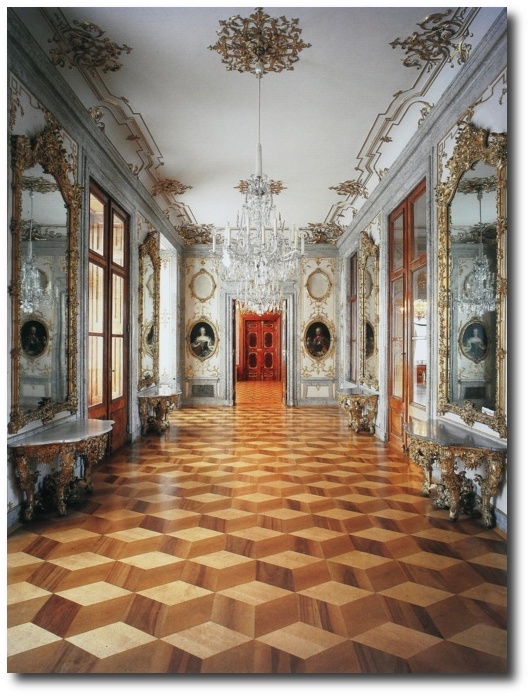
Schloss Hetzendorf in Austria
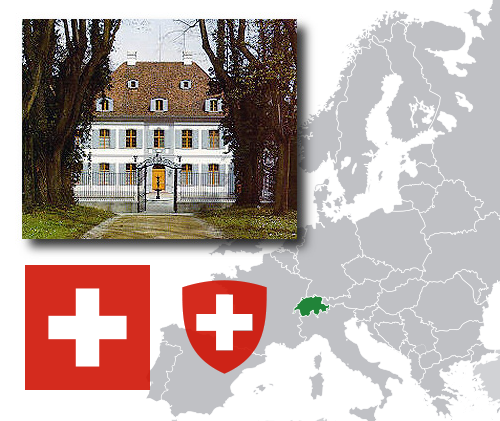
Europe -Switzerland- Location, Flag and Coat Of Arms-
A Picture of An spectacular estate in Switzerland
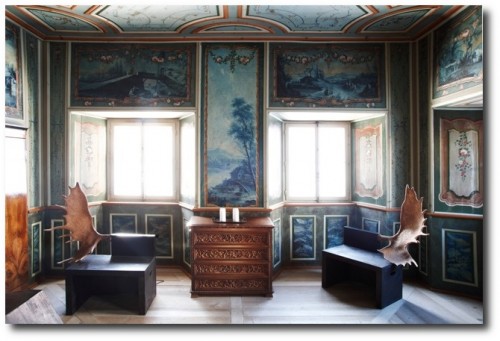
The home of Fawaz Gruosi and Caroline Gruosi-Scheufele’s villa, which overlooks Lake Geneva, in Prangins, Switzerland was featured in Elle Decor Magazine. 19th-century birdcages are suspended from a ceiling hand painted by Florentine artisans; the walls are decorated with framed dried flowers, the stool is wrought iron, and the cocktail table was made in Florence. Read more: A Lake Geneva Home with Traditional Decor – ELLE DECOR
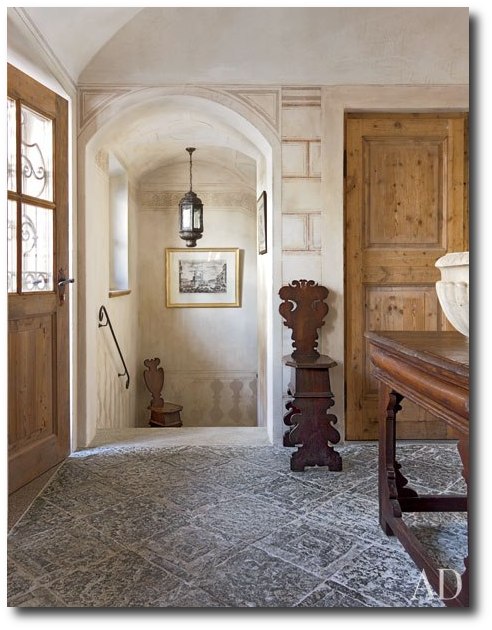
Architectural Digest featured a home in Moritz, Switzerland, with architecture and interior design by Studio Peregalli. This seventeenth-century home features Italian furnishings outfit the stone-paved entrance hall; the staircase lantern is 18th-century Venetian.
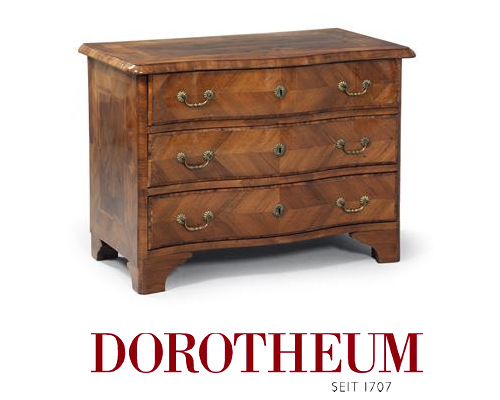
Baroque chest of drawers-Switzerland, Bern area, mid 18th century.
A three-drawer chest with walnut veneer and marquetry panels.
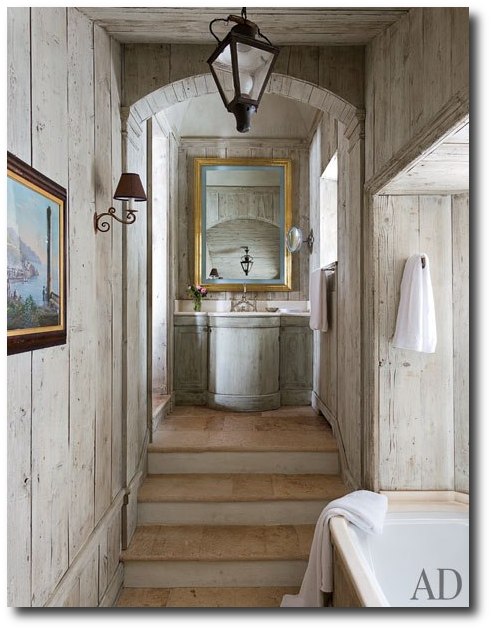
Moritz, Switzerland Home Featured In Architectural Digest
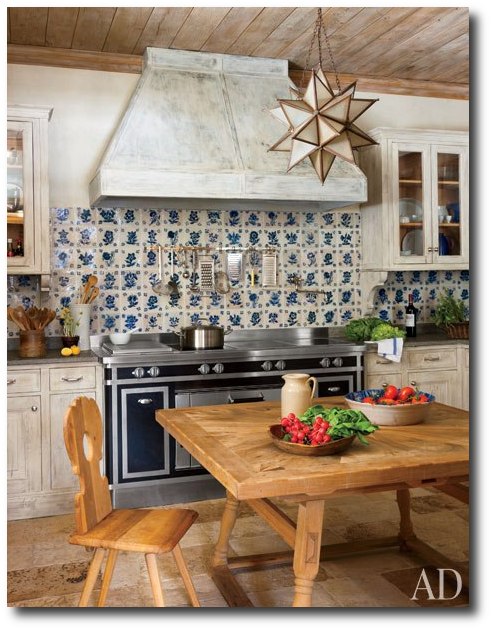
Moritz, Switzerland Home Featured In Architectural Digest
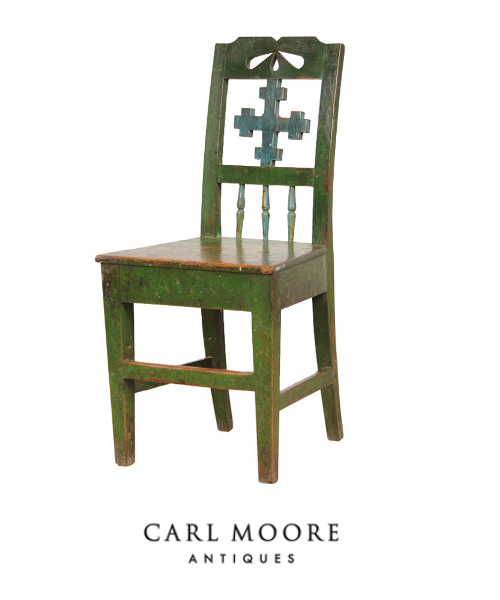
A charming side chair with the original painted finish from Switzerland c. 1850.
The geometric form of this chair is evident from the straight lines of the legs, stretchers and seat. But the back of the chair shows a wonderful rural aesthetic in the decoration.
The top most horizontal stile has a shaped upper edge and encloses three symmetrically placed piercings that resemble the petals of a flower. In the centre of the back there is a square cross form that has been created by four smaller crosses. This shape is actually reminiscent of an elaborate Maltese Cross first seen during the Crusades and an emblem of the Organization of the Knights Templar. The combination of the rich blue and green colour on the chair is quite pleasing. Look closely at the seat especially and it is possible to see the passage of time as the paint has been worn down to reveal the pine timber because of daily use. this pattern is impossible to duplicate in a new chair and it is what makes an antique so particularly desirable.
Old Chalet Refurbishment by Bergdorf & Nick Ruef Bernese Oberland, Switzerland- Yellow Trace Blog
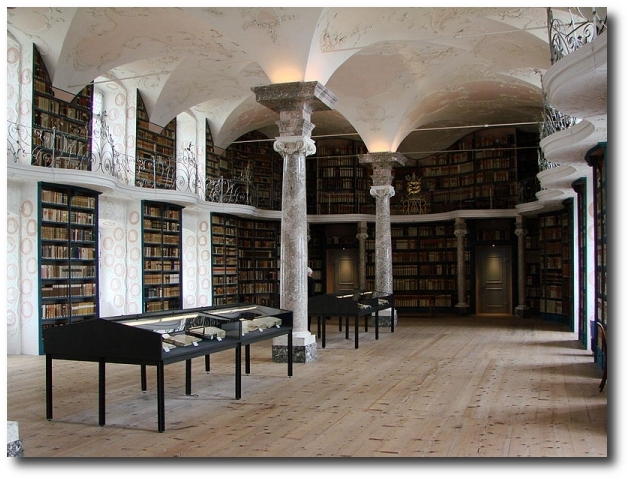
The Benedictine Monastery Einsiedeln was founded in 934.
Today it is one of most famous monasteries on the
Saint James’ Way, the pilgrimage route to the Cathedral of Santiago de
Compostela. The abbey’s library contains about 230,000 printed books,
1230 manuscripts and 1040 incunabula and early printed books including
the Versus de scachis, a Medieval Latin poem and the earliest mention of
chess in Western literature
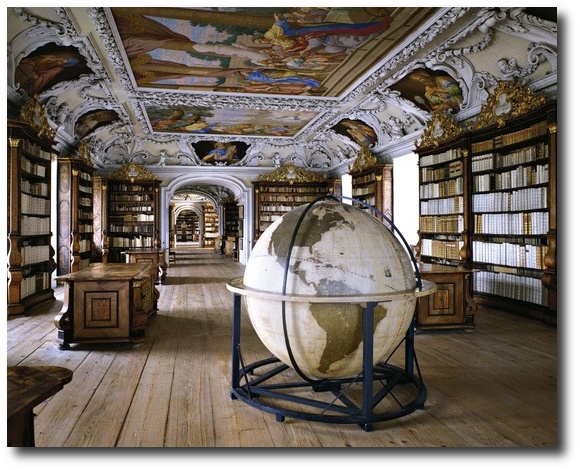
The Library Of The Kremsmünster Abbey, Austria
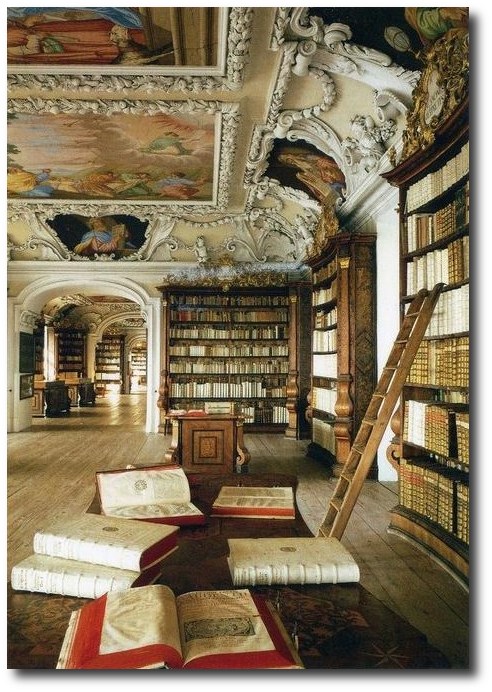
The Library Of The Kremsmünster Abbey, Austria

Louis Masreliez- The Designer Behind Gustav III’s Pavilion At Haga Park
Masreliez was born in Paris and began his education at Ritakademien, which was a drawing academy at the youthful age of 10. In 1769, Masreliez was given a study grant which allowed him the opportunity to travel to Paris and Bologna to study. When he left Bologna in 1773, he decided to stay in Paris for eight years,where he then returned to Sweden in 1782 to become a commissioner of the Royal Swedish Academy of Arts. He advanced the following year, when he was made a professor of art history. Then in 1805, he bacame the director of the Academy.
He was responsible for the interior of Gustav III’s Pavilion at Haga Park. In addition he also was responsible for the interior of Tullgarn Palace. Masreliez is remembered for its interior decorations at Haga, Drottningholm, Stockholm Palace in the classical Pompeian style. Masreliez was inspired by the excavations of Pompeii and Herculaneum, which could be seen in his interior design.
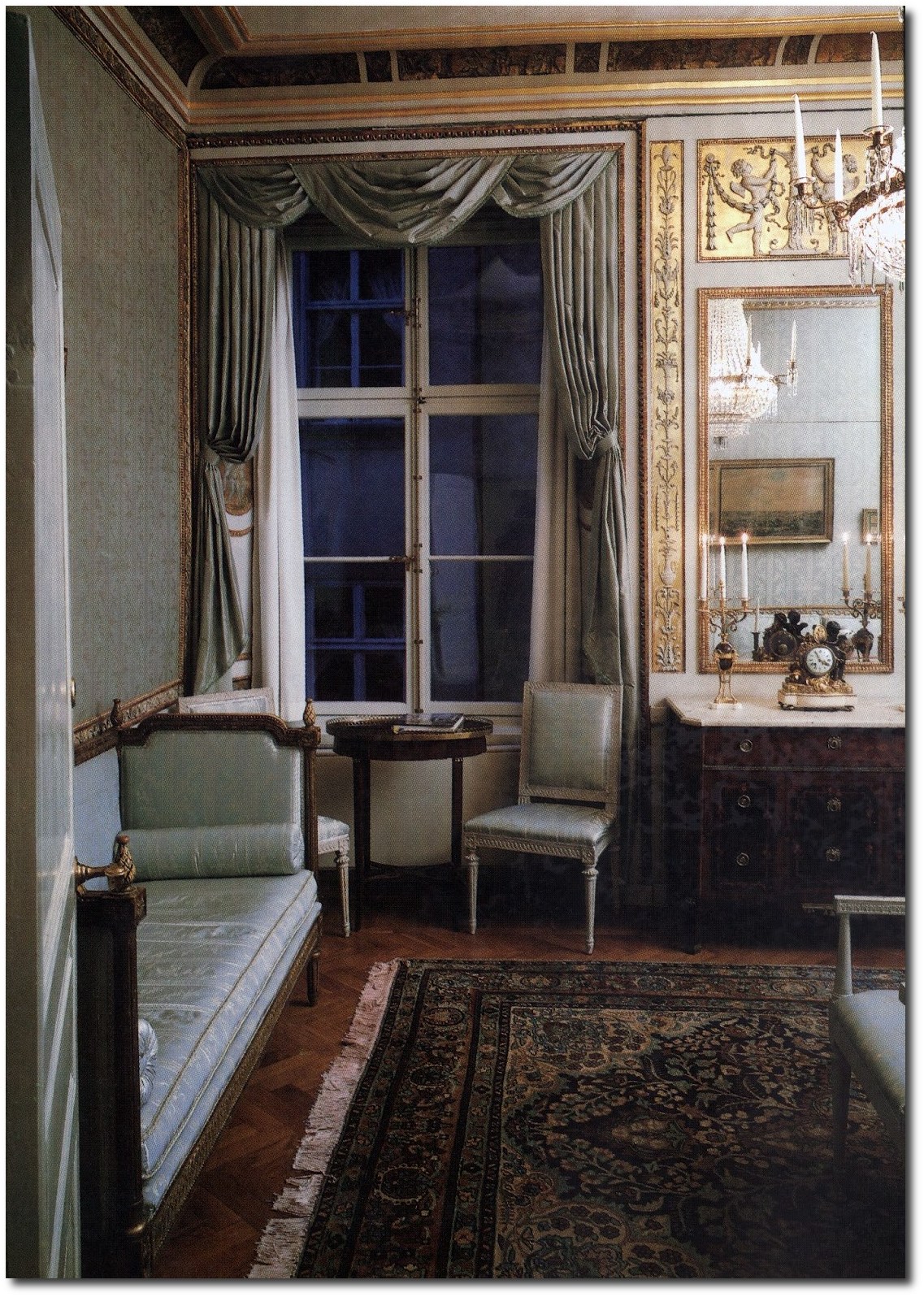
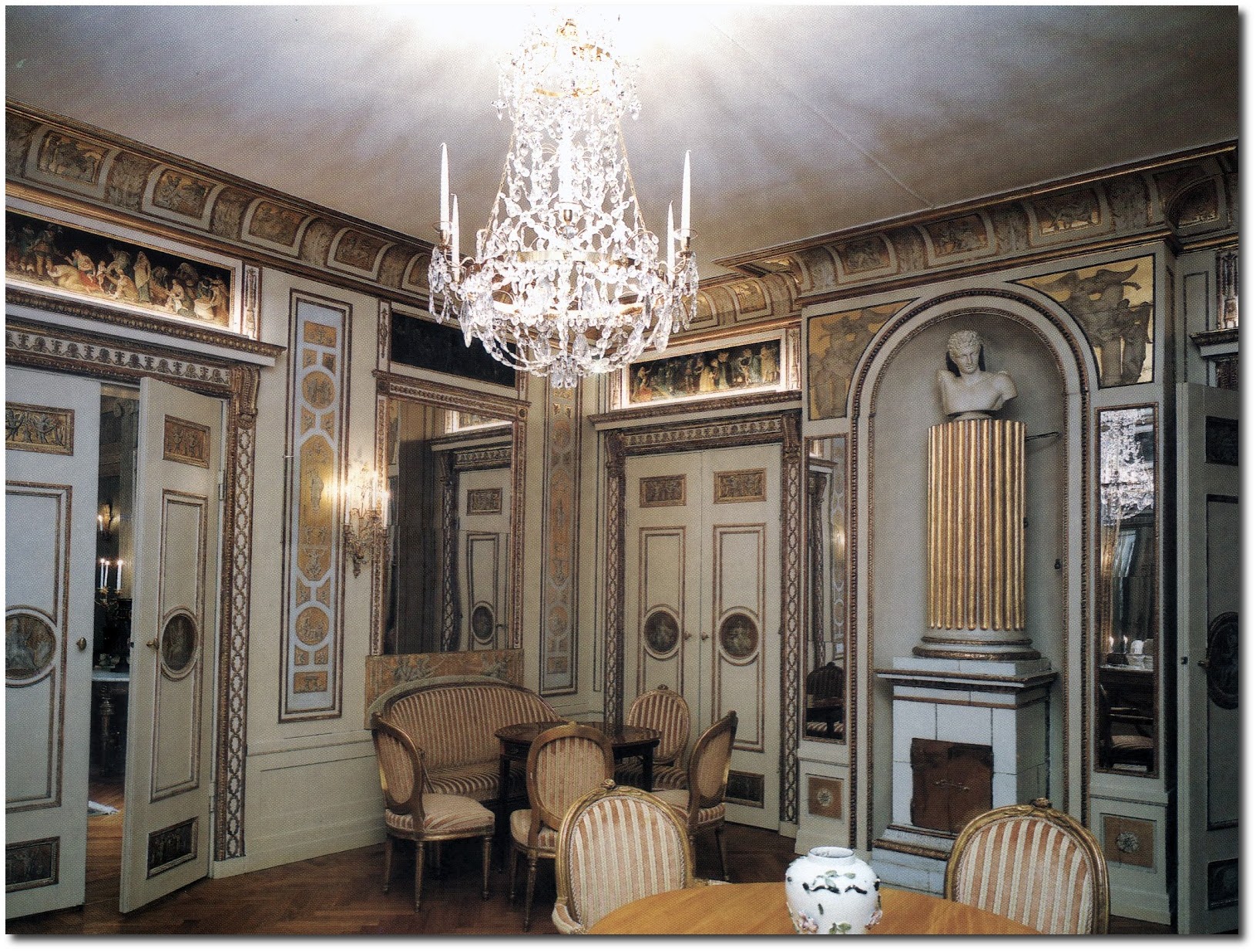
The pictures below in this post are located in Salviigränd, which is an alley in Gamla stan, old town in central Stockholm. On the second floor -Number 1, (the only building in that block not part of the Parliament administration), is a suite of rooms created by Louis Masreliez for the bachelor Wilhelm Schwardz in 1795. Dressed up in pastel, grey, and gold, the elegant Gustavian Classicism interiors features lighted candles, cut-glass chandeliers, taffeta curtains, and friezes and medallions.
A special thanks is to be given to A Connoisseurs Quest Blog for the pictures of Wilhelm Schwardz’s Home in Stockholm- See the entire post “A Peek at the Usually Hard to See House by The Gustavian Designer Masreliez in Gamla Stan, Stockholm”
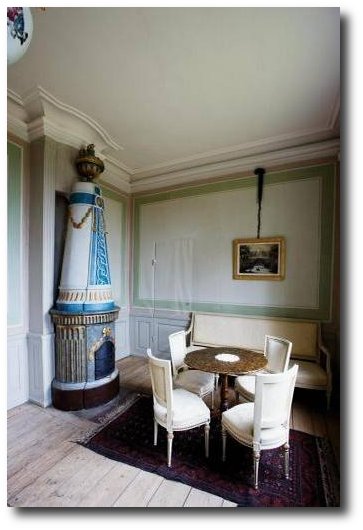
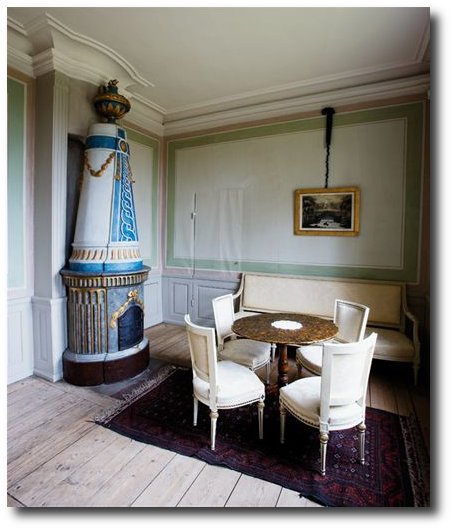
One can see parallels between the Gamla Stan and Sturehov, particularly in the placement of furniture. Larger round tables serve as focus points in both the Gamla Stan and Sturehov. Both of the Kakelugnar stoves also have classical columns which make the base of the stove.
We are happy to discover this designer with you….!
Akerö in Södermanland, Sweden
In the region of Bettna there are Manor houses abound, the most famous being Åkerö, beautifully positioned on the shores of lake Yngaren. The old mother tree to the famous Åkerö apple still stands in the gardens. The castle has its own apple variety. The parent tree was planted in 1759 and still stands in the park and gives fruit every year. Buildings have been on the property since the 1200s. Several of the farm’s owners have belonged to Sweden’s most distinguished noble families; Natt och Dag, Tott, Sture and Bielke.
In the mid 1500’s a castle was built with turrets and towers that are depicted in Dahlberg’s “Suecia Antiqua”. A part of the palace was burned a hundred years later and never refurbished.
The members of the Tessin family have been important in Swedish history. Nicodemus Tessin the Elder arrived there in 1636 and, alongside Jean de Vallée, became the country’s leading architect. His most famous work is Drottningholm Palace, which was completed by his son, Nicodemus Tessin the Younger, an even more significant architect whose major work is the Royal Palace in Stockholm. Nicodemus the Younger’s son, Carl Gustaf Tessin, was formally in charge of completing the Royal Palace, but was more noted as a diplomat and politician than as an architect. Carl Gustaf was one of the founders of the Hat Party and became one of the 1700s most important politicians with titles such as councilors, top Marshall and the Office of the President, the latter equal to the prime minister.
Carl-Gustaf Tessin purchased Åkerö in 1748. Carl-Gustaf Tessin was then superintendent of the Royal Palace . The architect Carl Harleman was good friends with Tessin, and when CG Tessin wanted to retire from political life, they settled on the land and hired Carl Harleman. Harleman then designed the main building and proposed two wings. The result was one of the most beautiful rococo seats were filled with art treasures of Europe’s leading artists. As ambassador in Paris and during trips to Italy and Vienna had CG Tessin acquired a sound knowledge of architecture and art.
Åkerö manor is beautifully surrounded by water from all sides. Beautiful maples, ash and linden trees are planted all around. Wall paintings, mirrors, door lintels, floors and countless antiques fill the space of the castle. . The National Museum has a large part of Tessin’s art collection at the Royal Library in Stockholm. Nowadays, concerts are put on at Åkerö Manor in cooperation with Södermanlands Music & Theater.
There are not many pictures of Akerö, just these three below
Akerö in Södermanland, Sweden- Picture 1
Akerö in Södermanland, Sweden- Picture 2
Akerö in Södermanland, Sweden- Picture 3

Books Available on Amazon:
Nicodemus Tessin the Elder: Architecture in Sweden in the Age of Greatness
Nicodemus Tessin the Elder was an architect, gentleman, and founder of the artistic dynasty that was immensely influential at the Swedish court in the seventeenth and eighteenth centuries. He was architect to the crown, to the nobility, and to the city of Stockholm, and he supplied buildings for a wide range of functions, from palaces to banks, courthouses, and fortifications. His unusually extensive travels in the Netherlands, Italy, France and Germany provided him with a comprehensive picture of contemporary European architecture, which he drew on as he synthesized a new group of buildings that would attract
international attention as models for princely architecture. His productivity required a new approach to architecture, and he was part of the first generation of architects in northern Europe to develop the architectural studio, distinguishing the design process from the business of building, and in the
process recreating himself as the modern architect.
Essays on Scandinavian History
This book examines important aspects of the history of Sweden and its Nordic neighbors between the later eighteenth and the beginning of the twenty-first century. Historian H. Arnold Barton has selected thirteen of the numerous essays he has published over the past forty years on the history of Scandinavia.
This is a companion volume to Barton’s The Old Country and the New, an essay collection on Swedish emigration and the Swedes in America. Included here are studies of the special significance of the eighteenth century in Sweden’s history and culture, the relationship of King Gustaf III to the eighteenth-century Enlightenment, the impact of the American Revolution in Sweden, and Gustaf III’s ambitions in the East Baltic region. Also detailed are the king’s early reaction to the French Revolution and his efforts to
organize a European coalition to crush it, a reassessment of the reign and internal reforms of Gustaf IV Adolf, and the Swedish succession crises of 1809 and 1810.
In addition, Barton examines the increasing tension between the Pan-Scandinavian movement and the rising Finnish national movement. He deals with the historians of the Danish Agrarian Reforms of 1784-1814, parallel developments in Finland and Norway between 1808 and 1917, the discovery of Norway abroad, Swedish national romanticism, and Sweden’s transition from a warfare state to a welfare
state, now exemplifying the rational and humane ideals of the twentieth century.
Essays on Scandinavian History highlights important topics in the history of the Scandinavian region, which has remained all too little known outside the Nordic lands themselves, while also offering broader perspectives on Europe since the mid-eighteenth century. Twelve keyed-to-text illustrations, a bibliography of Barton’s publications on Scandinavian history, essay endnotes, and an index augment this work.
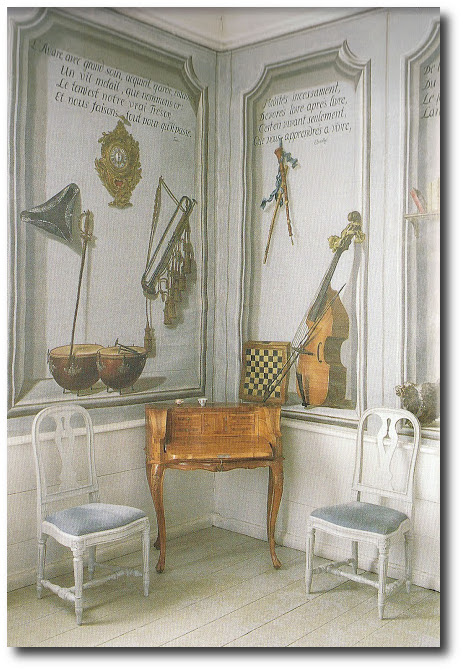
A ‘musical’ Trompe l’oeil in one of the rooms of Akerö in Södermanland,
Sweden with a Rococo “Bonheur du Jour” Picture Credit –La Pouyette Blog
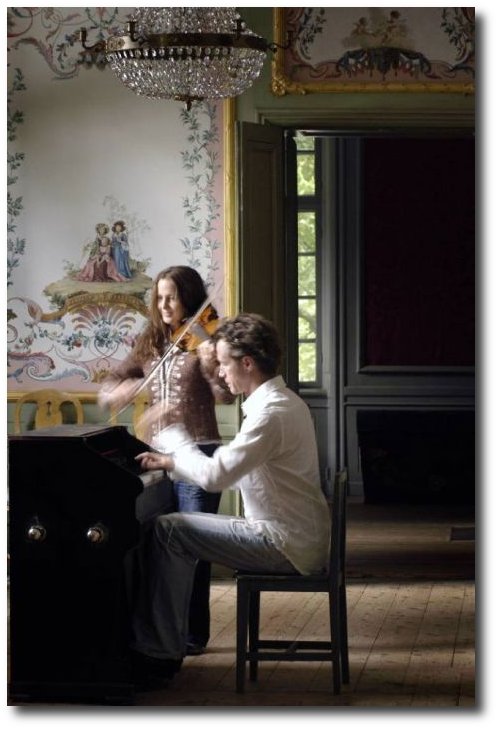
Akerö in Södermanland, Sweden –Credit
Reproduction Paintings From Fine Art China
Check out how they can take YOUR picture and paint your face in place of your favorite painting
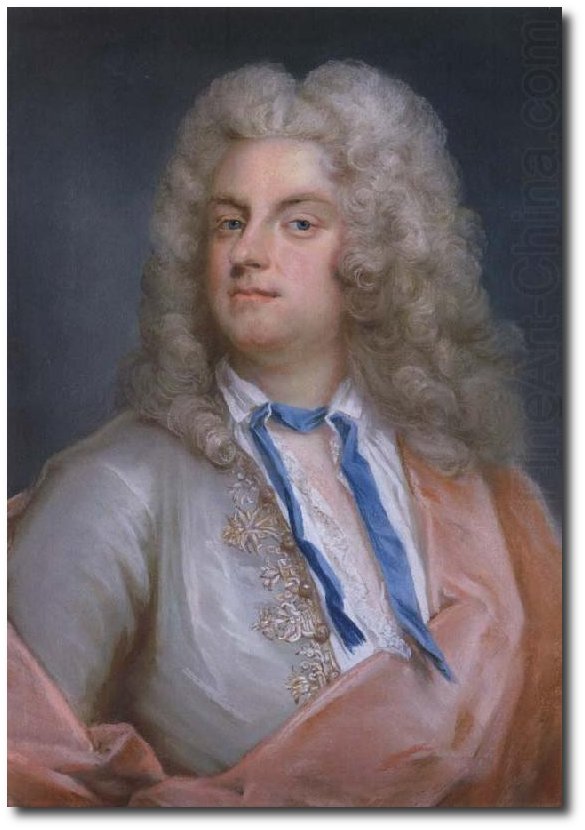
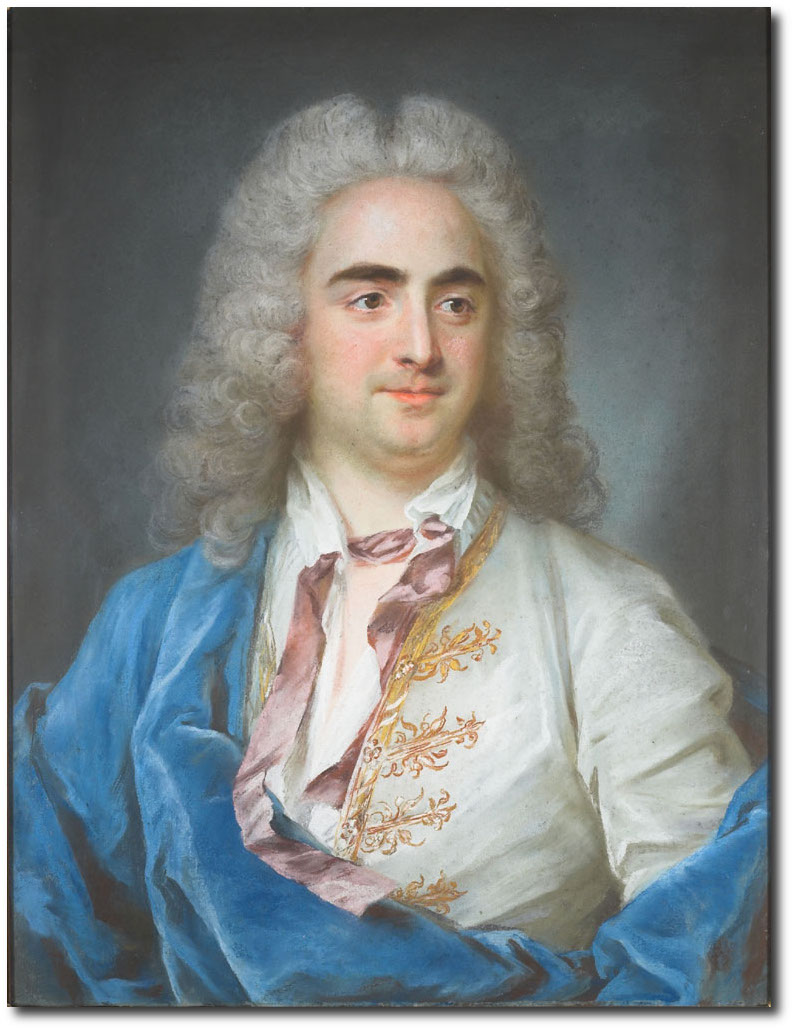
About Gustaf Lundberg- The Painter.
Swedish, 1695-1786,Swedish painter and pastellist. He was orphaned early and brought up by his grandfather, the goldsmith Fredrik Richter (1636-1714). In 1710 he was briefly apprenticed to David von Krafft (1655-1724). Against von Krafft’s advice, and at his own expense, he travelled to Paris in 1717. He
studied first with Hyacinthe Rigaud, Nicolas de Largillierre. He also studied drawing under Pierre-Jacques Cazes at the Ecole des Beaux-Arts. In 1720 Rosalba Carriera came to Paris from Italy, bringing with her the fashionable technique of drawing in pastel chalks. Lundberg became her pupil and within a year had mastered the medium, charming the Parisians with his portraits. Until the arrival of Carriera, he had worked only in oils but then turned exclusively to pastels.
He received portrait commissions from Louis XV (reg 1715-74), notably for those of his young queen Maria Leszczynska and of her parents Stanislav I Leszczynski and Catherine Opalinska (both 1725; Upplands Vesby, priv. col.), who at that time were living at Chambord.
Krusenberg Herrgård: An 18th Century Swedish Luxury Hotel
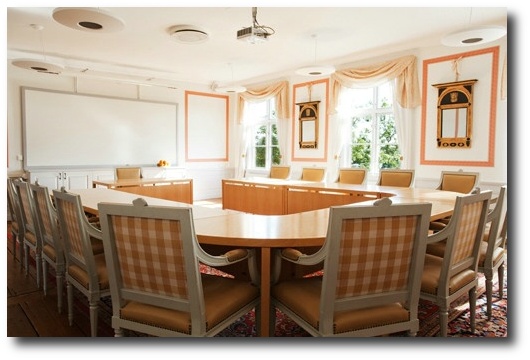
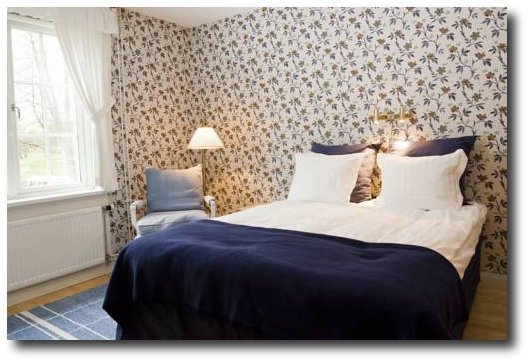
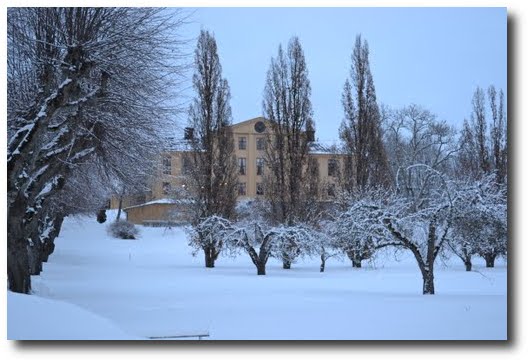
Krusenberg Herrgård is an extravagant hotel beautifully situated by Ekoln, a bay in Lake Mälaren. The estate dates back to the mid-15th century and is now a first-class hotel and conference facility that has retained its genuine style and old charm.
The manor house was built in 1802, and the wings date from the 18th century. Enjoy a walk through their large park and apple orchard with more than 100 old apple trees. The artist Gustaf Cederström, who grew up on the estate, painted his best-known work,”Karl XII´s likfärd”(The funeral transport of Charles XII) .
About the Hotel:
When staying at Krusenberg you can take the opportunity to take a tour with a canoe or rowboat which is supplied from the hotel. In winter, the situation is ideal for skating. The latest addition Sjöporten is a newly built house with exclusive sauna and spa. The building is right on the water’s edge and includes two wood-burning saunas with magnificent views of Lake Mälaren. Upstairs there is a spa area with treatment rooms and relaxdel. The house is built and furnished to suit those who appreciate “the good life”.
Manor house accommodates our renowned restaurant serving carefully prepared food in season. The kitchen is home not only cooks but also to their very own pastry chef who bakes fresh bread and pastries for every meal. Meals are served in the main building’s beautiful dining rooms. At this hotel you can also take the opportunity to relax in one of the most prestigious salons.
Manorhouse is 25 minutes from the airport and within easy reach of both the Stockholm and Uppsala. The hotel also offers a historical walking tour with a guide. Active guests will appreciate the petanque court and the tennis court. Meals are accompanied with wines from the manor’s wine cellar.
Krusenberg Herrgård is only 25 minutes from Stockholm’s Arlanda Airport and conveniently situated for both Stockholm and Uppsala. Uppsala city centre is 20 minute drive away. Sweden’s oldest town, Sigtuna, is 18 km from the Krusenberg Herrgård.
See the official website here



The Romantic Baroque Style: Part 1- Stromholm
If the Renaissance history is of interest to you, chances are you will love Baroque style. It is a design style isn’t that commonly seen in magazines, because the antiques are harder to find. If you are thinking about a design that is different and unique, this is certainly it! Baroque style originated in the 1600s in Italy before spreading throughout the rest of Europe. It originated in Rome, where the style was representative of the Catholic church, and was later adopted in the court of Louis XIV at Versailles. From there, the style spread to The Netherlands and Britain, and went on for almost two entire centuries, and became a less dramatic by the time the end of the 1700s.
Baroque didn’t go out of fashion suddenly. Rococo style was adopted, beginning in France in the late 1720s, especially for interiors, but the Baroque style continued to be used in architecture and interior design until the clean lines of Neoclassicism became the dominant style in the later 18th century.
Baroque style is a very ornamented style. Characteristics of this furniture are heavy, grand, theatrical, elaborate, and often rich in molding. The furniture is often very heavy detailed, did we say very heavy detailed? It is common to find baroque pieces which are intricately hand carved, such as turned legs and twisted columns. Louis XIV style is considered to the most identified example of Baroque style.
Baroque furniture is often larger in size. Canopy post beds are a good example of this. They were often grand with an excessive amount of carving. Cabinets, beds and chairs are all common pieces of furniture made in the Baroque style.
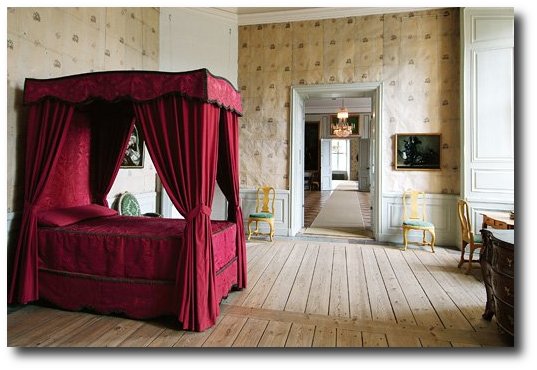
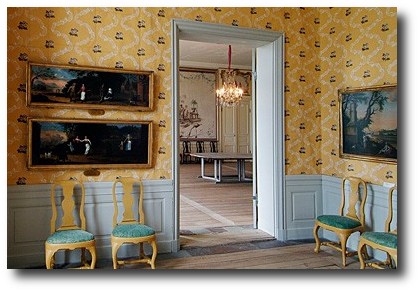
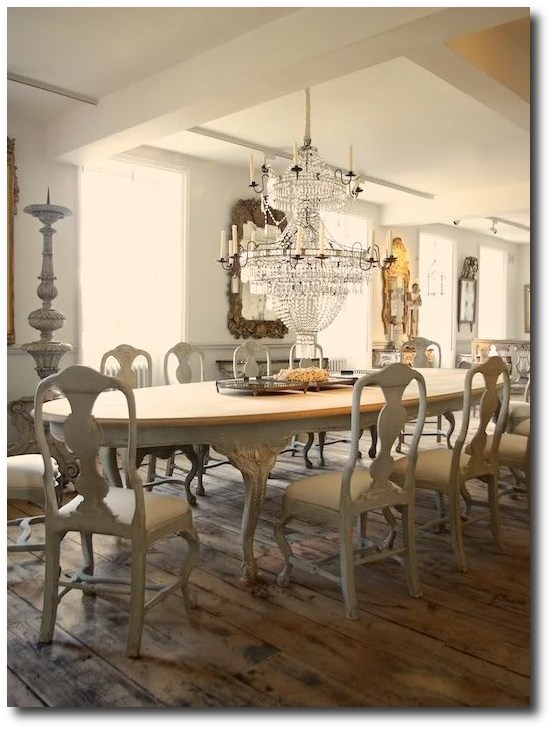
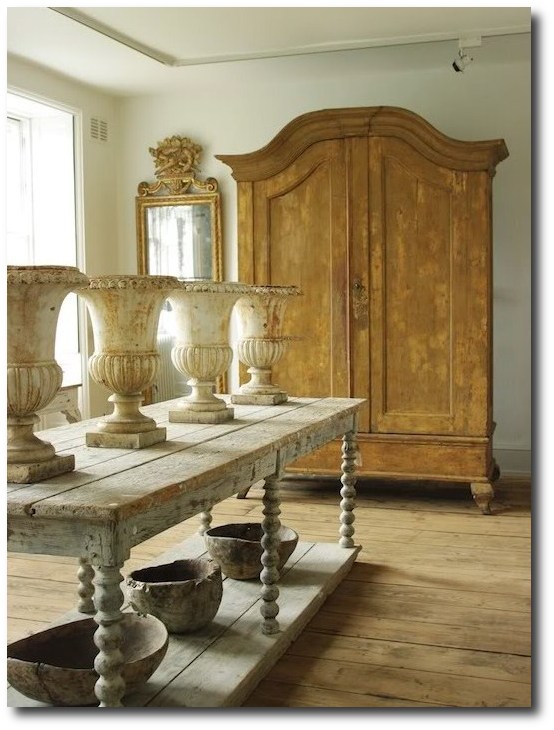
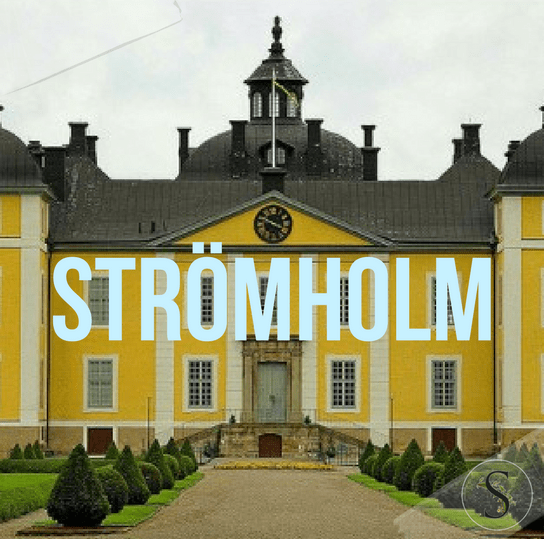
Sweden’s Strömholm’s yellow palace embraces the baroque style. This palace is a perfect mix between the baroque style with a Swedish flavor that is not at all Italian. Strömholm is located on the largest of three islands in the Kolbäckså river delta at Lake Mälaren. King Gustav Vasa had a farm on the property during the 1500’s. In 1560 the current castle was built between 1669 and 1681 for Queen Hedvig Eleonare. Strömsholm palace is one of the countries best examples of Baroque style. The Palace has royal interiors that are well preserved.
Additional Furniture To Admire
– A Swedish Baroque Table with Original Paintwork 1720s
-A mid 18th Century Swedish baroque drop-leaf table with its original blue paint
-A Swedish Baroque Centre Table circa 1750
-In Love With Swedish Baroque Mirrors
-Swedish Baroque drop-leaf table with original paint- Dienst + Dotter Antiques Picture 11
– Swedish Tray Topped Tea Table. Scraped to original blue paint. Beautifully shaped top with edge molding.Balustra shaped base on three legs.

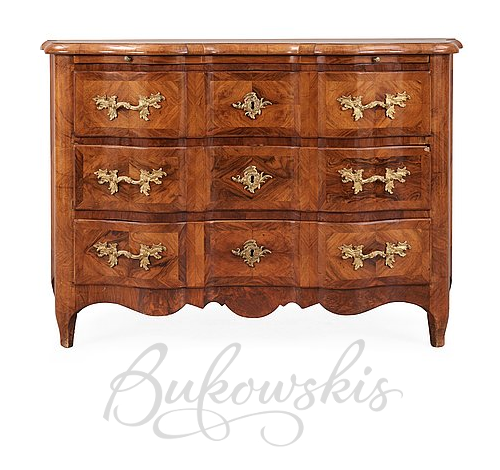
A Swedish late Baroque 18th Century commode, attributed to J. H. Fürloh.
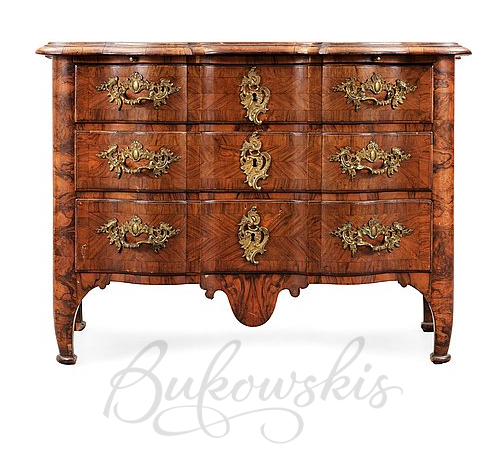
A Swedish late Baroque 18th Century Commode
Baroque Furniture From Augustus Brandt Antiques- Check out more pictures here
The Romantic Baroque Style: Part 2 King Gustav Vasa
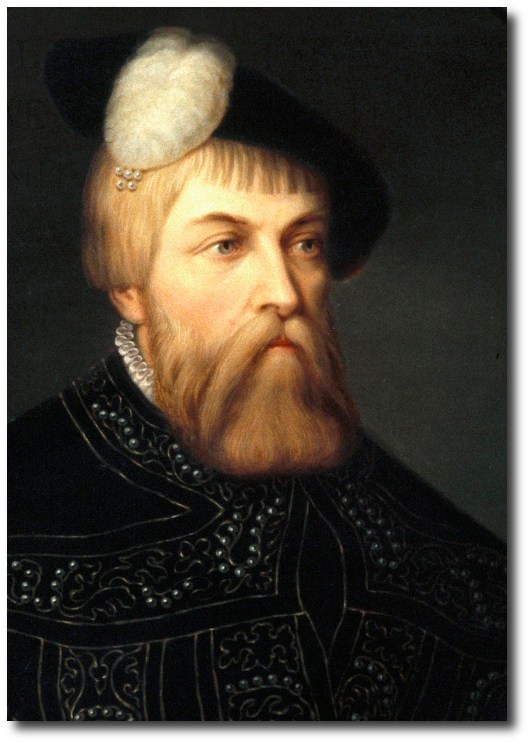
Gustav I of Sweden, born under the name Gustav Vasa (12 May 1496– 29 September 1560), was known one of the most powerful kings in Swedish history.
Gustav was the son of a Swedish senator and of a noble family whom played a prominent part in aristocratic politics of 15th-century Scandinavia. He was raised in the courts of Sweden, and participated in the fighting against Denmark. In fact, the connections his family had with the royalty at the time, supplied Sweden with three regents.
Gustav fought in the army of Sten Sture the Younger against Christian II of Denmark in 1517–18. Sweden at that time was a part of a union consisting of the Nordic countries (Denmark, Norway, Sweden and Finland), but the union was a mess in many ways. The Danish king, Christian II tried to dismantle the union by using brute force. King Christian attacked Sweden in 1520, and the Swedish Regent was killed. It was then that Gustav found himself held hostage in Denmark, but later returned to Sweden when the King promised to show leniency towards those nobles who wanted to fight back.
The Danish king, Christian II then called a “friendly” meeting with all of the officials, but Gustav chose to stay home. Gustav found himself spared because of that decision. Christian II rounded up the nobles, and bishops and had them beheaded in the Great Square in Stockholm. Gustav’s father, brother-in-law and uncles were murdered, together with about 75 other men in a mass execution known as “the Blood-bath of Stockholm”.
The Vasa family lands were confiscated, and most of Gustav’s family were imprisoned. Instead of hiding or running, he rose to the occasion and started fighting back by engaging the people of Sweden to rise up for their country. He started sowing the seeds of rebellion against Christian II . The army of Denmark pursued him, but he managed to escape which many tales of these adventures are told today. He managed to receive backing from the Hanseatic League, which also wanted the Danish king weakened. This union allowed him to gather together a sizeable army, and in 1521 he was elected Regent of Sweden. This army then attacked the Danes in several engagements, and step by step managed to oust the Danish king.
Gustav pushed through to establish Sweden’s independence, and his leadership through this time may have been what was responsible for his election as king. In 1523, at the age of 27, Gustavus was elected King of Sweden. He set about reforming the country, using methods inspired by rulers like Henry VII and Henry VIII of England.
Gustav made Sweden an independent state and gave his country, for the first time in a century, nearly 40 years of stable and intelligent government. Gustav managed to unite Sweden, and also laid the foundation for Sweden’s professional army that was to make Sweden into a regional superpower in the 17th century. He managed to shape the foundation for modern Sweden.
Beyond those great achievements, he ranks among the heroes of Swedish history because of his struggle to turn Sweden from a Catholic country to a Renaissance state with a Protestant church. This was by far some of the hardest wars many countries had to battle.
In the documentary A Lamp In The Dark: Untold History of the Bible, goes into great detail the tremendous struggle individuals had to endure throughout the Middle Ages. I highly recommend watching this documentary on You tube to gain a better appreciation for the battle against the Catholic church.
The Catholic church was against having the bible in the hands of the common man, and threatened imprisonment and death to any persons who disobeyed their rule. Valiant warriors of the faith in England such as John Wycliffe, William Tyndale, Martin Luther, considered the cost for the sake of sharing the Gospel that salvation IS through Jesus ALONE, not through works, or anything else. They rejected the notion that the Catholic church set forth such as “sacrament” which individuals had to confess their sins to a priest instead of through prayer to our heavenly father to forgive our sins. (1 John 2:1-2)
The Catholic church positioned itself in control of individuals souls (salvation), and even went as far to ask money from people whose loved ones had died whom could be removed from “Purgatory” (Hell), which they taught every believer goes first, which was contrary to scripture. The Catholic church’s sheer dominance made them extremely wealthy because of the vast amount of people willing to paying money to remove their loved ones from the “Purgatory”, and this allowed the Catholic empire to throw their weight around in many countries. Believers also fought ideas brought by the Catholic church that the Pope was Yahweh himself on earth, stated by Pope Leo XIII, Pope Innocent III, and Pope Boniface VIII, which contradicted scripture. Once the common people were able to read the Bible, through the Protestant Reformation, they could hold the Catholic church accountable by the scriptures themselves.
Gustav fought hard to ensure the triumph of Lutheranism (named after Martin Luther), and the suppression of Roman Catholic customs. Gustav Vasa has been known as the founder of modern Sweden, and the “father of the nation”. Gustav looked up to Moses, whom he believed to have also liberated his people and established a sovereign state. Gustav I’s breaking with the Catholic Church is virtually simultaneous with Henry VIII doing the same in England; both kings acted following a similar pattern.
To understand the Baroque period, a person must take into account the religious and political tensions at the time. The Catholic church during this time was a very powerful entity and one of the biggest customers of of art. During the seventeenth century artists were being asked by the Catholic Church to create pieces of art which then could transend a message through which could be then understood by the uneducated common people.
The Catholic Church through this time was going through some major changes known as the period of ‘Counter – Reformation’ which began with institutional changes within the Catholic church as we discussed earlier. The clergy recognized that they could communicate through art by using the more theatrical ‘Baroque’ interpretation of religious themes. The Church buildings were designed and decorated in such a way which the Catholic church itself was trying to build it’s own empire kingdom apart from the Kingdom of God which we are told through the bible was the bodies of his people, not buildings and objects.
The mass amount of wealth church accumulated through using the very word of God in deceptive ways allowed them to buy thousands of paintings, thousands of statues, and buildings that were the best of the best through this time period. They owned the nicest buildings, and the most beautiful art across Europe, so it was no wonder why their style at the time became the design that many copied in architecture, interior design and so forth.
The upper classes ALSO loved to show off their wealth and saw this new style as rich, and unreachable for the common folks, so they embraced it, hoping to stand out. Wood carvings appeared lavish, and obviously was a style that many of the peasants could not afford. Baroque art and architecture was one approch they used to wave their money for the world to see.
From Italy, Baroque quickly spread to essentially every country in Europe. Each country incorporated its own customs and heritage with Baroque. Some were more extravagant and others more conservative with the design style. In Italy we saw tremendous detail in the furniture, where as in Sweden we saw more of a refinement with the style. The overblown carved details were softened, and mimimized. During the middle of the 16th century the Baroque Era gradually gave way to the Rococo, and this wave of style change hit each country at a different time in history.
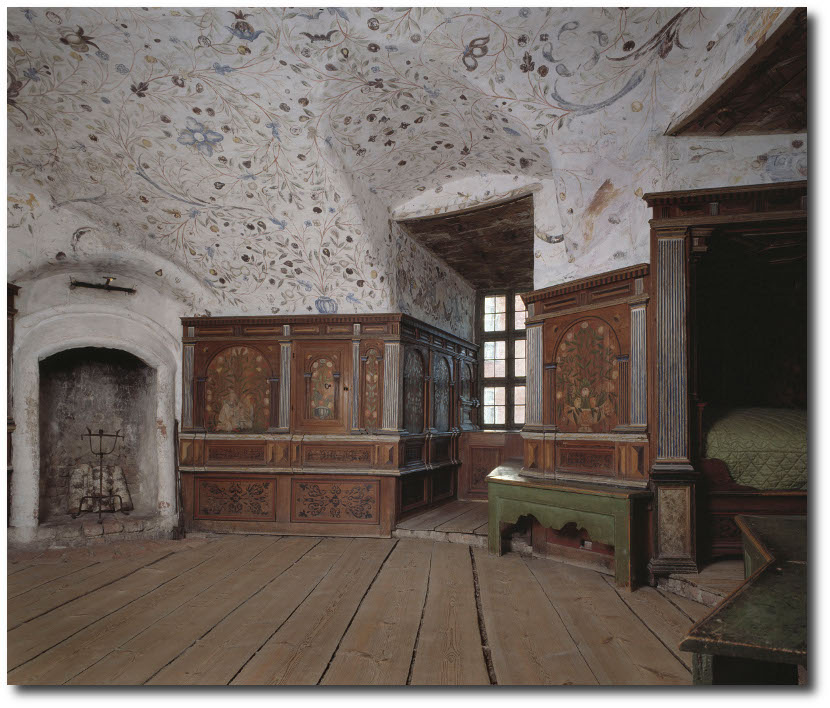
Gripsholm Castle belongs to the famous castles in Sweden.
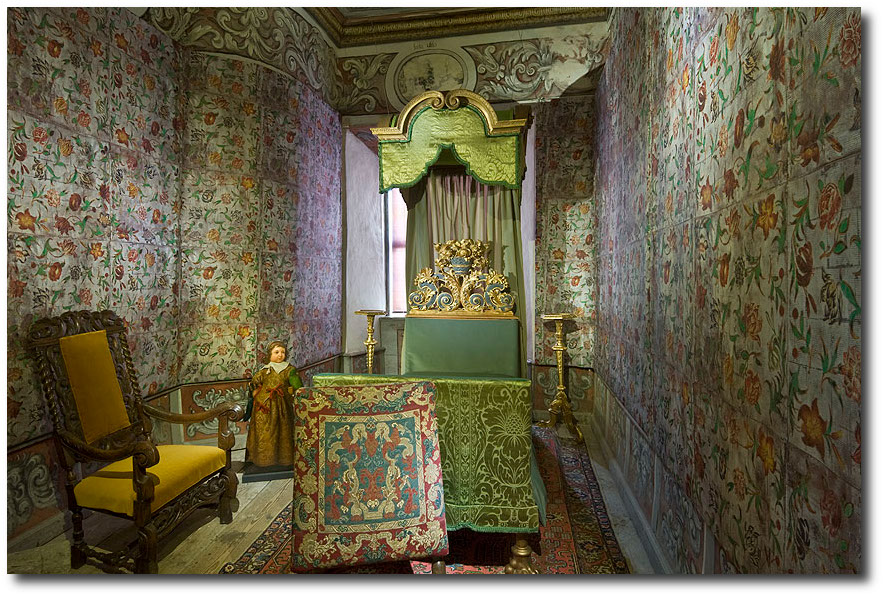
This view shows how kings slept in the chamber of Charles IX.
Gripsholm Castle, Stockholm – Home of King Vasa And The Royal Family
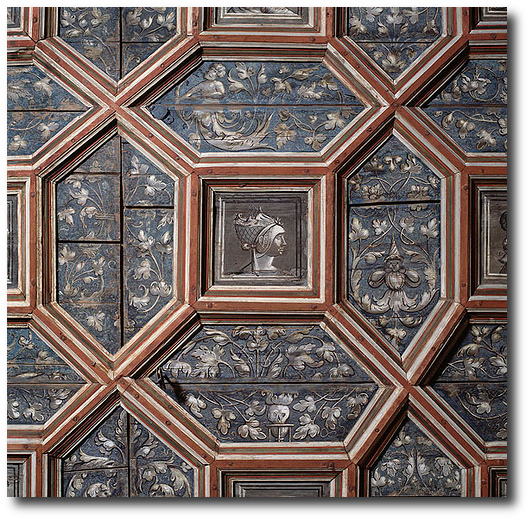
Gripsholm interiors – Roof decorations National Museum Stockholm’s Flicker
Swedish Baroque Style Seen in The Linnaeus House -Elmar Eye’s photostream
National Museum Stockholm’s Flicker
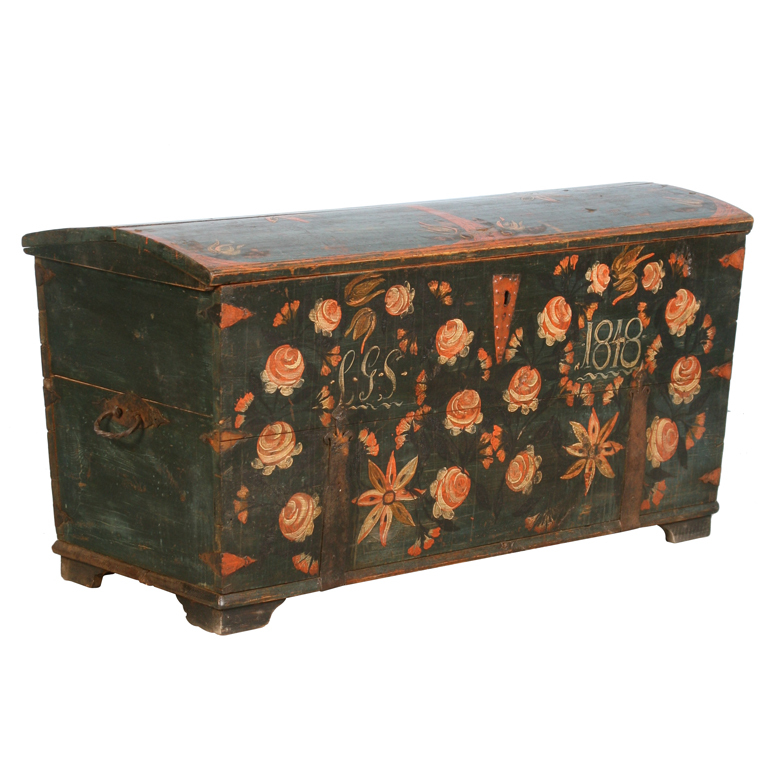
Antique Original Painted Swedish Trunk, dated 1848 From Scandinavian Antiques
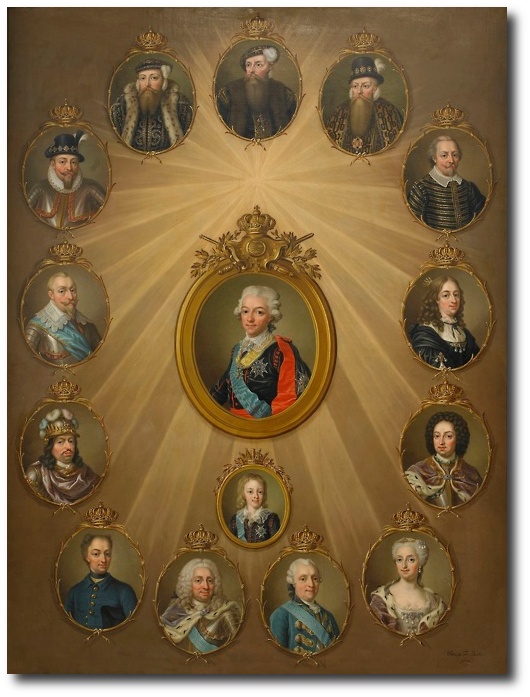
The reign of continued with Gustav’s sons Eric XIV, John III, John’s son Sigismund, and finally Gustav’s youngest son Charles IX.
Under Eric XIV the Reformation in Sweden proceeded on the same lines as during the reign of his Gustav Vasa, retaining all the old Catholic customs not considered contrary to Scripture.
After 1544, when the Council of Trent had formally been declared, the new teachings set forth by the Catholic church became obvious to that the Christian Bible, and the Catholic church were quite different. In fact, The Catholic Church created horrible laws at the Council of Trent that made it a death sentence for anyone who said the bread and wine used in Holy Communion were only symbolic. Sadly this entire history of the Catholic church has been covered up. Today the laws set forth in the Council of Trent still stand, and are upheld by the current Pope. The Popes during Vatican II Council have accepted the entire ratification of the entire council on this decree (Council of Trent, Session 13 Chapter VIII, Contradicting Hebrew 9:27-28; 10:11,12, 15)
King Gustav Vasa went on to publish a bible in Swedish for the people of his country. If he attended the “the Blood-bath of Stockholm” perhaps Sweden wouldn’t have Yahweh’s holy word, and perhaps never knew what Yeshua (Jesus) did on the cross for them. The Swedish Bible was published in 1540-41. The men behind the translation were Laurentius Andreae and the Petri brothers Olaus and Laurentius. Of them, Archbishop Laurentius is regarded as the main person. However, had the work not been commissioned by the Swedish King Gustav Vasa, who had in effect broken with the Pope in Rome in the 1520s, the work would not have been possible. The Bible follows the German version by Martin Luther from 1526 closely, not only in language, but in the fonts used and the typography as a whole. The Danish version, printed a few years earlier, also did this.
Charles Spada’s Normandy Home- See Part 1 and Part 2
The Romantic Baroque Style: Part 3 Skokloster & Steninge Palace
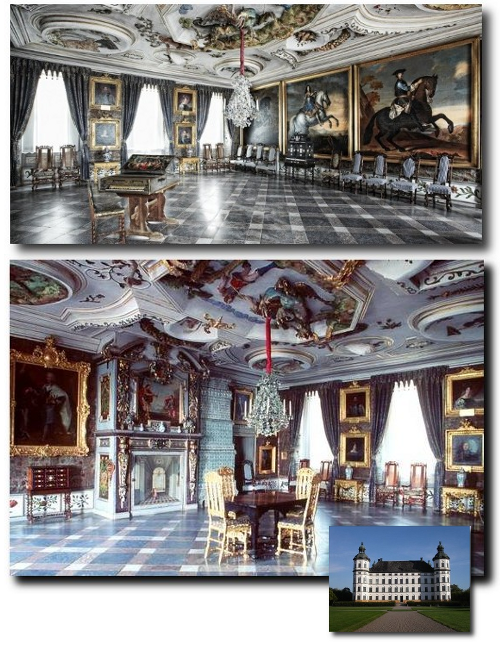
Swedish Skokloster Castle In the Baroque Style
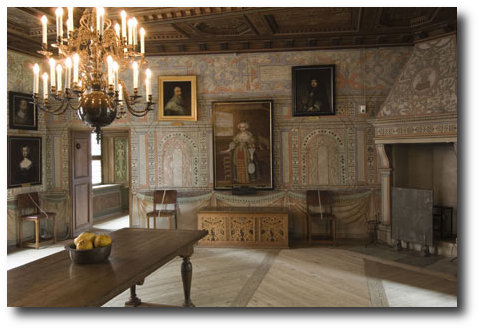
King’s Hall in Skokloster Castle, Sweden
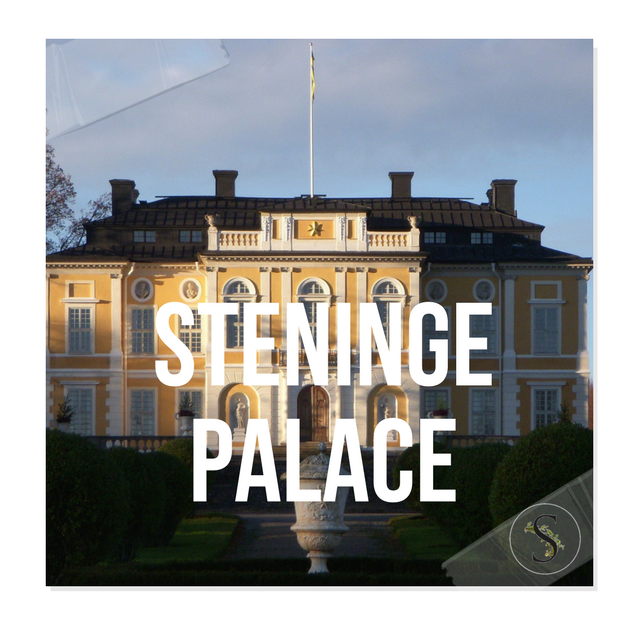
Steninge Palace, is called “Sweden’s most beautiful and perfect baroque building” Steninge, another palace located in Sweden stretches back to the 13th century. The palace has had countless owners; the Gyllenstierna (1649-1735) and von Fersen (1736-1839). In 1667, Carl Gyllenstierna 1649-1723, inherited the Steninge estate from his mother. His close relationship with the queen allowed him to develop the Steninge estate and the beautiful areas around Mälaren.
In 1680 the well-known architect Nicodemus Tessin the Younger was asked to design the Palace which were completed in 1705. Tessin was strongly inspired by the Baroque architectural style of Italian and French castles. This castle has only a few very small pictures of the interior, so sadly the interior isn’t photographed at large and available to the public. Nicodemus Tessin designed Steninge Palace with a blend of the Italian and French Baroque style with Swedish taste. It is said later that Tessin the Younger regarded Steninge Palace as his masterpiece.
Skokloster Castle is another castle in Sweden decorated in the Baroque styles, and is said to be one of the most important Baroque castles in Europe. Skokloster Castle was built as a residence between 1654 and 1676, when Sweden was a great power. Even to 17th century people, the imposing white building with its corner towers made a fairytale, ancient impression.
Steninge Palace Photographed By Keith Samuelson.com
See Information on Steninge Palace Here
Skokloster Castle From Adventures of A Far Traveler Blog
Skokloster Hallway – Photo Credit Richard Aufreiter
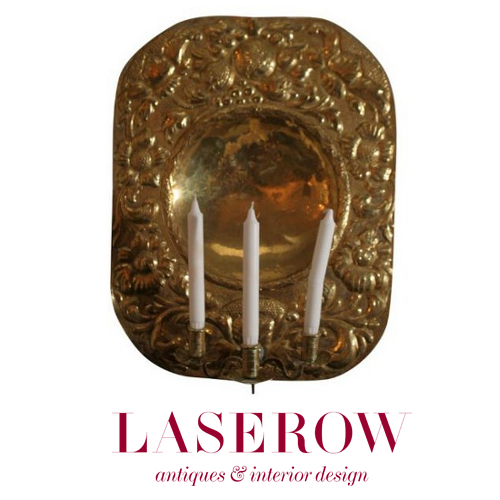
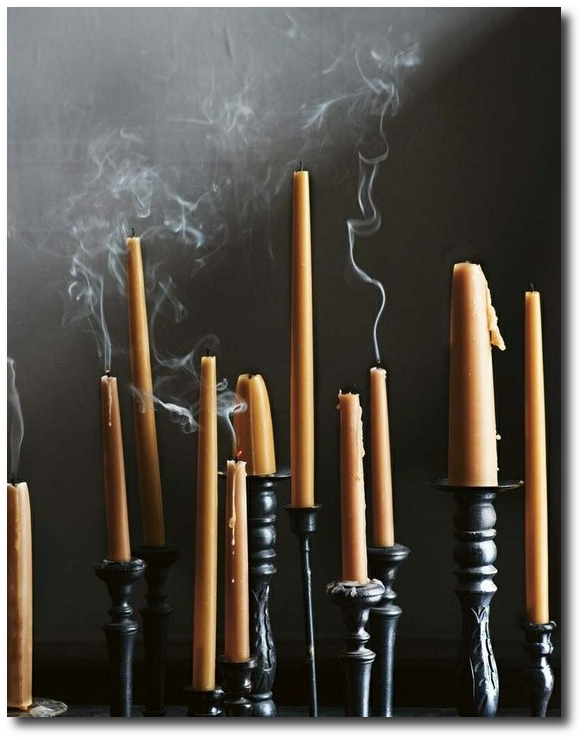
Large Swedish Baroque Brass Wall Sconce
Skokloster Castle
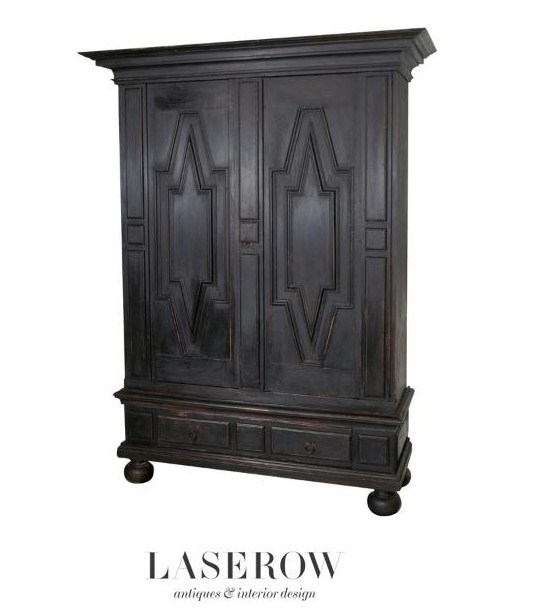
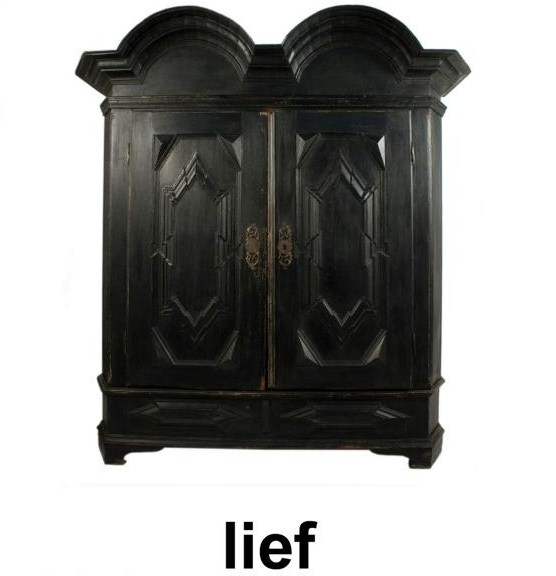
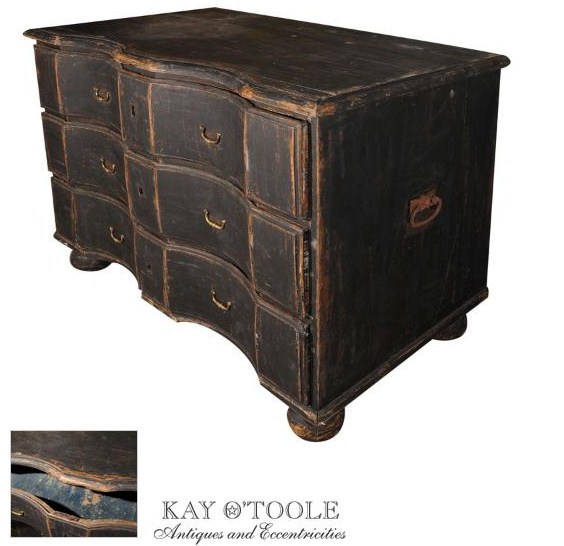
Two Door Black Swedish Baroque Cabinet 1770
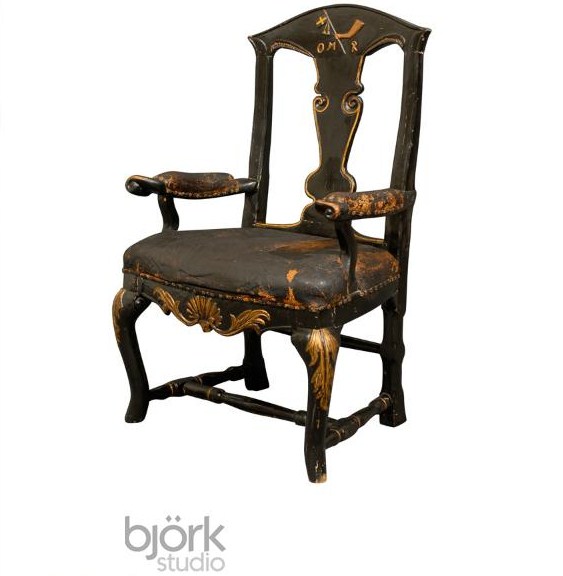
Swedish Baroque Captain’s Arm Chair c. 1750
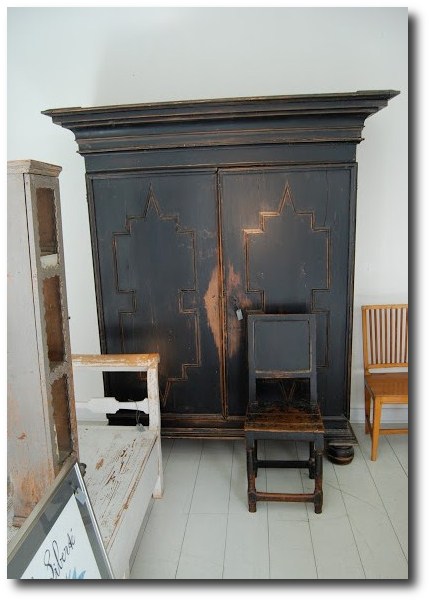
Swedish Baroque Cabinet and Chairs From romantiskahem.blog
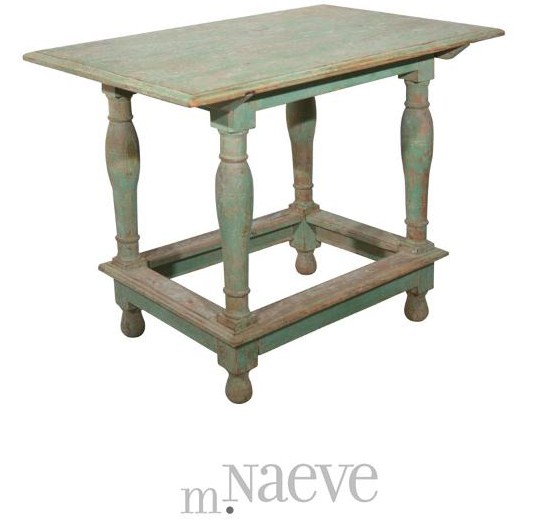
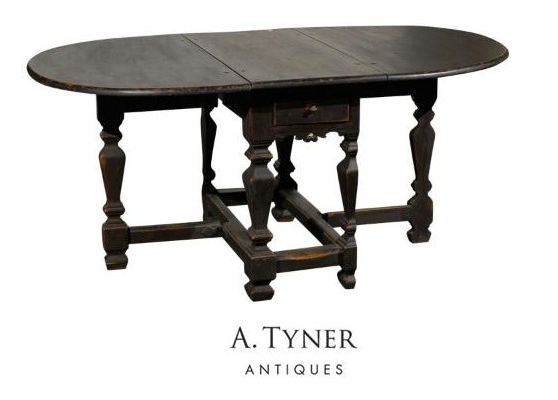
18th Century, A Swedish Baroque Drop Leaf Table.
Drawers on each end of the center section. Split-leg support on each side.
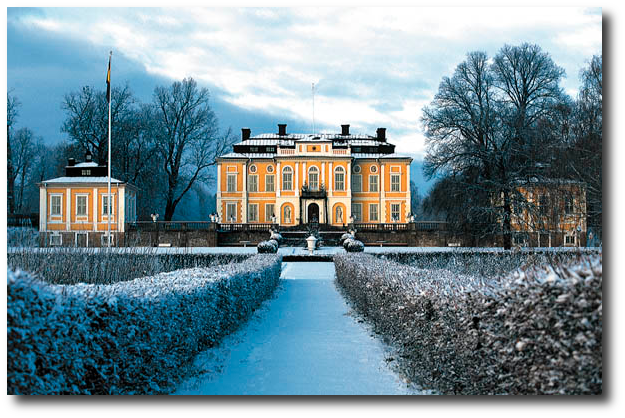
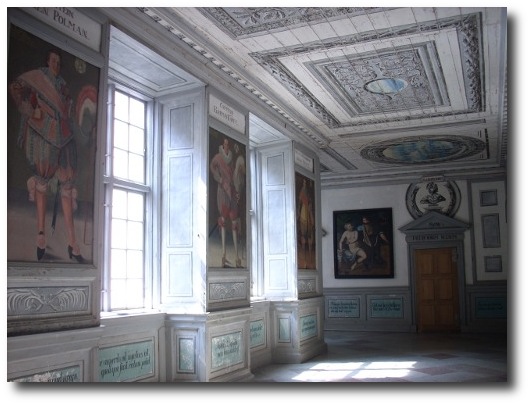
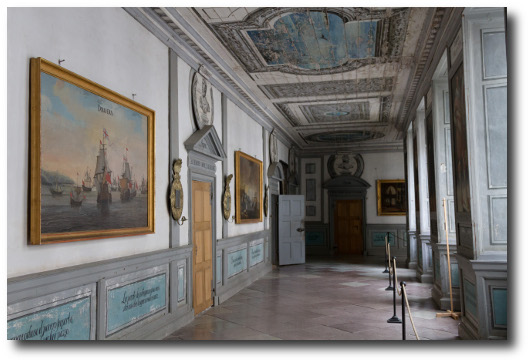
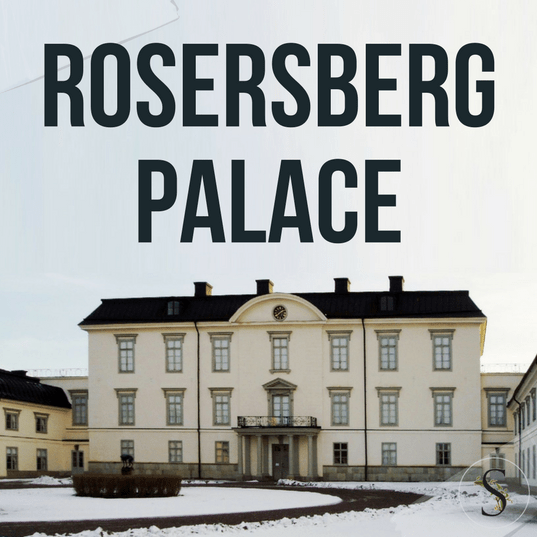
Sweden’s Empire Decorated Rosersberg Palace
Rosersberg Palace (Swedish: Rosersbergs slott) is one of the Royal Palaces of Sweden. Situated on the shores of Lake Mälaren, on the outskirts of Stockholm, it was built in the 1630s by the Oxenstierna family and became a royal palace in 1762. It was then that the state gave it to Duke Karl (later Karl XIII), the younger brother of Gustav III of Sweden.
Today at Rosersberg the rooms remain almost untouched from the 1795-1825 period. The interior takes you back in time to the authentic royal interior from the turn of the 19th century.
The second half of the 17th century, the Renaissance Palace became to be dated. Chancery President Bengt Oxenstierna acquired the estate, and renovated the home in the Baroque style that was fashionable at the time. He sought out the country’s leading architect, Nicodemus Tessin the Younger, and new wings were added to the building. The tall Renaissance gables were taken down and the exterior of the building was updated with a new hipped roof.
Then in 1747, Rosersberg was acquired by Baron Erland Broman. More alterations to the buildings were directed by one of the country’s most prominent 18th century architects, Jean Eric Rehn. On Broman’s death in 1757, the property was acquired by the State.
The property was then placed at the disposal of the young Duke Karl (later King Karl XIII) of Södermanland.
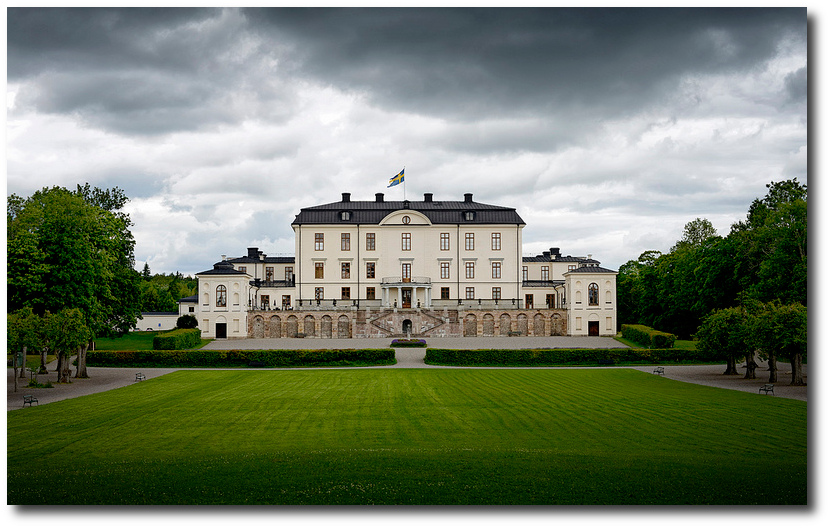
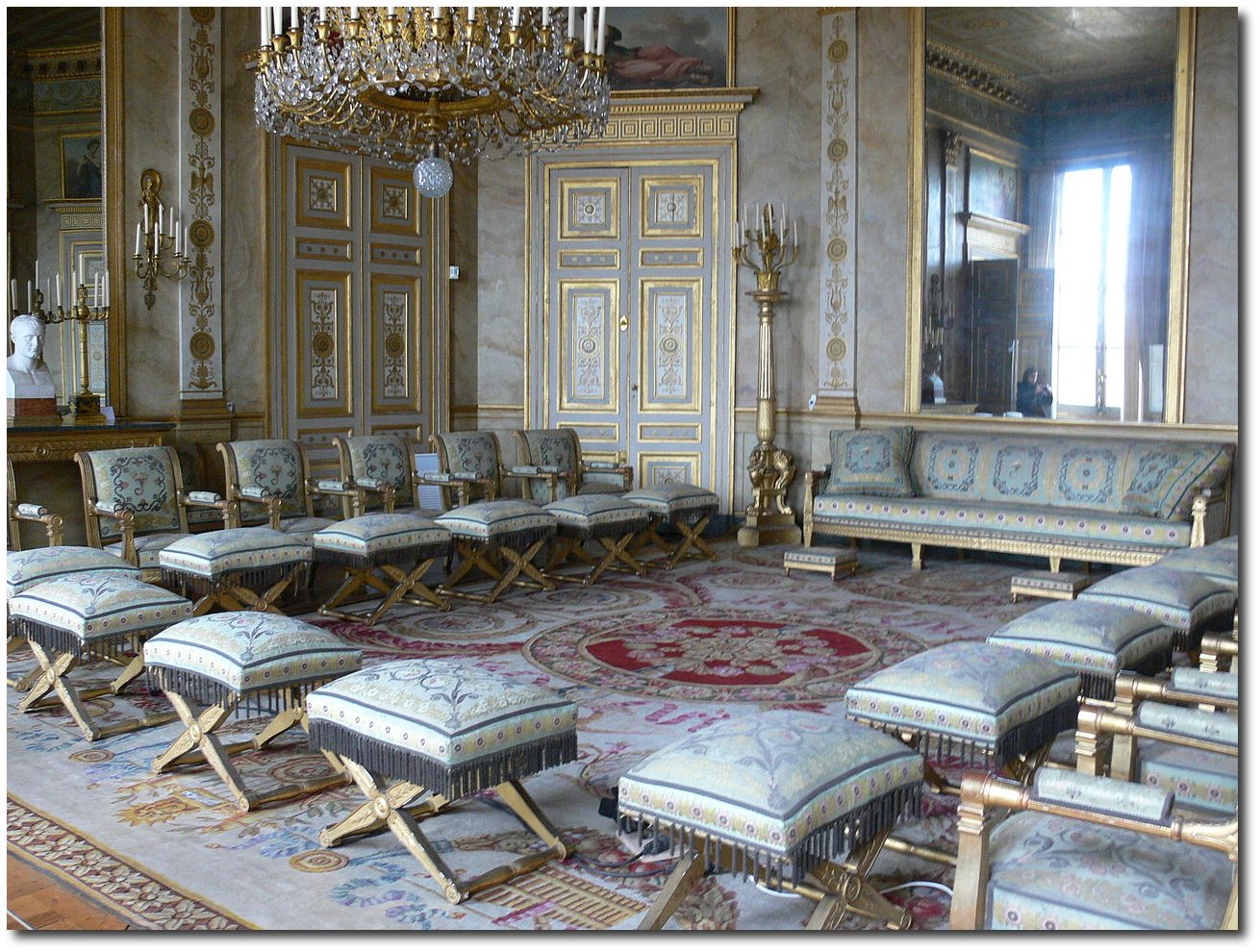
When Duke Karl (XIII) moved in around the 1760s, he modernized the palace in late Gustavian style. The interiors at Rosersberg Palace differ from the Gustavian style interiors of other royal palaces in Sweden. At Rosersberg the style has been known to trend after the Empire style. The palace combines the two styles: Neo-Classicism and the “Empire style”. Get some ideas from this beautiful castle for your own home.
- Sweden’s Rosersberg PalaceFrom Flicker
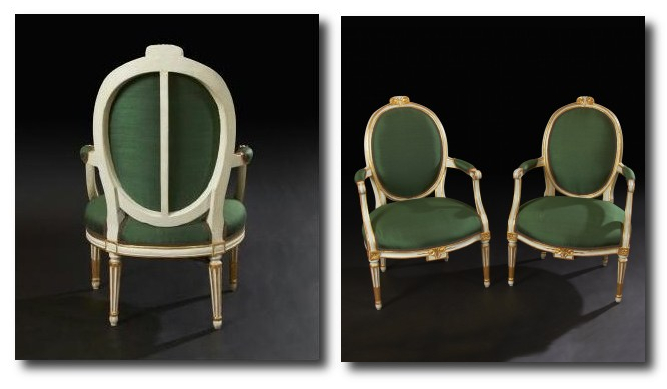
- Pair of Louis XVI carved and painted Fauteuils. Having oval backs, carved flower crest and apron on stop fluted legs.
- Photo Taken From Sw-Zamki.Narod.ru
- On the wall is a picture depicts the coronation of Karl XIV Johan. Photo Taken From Sw-Zamki.Narod.ru
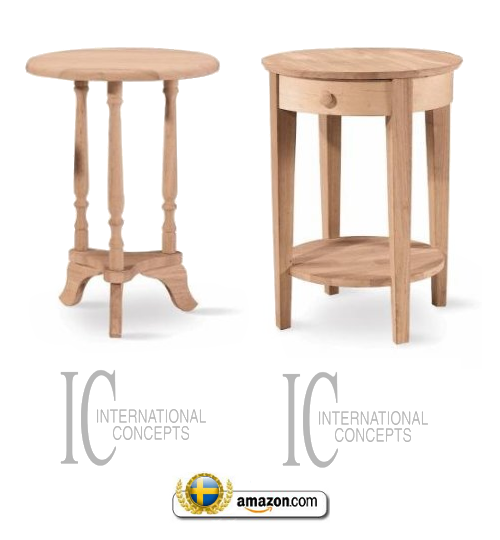
Turn this unfinished international concepts table, sold for $42 dollars into a thousand dollar table with an additional marble top and some paint. Consider white paint with gold accents for a classic Swedish style.
International Concepts Accent Round Table with Drawer- $104
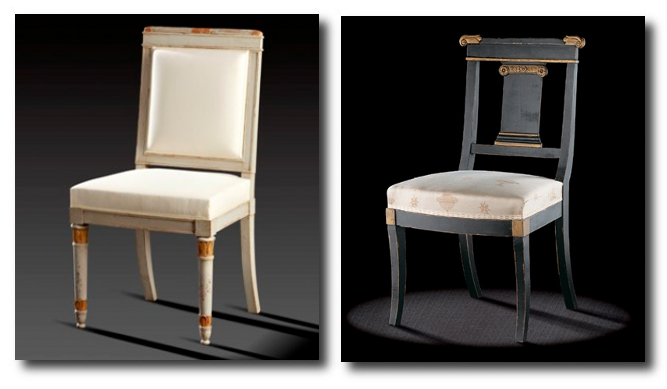
In this photo, you can see a neoclassical chair painted with a gray paint, outlined in a dark gray with white upholstery. Use the same color combinations with your painted furniture