Living In Norway- Norwegian Life In The 18th & 19th Centuries By Elisabeth Holte
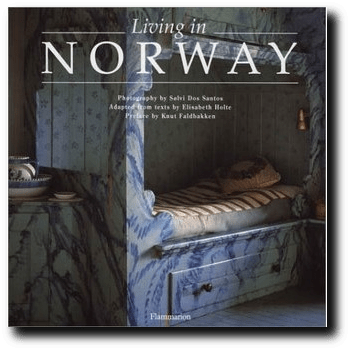 Living in Norway by Elisabeth Holte, is a book you need to look though. This book features 250 lovely photographs of Norwegian interiors which specialize on folk motifs, and countryside homes. The book is divided into the four seasons: fall, winter, spring and summer.
When it comes to antiques, this book shows them in their historical natural settings. View homes that look untouched from the 18th and 19th centuries. Many of the “hytta” or cabins found in Norway have been now turned into bed and breakfasts or museums which have kept much of the traditional interiors intact.
Look through many examples of traditional rosemaling on the walls and on the outside of the shadow box beds that show you the sheer talent of country people in the 19th century. In this book you will find a rich selection of Norwegian homes, interior and exteriors images, focusing on mostly historical homes, with the exception of one home set in the modern style.
214 pages show a variety of pictures, with a special section at the back featuring a visitors guide. While this book was published in 1999, this book is breathtaking, and be a classic example of the interiors found a long ago that we never get tired of.
Quotes I found most interesting:
On The Style Of Houses In Scandinavia “As Far back as ancient times, the Swedes usually constructed lightweight buildings with wooden facades, while the Danes, who claim practically no forests, built their (hatched cottages in stone and clay: the Norwegians built their solid valley farms of logs, one farm often made up of twenty buildings for different uses”
On Dragon Viking Style In Norway – “It was only in 1005 that Norway became a monarchy again with the coronation of the Danish prince Charles (the grandfather of the present King Harald), who came to the throne under the name Haakon VII. A renewed national consciousness was expressed in architecture and furnishings by the adoption of the Dragon style, inspired by a pseudo-Viking nationalism. As a people, therefore, we are both old and young, which explains the dominant rural trait in Norwegian culture”
On The Popularity Of Dragon Style “Dragon chairs that had been banished to the attic are now being brought down for a fresh look. The style originated in Sweden at the beginning of the 19th century and spread to Norway. The Swedes and the Danes tired of it in the 1880’s but Norwegians maintained the Dragon style and used it as a symbol of their ongoing struggle to leave the threadbare union with Sweden, which ended in 1905. Considered a pure Scandinavian tradition, totally independent of what was happening on the continent, the Dragon style was an expression of the pride of the Viking age”
On The North Summer Nights “As the days get longer, nobody wants to go to bed. In the south, it is possible to read outside in the garden until eleven o’clock at night and the sun is already up again by four in the morning. North of the Arctic Circle, the sun doesn’t set at all, creating an almost unreal atmosphere. During those ‘white’ nights of the midnight sun. time seems to stand still. In enjoy the beauty of the midnight sun at its most breathtaking”
On Rose Painting Artists “Rose Painting was distinguished as any of the country’s more widely known cultural representatives. Rose-painting was a rustic art made by local masters who traveled from farm to farm, often spending months in one place carving and painting the most magnificent interiors. The tradition of rose-painting started at the beginning of the 18th century and reached a peak towards the beginning of the l9th, surviving until the middle of the 19th century. For the owners of the houses, rose-painting was a way of expressing new-found prosperity, and farmers and peasants wanted to show off their wealth and their improved social status, much as the prosperous merchants and civil servants in the towns displayed theirs”
Norway’s Coastlines “Along Norway’s southeastern coast the climate is sometimes so mild that even herbs like thyme, cultivated on the terrace to flavour summer meals, survive the winter . One of summer’s highlights on the Sorlandet is the Trebatfestivalen (Wooden Boat Festival)
which takes place in August in the fine little sailboat town of Ris0r, whose harbour is lined with white wooden houses. Timber trade with Holland led to the creation of Risor in the 17th century, and it grew to become an important trade and ship-building port in the 18th century without ever losing its charming small-town atmosphere.”
On Rose Painting Art “Rose-painting was an amalgam of local tradition and personal style. Artists generally knew of the major artistic trends and skilfully incorporated this knowledge into their designs. Although rose-painting lagged behind stylistically in relation to the major artistic trends that were evolving on the continent, you can nonetheless find elements drawn from all the major styles—Renaissance, baroque, rococo and Empire. The leitmotif of rose-painting, the elegant, sweeping baroque tendril, could play different roles within a design, in conjunction with flowers, in elaborate geometric patterns or as a structure for other motifs;. Popular motifs included human figures (the artist might paint the farmers wife if he found her pretty enough), flowers, trees, religious scenes, and soldiers on horseback with little dogs running at their feet. Artists chose pure, bright hues to produce vivid but harmonious effects”
On Popular Antique Furniture “For two or three generations, there has been a craze for antique farm furniture and objects in Norways towns, ranging from fine and costly 18th-century tables and dressers to a more basic lyed farm table or the antique wooden bowl. It is only recently that urban antiques have started to attract attention. Mainly of these come from Sweden, Denmark and Norways southern coast, and are made From birch or old English mahogany in the Empire style. However, bondemobler, or old farm furniture, remains the most sought after type of antique”
On Artist Peder Aadnes “One of the most renowned 18th-century painters in the lowlands to the east was Peder Aadnes. He created delicate, baroque, floral designs in soft blues, but his style tended to be more urban than that of his fellow masters. When rose-painted furniture attributed to Peder Aadnes or his fellow masters appears on the antique dealer’s circuit in Norway today, you have to be prepared to pay enormous sums for a major item such as a sideboard. The colors and forms are so beautiful that you could put that sideboard in an empty room and need little else”
On Antiques In The Countryside “Even in the most modern Norwegian homes, it is unusual not to find at least one small remnant of the countries rural heritage —a bowl, a table, a rose-painted chest of drawers, or a painted dresser. (It would also be unusual not to find an example of Norway’s innovative contemporary handblown glass or pottery.) Up until the middle of this century, there was little appreciation of antique farm furniture in the rural areas and much of it was bought up cheaply by city dwellers dealers. These days, most farmers value their heirlooms—their painted beds, massive tables, rose-painted or stenciled walls—and take good care of them. On some farms, whole interiors can be works of art. Because craftsmen not only made furniture but also carved and painted entire rooms, including the bonded timber walls and the ceilings. Baroque tendrils and rococo shells adorn the massive wooden walls and beamed ceilings, while carvings of soldiers or king- with sabres drawn, brings doors to life. Many of these 18th century rooms still survive intact in farmhouses in the valleys and on the lowlands of southern and eastern Norway. Some are still used by the descendants of their original owners. Often, though, the present-day owners have made themselves modern houses next to the old ones, with luxuries such as electricity and plumbing”
Rugs Made From Scraps Of Cloth “Yli farm in Telemark is one of Norway’s finest folk art interiors, with 1797-1807 richly carved box beds and exquisite rose-painting. The lush, colourful rose-painting, rosemaling, by renowned local masters, involved far more than mere flower decorations and usually did not include any roses at all. In many valley’s dialects, rosut (rosy) simply meant decorated; rose-painting was the general name for the luxuriant rural decorative art in the 18th and 19th centuries. In the old days, weaving cotton rag rugs (left) was a way to make use of worn household textiles and clothes.”
Get the book Living In Norway, By Elizabeth Holte, Photography by Solvi Dos Santos from $12 dollars on Amazon



Swedish Council Of America Articles
DECORATIVE ARTS
- Antikhuset (Spring 91)
- Falu rödfärg (red paint) (Winter 89)
- Ferdinand Boberg (Summer 97)
- FibreWall (Spring 90)
- Gärdsgård: The Swedish Longfence (Spring 96)
- Kakelugn: Heating the Swedish Way (Summer 89)
- Loran Nordgren’s Swedish-Style Home (Autumn-Winter 98)
- Pergo Flooring (Winter 97)
- Rejmyre Lamps (Autumn 90)
- Sweden Sends Its Best (Autumn 87)
- Swedish Craft and Design in the 20th Century (Autumn 88)
- Swedish Culture in the 1980s (Autumn 88)
FOLK ART
- All Tradition is Change (Summer 95)
- Lindsborg’s Dala Horseman (Summer 87)
- Swedish Folk Art (Autumn 94)
- The Swedish Wooden Horse (Summer 93)
- When Moses Became a Swede (Spring 98)
FABRIC ARTS
- Folk and Provincial Costumes (Winter 91)
- Helena Hernmarck’s Tapestries (Autumn 92)
- Glimåkra Looms (Spring 89)
- Swedish Craft and Design in the 20th Century (Autumn 88)
MUSEUMS
- The Art of Preserving a Swedish Heritage (Autumn 97)
- National Museum: 200 Years of Art (Summer 92)
- Richard Oldenberg, Museum Director (Spring 94)
- Sweden Sends Its Best (Autumn 87)
- Uppsala’s Gustavianum Museum (Winter 99)
- The Vasa Comes Home (Spring 90)
WOODWORKING
- See also FOLK ART, above
- How to Build a Nyckelharpa (Summer 87)
- Jonsered Chain Saws (Summer 92)
- Swedish Boatbuilding in Yankee Maine (Spring 87)
- The Vasa Comes Home (Spring 90)
- Woodcarvers of Lindsborg, Kansas (Summer 92)
PAINTING AND DRAWING
- Albertus Pictor: Sweden’s First Great Painter (Autumn 93)
- America Discovers Anders Zorn (Winter 93)
- Carl Larsson and Sundborn (Autumn 91)
- Fred Somers, Swedish-American Artist (Spring 94)
- Gustaf Tenggren’s Golden Tales (Winter 87)
- John F. Carlson: American Landscapes (Spring 95)
- Jordi Arkö: A “Neo-Runic” Artist (Winter 95)
- Lindsborg and the Legacy of Birger Sandzén (Spring 93)
- Margareta Sjödin and Hanna Hellsten (Winter 94)
- Mona Starfelt: From Poems to Paints (Winter 93)
- National Museum: 200 Years of Art (Summer 92)
- Ray “Padre” Johnson (Autumn 92)
- Roger Tory Peterson (Spring 97)
- The Royal Artists of Sweden (Spring 94)
- Sweden Sends Its Best (Autumn 87)
- Swedish Culture in the 1980s (Autumn 88)
- Swedish Folk Art (Autumn 94)
- Ulla Wachtmeister’s Colorful World (Summer 94)
CRAFTS AND DECORATIVE ARTS (book reviews)
- The Book of Wheat Weaving and Straw Craft: From Simple Plaits to Exquisite Designs (Winter 99)
- Carl and Karin Larsson: Creators of Swedish Style (Summer 98)
- Carving Swedish Woodenware (video) (Summer 92)
- Creating the Look: Swedish Style (Spring 97)
- Dräktbruk och linnetradition I dalasocknarna Svårdsjö och Enviken (Autumn-Winter 98)
- Essential Swedish Style (Spring 97)
- Gamla möbler (Winter 96)
- The Magic Horse: “Devil’s Plaything” That Became a National Symbol (Winter 99)
- Making Swedish Country Furniture & Household Things (Autumn 94)
- New Swedish Style: A Practical Decorating Guide (Spring 97)
- Old Swedish Quilts (Spring 96)
- Poems of Color: Knitting in the Bohus Tradition (Summer 96)
- Porches of Pride in the Swedish Province of Hälsingland (Summer 99)
- Scandinavian Country, JoAnne Barwick (Spring 92)
- Scandinavian Country, Pamela Diaconis (Autumn 99)
- Scandinavian Painted Décor (Spring 91)
- Scandinavian Painted Furniture: A Step-by-Step Workbook (Summer 98)
- Sjutton Skansenhus berättar om Stockholm (Winter 99)
- Skansen: Traditional Swedish Style (Winter 96)
- Solveig Kristiansson, folkkonstnär (Summer 99)
- Swedish Carving Techniques (Summer 92)
- Swedish Folk Art: All Tradition is Change (Spring 95)
- A Swedish Legacy: Decorative Arts 1700–1960 in the Collections of the Nationalmuseum, Stockholm (Spring 99)
- The Swedish Room (Winter 95)
- Swedish Sweaters: New Designs from Historical Examples (Summer 91)
- A Taste for All Seasons: Cooking and Design in Sweden (Autumn-Winter 98)
Behind The Rundale Palace in Latvia
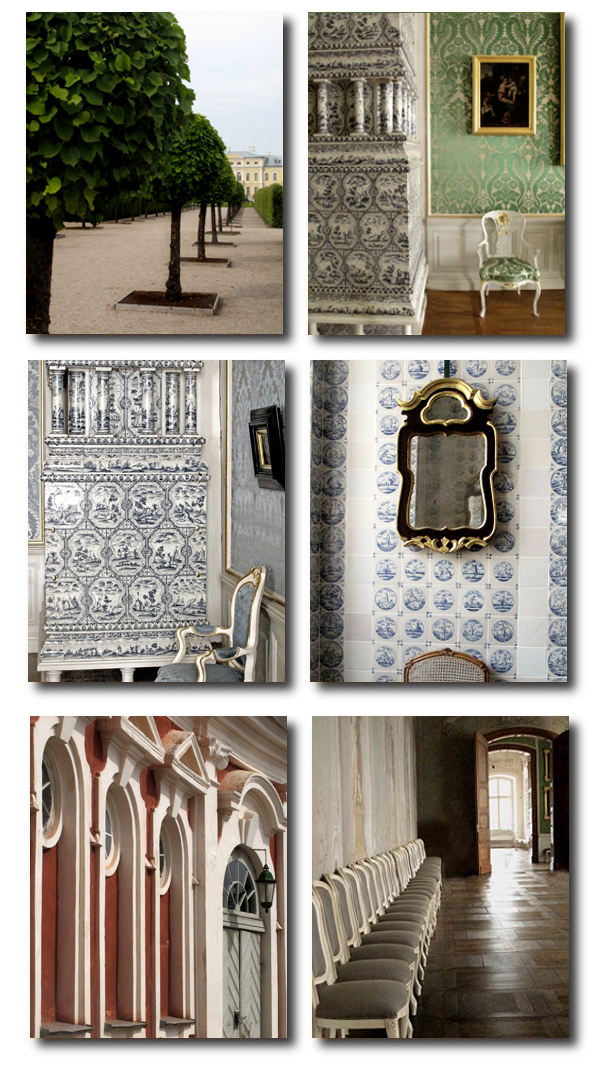
This week we’re visiting Rundale Palace in Latvia, newly restored to former glory. I can’t wait to go there.
This summer, New York-based photographer Christopher Flach discovered this world-heritage Latvian palace, Rundale. I had been aware of this baroque treasure, and knew it was undergoing major restoration. Chris was there just at the right moment.
Rundale, built between 1736 and 1740, is important because it paints a vivid portrait of the period from 1730 to around 1812. Rundale graphically embodies the world of an international coterie of eighteenth-century architects and craftsmen who traveled from one job-site to the next in Europe. These talents worked on palaces and museums for the Russian and Swedish and Latvian kings and czars and queens and empresses and nobles in the late eighteenth century.
Rundale Palace is one of the most outstanding monuments of Baroque and Rococo art in the Baltic region.
Read more at the thestylesaloniste.com
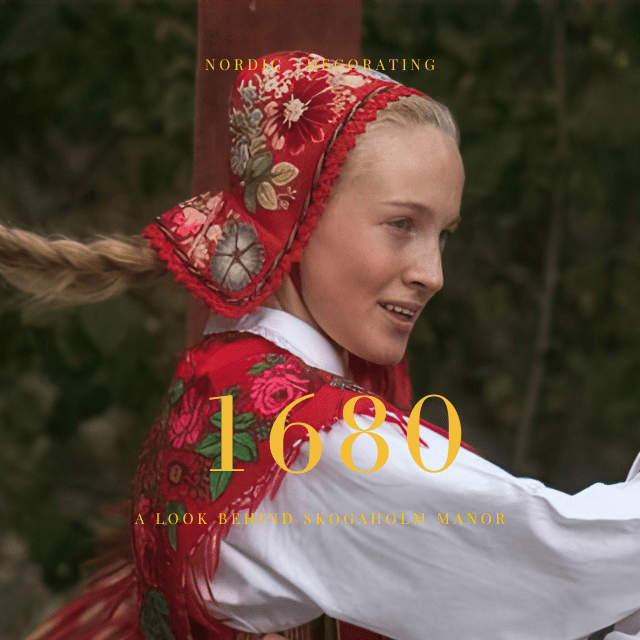
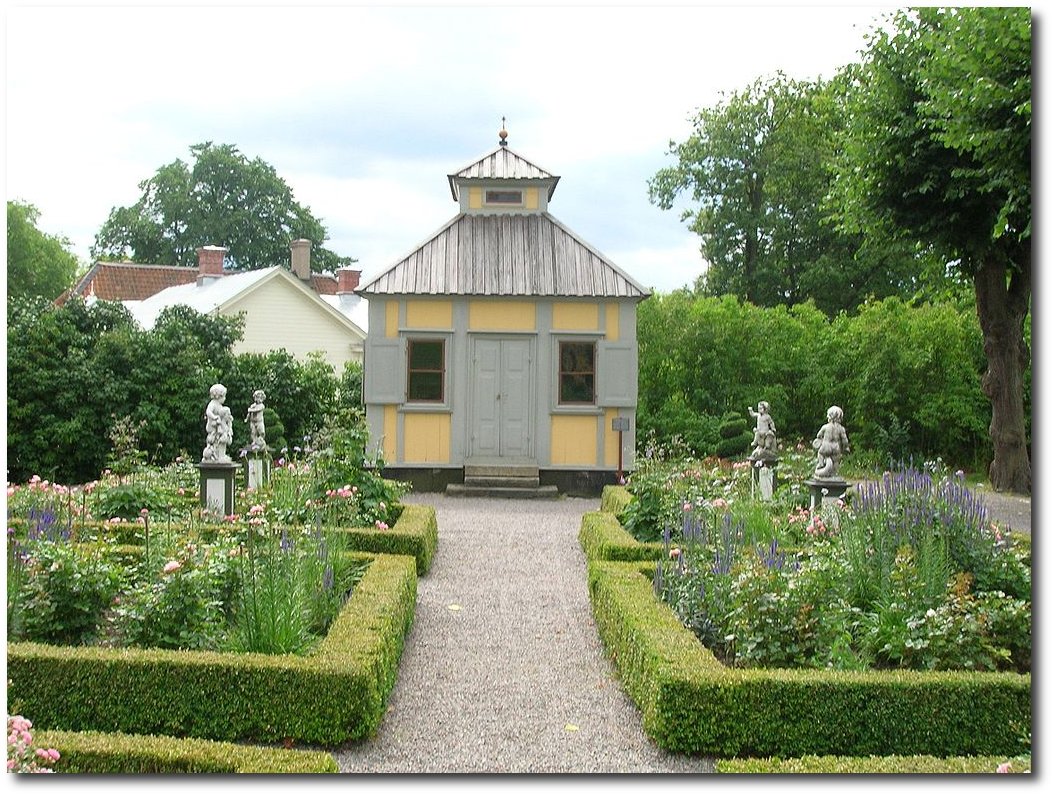
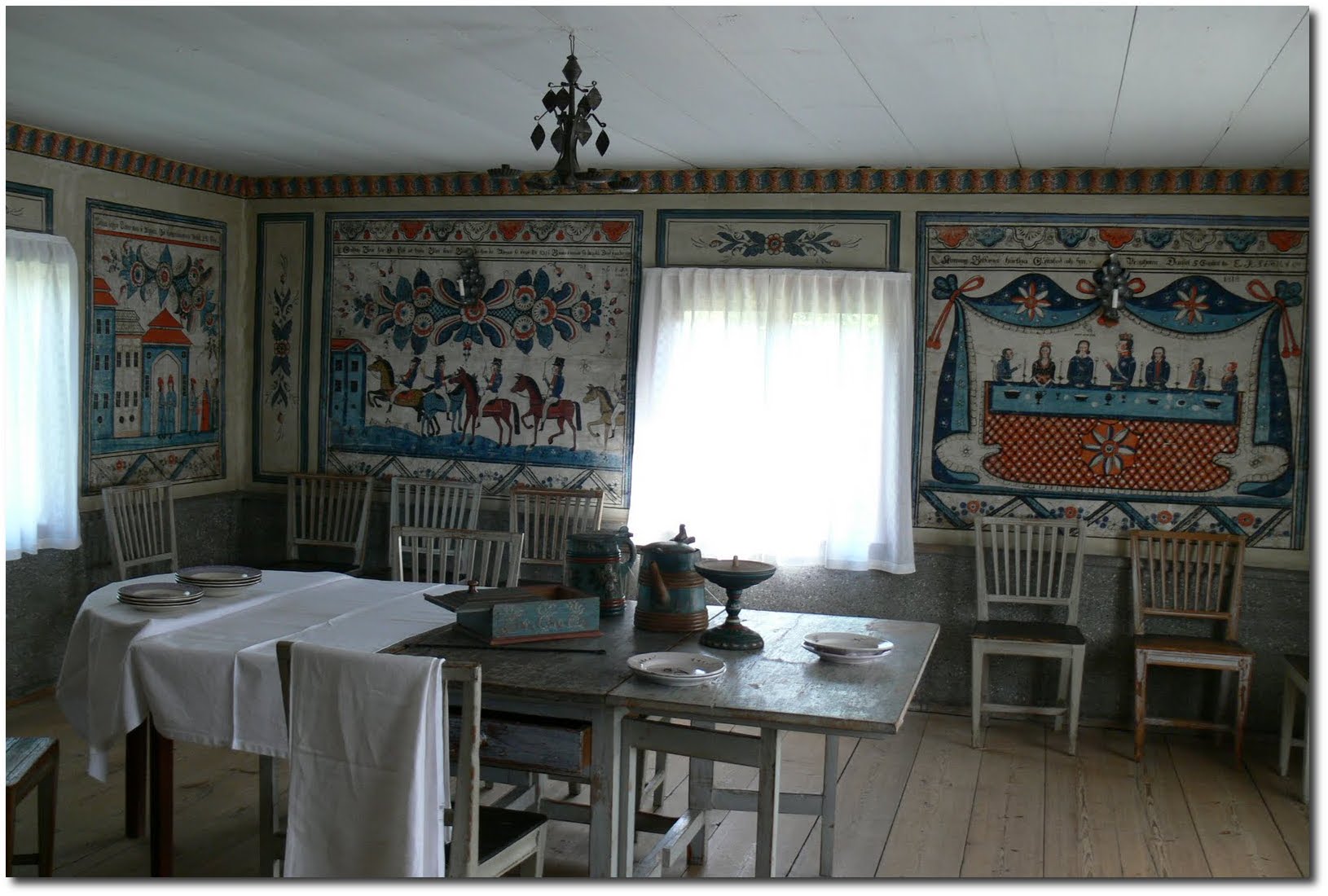
A Look Behind Skogaholm Manor -18th century Swedish Decorating
Skogaholm Manor, Jane Nearing
Skogaholm Manor is a large mansion built in the Caroline style in 1680, located at Skansen in Stockholm.
Skogaholm Manor, forms part of the open air museum at Skansen where it stands as an example of an 18th century Swedish manor house. The manor’s main building was donated in 1929 to the Nordic Museum and moved from Svennevads parish in southeast Närke.
The manor house was built around 1690 for Catherine Rosenberg and her husband Anders Wennerberg Manor, who inherited Skogaholm after her parents Simon Rosenberg and Margaret Larsdotter, and had visible colored red timber with white trim.
Skansen Air Museum is located on the island Djurgården in Stockholm, Sweden. It was founded in 1891 by Artur Hazelius (1833–1901) as a way to show life in the different parts of Sweden before the industrial era. Hazelius bought around 150 houses from all over the country, and had them shipped piece by piece to the museum, where they were rebuilt to provide a unique picture of traditional Sweden. Only three of the buildings in the museum are not original, and were painstakingly copied from examples he had found.
All of the buildings are open to visitors and show the full range of Swedish life from the Skogaholm Manor house built in 1680, to the 16th century Älvros farmhouses. Skansen attracts more than 1.3 million visitors each year and many of the exhibits cover over the 75 acre (300,000 m²) with a full replica of an average 19th-century town, in which craftsmen in traditional dress such as tanners, shoemakers, silversmiths, bakers and glass-blowers demonstrate their skills in period surroundings.
- Skansen Air Museum,Djurgarden 49-51, Stockholm 115 93, Sweden
- Skanseninfo, 08-442 82 00, info@skansen.se
Other Interesting Links:
Skogaholm Manor – The Interior Archive
Skogaholm Manor, Madame Berg Blog
The Skogaholm Manor – Skansen- Bittelitens Blog
The Skogaholm manor – Skansen – Cision
Skansen, Skogaholm Manor Panorama Pictures – 360Cities
Skansen- Johan Schuisky Pinterest
Skansen – Traditional Sweden in Miniature – PBase.com
Interesting Reviews:
“I have visited Skansen some times some years ago, and I enjoyed this revisit. The guides are excellent providers of information, and the interiors are cleverly reconstructed along with matching dresses of the guides. Statarlångan, Helsingslandsstugan, the ironware shop, Konsum shop … every house and shop have its past and worth while a visit. Petissan is a small, picturesque cafe where we enjoyed a cup of coffee and a variety of cakes. The carpenter’s workshop and the knowledgeable guide made me especially happy.” kanute07
“We made the mistake of not preparing for our visit. We had no idea of the size of the property, 75 acres, or of the number of historic buildings, 150! Thus, we did not leave enough time to properly watch the artisans at work, or talk to the interpreters in their traditional dress. Our hour and a half just skimmed the surface of what there was to see. We also made the mistake of not arriving at the main gate, and had to take a funicular railway. Thus, we missed the 15 shops in The Town Centre. The best time to visit is obviously not in mid-week in September, when activity is winding down, and the buildings begin closing at 5 pm. The free map is also essential!” Billitchyfeet
“This open-air museum is a collection of Swedish stuff. Swedish animals, Swedish housing across time and places, Swedish traditional clothing, everything. They even have real-size replica of a traditional old Swedish village from the 17th century. The Swedish animals are awesome! Make sure to go around 3:00 PM, it’s the animals’ feeding time.” John J
Picture Credits:
- Summerhouse of Swedenborg Source- Wikipedia
- Graeme & Ann’s 2010 Trip: Skogaholm Manor
- Skansen- Open Air Museum, Skansen.se
- The Skogaholm Manor – Skansen- Bittelitens Blog
- The Skogaholm manor – Skansen News.cision.com
- Ballroom inside Skogaholm Manor- Wikipedia
- Alain de Botton, Skogaholm Manor, Närke, c. 1790, Seen At Victoria Thorne
- Skogaholm Manor, Romain Moisescot
- Skogaholm Manor, Madame Berg Blog
- Skogaholm Manor, Jane Nearing
- Skogaholm Manor, Madame Berg Blog
- The Skogaholm Manor – Skansen- Bittelitens Blog
- Skogaholm Manor, Jane Nearing
- Skogaholm Manor, Romain Moisescot
- Skogaholm Manor, Jane Nearing
- Skogaholm Manor, Tommy Johansson
- Skogaholm Manor Wikipedia
- Skogaholm Manor, Tommy Johansson
- Interior of Skogaholm Manor, Don Kosin
- Skogaholm Manor, Maison de Lin
- Skogaholm Manor, Elle Decoration
- Skogaholm Manor Wikipedia
- Interior of Skogaholm Manor, Don Kosin
- The Skogaholm Manor – Skansen- Bittelitens Blog
- Skogaholm Manor, Madame Berg Blog
- Skogaholm Manor, Madame Berg Blog
- Interior of Skogaholm Manor, Don Kosin
- Skansen Open-Air Museum Seen At Trip Advisor.com






The History Behind Jean Bernadotte Otherwise Known As Karl Johan
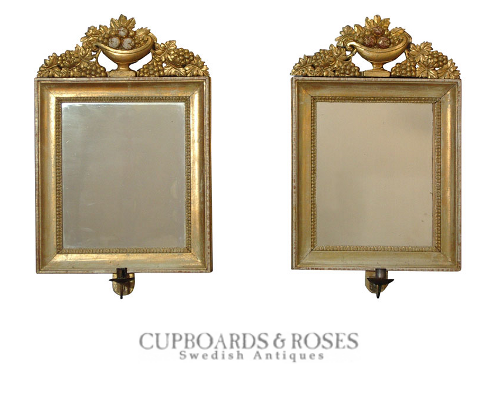 Pair of carved and gilded wood mirrors from the Karl Johan, or empire, period, Sweden circa 1830. Original brass candle holders on each. Original gilding, mirror glass, and backs. $8,500
He was born by the name Jean Bernadotte in France, and later in life became the ruler of Sweden. Here is how the history unfolded…..
Napoleon I – On The French Front
In May of 1804, the French people voted to change the consulate to an empire and to make Napoléon the Emperor of France.
In 1805, Austria, England, Russia and Sweden became united in a new Third Coalition to move against France. It was in September of 1805, when Austria attacked the French controlled Bavaria. Napoléon moved his army into Germany in September, and by October, Napoleon captured the Austrians at Ulm and occupied Vienna. It didn’t stop there, in December, Napoléon won his most brilliant victory which decimated the Austro-Russo armies at Austerlitz.
In June of the following year, Napoléon named his brother Louis as King of Holland, and within each following each victory, Napoléon enlarged the French Empire.
On the other front, Prussia and Russia joined together to mount a new campaign against France. In October, of 1806, Napoléon’s army decimated the Prussian army at Jena and at nearby Auerstadt. Napoléon was interested in preventing his enemies, especially the British, from trading with continental Europe. In November, he declared a new administrative law, which banned English ships from all ports under French control.
Napoléon was on a roll, in June of 1807, Napoléon eliminated the Russian armies at Friedland, which resulted in the signing of the Treaty of Tilsit, by Napoléon and Tsar Alexander. Under the treaty, King Frederick William III, of Prussia, became a vassal to France and lost half of his territories. Russia was forced to recognize the yet-to-be-created Grand Duchy of Warsaw which was to be carved out of Prussian Poland. Russia was also forced to make other territorial changes. Napoléon then turned to defeating Sweden, which he did with the help of Russia, in 1808.
The Start Of Things Falling Apart For Napoleon
The Peninsular War began in 1808 when Spanish and Portuguese forces rebelled against French rule. Tens of thousands of French soldiers died in the war, and the loss of Spain and Portugal greatly damaged Napoléon’s prestige.
Napoléon divorces Josephine, aged 46 years old in 1809, because she had not produced an heir. Worried about the continuity of the empire, he had the senate pronounce his divorce from Josephine in December of 1809. It was because of this that Pope Pius VII excommunicated Napoléon. Retaliating, Napoléon had the Pope arrested on July 6. On February 17, 1810, the Papal States were annexed to France. The pope was then forced to sign an additional concordat and to annul Napoléon’s marriage to Josephine. It wasn’t too long after that that Napoléon married Marie Louise, in April, 1810, the 18 year old daughter of Emperor Francis I of Austria.
On July 9, 1810, Napoléon again increased the size of the Empire by annexing Holland and much of Germany to the Empire.
Jean Bernadotte – On The Swedish Front….
Bernadotte joined the French army and after the French Revolution, he advanced quickly and was in 1804 appointed as a Marshal of France by Napoleon I, even though the pair had a tumultuous relationship. When his service to France ended in 1810, he was voted the heir to the Swedish throne.
In August of 1810 Swedish Parliament had their eye on him for the Swedish throne. In October the same year, Bernadotte arrived in Sweden, and quickly took over as the real head of state, as the reigning King Karl XIII was in poor health. The Swedish royal family was dying out with King Charles XIII, so Baron Carl Otto Mörner (a Swedish courtier), advocated for his position for leadership.
Karl Johan had good relations with France however, Swedish foreign policy led Sweden into alliance with Russia and Britain against France. Sweden was then promised to Norway, which meant going against Napoleon. In 1813 led Karl Johan Swedish troops in the sixth coalition war , which was successful against France. After the victory against French, he forced Denmark to cede Norway by the Treaty of Kiel . Norway declared its independence after having hosted a national assembly at Eidsvoll, but after a short war in late summer 1814 the Norwegians surrendered, and entered into a union with Sweden.
A few facts about Karl Johan:
- He was originally named Jean Bernadotte, but was also named Jean Baptiste after John the Baptist
- He converted the royal court from Roman Catholicism to the Lutheranism, and never learned to speak Swedish or Norwegian. French was widely spoken by the Swedish aristocracy.
- He married in 1798 with Désirée Clary , who had previously been engaged to Napoleon Bonaparte .
- Rosersberg Carl’s Country Retreat – Featured in Neoclassicism In The North On Amazon
- “Rosersberg Palace – Found on abebooks.com
- Niall Smith See MORE Pictures on New York Social Diary.com
- Small Bouillotte Lamp, Empire Style – Found on en.expertissim.com
- Johann Jacob de Lose 1763-1844 1805 www.1st-art-gallery.com
- Spegel by Josef Frank and Estrid Ericson
- First Class Staterooms Empire Rooms. Pinterest
- Late Gustavian Early Biedermeier BJORK STUDIO
- Swedish Empire Chairs- D.LARSSON
- Swedish Empire Stools dlarssoninterior.tumblr.com
- Pair of side chairs Found on cupboardsandroses.com
- Pair of Swedish armchairscupboardsandroses.com
- Pair of Swedish armchairs cupboardsandroses.com
- Pair of Carved Armchairs cupboardsandroses.com
- Pair of armchairs, Sweden circa 1860, cupboardsandroses.com
- Don Freeman Photography
- Lundgrens Antikhandel
- The Neo Lifestyle: Laura Montalban
- Laura Montalban | New York Social Diary
- House of Blass Came Unraveled – NYTimes.com
- Biedermeier pieces are found throughout this house- featured on traditionalhome.com
- An antique Biedermeier cabinet (c. 1850) topped with antique marble Found on traditionalhome.com
- A Palette of Mississippi Blues – House Beautiful
- Biedermeier Found on roys-antiques.com.au
- Biedermeier – Tim Wood Furniture Limited
- Chateau de Malmaison Found on google.fr
- Dallas Interior Design Found on courtneyprice.com
- 1920’s Empire Style Daybed – Castle Antiques
- 19th Century Swedish Empire Mirror- D.LARSSON
- Hinkley 3200AN – Lighting Import Service
- Beautiful Gustavian Stool. Originally Seen On 1stdibs
- Also Seen At www.fangkuang.co

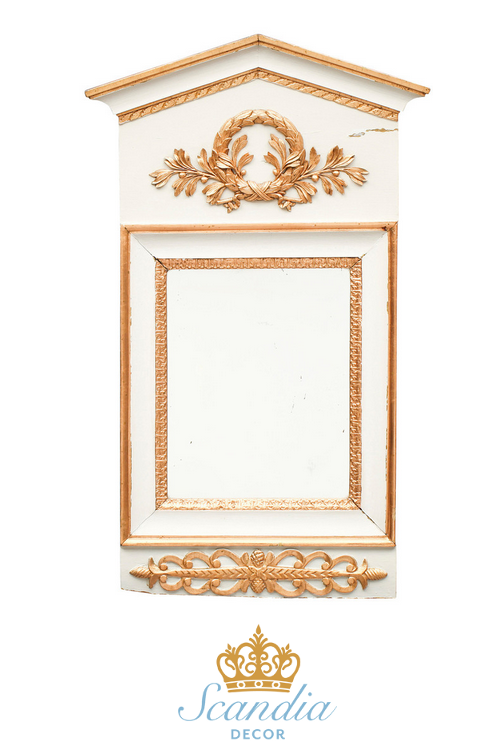 Small Gustavian Empire Swedish Mirror Scandiadecor.com
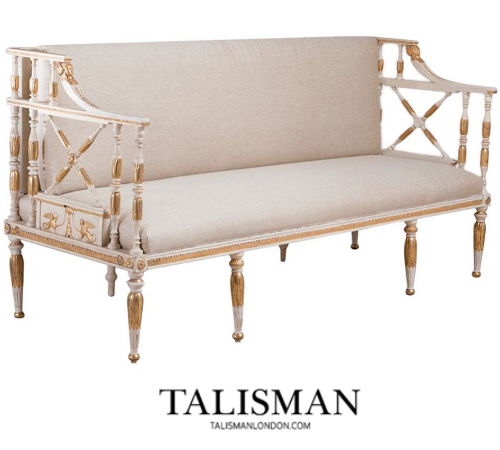 A Swedish Empire Sofa with Classical Gilt Detailing Upholstered by Talisman circa 1790
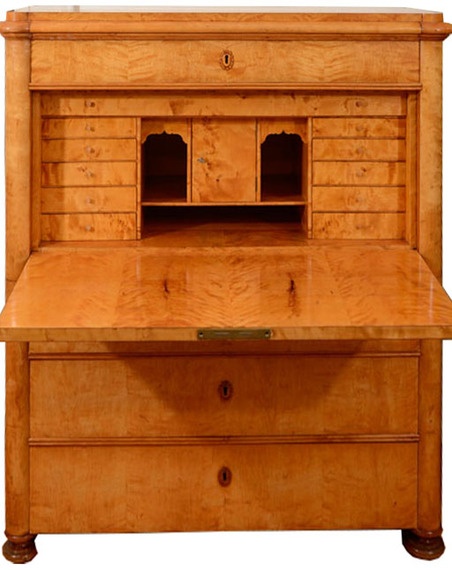
Biedermeier Secretaire Found on deringhall.com


10 Of The Best Tours In Sweden
Gripsholm Castle- Ground Floor Corridor Coutiers Wing Built 1780-82, Neoclassicism In The North
If you have never been to Sweden, here is a guide of what tourists have found to be the best and not so worthy sites to visit….
Best Places To Visit………..
1. Monteliusvägen Is Totally Worth Finding According To Many –Is a scenic walkway along the heights of Södermalm. This is one of the most captivating viewpoints in Stockholm, as it overlooks the Old Town and Norrmälarstrand. Plan a lunch or get a latte and enjoy looking at the view from many of the benches that are available. Plan something really special for your significant other here. Tourists have said it is tricky to find, yet definitely worth the search. Many mention that many of the locals don’t even know the place exists or very surprised tourists can find the place on their own.
2. Take In A Free Walking Tour Of Downtown Stockholm– Enjoy a free 90-minute walking tour of Stockholm’s Norrmalm district with a guide who works only for tips, so all you need to pay is what you feel the tour was worth at the end!- Links- Get Our Guide.com, Trip Advisor.com
3. Fotografiska Museum – (The Swedish Museum of Photography) -Fotografiska presents four unique large exhibitions and about 20 smaller exhibitions annually. The photos will range from powerful and thought-provoking to creepy. This museum will certainly be a very interesting tour!
4. The Vasa Museum is an absolute must for any tourist! The Vasa Ship Museum features one of the most complete and best preserved shipwrecks in the world. The ship sank a few hundred meters from its first sailing in the 1650’s. It was then discovered at the bottom of the harbor was painstakingly brought back to the surface and reassembled. In the museum, you can see this ship up-close, and truely is a work of art.
5. The Ghost Walking Tour In Gamla Stan– This tour isn’t your every day tour. Get the inside story behind stories of legends, diseases, murders and of course, ghosts. The old town is charming. Get lost in the atmosphere of walking down cobbled streets and winding avenues. The buildings are colorful, and the narrow lane ways are very interesting to see. Mårten Trotzigs Gränd is the narrowest alley. Take time out to leisurely visiting the shops, eating at the local eateries, enjoying the architecture and simply soaking it all up. There is a lot to see and do, however, don’t arrive early, as many shops don’t open until 11:00 a.m.
6. Royal Palace, Riddarholmen, Stockholm, Sweden- Amongst all European palaces, many people report that this one is the most interesting. It’s beautiful Baroque architectural style took 63 years to finish. This palace is proper and formal but far from pompous. The collection of costumes, uniforms and jewelry are kept in the main museum, while the basement museum features the architectural fortifications and underpinning of the “new” palace.
This palace has over 1400 rooms and many are still in use today.The tour takes about one hour but you can go at your own pace through the many rooms. Your ticket would cover the State and Guest apartments, the treasury, the Kroner Museum and Museum of Antiquities. They stamp your ticket at each venue, which allows you to visit once, over 7 days if you so wish. You can’t take any photographs inside, but the gift shop sells books and post cards.
The changing of the guard ceremony has been a daily tradition since 1523. The change happens at 12pm and lasts for approximately 40 minutes.
Pictures
– Throne room, Drottningholm Royal Palace, Sweden.- Corbis Images
-Chinese Style Interior at the Royal Palace of Drottningholm – Corbis Images
Helpful Comments On Trip Advisor
Pay Attention To The Tapestries “The tapestries in the palace are most interesting. Some depict the lavish lifestyle of the Swedish Royalty. There is one in particular that shows famous people from around the World including The Beatles and Bob Dylan plus many Heads of State.”
You Can Walk Through At Your Own Pace, Or Take The Tour “The Tre Kroner museum gives a history of the palace, we nearly missed it we were on way out when we spotted sign leading down some stairs.You can do the Palace on your own as we did but there were guided tours.”
“The Tre Kronor museum takes you into the Medieval history of the palace which I found fascinating”
“There is so much to see, but no photos are allowed–fair warning! The crown jewels/Treasury museum was my favorite, but the apartments were by far the coolest thing to walk through.”
“There was a very interesting temporary exhibition about the life of today’s king. Among the old baroque palace halls you can see the room which is designed nowadays, for various state meetings – it’s modest and elegant. All in all the palace has modest and austere (even bordering on dull) look in comparison with other European palaces, but hey, this is probably one of the reasons why Sweden never had any revolutions, the royals were just less greedy than the others!”
Take The Tour and Then Visit The Palace On Your Own –“The Royal apartments are very dark, and you can not take any pictures. The attendants in the museum are there to make sure you don’t take pictures, not to answer questions. The only exception to this is the guard in the knights room, they are friendly and will answer questions. A few of the rooms were very nice, but most were just dark. There are many stairs. You can see the backs of some statues on the tour but are not allowed to go to see the front of the statues.”
Lack Of Restrooms Within The Palace “Two warnings. You cannot take any pictures inside the palace and WCs are at a premium. Make sure you use the one at the gift store/ticket center before you go in as there are none in the palace.”
7. Oaxen Slip in Djurgarden “Our favorite meal was dinner at Oaxen Slip in Djurgarden, which our AirBnB host recommended to us. It is the cheaper, ‘backdoor’ sister restaurant to Michelin-starred Oaxen Krog. We ordered a variety of dishes to share, and everything we ate was spectacular! In fact, this is the first time I could say I actually enjoyed the veggie dishes more than the meat dishes. The baby asparagus was absolutely divine. Our waiter also recommended the beets with mayonnaise, which sounded suspect but we went along with what he said, which ended up being the right decision- they were also divine! We also had duck, pork and char as our entrees, and then the bread pudding and glace du four desserts. Service, and our waiter in particular, was great”
8. Stockholm City Hall has been described as a hidden gem. This building is the seat of Stockholm city government and also contains a luxury restaurant and happens to be the site of the banquet after the Nobel Prize ceremony. The organ in the Blue Hall has 10,270 pipes and is the largest in Scandinavia. If you intend to catch the tour, it is advised to buy your ticket in advance. One lady said that if you buy tickets at the hall, you need to buy them in the gift shop and can get crazy if you are feeling rushed to get on to the tour and someone in front of you is buying postcards. The tours last 45 mins and sell out quickly. The views from the top of the hall are especially captivating. So get your camera ready.
9. The Swedish History Museum- This museum has an extensive and unique collection of Viking artifacts, some dating to 4,800 BC. The second floor has a very imaginative timeline of Swedish history and some report a disturbing exhibit that graphically shows a medieval massacre. The best part of this museum is their famed Guldrummet or Gold Room. They feature over 100lbs of gold and 500lb of silver which are treasures from the Bronze to Middle Ages. This museum is a must see.
10. Royal Armoury -If you are interested in learning about Sweden’s royalty, this is the place to go. The history behind Sweden’s kings and queens from the 15th century are displayed in an ever-expanding collection of memories from the country’s different dynasties. They give the history behind Sweden’s well-known events in a captivating way. See objects like Gustav Vasa’s crested helmet in 1548, or the costume Gustav lll wore at the masked ball at which he was murdered. View costumes worn in various films such as from the film “Elizabeth”
We will have to leave Gothenburg, Malmö, Marstrand, Skåne, and Visby/Gotland for another article……..
Some Of The Less Than Impressive Sites According To Comments At Trip Advisor:
Skansen Museum “Some of the less impressive things we did in Stockholm included going to the Skansen museum… we just didn’t understand what the hype was about. At first we thought it would be cool to see the old houses and be able to go inside them, but all of the doors were locked! There was written commentary outside each of the houses, ie. “Inside the living room there are some interesting artifacts” which really didn’t help since we weren’t able to go inside” here
“As for Skansen, everyone I took there really liked it, you must have been unlucky if many of the houses were closed. High season is probably better”
Rosendal’s Garden “We also walked all the way to Rosendal’s Garden to have lunch, given the positive views on TA, but it did not live up to expectations at all! If it had been closer to the museums, then that would be one thing, but we had to walk through farms and forests to get there. To us, it seemed like a prettied-up self-service cafe, and the food wasn’t even that great. If I could do it again, I would give this place a pass”here
A Bit About Swedish Culture Before Visiting Sweden
-43 Things I Love About Sweden – blogs.sweden.se/
-Top Ten Things You Need to Know About Sweden and the Swedish –expatsblog.com
– 10 Things Not to Do in Sweden – About.com
-Party Like A Local – 10 things to know before visiting Sweden CNN.com
Additional Related Articles
–The Lavish Interior Of The Swedish Häringe Castle The Swedish Furniture
–A Look At The Castle Behind The Movie “The Girl with the Dragon Tattoo-The Swedish Furniture
–The Gustavian Style Of Swedish Interior Designer Louis Masreliez- Part 1 -The Swedish Furniture
-The Romantic Baroque Style: Part 1- Stromholm The Swedish Furniture
–The Romantic Baroque Style: Part 2 King Gustav Vasa – The Swedish Furniture
–The Romantic Baroque Style: Part 3 Skokloster & Steninge Palace – The Swedish Furniture
–Neoclassicism in the North- The Style Saloniste
–Swedish Painted Furniture Gustavian Neo-classical Annie Sloan
Empire style in the former royal summer palace Rosersberg – Picture Credit daserste.ndr.de
The study of duke Fredrik Adolph Tullgarn Palace –www.kungahuset.se
History Behind Many Of Sweden’s Palaces
Haga Palace
Since 1966 this small palace has been in the Swedish government’s hands, and used for meetings and conferences and as a guest house for prominent foreign visitors.Prime Minister Fredrik Reinfeldt decided to return the right of disposal to the royal family.
Here is the summarized history behind Haga…….
- The neoclassical Haga Palace was built 1802-1805 by the architect Carl Christoffer Gjörwell on the orders of King Gustaf IV Adolf. Across the road was Gustaf III’s Pavilion, which had been built by Olof Tempelman for King Gustaf III in 1787-1790. Located behind this was the ruins of Haga Palace, a Swedish Versailles designed by Louis-Jean Desprez. The structure which was being built was was halted when Gustaf III was assassinated in 1792. Later when his son, Gustaf IV Adolf, found his father’s pavilion to be too small to accommodate his growing family, ordered a new building from Gjörwell.
- Haga Palace was given to his aunt Hedvig Elisabeth Charlotta, (the new queen), and it became known as the Queen’s Pavilion. The next inhabitant was Prince Erik, the mentally handicapped youngest son of King Gustaf V. Prince Erik died in the autumn of 1918 and Haga Palace was thereafter briefly opened up to children who had lost their homes as a result of World War I.
- Later, Prince Gustaf Adolf and Princess Sibylla, moved into Haga following their marriage in 1932. They raised their four daughters, Princesses Margaretha, Birgitta, Désirée and Christina at Haga.
- In 1950 the widowed Princess Sibylla and her children temporarily moved to the Royal Palace in Stockholm in which a few repairs were needed. They fell in love with country living, and chose to remain at the Royal Palace until the renovation of Haga was completed.
- In 1966 when King Gustaf VI Adolf transferred Haga to the disposal to the government, it was turned into a guesthouse for distinguished foreign official visitors. In 2009, it was announced by Prime Minister Fredrik Reinfeldt that the rights of disposal to the palace will be transferred back to the royal court to be used by Victoria, Crown Princess of Sweden, and her husband, Prince Daniel, Duke of Västergötland, as a wedding gift in 2010.
Haga Pavilion
Haga Pavilion built in the 17th century by Gustav III. Located in Haga Park, King Gustav III used the pavilion year round and had grand plans for the park, which included a new residence. He was murdered in 1792 and his vision was never completed.
When King Gustov III made his way through the grand courts of Europe, it made a lasting impression. Upon his return to Sweden he along with architect Olof Templeman, designer Louis Masreliez and Swedish craftsmen were responsible for creating the pavolion that adapted to the style and grandness seen in the European courts.
Sweden’s Drottningholm Castle
Drottningholm Castle is located in Lake Mälar, 12 kilometres from Stockholm. The construction of this regal residence began in 1662. Baroque and Rococo influences largely comprise the characteristic features of the park that surrounds the castle. Drottingholm Castle has managed to retain the regal atmosphere of the Swedish royal families as it was during the 18th century.
Work on the castle began at the end of the seventeenth century under the architect Nicodemus Tessin the Elder and was completed by Nicodemus Tessin the Younger. The interior was decorated between 1665 and 1703. Nicodemus Tessin the Younger also laid out a garden design that reflected a baroque appearance according to what was modeled in France. Gustav III also added an English park in 1777.
Drottningholm Theatre is one of the most well preserved baroque theatres in all of Europe. It was built in 1764-66 and was truly magnificent in 1777, when Gustav III took over the castle. After the death of Gustav III, theatrical performances were discontinued and the theatre fell into dispair. In 1922 it was restored to its original state under the direction of Agne Beijer. A unique collection of stage sets is preserved giving you a glimpse into how wonderful it was at one time in history.
Tullgarn Palace
Built in the late 16th century, for Count Carl Sture, this is a renaissance palace was pulled down in 1720 and replaced with the present building which was designed for the French officer Joseph Gabriel Destain for the then owner, Count Magnus Julius De la Gardie.
In the 1770s the Palace was acquired by the State for Gustav III’s youngest brother, Duke Fredrik Adolf of Östergötland. He then radically re-built the Palace in the 1780s. Wings were raised to be one story higher and the whole building was given a flat Italian roof. Fredrik Adolf’s interiors at Tullgarn, were are among the finest of their kind in Sweden. Credit- community.fortunecity.ws
Additional Links To Fantastic Pictures:
- Castles, Palaces & Manor Houses in Sweden Jeannine Mantooth’s Pinterest Page
- Entrance to Salon at Tullgarn Palace Corbis Images
- The Bernadotte Library – The Royal Palace Sveriges Kunset.se
- Tullgarn Palace, stable turned into a restaurant nftravel.blogspot.com
- Christian IV’s Writing Room; Rosenborg castle, Copenhagen www.flickr.com
- The 1st Floor – Rosenborg Castle dkks.dk
- Royal Arms Collection at Rosenborg flickr.com
- 10 Must-See and Do Attractions in Copenhagen The Culture Map
- Inside The Rosenborg Castle tripwow.tripadvisor.com
- Tsars Palaces In Paintings English Russia Blog
- Beautiful Floral Patterns
- Souvenirs from The Royal Gift Shops –www.kungahuset.se
- “A Visit to Gripsholm Castle in Sweden” The Martha Blog
- Slottskyrkorna – Sveriges Kungahus
- Exteriör Drottningholm Castle
- Welcome to Tyresö Castle! | Nordiska museet
- Alexis Daflos www.kungahuset.se
- Tullgarn slott (castle) | Flickr
- Swedish Wedding at Tullgarn Palace
- Take a trip to Tullgarn Palace kungahuset.se
- Castle Tullgarn, Seen at Rococo Revisited
- Castle Tullgarn | Flickr
- Hässelby slott julbordsmaklarna.se
- Hässelby slott sv.wikipedia.org
- Svartsjö Palace, Found on sfv.se
- Svartsjö slott, interiör – Foto Åke E:son Lindman
- Lindman Photography.
- Found on upload.wikimedia.org
- Stockholm Palace – Wikipedia
- Frederiksborg Castle – Copenhagen Wikimedia
- Tyresö slott | Nordiska museet
- A Visit to the Rosenborg Castle in Copenhagen www.hollandamericablog.com
- Rosenborg Castle (Photo credit: Christopher Macsurak) tripideas.org
- dicksandy.org
- Rosenborg Castle: Venture Denmark
- Copenhagen Rosenborg Castle Throne Room – traveljapanblog.com
- Stairway at the Rosenborg Palace, Copenhagen. shuttersandsunflowers.com
- Neoclassicism in the North- The Style Saloniste
- Gripsholm Castle commons.wikimedia.org
- Olivia November 2012 Outi Ranua – Fashion Models
- Unknown Swedish Home Picture Credit- Uploaded On Pinterest
- -Room Interior at Digitalt Museum – Tyresö slott
- Stora Huset –www.nordiskamuseet.se
- Stora Huset –www.nordiskamuseet.se
- Digitalt Museum – Interiör, Tyresö slot
- Tyresö slot- commons.wikimedia.org
- Stora Wäsby – Swedish Castle – Found on abebooks.com
- Stora Wäsby – bohemianwornest.tumblr.com
- Rosendal, the former summer palace of Charles XIV – Picture Credit daserste.ndr.de
- homedesign.marthastewart.com
- Stola Herrgård
- Gunnebo Slott
- Neoclassicism in the North- Seen On The Style Saloniste
- Gunnebo Seen In Neoclassicism In The North
- Gripsholm interiors – Gula Salongen Nationalmuseum Stockholm’s Photostream
- Neoclassicism In The North
- Costumes, Cats 18th Century Blog


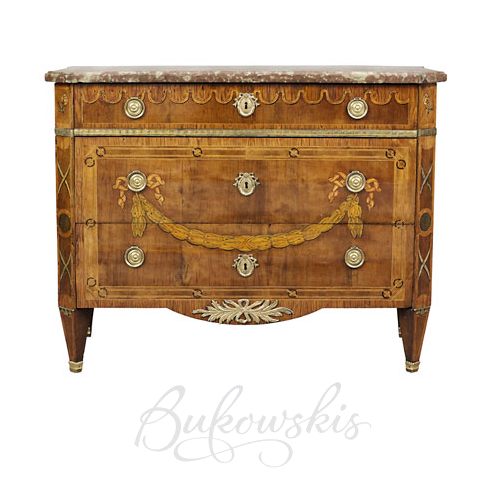 Jonas Hultsten www.antikvarlden.se
The chest of drawers in the original room was made in about 1780, was originally purchased for Sofia Albertina and is typical of its maker, Jonas Hultsten.
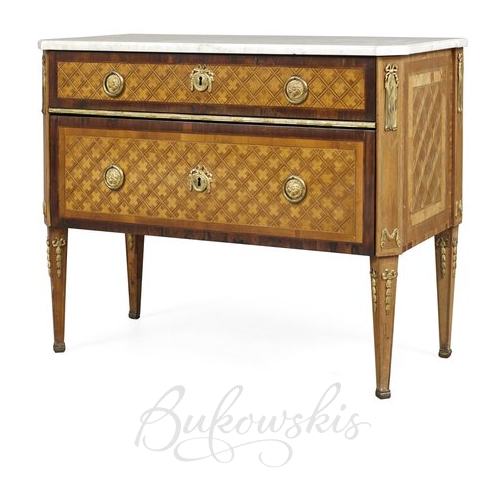 Jonas Hultsten www.bukowskis.com
Jonas Hultsten www.bukowskis.com
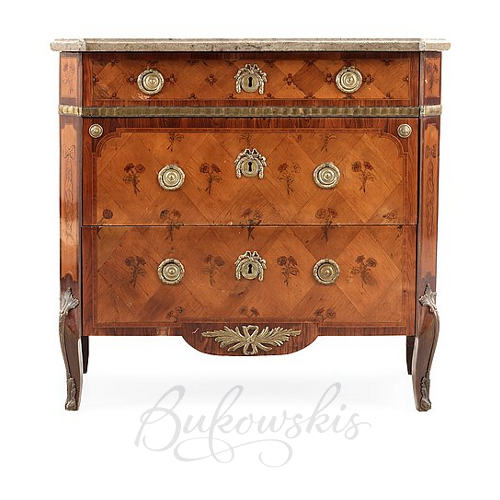 Jonas Hultsten 1700 www.bukowskis.com
“A Visit to Gripsholm Castle in Sweden” The Martha Blog
Walk through Gripsholm with Martha Stewart in this post – “A Visit to Gripsholm Castle in Sweden” The Martha Blog
She captured the beautiful floors at Gripsholm. Each room had a different pattern.
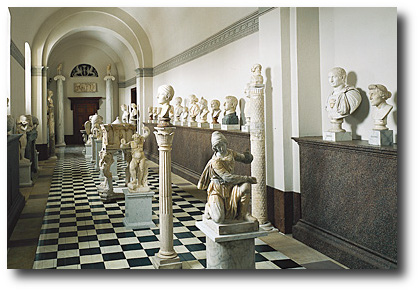
Tour description, Gustav III’s Museum of Antiquities. Gustav III’s Museum of Antiquities, The Royal Palace www.kungahuset.se
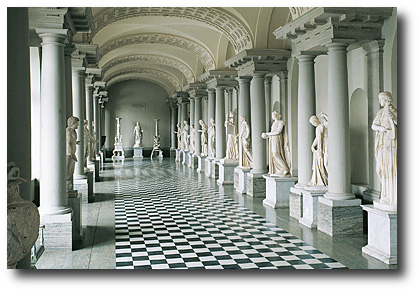
Royal Palace –www.kungahuset.se


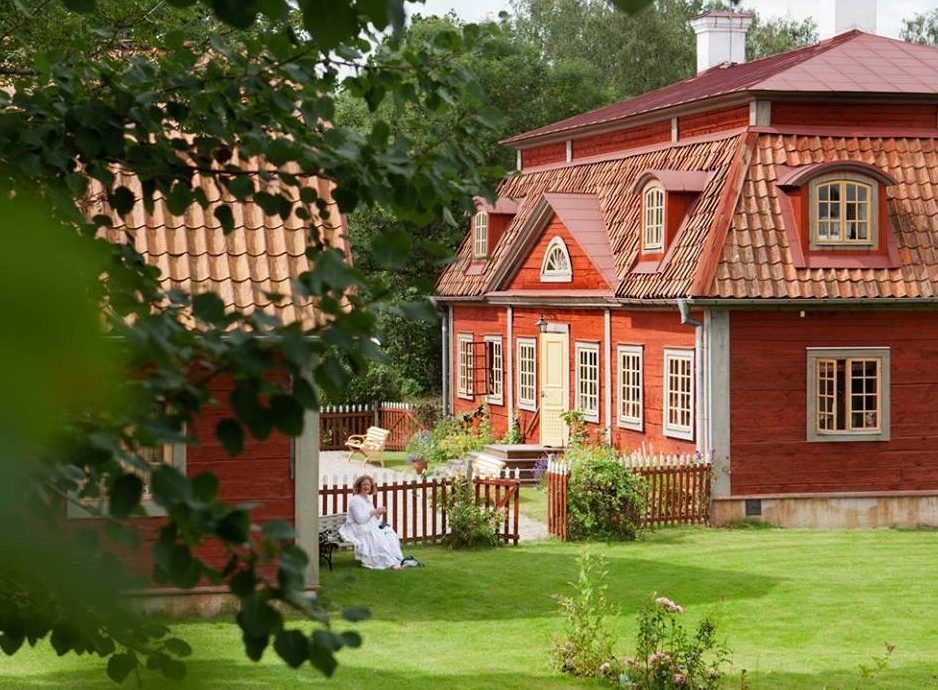
Buying Property In Sweden
Have you ever considered buying or renting a home in Sweden? The prices for a cottage in the country are surprisingly affordable. Expert Home Design Blog details the costs of real estate in Sweden:
Sweden is the largest country in Scandinavia and the fourth largest in Europe, bordering Norway and Finland, within the Arctic Circle. Sweden has large numbers of newly built properties, with over 50% of apartment homes being built since 1960 with the majority being mainly rented. Freehold individual properties are largely owner occupied. Official language is Swedish with a minority understanding Finnish.English is widely spoken. Capital gains should not be charged for the sale of privately owned property.
There are no restrictions on Foreign Ownership.
Property and Real Estate Prices in Sweden
Range Varies, for example:
From around £25,000 / $37,000 for a single family home
From around £25,000 / $37,000 for an apartment
From around £40,000 / $60,000 for a villa
From around £50,000 / $75,000 for a bungalow
From around £85,000 / $125,000 for city homes
Country homes vary from around £150,000 / $225,000
Locations to buy real estate and property in Sweden Stockholm being Sweden’s capital is popular and including the suburbs represents about 20% of Sweden’s total population and with the growth of financial and technical companies around Stockholm this will likely grow. It is situated on the Baltic Sea, at the entrance to Lake Malaren and is built on 14 islands with many exceptional waterside buildings.
Gothenburg, Sweden’s second largest city on the West Coast of the country is a major port and industrial center. Malmo, on the south coast is expected to grow significantly over the next few years following the completion of the 16 km bridge and tunnel linking to Copenhagen in Denmark.
Living Costs in Sweden
Sweden has enviable living standards supported by high tech capitalism and extensive welfare benefits.
Buying property and real estate in Sweden
It is usual for a Real Estate Agent to be used for buying and selling of property in Sweden. They will handle the necessary paperwork and communicate buying and selling prices with all parties involved. It is not contractual to have your property valued but fairly common for buyers to hire independent surveyors. When you have satisfied any questions in respect of your purchase a completion date can be agreed through your Real Estate Agent. It is the responsibility of the buyer to apply for deeds of title within three months of the sale transfer and submit for registration.
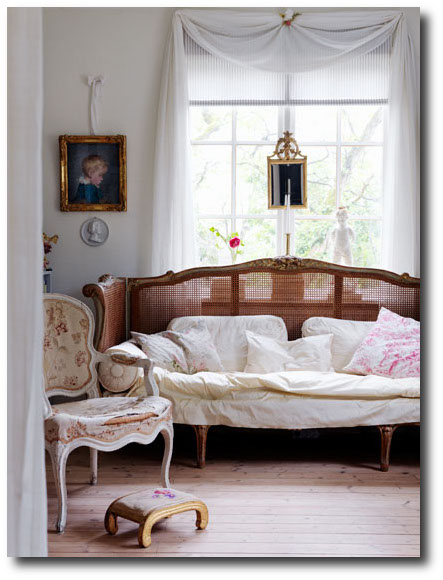 Carolina Romare is a Swedish freelance photographer. After three years in Melbourne, Australia and a Bachelor of Arts in commercial photography from RMIT University, she decided to move her business back home and is currently based in Malmö, Sweden.
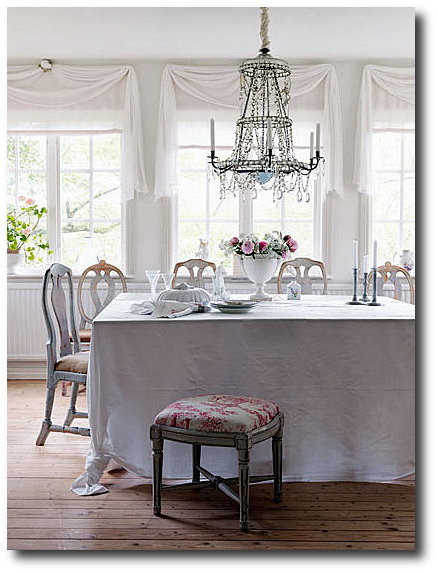 Swedish Interiors – Carolina Romare
Swedish Interiors – Carolina Romare
Swedish Dining Table From The Right Bank Blog
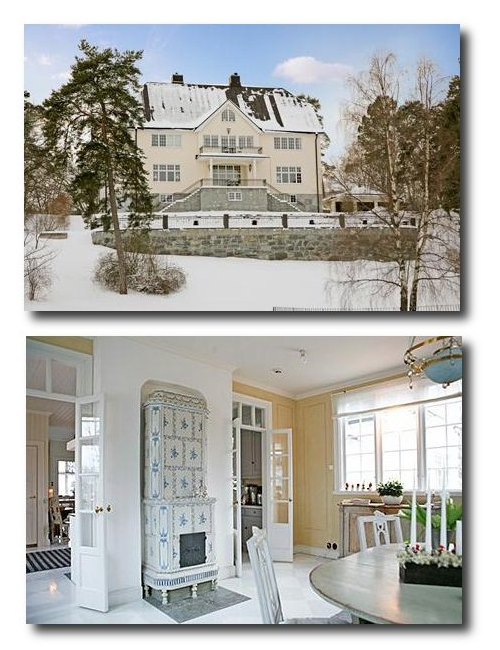 Swedish Home Decorated In The Gustavian Style
This outstanding Swedish home located in the suburb of Djursholm, outside Stockholm is designed around the Gustavian 18th century appeal. The home was built in 1905, and totals about 945 sqm, approximately 12,268 sq ft. The listings suggest that the owner has spent a lot of money back to its classical “old world” charm. The kitchen is designed around the Gustavian styles of centuries past. The tile stove from the 18th century.
This home has 11 rooms, including 6 bedrooms and 3 bathrooms. On the ground floor hall, features the lounge and office, as well as the dining room, which is decorated breakfast room with tiled stove in 1700 and an exclusive kitchen, reproducing the original in one of the oldest castles in Sweden. The second floor has five bedrooms, the main one with a breathtaking view and its own bathroom. The basement room has a bedroom, a playroom for children and adults, back door with laundry and bathroom spas, sauna and gym. Home heating – geothermal. Detached garage for several cars. $ 1050000 Euro See more at this listing…
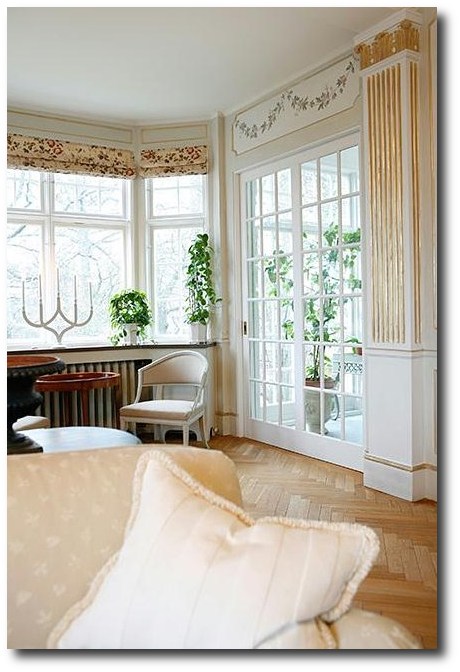 Swedish Home Decorated In The Gustavian Style
Beachfront Three-Storey 7 bedroom Home on The Lake – Sweden
Swedish Native Eva Johnson’s home in England is decorated in the Gustavian style. Most of the furniture is from her grandparents.
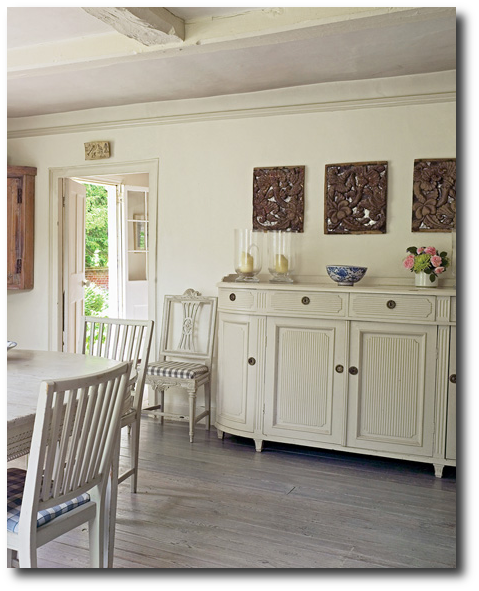 Swedish Native Eva Johnson’s home in England
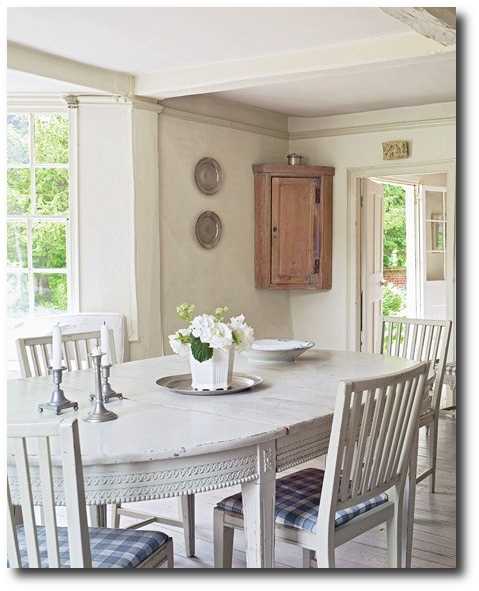 Swedish Native Eva Johnson’s home in England
Beautiful Primitive Wall Plate Display From Belgian Pearls Blog
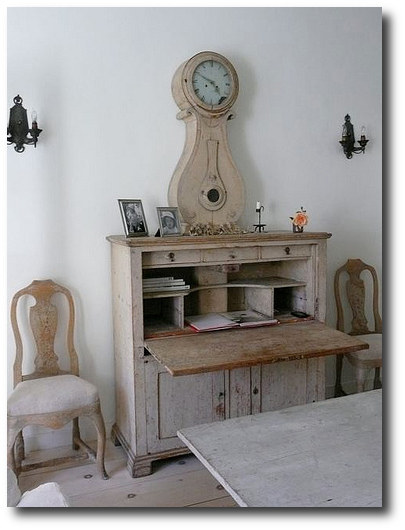 Kennedy Home From Velvet and Linen’s Flicker Stream
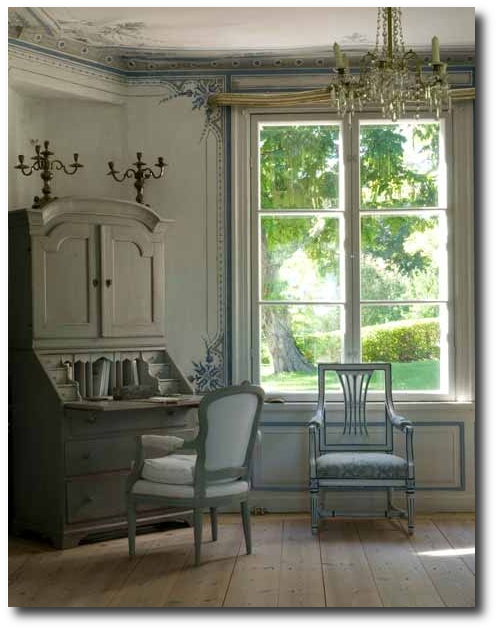
Swedish Interior With Wood Flooring Featured On Gardochtorp.se
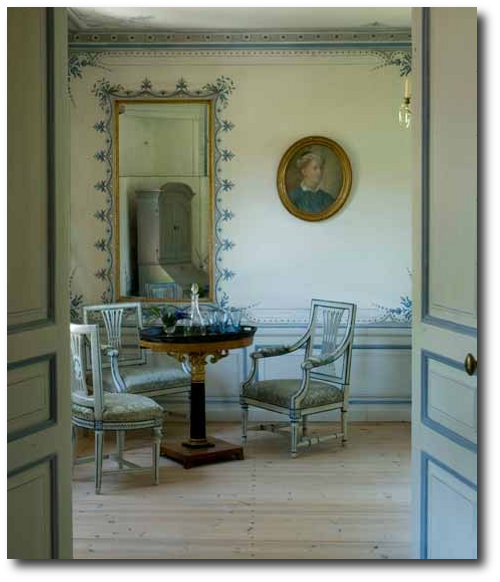
Swedish Interior With Wood Flooring Featured On Gardochtorp.se
AAn idyllic summer in Norway- Maren had found her dream house on the south coast of Norway, but it was so dilapidated that it should be demolished. Local government gave the permission to a new construction provided that: the new house was built in the traditional style. Maison Campagne
This lakefront wooden country house set in a serene area on Lake Malaren boasts breathtaking views of Drottningholm Palace and the lake and the Stockholm skyline from the large rooftop veranda. The house was built in 1880 by famous architect Magnus Isæus. The interiors of the house are inspired by various styles, especially Gustavian with touches of Empire style.
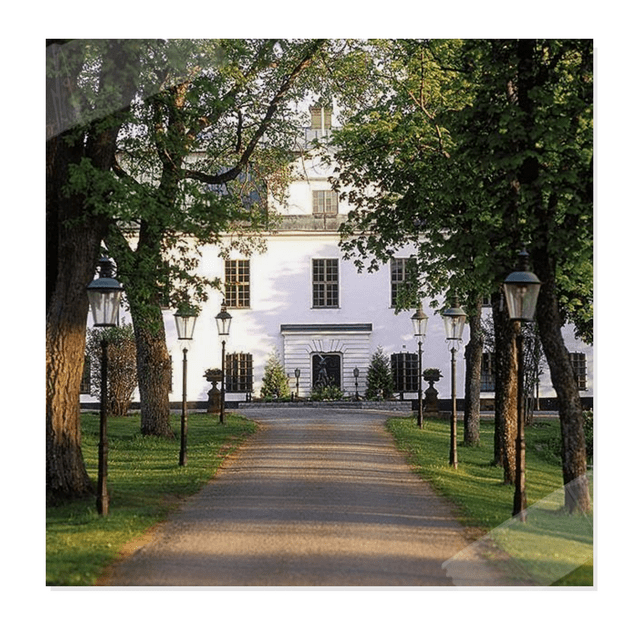
The Lavish Interior Of The Swedish Häringe Castle
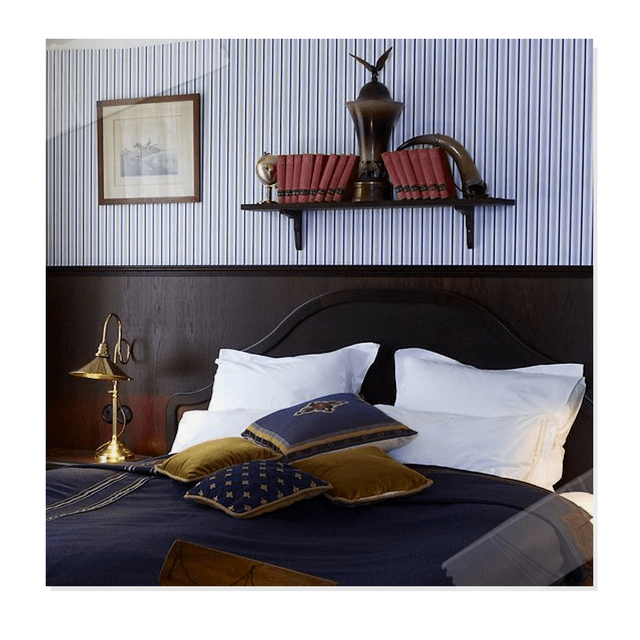
$11M Stockholm Palace is Made for ….Curbed
$11M Stockholm Palace is Made for ….Curbed
Häringe Castle- mogi.metromode.se
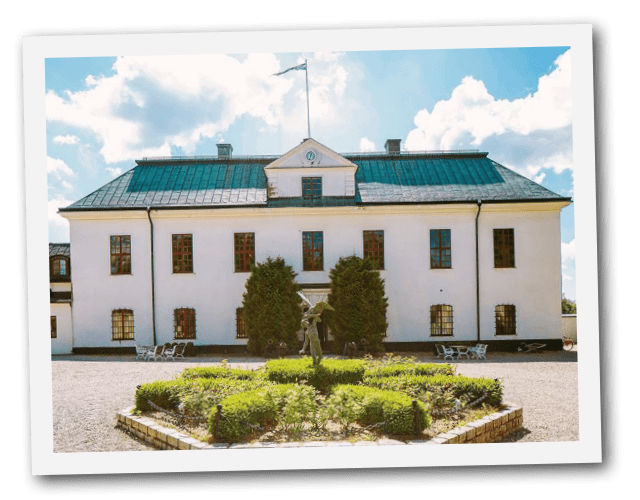
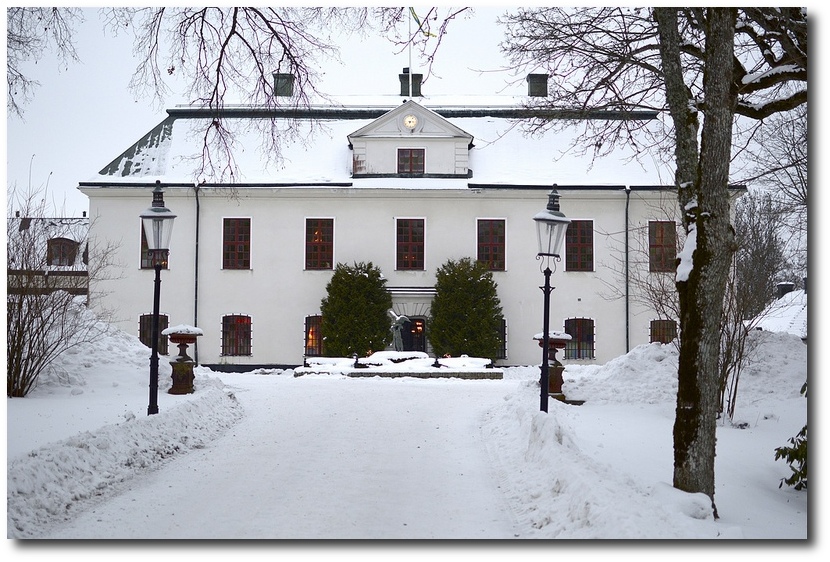
If you want to explore near Stockholm Sweden, consider visiting the Palace-turned-hotel Häringe Castle. This stunning 17th-century baroque castle- hotel just 45 miles outside Stockholm is located near a nature reserve. Historic lore suggests that Vikings first claimed the Häringe Peninsula as property in the 11th century. The estate has belonged to many famous people as King Gustav Vasa, Gustavus Horn, and Axel Wenner-Gren. Häringe was a ship yard during the time of King Gustav Vasa and probably even earlier. Häringe manor consists of the castle garden and park facilities, farm buildings, staff quarters, the farms and active farmland. Häringe is a very important link to the City’s history, and is a national tourist destination.
The main building was originally built in 1657 by Field Marshal Gustav Horn. The south wing was built slightly earlier when the castle was built. The castle got its present appearance at a major refurbishment in 1770. Häringe sat as an estate from about 1770 until 1929, when it was bought by the newspaper man Torsten Kreuger. Kreugar added the landscaping and the swimming pool.
After Kreuger, Häringe was bought in 1934 by business and industrialist Axel Wenner-Gren and founder of Electrolux. He filled the mansion with expensive furniture, and it was said he also built the road leading up to the estate. The Wenner-Gren had Häringe many famous guests like Greta Garbo, Danny Kaye, Karl Gerhard. At one point, all the furnishings were sold by one owner, only to be researched and re-purchased by another one years later. After Wenner-Gren’s death in 1961, the lavish furnishings disappeared. The new owner, crab importer Olle Hartwig, pored over Wenner-Gren’s photo albums, and was able to re-purchase most of the items.
Häringe castle is located in open countryside between Landfjärden and Bobäcken. Häringe estate was in the early 1900s, one of the largest in the county. The manor house, which has its origins in the mid-1600s, is today a whitewashed two-story building with mansard roof. It has separate wings on both the north and south side. On the south side there is a large swimming pool and remnants of very old trees. Beyond the grandeur interior, the property lead the way to feature Sweden’s first outdoor pool with a slide from the second floor bathroom, as well as a bowling alley and underground tunnels.
North and east of the castle are a dozen red-painted farm buildings of different ages, which at one time meet the housing needs of the property. These are dominated by a large barn from 1946. On the castle’s west side are the remains of a garden with statues from the Wenner-Gren at the Castle (1934-1961).
There is also a nature reserve south of the property called the Häringe-Hammersta. The land in the nature reserve owned by the Archipelago Foundation. The land immediately surrounding the castle is privately owned. Today the palace is used for conferences, as hotel accommodation. This castle turned hotel is owned by the Ljungberg family since 1999 and is part of an exclusive hotel chain.
Information gathered from Haninge.se
- Website: Häringe Palace
- E-mail: info@haringeslott.se
Additional Links:
– A Bridal Party At Häringe Castle – 2bridesphotography.com
– Most interesting pictures tagged “häringeslott” on Flick River
– An Enchanted Castle in Sweden –remodelista.com
– An Enchanted Garden in Sweden- www.gardenista.com
– Sweden’s most haunted castle: Häringe – Network Europe
– A night at Haringe Palace –Live Like You
The Swedish Wreta Gestgifveri Inn
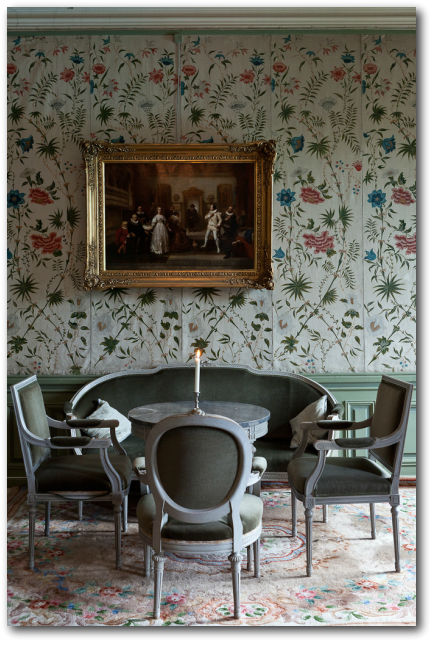
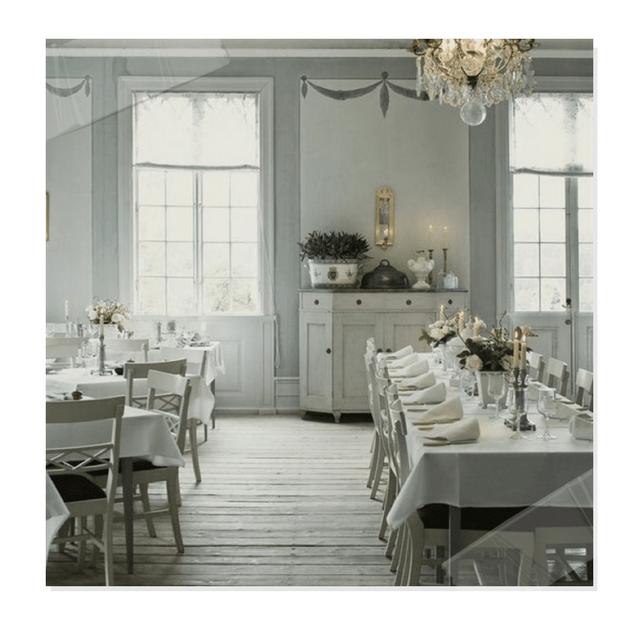
Take a trip back in time to Carl Larsson’s turn-of-the-century romanticism by dining and taking in a breath of fresh air of all things Swedish at the Wreta Gestgifveri Inn. Lose yourself in the romance of the 17th century baroque period, and forget the tv, work, and stresses of this day.
When Owner Jim Grundstrom, one of Sweden’s most accomplished interior designers, first saw the seventeenth century building, it was empty, and lacked any sort of style. Seeing beyond the battered interior, he saw the potential of restoring it back to it’s orginal form and opening it up as a boutique country hotel. This hotel gives you the choice of several different styled rooms, ranging from Gustavian, Empire and rustic folk art.
Around The Area
Only 20 minutes out of Stockholm is the Högberga farm and a magnificent view over the water. In about an hour you will find Rånäs Castle, Ulvhälls Estate and Wreta Gestgifveri.
1.5 hours north reaches you Gimo Estate in Northern Roslagen and Söderforsgatan Mansion at Dalälvens beach. Hotels Havsbaden, Chub Estate and Söderköpings Brunn are all two hours away.
The Upper Floor In The Main Building:
The Mamsells Kammare room is one of the oldest rooms in the guesthouse, showing off a country feel with a touch of red. The Kuskens Kammare is another old room, and may have been one of the rooms where the coachmen stayed. The von Fersens Kabinett room, has an elegant feel, and was inspired by the late 18th century frequent guests, Axel von Fersenis. The Bernadotterummet Room is a room decorated around the true Empire style, named after Crown Prince Karl Johan Bernadotte’s visit to Wreta in 1816.
The Gustavianska Gemaket room is a late-Gustavian-style room looking out over the apple orchard. The Hårlemanska Gemaket Room is named after the castle architect Carl Hårleman, who was a frequent guest at Wreta in olden times. The Kolonialrummet Room is an example of how the Swedish East India Company’s journeys to Southeast Asia influenced some Swedish manor houses. The Gestgifverisviten Room is where he Gustavian meets the Empire style. A warm welcome awaits you in this bedroom and lounge.
The Swedish Artist Carl Larsson
 Guest Post- Dawn- Bella Visione Blog
Carl Larsson is Sweden’s most recognized artist who depicted his idyllic life, with wife Karin and their children, in exquisite delicate watercolor paintings.
Born in Stockholm in 1853, he grew up in less than idyllic surroundings, being left by his father for his mother to rear. She worked diligently as a laundress, but earned very little. They lived in squalled conditions and he learned to work very hard as well.
At thirteen he was urged by his school teacher to apply for entry to the Stockholm Academy for Fine Arts. He was accepted, but it took some time for him to acclimate to the new, more refined surroundings.
He continued through school, became an illustrator and later moved to Paris to become an artist. He started painting in oils, but in 1882 having moved to Grez, (a Scandinavian artists’ colony) he transitioned to watercolors, which he mastered in six short months.
This is where he met Karin Bergoo and they soon married in 1883. Five years later Karin’s father gave the couple the house Lilla Hyttnas at Sanborn. This was to be the setting for many of Larsson’s paintings, capturing his life as it unfolded with his wife and their many children.
There were two major influences, whether knowingly or not, that shaped the creativity that took place within the walls of the Larsson home.
In 1891 a major exhibition of the Gustavian Style was compiled, this was in response to the look becoming popular once again in Sweden. This happened to be within the same time frame that the drawing room at Sanborn was redecorated in the fashion it still is today. The Gustavian tenets of light, refinement and unpretentious elegance are evident.
There was also a movement taking place that had begun in England, as a rejection to the over-opulent, mass-produced, poor quality furnishings that was being churned out during the latter portion of the Victorian era.
William Morris, influenced by the writings John Ruskin, longed for a return to quality, hand-crafted, thoughtful goods that harkened back to the medieval period. This was to become known as the Arts and Crafts Movement and became popular in the US as well with the works of Gustav Stickley.
The paintings of Carl Larsson capture this desire for a hands-on, real life, where the pieces in the home are beautiful, useful and lovingly created. Karin’s weavings and embroideries add texture and personality to each room. Older pieces of furniture were often painted and then embellished with portraits or motifs to create one of a kind works of art.
The rooms were meant to be lived in, enjoyed and be a place of security and comfort to the family, something Carl Larsson experienced very little when he was a child.
The legacy the Larsson’s left at Sanborn inspire those that experience its beauty to integrate a small part into their own lives.
About Dawn:
Dawn is the author of the Bella Visione Blog. This interior designer has lived in four countries on three continents and lives to blog about her strong desire for travel and adventure. Today she lives in Minnesota, where she runs a a full-service interior design studio. Casa Bella Design
offers a wide range of services including re-models, space planning, interior design and more. Her interior design studio specializes in European, Gustavian and Scandinavian style.
- Carl Larsson A Self Portrait -18×27$30
- Carl Larsson A Young Girl with a Doll – Premium Print $30
- Lisbeth Med Docka – Carl Larsson Sweden
- Larsson Carl Stina BergooSom Canvas $30 From Canvas Art USA

