3 Houses Decorated Around The Rustic Swedish Style
1. Cotswold’s Barn Conversion comes from Light Locations. Inside, the home is saturated with shades of whites. Take notice of it’s whitewashed rustic oak beams, the neutral decor scheme and open plan interior. Decorated around minimal decor, this home has rustic furniture, industrial pendant lights, linen bedding and furniture and huge picture windows.
See more of this home at Light Locations
2. A Chattahoochee River Home, decorated by designer Amy Morris, was seen in Atlanta Home Magazine. This home is decorated around the neutral palette, with soft creamy whites and touches of gray, green and blue. In the entry hall, we see the start of a theme that continues throughout the house…. “Rustic and elegant“. A herringbone-patterned brick flooring, combined with country distressed furniture is very welcoming. What makes this house appear warm and cozy are the fabric choices and old world color choices. One of the designer’s favorite style secrets involves using outdoor fabric in busy rooms…… “I typically use a polyester, which looks like natural velvet,” she says. It looks great and no one knows.”
View more of this interview in Atlanta Home Magazine
View Designer Amy Morris Interiors
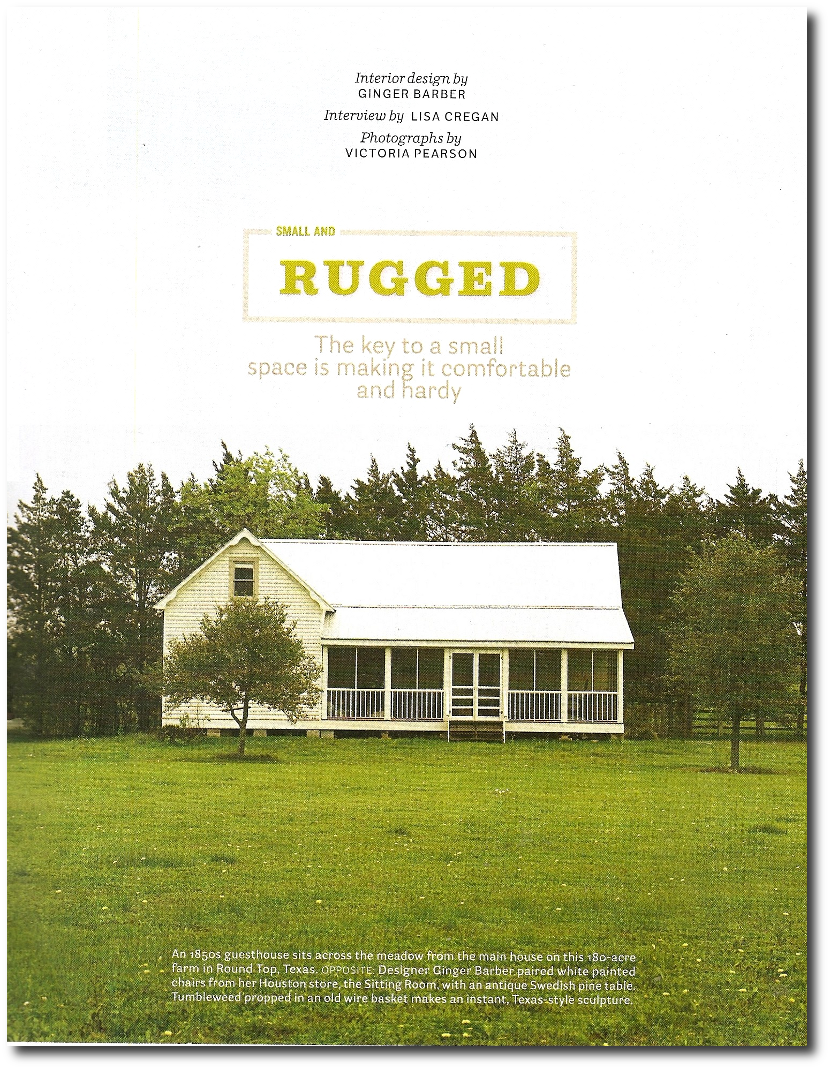
3. Ginger Barber’s Rugged Texas Home. This home was featured in House Beautiful‘s July 2009 issue. As you enter her 180-acre property you see a beautiful white farmhouse, which is Ginger’s main house, and across the pasture, is her 1850s guesthouse.
When they decided to renovate the guest house, they worked with an open design scheme. It has a combined family and dining room, along with a master bedroom and bathroom.
She choose to work with a soft creamy gray for the color scheme. Going with a lighter color palette helps the rooms feel bigger. In addition to keeping it brighter, they boarded every wall with reclaimed wood and whitewashed the boards for warmth.
Ginger Barber On Lived-In Rooms
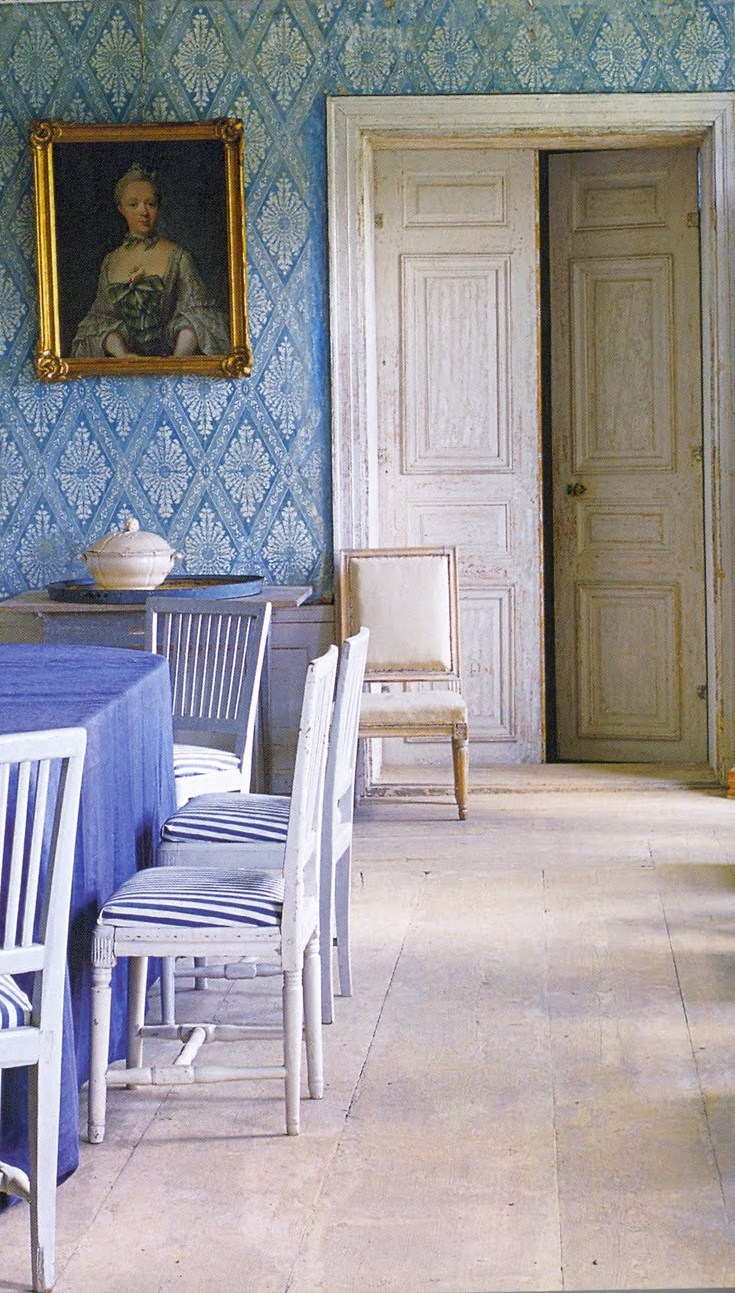
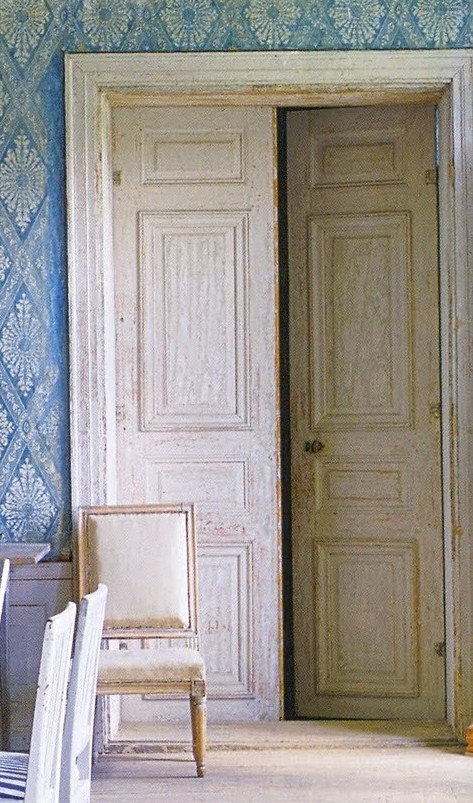
On Patina “A nice wide table with the paint peeling off. It’s got great lack-of-paint, doesn’t it? I love chipped painted things; they feel more natural, softer, more inviting. And that washedout Swedish cupboard in the main house’s living room is so wonderfully dull—I love that, too. I’ll even take a new piece and work on the finish to get the look I want. If you look at that pine table in the main house, you’ll see it’s stripped raw, rosy raw. I used white chairs around it because I love the back and forth of crisp white against old and worn”
On Slipcovers- “Again, you’ve got to live. You’ve got to be ready to throw the slipcovers in the wash andbe done with it. My work is 90 percent slipcovers. I mean, this family’s got two Jack Russell terriers, and they’re always on the furniture.”
Simple Linens- “I think a person gets sick of a floral sofa in six months, tops. And in a small space it probably takes even less time to get tired of too much color. The accessories are what give a shot of color to my work, and their shapes and textures add personality. A simple purple-striped coverlet does amazing things for a white bedroom like this guest room, doesn’t it?”
View more of this article in House Beautiful Magazine
View Designer Ginger Barber




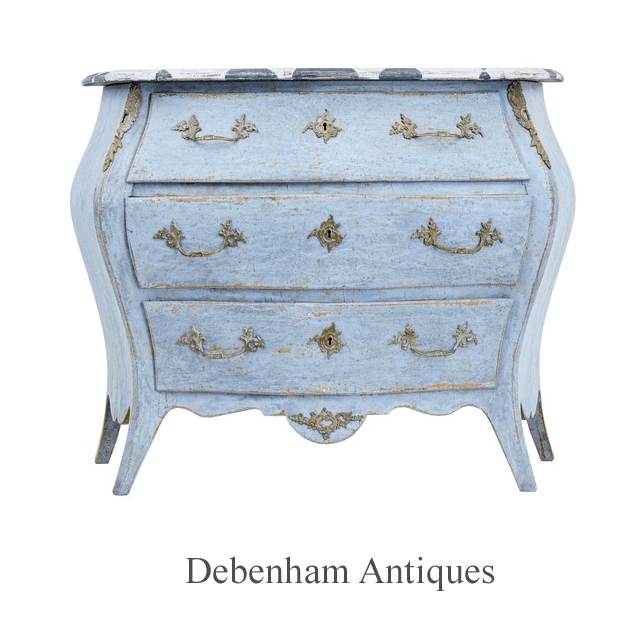
Swedish Antiques From Debenham Antiques
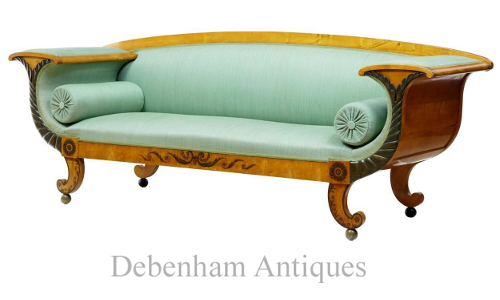 19th Century Swedish Birch Neo Classical Sofa US $5,540.37 On Ebay
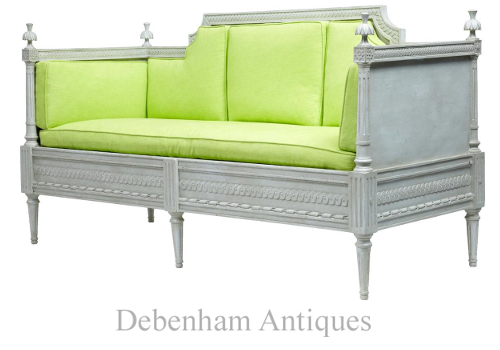
Early 19th Century Painted Gustavian Sofa -US $4,477.83 Beautifully carved, re-upholstered with fitted cushions- On Ebay
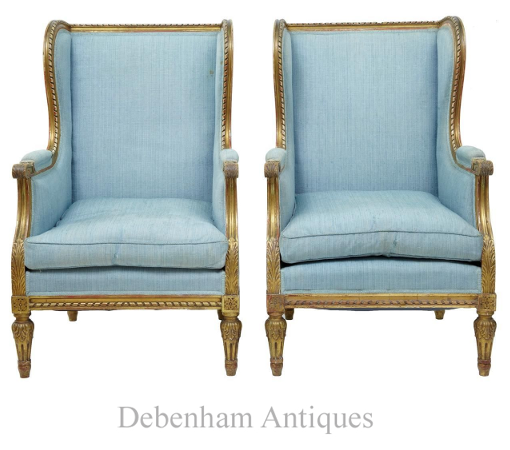 Pair of 19th Century Carved wood French Armchairs US $3,718.88 On Ebay
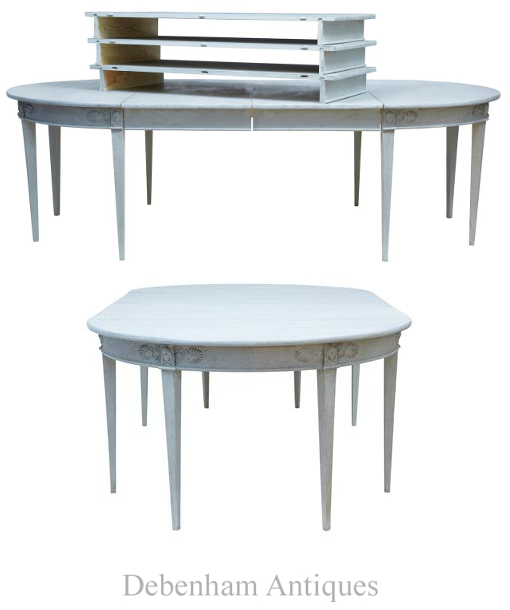
19th Century Massive Extending Swedish Painted Dining Table US $12,702.51 On Ebay
This table has been adapted to form many scenarios of use and size. Can be used as a round dining table, and comes complete with varying bearers to allow housing of 5 leaves. Fully extended at 167″ in length which is just short of 14FT. Could also be used as a pair of demi lune side tables when not in use for dining.
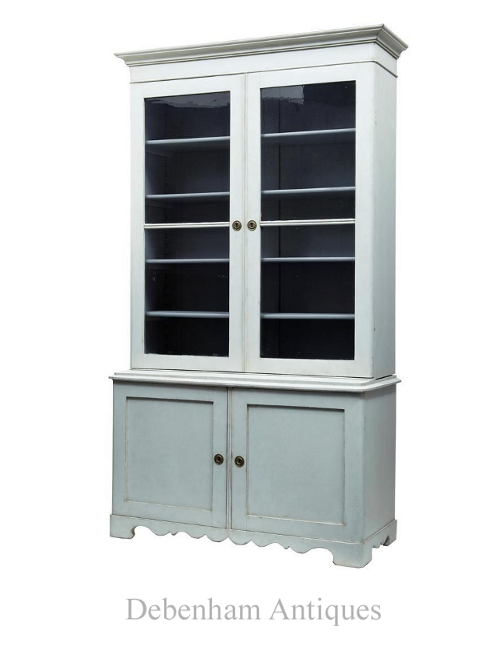 19th Century Painted Pine Bookcase Cabinet US $6,151.53 On Ebay
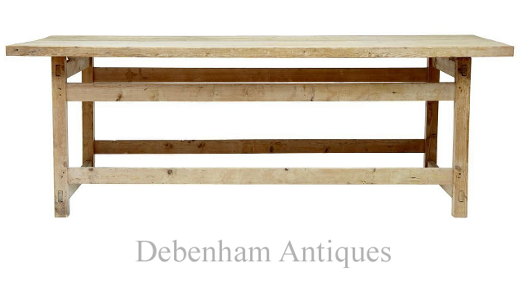
Circa 1880. Fine piece of Swedish rustic furniture which could lend itself to many uses such as a desk, kitchen table or dining table
Rustic 19th Century Pine Table From Debenham Antiques US $1,510.32 On Ebay
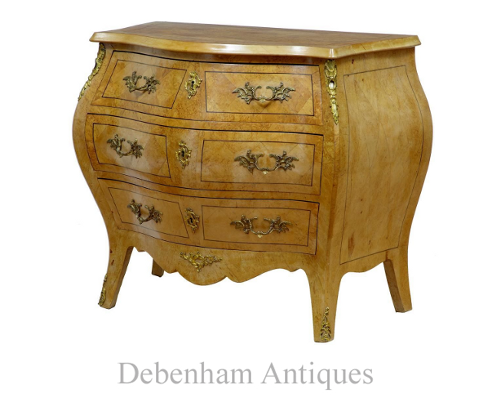
Early 20th Century Birch Root Swedish Bombe Chest Of Drawers- US $2,796.15 On Ebay
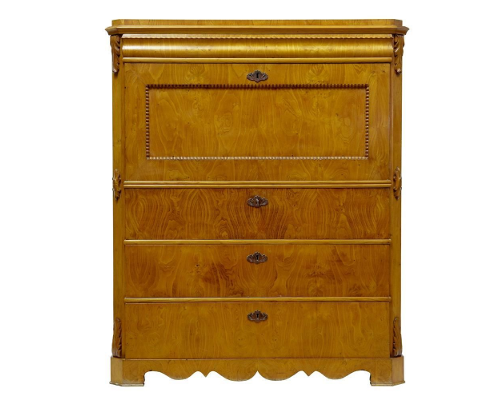
19th Century Swedish Elm Secretaire Chest Of Drawers- US $2,504.55 On Ebay
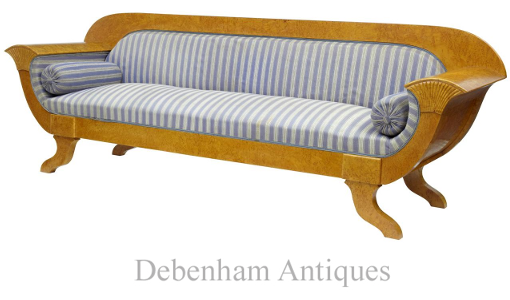
Massive 19th Century Biedermeier Birch Sofa Settee, US $5,236.79 -Length: 108 3/4″, On Ebay
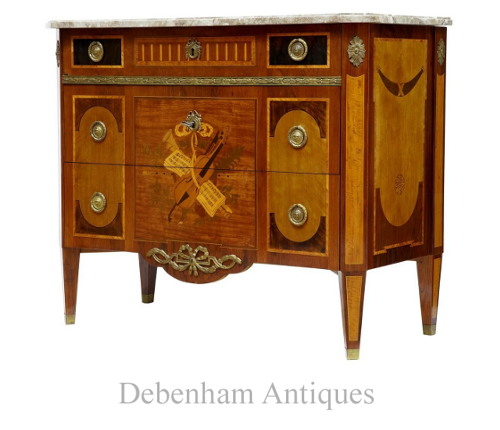
19th Century Inlaid Swedish Kingwood Commode US $2,959.92 On Ebay
Profusely inlaid and decorated with various woods such as satinwood and walnut. Detachable marble top with ormolu handles and decoration. 3 drawers which open on the key- circa 1870
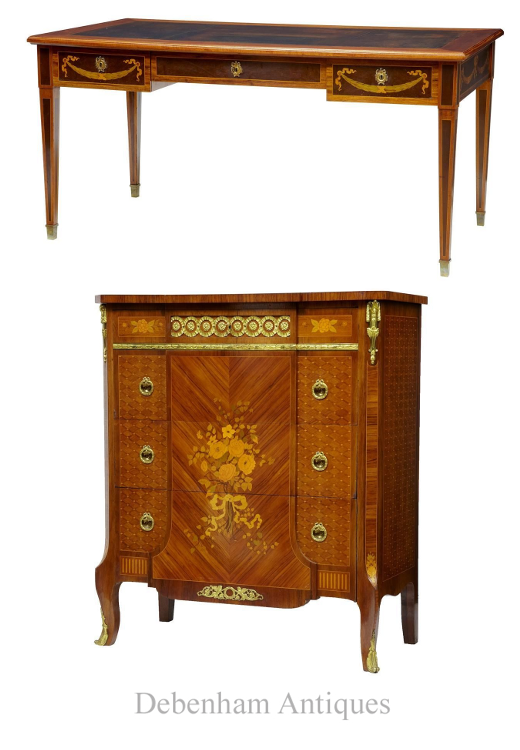 19th Century Mahogany and Satinwood Inlaid Desk $4,477.83 On Ebay
Early 20th Century Mahogany Inlaid Commode- US $3,718.88 On Ebay
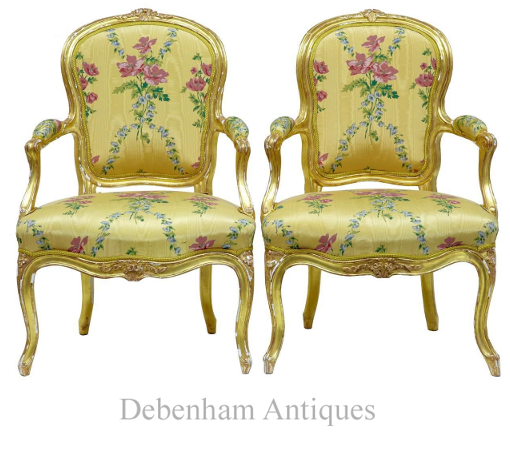 Pair of 18th Century Louis XV French Gilt Fauteuil Armchairs By Michard US $7,513.65 On Ebay
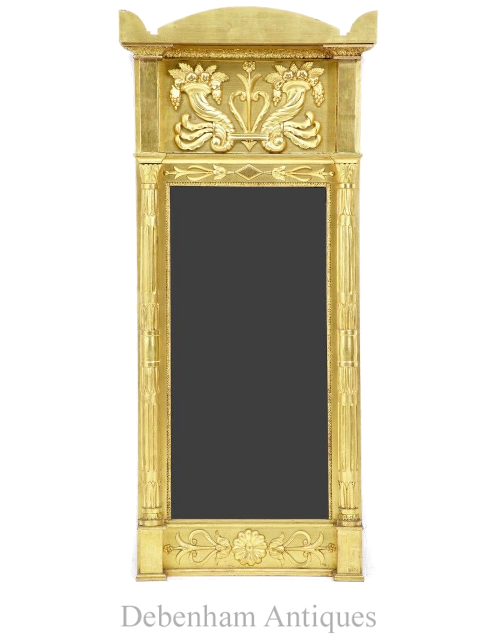
19th Century Antique Swedish Carved Wood Gilt Pier Mirror -US $3,718.88 On Ebay
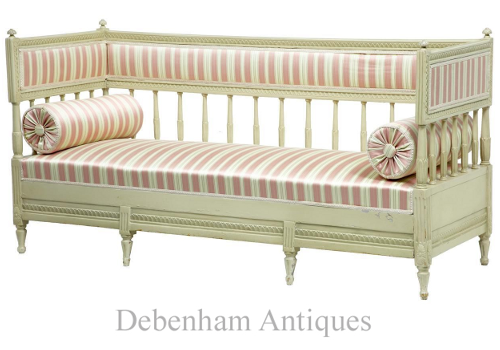
19th Century Painted Swedish Day Bed Sofa, US $3,263.51- On Ebay
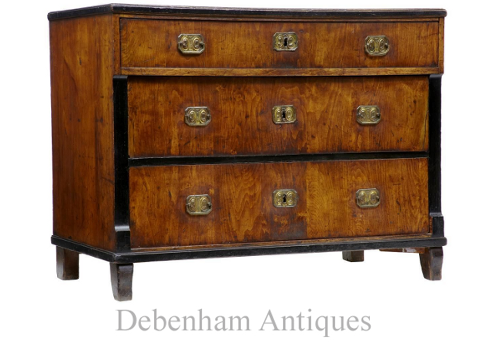
19th Century Antique Biedermeier Birch Commode Chest of Drawers -US $2,504.55, On Ebay
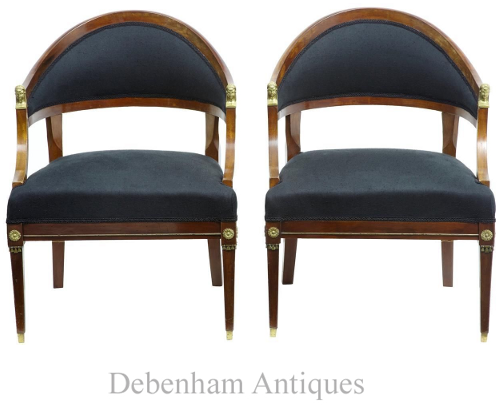 Pair of 19th Century French Empire Mahogany Armchairs US $3,718.88 On Ebay
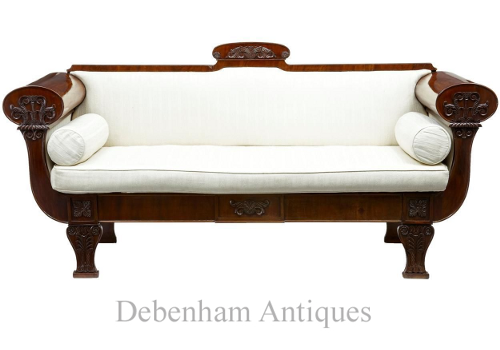
Early 19th Century Antique Carved Scandinavian Mahogany Sofa US $3,415.30 On Ebay
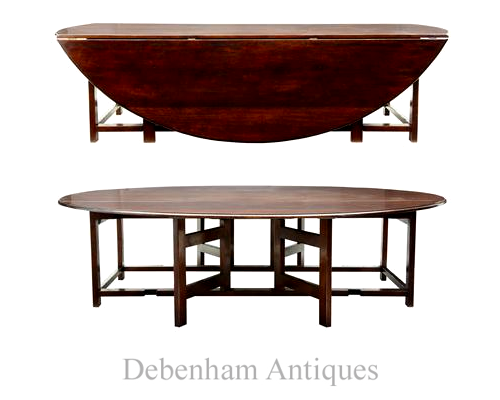
Massive Mahogany Cherrywood Gateleg Table Seats 16- Can be made up to 18 feet, 9FT 6INCH X 8 FT On Ebay
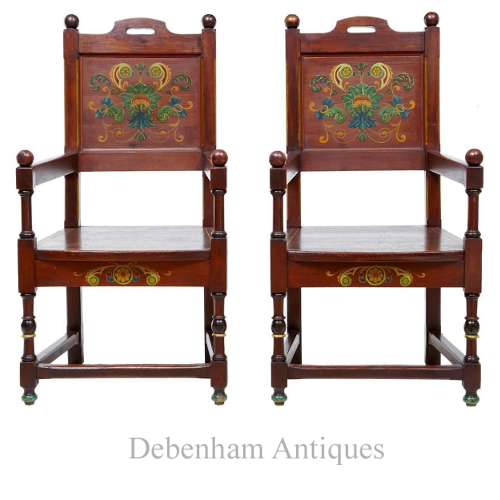
Pair of 19th Century Painted Pine Swedish Armchairs- US $1,510.32, On Ebay
Swedish arts and crafts influenced. Made from pine, painted with floral decoration to the back, gold lining to the seat, continued with painted elements to the freize and turned legs
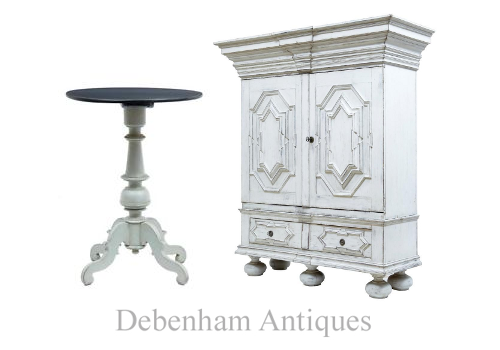
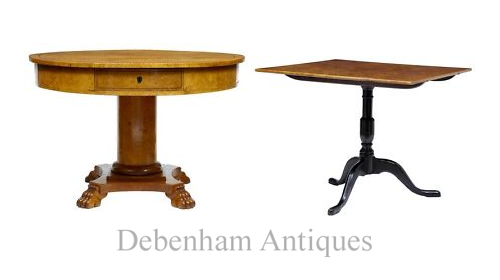 Early 19th Century Swedish Occasional Side Table US $1,176.38 On Ebay
Early 19th Century Biedermeirer Birch Drum Table US $4,326.04, On Ebay
19th Century Swedish Birch Square Tilt Top Table – US $1,897.39 On Ebay
19th Century Painted Gothic Swedish Cabinet US $6,311.31 On Ebay
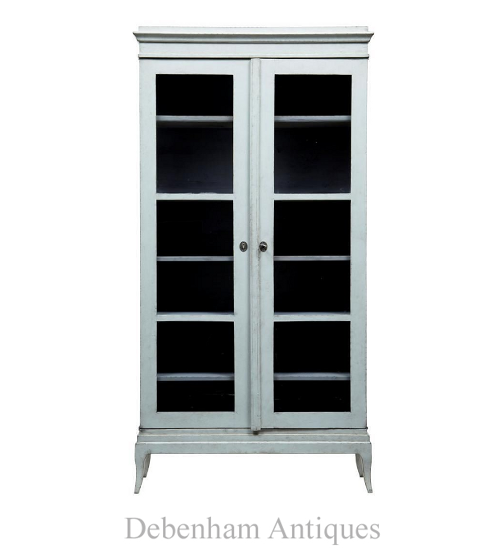 19TH Century Swedish Painted Pine Bookcase- US $3,507.17 On Ebay
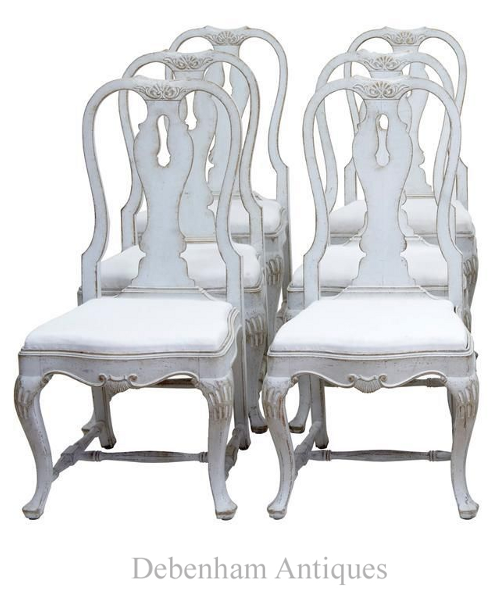 Rare set of 12 -19TH Century Queen Anne Influenced Painted Swedish Dining Chairs US $12,702.51 On Ebay

An Interview With Daniel Larsson- The Go-To Guy For Swedish Antiques
D.Larsson Interiör & Antikhandel
I recently was able to interview Daniel Larsson, owner of D.Larsson Interiör & Antikhandel, one of Sweden’s top sources for authentic antique furniture and decor. Daniel opened his store in July 2012 and has quickly become recognized in the industry as the go-to guy for Swedish Antiques – He not only locates the goods you’re looking for but also educates you when buying your first slice of Swedish history or adding to your ever growing collection of rare Scandinavian finds.
Unlike other dealers who wouldn’t dream of sharing their sources, Daniel is a guide with The Antiques Diva® & Co European Tours which means he takes clients hand in hand to wholesale warehouses and secret sources.
Daniel has traveled around the world, and has lived in the USA, England, India, Norway, Spain and Holland, but has returned back to his roots in Helsingborg, Sweden where his main antique store is located.
He and his better half, life partner and wife- Cristina, work together to run D.Larsson Interiör & Antikhandel, a busy antique store, which offers Swedish furniture ranging from 18th to late 19th century. They specialize in presenting Gustavian painted furniture and Swedish country styled pieces. They supply directly to private or trade customers worldwide, and network with easy and reliable shipping companies. Daniel is one of six dealers in Decorative Collectives; a new Antiques Center in Petworth, Uk, where he currently features the majority of his stock.
Here are my questions for Daniel:
Q- What had you interested in antiques? Where did that passion come from?
A: I have always been interested in Interior Design and it came rather naturally to me. In my early 20s I got hooked on the modern retro Scandinavian style when I decorated my first apartment. After taking several years to tour the world I settled down with my wife in Helsingborg, Sweden and together we began to make my house a home. A friend recognizing my talent in design approached me and asked if I wanted to start a business selling antiques together. After a couple of years together we eventually decided to each go our own way – but I was hooked! I had been bitten by the antiques bug and I was committed to staying in the trade. I began to concentrate on higher quality Swedish pieces and expand my repertoire in to Baroque, Empire, Rococo and Gustavian pieces.
Q: Was there one antique that you let go, and wish you hadn’t?
A: Sigh… the one that got away. I’m dreaming of a stunning Rococo mirror (see attached pic) that I wished I would have kept for myself. I try not to get too attached to the pieces in my store – but must confess sometimes I sell items to quickly and find I don’t have enough time to enjoy them properly.
Q:Tell us a few keys to look for when determining if a piece of furniture is an authentic antique?
A: The authenticity of antiques is a complex matter, there are great books about the subject but for an untrained eye it can be very hard to spot a fake. A good way to start is by looking at the wood to check if it’s old and has a nice patina. The best thing you can do is to buy from a trustworthy dealer which will be able to give you all the information about the piece so you are sure of what you have bought. And you can always ask for a certificate of authenticity. Another tip is to always check the price, if it is to good to be true… it probably is!
Q:What are the most sought after styles right now? What are people asking you for?
A: The Gustavian style with it’s pale colors is always popular and people are also asking for good Swedish country pieces because they fit perfectly in a modern setting as well. People are looking to mix things up nowadays, it gives more caracter to a home.
Q:Like many of us who are fond of one thing over another when shopping for furniture and decor, is there a particular style or antique that your wife Cristina buys over and over? Tell us her secret antique fetish?
A: Cabinets, She always need to have at least one big cabinet in the showroom. She likes big and impressive things 🙂
Q: For New Buyers, ….what would you suggest to invest in first?
A: Always buy something that you love, follow your heart. If you want something really Swedish go for a tall case painted clock or a Gustavian sofa. Both are very decorative. Another great choice is a Rococo or Gustavian mirror as they are easy to place making a fabulous statement peace.
Q: Many Swedish dealers shun the thought of re-painting antiques. I find many dealers re-painting furniture in the most popular colors such as gray, or white, and others cringe at the thought of disturbing a finish. What are your thoughts on this?
A: The majority of Swedish painted furniture has been painted several times thru the centuries and to find one in original color is extremely difficult nowadays and when you do find them they sell for extraordinary sums. What happens sometimes is that the latest layers of paint are dry scraped to reveal traces of the original color but the majority of times this is not possible because the paint has suffered to much damage thru the years and needs to be repainted. This way the tradition continues. Don’t be mistaken; repainted pieces, if done properly are still highly valued.
Q:From a Small Business point of view, here are some pooled questions that have been asked from small furniture collectors who represent smaller markets:
How would you suggest going about determining the price for an item? Do you recommend reproduction pieces and if so what determines a good piece? How do you go about restoring pieces that are not in tip-top condition?
A: When I determine the price I look at the originality, rarity and quality of a piece. It’s also important to know the market value.
I certainly do recommend reproduction pieces especially when clients are looking for more than one-of-a-kind pieces. What often happens in the hospitality market is that they need many arm chairs of the same model and that is an impossible to find in the antique market.
I always use a specialized furniture carpenter to restore my pieces if they are not in tip – top condition. It’s important that the restoration work is done the traditional way sympathetic to the past.
Q: Finally, what should clients who wish to participate on the hardcore antiquing tours be prepared for?
A: At The Antiques Diva® & Co we’re known for giving clients access to the best little black book of antiquing address on the continent – in Sweden as well as all over Europe. On my tours I really try to educate my clients. All our tours are private and customized – and thus, when a client books a tour we inquire what they’re looking for and then we plan a route that gets them to down the back roads to the places they need to know about. On tour we translate, negotiate and then we liaise with a shipper to help get the goods home sweet home across the pond. While you can book at 1 day tour – real dealers want to delve deep into the countryside – and our trade tours can run 3 or 4 days of hard core antiquing.
Visit Daniel and Cristina’s website dlarssoninterior.com
Follow Daniel on Twitter- here
D.Larsson Interiör & Antikhandel
Wrangelsgatan 13 254 39 Helsingborg, Sweden
+46 73 438 18 43 info@dlarssoninterior.com

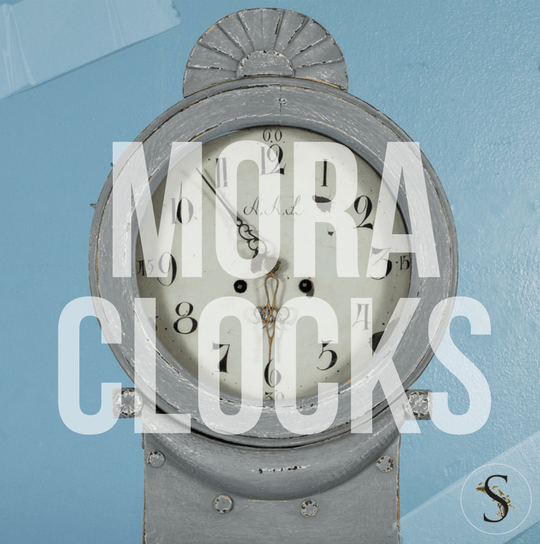
Mora Clocks: Investing In Swedish Heritage
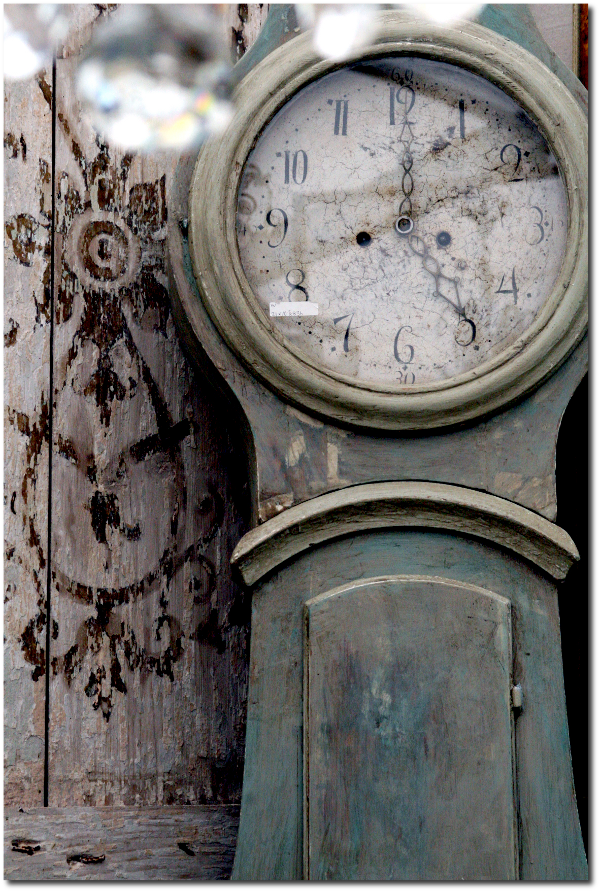
Mora clocks are breathtaking to look at, and have become tremendously popular over the last 10 years. Swedish tall clocks are commonly called “Mora clocks” however, it is known that only clocks and cases produced in the Mora municipality can accurately bear the name of Mora. The mora clock began in around the Mora municipality in Dalara provence in a small town called Ostnor during the late eighteenth century. According to Wikipedia, Mora clock faces are often marked with the inscription “A A S Mora”—the initials of Krång Anders Andersson (1727-1799) of Östnor, traditionally known as the first clockmaker in the district of Mora.
The clock works were crafted by farmers, the first being Krang Anders Anderson (1729-99) , who needed to find additional income during the winter months. The iron mines of nearby Sala made iron affordable for the farmers to work with, which allowed the clock industry to grow. It started with a few farmers who needed extra money, but by the end of the nineteenth century the clock making business in Sweden thrived. More than 50,000 clockwork motors were produced during this time.
Each family around the region would specialize in producing one or more of the parts required for these clocks. A finished clock would often be sold without a case, in which the buyer would then have to arrange for one to be made locally. As many as 1,000 clocks were being made each year. Clock cases evolved from a straight case in the eighteenth century to a curvier form in the nineteenth century. Within 80 years, the competition from inexpensive German and American clocks put an end to this cottage industry.
Jo from Swedish Interior Design, shares some ideas on what you should look for when you want to buy a Mora Clock.
Many people’s first time with a Mora comes from the movie ‘Somethings Gotta Give’ where there is a mora clock prominently displayed in the living room scene with Jack Nicholson. Original 1800s Mora clocks are very rare now so here’s a few pointers to help you find the right one.
They are most worked in pine but very occasionally built in oak and they measure height wise from 180-250cm and feature a great wealth of decorative carvings and original paint finishes.
Each Mora clock is a unique handmade object dreamed up by the imagination of its maker so every clock has a different the hood, clock face decoration, belly shape, plinth etc .
1800s Swedish Mora clocks generally come in a number of types –
Fryksdall: These clocks have a pinched waist, wider belly, curly scroll decoration on the waist and neck and extravagant hood carvings. They come in a variety of whites & greys and would be owned by wealthier individuals.
Bridal: The most unusual of mora clocks, often from Jamtland, these pieces have the finest levels of decorative carving. They exhibit the finest level of craftsmanship in the Mora clock world.
City: a catch all phrase to describe Mora clocks that have fine levels of decoration or beautiful painted finishes that set them apart from the simpler country clocks.
Country: the country clocks are usually plainer in appearance with less decoration. Often given as wedding presents, they would be a prized possession in poorer families. Normally they have simpler hood crowns and less use of glass. They may have no face glass at all or pendulum viewing port for example. Painted in earthier folk art colors in the Swedish Kurbits folk art tradition, they show with yellows, oranges, deep russets, browns and ochres.
There seem to be 3 schools of thought in terms of paint finishes.
Some people strip the clocks back to the bare wood and repaint but that doesn’t make sense to me. Every clock has lived a history and by over restoring, you strip away its special ‘aura, it becomes just a clock body made of old wood devoid of personality making it not much different from a repro one in reality.
Also many clocks have ‘scraped back’ paint. But this is just a paint effect really. Originally the paint would have been a rich chalk paint in perfect condition, and the scraped paint ‘effect’ is just that – an interior design effect similar to ‘shabby chic’ that you see on lots of restored Swedish furniture. It looks nice but its not real!
At Swedish Interior Design, we prefer to keep the paint whenever we can as it is and only repaint where the original coat is in poor condition or it has been repainted at some later time. When we do it is sensitively done to allow the mora clock to live and breathe so to speak.
Finally you need to think about whether you want to use the original clock mechanism or fit a battery powered electric one. This may seem a strange question but mora clocks have very ‘country’ parts, unlike the precision clock mechanisms of English clocks of the period.
So they can be difficult to set up and can be affected by a change in temperature causing the wood in the clock body to shift slightly or being jolted as you walk past. This affects the swing planes and can cause the clock to stop. Also the mechanisms are open to the air and its very easy to get dust caught in the cogs.
So that’s why most of our clients go for the battery option. It doesn’t need winding and it looks exactly the same as the original from the outside. Its easy to do and there’s no damage to the clock as the original mechanism is only kept in place by small screw and you can put the original mechanism back in place whenever you like (although it will need cleaning and setting up professionally if you do).
Further Reading:
- Martha Stewart Appearance, Mora Clocks, and a Winner! Cove Table
- “Mora Clocks and Tall Case Clocks”. Cupboards and Roses. Retrieved 2006-12-29.
- “Swedish Long Case Mora Clocks”. Ryder Antiques.
- http://www.antikuhr.de The Mora Story
- “Swedish painted furniture”. Julie Foster Decorative Antiques. Retrieved 2005-12-17.

Edgar Reeves Lighting and Antiques sells this terrific late 19th century tall long case clock in Swedish “Mora” style. The clock is elaborately painted with floral details from a period perspective. “Mora” clocks are a type of long case clock which were made in, and derived their name from, the town of Mora in Dalrana provence Sweden. Edgar Reeves has this clock priced at $3,200
Leif Antiques has for sale an early Gustavian clock by Johan Lindquist who was a royal clock maker to King Adolf Frederick 1750-1771. This clock was made towards the end of King Frederick’s reign and is a prime example of Lindquist’s work and the beginning of the Gustavian Period. This clock is in exceptional condition and is priced at $80,000
- A Tyner Antiques
- Judy Frankel Antiques
- A Tyner Antiques,
- Dawn Hill Swedish Antiques
- Lillian August Designs,
- Liza Sherman,
- Jacqueline Adams Antiques
- Talisman,
- Scandinavian Antiques,
- Carl Moore Antiques
- Scandinavian Antiques & Living,
- CUPBOARDS & ROSES Swedish Antiques,
- CUPBOARDS & ROSES Swedish Antiques
- Scandinavian Antiques & Living,
- Lillian August Designs
- Laserow Antiques,
- Stair Galleries ,
- A Tyner Antiques
- A Tyner Antiques
- Scandinavian Antiques Co On Ebay


5 Pro Painting Tips For Black Furniture

Anyone can paint a piece of furniture black, but there are certain tricks to make your painted pieces appear more valuable than they really are. Many of us feel that sensation of discovering a beautiful piece of furniture at a garage or estate sale, and then dreaming of what to do with it next. If you are anything like me, scrolling through pictures of paint chips, and color combinations can be a thrilling experience.
If you love lighter colored interiors such as white, light blue, or mint green, then black furniture might be a consideration for your interior. Painting a piece of furniture black can create tremendous contrast for your interior. Here are a couple tips to making your painted furniture look antique:
1. Use Matte Paint
You won’t find shiny finishes on the old antique furniture in Sweden. This article won’t cover the modern black painted furniture that one would expect to see in the 50’s or 60’s , but rather the aged furniture that someone could come across 100 or more years ago.
When selecting a sheen, consider starting out with a matte finish. Once the piece is dry you can add either a tinted wax or a tinted glaze to the final finish to give it even more depth. The sheen will then produce a look between flat and satin. Starting out with a low sheen will keep the overall finish looking rustic even after you apply additional paints.
2. Paint Your Hardware
While there are so many ways to feature hardware on black painted furniture, painting the hardware can be a smart way to making a black piece look understated yet elegant. Take a look at a French Provincial chest painted in olive by Knack Studios. The hardware was painted and carefully distressed. In this case, a little bit of distressing went a long way. Compare that photo, with this photo of a black painted bombe chest which is also painted in black. The hardware is painted, but not distressed. While bombe chests are considered some of the most spectacular pieces of furniture, this piece falls short for me.
– Darken your hardware with chemicals. Rockler sells a brass darkening solution that ages brass, copper and bronze metal. It allows you to change the color gradually so you can control how dark the final product turns out.
– American Accents by Rustoleum sells an Oil Rubbed Bronze spray paint that I have used on many pieces of my own furniture. After the paint has dried, simply distress the hardware with a sponge sander.
3. Show Off The Wood With Distressing
Adding a bit of interest to your furniture can go a long way. There are several ways to add patina. Two ways that come to mind is by distressing, and another is by layering paint.
A: Distressing is a sure way of adding depth and interest to a vintage piece of furniture. Some people like a LOT of distressing, and others like MINIMAL distressing. It is rather interesting to see how people fall into those two categories. Look at a few pictures on pinterest to decide what appeals to you. The best thing about distressing is if you go too far, simply just repaint the areas, which will tone down the distressing.
Style 1 – A Little Distressing:
Well cared for furniture that really isn’t moved a lot over the years will only have a little bit of distressing. When I think of a little bit of distressing, I think of my own grandparents home. I can remember a china cabinet sitting in the exact same spot for 30 years or longer. When this same china cabinet was passed to my cousin, it was in perfect condition.
This look is favored by many painters. A little distressing can go a long way. Areas to distress would be around the knobs on a chest of drawers, the legs of chairs, the back of chairs, and around drawer sides. The trick to distressing is to look for the areas where natural wear would occur. On a desk for example, arms would naturally rest on the front portion of the desk, so that would be the area to remove paint.
Style 2: A LOT of Distressing:
This is the style that I tend to enjoy the most. It can be a tricky finish to accomplish, and I will show you how I have achieved my personal looks over the years.
When I first began painting, I always made sure I primed my furniture, because I wanted the paint to stick to the furniture. I was afraid of the paint lifting off the furniture, so I always made sure I primed. As I experimented and advanced in my painting, I found I was pretty limited when it came to distressing as black primer doesn’t exist. I would buy gray primer, and see the gray paint in the areas I distressed. It wasn’t until much later, (almost a year later) that I discovered if I sanded well I could skip the primer all together. Many of the pieces I worked on were wood, and not metal, or plastic. The options then started opening up for me.
A few years later when I stopped turning over furniture, and just worked on my own furniture, I discovered the real trick to getting the Swedish finishes were to remove the polyurethane, stains or paint all together. I found the raw wood went a long way to getting the results I was after.
I have always been attracted the paint finishes that looked as though they have been left out in the outside elements for several years. Layering your paint with this technique can really open up the overall finish.
Distressing Tricks:
Sponge sanders found at your local hardware store can be a great tool for distressing I have found using a sponge sanders can give you the flexibility and control than electric sanders. Using a hand electric sander can take off A LOT of paint, which often times forces you to go back and repaint some of the areas. Using a hand electric sander might come in handy if you have several layers of paint that you want to expose. Another trick is to remove the paint before the paint is dry. Many of us have used this technique because it is simply easier. With sponge sanders, purchase the ones what work with water. In this instance, have a warm bucket of water and wash out your sponge sander as you go.
4. Add Patina To Your Black Paint Finishes
When it comes to really ornate furniture such as Louis XV styled furniture, why not highlight some of the intricate details? One simple way to do this is with paint. Often times painters will try to replicate this aged look by applying a beige or gray paint to bring out the beautiful depths of heavily carved furniture.
How is this done? Glaze is the easiest way to achieve this look. Simply mix half and half paint to glaze ratio in a bowl. I have simply painted on the glaze in the past, and with a wash cloth, wiped it off within a few minutes. The glaze paint mix will dry to have a transparent look, than a solid paint look. This works great in corners of detail where dust would collect over time.
Many years ago, I highlighted an black painted empire dresser with light gray paint. I wasn’t pleased with the look, because the gray painted areas looked too heavy, than natural.
I washed it off and noticed that the watered down remnants of paint that were left, perfectly highlighted the areas. It did a remarkable job of making the dresser look more expensive than it was. If you do plan on trying out this technique, dilute your beige/gray paint with a glaze, and be sure to have a damp rag to remove the extra paint. Just a little highlighting paint will go a long way.
Black Metal Furniture:
I never considered using a green wash on black until I had seen it done on an antique metal canister, so I tried it for myself. Simply mix together a bit of a grayed green color with glaze. Like the gray / beige paint in the suggestion above, you can remove the paint with a wash cloth, or create a sponged effect with the glaze on the paint to get the look of rust. Like any aged furniture, you want to try to leave the green paint where rust would normally happen. I have used it on ornate chairs, and it has really pushed the value of my furniture up a notch.
5. Add Interest By Leaving Some Areas Natural
One solid color all-over looks fantastic on most pieces of furniture. While occasionally you may come across a piece where you can break up the paint with the natural wood. Consider adding dimension to your desks, dining table, side tables, which all have tops that can be left in it’s natural raw wood. Consider washing the wood (paint diluted with water) over raw wood, and painting the rest of the piece a solid black.
Paint the can be another way of adding depth. Painting only some of the areas of your furniture can allow for a more unique and interesting look. For example, the inside of a secretary can be left in it’s natural wood, or painted a different color.
If you have paint tips to share, please leave a comment below. Please link to your blog or website to your articles about painted furniture. We look forward to hearing from you.

Painted Black Furniture Swedish Desk – Picture Credit Master Henry Blog
Black painted writing desk, Sweden circa 1760 with slant front and two over two
drawers. The interior in blue paint has multiple drawers and cubbies, with two
hidden compartments. Simple bun feet. (Depth when open is 34″.)
Black painted Swedish period (1650-1750) Baroque chest of drawers.- Old Is New Blog
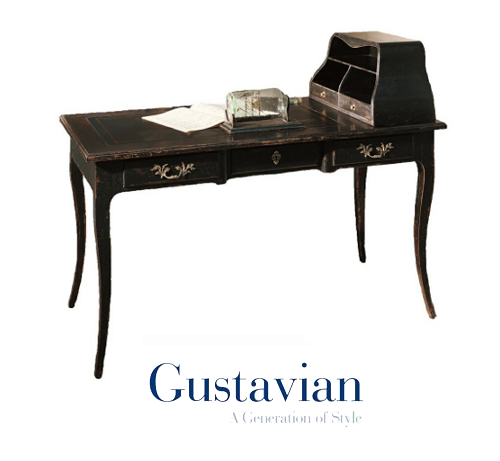
Marie Desk– Swedish Furniture By Gustavian Price: £2,600.00
Rustic Wire Baskets – Painted Furniture Glass Cloches From Næslund Antikviteter
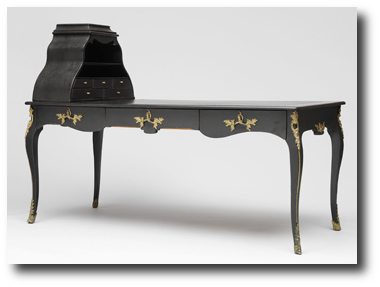 Swedish Rococo Desk. Black lacquered Stockholm Work with gilt bronze fittings.
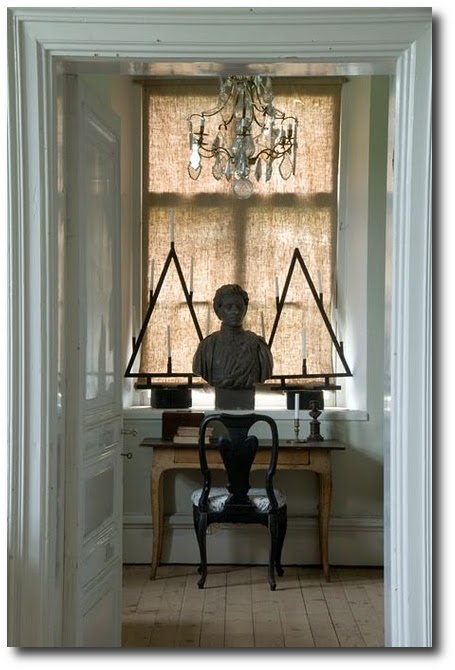 This beautiful picture credited to Lars Sjoberg was featured on the Swedish Blog Designe
Swedish Decorating With Rustic Looks – Sköna Hem
Rustic Elegance – Sköna Hem
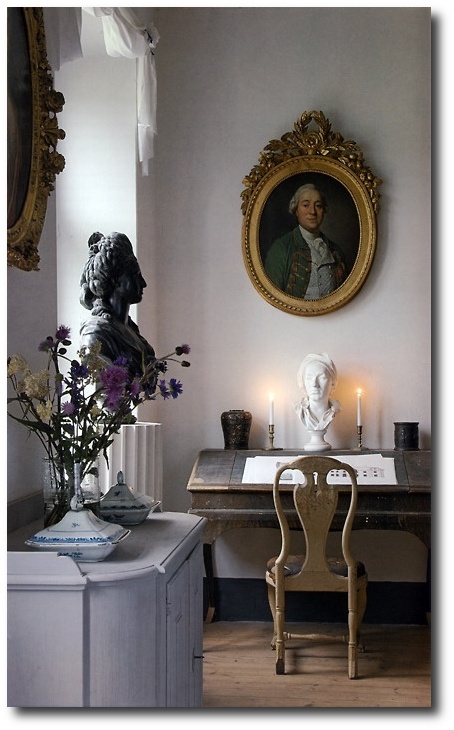 via:thedecorista.tumblr
Rustic Elegance – Sköna Hem
Chest of three drawers, Denmark circa 1750, with serpentine drawer fronts,
shaped top, and bracket base. The hardware and painted surface are original
Rustic Elegance – Sköna Hem
Black Painted Mora Clock From Tone on Tone
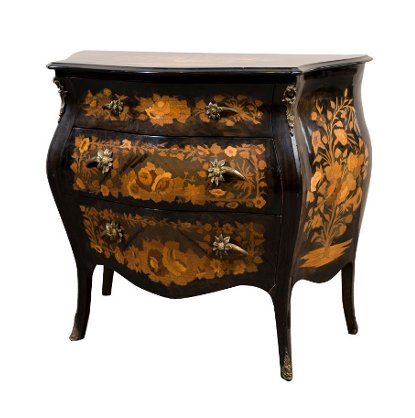
French Louis XV Hand Painted Commode –Carrocel Restorations
Each facet of this commode has intricately hand-placed inlay using old-world techniques. The inlays are absolutely beautiful. The ebony finish on the wood is a great contrast to the more vibrant inlay. Also, take note of the smooth clean lines that flow up and down the piece – met at top and bottom with solid brass floral carvings. This piece would certainly be a welcome addition to a hallway entrance, bedroom, or living room.
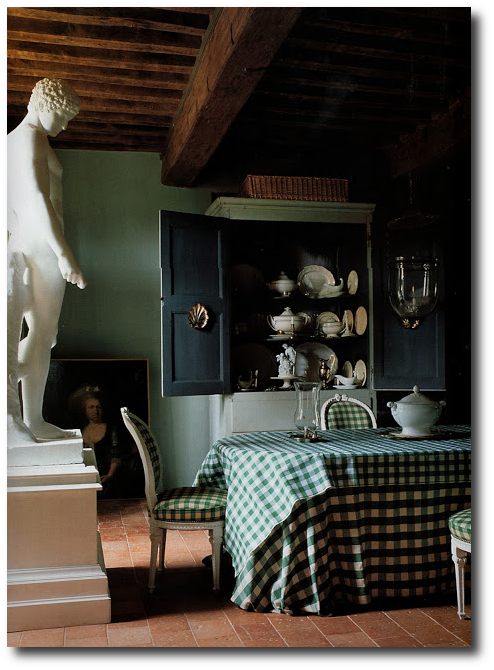 The Dining Room At An 18th Century Manor House In Burgundy
The World of Interiors, Jun 2005 genusloci.blogspot.com
Christopher Howe offers a very unique stock. Since the age of 20, he has acquired items dating from the 17th through to the 20th centuries. Most of his stock is available to view online or can be seen in his shop located on the prestigious Pimlico Road in London.
Distressed Swedish Antiques From Næslund Antikviteter
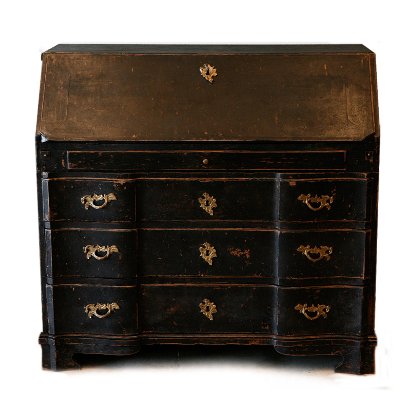 Galerie Half in Los Angeles is selling a stunning Swedish secretary which is still painted in its original milk-painted finish. The distressed paint and its brass handles really provide a great contrast against the black paint. You can see that this secretary has a really dark painted finish that you often don’t get with normal latex paint. The color is striking and would look terrific against a classic gray painted wall.


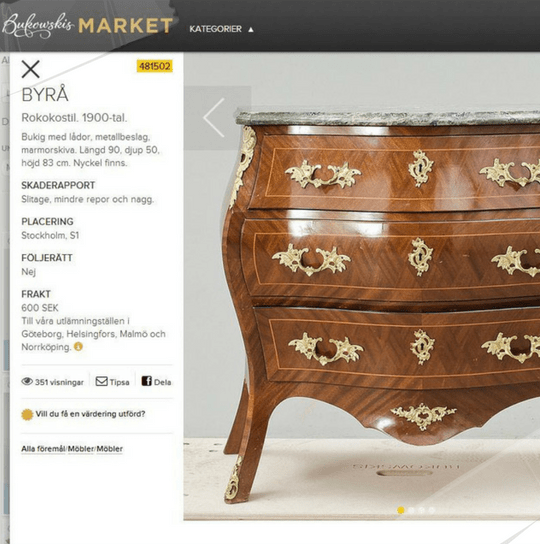
Swedish Furniture From Bukowski Market
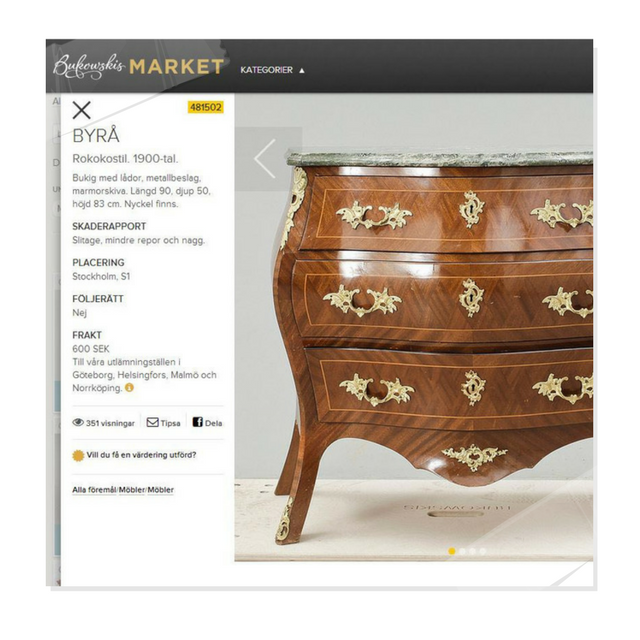
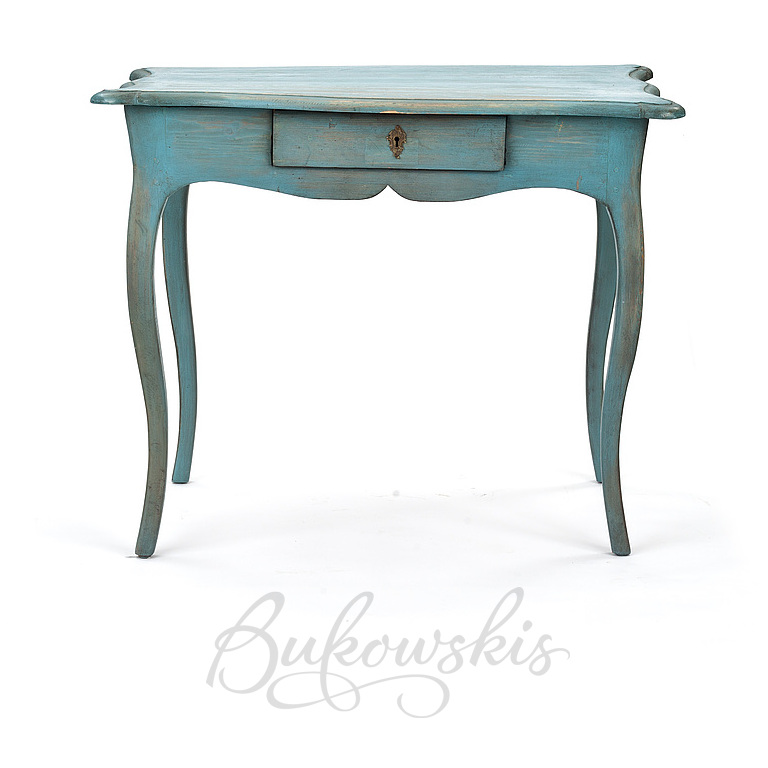 Rococo Desk 1700’s
Bukowski is the leading auction house founded in 1870 by the Polish nobleman Henryk Bukowski. Bukowski Market also happens to be Sweden and Finland’s largest on-line internet site for quality auctions. Bukowski Market offers modern capabilities to the auction experience; one that combines online shopping with spectacular antiques and reliable expertise.
Bukowski pairs together buyers and sellers from around the world and allows antiques to be brought to the public for sale. All items sold at Bukowski have been reviewed by experts in showrooms in Stockholm, Gothenburg, Malmö, Helsinki, and Norrköping. Bukowski offers a large assortment of antiques, design, art and decorative items for all tastes. Before bidding from Bukowski, be sure to look at their terms of sale, and have your shipping and pick up arrangements set before bidding.
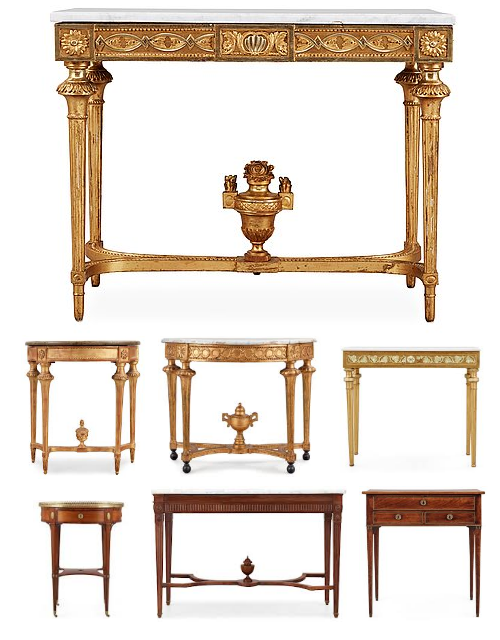
The Gentle Palette of Swedish Antiques-Corey Amaro
Guest Post By Corey Amaro, Tongue In Cheek Blog
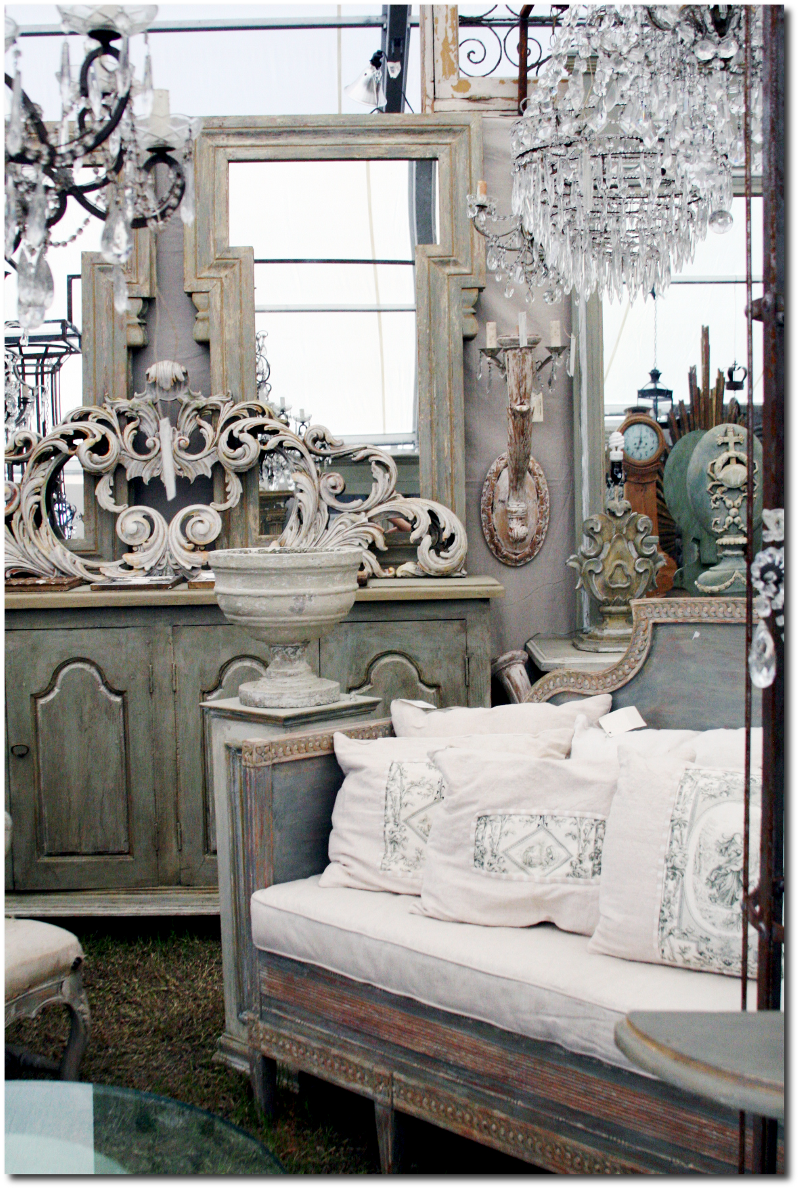
Crystal chandeliers sparkle like stars above A. Tyner’s Swedish antiques booth in Marburger.
The Antique fair in Roundtop, Texas is a sight to behold even if you don’t like antiques. The amount of foreign antiques, museum like quality, history that you can touch, feel and soak in is literally mind boggling. The dealers are knowledgeable, passionate about their business and share their wealth of history freely.
Most of the items I cannot afford. But that does not stop me from going in, asking a million and one questions. Antique dealers love to talk shop… how lucky I am to gain from their wealth of experience and to stand amongst such beauty. What amazing craftsman and women walked before us, leaving such elements of a life once lived with grace and elegance, a worthy path to follow.
A Tyner Antiques are one of the largest importers of Swedish antiques in America. They have been in the antique business for over fifteen years. Their stand in Marburger is an incredible wealth of beauty. Painted furniture is something I adore, so stumbling into their booth felt like I had fallen into an eighteen century Swedish home finding myself happily at home.
When I dared pick myself up and back into reality, I asked if I could take a photo, I found myself happily engaged in a most interesting conversation about Swedish antiques and their antique business. Thank you Angie and Rex for your allowing me to peek into your world.
French eighteen and nineteen century printed and embroidery silk panels. (picture below)
Due to the storm last night some of the tents leaked, worse, had water running through them. Some rugs, fabric, and upholstered items were soaked.
Though most things were protected, the dealers were fretfully worried that their pieces might be ruined.
Interiors with Provenance specializes in antiques from around the world, including antique oriental carpets, textiles, furniture, decorative accessories, and fine art from purveyors, Deborah Gott and Ken March. Their booth is right behind Lynn’s so I often peek inside.
Their collection of printed linen, silks, tapestries is worthy of a trip, they have something for every pocket book and are the kindest folk to talk to.
Usually these globe de mariage (Napolean the III with a glass dome and a painted black wooded base) contained a bride’s wedding wreath and other marriage tokens surrounded by gold leaf styled symbols. Fete de Fleur describes it best…
Though the globes (glass domes) also were used to guard other souvenirs: Flowers, birds, butterflies and religious artifacts.
I think I might have to have a couple of those globe de mariage … as big as a house please to store my souvenirs of Marburger!
About The Author:
Corey Amaro, author of Tongue In Cheek Blog, and Tongue In Cheek Antiques– has been living in France for twenty five years, and fell in love with France while meeting her husband, who was a Frenchman, while dancing in San Francisco. Now, with two children in their twenties, she has time to spill about her favorite hobbies and thoughts on her blog.
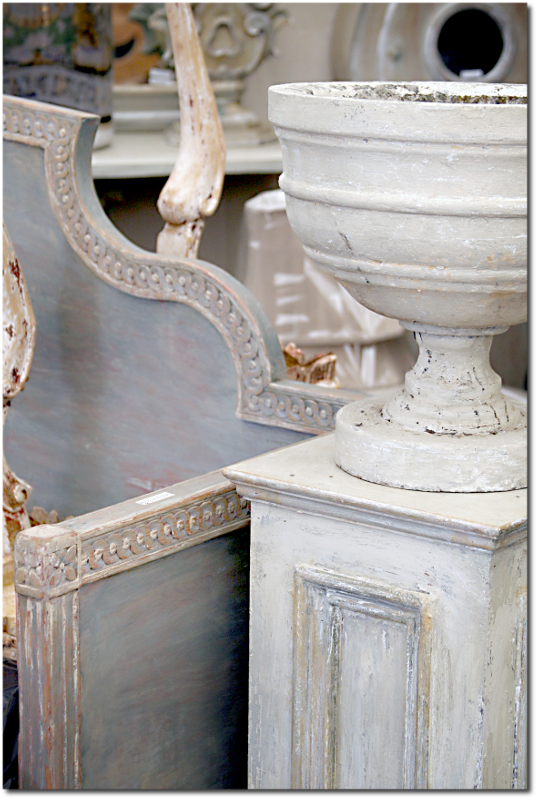

Martha Stewart’s Creative Director- Erik Pike’s Gustavian Townhouse In New York Part 2
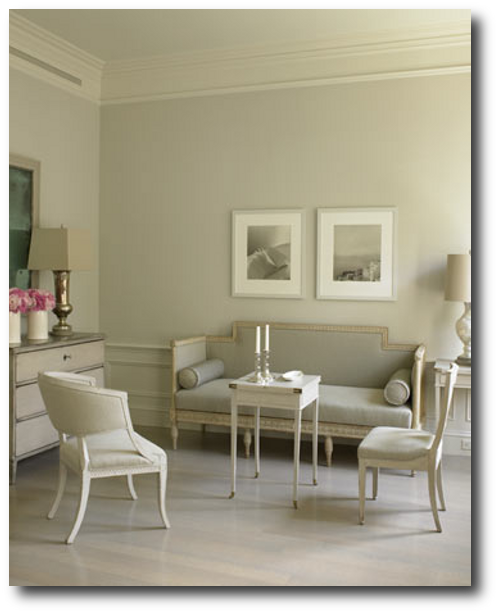
The settee, chest, and rounded-back chair in this photo are genuine Swedish antiques. Eric purchased the other chair at auction and had it copied for the dining room. The tables in the room are vintage, which he painted himself. Look at the three color combinations on the walls. It appears that the wall color, crown molding and ceiling colors are slightly different tones. With the painted antiques, and color of upholstery, this room is rich with detail.
The gray wood flooring doesn’t go unnoticed, tying together the various rooms in his home. The wide planks were bleached, then stained a neutral gray. He decided to upholster all of the living room furniture in a single gray linen, allowing individual antiques to be unified as a set. Hints of silver are found in the candlesticks, light fixtures, and hardware and have always been a classic Gustavian element found in Swedish style.
The house originally appeared in Martha Stewart’s September issue way back in 2005. “I wasn’t going to buy until I could find the right place,” he tells Martha Stewart Living Magazine. He ended up renting a small one-bedroom apartment for sixteen years until the perfect place showed itself to him. The 1840s Federal-style townhouse on a historic block had all the right bones for what he always had in mind.
In this photo from Marthas website, a decorative box houses some objects he used for inspiration. If you look closely, you can see two pictures of the townhouse before renovations. New York City architect Richard Perry, Pike set out to make the apartment his own.
“I like the neoclassical forms and the sculptural lines combined with rustic painted finishes,” Pike says. “They have no unnecessary embellishment — there’s a purity in that.”
I have loved his townhouse for years. I hope you find as much inspiration from his home as I did.
See Martha Stewart For More Information
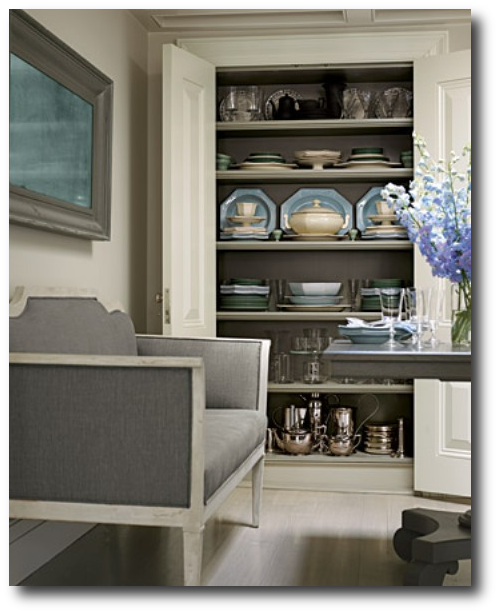
Martha Stewart’s Creative Director- Erik Pike’s Gustavian Townhouse In New York
The sitting area above lacks the height compared to the rest of the apartment, so a skylight was introduced into the space. Support beams are concealed yet present a dramatic look to this room. Eric sought a square pedestal table to complete this room; finding none, he designed one with architect Richard Perry.
You would never know a television hangs over the living room mantel because an antiqued mirror lifts to reveal it. Look at this photo of the kitchen where one wall houses a refrigerator and washer and dryer behind cabinet doors. A toaster and coffeemaker are housed in an appliance “garage” on a tray that pulls out so you can pour in water. The bathroom is designed just right to make it appear bigger with glass shower doors. The bedroom and the bathroom are the most modern rooms in the home.
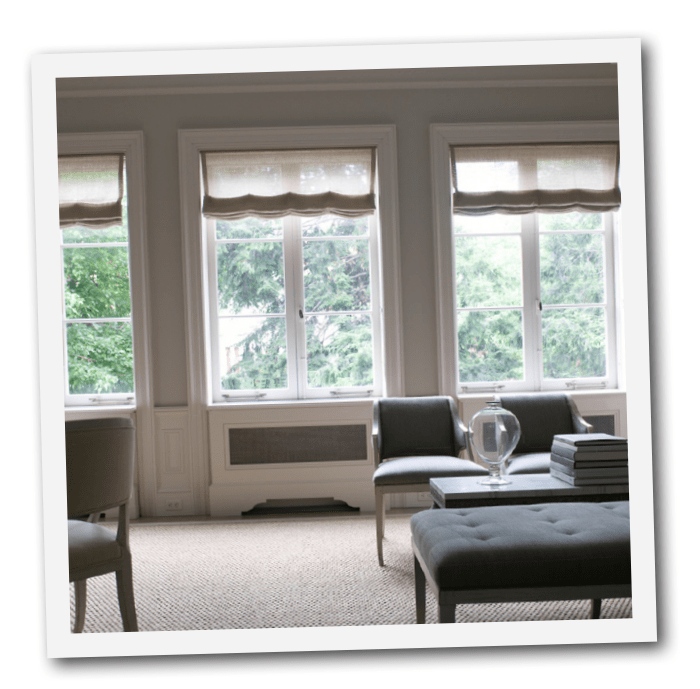
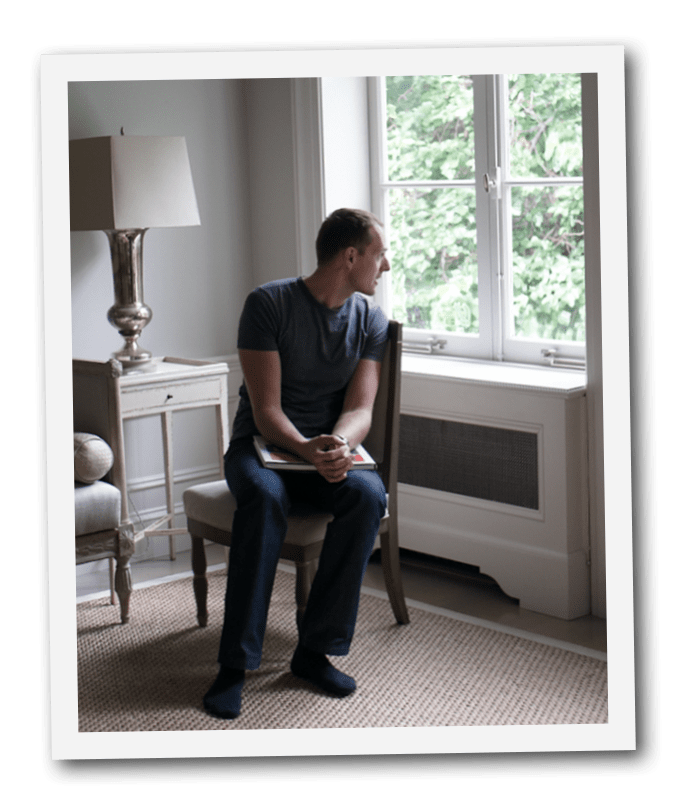
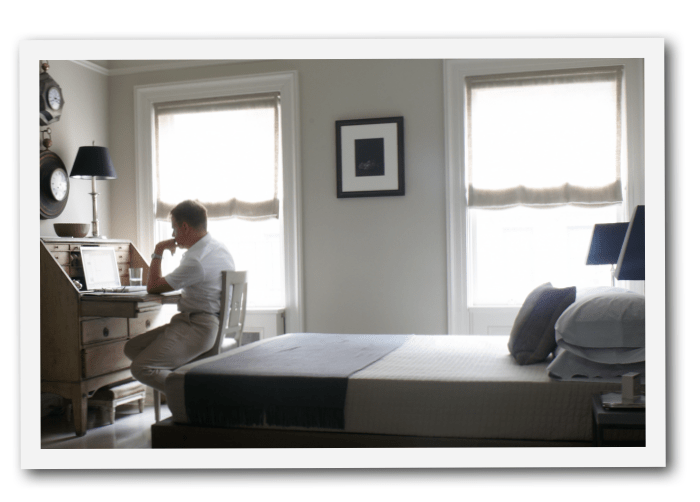
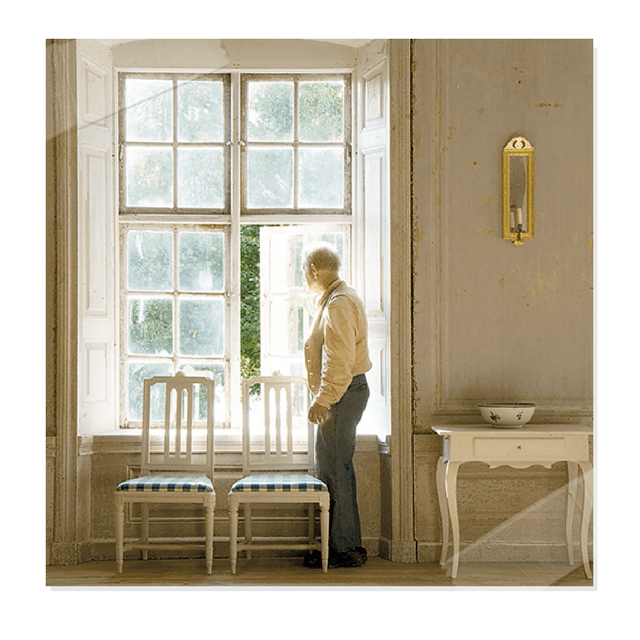
Eric Pike is Creative Director of Martha Stewart Living. Stefan Steil is an interior designer and founder of Stelish. Some of his design work can be found at Stefan Steil. Portraits taken at their townhouse in Manhattan.

Book Review: Lars Sjöberg’s The Swedish Room
Lars Sjöberg is well known for his Swedish guides on Gustavian interiors and 18th and 19th century Swedish furniture. Sjöberg is a curator of the National Museum of Stockholm, and is author of several books : The first one being The Swedish Room (Creating the Look) published in 94, then L’Art de vivre en Suède, (2002), and his most current book Classic Swedish Interiors published in 2010Lars Sjöberg has made it his life’s work to preserve Swedish manor houses that originated out of the 17th and 18th centuries.
Over 40 years he has acquired over 10 homes from around Sweden. His most current book – Classic Swedish Interiors published in 2010,focuses on Sjöberg’s most complex project: the manor of Regnaholm. The home was unoccupied for about 40 years when Sjöberg arrived in 1966. This home was his first allowing him to experiment with refurnishing and copying old Swedish furniture. Odenslunda, a small manor from the 1770s details an exquisite panelled exterior and is said to be his family home. Sörby was a renovation which was a 17th-century manor house, reproduced in its entirety for an exhibition in Stockholm.
Well known for his in depth knowledge about Swedish history, he has transformed many grand homes around Sweden with the help of his wife Ursula, and father whom was a metal smith and skilled in the carpentry trade. He told The Telegraph that as a young child his mother would read to him the history of Finland and Sweden and for his 10th birthday he was given his grandfather’s book about Sweden’s palaces and manor houses which fueled the fire for collecting historical furniture and restoring anything Swedish. In the 1990’s he designed a Gustavian collection for the Swedish company Ikea. The Ikea collection was designed with his help, and being that he was involved with the Swedish National Museum in Stockholm, he was the perfect go-to-guy.
The Swedish Room” written in 94, with his wife Ursula is still one of the very best books on Swedish decorating and remains current considering it is more than a decade old.
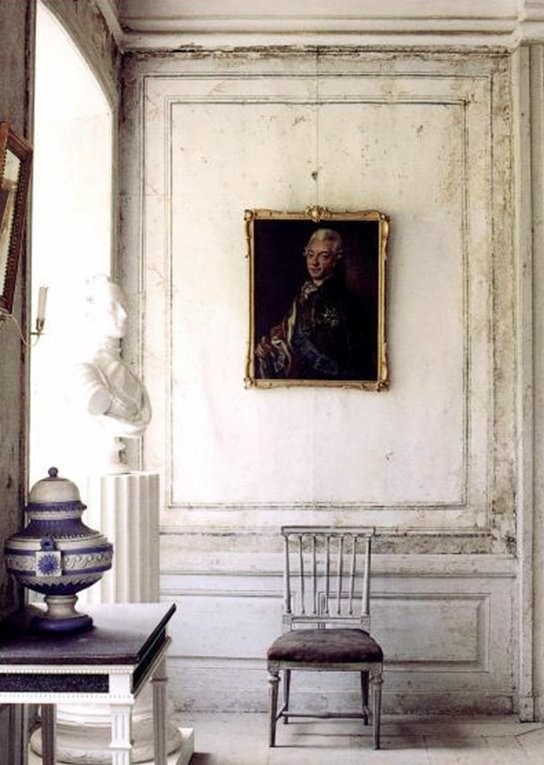
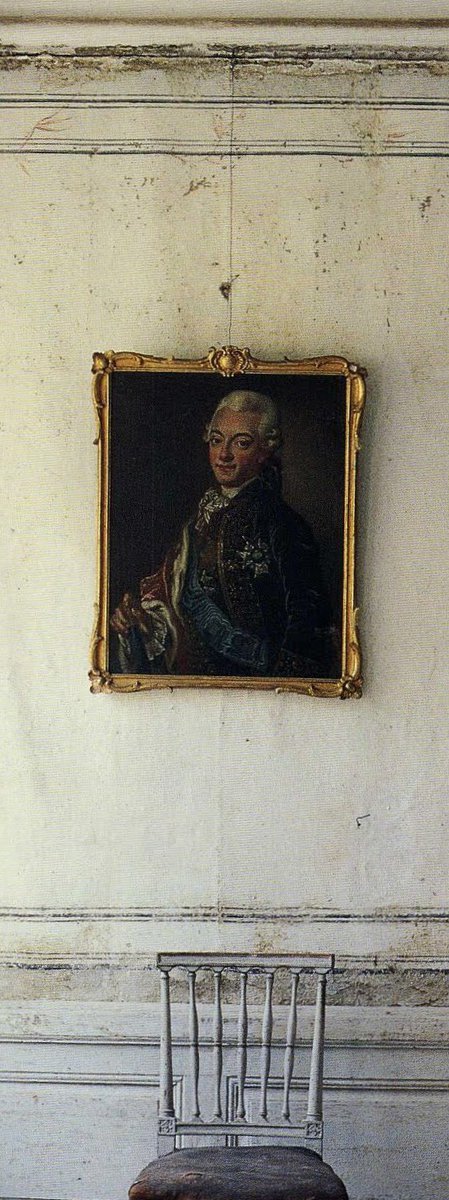
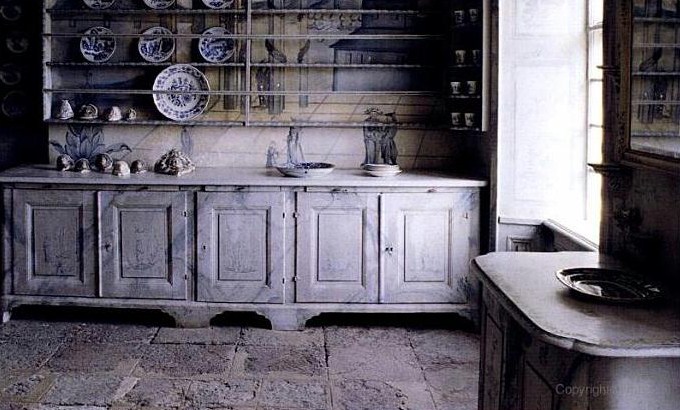
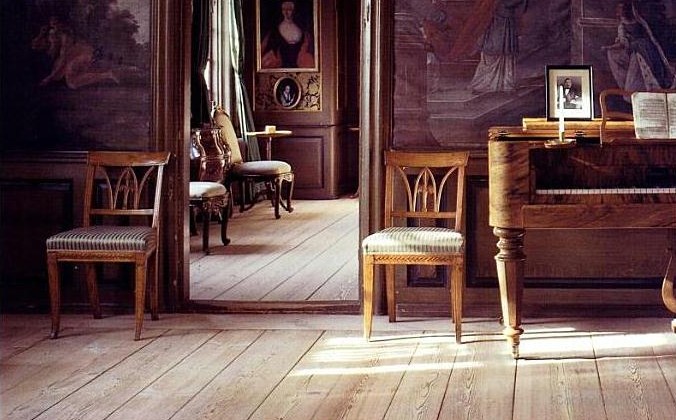
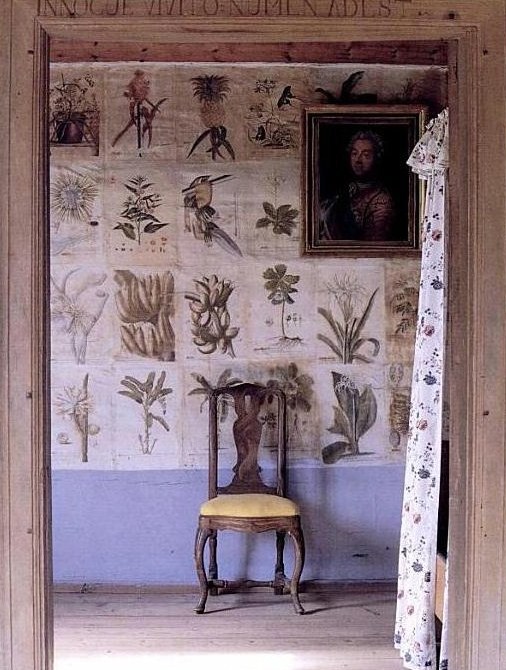
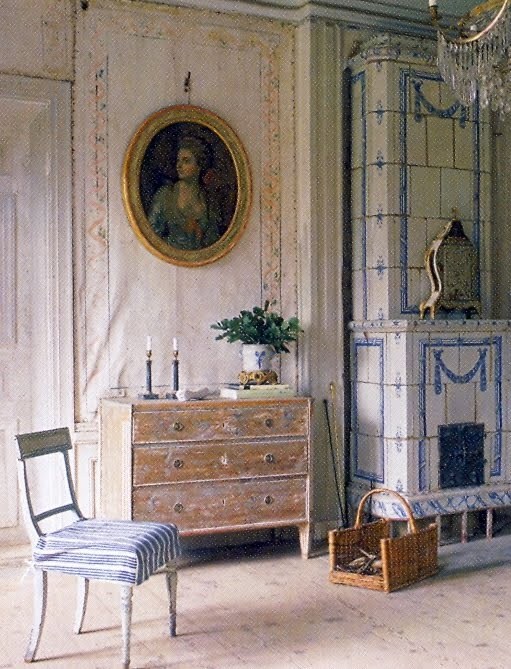
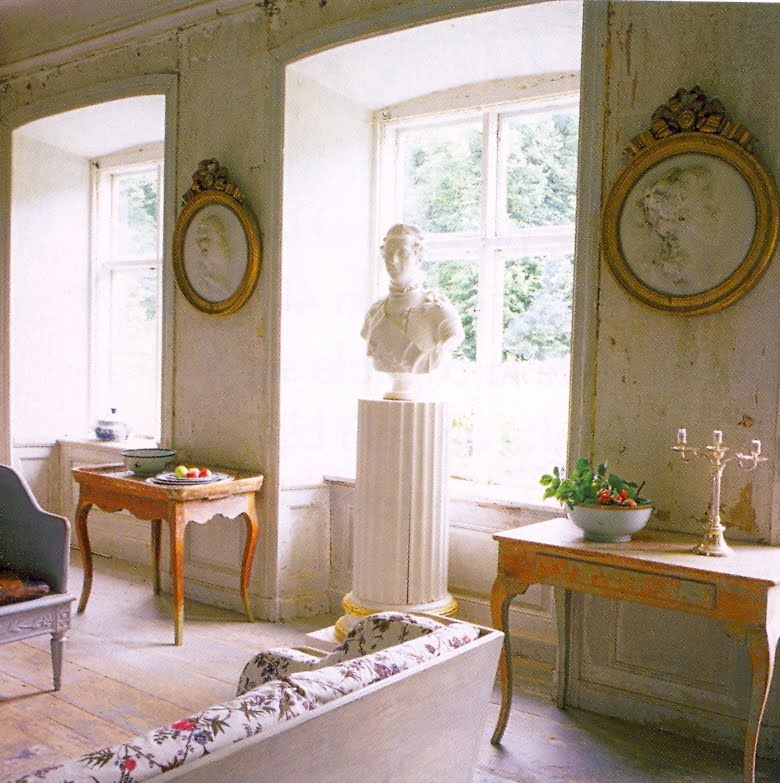
This wonderful book features 192 pages of great attention to detail of the many ornate finishes found in Swedish decorating. This book is a must have for any decorative artist or faux- finisher.The interiors selected for this book are simple ones with soft color schemes, washed plastered walls, pickled floors, and certainly authentic 18th century interiors. The homes all feature a cleaner, pared-down look with not a lot of clutter which you would normally see see in french homes, but rather very carefully selected objects that are neoclassical in nature. Sjöberg features stately homes, which appear to be palaces or mansions in nature, but with simplistic interiors and basic elements. Swedish impressions from farms and cottages with higher end furnishings can inspire any person who is after the grander looks but with a natural appeal.
The most impressive of this book is his Ekensberg home which is located on the banks of the Lake Mälaren, about 40 km away from the Swedish capital Stockholm. This three-story Italianate villa built in 1788-90 feature some of the most stunning pictures. One in particular shows a time capsulated finish after layers of wallpaper were removed which revealed late eighteenth century decorations. (See below) The walls were originally covered in a linen which provided a perfect base and smooth surface for painting. The house was built and finished in neoclassical style during the time after the return of king Gustav III from Italy 1784. Lars Sjöberg has continued renovating this house since 1976 and says the work is never finished!
The book is split up into 5 main sections detailing specific periods of Swedish history.
Section 1- The Stirrings of International Style discusses the impact of the French and Italian Baroque of the period between 1640-1720.
Section 2- New Alignments discuss the Late Baroque and the Influence of the Orient, and England through 1720- 1750.
Section 3- Progressive Refinements discuss the spread of the French Rococo throgu the period of 1750- 1770.
Section 4- Elegance and Enlightenment discuss the Gustavuan style thriugh 1770-1790
Section 5 discuss the influence of Neoclassicism and the French Empire which took place between 1790- 1820
Additional sections discuss painters in Dalarna, Halsingland and Gastrikland, with a section that details restoration and recreating period homes.
Thank you to Belgian Pearls for the bottom fabulous pictures. The rest were obtained from a free preview of Google Books, which can be viewed for free. This book needs to be on your shelf. I guarantee it serve for many inspirational projects.