The Beautiful Wall Paintings Of von Echstedtska gården In Sweden
See more pictures of these wall paintings on Miras Mirakel’s blog.
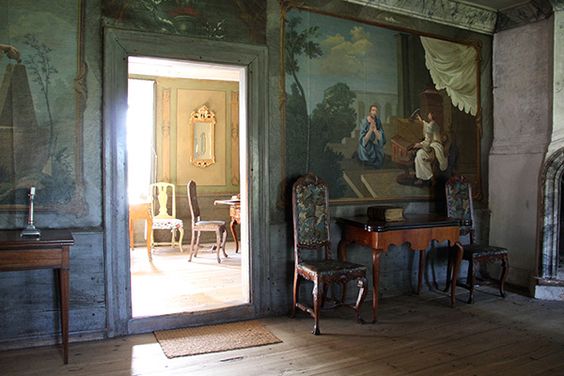
Picture Credit – naturbilder.biz
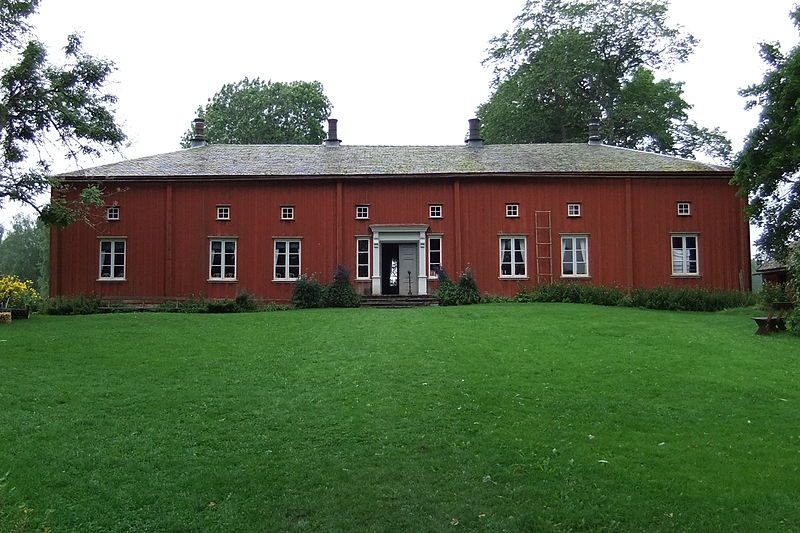
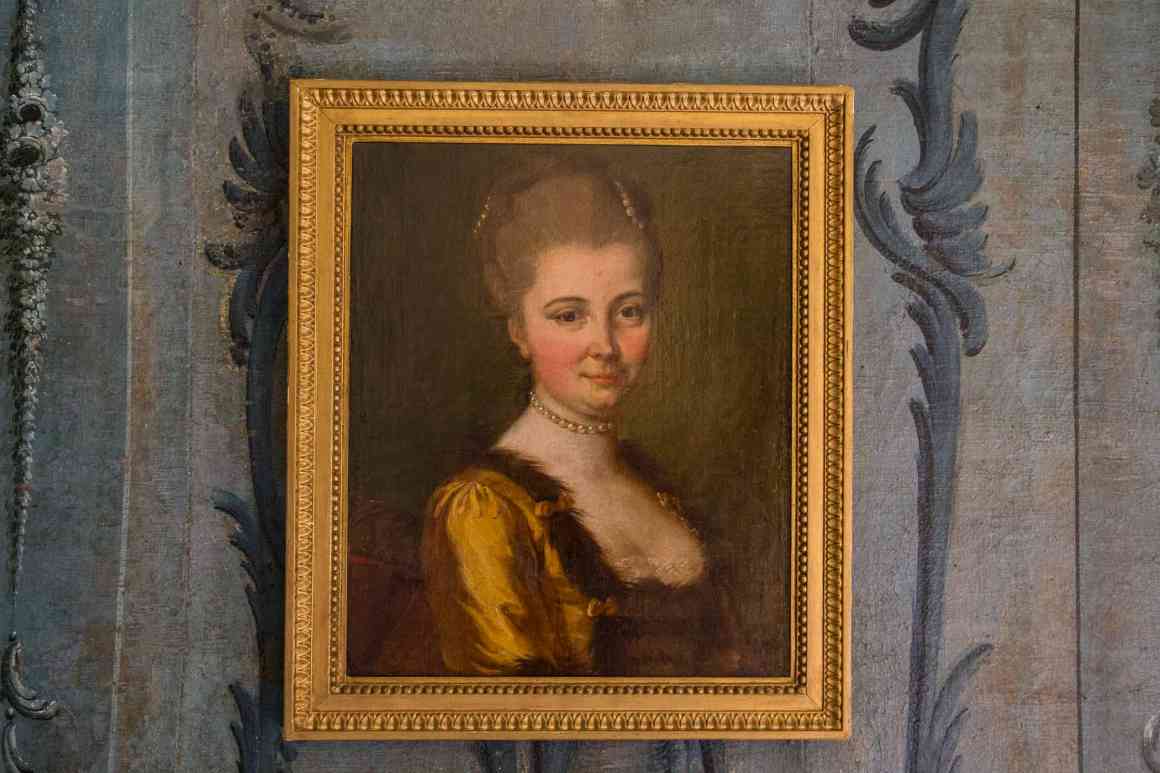 von Echstedtska gården – Picture Credit – trippa.se
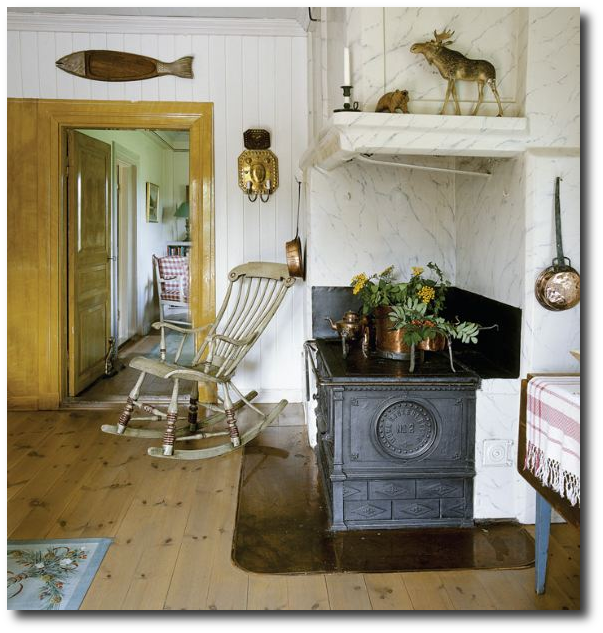
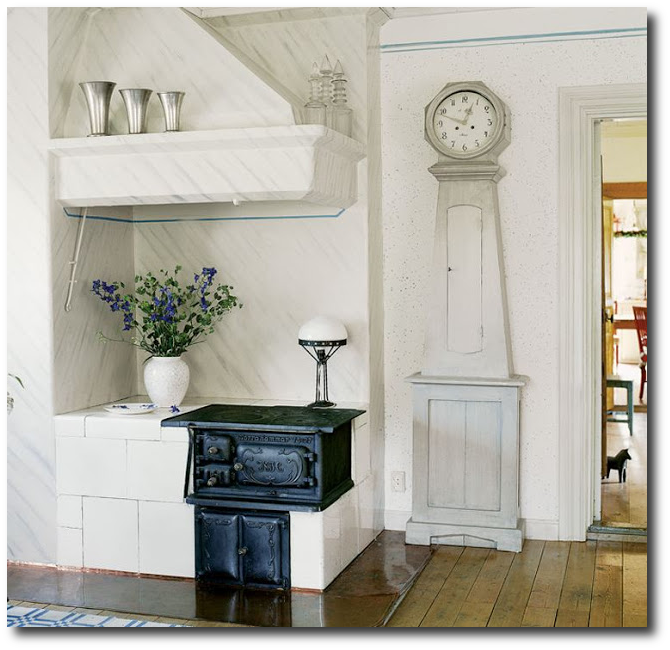
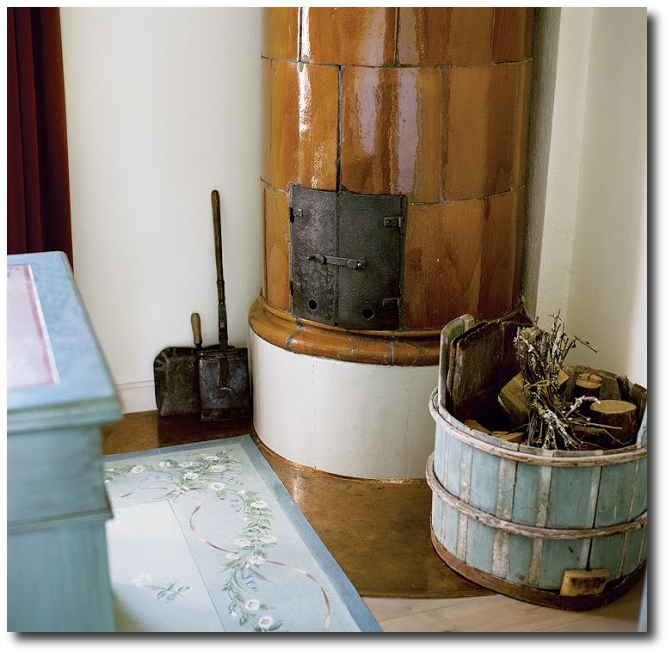
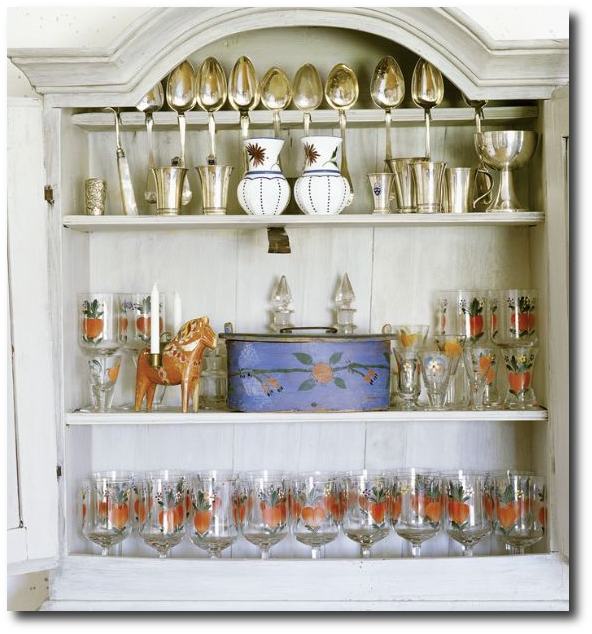
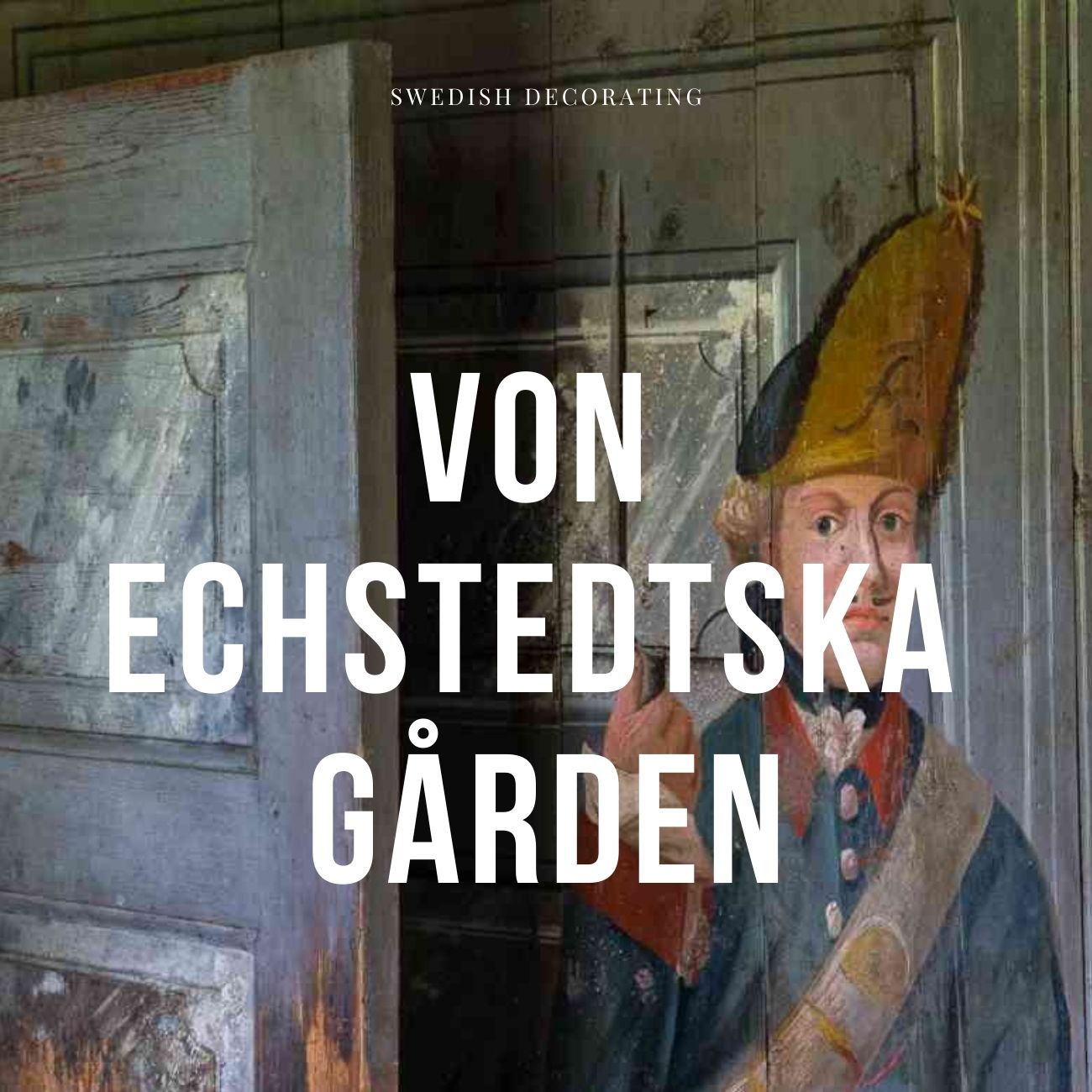
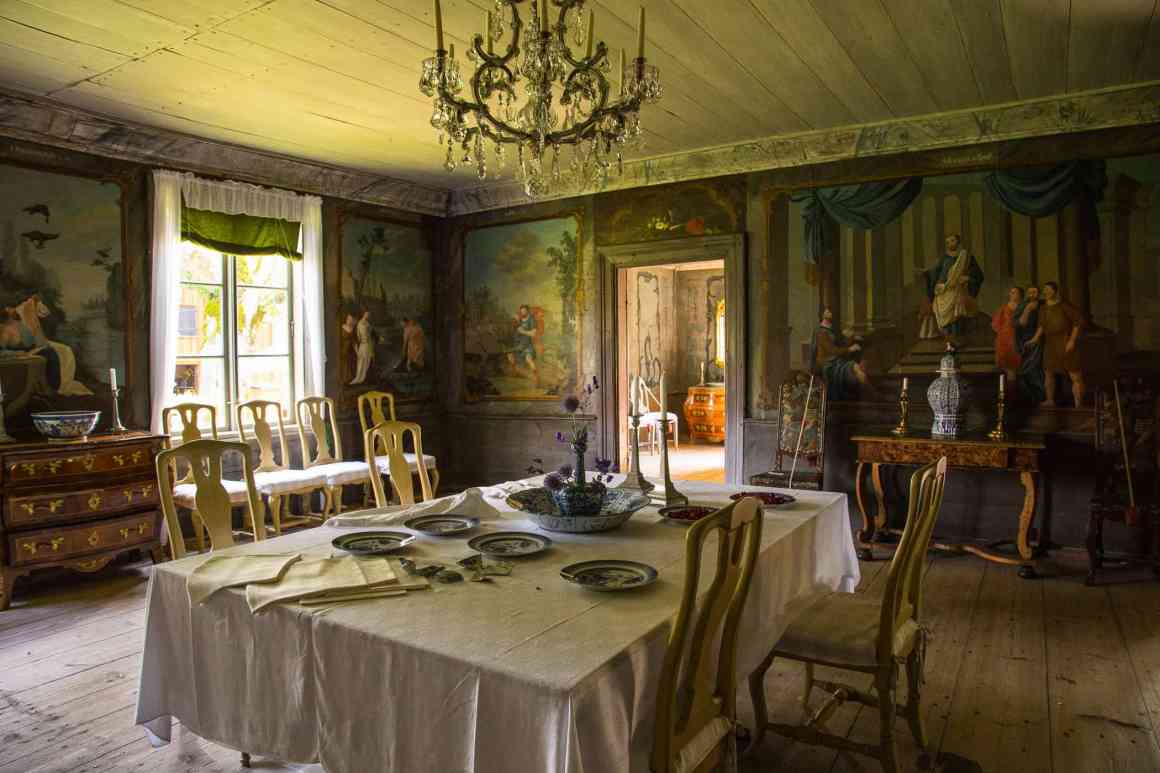
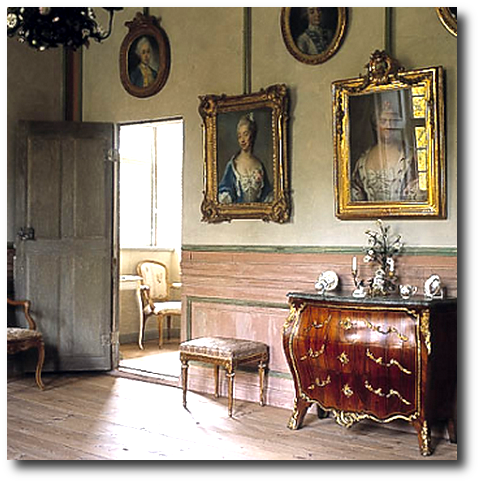
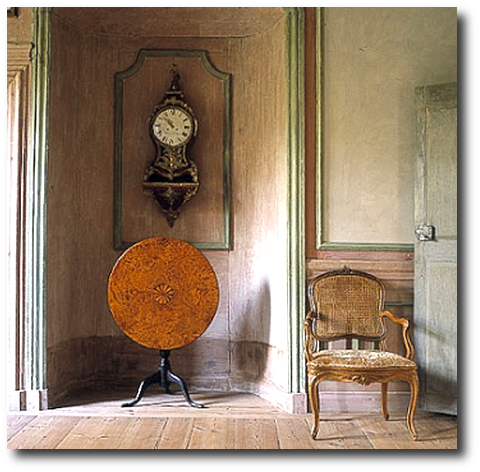
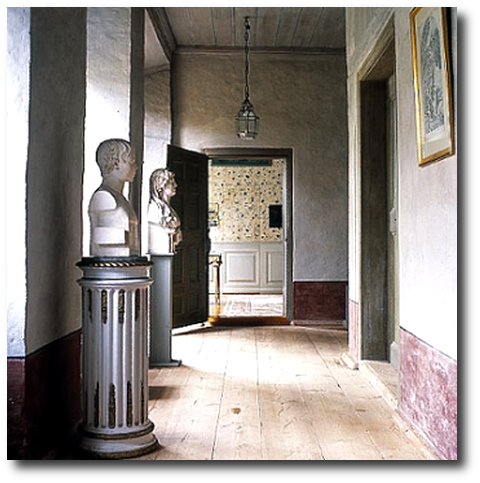
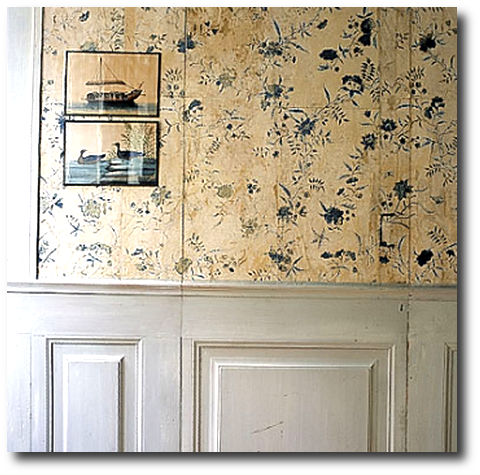
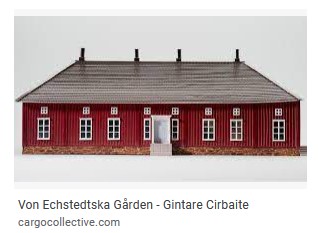 I stumbled across a post from Miras Mirakel’s blog about an enchanting farm called “von Echstedtska gården” located in Saffle, Sweden. The pictures immediately caught my attention.
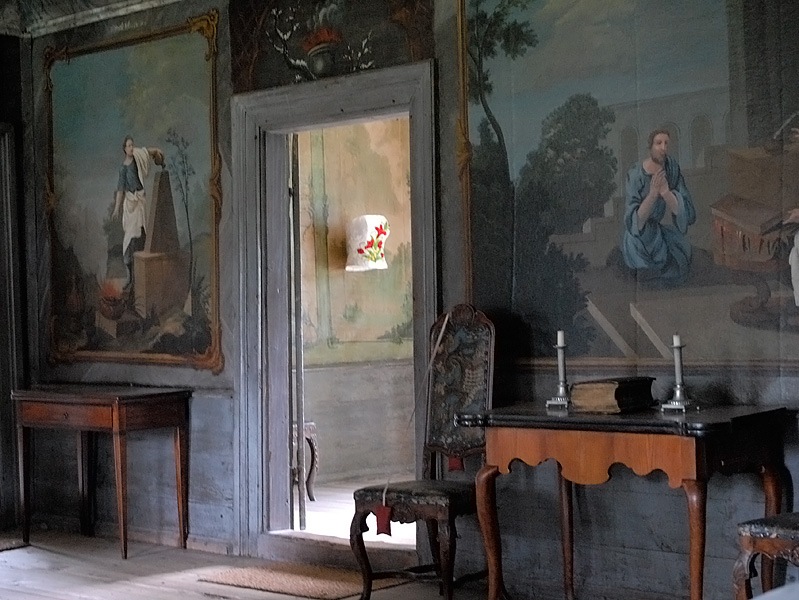
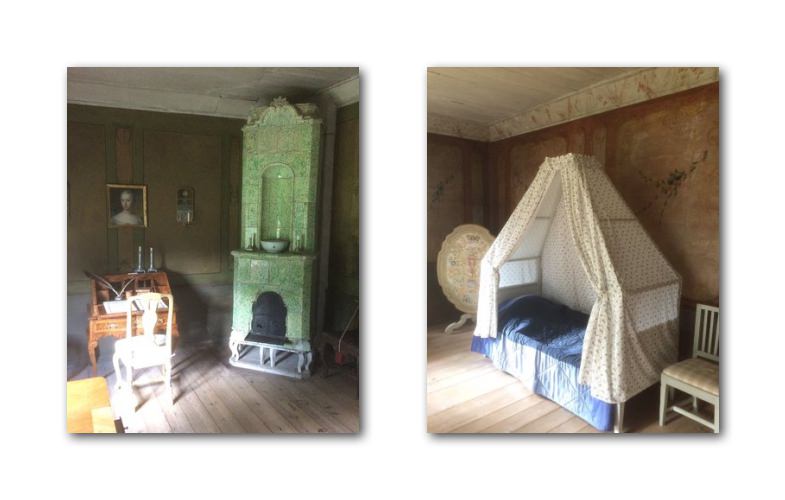
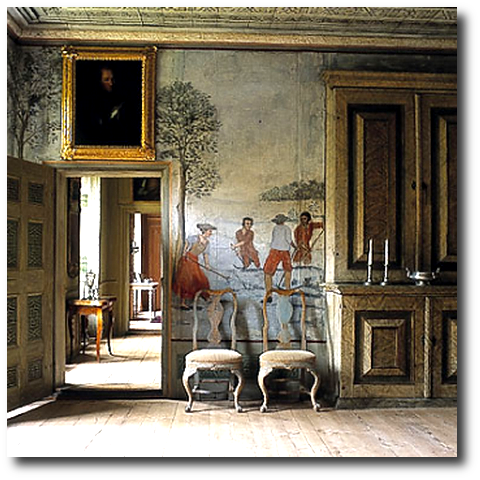
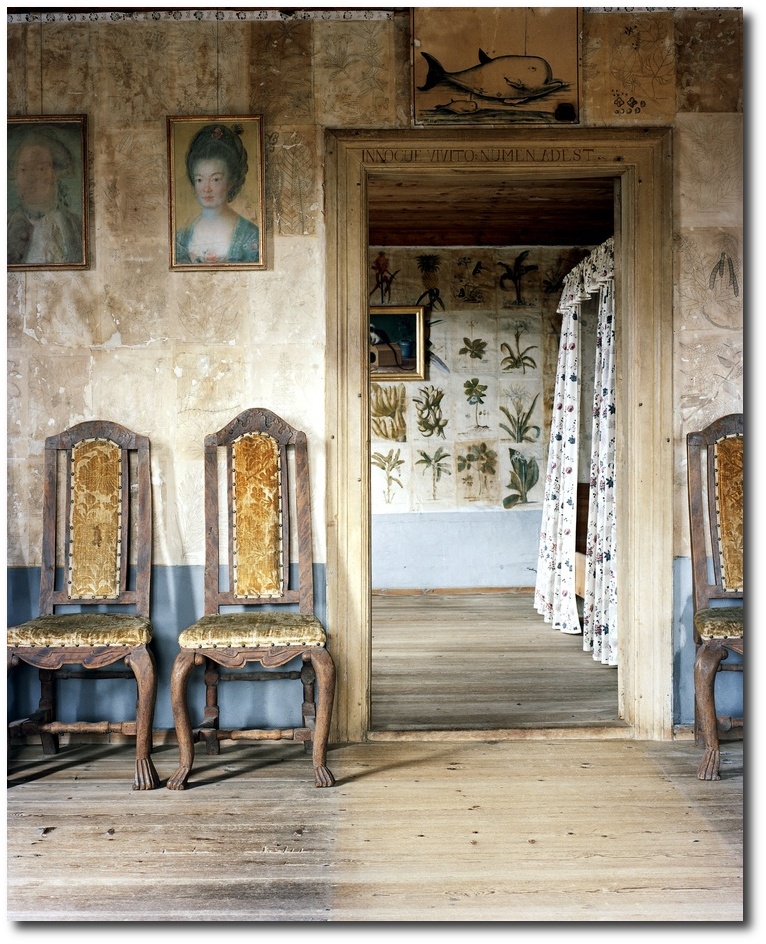
What is really captivating about this mansion is the beautiful wall murals. You have to wonder whose talent that was through history. Was it one woman, or a few talented residents? I really don’t know. When you look at the pictures, pay attention to the faux marble panels and trim. My goodness, someone in time had some incredible talent!
Here is what Wikipedia tells us about this beautiful mansion:
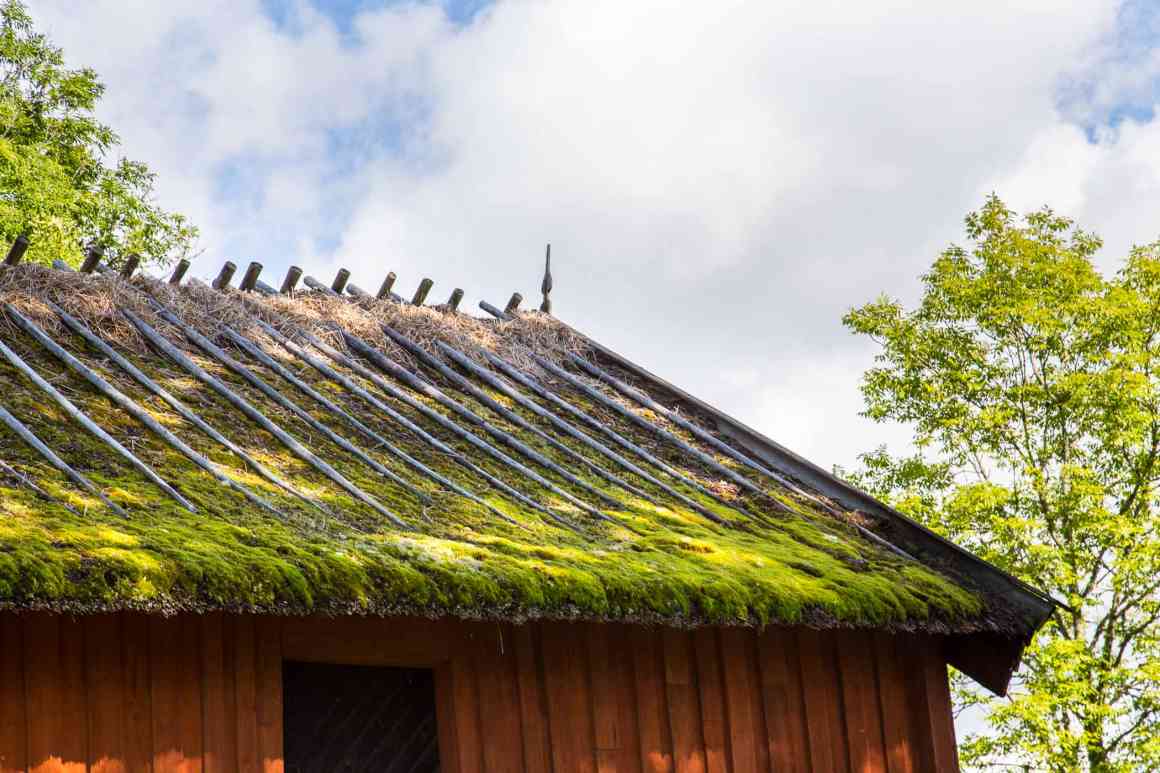
The farm was built during the years 1762–1764 by the assessor Bengt von Echstedt . The outside has a Carolingian touch. On the inside, the rococo blooms in the murals, among other things. A gazebo and secret house flank on either side of the main building, below are double pairs of wing buildings. The secret house has unique ceiling paintings that depict the landlord with his first wife elegantly sitting on the exit with courting servants. At the farm there is an apple farm with old Värmland apple varieties .
The farm was threatened at the beginning of the 20th century to be moved to Skansen but avoided this by Värmlands Museum buying the farm in 1939. The buildings and interiors were thoroughly restored in the 1950s, 1992–93 and even later.
More Pictures To View :
Von Echstedtska Gården, Västra Smedbyn, 661 94 Säffle, Sweden
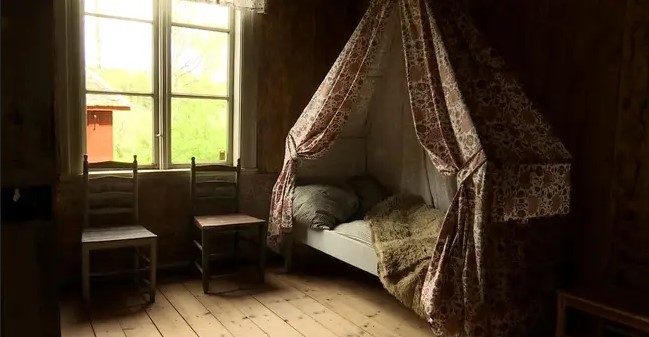
Textile exhibition at Echstedtska gården in Säffle – 5/29/2021 – tellerreport.com
Värmlands Museum has had the help of the art historian Lars Sjöberg, he has borrowed from his collections and is an expert on 18th century interiors.
– When you furnish a home, you dress it in textile, he explains.”
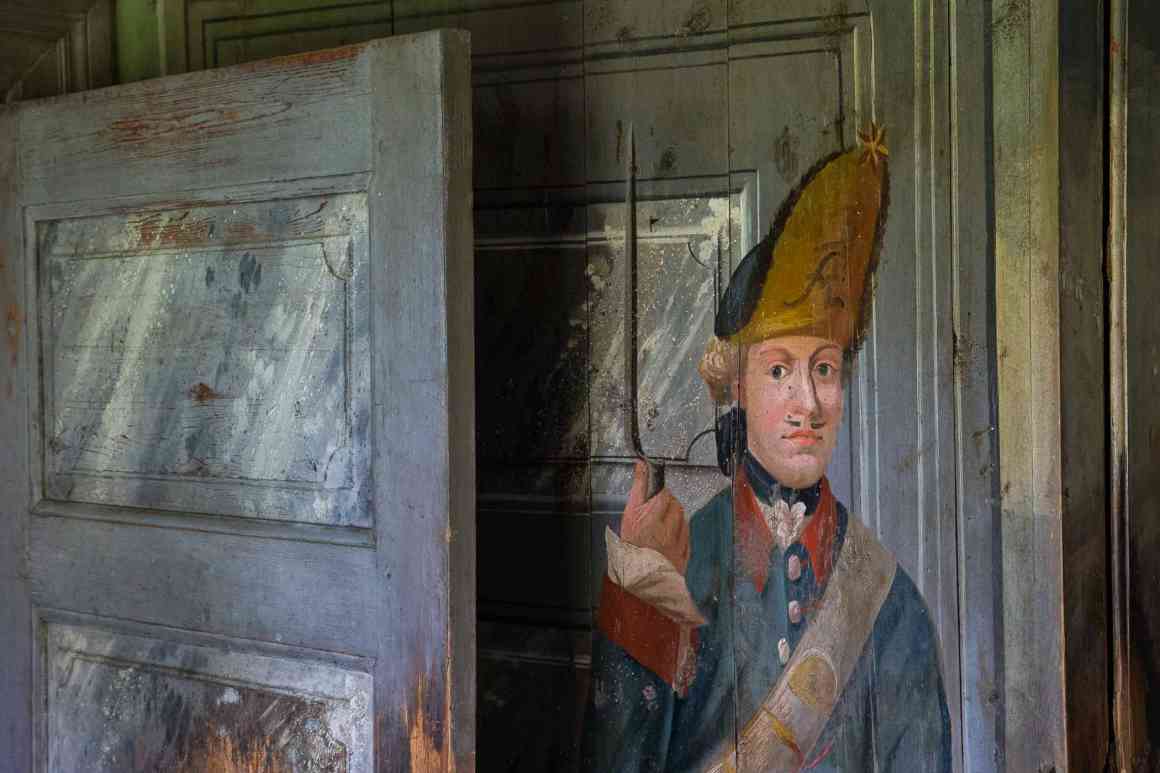
von Echstedtska gården – Picture Credit – trippa.se
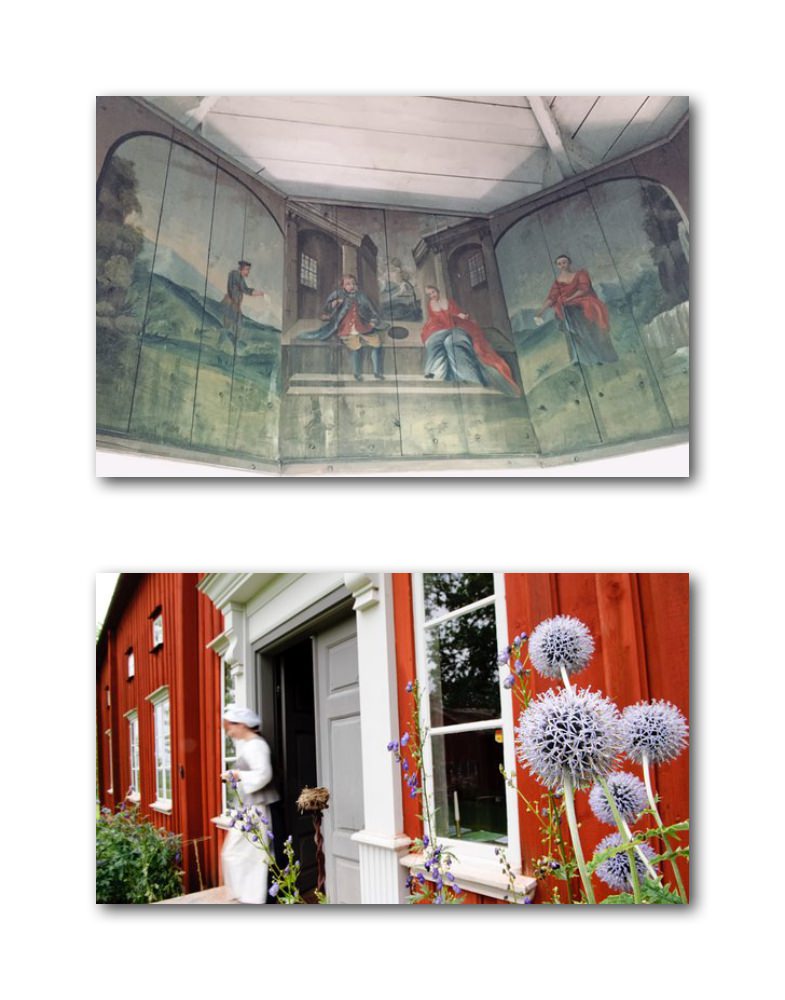 von Echstedtska gården – Picture Credit Trip Advisor
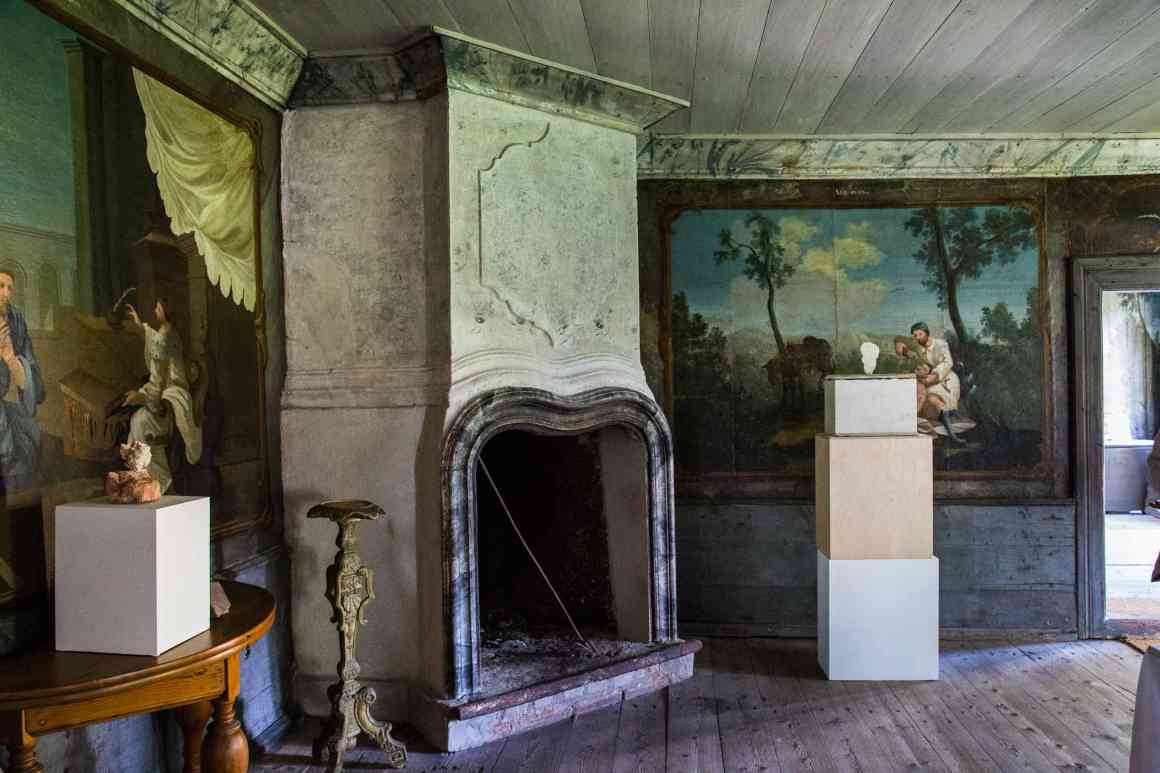
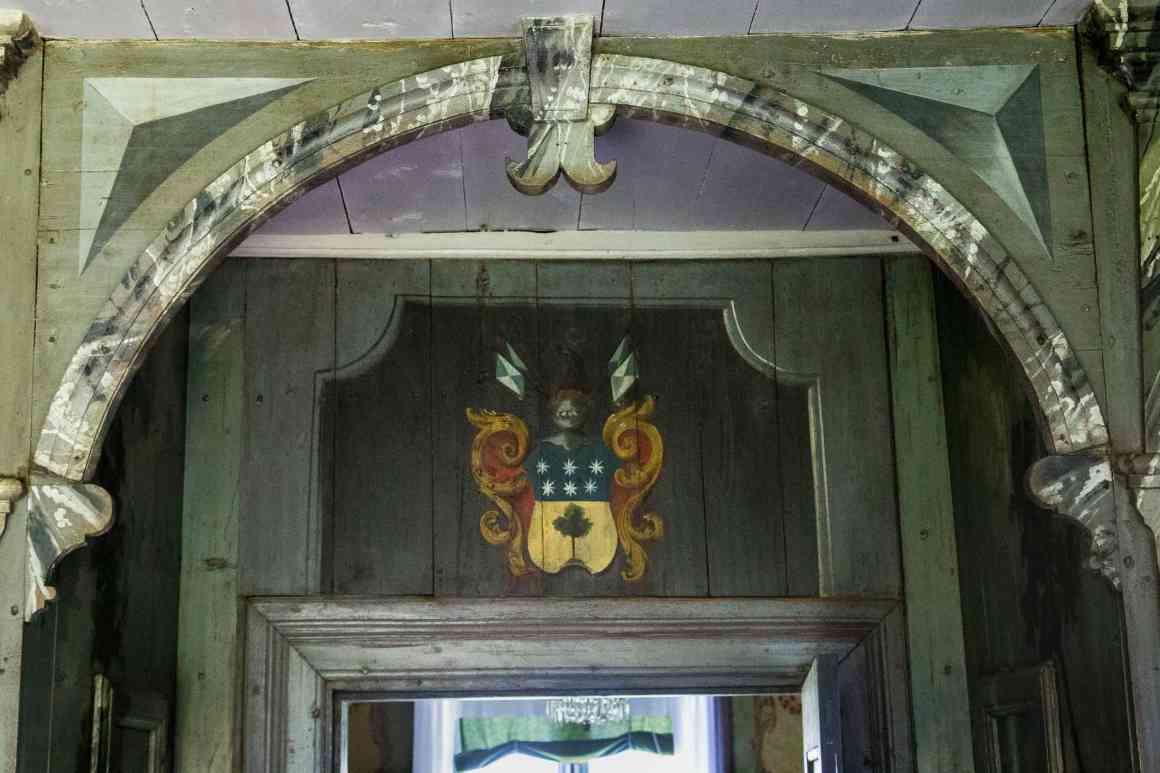
von Echstedtska gården – Picture Credit – trippa.se
 von Echstedtska gården – Picture Credit Trip Advisor
 Picture seen on spokhistorier
von Echstedtska gården – Picture Credit – trippa.se
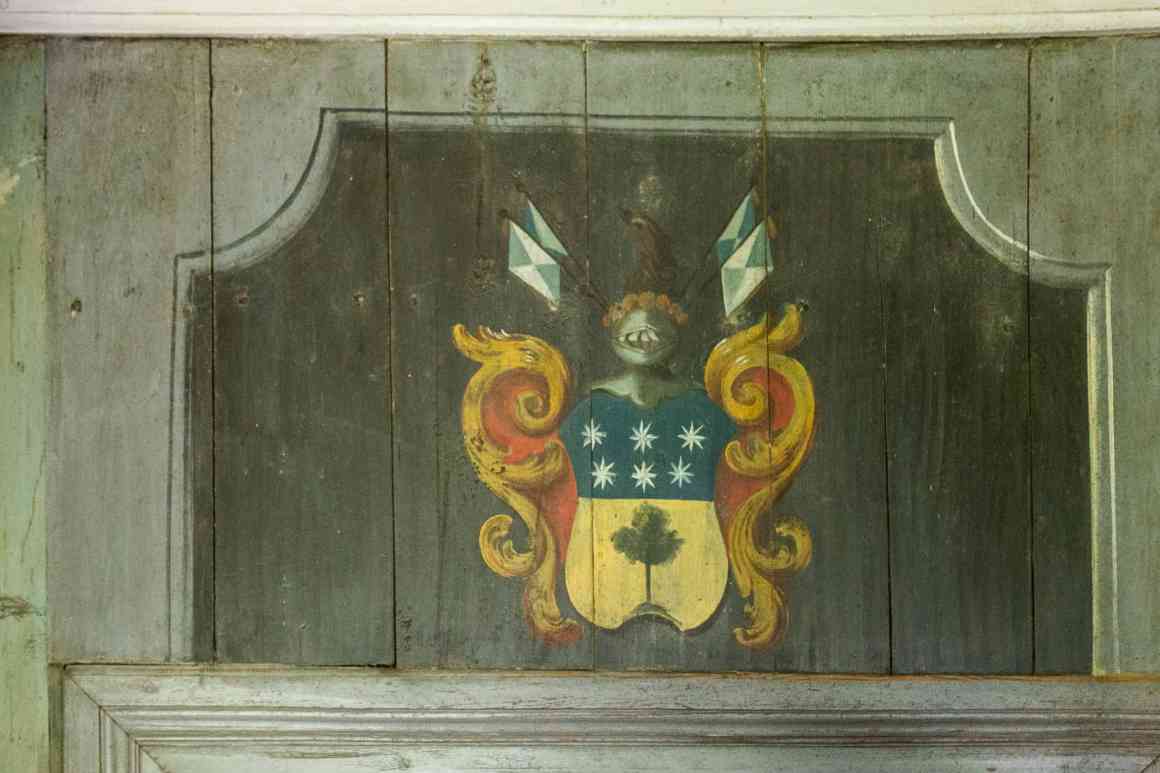
von Echstedtska gården – Picture Credit – trippa.se
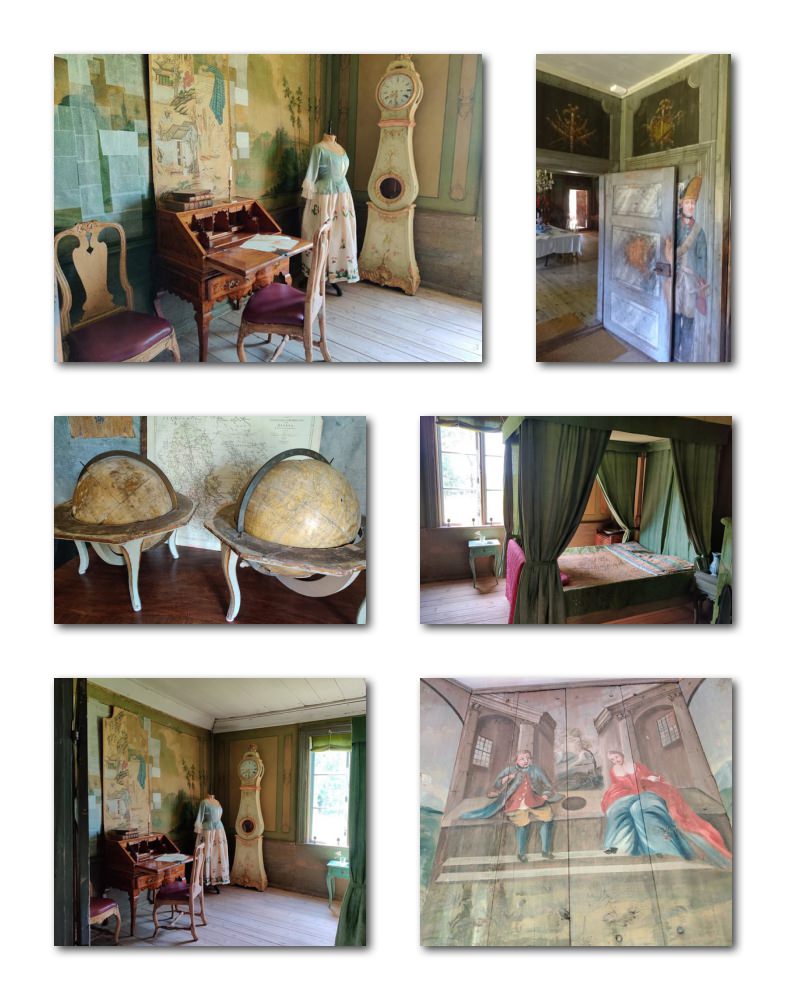 von Echstedtska gården – Picture Credit Trip Advisor
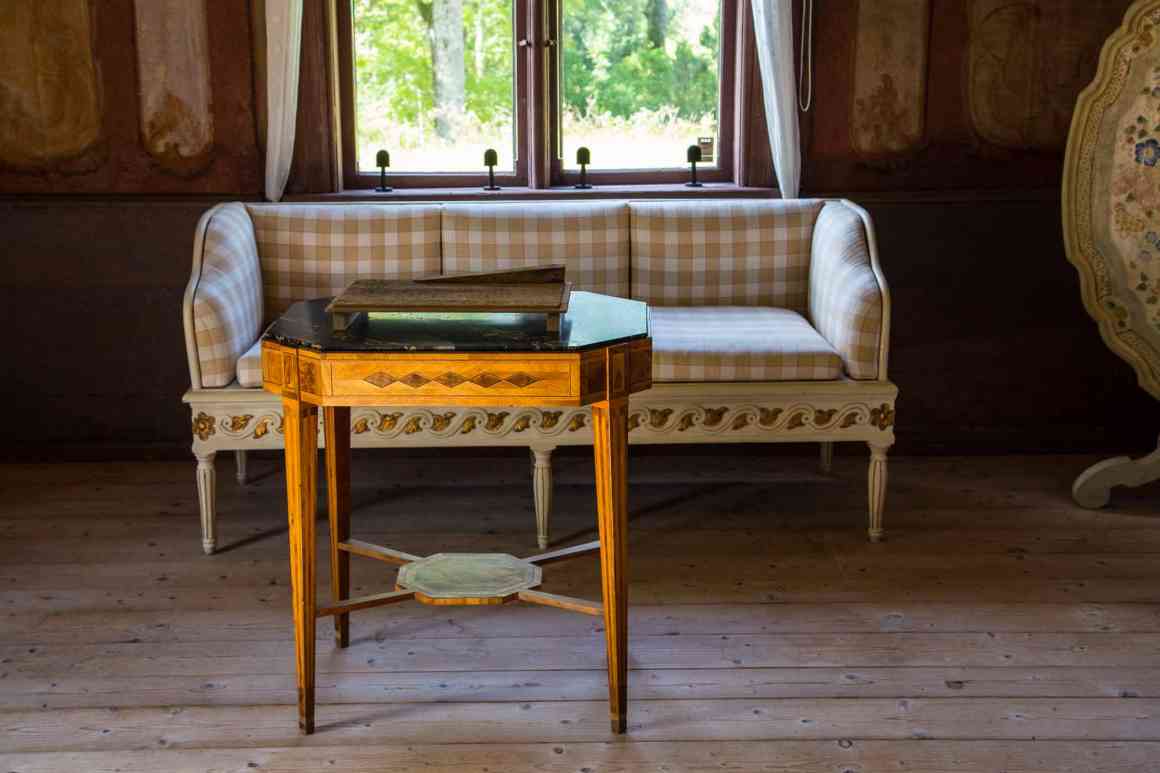
von Echstedtska gården – Picture Credit – trippa.se
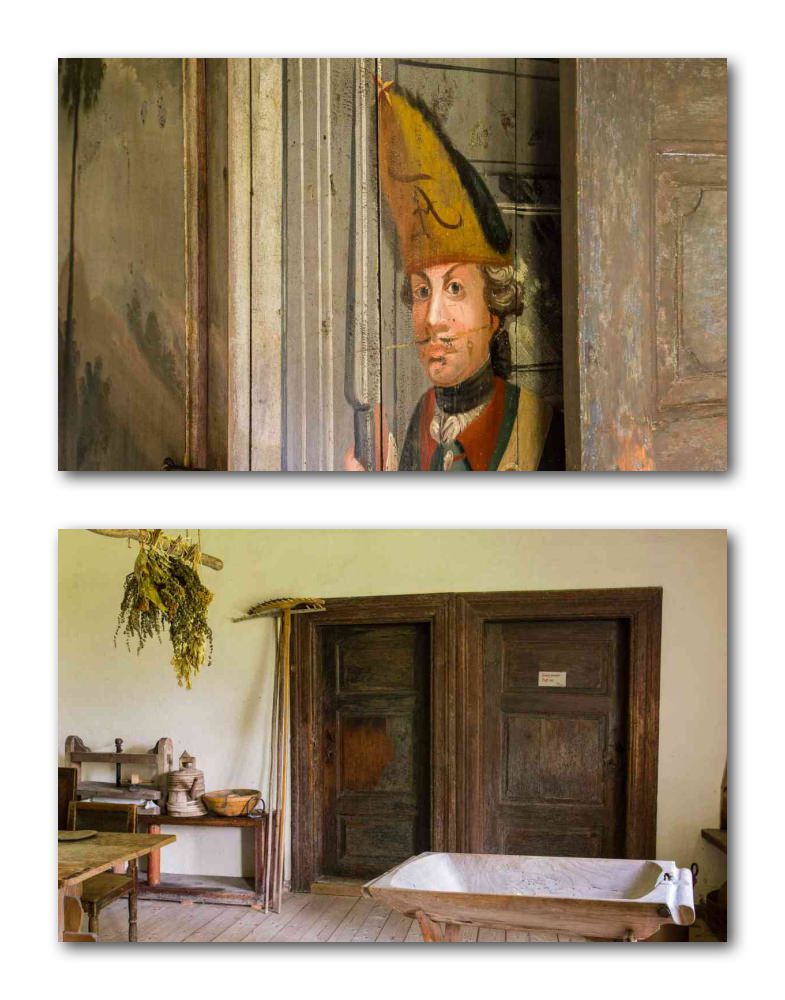 von Echstedtska gården – Picture Credit – trippa.se
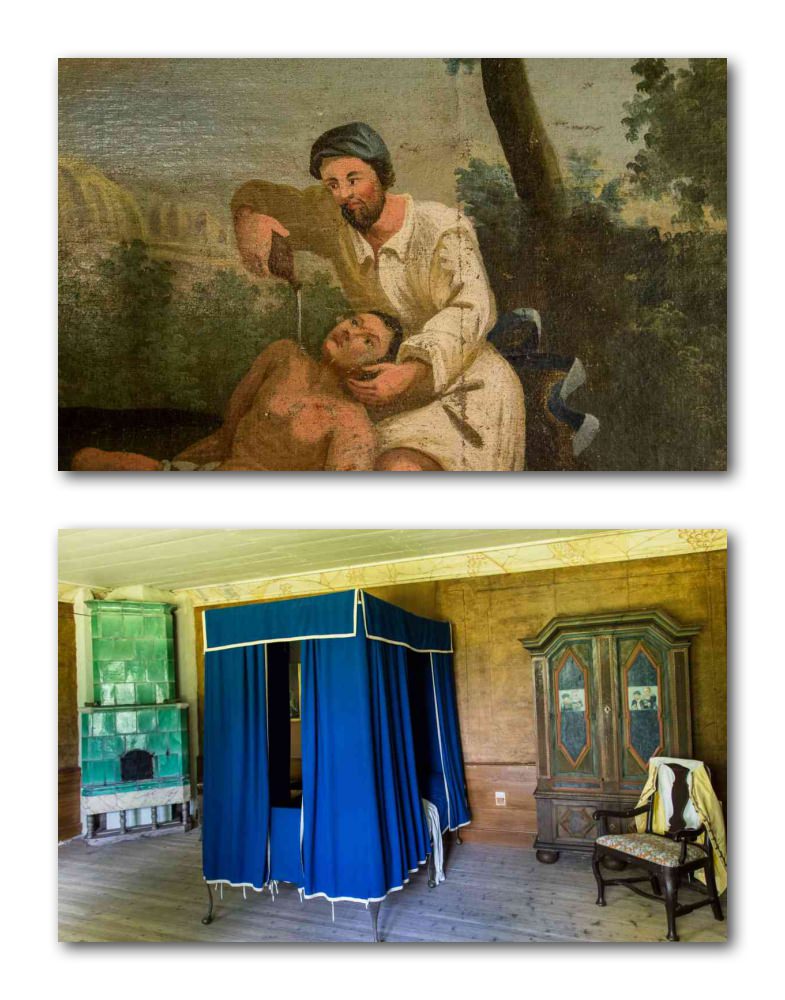
von Echstedtska gården – Picture Credit – trippa.se
Life In 17th Century Norway & Sweden
In the 17th and 18th centuries, the Nordic people had various desires and aspirations influenced by the social, economic, and cultural context of the time. Here are some of the most sought-after things during those centuries:
Wealth and Land: Accumulating wealth and owning land were significant aspirations for many people in the Nordic region. Land ownership represented social status, economic power, and provided opportunities for agricultural production and resource exploitation.
Trade and Commerce: Nordic countries, such as Sweden and Denmark, were engaged in international trade during this period. Merchants and traders sought to establish profitable connections with other European countries and expand their commercial ventures.
Access to New Goods: The growing trade networks allowed for the introduction of new and exotic goods into the Nordic region. People sought after luxury items like spices, silks, ceramics, and other commodities that were not readily available locally.
Education and Knowledge: The Enlightenment period in the 18th century brought an increased emphasis on education and the pursuit of knowledge. People sought access to education, particularly in fields like philosophy, science, and the arts.
Social Status and Prestige: Nobility and social hierarchy played an important role in the Nordic societies of the time. Many individuals desired to attain or maintain their noble status, associating themselves with the upper echelons of society.
Cultural and Intellectual Trends: The Nordic region saw an influx of ideas and cultural movements from other European countries. People sought to be part of these intellectual trends, embracing new philosophies, literary works, and artistic movements.
Scientific Advancements: The 17th and 18th centuries witnessed significant scientific discoveries and advancements. People were eager to access and learn about the latest scientific theories, particularly in fields such as astronomy, physics, and medicine.
Political Influence: As in other parts of Europe, power and political influence were highly sought after. Many individuals aspired to hold positions of authority, whether in local governance, regional politics, or the national administration.
It’s important to note that the desires and aspirations of individuals varied depending on their social class, occupation, and personal circumstances. These general themes provide a glimpse into the aspirations of people during the 17th and 18th centuries in the Nordic region.

18th Century Antique Swedish Rococo Tragsoffa | Vinterior

‘Saddle Up’ wallpaper designed by Eleanor Walton for Graduate Collection
 decorativecollective.com
 Picture –thisivyhouse
Life In the 17th century Nordic countries
Daily Routine: People in the 17th century generally woke up early, as daylight was essential for most activities. They would begin their day with personal hygiene tasks like washing their face and hands, often using water from a basin. Due to limited sources of artificial lighting, the evening hours were typically dedicated to rest and sleep.
Work and Occupations: The majority of the population in the 17th century lived in rural areas and worked in agriculture. Farmers would tend to their crops and livestock, while women would engage in domestic tasks such as cooking, cleaning, and caring for children. In urban areas, people were involved in various trades and crafts. Merchants conducted business, artisans practiced their respective crafts, and apprentices learned skills from their masters.
Religion and Church: Religion played a significant role in daily life during the 17th century, particularly in Europe. Most people adhered to Christianity, and attending church services was a central part of their routine. Church buildings often served as community centers, where people gathered not only for religious activities but also for socializing and discussing local matters.
Education: Formal education was limited during this period, and literacy rates varied across regions. Wealthy families could afford tutors or send their children to private schools, while the lower classes often received basic education through informal means. Education focused on religious teachings, reading, writing, arithmetic, and vocational skills.
Entertainment and Recreation: In their leisure time, people in the 17th century engaged in various forms of entertainment. Popular recreational activities included playing games, such as cards, dice, and board games like chess or backgammon. Sports like archery, bowling, and tennis were also enjoyed. Social gatherings and events, such as dances, music performances, and theatrical plays, provided further amusement.
Art and Culture: The 17th century witnessed significant advancements in art and culture. Renowned artists like Rembrandt, Caravaggio, and Vermeer produced masterpieces during this period. Literature flourished with the works of influential writers like William Shakespeare, Miguel de Cervantes, and John Milton. Music, including compositions by composers like Johann Sebastian Bach and Antonio Vivaldi, also thrived.
Fashion and Dress: Clothing in the 17th century varied based on social class and occupation. Wealthy individuals wore garments made of fine fabrics and adorned with elaborate embellishments, while commoners dressed more simply. Fashion trends were influenced by the styles of the monarchy and the aristocracy, and clothing choices often reflected social status.
Food and Drink: The diet of people in the 17th century consisted of locally available food sources. Common staples included grains like wheat, barley, and oats, along with vegetables, legumes, and dairy products. Meat was primarily consumed by the wealthy, while the less affluent relied more on fish and poultry. Alcoholic beverages, such as beer and wine, were commonly consumed due to the limitations of safe water sources.
It’s important to note that the specifics of daily life in the 17th century varied greatly depending on the region and social circumstances.

The painted detail of a 18th Century Swedish Gustavian Chest – 1st Dibs


Antique Swedish Furniture

Swedish 18th Century Gustavian Clock with Original Paint – averydash.com/
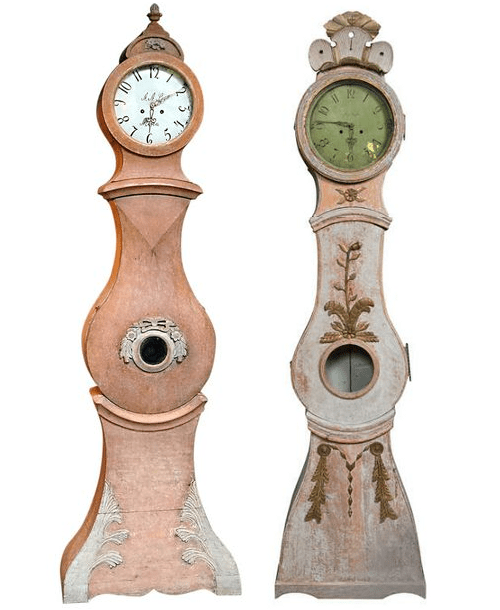
Mora Clock in Original Salmon Paint Found on 1stdibs.com
Swedish Tall Case Clock, ca.1780-1800 Found on 1stdibs.com
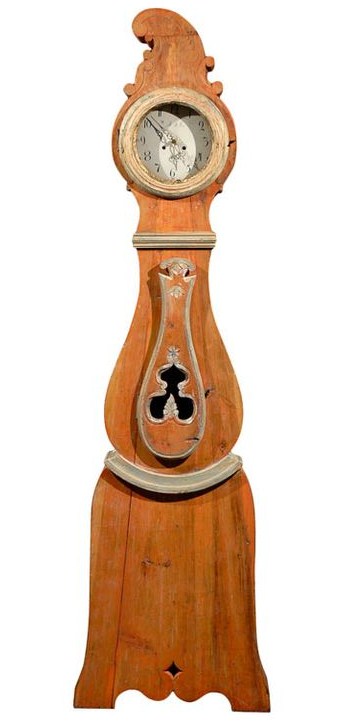
19th Century Swedish Orange Painted Wooden Clock Found on 1stdibs.com
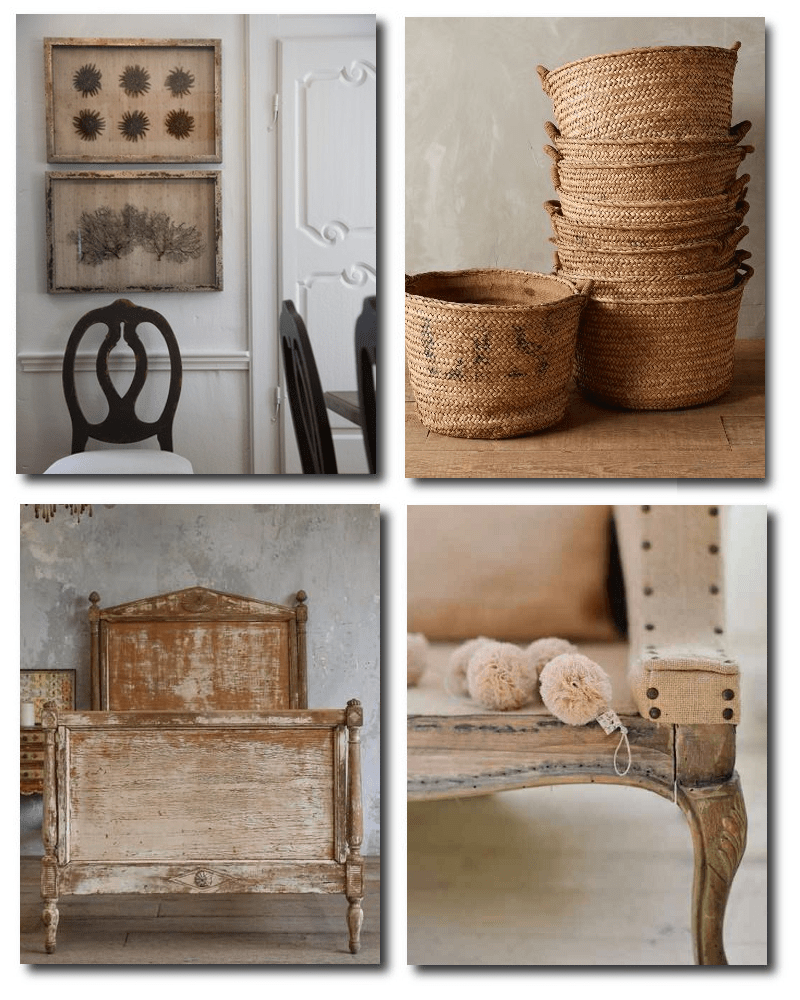
Gustavian Style Found on houzz.com
Harvest Basket, Found on anthropologie.com
Directoire Bed, Found on eloquenceinc.com
De-constructed Chair – Found on inspired-design.tumblr.com
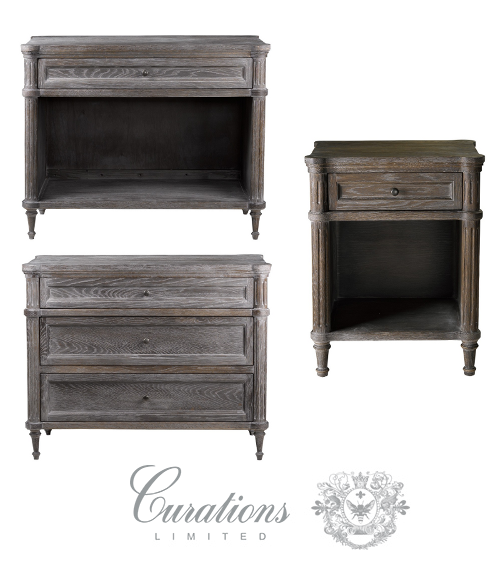 Alden Furniture Collections- Curations Limited
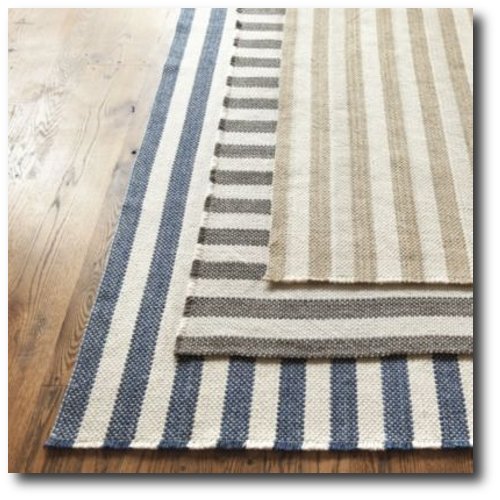
Vineyard Stripe Rug Ballard Designs
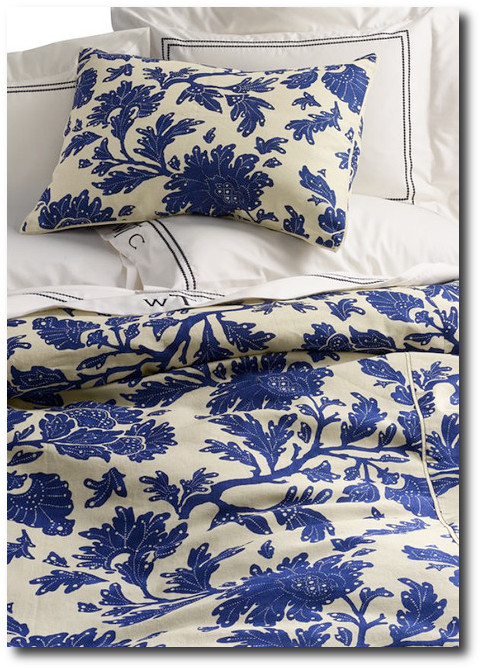
Harbor Springs Floral Duvet Cover, Lands End
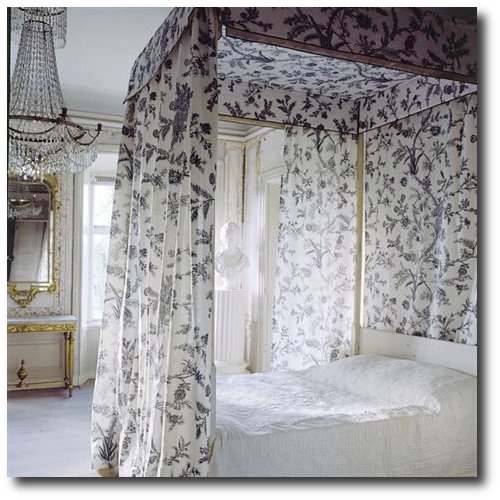
Buy Authentic Historical Textiles online at Ljungbergs Factory
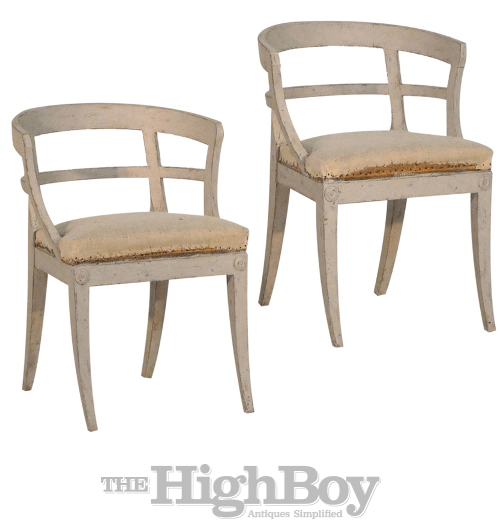 Pair of Swedish Sulla chairs with curved and open H-form backs, with original upholstery raised on splayed legs.- Highboy Antiques

An antique looking mailbox – Amazon

A mailbox with a blue distressed finish – Amazon


Mid 19th Century Painted Water Carrier – debenhamantiques
Swedish Tripod Tilt-Top Candle Stand Tables
Tea tables were originally designed to serve tea. Some were designed to tilt like the pie table which could then be folded up and stored away.
Dutch painters were known to decorate the tops of these tables with landscapes starting in the late 17th century, and this following survived well into the 19th century. In the late 18th century the English style became extremely fashionable, and this style of table became extremely popular.
- Swedish Tea Tripod Tables- trouvais.com
- Swedish Painted Tilt Top Candle Stand From Eleish Van Breems Antiques
- Swedish Tilt Top Table Seen at Puckhaber Decorative Antiques
- London-Townhouse By designer Katrin Cargill
- Swedish Tripod Table Seen At Max Rollitt
- Swedish Tilt Top Table Seen at Puckhaber Decorative Antiques
- 19th Century Swedish Tilt-top Table- Lorfords Antiques
- 19th century Swedish tilt-top table –Lorfords Antiques, 19th Century Swedish Birch Square Tilt Top Table, Debenham Antiques Ltd
- Swedish Late Gustavian Alder Root Table D Larsson Interior.com
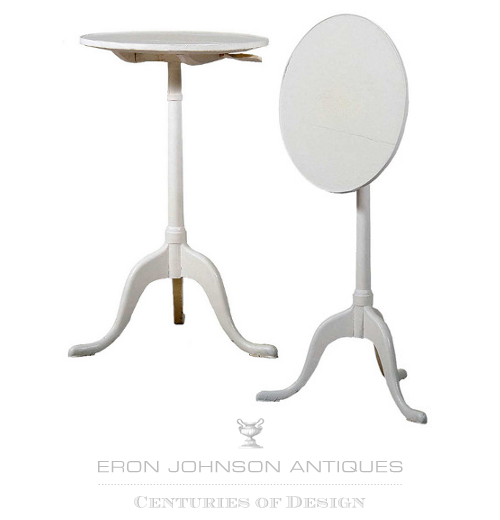 Swedish/English Painted Birch Round Tilt-top Tripod Table $295- Eron Johnson Antiques.com


Decorating With Swedish Country Antiques- Darlene Peterson Buchanan

Swedish Country Plates Sold Through Food52. Visit Swedish Country.com For A Look At The Whole Rosemaling Collection
America is a land of many immigrants. As many as 1.4 million Swedes immigrated to America between 1840 and 1930. As the descendants of these immigrants and others seek to decorate their homes, it is not surprising that Swedes and non-Swedes alike are looking to Swedish country décor. It offers a colorful Carl Larsson look or the light and airy Gustavian look.
The Swedish people are lovers of color and light. They use all aspects of nature relating to light and its effect in a room. The color and light play off the walls, furnishings and accessories. This decorating style blends perfectly with the Gustavian look of old Sweden or the peasant look depicted by Carl Larsson. By placing a lovely old Swedish antique in a room bathed with light and having the traditional white and blue colors, you can capture the desired Swedish look.
Carl Larsson was a very famous painter in Sweden. He captured the daily life of old Sweden on canvas, and his home is now a museum. It bursts with color, design, shapes, art, creativity and representations of the simple life in Sweden at the turn of the century. This style is very popular and has created a high demand for Swedish antiques in this country.
Read more of this article by Darlene Peterson Buchanan at go-star.com
3 Rustic Scandinavian Country Homes – Borrow Ideas From Norway and Denmark
Inspiring Interiors Blog posted some terrific pictures of a barn styled home with a Scandinavian styled interior. If you are looking for a country styled look, consider how this home is set up.
Start With A Gray Palette
Starting out with gray through out your house can be a really simple way to decorate the rest of your home. To make it interesting, choose several shades of gray which you can work through your home.
For my own home, I decided that lighter colors worked well in larger rooms, while the more saturated shades could punch things up in the closets, the bathrooms, and smaller rooms.
Using gray through out your home allows your home to flow nicer than having one bright bold color in each room of the house. Later if you want to add color, simply attach a chair rail, and paint the upper half of the wall. You can add depth with accessories and wall art.
Work With Muted Shades For Country Styles
The wood walls in this home look very primitive with a gray wash. Some walls are left natural while others are painted. In one of the rooms, dried floral wreaths add a rustic touch to the walls. Here is an example of a captivating look that is inexpensive.
Helichrysum Strawflowers are one of my favorite florals. Pick flowers for drying when they are open, but not fully mature. Hang the stems upside down in a cool-well ventilated spot to dry. Avoid over-watering during the growing season, and these florals will look spectacular dried in a vase or a floral wreath.
Incorporate Red And Rust…….
Red is a classic country color that is commonly seen in the countryside of Sweden. Barns and countryside homes are painted rich reds, making it a very classic color to work with. Painting a chest of drawers or an accent chair in Falu red can really bring out the country side of Scandinavian decorating. Pair together rusty metal urns, and accessories like natural straw, hay, wicker, baskets for that country feel.
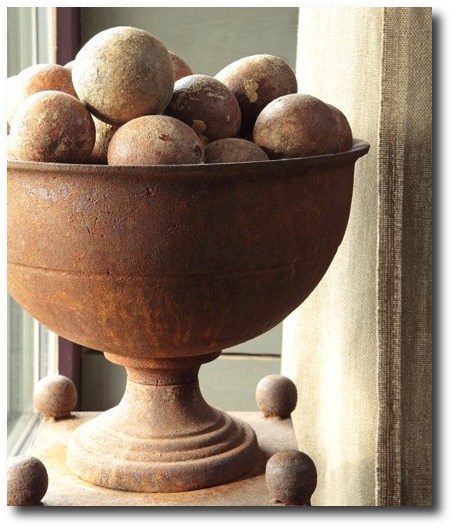
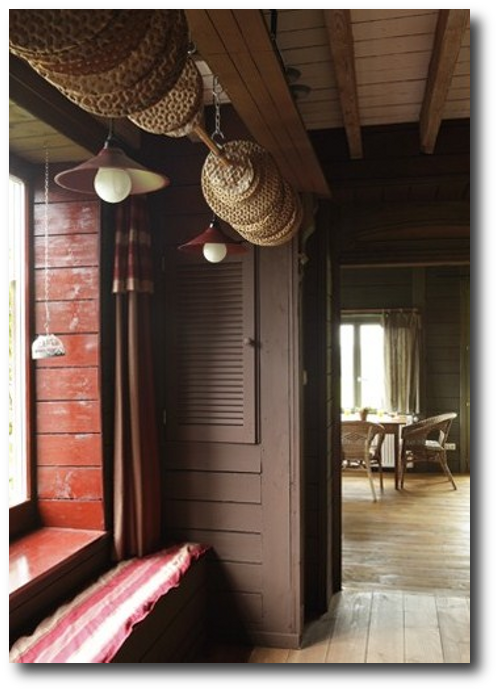 The house below was originally an eighteenth century barn which was converted into a guest house. This lovely barn is located in the village of Saint-Hilaire-sur-Helpe, in France, and pairs together both the Swedish and French rustic styles.
Photography by Corinne Schanté-Angel, All images from here.
Early 19th Century Female Portrait –Maison Maison
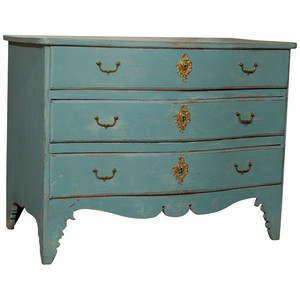 Swedish Rococo Chest-A. Tyner Antiques
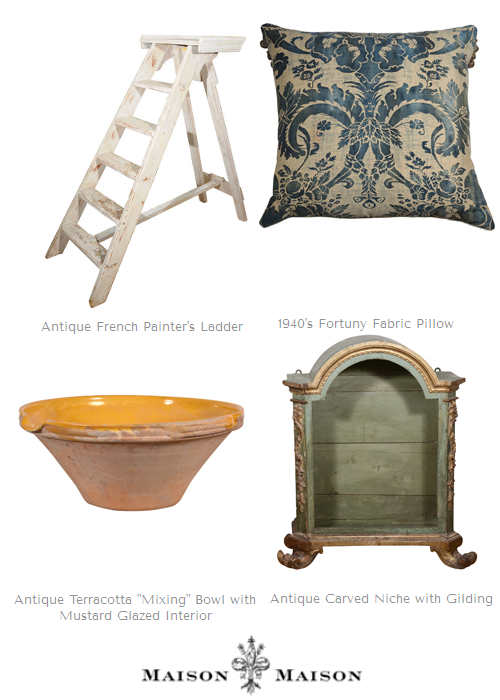
Home 2, This comes from the blog browni.net, a home which was featured on Gods and Gardar.
Here are a couple things we see that really work in this home:
Use A Saturated Shade On The Walls
A saturated shade of mustard is applied to the walls, and followed up with layering of black based tapestry. Centered is a large scale wooden horse sitting on a antique chest. If you notice, the colors from the tapestry, and the wall color are opposite on the color wheel causing both elements to stand out nicely. The white paint in the horse tends to capture the eye against the bold color of the wall, and print in the tapestry.
Set your Furniture On A Slant
As you can see here, it works. Corner cabinets and cupboards off set the rest of the furniture in the room. Chairs are placed at a diagonal, and not everything is symmetrical. Common shades such as green, mustard and blue are used through out the house to keep the palette, exciting but toned down.
Work With Black and White To Balance Things Out.
Upholstered Swedish chairs in a neutral fabric really add balance to this home. The home is bright, but one can still find peace and serenity due to the furniture colors. Looking closely at the chairs, you can see they picked a linen, with a gray white painted frame. The creamy white allows everything to blend nicely together, without being overdone.
Picture Credits
- Swedish Antiques D Larsson Interior
- Jesse Breytenbach Tulip Pattern- Found on jessebreytenbach.co.za
- Found on ana-rosa.tumblr.com
- A Casa di Ro
- Danish Decorating Ideas via Indenfor and Udenfor

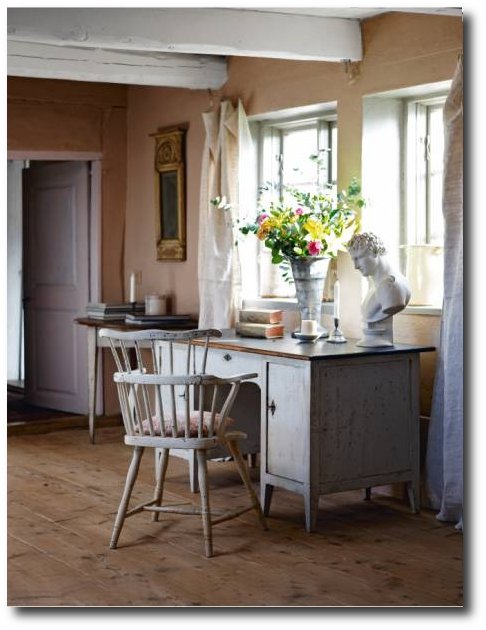
House 3, Originally shown in Sköna hem, this house has a powdery color and the country style atmosphere. Again we see saturated shades on the wall, balanced by gray white toned furniture. One way to surely give the rustic country feel is to choose something with a chippy finish. The armoire may have seen better days, but that is part of the romance.
Adding a few delicate features such as floral print fabric, or a worn childs doll can add the country charm to your home. Johan KalÃn for Sköna hem
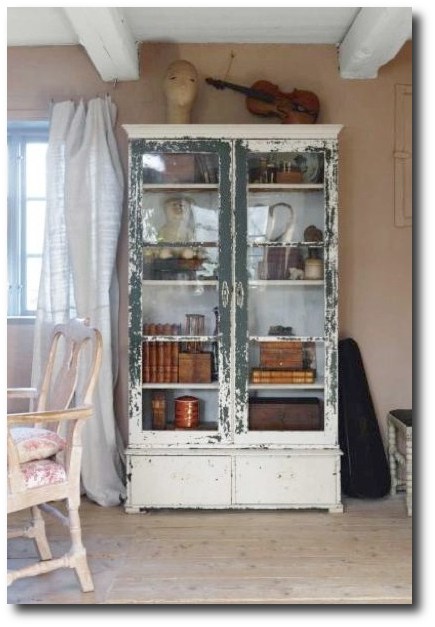
Swedish Folk Art Home Johan KalÃn for Sköna Hem
The same home featured on Home And Delicious Blog, seen in House and Garden 2006
Swedish Folk Art Home Johan KalÃn for Sköna Hem
Home And Delicious Blog, seen in House and Garden 2006
Swedish Folk Art Home Johan KalÃn for Sköna Hem
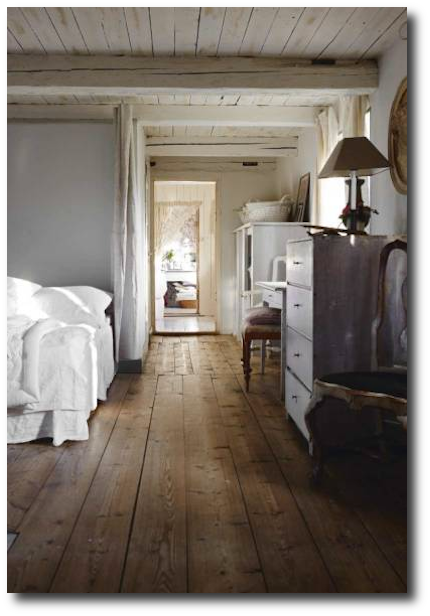
Home And Delicious Blog, seen in House and Garden 2006
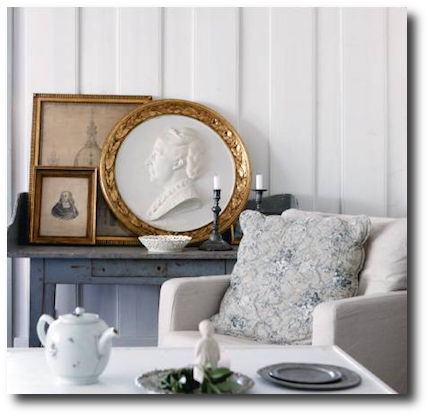
Home And Delicious Blog, seen in House and Garden 2006
Bergere Chairs Maison Maison
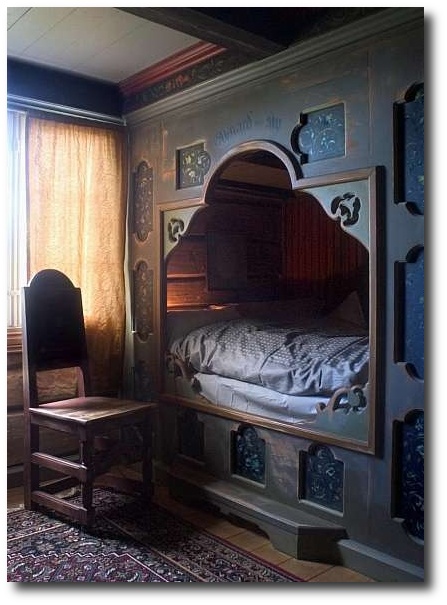
Eidsborg Museum in Telemark, Norway
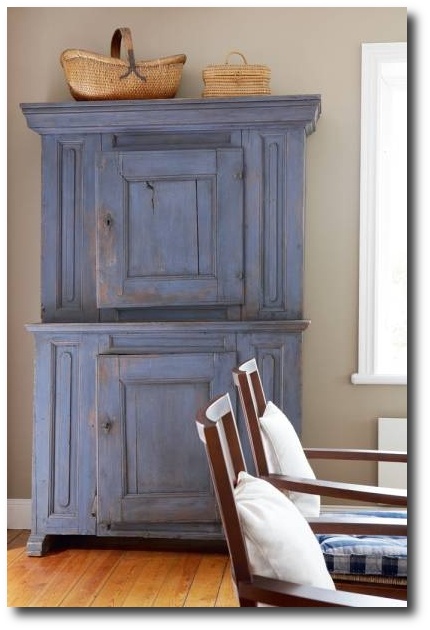 Blue cupboard Visit skonahem.com
Swedish Furniture Decorating Ideas Gypsy Purple BlogCountry Nordic Styled Home in Drobak,
NorwayCountry Nordic Styled Home in Drobak, Norway
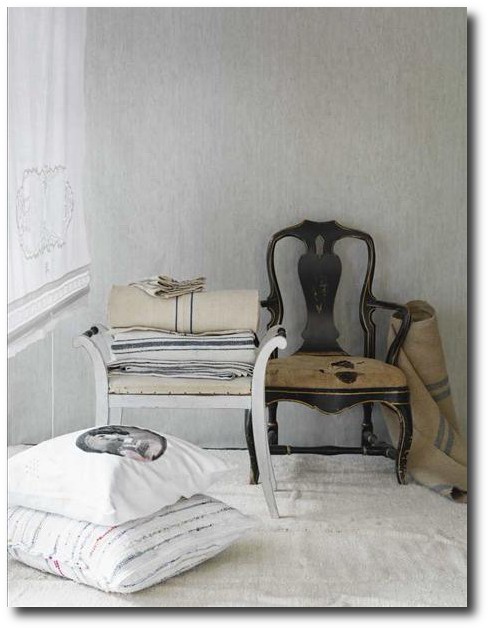
Slant Front Writing Desk in Blue Paint– Sweden Circa 1820
Swedish writing desk, circa 1820, with four graduated drawers under the slant-front. The interior features a central cupboard with lozenge trim and two banks of three drawers on either side. Great patina on the secondary blue paint.
Gustavian style commode with two over two drawers, Sweden circa 1910, in
secondary blue paint. Canted and fluted corners with applied rosettes and shaped
top. Square tapering legs. Original brass hardware.
Chest of three drawers, Denmark circa 1750, with serpentine drawer fronts,
shaped top, and bracket base. The hardware and painted surface are original
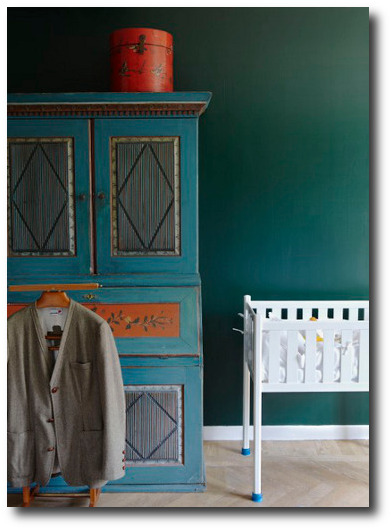 INTERIOR & STILL LIFE – Agent Bauer
Rustic Nordic Furniture From Am
Traditional beds in the kitchen of an old Swedish farm house Uploaded To Pinterest
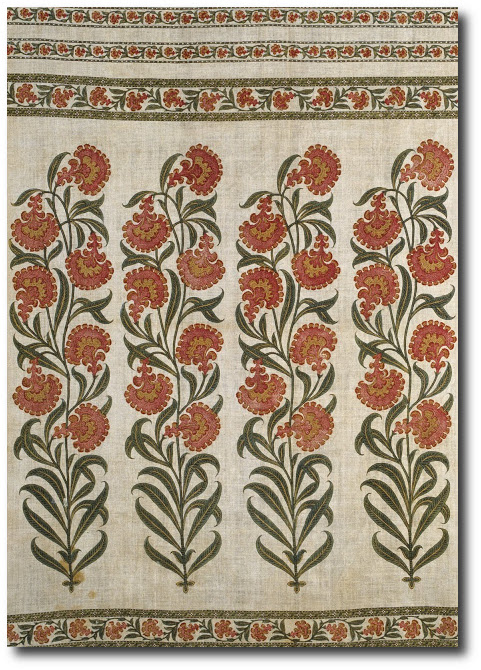
Wouldn’t this be a wonderful stencil pattern for the walls? Found on stylecourt.blogspot.com


69 Inspiring Pictures Of Nordic Country Style Decorating
Bogstad Manor is a protected cultural monument and one of the few country estates in Norway. The history of the estate dates back to 1649, while Norway was still Catholic the land was rented out to tenant farmers by Hovedøya Monastery. After the reformatin in 1536 it was confiscated by the Crown. It was then in 1649 that the Danish-Norwegian King Fredrik III sold Bogstad and number of other farms to Morten Lauritzen. This land provided great timber for sawmills which was rapidly expanding in the 17th century.
The Manor remained in the same family from 1649 until it was left to the Bogstad Foundation in 1955, administered under the Norwegian Folk Museum. The museum has left the estate authentic to the original time period, leaving a monument that shows layers of layers of history.
Peder Anker, became the first Norwegian Prime Minister in Stockholm in 1814 during the union with Sweden (1814-1905). From 1773 to 1780 Peder Anker made some alterations and additions to Bogstad Manor’s main building. He designed the ballroom with inspiration from Versailles, bought a huge collection of paintings in Rome and created the first English landscape park in Norway.
Bogstad Manor is open to the public throughout the year, as well as guided tours of the main buildings are offered from May-September. Bogstad Manor also has copies of artifacts for sale in the museum shop that relate to the history and tradition at Bogstad manor. The museum shop sells glass, pewter and porcelain.
The gardens at Bogstad are sensational to see. The baroque garden was established in the first part of the 18th century. The English style park was created by Peder Anker around 1780 and has canals and ponds for carp and ducks. Peder Anker introduced more than 400 rare trees and plants from abroad. This park became a model for number of parks in Norway.
Bogstad Manor In Norway
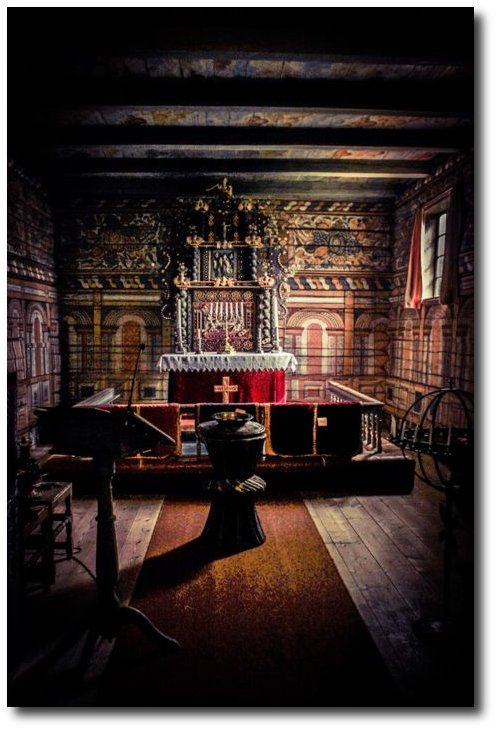 Stave church, Rollag, Buskerud, Norway
Picture Credit Visit google.no

Røldal stave church, Hardanger region in Norway. The church was built at the end of the 13 th century and is famous for its crucifix. According to legend it sweats once a year (July 6 th), and the sweat has healing power. After Trondheim (Nidarosdomen cathedral), Røldal was the most important site of pilgrimage in Norway during the middle ages.
Garden Snails – Cepaea Hortensis (Detail) New painted ceiling on antique floorboards.
Peter Korver Amsterdam 2008
Norwegian cubbord beds adorned with wood carvings and Rosemaling
The colorful knotted throw was created to compliment the wall painting.
Visit homedesign.marthastewart.com
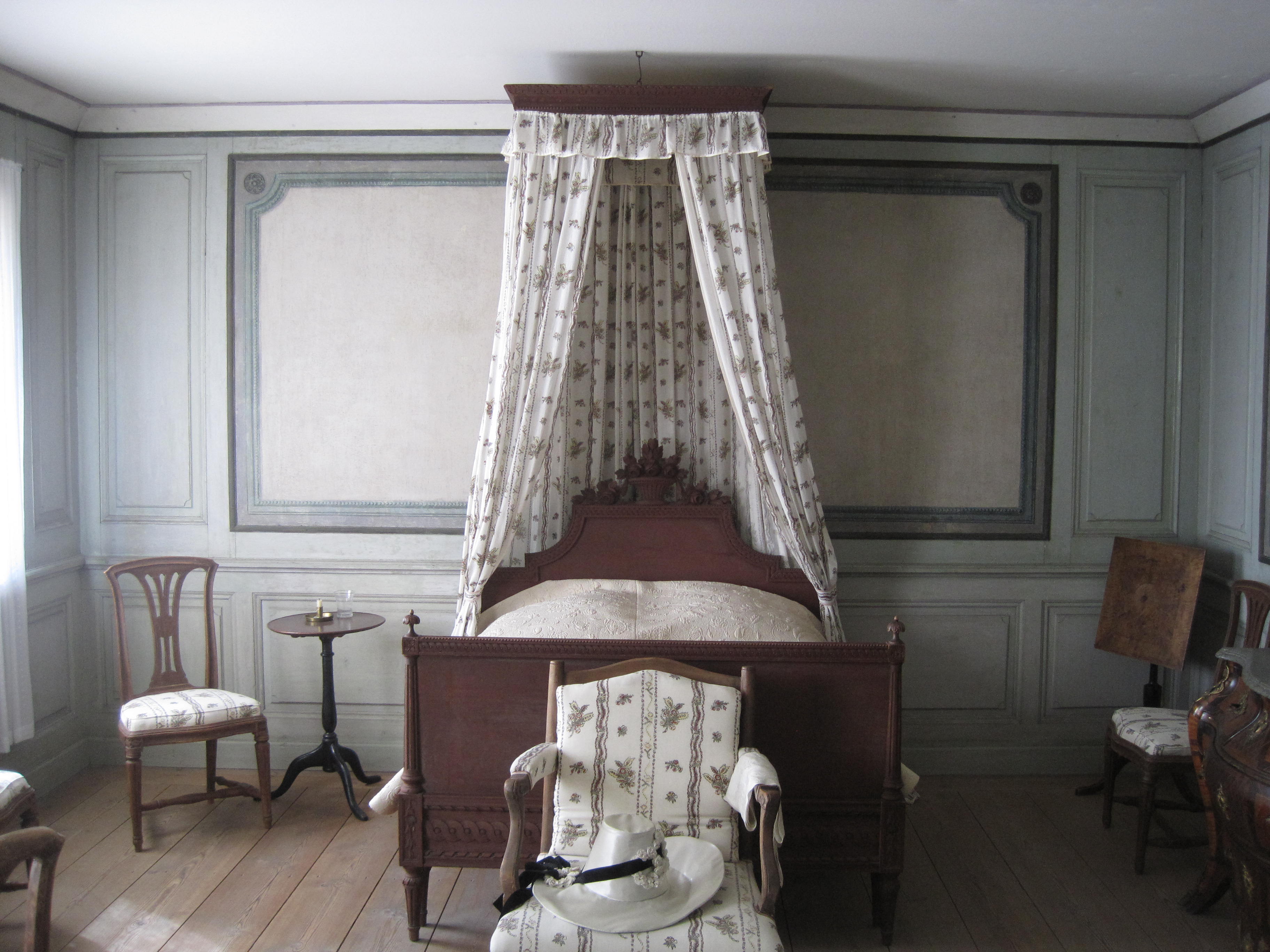
“The lady’s bedroom at Skogaholms herrgård (Skogaholm Manor), Skansen open air museum, Stockholm.” Visit upload.wikimedia.org
Antique 1840-1870 Swedish Mora Clock Visit seattle.craigslist.org
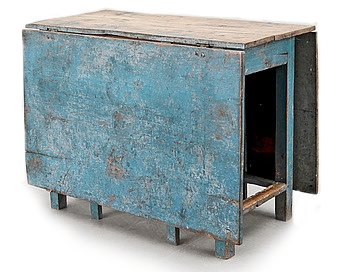
Swedish Antiques Visit bukowskismarket.com
Stora Nyckelviken, Stockholm – Visit upload.wikimedia.org

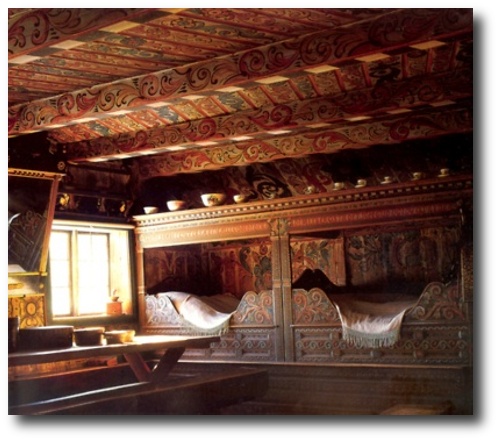 Hall (ivistoga) with intricate rosemaling; Yli farm in Telemark
Skansen Museum in Stockholm- See More At New Girl’s Accessories Blog
Länna Prästgård, Norrtälje Visit homedesign.marthastewart.com
Skansen Museum in Stockholm- See More At New Girl’s Accessories Blog
Skansen Museum in Stockholm- See More At New Girl’s Accessories Blog
Two Scandinavian Homes Visit inspiracionline.blogspot.com
Lone Ranger Antiques 321 Walnut Street Hollywood, Florida, 33019.
Swedish Palette – A Galvinized Pail Is Used As A Vase
Näs herrgård, Norrtälje, Uppland –Wikipedia
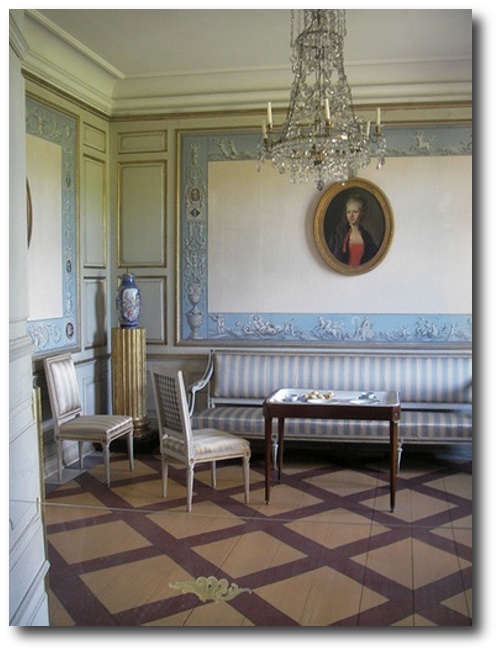 Skogaholms Herrgård, Skansen, Stockholm.
18th century weeks at Skansen by Johanni on Flickr
Sunlight in the dining room at Haga, Haga Pavilion, Late 18th century, Gustaviansk or Swedish Neoclassicism Photograph by Magnus photo Seen on Pinterest
Sweaters by Designer Solveig Hisdal
Traditional Swedish Nordic Dining Rooms – Visit solgarden.se
Visit knowingtheroyals.wordpress.com
Adolf Frederick was born, 14 May 1710 -12 February 1771) was King of Sweden from 1751 until his death. His father was Christian Augustus (1673—1726) duke and a younger prince of Schleswig-Holstein-Gottorp, prince-bishop of Lubeck, and administrator, during the Great Northern War, of the duchies of Holstein-Gottorp for his relative Charles Frederick. His mother was Albertina Frederica of Baden-Durlach. On his mother’s side, Adolf Frederick descended from king Gustav I of Sweden and from Christina Magdalena, a sister of Charles X of Sweden. From both his parents he was descended from Holstein-Gottorp, a house with a number of medieval Scandinavian royal dynasties among its ancestors. Adolf Frederick was also a 13th-generation descendant of Erik V of Denmark; a 13th-generation descendant of Sophia of Denmark and Valdemar I of Sweden; and an 11th-generation descendant of Euphemia of Sweden, Duchess of Mecklenburg and her husband the duke Albrecht.
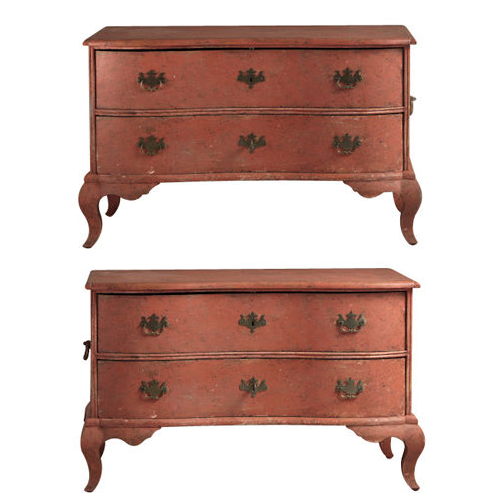
Pair of Swedish Baroque Commodes created in the 1850s. Unknown Dealer
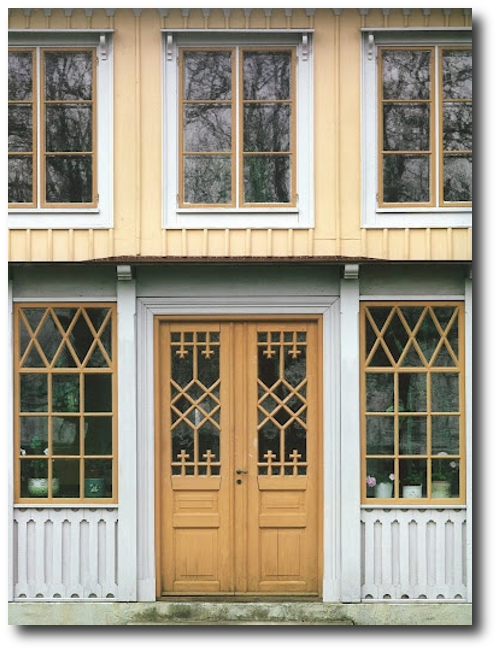
Nordic Architecture Visit homedesign.marthastewart.com
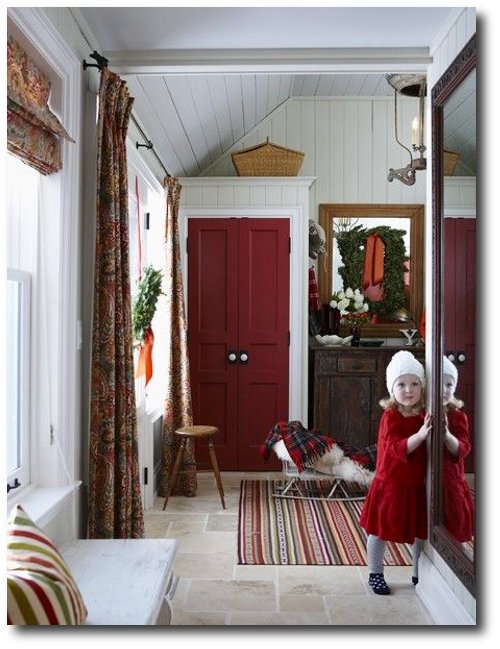 Sarah Richardsons Country House Visit houseandhome.com
GRUVGATAN 13 Blog Visit gruvgatan13.blogspot.se
The pale colors and bare windows give this room a Swedish feel….Colefax and Fowler
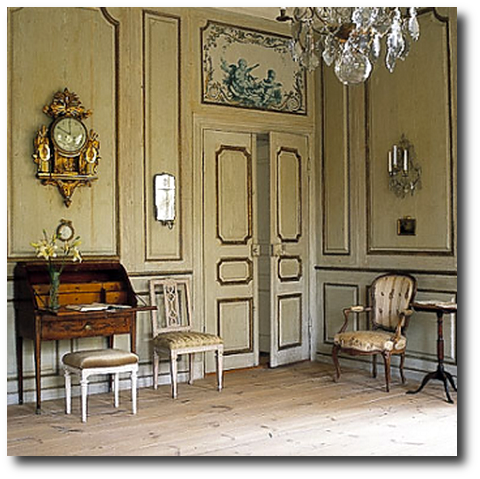
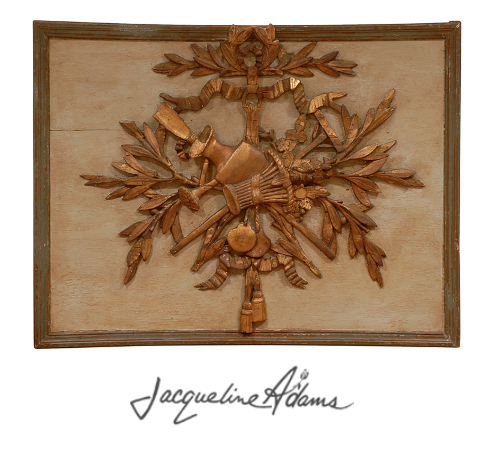 18th Century French Carved Wood Louis XVI Panel
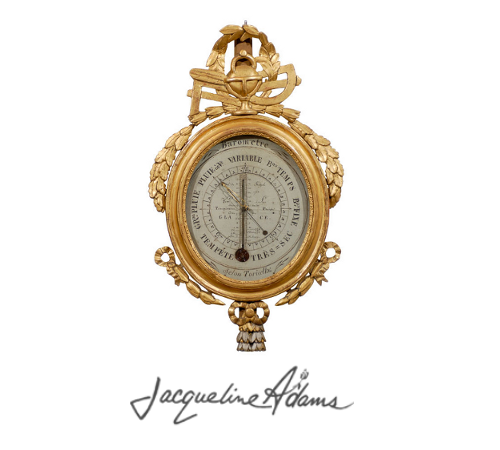
18th Century Giltwood Barometer with Allegory of Science
This comfortable and fresh vacation home displays simple palette combined with clean lines and rustic finishes. In place of a traditional oil painting, designer Jessica McIntyre created an art installation for the dining room with wall brackets from Ballard Designs, pewter chargers from Pottery Barn, antler trophies from Two’s Company and antique Chinese water vessels from Club Cu. The rustic Durango light fixture by Arteriors Home contrasts nicely with the more traditional Zentique dining chairs. The tonal damask rug is from Shaver-Ramsey.coloradohomesmag.com
A Swedish Farmhouse- Source: Skeppsholmen.
Lennart Castelius Antiques & Interiors- here
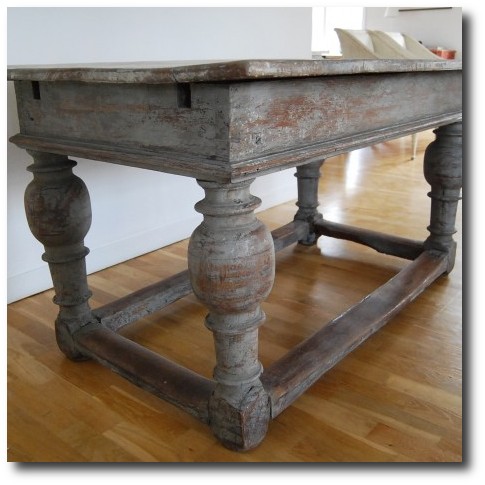
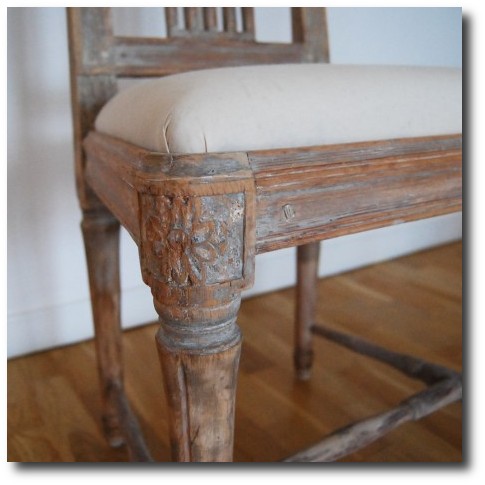
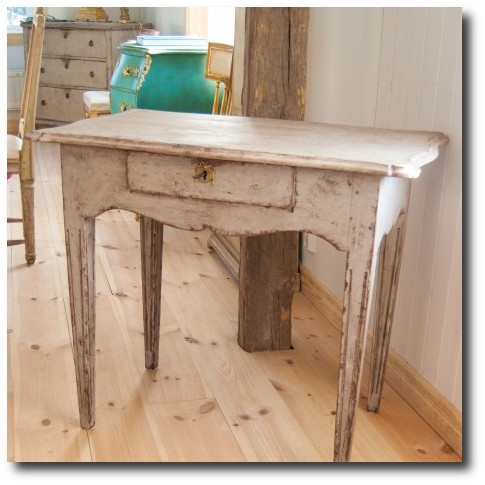
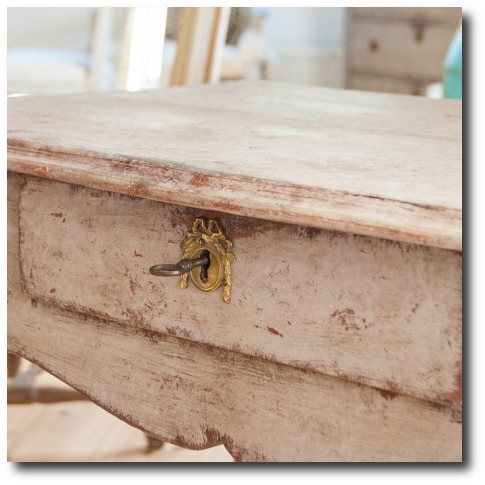 Lennart Castelius Antiques & Interiors
Pictures:


A Guesthouse Decorated in The Swedish Style
In the August 2010 issue of Home Beautiful, an editorial was written up on a garage in Salt Lake City which was transformed into a relaxing guest house with an overall Swedish design. Designers Marshall Watson and Jeffrey Kilmer took the everyday average space we all forget about and utilized the property in an entirely new way.
This concept of using the garage space has become even more popular in recent years as the need to accommodate “boomerang” children and aging parents has made many of us re-think the space we already own.
Many homes have attached or detached garages, and these spaces can be turned to very nice living accommodations. As with any project, you’ll want to make sure that you comply with local ordinances and building codes before undertaking such a project.
When converting a garage into to livable space, there’s always the issue of what to do with the garage door opening. A good solution is to keep a garage door in the original opening. By doing so, you can keep with the overall exterior look of the house.
Another option is to install carriage-style garage doors which feature decorative windows. These doors allow you the functionality of windows on the inside while maintaining the original garage look on the exterior. Another option is to replace the garage doors with large scale windows or doors which will fill the opening.
One of the most challenging aspects of this sort of renovation is the option of a bathroom. Additional plumbing requires tying into the existing plumbing lines which can be problematic and challenging. An additional bathroom is always a nice amenity to have for those additional guests, so investigating ways to add this possibility is worth doing.
About the Swedish Salt Lake City Garage Transformation:
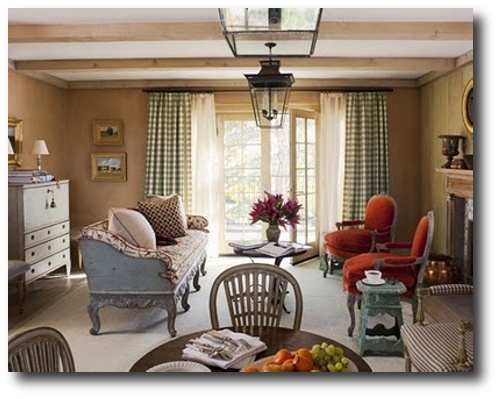
After looking at the pictures of the Salt Lake City interior, one would never suspect it was a garage to begin with. Bead board paneling frames a fireplace where a gilded 19th century Italian mirror gives the living room a refined look. Porcelain garden stools are scaled perfectly for a pair of 18th century Swedish chairs. A Swedish sofa with embroidered crewel work add a natural, yet refined look for this room. A traditional mora clock in the entry way sets the mood for the whole guest house.
Subscribe to Home Beautiful- House Beautiful (1-year auto-renewal) $15 dollars ($1.50/issue)
Borrow Elements From This Home:
– Pairs of French Bergeres- Ebay
– Gingham check black curtain drapes W46 X L42 $25- Amazon
-Ivory & Orange Faux Silk Checks Curtains 52″W X 84″L – $38- Amazon
-Juliet Heavy Satin Embroidered Faux Silk Curtain Panel 52″W X 108″L – $295 Amazon
-Howard Elliott Bright Gold Lead 37″ Round Wall Mirror -$299 Amazon
-Uttermost Valent Blue Accent Table- $217 Amazon
-Two’s Company Gold Leaf Round Wall Mirrors, Set of 3- $136 Amazon
-Hickory Manor Round Rose Mirror, Cream Gold Silver- $292 Amazon
-Howard Miller Grandfather Clock $3K – Amazon
-Howard Miller Joslin Grandfather Clock- 3K Amazon
-Traditional Grandfather Clock with Chime from Coaster $230 Ebay
-Uttermost Cadey Side Table-$283- Amazon
-Howard Miller Chili Red Mora Clock For $1K Amazon
Commentary from the House Beautiful article:
FRANCES SCHULTZ: Sometimes the guesthouse is the second-Hand Rose of decorating, but this is a little jewel box.
MARSHALL WATSON: The owners treat their guests like family, and most of the time they actually are family. Between them they have seven children-two still at home and five grown and away who return frequently to visit.
Jeffrey KILMER: She wanted the house to be a fantasy escape, for her visitors to have a feeling of being transported into a foreign environment that
was cozy and warm.
FRANCES SCHULTZ- That Swedish Mora clock as you enter really sets up the whole scheme.
MW: You also feel, ‘Boy, I’m entering a really special space.’ You’re enthusiastic and drawn in. Even though you enter directly into the main room, it creates the feeling of an entry distinct from the room.
IK: And as opposed to a painting or a mirror, the clock is three-dimensional, so it adds depth and enhances the sense of space.
FRANCES SCHULTZ- Small spaces allow the luxury of less. And yet there seems to be everything here you need.
IK:- It’s laid out comfortably. The living room and dining room pieces are small scale, but still very comfortable. There’s not a lot of stuff here, but everything
has its function. We’ve kept the seating arrangements pulled away from the walls. If you create space beyond the furniture, it adds volume to a room.
MW: And there’s no upholstery to the floor. There are a lot of legs, and that creates that air space, which in turn creates an open feeling. But you have to be careful. In a large area a lot of legs will look like too many ballerinas on tiptoes.
FRANCES SCHULTZ- That elaborate gilt mirror is a bit brazen for a Nordic country cottage. Did it come from an ancestor’s castle?
MW: Well, it’s from somebody’s ancestral castle,and it works here for several reasons: It’s in a rather squashed space, so to put a square mirror there would not have been nearly as interesting. Also, a bull’s-eye expands the room. As for its elaborateness, you know the mantel was—and [still is—the place where you put your best pieces.
So the idea is that this was handed down through generations, and it was going here because it was the finest thing given to us by Grandmother.
FRANCES SCHULTZ- The lanterns seem to be the only place in the room where you’ve played up the scale. How big are they?
JK: About 18 inches tall and 13 across. There weren’t a lot of lamps, and we needed something to anchor the space. The two large lanterns delineate the living and dining spaces and give an intimacy to each,but at the same time pull them together.
MW: We also used downlighting in this room,and rather dramatically on that wonderful wall of wood that’s the fireplace wall. There’s a hidden door at the left of the fireplace to conceal a closet and television—that’s easy to do with beadboard.
It was typical of both Swedish and American Colonial houses to have wood paneling on the fireplace wall, since it was the focus of the room, and the rest of the room would be lath and plaster. We added beams also to give that cozy feeling of a very old
house with low ceilings.
FRANCES SCHULTZ– The kitchen blends so seamlessly into the room that
I almost missed it.
M W: We love to do kitchens, but we hardly ever do a ‘normal’ kitchen. We try to find an antique and adapt it to a kitchen cabinet door-front, whether it’s a rustic couple of boards from a wash stand or a wonderful Gustavian sideboard, which is what these were inspired by.
FRANCES SCHULTZ-There’s an element of depth in everything, from the fabrics to the furniture to the layers of color and glazing on the painted surfaces.
MW: In a small space you view things close at hand,so in many ways the detail is more important than it might be in a grander space.
FRANCES SCHULTZ- Which is not to say you don’t have elements of grandness. The clock, the mirror, that amazing headboard. Talk about going for Baroque.
MW: And if it ain’t Baroque, don’t fix it. Isn’t it fabulous? It was part of a large cartouche that came from Austria. It’s pine, and in two pieces mounted directly to the wall. We thought it was reminiscent of a chalet in Europe where you’d throw this one
enormous piece in a room. It makes the room feel a little larger, and everything else holds together.
FRANCES SCHULTZ-The house may be small and relatively sparse, but there are big gestures.
MW: You don’t have to have a lot of pieces in the room if the pieces have a lot of character. We do many large projects, and it’s wonderful to have these great, large rooms for entertaining. Yet invariably the couple finds the smallest, coziest study or
library to live in. In our everyday lives we want to feel enveloped and protected, don’t we?
The surprise of a gilded 19th-century Italian mirror “gives the living area a great jolt,” Watson says. Porcelain garden stools are perfectly scaled for the pair of 18th-century Swedish chairs.
The house is on a promontory that overlooks a canyon: “There are several resorts in the region, so it gets a lot of use, winter and summer,” Kilmer says. Seating is arranged away from the walls, giving the room an airy, open feel. The cushion on the painted antique sofa is covered in Hinson’s Classic Crewelwork and shaped to follow the lines of the wooden seat. Curtains are Mariefred by Country Swedish. Sofa and drop-front desk from Evergreen Antiques.
Beautifully effecting patina and age, decorative painter Judy Mulligan applied multiple layers of pigment and glaze to kitchen cabinets and walls. The narrowness of the Dennis & Leen Formations dining table “allows for intimate, lively conversation,” Watson says. English Hepplewhite-style chairs are covered in La Seyne by Brunschwig & Fils. Sub-Zero refrigerator with custom panels; Viking range and hood.
Gustavian Three Seater Sofa By Gustavian sells a traditional Swedish 18th Century sofa made from solid birch wood with hemp fibre in supporting weave. Seat and back cushions in natural rubber and coconut fibre. Hand carved floral pattern on the front. Price: £3,200.00
White Painted Gustavian or French Style Carved Wood Sofa – A very decorative white painted Gustavian or French Style carved wood sofa, modified to accept comfortable upholstered cushions $4,950.00 FS Henemader Antiques


50 Examples Of Swedish Folk Country Interiors
Interior archive is one of those sites where you can spend hours on. Looking through their dozens of pictures, there are a number of beautiful pictures that present a country look from Sweden. Here are my favorites:
A Swedish Interior Design Country Folk Art Home Photographed By Tim Clinch
The Interior Archive showed some beautiful pictures of a country house in the folk art Swedish style. A simple kitchen is furnished with antique wooden furniture. A hand-painted Swedish Mora clock stands against a distressed orange wall in the kitchen. Here, we see the detail of the hand-painted decoration on the chair that sits in the kitchen. A wall-mounted corner cupboard provides ample storage in the kitchen.
Swedish Country Home Designed By Van Breem
Photographer Simon Upton captures a guest bedroom is painted a pale grey and the bed is from van Breem’s line of reproduction Swedish furniture. A pair of rustic wooden chairs flank a console table and a Swedish Baroque mirror in the yellow painted hallway. The dining area in the kitchen has a wooden trestle table and Swedish grandfather clock and is full of spring flowering bulbs. The large range in the kitchen displays a collection of Swedish copper pots. A painted yellow Swedish sofa from 1760 and a dresser in the living room. Outside we see a Swedish bench and lantern infront of a shed with a blue door.
A Swedish Home Designed By Lena Renkel-Eriksson
-Lena Renkel-Eriksson has used shades of white, blue and dove grey to recreate the classic style of her native Sweden in her Surrey home Here she creates a unique space around the color blue. A blue-painted cabinet in the kitchen was custom made by Swedish carpenters and the swedish country chair was painted in a richer more saturated blue and distressed. In this photo, we see a yellow painted doll’s house flanked by tiers of battered leather suitcases in a nursery. This spectacular photo shows off a dining area designed around the Swedish styles. A Swedish bench is paired with white painted Swedish gateleg table, and two classic swedish side chairs. The wooden floor of this hallway has been hand- painted in a yellow and white harlequin pattern. In the attic bedroom, white is the dominant color. A white wooden desk and Gustavian-style chair are placed infront of the window. A country styled white painted chair sits in the corner of the living room, where beautiful painted walls steal the attention. An oval Gustavian bow mirror is painted in white on the wall shows this room is decorated around the classic Swedish styles.
Noteworthy Beauties:
-A Rustic Lars Sjoberg Home shows a Swedish mora clock which stands on the stone staircase.
-Designer Lena Proudlock shows a solid blue-painted Swedish mora clock which stands on a blue-painted wooden floor.
-Mish Tworkowski designs this rustic styled living room that sits an antique spoolwork armchair
and a re-upholstered French chair in an orange velvet. In the room sits a cream painted 19th century Swedish cabinet. White washed wood walls give plenty of light to this sitting area.
-Miguel Flores Vianna shows a spectacular Swedish kitchen with a wood burning stove, with country Swedish chairs. This kitchen has many rustic elements to it. A light blue is painted on the walls breaking up
– Christian Kain positions two pairs of boots on either side of a carved painted console table in green the hallway.
Picture Credits:
Jeff R Bridgman American Antiques
Swedish Interior With Slat Wood Walls- Tumblr
Swedish photographer Anna Kern.
Norrlands Chairs Lucas Antiques Blog
Swedish photographer Anna Kern
Swedish photographer Anna G. Tufvesson ,
Swedish antiques from Gudrun Ödmann Antikhandel gudrunodmann.com
Picture Credit-masterhenriks.blogspot.com
Swedish photographer Anna Kern
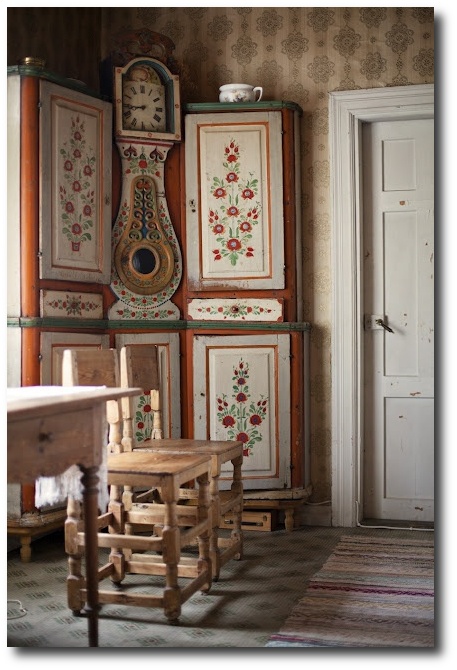
Corner cabinet in red, white and green with a built in Mora style clock. Tumblr
Swedish Bench- Live Auctioneers
Sandemar, Sweden, 17th Century
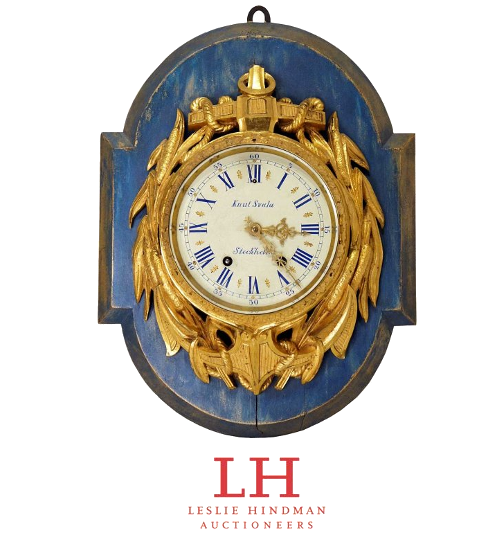
Swedish Gustavian Style Gilt Bronze Cartel Wall Clock,circa
1860, having a heavy bronze case in the form of an anchor draped with a
laurel wreath mounted on a blue painted wooden plaque; the white
porcelain dial has a blue Roman numeral chapter ring encircled by an
Arabic numeral minute ring, marked Knut Svala / Stockholm
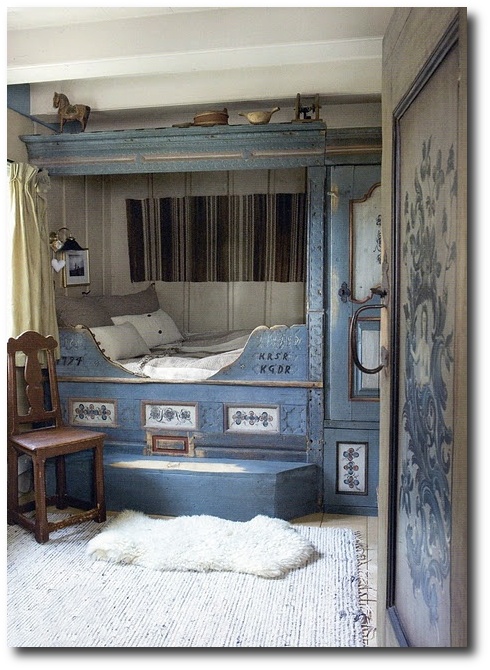
Scandinavian Bed
Folk art painted step back hutch with adjustable shelves, two drawers and two doors.
Scandinavian room scanned from BOOK: The Perfect Country Cottage by Bill Laws
Featured on Glenda’s Blog The Paper Mulberry
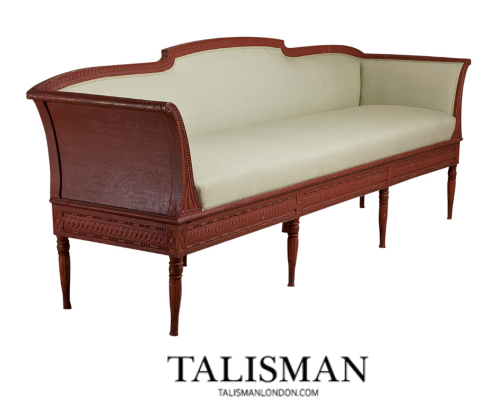
A Rare Swedish Gustavian Red Painted Sofa circa 1790 Reupholstered by Talisman
The Swedish Country House By Susanna Scherman- Buy It On Amazon
Original Pictures Seen On Martha Stewart
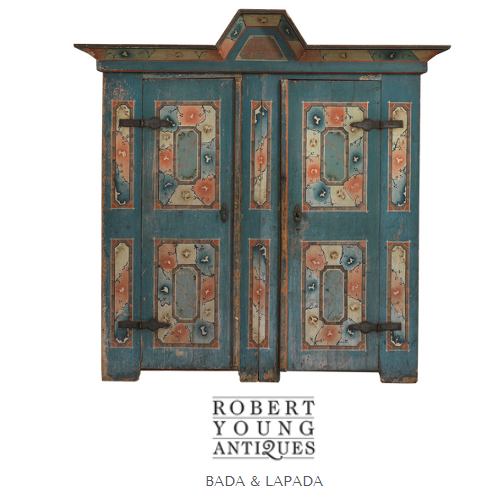
A remarkable late 18th Century Marriage Cupboard, in the Folk Art tradition, made in two vertical sections and surmounted by an arched molded cornice, all retaining the original painted decoration and hand wrought iron hinges. The original painted surface shows some appealing evidence of wear and age and the subtle original polychrome colours have softened and patinated to a delightful chalky dry surface.
Marriage Cupboards of this scale and importance were generally made to special commission for young married couples and were frequently offered by their families, containing woven, homespun and embroidered fabrics. They are also known as “Dowry”, “Brides” or “Wedding” Cupboards and are often associated with the Scandinavian Countries, where there was a strong tradition of Paint Decorated Furniture of this type as in other European alpine regions. The reason they are made in separate sections is so they could easily be de-assembled and transported up to the mountains in summer months, when the agricultural folk would take their livestock up to new pastures.
The extraordinary artwork seen in this social gathering space was painted by Jonas Hertman in the 1770s. The subjects of the murals depict cherished images and events in Swedish culture.
Original Pictures Seen On Martha Stewart
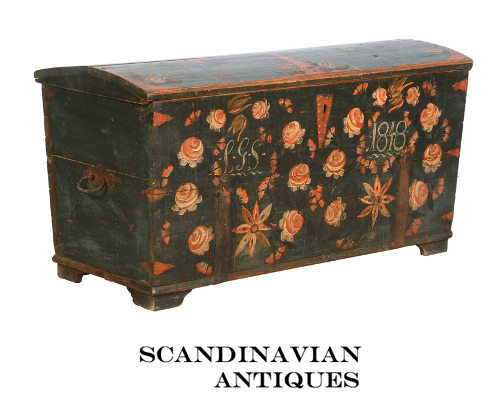 The colorful original paint has been well preserved on this lovely chest. The monogram and date of 1848 indicate it was likely a wedding or anniversary gift.
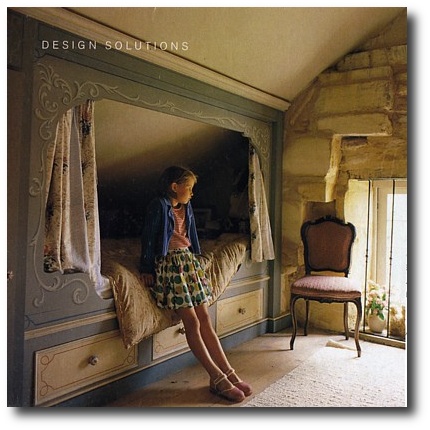
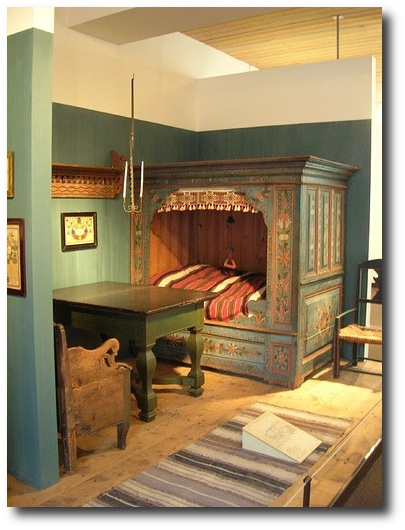
Scandinavian style bed stuffed with charm –Flicker
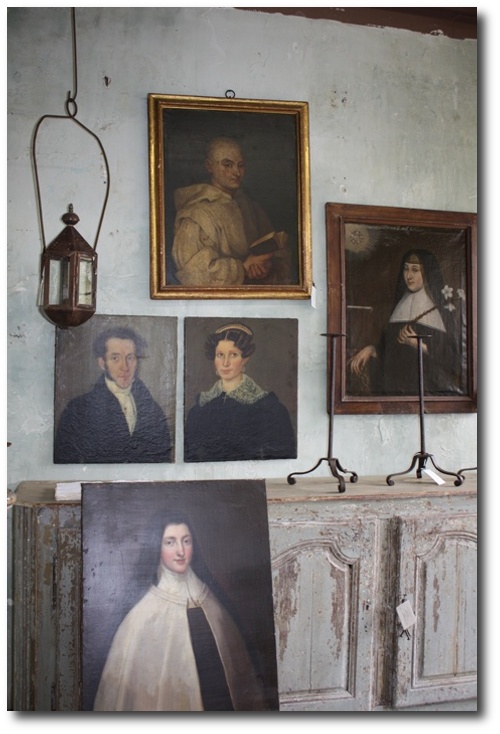
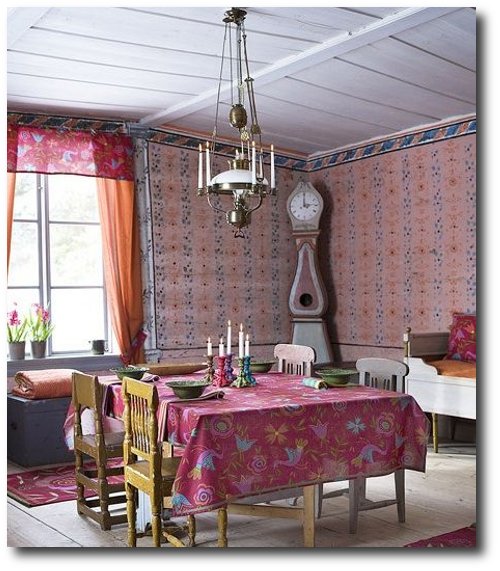
Swedish Folk Art Style- Space For Inspiration
Primitive Corner Cabinet With Astonishing Blue Paint, 3 Beautiful Country Chairs,
Red Antique Chest, -Swedish Wedding Chest Lucas Antiques Blog,
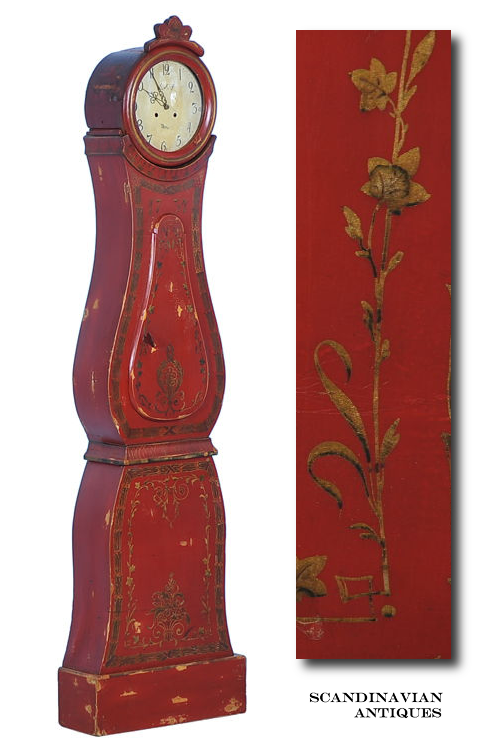
The beauty of a Swedish Mora clock such as this is found in the lovely
curves of the piece itself. In addition, this one had been painted a
deep shade of red and has intricate floral and leaf flourishes in gold
and green (note, paint is newer than the clock case, painted
approximately 100 year ago).
Swedish Mora Clock In Red From Scandinavian Antiques


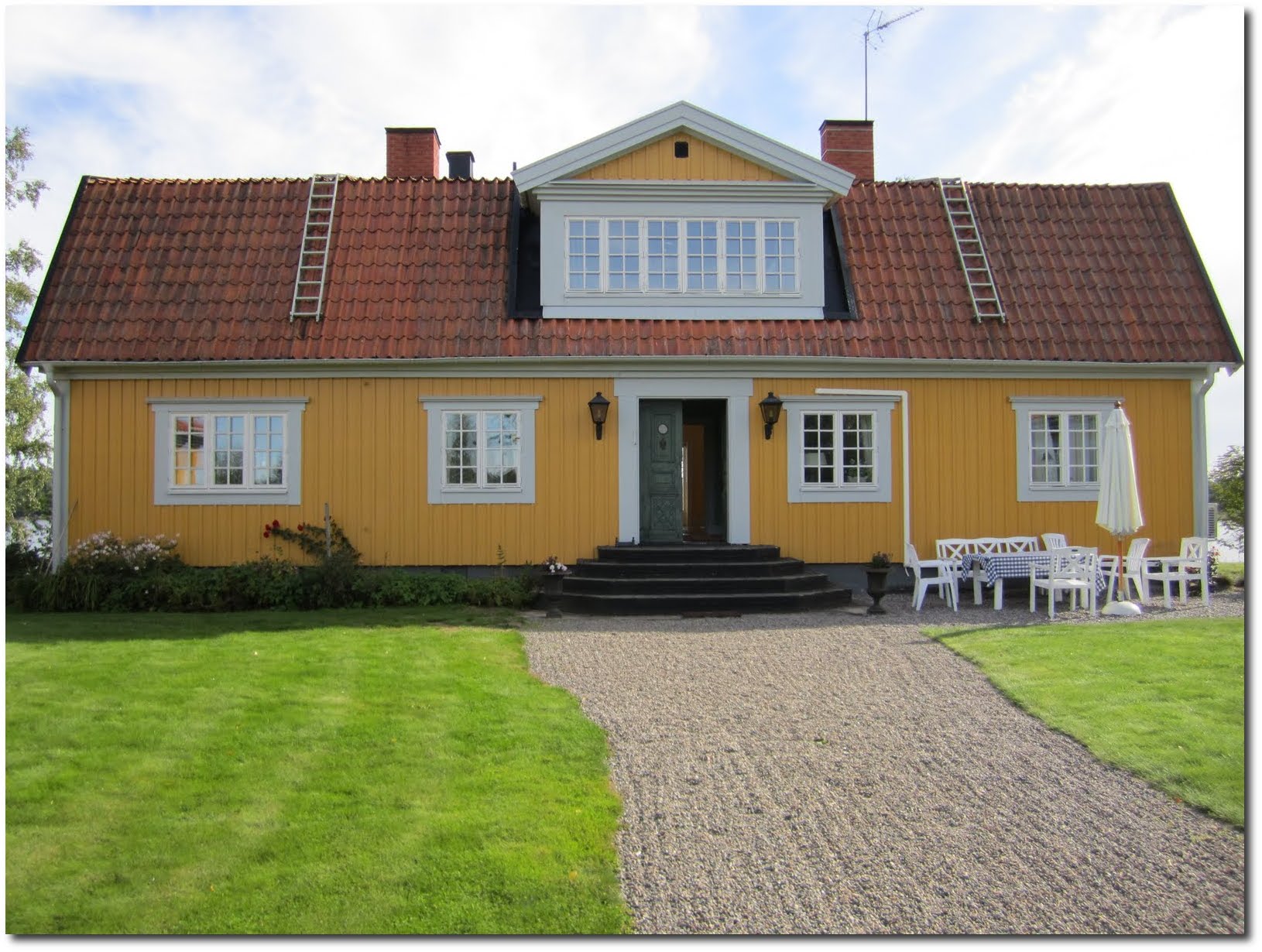

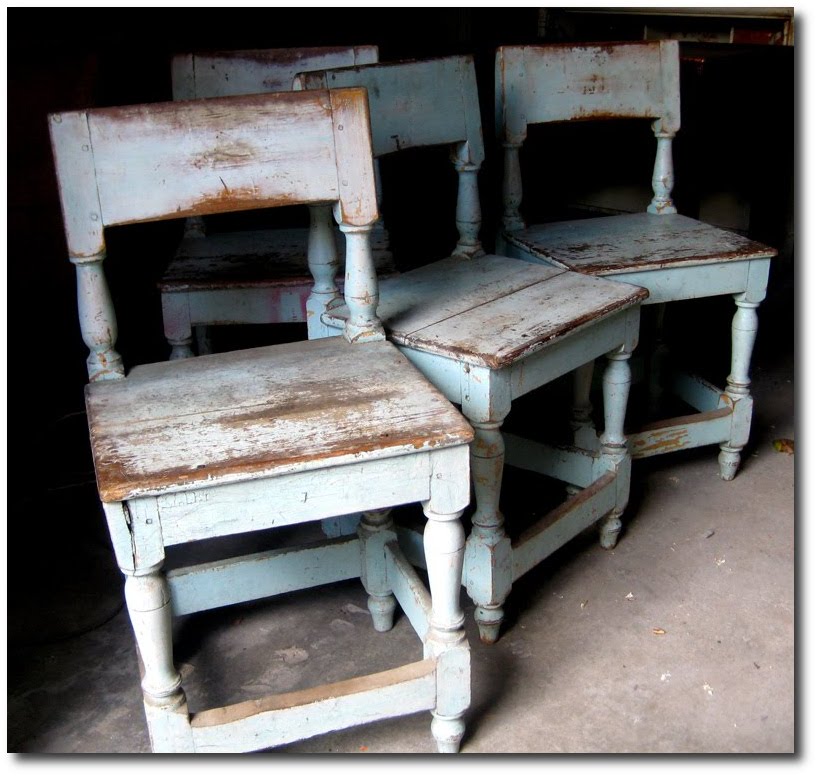
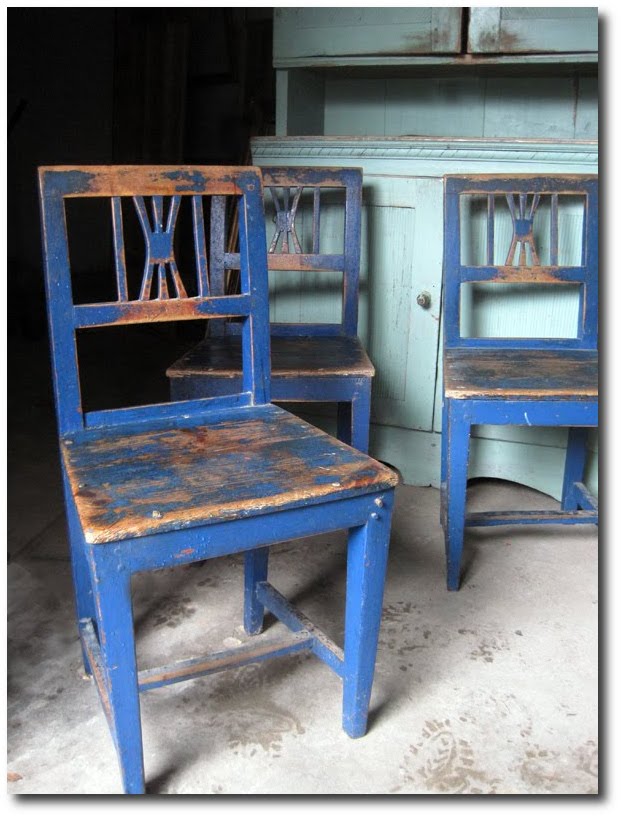
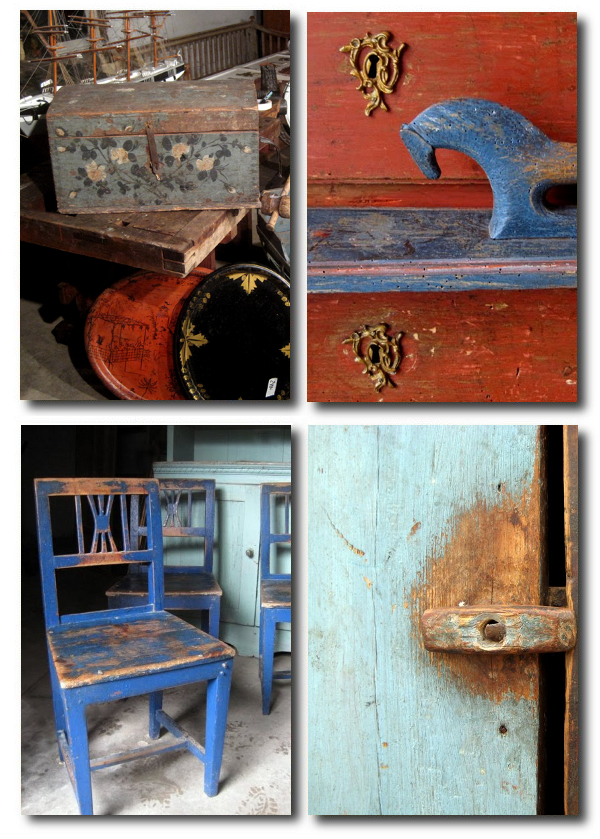

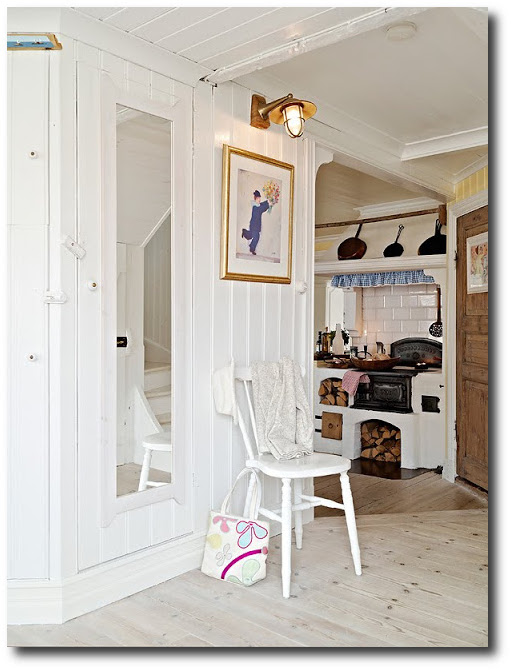
The Country Side Of Sweden- An All White Based Home
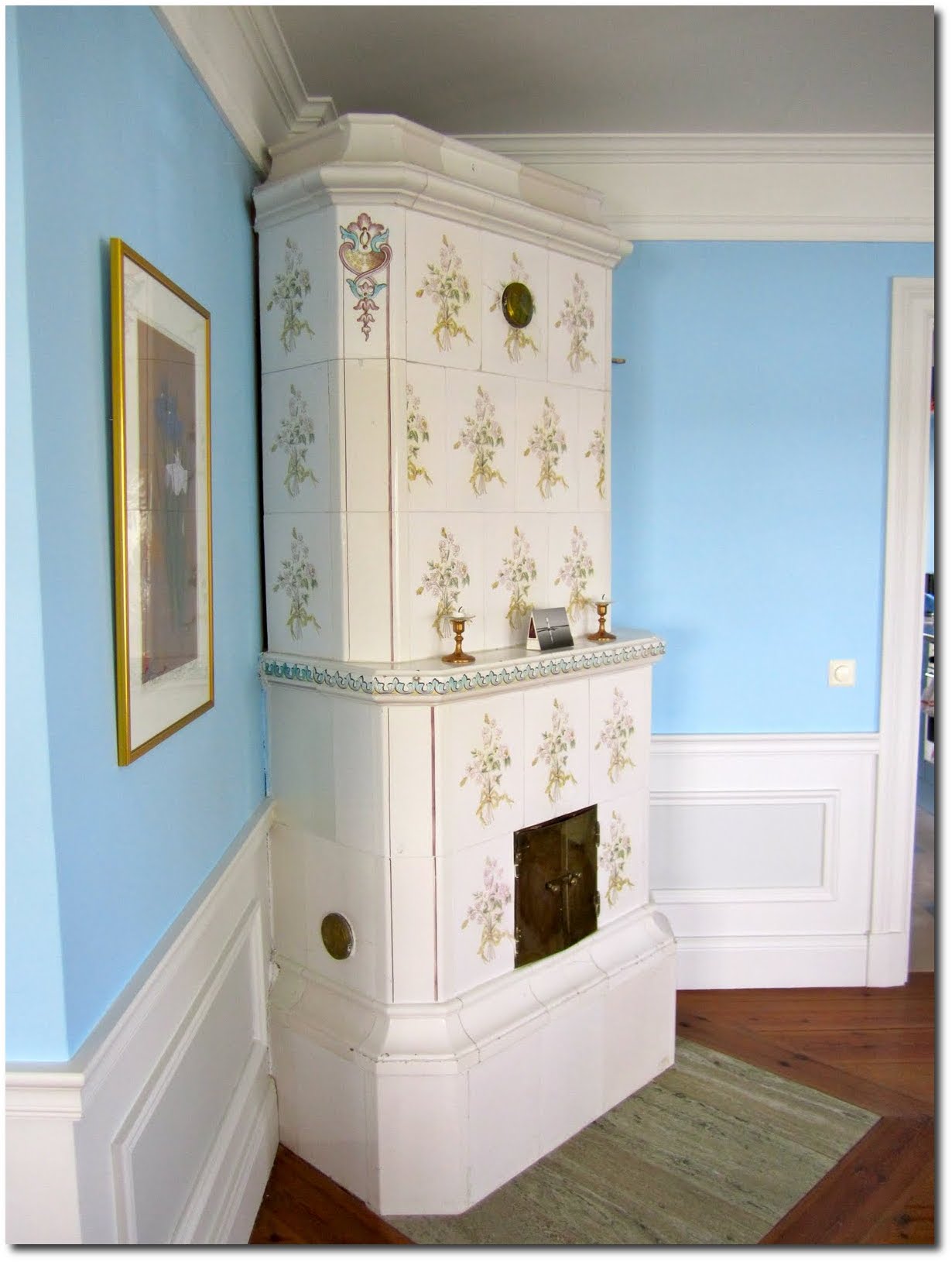
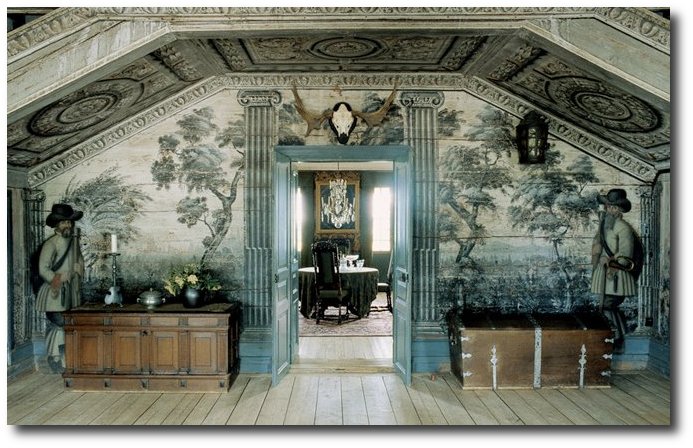
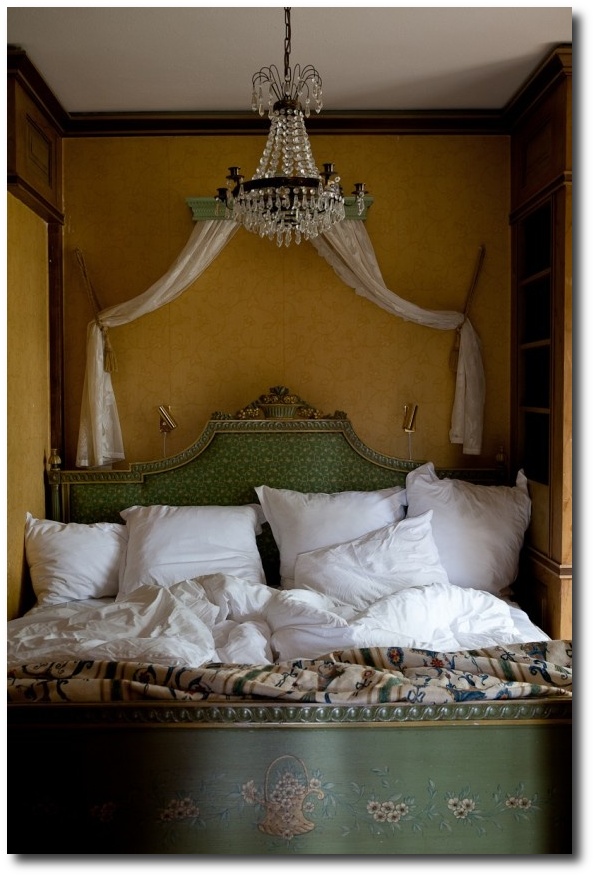
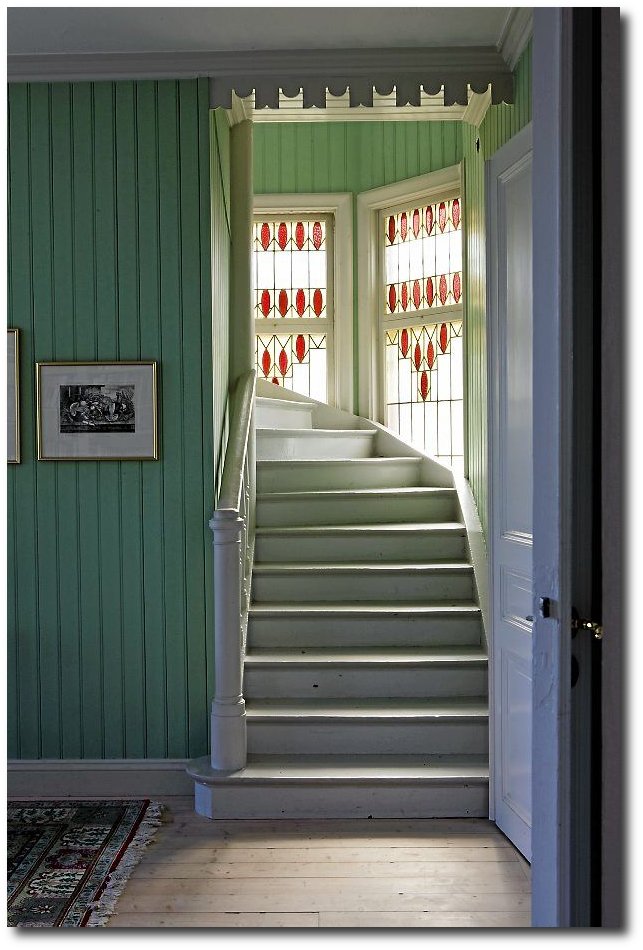
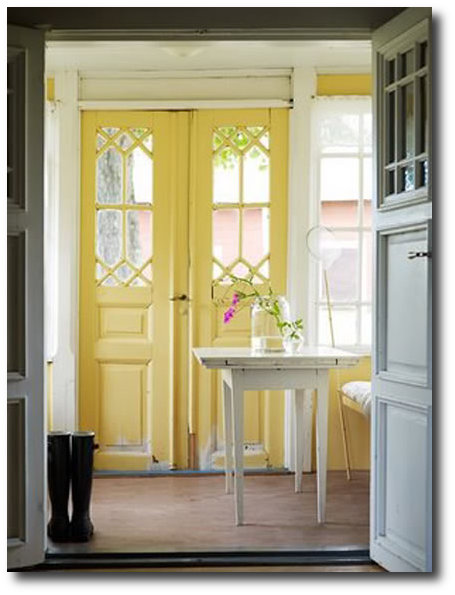
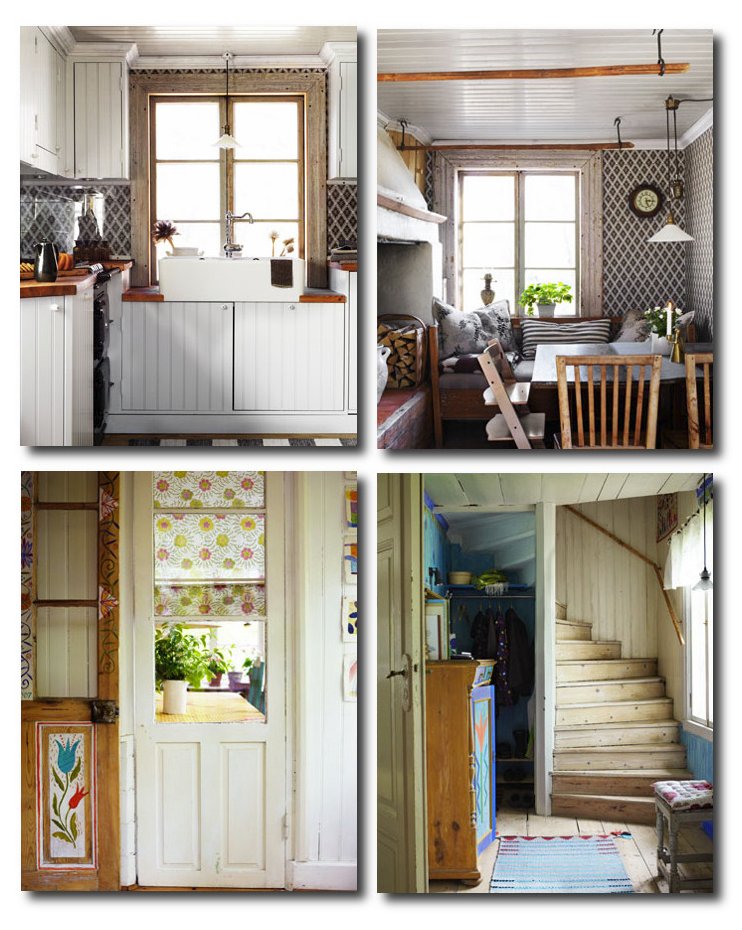
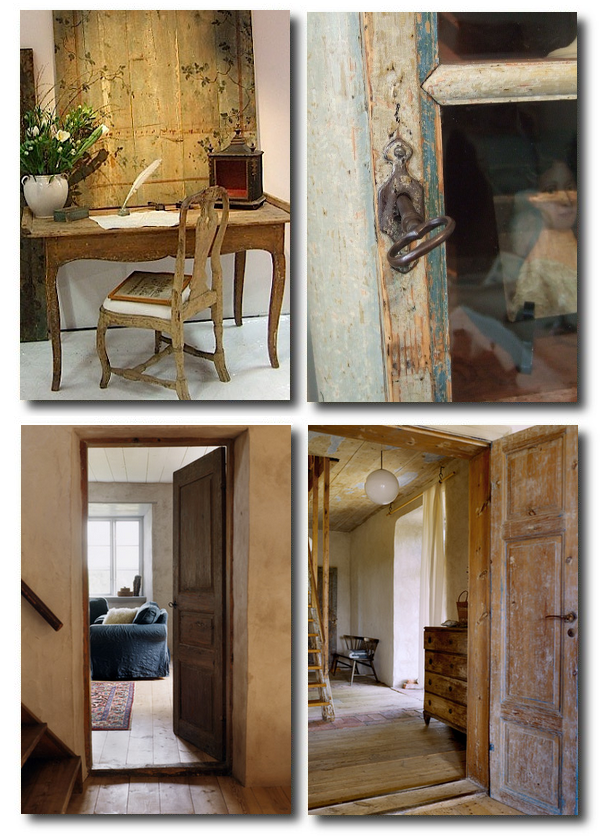
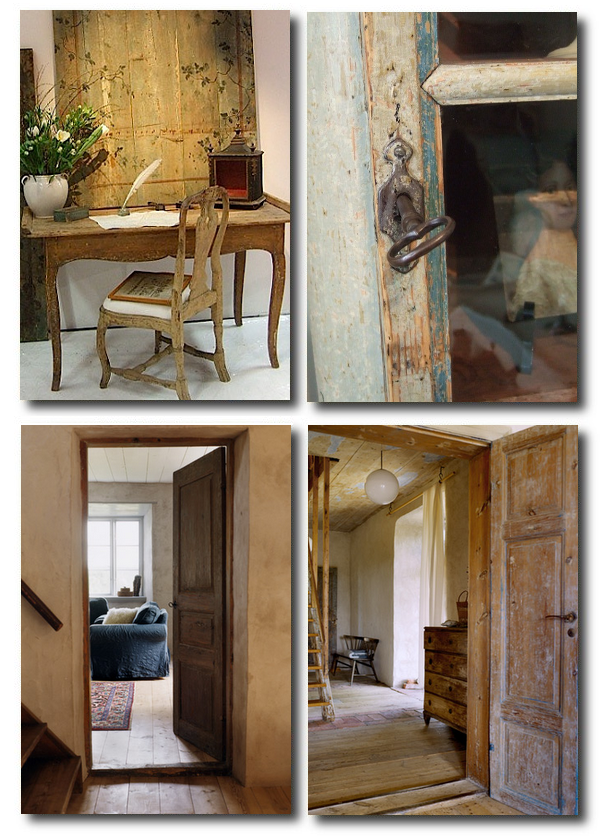
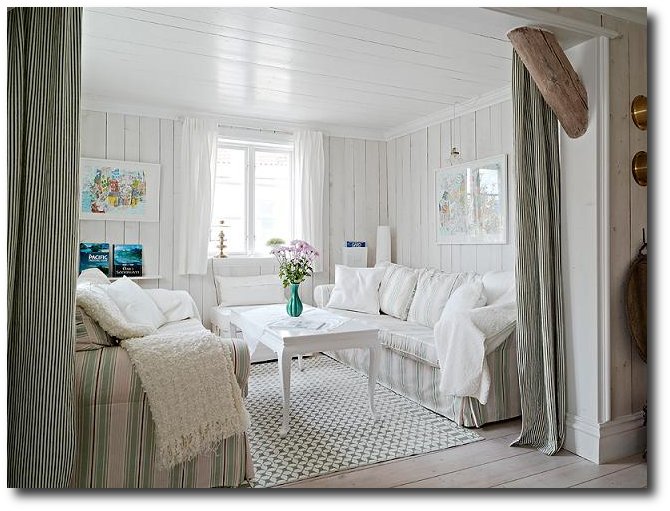
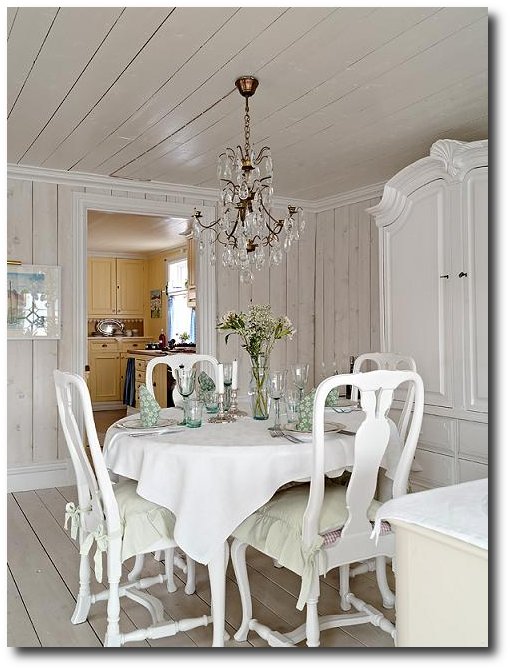
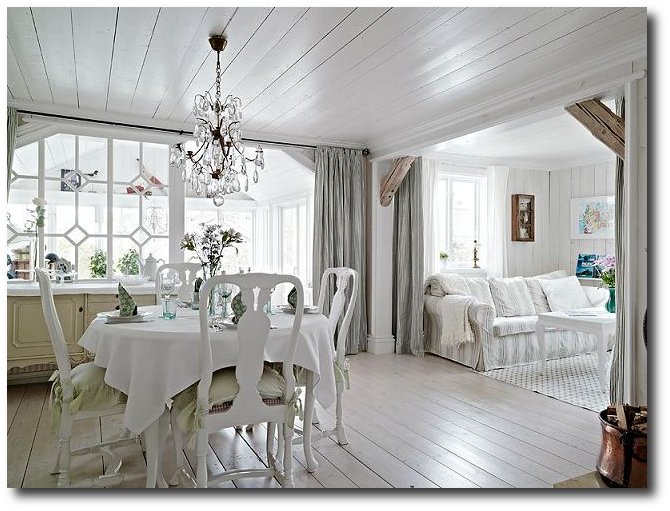
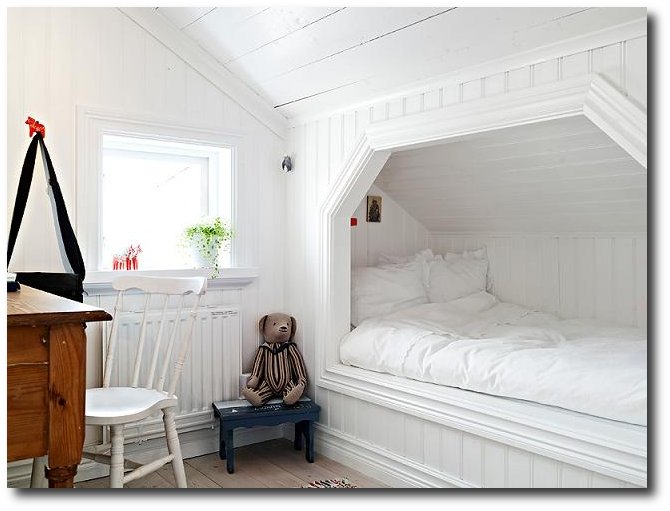
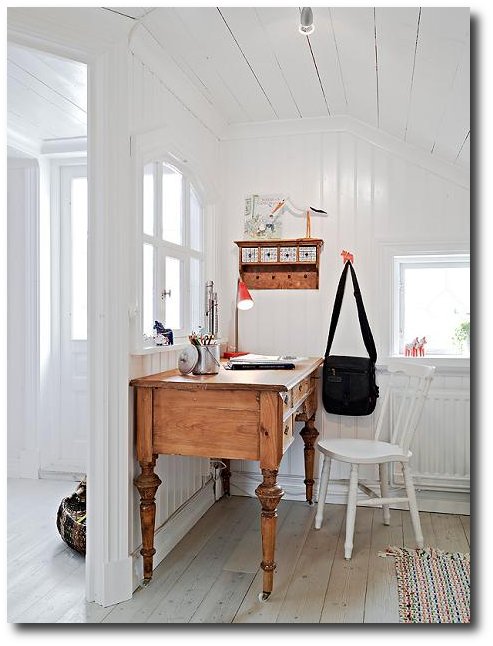
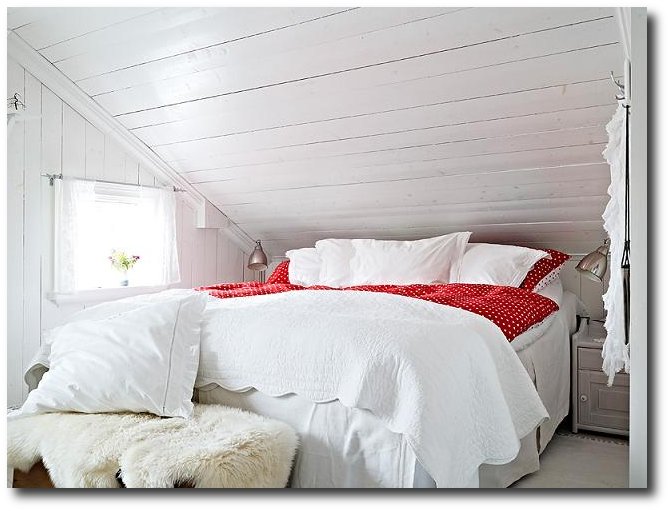
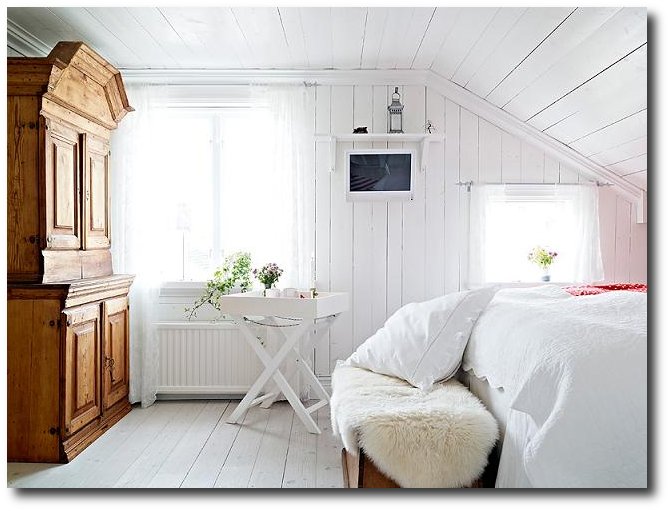
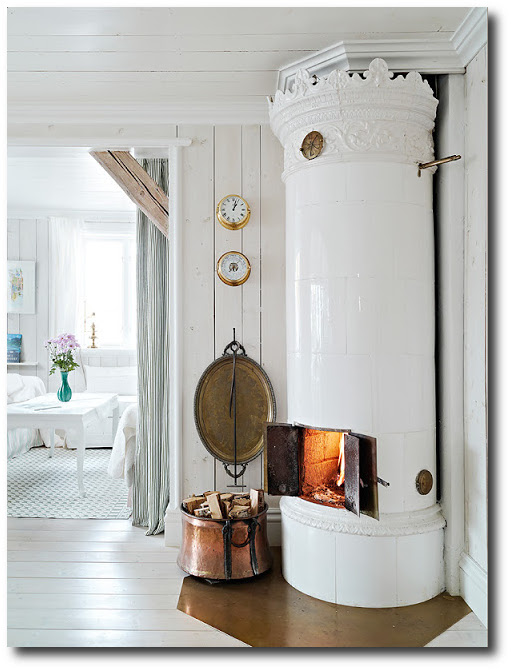
Wood has always played an integral part in the Swedish home life. Beech, birch and pine are the most popular woods in the Nordic region. Hardwoods such as mahogany were rarely used in Sweden as they would have to be imported, as well as the blonder woods were native to the land making it practical to make everything out of wood other than the kitchen sink. Swedish design is known for their use of pale wood, paneling, and solid wood furniture. Furniture was often elaborately painted, or left bare. In this country home we see this very design; shades of white, minimal design, and outstanding Swedish wood furniture.
Tips From This Interior To Your Home:
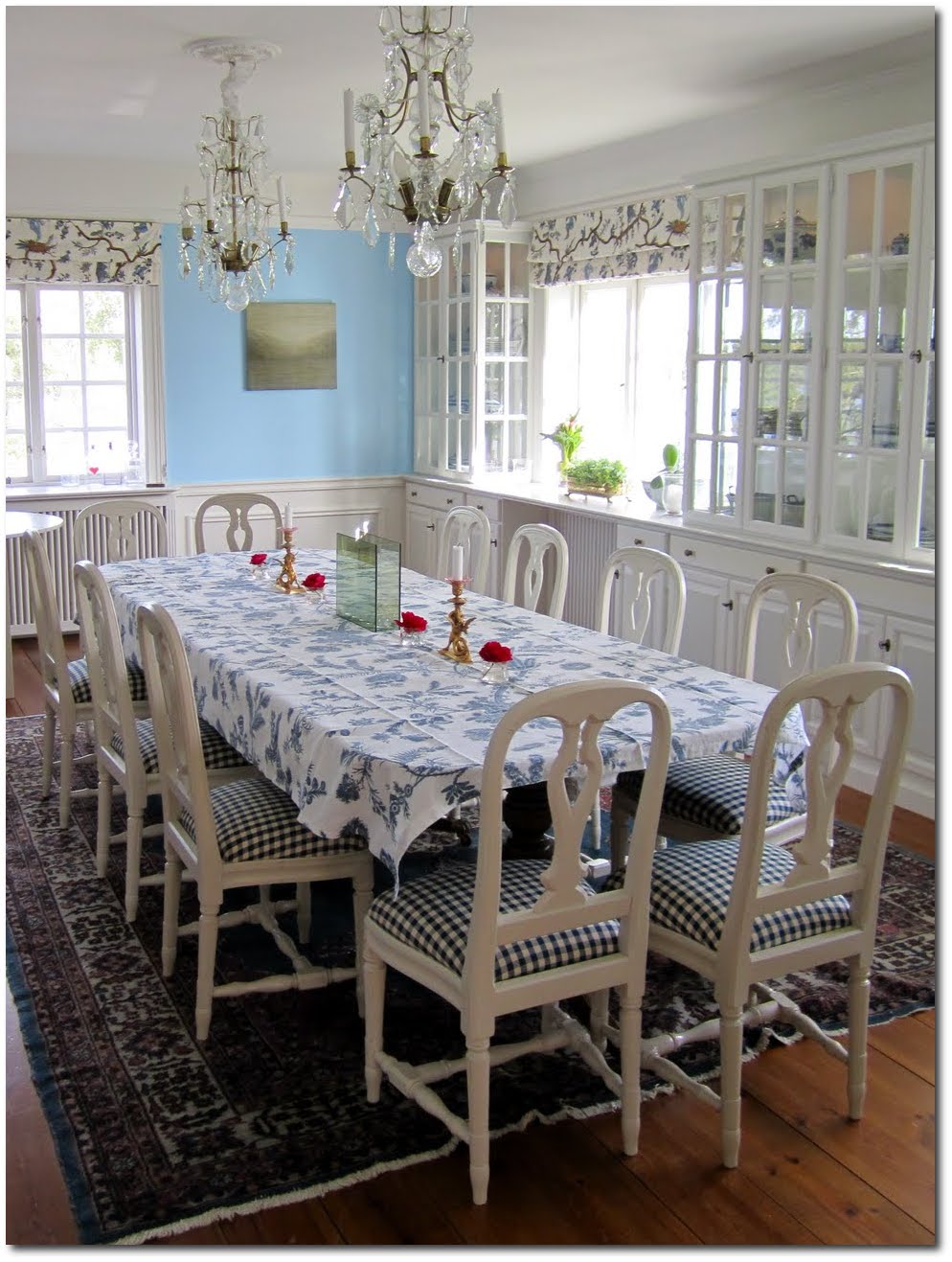
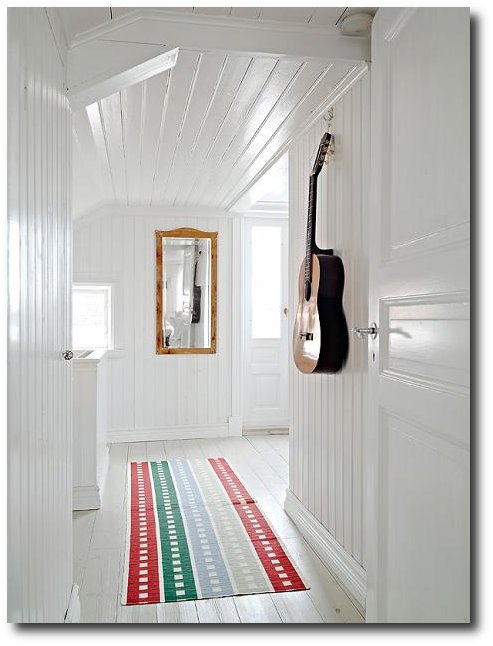
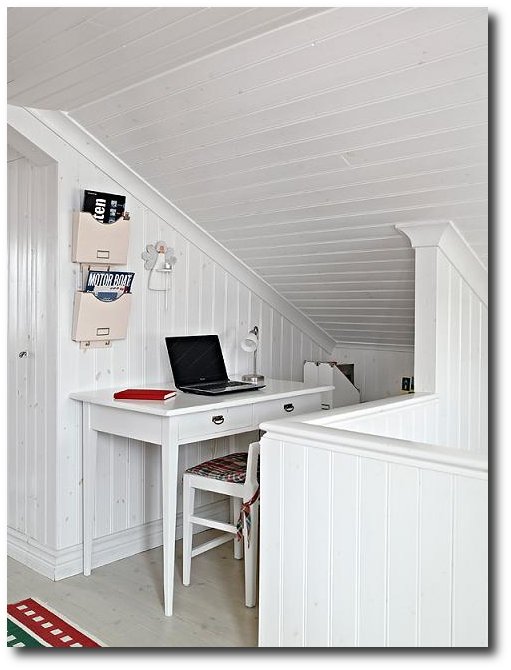
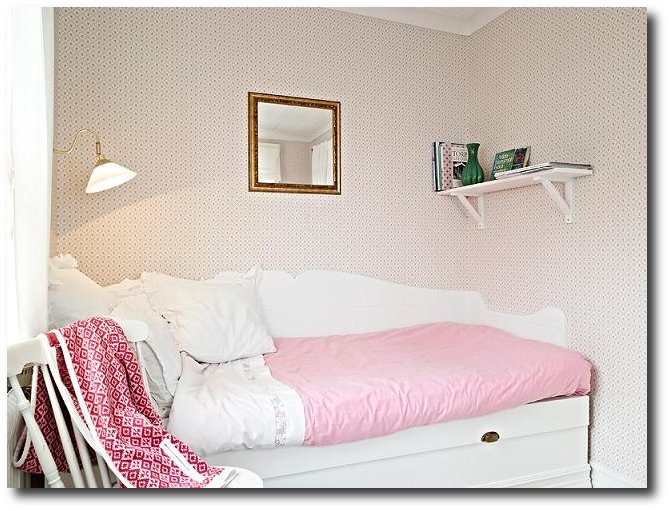
1. Add Interest- This Swedish interior is based around whites. They add an interesting floor mat to spice things up. A guitar hangs on the wall, which adds a stamp of personality into the home. Make your textiles count in a minimal home. Consider fabrics that have a Swedish styled patterns. Look for upholstery fabric, slipcovers, tablecloths with a distinct Swedish design.
2. Skip Painting Some Pieces. If you are hoping to decorate around white, add in plenty of untouched wood pieces to the overall scheme. Raw wood furniture can be very beautiful. This directoire style chest is washed with solid paint in a unique way that shows off the wood, but at the same time presents a very rustic edge to the style. Use the paint technique for your own wood pieces. Give a Swedish touch to these raw pieces by adding a oil rubbed hardware…. The rustic details won’t be overlooked.
3. Hang Swedish Styled Art- Look around for one of a kind art for your walls. Find a local artist who can create dimensional embroidery for your walls. Pick up 9 identical frames, and have the artist create a story or pattern that can be told through the embroidery. Add color into your home through the thread. Opt for brighter reds, yellow or blues.

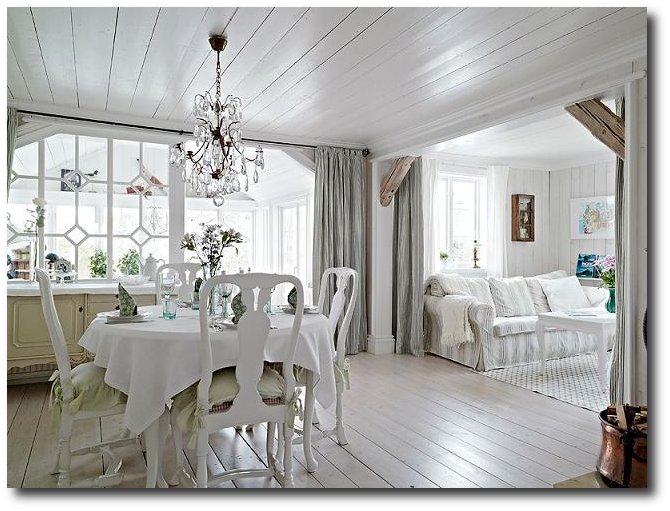


An American’s Guide For Getting The Swedish Country Look
With the stresses this world has to offer, it is no wonder why there is such a gravitation towards a home that is cozy and relaxing. Our homes are places where we want to connect with our family and friends amidst the fast paced life we are living.
Country decorating has always been a very popular decorating approach in the US, and around the world for that matter. American painted furniture with colonial elements is often what you would find in many homes in America that are designed to reflect the early America period design, but rarely do you see a home decorated with a Swedish reflection.
Swedish country decorating has a slightly different slant than you find in America. The style and approach to furniture is quite a bit different. In Sweden we find the same countryside looks that are found away from the city with a homestead influence. We give you 5 tips to getting the Swedish look with the common elements that you can find in America online and in your local antique stores.
Here Are A Couple Tips To Getting A Country Swedish Look In Your Home
This Swedish decorated house in Dalarna, Sweden has all the rustic elements
you would expect to see in a house set in the Scandinavian country. Borrow a couple ideas from this home for your personal decorating.
1. Collect The Right Style Period Furniture.
This family house in the Swedish countryside has some very authentic Swedish looking furniture. Gustavian style Rococo chairs through out the home show off a Gustavian look that is famously created in Sweden. The chairs alone tell you this home is from Sweden. Finding these very rare pieces of furniture in America is next to impossible, and buying true antiques can be very costly making a whole home decorated around the Gustavian style a far reach for most people.
There are some furniture pieces in America that double the looks found in Sweden.
– Consider decorating with furniture that is has clean straight lines, and made out of wood. In the picture above the drop leaf table looks much like the early shaker style seen in America. Look at some of the furniture from Chelsea Textiles to get some good ideas. Many of these tables such as this one, and this one, can be found for less. Collect furniture such as drop tables which can be used in the middle of a living room paired with a sofa, they can also be pushed against the wall.
Other items that are universal to some degree are wall shelves. Find wall shelves that are made of wood, and slightly cut with a curve. The top of this cupboard is a great example of a look that is found in the country. Plate racks for the walls are easily found on ebay and can be painted any color to create a uniform look within your home. Collecting plates that can be positioned on the wall or on plate racks is another common element in Swedish styled homes.
– Have a couple pieces in your home which are just plain wood. Consider stripping a side chair down to its bare wood, and waxing it. Beauty can be found in wood, and gives a much needed balance towards an interior with many painted finishes.
–Wood Slat walls are another very common architectural element with Swedish styled homes. Often times these walls are painted a white or a gray with gilt mirrors hung on the wall.
– Another option is to collect Queen Anne furniture which then can be manipulated with paint to get the look of the backroads in Sweden.
-Wooden chairs and old benches can be a stylish approach in decorating your home. You can include a corner cupboard, plate racks and even sideboards and serve as storage areas around your dining room.
–Shop on ebay for the just right pieces to finish off every room in your home
2. Get The Color Right
This pinterest page gives a person some excellent examples of Colonial decorating in America. Much like Swedish decorating, painted wood is a very common element. When comparing the two styles, one thing is very evident, the colors are slightly different. Dark blues are very common with Swedish and Nordic style antiques, as well as lighter hues of elementary colors. In this photograph you can see a wide range of salmon oranges, deep blues and red. Consider bringing the historical c0lors that are found in Sweden inside your home.
Decorating with red and pink can be very country. While pink is shunned these days, it can be a dramatic color which can really speak volumes in your home. Getting the right color, and adding additional painting techniques such as distressing and glazing can give a terrific historical look. Black is also a great color for primitive interiors. Other country colors to consider are yellow, and red, and creamy white. Consider putting more of an emphasis on the bolder richer colors such as a deep red than the light blues and whites found in the castles of Sweden. Borrow from the colors found in Sweden for your wood accessories, furniture and walls.
Wood can be painted and heavily distressed to give you the dramatic looks that
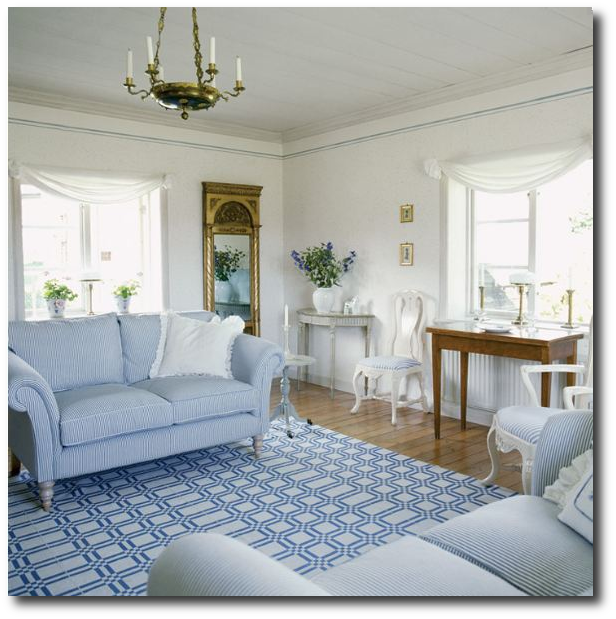
are found in Sweden. Light colored drapes around the windows let in the light, and give this home a soft touch. Antique Swedish mirrors also make this home, and a pair of sofas in blue and white stripe are the colors found in Sweden. Wooden floor with Nordic Style runners sewn together making a large rug. In this home antique kitchen table is paired with Swedish Leksand chairs.
Country style decorating can capture the spirit of the simplicity of country living amidst the modern times. Country decorating is one way of reminiscing the pasts. It reminds us of how we are living our lives. Decorations inspired by country living makes us closer to nature. A cozy home reminds us to live simple lives.
Picture Credits- isogninelcassettodiadriana.blog, Weranda Country