The Light And Airy Furniture Of Sweden
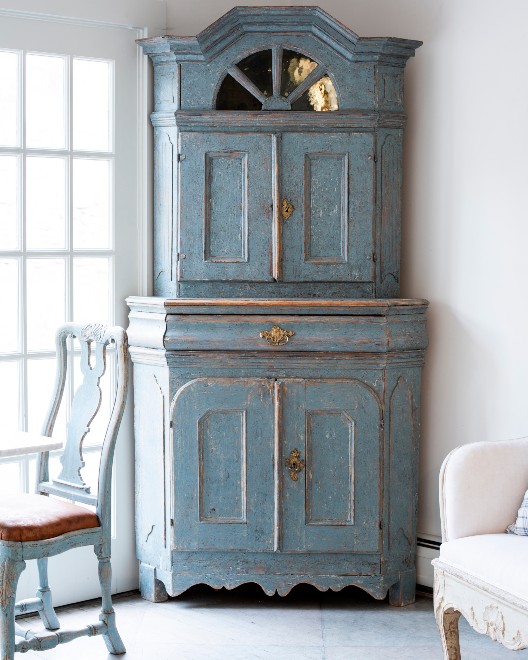
Dawn Hill Antiques
Swedish furniture is in a class of its own. From the exuberant decoration of the Rococo style with an abundance of curves and natural motifs that gave way in the late 1700s to the restrained Gustavian style, Swedish furniture appeals to many. Owing to its clean lines and simplicity, it mixes well with other styles, both traditional and modern.
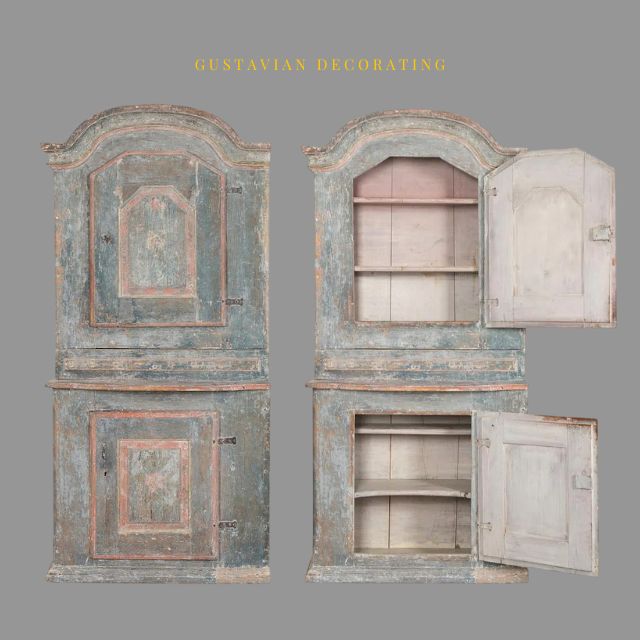
“You cannot talk about Swedish design without first considering the natural environment of Sweden. It is a country of islands, with the sea on one side and the interior populated by dense forests,” said antique dealer Paulette Peden of Dawn Hill Antiques in New Preston, Conn. “In the winter months there is a very short period of daylight, so the Swedish people craved the light, and created rooms painted with pale colors, and light furniture to make the most of the precious daylight.” The Gustavian style was named for Sweden’s King Gustav III (1746-92), during whose reign the talented craftsmen of the Stockholm Guild made well-designed furniture like chairs, tables, secretaries, cupboards and settees.
Read more – liveauctioneers.com
6 Colors You’ll Find In Every Scandinavian Home – Laura Barry
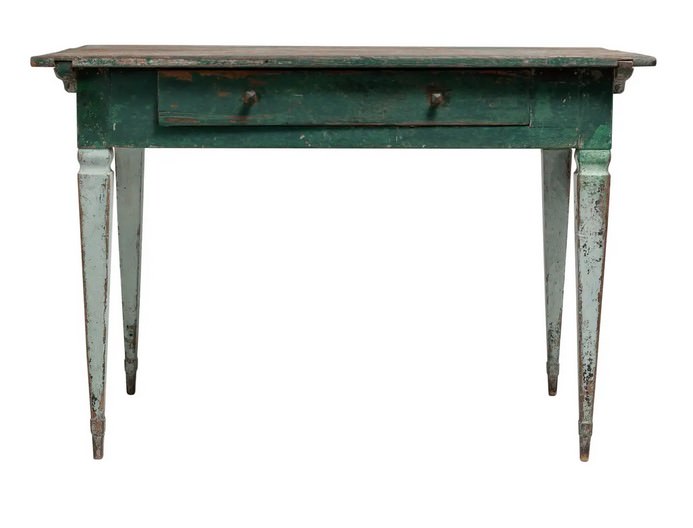
Swedish 18th Century Gustavian Pine Desk –1st Dibs
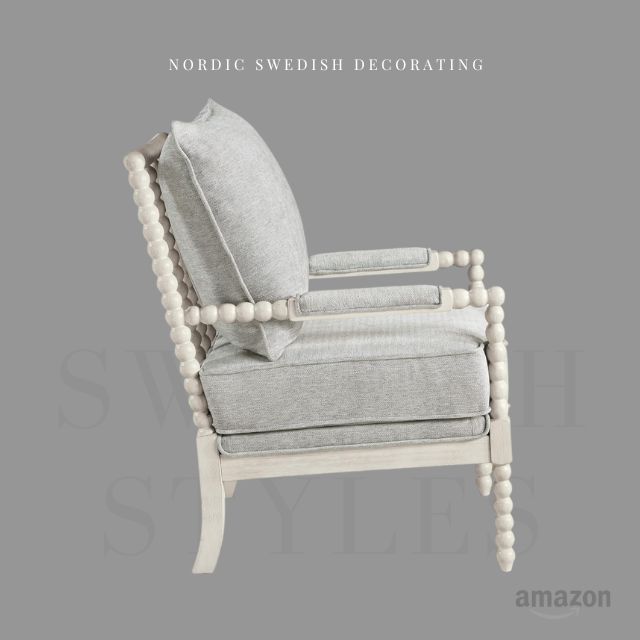
Kaylee Spindle Accent Chair – Amazon $340
The regions fondness for natural materials, muted color palettes and fine craftsmanship set the standard high when it comes to interior design, however achieving the same look in your own home isn’t that hard.
Scandinavian interior design is about embracing what nature has already presented us with. Using timber for furniture, buttery soft leather for upholstery or soft furnishings and looking to wool, linen and cotton for bedding and accessories. But it isn’t just the use of natural fibres that demonstrates the Scandinavian love of nature, it’s the color palette that’s entirely inspired by the naturally occurring shades found in forests and landscapes.
If you’re trying to inject a little bit of Scandinavian style into your home the first thing to do is rethink your color palette, and try using these six colors that appear in all Scandi-inspired interiors.
1. Forest Green
This rich shade of green offers a home the perfect balance of on-trend color that still feels timeless. Work a forest green cushion, throw blanket or linen duvet set into your interior scheme and finish off with a dark green foliage plant to complete the forest transformation.
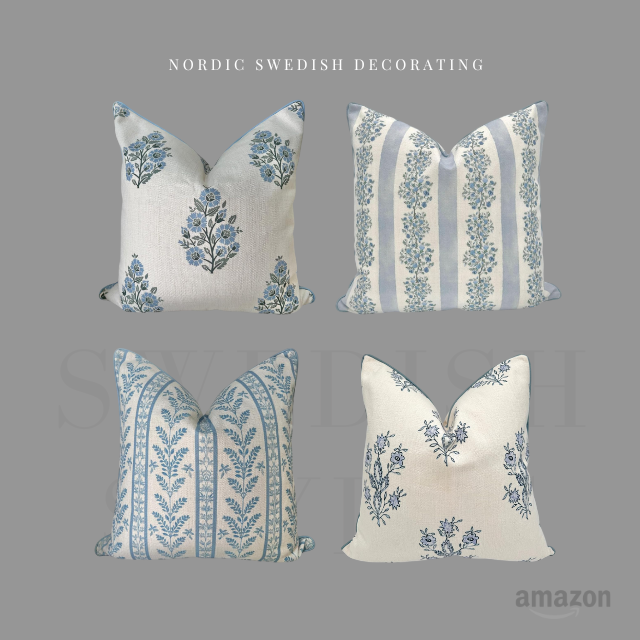
The Mary” Periwinkle Floral Block Print Pillow Cover –Amazon
“The Camille” Floral Block Print Pillow Cover – Amazon
“The Juliet” Floral Block Print Pillow Cover – Amazon
“The Hazel Bright Blue White Floral Pillow Cover – Amazon
“The Louis” Blue Floral Block Print Pillow Cover – Decorative Throw Pillow Cover –Amazon
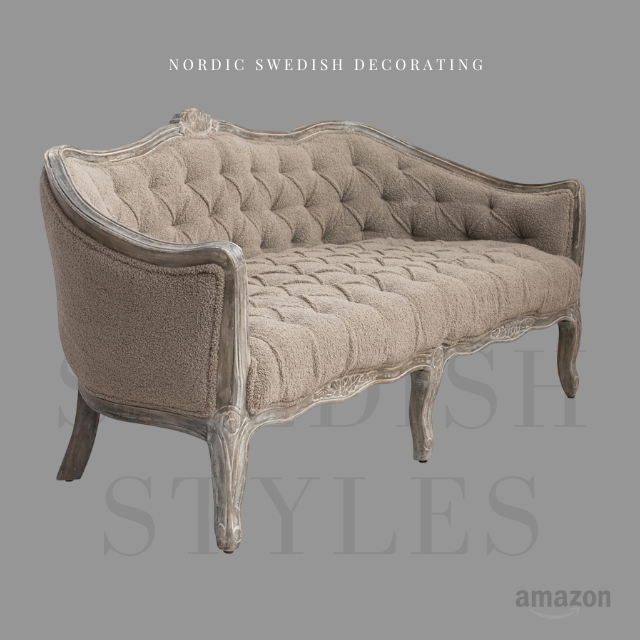
Swedish Furniture Design – What Makes The 1800’s So Obsessive
Co-Op Bouclé Pintucked Sofa – Amazon
Guest Post – Jason Phillips
The Scandinavians are known around the world for creating simple, stylish and functional furniture; its style reflects its origins, furniture and décor which maximized the available light and space. The look is minimal, yet honest with an earthy flavor. It is the perfect style to use when you are looking to revitalize an old, gloomy house and create a contemporary yet practical flare. To really get the 1800s Swedish feel in your home you will need to follow these tips:
1. Wooden Flooring
The flooring should be light and preferably wood, although a laminate will have the same effect. This allows the sunlight entering the house to bounce around the room and help to create a feeling of space, warmth and light. The bathroom is the only exception to this rule as a darker, warmer color will make the room feel more inviting.
2. Color Palettes Of Brown and Gray
The original Scandinavian design would be for white walls and a pale grey or light blue; either as a feature wall or as part of the design; the color of the furniture or the accessories. However, there have been several other influences in the Scandinavian scene and it is possible to introduce some bright colors through the accessories or even the flowers in the room. These will draw the eye and make the room feel friendly and inviting. It is also possible to opt for wood on one of the walls; it is a natural material and adds a layer of warmth to the property. If the wood is too yellow for your taste than it can be white washed or you can use grey oil to dilute the color.
3. Furniture Lines
The handmade designer furniture you use in your Scandinavian room must have clean lines. The majority of Swedish furniture elements will already have the lines you require. This simplistic approach will provide a calm, tranquil room in which to relax.
4. Functional Furniture
The Swedish pride themselves on providing stylish yet functional furniture. Every piece has a specific purpose and it is well designed for that purpose. This ethic should apply across the entire house; it avoids unnecessary clutter and encourages the simple, minimalistic style. Furniture may have been designed recently or may be genuine antique pieces. Either will work as the elements of design have stayed true throughout time; every Swedish piece has a classic beauty in its simplicity and will sit perfectly in a room today. The way this furniture has been designed allows it to blend with any room, creating a stylish, yet practical living area.
5. Corner Fire
Swedish winters are generally much colder than those in many other parts of the world. A fire is an essential part of surviving these winters. However, they are not the feature point of the room; they are seen as another piece of furniture. Swedish fires are often tiled and sit in the corner of the room. They are usually very simple in design and may hardly even be noticed with their doors closed. The corner approach also allows the heat to radiate out across the room effectively.
6. The Environment
The Swedish are well known for adding environmentally friendly features to their houses. This can be as simply as embracing the energy efficient light bulbs, to adding solar panels or a ground source heat pump. Insulation and triple glazing are also standard on new builds and help to create the warm, inviting interior of a Swedish house.
7. Less Is More
Scandinavian design does not incorporate an abundance of ornaments and accessories. The approach is minimalistic in order to keep the clean lines and bright spaces that they desire. Among the few accessories will usually be a plant or bunch of flowers to add a touch of the outside to the décor. Blend your minimalistic approach with natural materials and you will have a beautiful house that you can
actually live in!
Embrace the Swedish home design and transform your home into a welcoming, truly inviting living nest. Choose a dominant color that best lives up to your expectations, and don’t be afraid to improvise. Oversized throw pillows, flower pots with seasonal flowers and custom-made furniture items are everything you need for a Swedish-inspired home.
3 Swedish Style Homes Featured In Magazines
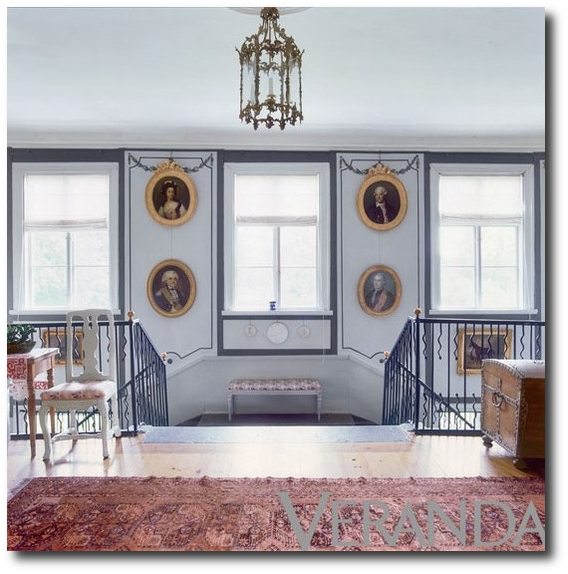
I have been holding on to Veranda’s November / December 2011 issue which featured an 18th century manor situated in Sabylund, 2 hours west of Stockholm. Built in 1780’s in the Gustavian aesthetic, the house has stayed virtually intact as it was back in the 18th century.
In the red room, chalky white finished chairs with gilt wood embellishments are covered in Chinese red damask. A Swedish day bed functions as a sofa and a bed, and is accompanied by a table surrounded by Gustavian white painted chairs. A Swedish Kakelugn stove has gold painted garlands on the tile. A number of small rectangular portraits hang on the wall.
In the main room, light blue painted walls are framed with wall moldings, and hand painted garlands add a romantic feel to the walls. Sheer drapery allows the light to come into this room. A settee and Louis XVI chairs with a blue and white stripe slipcovers form a seating area with a Empire table and crisp white tablecloth. A pale light blue and white scheme pull together a soft, yet delicate look for this room. A pink rug, and lighter pink upholstery seen on the backs of the chairs offer up a subdued, yet tender room to lounge in. Large gilt oval portraits add a historical feel to the room.
A grand library filled with the owners original books offered a taste of the high life. Books were so much more valuable in the 17th and 18 century, and having a library filled with them, suggests the owners were well off. A 1799 white stucco medallion mounted on a simple wood frame depicts the houses first owner. A Dutch or German table centers the room, with English cane chairs backed to the books. Swedish pewter candlesticks sit on the table, along with a brass telescope for viewing nature. The shelves are painted in a blue/ gray, houses natural leather books adding such rich contrast. Furniture is left in it’s natural wood, which adds a rustic effect.
“The most interesting thing about this house is that it has actually been lived in all these years” says Johan who owns the house. His wife Ingrid Lagerfelt and their two children live in this home currently. Their ancestor inherited the house from the original brother and sister who built the home. Johan is a doctor, and his wife Ingrid farms the estates 2,500 acres of land.
More from Veranda:
- Swedish Design Inspiration – Veranda.com
- Eugenia’s Swedish Shopping Resources – Veranda.com
- Swedish Country Interiors -Book Review – Veranda.com
- Swedish Antique 18th Century Daybed – Juan Montoya
- Winter Warmth – Veranda.com
Johan and Ingrid Lagerfelt’s Home In Veranda
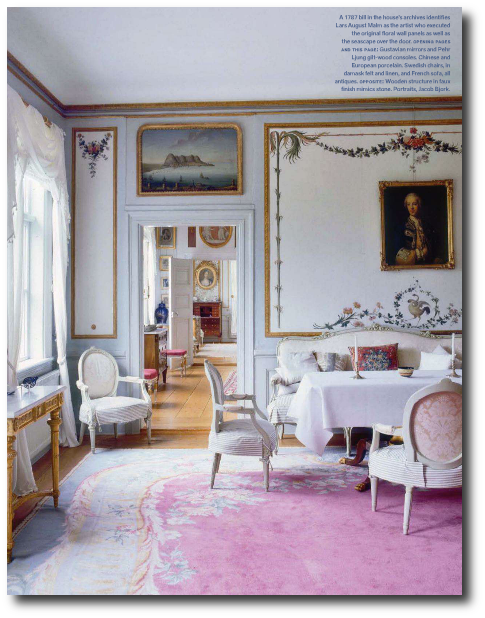
Johan and Ingrid Lagerfelt’s Home In Veranda
An Up-close and Detailed Look At The Wall Painting
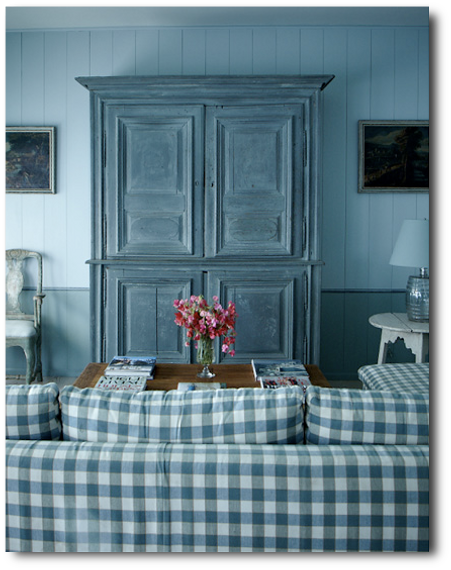
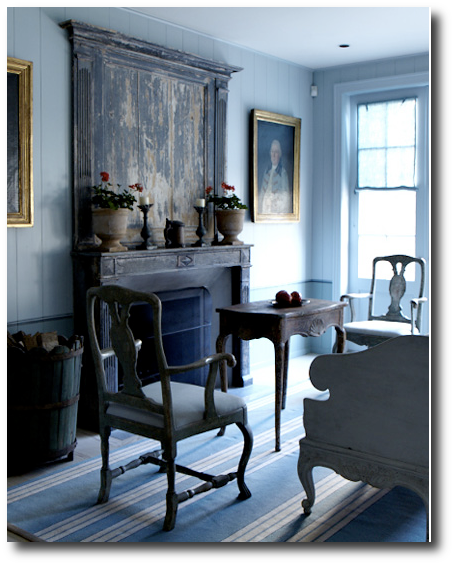
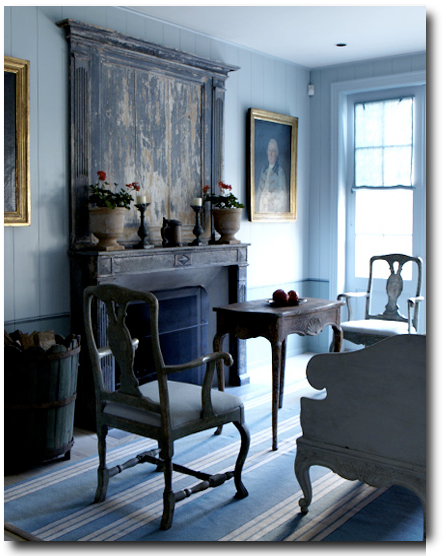
House Beautiful first captured our interest in this Swedish styled home decorated by Carol Glasser and Katrin Cargill. The home bathed in blues with Swedish-style home by Carol Glasser Interiors.
This home was originally decorated around an English country style, and featured in Country Living magazine in the 1990’s.
Later the homeowners decided their taste had changed, and they wanted an 18th century look focused on the styles found in Sweden.
To start this process, everything in the house was sold, as they started the process of decorating their home, completely from scratch. It wasn’t just a change of furniture and a little bit of paint, but rather the house’s walls were taken down to their studs and every thing was given a new facelift, -the roof, floors, windows and walls.
Carol Glasser decided to work with Swedish Style expert Katrin Cargill who brought the eye for authenticity.
In the living room sits a classic style Swedish painted sofa, while on the other side of the room gives the room a modern twist with a Charles sectional from B&B Italia. Walls show off a rustic look with painted planks with a faux chair rail. Antiques in this room are beautiful in their original paint. A French Directoire mantel and Swedish tea table and armchair make the perfect 18th century sitting area. These pictures came from Katrin Cargill’s website and are updated shots of the home.
More From House Beautiful
- Furniture Now — Swedish Fantasy – House Beautiful
- Gustavian Corner Cupboard – Island Decorating Style
- Decorating in Antique Blues – House Beautiful
- Swedish Paint Colors – House Beautiful
- Swedish Country Style – Swedish Cottage – House Beautiful
- Hamptons Beach House – Swedish Design Home
- Scandinavian Design Advice – Swedish Style
- Swedish-Style Kitchen – House Beautiful
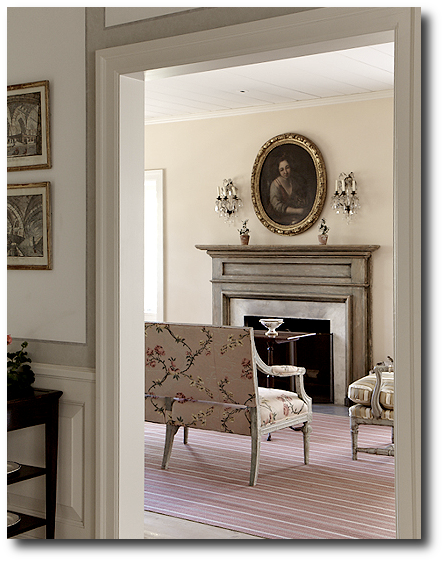
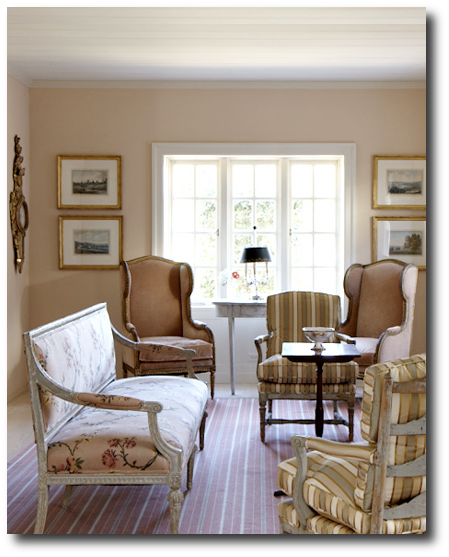
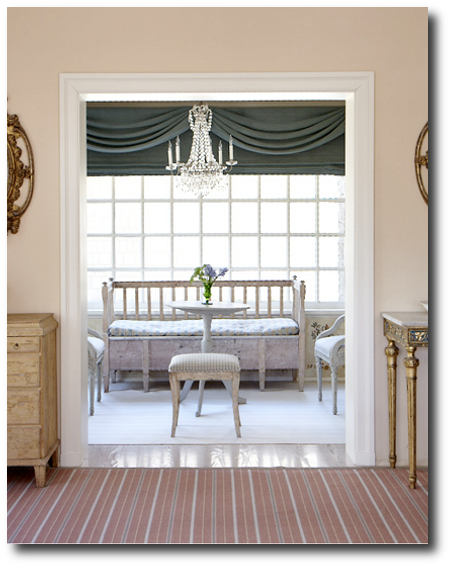
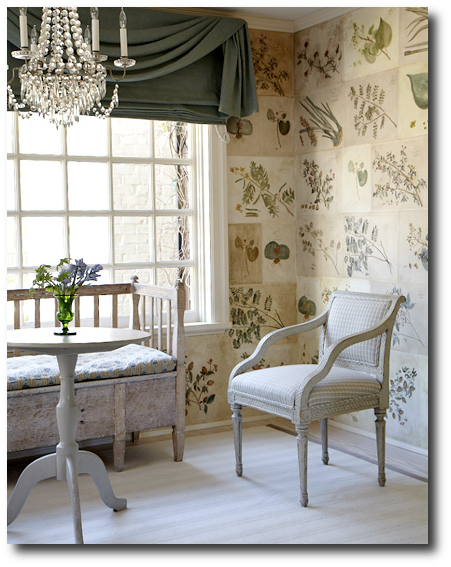
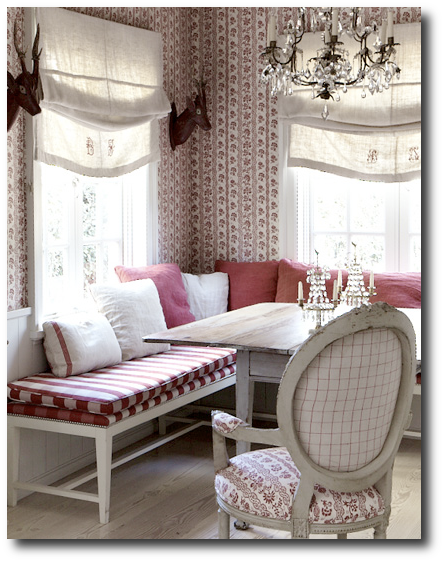
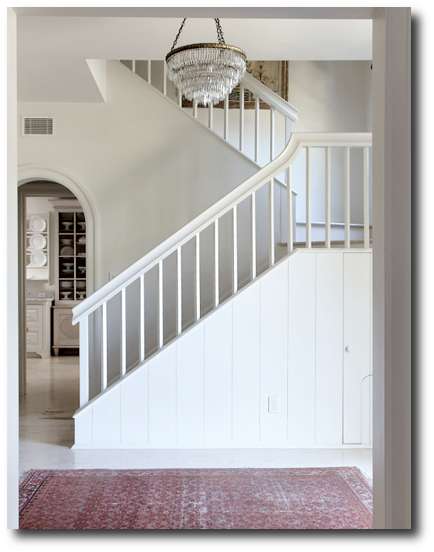
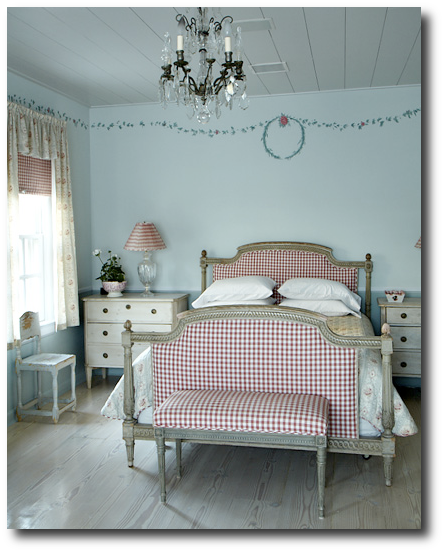
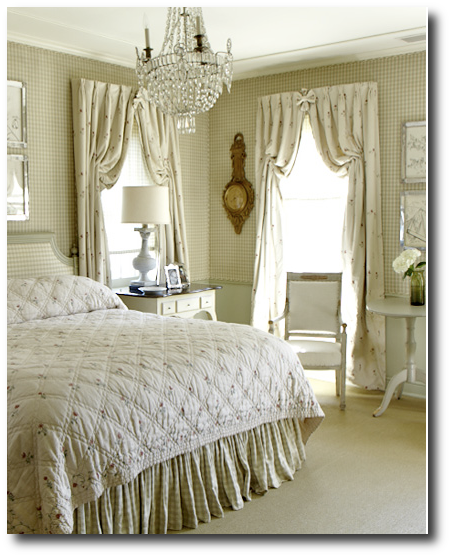
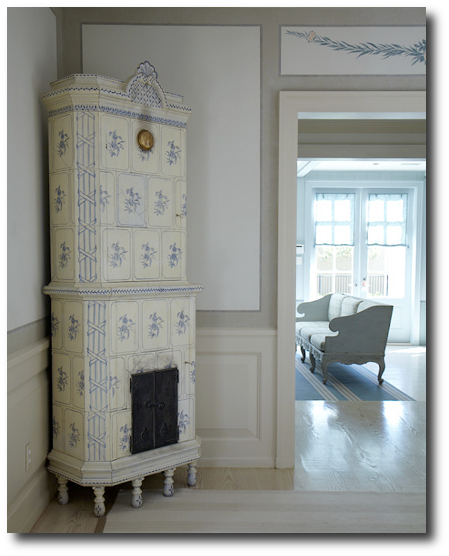
Swedish-style home by Carol Glasser Interiors.
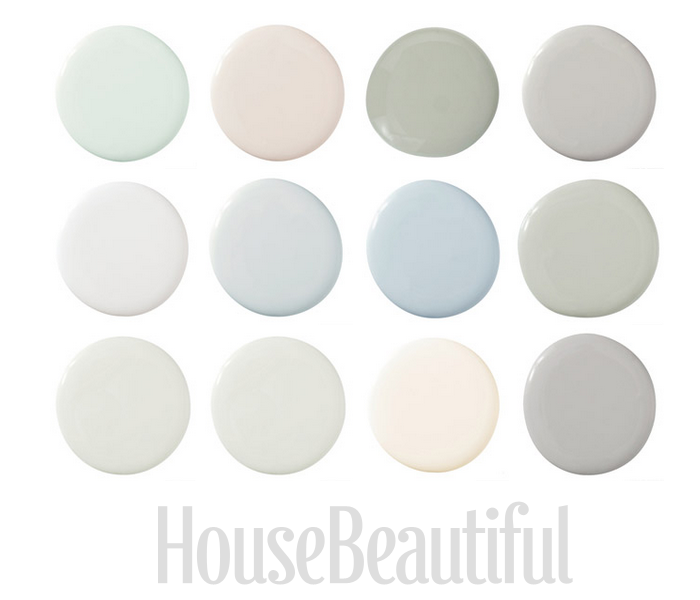
View all the details behind these Swedish Paint Colors at Home Beautiful
The Devoted Classicist featured the country manor home of Baron Henric Falkenberg, which is located in western Sweden on the shore of Lake Vanern in Varmland province. The property was featured in an article by Miguel Flores-Vianna with photos by Fernando Bengoechea in the April, 2000, issue of Elle Decor magazine.
The house itself was completed in 1774 by master carpenter Johan Georg Reincke, and has been in the Baron’s family since the late 19th century. It has been mentioned that this estate to has over 1,000 acres of property! In the photo below of the billiard room, a portrait gallery features of the baron’s ancestors, and portrait paintings of the original owners of Varmlands Saby hang above a Dutch armoire in the dining room. See more at The Devoted Classicist Blog
More From Elle Decor
- Modern Swedish Style – Elle Decor
- House Tour: Modern Swedish Style – Elle Decor
- Swedish Revival – ELLE DECOR
- Cottage Industry: Architect Gert Wingardh’s Gothenburg Home
More From The Devoted Classicist
- The Devoted Classicist: New Library of Reclaimed Pine
- The Devoted Classicist: Mellon-White Townhouse
- The Devoted Classicist: Roger Prigent’s Paris Pied A Terre





The Most Beautiful Rococo Library In The World:The Anna Amalia Library
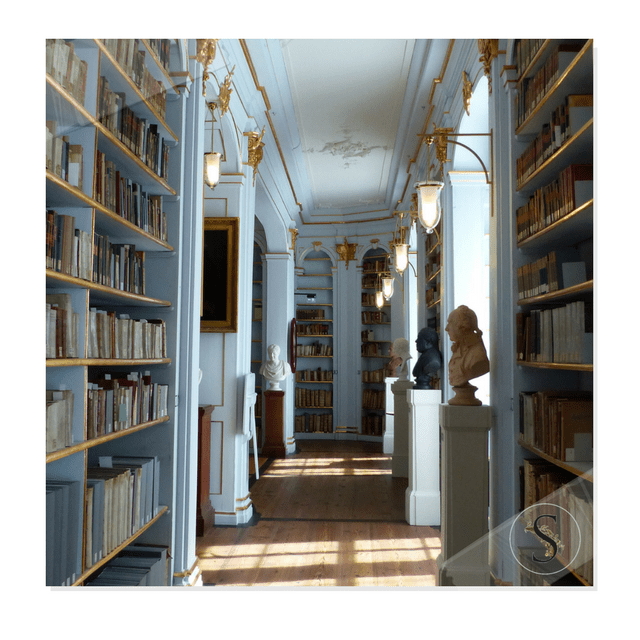
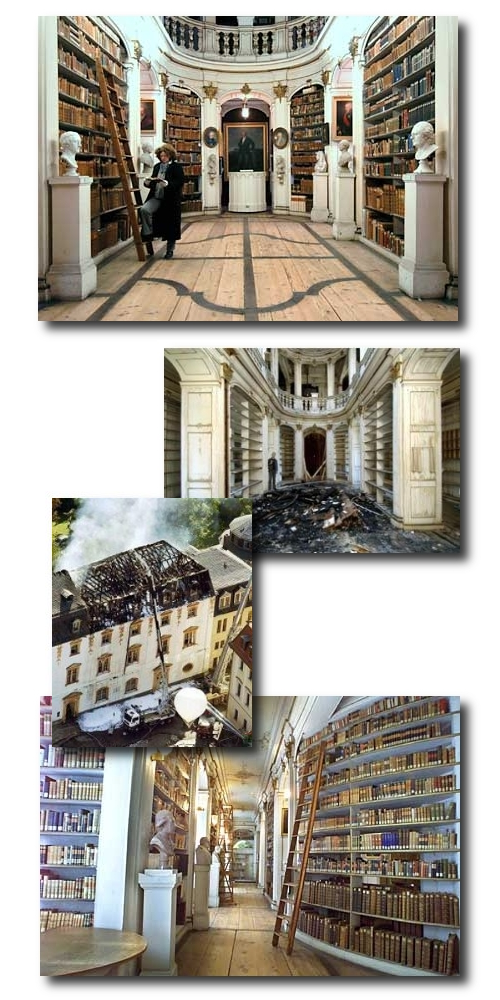
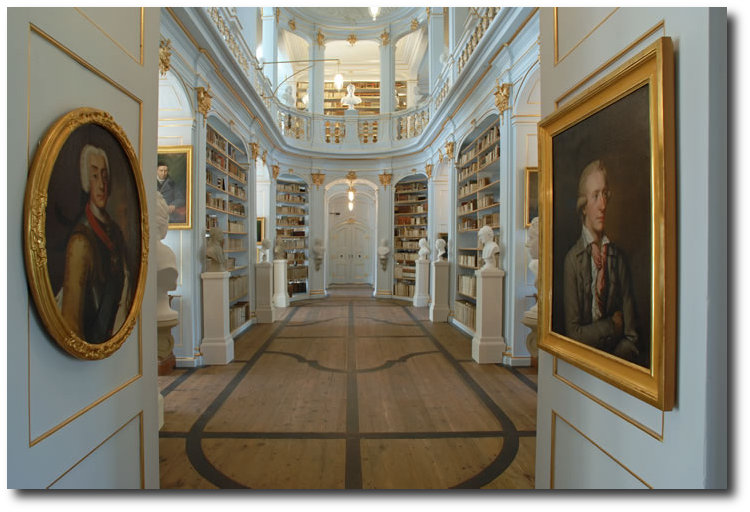
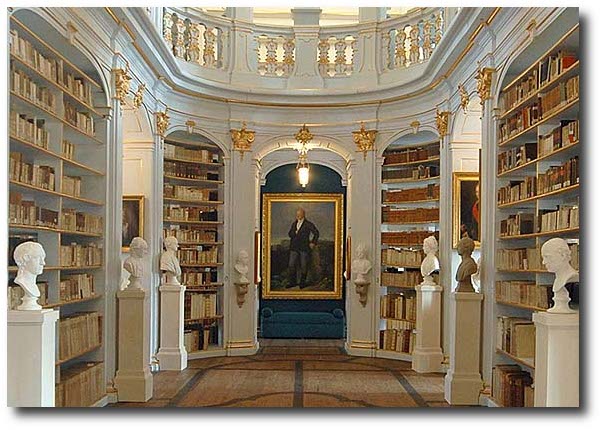
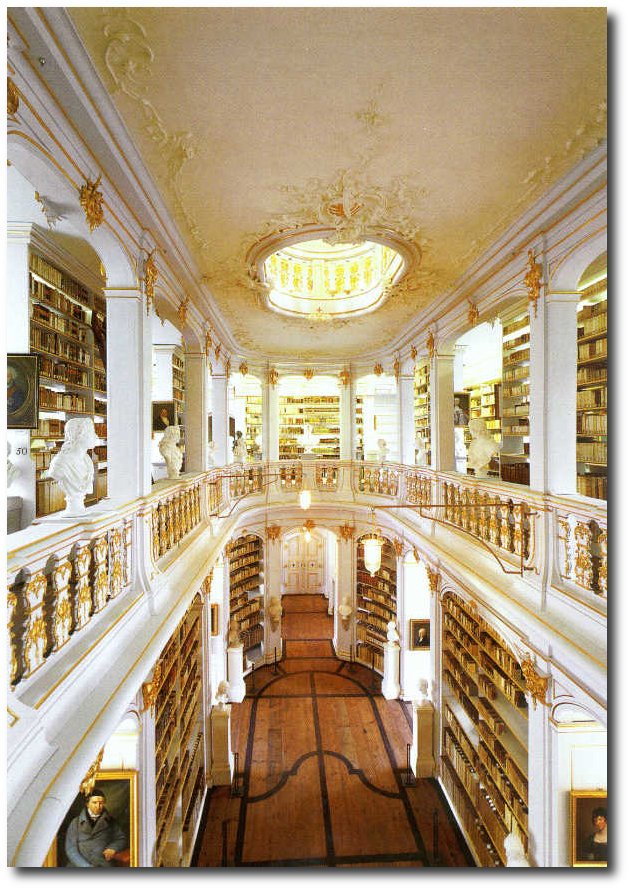
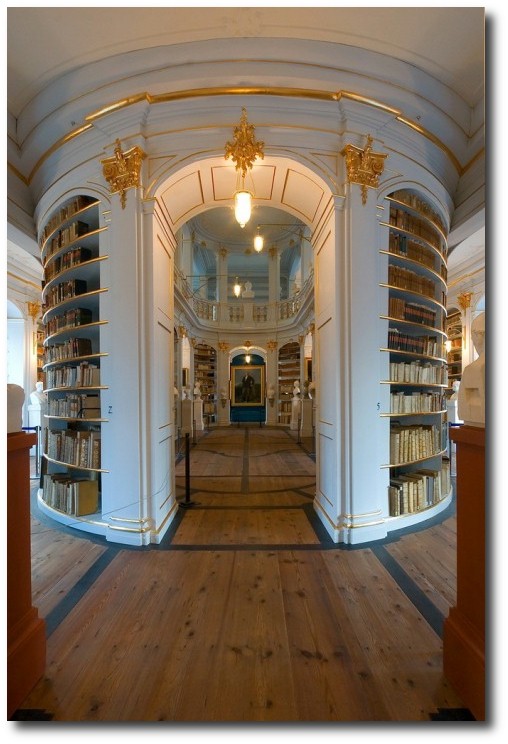
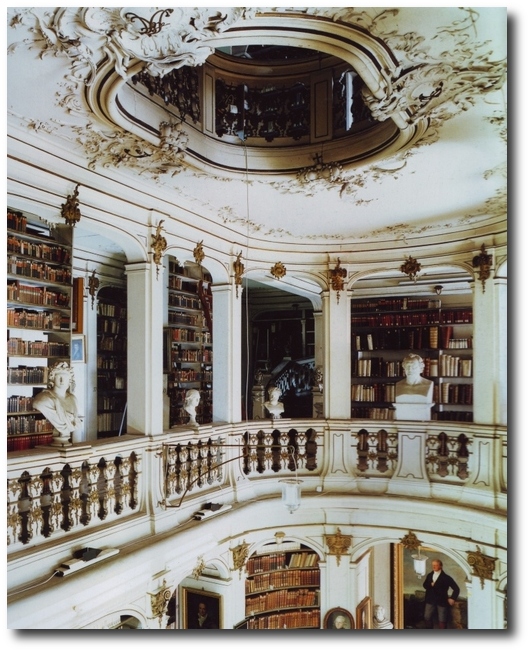
The Duchess Anna Amalia Library located in Weimar, Thuringia, Germany, is world famous for its oval Rococo architecture. The library one of the most breathtaking examples of Rococo design. The Rococo library houses a major collection of German literature and historical documents. The Duchess Anna Amalia Library is named for Anna Amalia, Duchess of Saxe-Weimar-Eisenach, who arranged in 1766 for the courtly book collection to be moved into the library.
In the picture above, a photographer takes a picture of the in the middle of the room with a view of the front door. Three weeks after Candida Höfer had made their shots, a fire caught in the library, and burned about one million volumes. 50,000 volumes were saved, but many were irreplaceable, and of the 62,000 volumes that were damaged by fire or water, at least 36,000 were restored. Even though, a substantial amount of books were lost in the fire, there has been no loss of interest in the library.
The sad part of the account was the library was scheduled for the overdue renovation when an electrical fire struck the library in September, 2004, JUST weeks before the collection was to be moved for the renovation.
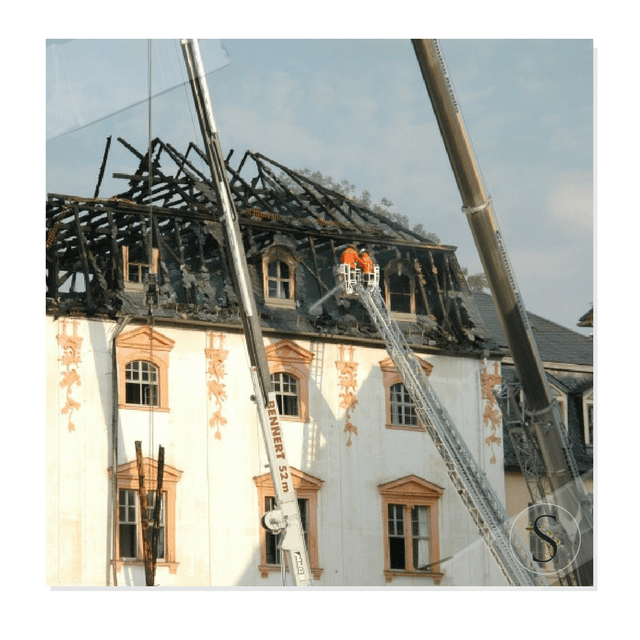
Thousands of precious books which had been preserved for two centuries, were destroyed by fire by a damaged electrical cable. The interest in preserving the library drew in almost 14 million dollars for the restoration and repurchasing of the books.
Check out this bm-online.de, link for some of the pictures of the restoration. The library was reopened in December 2007.
The Rococo hall continues to be one of the most beautiful libraries in the world. The hall has a narrow floor plan and an astounding ceiling height which leads the eye upward. The reading room is a lofty gilded gallery with busts of poets, paintings and bookcases set against white and blue walls. A light parquet floor and minimal furnishings create a dramatic contrast to the Rococo Hall which can be seen through the oval opening in the ceiling.
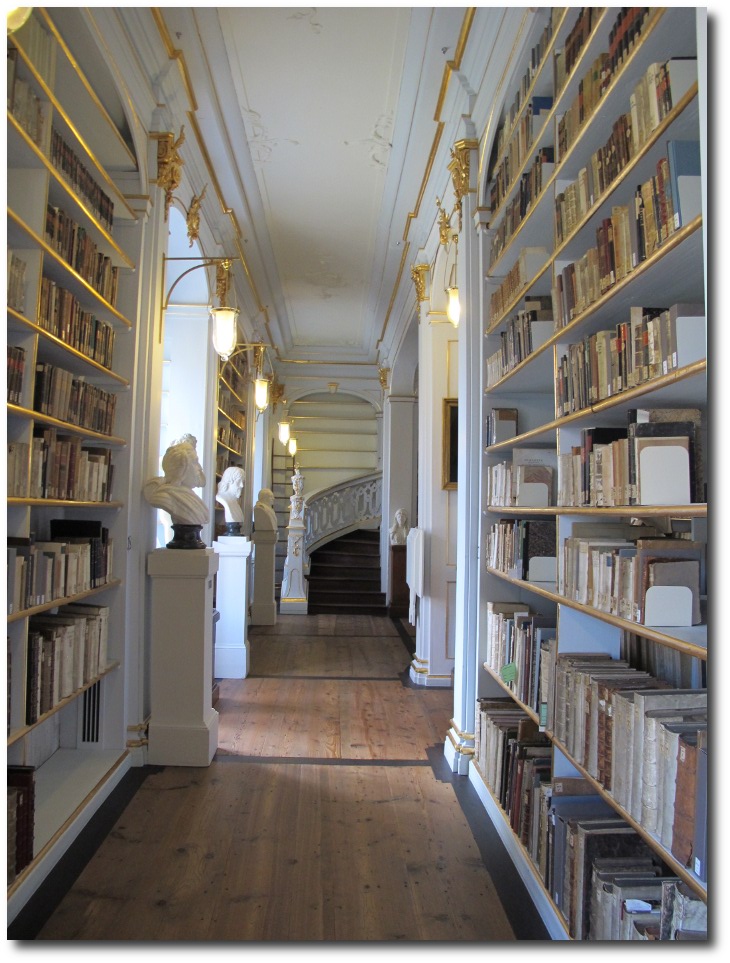
In The Most Beautiful Libraries in the World, writer Jacques Bosser provides a vivid description of the library’s interior: “The heart of the building was open, thus creating a vast central room for reading and preservation. It was surmounted by a sizable gallery replete with bookshelves. Encircling the hall, between
it and the castle, is a wide corridor with bookshelves on both sides. Its late-Rococo décor is sober, simple, charming, and functional. The floor is a parquet decorated in dark slats shaped like a carpet. Everywhere are paintings, framed drawings, and white marble busts of the celebrated visitors to this site, which had long been renowned through-out Europe” (Laubier and Bosser, 2003, p. 54).
See additional photos at Baulinks Website, Epoch Times
- holidaycheck.de
- Candida Höfer
- commons.wikimedia.org
- vebidoo.de
- gaab-weimar.de
- kastl.de
- germany.travel